General information, not medical advice. Every baby is different — if anything worries you, speak to your midwife, health visitor or GP rather than waiting.
Apples are one of the most common first foods parents reach for, and for good reason. They’re naturally sweet, gentle on a baby’s digestion, and easy to turn into a smooth puree with almost no equipment.
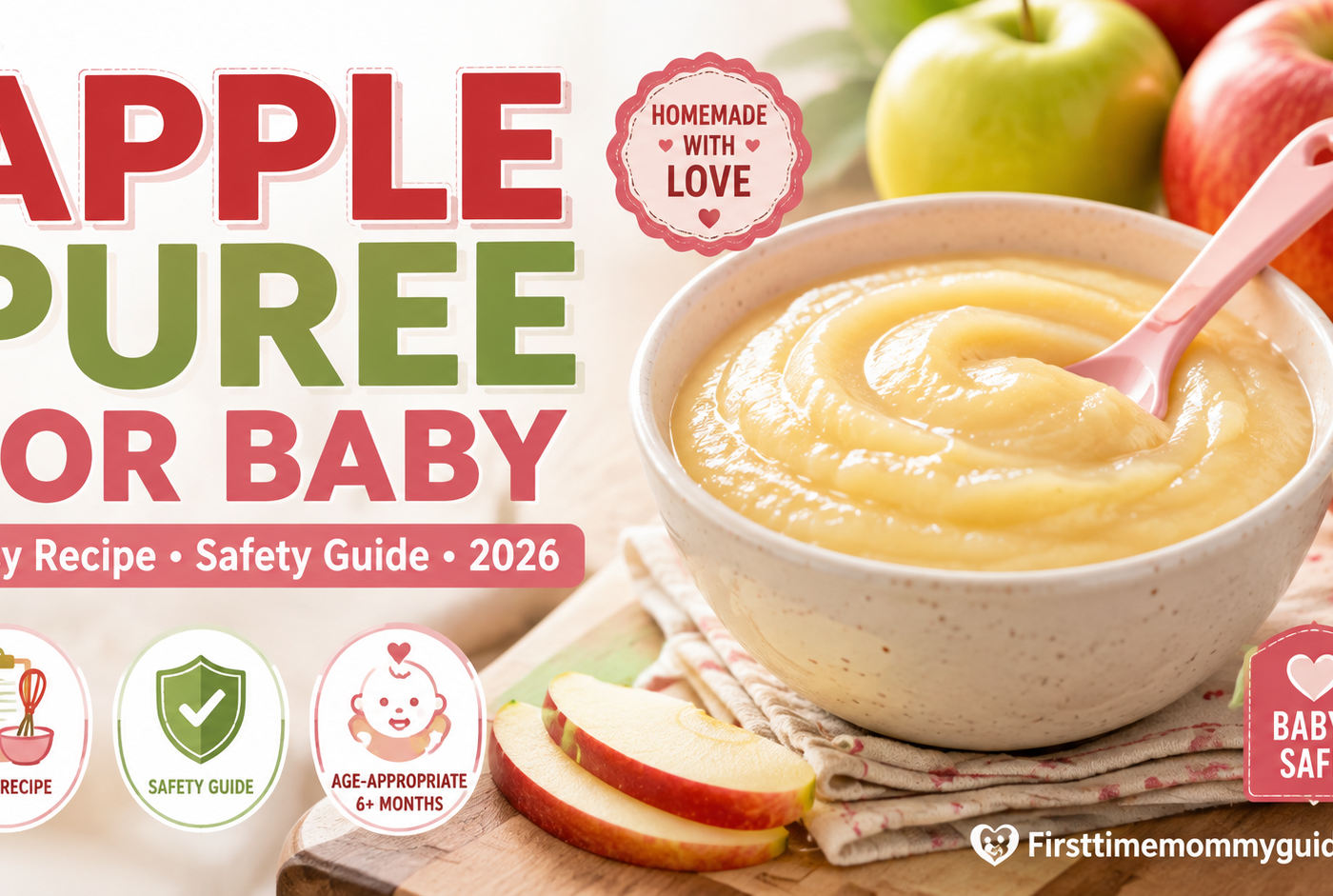
Apple puree for baby is made by peeling, coring, and cooking apples (steamed, baked, or boiled) until soft, then blending them until smooth — with water, breast milk, or formula added to reach the right consistency.
Most babies can start apple puree around 6 months of age, once they show clear signs of readiness for solids.
Table of Contents
Is Apple Puree a Good First Food for Baby?
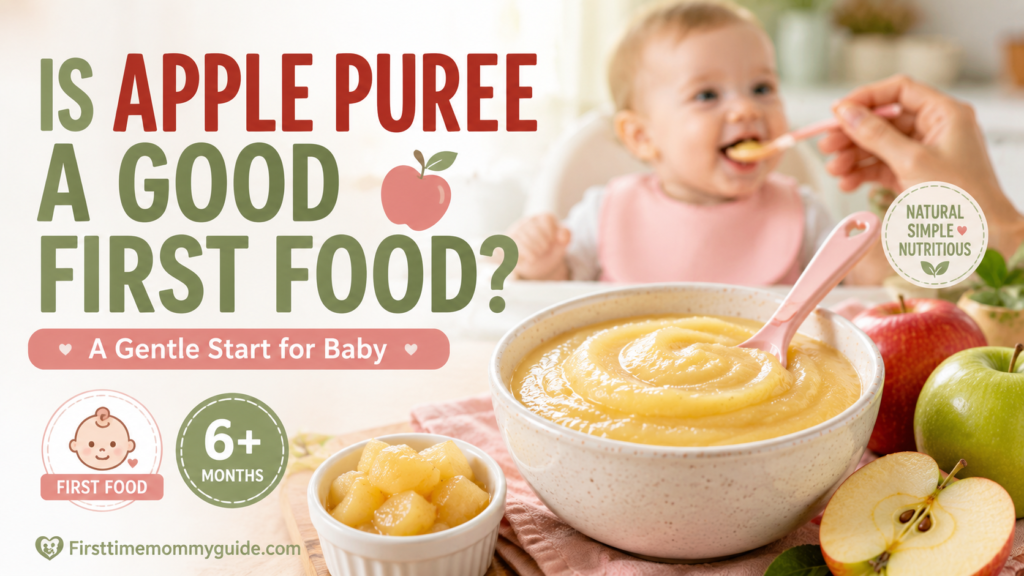
Yes. Apples are widely recommended as a first food because they’re low in common allergens, naturally sweet, and cook down into a smooth, easy-to-swallow texture. They also provide dietary fiber, vitamin C, and small amounts of potassium, which support digestion and overall growth.
That said, apple puree alone isn’t a complete meal. Because apples are low in iron and protein, pediatric guidance recommends prioritizing iron-rich first foods — like fortified infant cereal, pureed meat, or legumes — alongside fruits like apple puree, rather than relying on fruit purees as the main food in early weeks of solids.
When Can Babies Start Eating Apple Puree?
The American Academy of Pediatrics (AAP) recommends exclusive breast milk or formula for about the first 6 months, then introducing solid foods once a baby shows signs of developmental readiness. This is a readiness-based recommendation, not a strict calendar date — some babies show these signs slightly before or after 6 months.
Signs your baby may be ready for apple puree and other solids:
- Can sit upright with little or no support and hold their head steady
- Has lost the tongue-thrust reflex (no longer automatically pushes food back out)
- Opens their mouth for a spoon and shows interest in what you’re eating
- Can bring objects (like toys) to their mouth on their own
If your baby isn’t showing all of these signs yet, it’s fine to wait a week or two and try again — there’s no benefit to rushing solids.
Always check with your pediatrician before starting solids, especially if your baby was premature, has a medical condition, or has a family history of food allergies.
Apple Puree Nutrition: What’s in It for Baby?
| Nutrient | Why It Matters for Babies |
|---|---|
| Dietary fiber | Supports regular digestion and helps prevent constipation |
| Vitamin C | Supports immune function and helps with iron absorption from other foods |
| Potassium | Supports healthy muscle and nerve function |
| Natural sugars (fructose) | Provides a mild, naturally sweet flavor babies tend to accept easily |
| Water content | Helps with hydration, especially once solids reduce milk volume slightly |
Apples are low in fat and protein and contain very little iron, so pair apple puree with iron-fortified cereal, meat purees, or legumes rather than serving fruit as baby’s only food.
How to Make Apple Puree for Baby: 3 Easy Methods
All three methods start the same way: wash the apples well, peel them, remove the core and seeds, and cut into chunks. Peeling matters most for younger babies (around 6 months), since the skin is harder to break down; once your baby is comfortable with more texture (around 8+ months), you can leave the skin on for extra fiber.
Method 1: Steamed Apple Puree (Best for Preserving Nutrients)
- Place apple chunks in a steamer basket over 1–2 inches of simmering water.
- Cover and steam for 8–10 minutes, until a fork slides through easily.
- Transfer to a blender or food processor with a splash of the cooking water, breast milk, or formula.
- Blend until completely smooth, adding liquid gradually until you reach the right consistency.
Method 2: Baked Apple Puree (Best Flavor, Great for Batch Cooking)
- Preheat the oven to 375°F (190°C).
- Place apple chunks in a baking dish with 2–3 tablespoons of water; cover with foil.
- Bake for 25–30 minutes, until very soft.
- Blend the baked apples (skin removed) with a little of the baking liquid until smooth.
Method 3: Boiled/Stovetop Apple Puree (Fastest, No Special Equipment)
- Add apple chunks to a small saucepan with 2–3 tablespoons of water.
- Cover and simmer on low-medium heat for 10–12 minutes, stirring occasionally.
- Let cool slightly, then blend until smooth.
Cooking Method Comparison
| Method | Time | Nutrient Retention | Flavor | Best For |
|---|---|---|---|---|
| Steaming | 8–10 min | Highest | Mild, fresh | First-time introduction |
| Baking | 25–30 min | Moderate–High | Rich, slightly caramelized | Batch cooking, older babies |
| Boiling | 10–12 min | Lower (some nutrients leach into water) | Mild | Quick weeknight prep |
Expert tip: If boiling, use the leftover cooking water to thin the puree instead of discarding it — it carries some of the nutrients that cooked out of the apple.
What to Mix Apple Puree With (Combination Ideas)
Once your baby has tried plain apple puree a couple of times with no reaction, you can start combining it with other first foods to build variety and encourage acceptance of new flavors.
- Apple + oatmeal (adds iron and a heartier texture)
- Apple + pear
- Apple + sweet potato
- Apple + butternut squash
- Apple + plain whole-milk yogurt (from ~6 months, check pediatrician guidance on dairy)
- Apple + cinnamon (a warm spice, not a common allergen)
- Apple + carrot puree
- Apple + banana
Introduce one new ingredient at a time and wait 2–3 days before adding another, so you can identify the source of any reaction.
How to Store Apple Puree Safely
| Storage Method | How Long It Lasts | Notes |
|---|---|---|
| Refrigerator (airtight container) | 3–4 days | Cool completely before sealing |
| Freezer (ice cube tray, then bag) | Up to 2 months | Freeze in 1-oz portions for easy thawing |
| Room temperature | Do not leave out | Discard after 2 hours at room temperature |
To freeze: spoon cooled puree into a silicone ice cube tray, freeze until solid (about 4 hours), then pop the cubes into a labeled freezer bag. Thaw one portion at a time in the fridge overnight or in a bowl of warm water.
Never refreeze puree that has already been thawed and served, and always discard any puree left in a bowl after a feeding — saliva from the spoon can introduce bacteria.
Texture Progression: From Puree to Finger Food
| Baby’s Age | Typical Texture |
|---|---|
| ~6 months | Thin, completely smooth puree |
| ~7–8 months | Slightly thicker puree with small soft lumps |
| ~9–10 months | Mashed apple with visible soft chunks |
| ~10–12 months | Small soft, cooked apple pieces or thin slices as finger food |
If you’re following baby-led weaning instead of spoon-fed purees, apples can be offered as a large, soft, cooked wedge (skin removed) that’s easy for baby to gum and gnaw without breaking into a choking-sized piece.
Safety: Allergies, Choking, and Common Mistakes
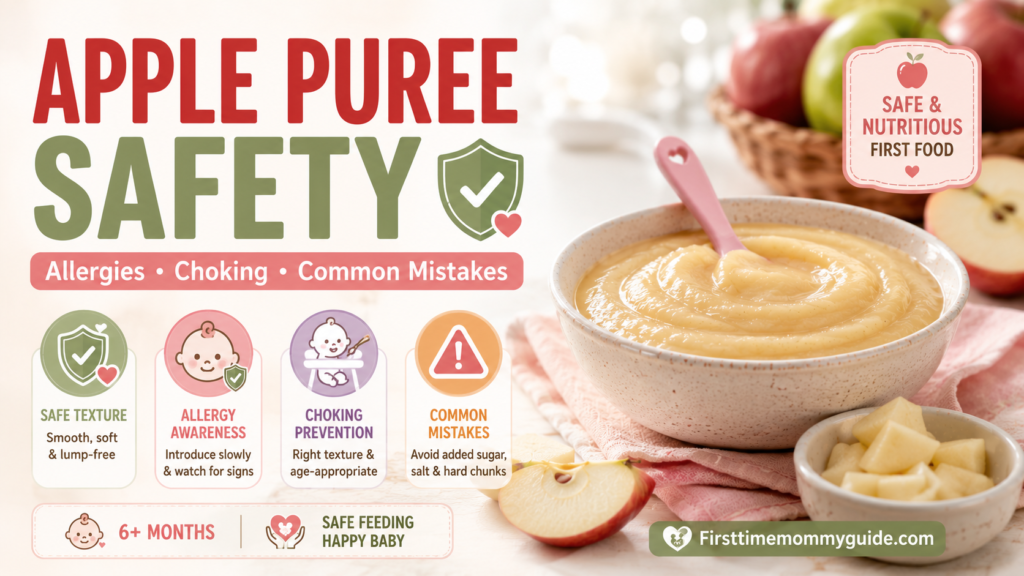
Allergies: Apples are not among the top common food allergens, but any new food can occasionally trigger a reaction. Introduce apple puree alone first, then wait a few days before adding it to combination purees, and watch for hives, vomiting, diarrhea, or facial swelling.
Choking risk: Raw apple pieces and apple skin are a known choking hazard for babies and toddlers because they don’t soften with chewing the way cooked apple does. Always cook apples thoroughly and remove the skin for younger babies; never offer raw apple chunks, whole grapes-style pieces, or apple slices with skin to a baby under 12 months.
Common mistakes to avoid:
- Adding sugar, honey, or salt — apples don’t need it, and honey isn’t safe before 12 months due to infant botulism risk
- Serving puree straight from a jar the baby has already eaten from (bacteria risk)
- Skipping the “wait and watch” period between new foods
- Making the puree too thick before baby is ready, increasing choking risk
- Using apple juice instead of water/milk to thin puree (unnecessary added sugar concentration)
Frequently Asked Questions (FAQs)
Is apple puree a common first food for babies?
Yes, it’s one of the most widely recommended first foods because it’s low-allergen, easy to digest, and naturally sweet.
What age can babies eat apple puree?
Most babies can start around 6 months, once they show signs of readiness for solids like sitting with support and losing the tongue-thrust reflex.
Can I give my 4-month-old apple puree?
Pediatric guidance generally advises waiting until closer to 6 months and readiness signs, rather than a specific early age, since introducing solids too early is linked to health concerns later on.
Do I need to peel the apple for baby puree?
Yes, for babies around 6–8 months. Skin is harder to break down and can be a texture/choking concern; older babies who handle more texture well can have puree made with the skin on.
Should I add sugar or honey to apple puree?
No. Apples don’t need added sugar, and honey should never be given before 12 months due to the risk of infant botulism.
Can I use apple juice instead of water to blend the puree?
It’s not recommended — juice adds unnecessary concentrated sugar; water, breast milk, or formula are better choices for thinning.
How long does homemade apple puree last in the fridge?
About 3–4 days in an airtight container.
Can I freeze apple puree for baby?
Yes, for up to about 2 months. Freeze in small portions like ice cube trays for easy single servings.
Is steamed or baked apple puree better for babies?
Steaming generally preserves more nutrients and is faster; baking gives a richer flavor and works well for batch cooking. Both are safe.
Can apple puree cause constipation or diarrhea in babies?
Apples contain fiber and can have a mild laxative effect for some babies in larger amounts, while applesauce is sometimes used to help with constipation; watch your baby’s individual response.
What apples are best for baby puree?
Sweeter, softer-cooking varieties like Gala, Fuji, Honeycrisp, or Golden Delicious tend to puree smoothly and taste mild.
Can I mix apple puree with baby cereal?
Yes, combining apple puree with iron-fortified infant cereal is a common and nutritious pairing.
Is it safe to give raw apple to a baby?
No, raw apple — especially with skin — is a choking hazard for babies and young toddlers and should always be cooked first.
How much apple puree should I feed my baby?
Start with just 1–2 teaspoons at the first feeding and gradually increase to 2–4 tablespoons as baby gets used to solids, following their hunger cues.
Can twin/multiple new foods be introduced with apple at the same time?
It’s best to introduce apple alone first for a few days before combining it with other new foods, so you can track any reaction.
Does apple puree need to be organic?
Organic isn’t required for safety; washing and peeling conventionally grown apples removes most surface residue.
Can I use a store-bought applesauce instead of homemade puree?
Yes, but check the label — choose unsweetened varieties with no added sugar and appropriate for baby’s age.
What’s the difference between apple puree and applesauce for babies?
They’re essentially the same thing at this stage — a smooth, cooked apple purée; “applesauce” is often used for slightly chunkier or older-child versions.
Can I microwave apples to make baby puree?
Yes — place chunks in a microwave-safe dish with a little water, cover, and microwave in short intervals until soft, then blend, checking temperature carefully before serving.
How do I know if my baby is allergic to apples?
Watch for hives, swelling, vomiting, diarrhea, or unusual fussiness within a couple hours of the first taste, and contact your pediatrician if you notice any of these signs.
Can apple puree help with baby constipation?
Some parents find that fresh apple puree (as opposed to applesauce) can have a mild loosening effect due to its fiber and sorbitol content, while cooked applesauce is sometimes used the opposite way; individual response varies.
Is cinnamon safe to add to baby’s apple puree?
Cinnamon is not a common allergen and is generally considered safe in small amounts once baby is eating solids, though it’s optional.
Can I combine apple puree with meat purees for iron?
Yes, pairing a vitamin C–rich food like apple with an iron-rich food (like meat or fortified cereal) can help the body absorb non-heme iron more effectively.
What equipment do I need to make apple puree at home?
A pot or steamer basket, a blender or food processor (or an immersion blender), a knife, and freezer-safe storage containers or trays.
Can premature babies start apple puree at 6 months?
Timing for premature babies is usually based on adjusted age and individual readiness signs, so check with your pediatrician for personalized guidance.
Conclusion
Apple puree is a gentle, naturally sweet first food that most babies take to easily, but it works best as one part of a varied diet that also includes iron-rich foods.
Cook apples thoroughly, skip added sugar and honey, thicken the texture gradually as your baby grows, and store leftovers safely in the fridge or freezer. When in doubt about timing or your baby’s individual readiness, your pediatrician is always the best resource.

Dilawar Mughal
Founder and editor, First Time Mommy Guide
I research every guide against what the NHS, the AAP and the WHO publish, then write it in plain English — because most new parents are reading with one hand free, not comparing clinical guidelines. I'm not a doctor or a midwife. Every health claim on this site is sourced and linked so you can check it yourself, and anything urgent belongs with your health visitor or GP, not a blog.