General information, not medical advice. Every baby is different — if anything worries you, speak to your midwife, health visitor or GP rather than waiting.
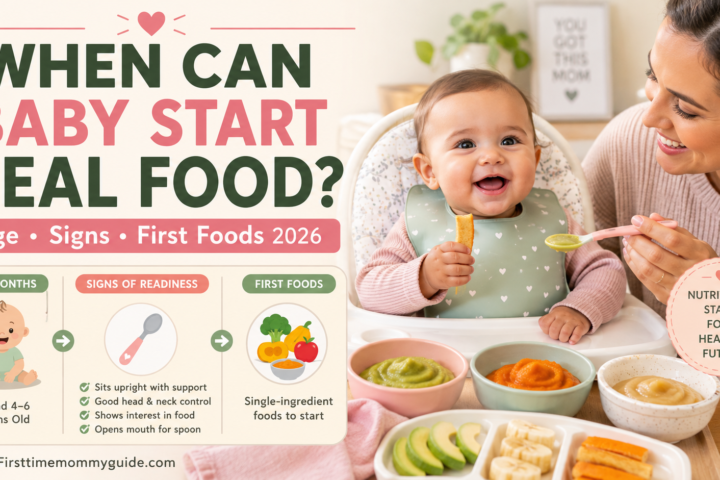
Watching your baby take their first bite of solid food is a milestone — but it also raises a lot of questions. What should go on that first spoon? Purees or finger foods? And how do you introduce common allergens safely?
First Foods for Baby at 6 Months, most babies are ready to start with iron-rich, single-ingredient foods — such as iron-fortified infant cereal, pureed or shredded meat, mashed lentils, or soft cooked vegetables — offered once a day alongside continued breast milk or formula.
Table of Contents
Key Takeaways
- Solid foods typically start around 6 months, based on developmental readiness, not age alone.
- Iron and zinc-rich foods should come first, since babies’ iron stores begin to drop around this age.
- Breast milk or formula remains the primary source of nutrition through the first year.
- Both purees and baby-led weaning (BLW) are AAP-supported approaches; many families combine them.
- Common allergens (egg, peanut, dairy, wheat) should be introduced early and one at a time, not delayed.
- Certain foods — whole grapes, nuts, popcorn, hot dog coins, honey — must be avoided due to choking or botulism risk.
Is Your Baby Ready for Solid Foods?
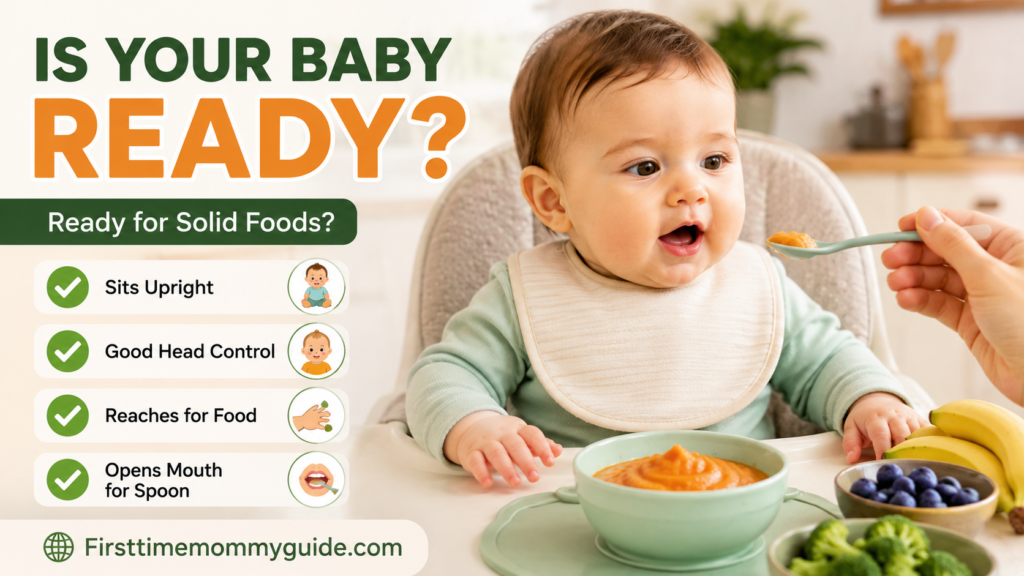
Age is only part of the picture. According to the AAP, babies who have doubled their birth weight and weigh about 13 pounds or more are typically ready for solid foods, which usually happens around 4–6 months.
Signs of readiness include:
- Sitting up with little to no support
- Good head and neck control
- Bringing hands or objects to the mouth
- Loss of the tongue-thrust reflex, which naturally pushes food back out (this reflex typically fades between 4 and 6 months)
- Showing interest in what others are eating — leaning forward, opening the mouth, or reaching
If your baby shows these signs but seems frustrated with a first attempt, it’s fine to pause and try again in a few days.
Best First Foods for Baby at 6 Months
The consistent theme across pediatric feeding guidelines is iron first. Iron helps carry oxygen through a baby’s body and brain, while zinc supports digestion and immune health — both become priorities around 6 months as a baby’s natural iron stores from birth begin to decline.
Iron- and Zinc-Rich First Foods
| Food | Serving Style |
|---|---|
| Iron-fortified infant cereal (oat is a common first choice) | Mixed with breast milk, formula, or water to a smooth consistency |
| Well-cooked, pureed meat or poultry | Pureed or finely shredded |
| Mashed lentils or beans | Well-cooked and mashed to avoid whole pieces |
| Tofu | Soft-cooked, mashed, or cut into baby-safe strips |
| Cooked egg (yolk and white) | Mashed or served as soft strips |
Fruits and Vegetables
| Food | Serving Style |
|---|---|
| Sweet potato | Cooked and mashed or pureed |
| Carrots | Cooked until very soft, then mashed or cut into safe strips |
| Peas | Mashed (whole peas can be a choking hazard) |
| Banana | Mashed; slippery when whole, so mash or coat in cereal |
| Avocado | Mashed; same slipperiness caution as banana |
| Pears and apples | Cooked until soft, then mashed or grated (raw apple is a top choking hazard) |
Expert tip: Start with single-ingredient foods for the first several days of introducing solids. This makes it far easier to identify the source if your baby has a reaction.
How Much and How Often Should Baby Eat?
At 6 months, solids are about exploration, not nutrition replacement. Breast milk or formula still provides the bulk of calories and nutrients.
| Age | Meals per Day | Typical Amount |
|---|---|---|
| 6–8 months | 1–2 meals per day | 1–3 teaspoons per sitting |
| 8–10 months | 2–3 meals per day | Small portions, finger foods introduced |
| 10–12 months | 3 meals per day, plus 1–2 snacks | Wider variety of textures |
Start with about half a spoonful and let your baby set the pace. Don’t be surprised by wrinkled noses or spit-out bites — this is a normal part of learning new tastes and textures.
Baby-Led Weaning vs. Purees: Which Is Right for You?
Both approaches are supported by the AAP, and most families end up blending the two.
| Factor | Purees (Spoon-Feeding) | Baby-Led Weaning (BLW) |
|---|---|---|
| Method | Parent spoon-feeds smooth or mashed food | Baby self-feeds soft, graspable pieces |
| Control | Parent controls pace and amount | Baby controls pace and amount |
| Mess level | Lower | Higher |
| Choking risk | Not shown to be higher than baby-led weaning in AAP-reviewed research | Not shown to be higher than traditional spoon-feeding when choking hazards are avoided |
| Best for | Parents who want more control early on | Parents comfortable with mess and self-feeding |
How they compare in practice: Roughly 80% of parents use a combination approach, offering finger foods for self-feeding alongside spoon-fed purees — a flexible way to support both independence and adequate iron intake.
Introducing Allergens Safely
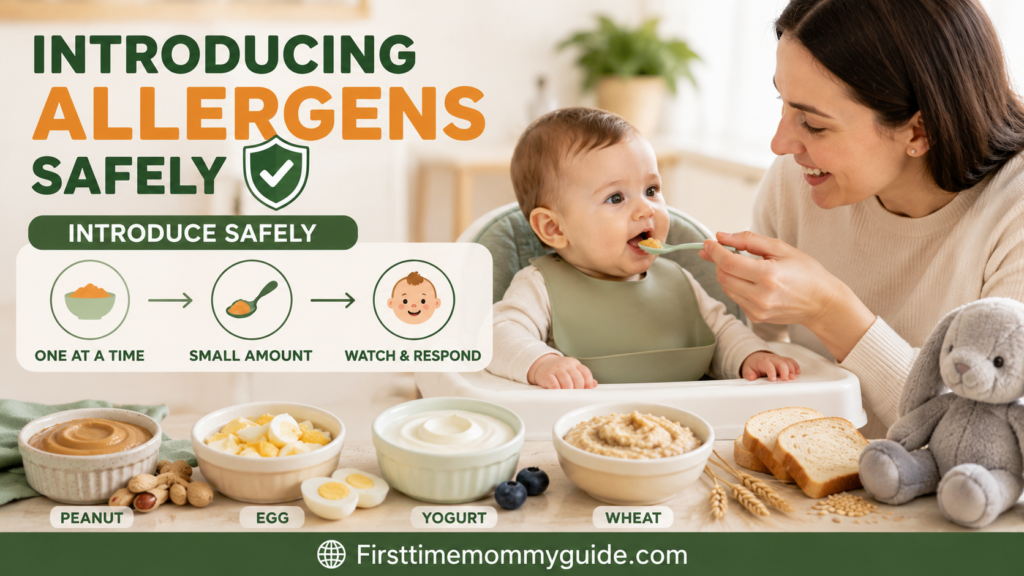
Guidance has shifted significantly in recent years. Current AAP guidance links early allergen introduction to lower rates of peanut allergy and other food allergies, and recommends introducing allergenic foods around 6 months rather than delaying them.
The top 9 allergens to introduce:
Egg, peanut, tree nuts, cow’s milk (in food form, not as a drink), wheat, soy, fish, shellfish, and sesame.
How to introduce allergens safely:
- Introduce one allergen at a time, in a form appropriate for a baby’s age and chewing ability.
- Offer it for 2–3 days before introducing the next new food.
- Serve peanut butter thinned and spread thin — never as a thick glob, which is a choking hazard.
- Watch for reaction signs: rash, hives, swelling, vomiting, or difficulty breathing.
- If you see a mild reaction like a rash, contact your pediatrician. For any signs of trouble breathing, seek immediate medical attention.
Foods and Choking Hazards to Avoid
Some foods pose a real choking risk because of their shape, size, or texture. The AAP lists hot dogs, nuts, seeds, and round candies among the top choking hazards for young children.
High-Risk Foods to Avoid Under Age 1–2
- Whole grapes, cherry tomatoes, or blueberries (quarter them instead)
- Hot dog coins
- Whole nuts and seeds
- Popcorn
- Hard candy
- Thick globs of nut butter
- Raw hard vegetables (carrots, celery) and unripe pear
- Honey — avoid entirely until age 1 due to botulism risk
Foods That Need Modification
- Apples: Apples are one of the foods babies choke on most often during baby-led weaning — peel, slice thin, and steam, or grate raw once your baby has a pincer grasp.
- Bananas, avocado, melon: These are slippery and can slide toward the airway; mash them or roll pieces in iron-fortified cereal for grip.
Safety rule of thumb: Food should be soft enough to mash between your fingers or on the roof of your mouth. Always supervise every meal, and keep your baby upright while eating.
Gagging vs. Choking: Know the Difference
- Gagging is loud — your baby may cough, sputter, or make a retching sound. This is a normal, protective reflex as babies learn to manage new textures.
- Choking is silent — your baby cannot cry, cough, or move air, and may turn blue.
If choking occurs, begin infant choking first aid immediately and call 911. Taking an infant CPR and choking-response class before starting solids is a smart, proactive step for any parent.
Common Mistakes to Avoid
- Adding cereal to a bottle. This increases choking risk and isn’t recommended by pediatric guidelines.
- Delaying allergens out of caution. Current research supports early, not delayed, introduction.
- Skipping iron-rich foods. Fruits and vegetables alone don’t meet a 6-month-old’s rising iron needs.
- Leaving a baby unsupervised while eating, even for a moment.
- Offering choking-hazard foods in adult-size pieces rather than age-appropriate shapes.
Sample First Week of Solids
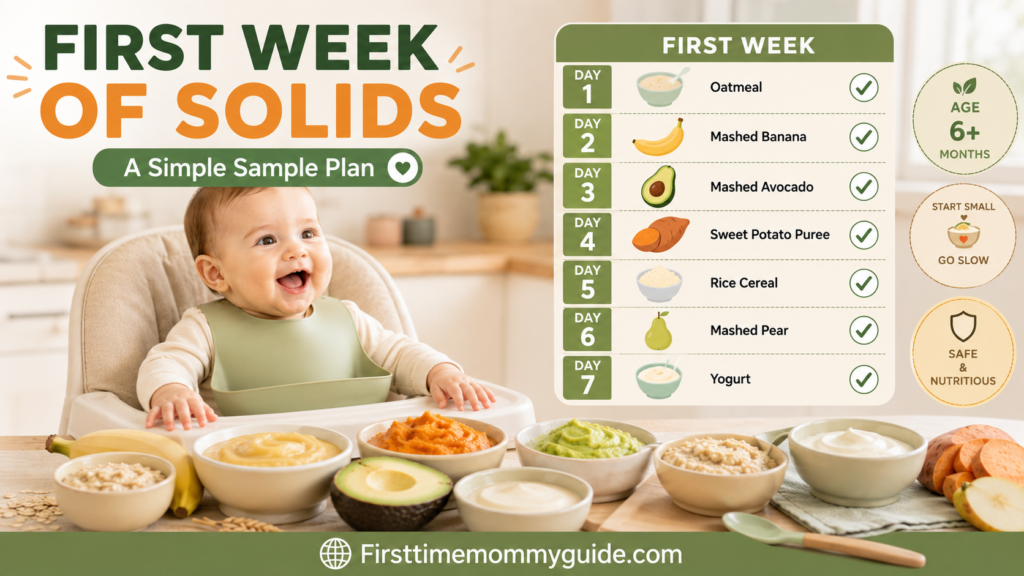
| Day | Food to Try |
|---|---|
| 1–3 | Iron-fortified infant cereal mixed with breast milk or formula |
| 4–6 | Pureed sweet potato |
| 7–9 | Mashed avocado |
| 10–12 | Pureed or shredded chicken |
| 13–15 | Mashed peas |
Spacing new foods by a few days makes it easier to spot any reaction before adding the next item.
Frequently Asked Questions (FAQs)
What is the first food to give a baby at 6 months?
Iron-fortified infant cereal or a pureed iron-rich food like meat or lentils is a common, pediatrician-supported starting point.
Can I start solids before 6 months?
Most guidelines recommend waiting until around 6 months, when a baby shows physical readiness signs, rather than starting earlier.
Do I need to give rice cereal first?
No — rice cereal is a traditional choice, but any iron-fortified single-grain cereal or pureed iron-rich food works as a first food.
Is baby-led weaning safer than purees, or vice versa?
Research reviewed by the AAP has not found either method to carry a significantly higher choking risk when hazard foods are avoided and meals are supervised.
When should I introduce peanut butter?
Around 6 months is appropriate, thinned and spread thin — never offered as a thick glob.
How do I know if my baby is allergic to a new food?
Watch for rash, hives, swelling, vomiting, or breathing difficulty within a few hours of eating; contact your pediatrician for mild symptoms and seek immediate care for breathing trouble.
Can babies have honey?
No — honey should be avoided until after the first birthday due to the risk of infant botulism.
How much solid food should a 6-month-old eat?
Typically 1–2 small meals a day, around 1–3 teaspoons per sitting, with breast milk or formula still providing most nutrition.
What foods should never be given to a baby under 1?
Honey, whole nuts, whole grapes, popcorn, hard candy, and hot dog coins are among the foods to avoid due to choking or botulism risk.
Should I mix breast milk or formula into purees?
Yes, this can smooth out texture and make new foods more familiar and easier to accept.
Is it normal for my baby to refuse new foods?
Yes — many babies need to be offered a food multiple times before accepting it; patience and repeated exposure help.
Do I need to introduce one food at a time?
Yes, spacing new foods by 3–5 days makes it easier to identify the cause if a reaction occurs.
What’s the difference between gagging and choking?
Gagging is loud and protective; choking is silent and requires immediate action.
Can my baby drink cow’s milk at 6 months?
No — cow’s milk shouldn’t be a primary drink until 12 months, though pasteurized yogurt and cheese are fine earlier.
What texture should first foods be?
Smooth purees or very soft mashed foods that a baby can manage with their tongue and gums.
Is baby food safe to make at home?
Yes, homemade purees from cooked, mashed, or blended fruits, vegetables, and proteins are a common and safe option.
When can babies start finger foods?
Many babies begin exploring soft finger foods around 8 months, once they can grasp and bring food to their mouth.
Do I need to avoid all allergens until age 1?
No — current guidance supports introducing top allergens around 6 months rather than delaying them.
What should I do if my baby chokes?
Begin infant choking first aid immediately and call 911; taking an infant CPR class in advance is strongly recommended.
How do I make foods like banana or avocado safer?
Mash them or roll pieces in iron-fortified cereal to reduce slipperiness, since slippery foods can slide toward the airway.
Conclusion
Starting solids is less about finding the “perfect” first food and more about safe preparation, patient introduction, and consistent iron intake.
Whether you choose purees, baby-led weaning, or a mix of both, the fundamentals stay the same: soft textures, one new food at a time, close supervision, and continued breast milk or formula as the nutritional foundation.
This article provides general information and is not a substitute for personalized medical advice.
Talk with your pediatrician before starting solids or introducing allergens, especially if your baby has a family history of food allergies or other health considerations.

Dilawar Mughal
Founder and editor, First Time Mommy Guide
I research every guide against what the NHS, the AAP and the WHO publish, then write it in plain English — because most new parents are reading with one hand free, not comparing clinical guidelines. I'm not a doctor or a midwife. Every health claim on this site is sourced and linked so you can check it yourself, and anything urgent belongs with your health visitor or GP, not a blog.