General information, not medical advice. Every baby is different — if anything worries you, speak to your midwife, health visitor or GP rather than waiting.
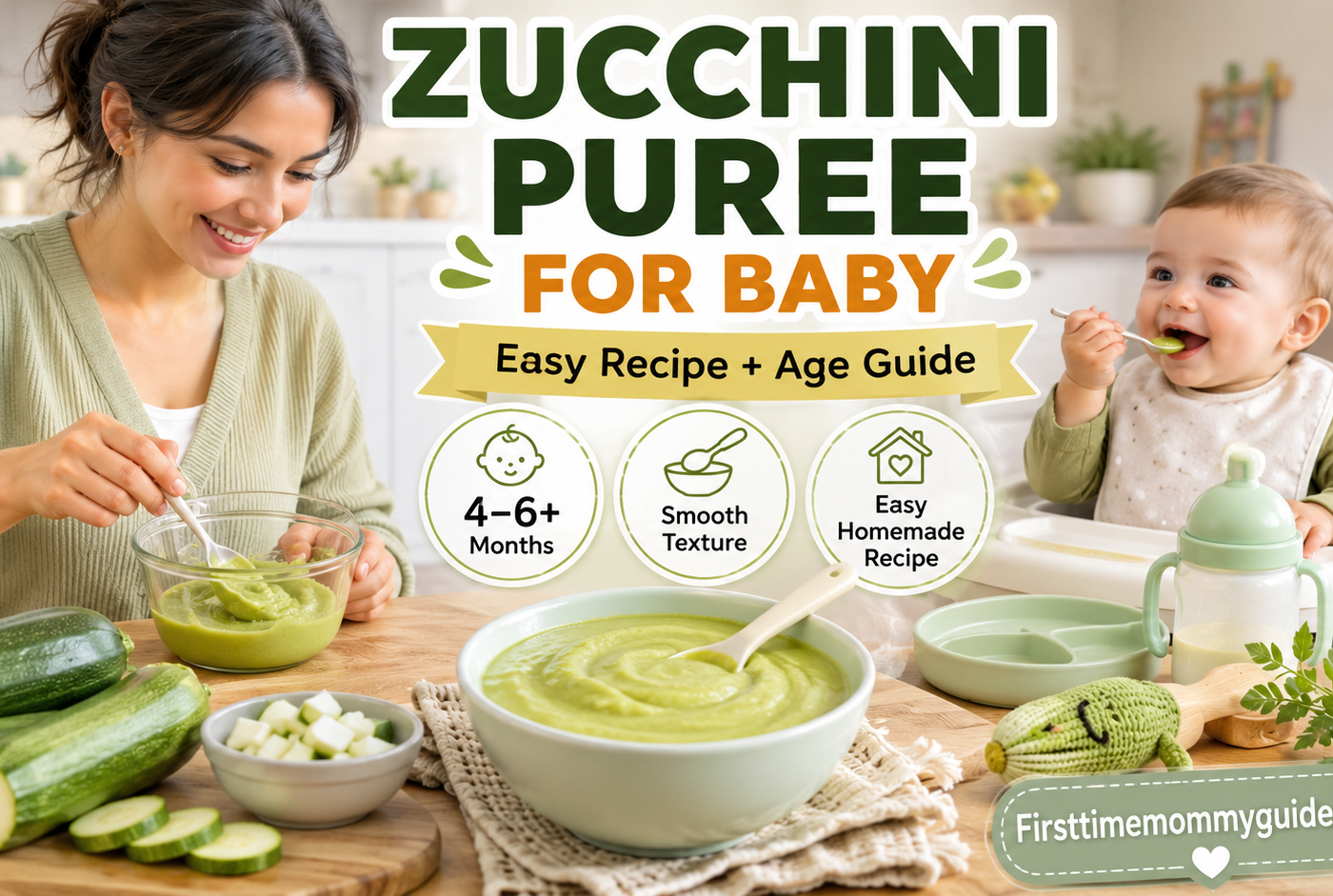
Zucchini puree for baby is one of the easiest first foods you can make — it needs just one ingredient, a steamer, and a blender.
This mild, naturally sweet summer squash is gentle on a baby’s digestive system, blends into a silky-smooth texture, and mixes well with almost any other fruit or vegetable puree. Below, you’ll find a foolproof recipe, an age-by-age serving guide, storage and freezing instructions, flavor pairings, and answers to the questions parents ask most.
Quick answer: To make zucchini puree for baby, wash and slice zucchini, steam it for 8–10 minutes until fork-tender, then blend with a splash of steaming water, breast milk, or formula until smooth.
No salt, sugar, or honey is needed. Zucchini can typically be introduced around 6 months, once a baby shows signs of readiness for solid foods.
Table of Contents
Key Takeaways
- Zucchini is a low-allergen, mild-tasting first food that most babies can try around 6 months of age.
- You don’t need to peel zucchini — the skin is soft once cooked and holds many of the nutrients.
- Steaming (rather than boiling) preserves the most vitamins and minerals.
- Zucchini puree freezes well for up to 3 months in ice cube trays.
- Always check with your pediatrician before starting solids, especially if your baby has a history of eczema or existing food allergies.
Why Zucchini Is a Great First Food for Babies
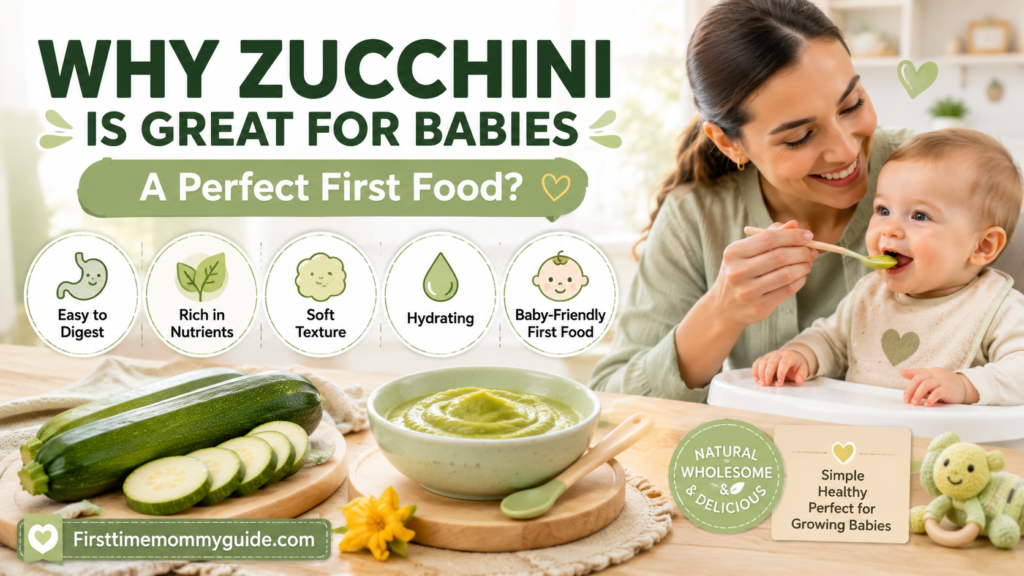
Zucchini (also called courgette) is technically a fruit but is used like a vegetable in cooking. It has a high water content, which gives the puree a naturally thin, easy-to-swallow texture — perfect for a baby’s first tastes of solid food. Its flavor is subtle, so it pairs well with other first foods without overwhelming a developing palate.
Nutritionally, zucchini offers a helpful mix of vitamins and minerals for a growing baby. According to USDA nutrient data, a cooked serving provides small to moderate amounts of vitamin A, vitamin K, and folate, along with potassium, calcium, magnesium, and phosphorus. It’s also a good source of vitamin C and vitamin B6, both of which support immune function and iron absorption.
Nutrition snapshot (per 100 g, cooked/raw baby zucchini):
| Nutrient | Amount | Why It Matters for Baby |
|---|---|---|
| Calories | ~21 kcal | Low-calorie, nutrient-dense first food |
| Potassium | 261–459 mg | Supports muscle and nerve function |
| Vitamin C | 18–34 mg | Supports immunity, helps iron absorption |
| Vitamin A | 200 IU / 10–25 mcg RAE | Supports eye and immune health |
| Folate | 24 mcg | Supports cell growth and development |
| Fiber | 1–1.2 g | Supports healthy digestion |
| Sodium | 3–8 mg | Naturally low — ideal for babies |
Figures compiled from USDA and nutrition-database sources; values vary slightly by variety and cooking method.
When Can Babies Eat Zucchini Puree?
Most babies can start zucchini puree around 6 months of age, once they show developmental signs of readiness for solids. The American Academy of Pediatrics notes that babies are generally ready for solid foods at approximately 6 months, though signs of readiness matter more than the calendar date. Look for these cues before offering any puree, zucchini included:
- Can sit upright with little to no support
- Has good head and neck control
- Shows interest in food (watching you eat, reaching for your plate)
- Has lost the tongue-thrust reflex (no longer automatically pushes food out of the mouth)
If your baby isn’t showing these signs at exactly 6 months, that’s normal — wait another week or two and try again.
Is Zucchini a Common Allergen?
No. Zucchini is not one of the nine major food allergens recognized in the U.S. and is considered a low-risk first food. That said, any food can theoretically trigger a reaction in a sensitive baby, so it’s still smart to introduce it on its own for the first time and watch for signs like rash, vomiting, or unusual fussiness. Once tolerated, zucchini is a great “canvas” food to combine with the top allergens (like egg, peanut butter, or dairy) that pediatric guidelines recommend introducing early and often.
How to Make Zucchini Puree for Baby (Step-by-Step)
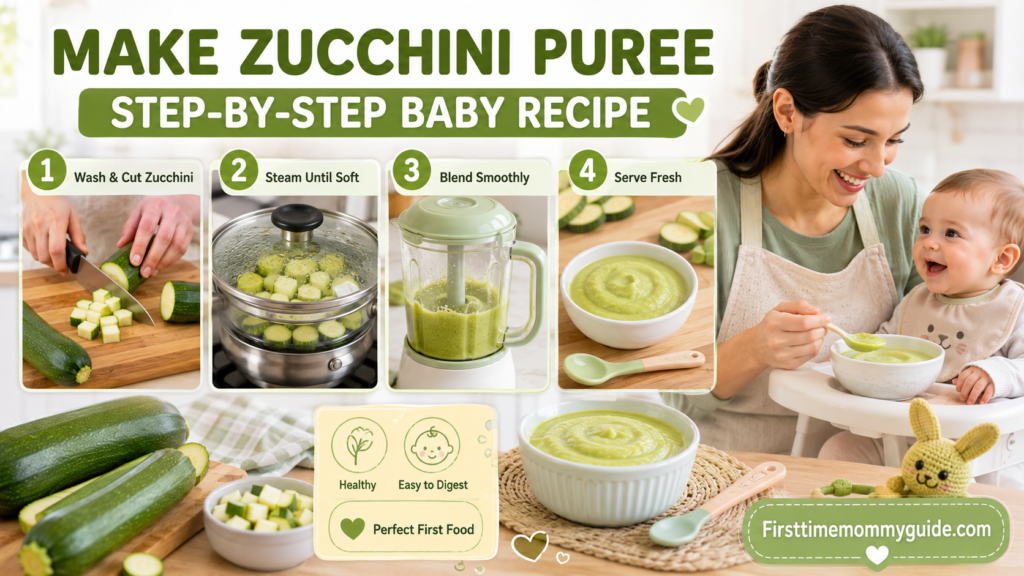
This method makes a smooth, single-ingredient puree that’s perfect for a baby’s first tastes. Steaming is the recommended cooking method because it preserves more nutrients than boiling, where vitamins can leach into the cooking water.
What You’ll Need
- 2–3 medium zucchini, washed
- Steamer basket and saucepan (or a microwave-safe steaming dish)
- Blender or food processor
- Breast milk, formula, or reserved steaming water (to thin the puree)
Steps
- Wash and trim. Rinse the zucchini well and cut off both ends.
- Slice. Cut the zucchini into rounds or half-moons for even, quick cooking.
- Steam. Add 1–2 inches of water to a saucepan, bring to a boil, then steam the zucchini in a basket for 8–10 minutes, until fork-tender. Reserve the steaming liquid.
- Cool slightly. Let the zucchini cool for a few minutes so it’s safe to blend.
- Blend. Transfer to a blender and puree until completely smooth, adding steaming water, breast milk, or formula a tablespoon at a time until you reach the right consistency.
- Adjust texture. For younger babies (6 months), blend thinner. For older babies (8–9 months+), leave a bit more texture or mash with a fork instead.
- Serve or store. Serve warm or at room temperature; refrigerate or freeze the rest.
Pro tip: You don’t need to peel zucchini. The skin softens completely when steamed and blends smooth, and it’s where a good portion of the fiber and antioxidants live.
Age-by-Age Serving Guide
| Age | Texture | How to Serve |
|---|---|---|
| 6 months | Very smooth, thin puree | Spoon-fed, single-ingredient or mixed with breast milk/formula |
| 7–8 months | Thicker puree, mashed with soft lumps | Spoon-fed; can begin mixing with grains, meats, other veggies |
| 9–10 months | Soft grated, small diced, or chopped | Self-feeding practice with a pincer grasp |
| 12+ months | Roasted sticks, raw matchsticks, sautéed | Finger food, family meals, raw if very thin-cut |
Storage and Freezing Guidelines
| Method | How Long It Lasts |
|---|---|
| Refrigerator (airtight container) | 3–5 days |
| Freezer (ice cube trays, then bagged) | Up to 3 months |
| Thawing | Overnight in the fridge, or set the sealed cube in a bowl of warm water |
Freeze leftover puree flat in ice cube trays, then transfer the frozen cubes into a labeled freezer bag. This makes portioning single servings simple and helps you build a rotating stock of baby food without extra prep each day. Always reheat thoroughly and cool to a safe, lukewarm temperature before serving.
Flavor Combinations: What to Mix With Zucchini Puree
One of the best things about zucchini is how well it plays with other first foods. Try combining it with:
- Apple or pear — adds natural sweetness
- Sweet potato or potato — adds creaminess and calories
- Carrot — boosts color, beta-carotene, and sweetness
- Pea or spinach — adds iron and a vibrant green color
- Avocado — adds healthy fats for brain development
- Oats or rice cereal — adds thickness and iron fortification
- Basil, oregano, cumin, or mild curry powder — introduces new flavors early (no salt needed)
Common Mistakes to Avoid
- Boiling instead of steaming. Boiling causes more nutrient loss because vitamins leach into the water.
- Adding salt, sugar, or honey. Babies don’t need added salt or sugar, and honey should never be given before 12 months due to infant botulism risk.
- Over-thinning the puree. A watery puree can be harder for a baby to manage on the spoon; add liquid gradually.
- Skipping the skin. Peeling removes fiber and nutrients unnecessarily — the skin purees smooth once cooked.
- Serving raw zucchini too early. Raw zucchini is firm and can be a choking risk; save raw pieces for babies 12 months and older, cut very thin.
Pros and Cons of Zucchini as a First Food
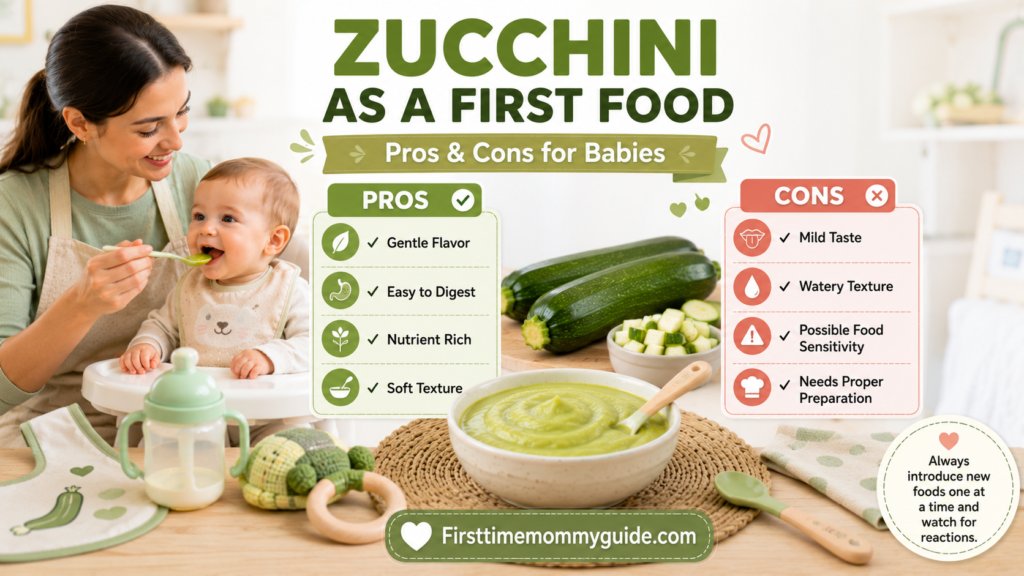
| Pros | Cons |
|---|---|
| Mild flavor, easy to combine with other foods | Very watery on its own; may need thickening for some babies |
| Low allergen risk | Some babies dislike the plain, slightly grassy taste at first |
| Freezes and reheats well | Nutrient content is modest compared to iron-rich first foods |
| Simple, one-ingredient prep | Needs pairing with iron/protein-rich foods for a balanced meal |
Frequently Asked Questions (FAQs)
1. What age can babies have zucchini puree?
Most babies can try zucchini puree around 6 months, once they show signs of readiness for solids, such as sitting with support and good head control.
2. Do I need to peel zucchini for baby food?
No. Zucchini skin becomes soft once steamed and blends smoothly. It’s safe to leave on and contains additional fiber and nutrients.
3. Should I remove the seeds before pureeing?
No. The seeds in young zucchini are soft enough to puree completely and don’t need to be removed.
4. Is zucchini a common allergen for babies?
No. Zucchini is not among the recognized major food allergens and is generally considered a low-risk first food.
5. How long does homemade zucchini puree last in the fridge?
Zucchini puree keeps for 3–5 days in an airtight container in the refrigerator.
6. Can I freeze zucchini puree?
Yes. Freeze it in ice cube trays, then transfer to a freezer bag for up to 3 months.
7. What’s the best way to cook zucchini for baby food?
Steaming is recommended because it retains more nutrients than boiling, where vitamins can leach into the cooking water.
8. Can I microwave zucchini instead of steaming it?
Yes, microwaving in a covered, microwave-safe dish with a small amount of water is a quick alternative that also helps retain nutrients.
9. What can I mix with zucchini puree for extra flavor?
Apple, pear, sweet potato, carrot, pea, spinach, avocado, or mild herbs and spices like basil or cumin all pair well.
10. Is zucchini a good first food, or should I start with something else?
Many pediatric feeding guides recommend starting with iron-rich foods like fortified cereal or pureed meat, then rounding out the diet with vegetables like zucchini for variety and texture practice.
11. Can zucchini cause constipation or diarrhea in babies?
Zucchini’s high water and moderate fiber content generally supports healthy digestion, though every baby responds differently to new foods.
12. What texture should zucchini puree be at 6 months?
It should be thin and completely smooth, with no lumps, for a baby’s first spoon-feeding experiences.
13. When can I stop pureeing and start giving chunkier zucchini?
Around 8–9 months, many babies can handle mashed or soft, small-diced zucchini as they build chewing and self-feeding skills.
14. Is raw zucchini safe for babies?
Raw zucchini is firmer and harder to chew, so it’s best reserved for babies around 12 months and older, cut into very thin sticks or matchsticks.
15. Can I use frozen zucchini instead of fresh?
Yes. Frozen zucchini can be steamed from frozen and blended the same way as fresh; texture may be slightly softer.
16. Does zucchini need to be organic for baby food?
Organic isn’t required, but washing zucchini thoroughly under running water helps reduce residue regardless of how it was grown.
17. Can zucchini puree be part of baby-led weaning instead of spoon-feeding?
Yes. For baby-led weaning, offer soft-cooked zucchini spears or sticks instead of a smooth puree so your baby can self-feed.
18. Is zucchini high in natural sugar?
No. Zucchini is low in natural sugar and calories compared to many other baby-friendly fruits and vegetables.
19. Can I add breast milk or formula to zucchini puree?
Yes. Adding breast milk or formula is a common way to thin the puree and add familiar flavor for a baby’s first tastes.
20. What’s the difference between zucchini and yellow squash for baby food?
They’re closely related and can generally be prepared and served to babies the same way, with very similar nutrition profiles.
Conclusion
Zucchini puree for baby is a simple, low-allergen first food that’s easy to prepare, freezes beautifully, and pairs well with almost anything else in your baby’s growing diet.
Start with a thin, smooth puree around 6 months, adjust the texture as your baby grows, and always check in with your pediatrician about your baby’s individual readiness and any allergy concerns.
With just one ingredient and a steamer, you can have a batch of homemade baby food ready for the week in under 20 minutes.

Dilawar Mughal
Founder and editor, First Time Mommy Guide
I research every guide against what the NHS, the AAP and the WHO publish, then write it in plain English — because most new parents are reading with one hand free, not comparing clinical guidelines. I'm not a doctor or a midwife. Every health claim on this site is sourced and linked so you can check it yourself, and anything urgent belongs with your health visitor or GP, not a blog.