General information, not medical advice. Every baby is different — if anything worries you, speak to your midwife, health visitor or GP rather than waiting.
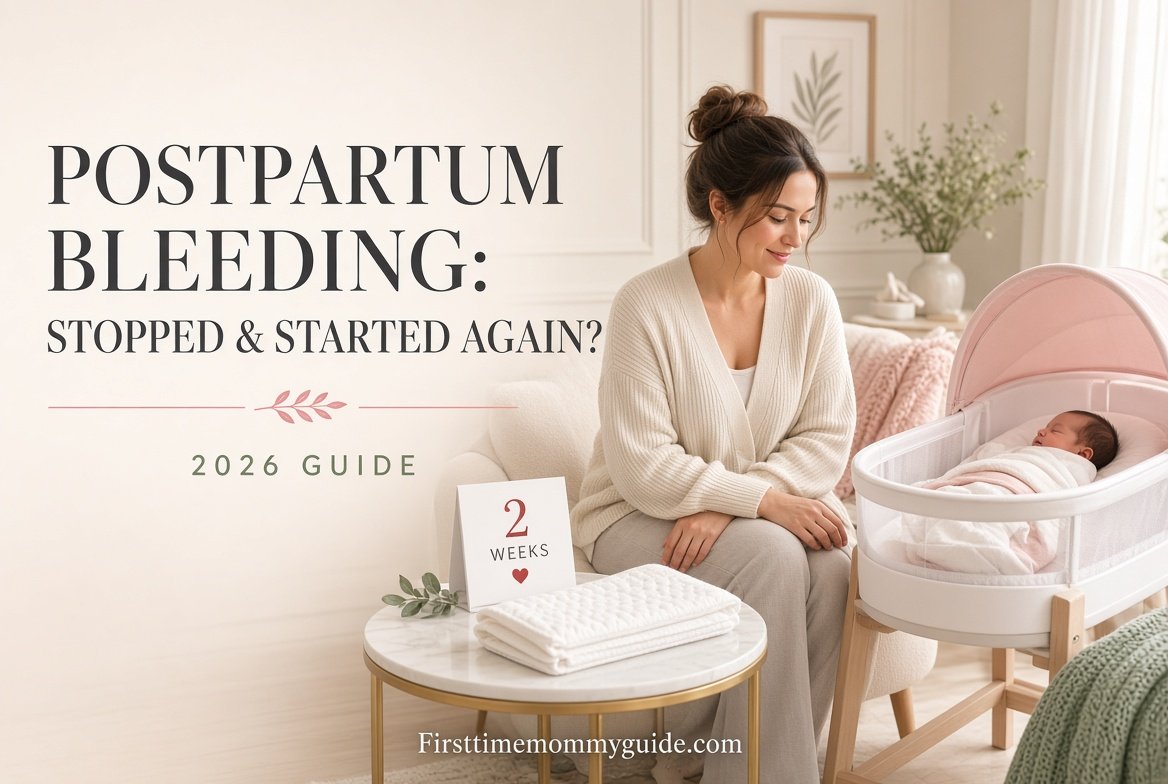
If your 2 Weeks Postpartum Bleeding Stopped and Started Again, postpartum bleeding slowed down, seemed to stop, and then came back around the two-week mark, you’re not imagining it, and you’re not alone.
This pattern is common, and most of the time it’s your body’s normal healing process rather than an emergency.
Table of Contents
2 Weeks Postpartum Bleeding Stopped and Started Again

Bleeding that stops and restarts around 2 weeks postpartum is usually caused by increased activity, a delayed hormone shift, or your uterus shedding leftover tissue from the placental site.
It’s typically not dangerous if the blood is light-to-moderate, pink or brown, and doesn’t have a bad odor. Heavy bleeding, large clots, fever, or foul smell are red flags that need medical attention.
What Counts as Normal Postpartum Bleeding (Lochia)
Postpartum bleeding is called lochia. It’s your uterus clearing out blood, mucus, and leftover tissue from where the placenta was attached.
Lochia normally moves through three color stages over several weeks, gradually getting lighter before stopping completely.
| Stage | Name | Typical Timing | Color |
|---|---|---|---|
| 1 | Lochia rubra | Days 1–4 | Bright red, heavier flow |
| 2 | Lochia serosa | Days 4–10 | Pink or brownish, lighter |
| 3 | Lochia alba | Days 10–28+ | Yellowish-white or light |
By week two, many women are in the serosa or alba stage. A sudden return of red or pink bleeding after it had slowed is where most of the confusion — and worry — comes from.
Why Bleeding Might Stop and Then Start Again at 2 Weeks

Increased Activity or Overexertion
Standing, walking more, lifting the baby, or doing light chores can increase blood flow to the healing uterine lining. This often triggers a short return of bleeding.
Doing Too Much Too Soon
Rest allows the uterus to contract and heal. If you push past your energy levels, bleeding can restart as a signal to slow down.
Uterus Still Involuting (Shrinking Back)
Your uterus takes about 6 weeks to shrink back to its pre-pregnancy size. This process isn’t perfectly linear, and it can cause on-and-off spotting or bleeding.
Small Pieces of Tissue Still Shedding
The site where the placenta attached heals gradually. Small amounts of leftover tissue can release later, causing a short bleeding episode.
Hormonal Fluctuations
Estrogen and progesterone are resetting after birth. This shift can affect the uterine lining and cause irregular spotting.
Breastfeeding-Related Contractions
Nursing releases oxytocin, which makes the uterus contract. These contractions can sometimes push out extra blood or clots.
Early Return of Menstrual-Like Spotting
Some women, especially those not exclusively breastfeeding, notice early hormonal spotting that can look like a restart of postpartum bleeding.
Possible Retained Placental Tissue
Less commonly, small retained fragments can cause bleeding to return, sometimes with a foul smell or larger clots. This needs medical evaluation.
Postpartum Infection (Endometritis)
An infection in the uterine lining can cause bleeding to restart along with fever, pain, or a bad odor. This requires prompt treatment.
Secondary Postpartum Hemorrhage
Heavy bleeding between 24 hours and 12 weeks after birth is medically classified as secondary postpartum hemorrhage and always needs urgent care.
Normal vs. Not Normal: Quick Comparison
| Sign | Normal | Needs Medical Attention |
|---|---|---|
| Color | Pink, brown, light red | Bright red and heavy, or suddenly dark with clots |
| Amount | Soaks less than 1 pad per hour | Soaks 1+ pad per hour for 2+ hours |
| Clots | Small, occasional | Larger than a golf ball, or frequent |
| Smell | Mild, like a normal period | Foul or fishy odor |
| Other symptoms | None | Fever, chills, dizziness, severe cramping |
| Duration of episode | A few hours to 1–2 days | Increasing or not slowing after 2 days |
When to Call Your Doctor Right Away
Call your OB-GYN, midwife, or go to urgent care if you notice any of the following:
- Soaking through a pad in an hour or less, for two hours in a row
- Blood clots larger than a golf ball
- Fever over 100.4°F (38°C)
- Foul-smelling discharge
- Severe abdominal or pelvic pain
- Dizziness, lightheadedness, or a racing heart
- Bleeding that keeps getting heavier instead of lighter
These can be signs of infection, retained tissue, or hemorrhage, all of which are treatable when caught early.
How to Manage a Postpartum Bleeding Restart at Home
- Rest as much as possible for the next 24–48 hours
- Avoid heavy lifting, including anything heavier than your baby
- Stay hydrated and eat iron-rich foods to support recovery
- Use pads, not tampons, until fully cleared by your provider
- Track pad count and clot size so you can report changes accurately
- Avoid strenuous exercise until bleeding has stayed light for several days
Postpartum Bleeding vs. Your First Period: How to Tell the Difference
It can be hard to tell whether bleeding at 2 weeks is lochia restarting or your period returning early.
- Lochia restart usually follows activity, is inconsistent, and connects back to your birth recovery timeline.
- Early period tends to follow a more period-like pattern, is less common this early if breastfeeding, and may come with typical PMS symptoms.
If you’re unsure, mention the pattern to your provider at your postpartum visit, or sooner if any warning signs above are present.
Common Mistakes to Avoid
- Ignoring heavy bleeding because “it’s probably normal”
- Returning to full activity levels too quickly
- Using tampons or menstrual cups before medical clearance
- Not tracking how many pads are used per day
- Waiting too long to call a provider when a fever appears
Expert Tips for Faster Recovery

- Treat any bleeding restart as a cue to rest more, not less
- Keep your 6-week postpartum appointment even if you feel fine
- Ask your provider specifically about this pattern if it happens more than once
- Write down the date, duration, and color of each bleeding episode to share at your visit
Frequently Asked Questions (FAQs)
Is it normal for postpartum bleeding to stop and start again at 2 weeks?
Yes, this is common and usually caused by activity, uterine healing, or hormone shifts. It’s normal as long as bleeding stays light-to-moderate without fever or foul smell.
How long can postpartum bleeding stop and restart?
It can happen on and off for up to 6 weeks as your uterus fully heals. Each restart episode should be shorter and lighter than the last.
What color should postpartum bleeding be at 2 weeks?
Most women are in the pink, brown, or light-red stage by 2 weeks. Bright red heavy bleeding this late deserves a call to your provider.
Can overdoing it cause postpartum bleeding to return?
Yes, standing, walking, or lifting too much can trigger a temporary return of bleeding. Resting usually helps it settle back down.
Does breastfeeding affect postpartum bleeding?
Yes, breastfeeding releases oxytocin, which causes uterine contractions. This can push out extra blood, sometimes causing brief bleeding spikes.
When should I worry about postpartum bleeding restarting?
Worry if you’re soaking a pad hourly, passing large clots, running a fever, or noticing a foul smell. These need same-day medical attention.
Can retained placenta cause bleeding to stop and start?
Yes, small retained tissue fragments can cause bleeding to return, sometimes with odor or clots. An ultrasound can confirm this.
Is fresh red blood at 2 weeks postpartum normal?
A small amount can be normal after activity, but persistent bright red heavy bleeding this late is not typical and should be checked.
How much bleeding is too much 2 weeks after birth?
Soaking more than one pad per hour for two or more hours in a row is considered too much and needs prompt evaluation.
Can postpartum bleeding restart due to infection?
Yes, an infection like endometritis can cause bleeding to return along with fever, pain, and foul-smelling discharge.
Is it my period or postpartum bleeding at 2 weeks?
It’s more likely lochia this early, especially if breastfeeding. A true period returning this soon is less common but possible.
What is secondary postpartum hemorrhage?
It’s heavy bleeding occurring between 24 hours and 12 weeks after birth. It’s a medical term for delayed heavy bleeding that needs urgent care.
Should I use a pad or tampon for postpartum bleeding?
Always use pads, not tampons, until your provider clears you, usually at your 6-week checkup, to avoid infection risk.
Can stress cause postpartum bleeding to restart?
Stress itself doesn’t directly cause bleeding, but it can affect rest and activity levels, which indirectly influence bleeding patterns.
How many pads a day is normal at 2 weeks postpartum?
Light spotting requiring a few pads a day is normal. Needing a full pad every hour or two is not and should be reported.
Can postpartum bleeding restart from constipation or straining?
Straining can increase abdominal pressure and may briefly affect bleeding, though it’s less common than activity-related causes.
Does C-section recovery affect when bleeding stops and starts?
Yes, C-section recovery can follow a similar or slightly extended bleeding pattern compared to vaginal birth, with the same warning signs applying.
What does brown discharge mean at 2 weeks postpartum?
Brown discharge usually means older blood is clearing out and is a normal part of the lochia alba stage.
Can large clots at 2 weeks postpartum be dangerous?
Yes, clots larger than a golf ball can signal retained tissue or hemorrhage and should be evaluated the same day.
When does postpartum bleeding usually fully stop?
Most women stop bleeding by 4 to 6 weeks postpartum, though timing varies by individual and delivery type.
Should I go to the ER for postpartum bleeding that restarted?
Go to the ER or call your provider immediately if bleeding is heavy, you feel dizzy, or you have fever and foul-smelling discharge.
Can pelvic floor exercises restart postpartum bleeding?
Gentle pelvic floor exercises are usually fine, but overly strenuous core or ab work too soon can trigger bleeding to return.
Is spotting after 2 weeks postpartum a sign something is wrong?
Light spotting alone usually isn’t a problem. It becomes concerning only when paired with pain, fever, odor, or heavy flow.
How can I track postpartum bleeding accurately for my doctor?
Note the date, pad count per day, color, and any clot size each time bleeding changes, then share this log at your appointment.
Conclusion
Bleeding that stops and starts again around 2 weeks postpartum is common and usually tied to activity, healing, or hormones rather than a serious problem.
Pay attention to the amount, color, and any accompanying symptoms like fever or foul odor. When in doubt, it’s always safer to call your provider than to wait it out. Your body is doing important healing work, and giving it the rest it needs is often the simplest fix.

Dilawar Mughal
Founder and editor, First Time Mommy Guide
I research every guide against what the NHS, the AAP and the WHO publish, then write it in plain English — because most new parents are reading with one hand free, not comparing clinical guidelines. I'm not a doctor or a midwife. Every health claim on this site is sourced and linked so you can check it yourself, and anything urgent belongs with your health visitor or GP, not a blog.