General information, not medical advice. Every baby is different — if anything worries you, speak to your midwife, health visitor or GP rather than waiting.
Is It Normal for Umbilical Cord Stump to Bleed After Falling Off? A small spot of blood or slight oozing around a newborn’s belly button can sometimes happen as the umbilical cord stump separates and the area continues to heal. While a tiny amount of bleeding may be part of normal healing, parents may understandably worry when they notice blood after the stump has fallen off.
The belly button area may take some time to fully heal after the cord separates. A small amount of dried blood, mild moisture, or a spot of blood on clothing can occur as the remaining tissue heals. However, persistent bleeding, increasing redness, swelling, pus-like discharge, a foul smell, or signs that the baby seems unwell can indicate a problem that needs medical attention.
Knowing what normal healing looks like can help parents feel more confident while caring for their newborn. Understanding how to keep the area clean and dry, what signs to monitor, and when to contact a healthcare professional can make the days after the umbilical cord falls off much less stressful.
Table of Contents
Is It Normal for Umbilical Cord Stump to Bleed After Falling Off?
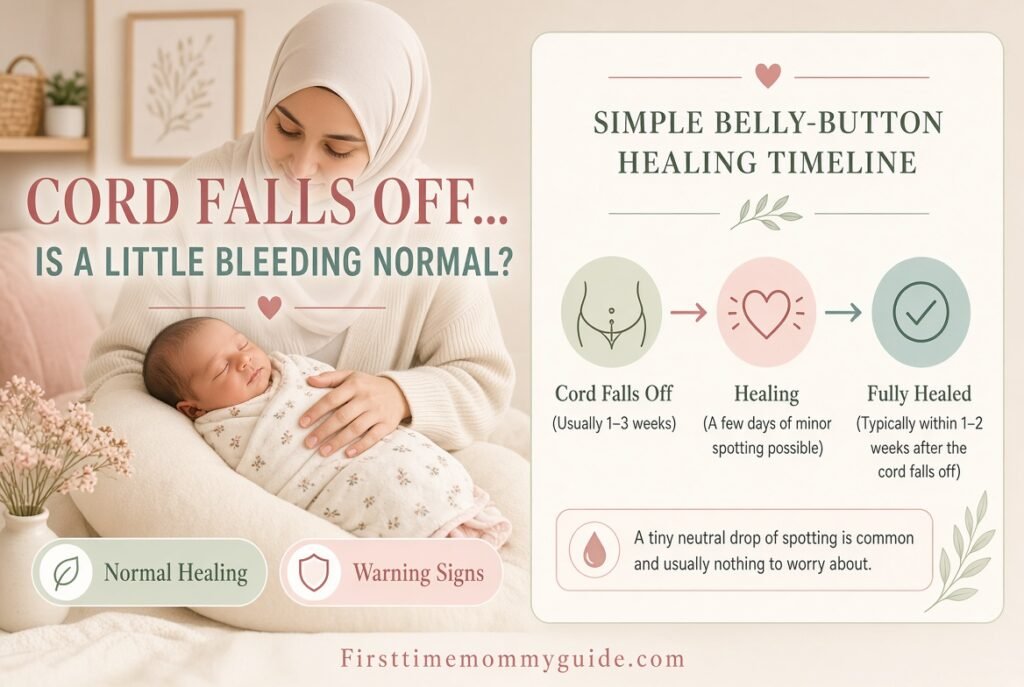
Yes. A few drops of blood around the time the stump separates, or shortly after, are normal. The belly button is healing, much like a scab that lifts.
Call your baby’s doctor if the bleeding is more than a few drops, keeps returning, or does not stop with gentle pressure. Call right away for pus, spreading redness, a foul smell, or fever.
Key Takeaways
- A few drops of blood when the stump falls off are common and usually harmless.
- Normal bleeding is light and stops quickly with gentle pressure.
- Most stumps fall off between 1 and 3 weeks after birth.
- Never pull the stump off, even if it hangs by a thread.
- Heavy bleeding, bleeding that returns after 3 days, or bleeding with infection signs needs a doctor.
- Fever of 100.4°F (38°C) or higher in a baby under 12 weeks is an urgent call.
Umbilical Cord: What Is It?
The umbilical cord is a flexible, rope-like tube that connects your baby to the placenta during pregnancy. It carries oxygen and nutrients to your baby and carries waste away.
The cord contains three blood vessels: two arteries and one vein. These vessels are why the cord can bleed when it is cut or disturbed.
Why the Cord Is Cut After Birth
Once your baby breathes and feeds on their own, the cord is no longer needed. A healthcare professional clamps and cuts it soon after birth.
The cord has no nerve endings. Cutting it does not hurt your baby.
Umbilical Cord Stump: What Is It?
The umbilical cord stump is the small piece of cord left attached to your baby’s belly button after the cord is cut. It is usually about half an inch to an inch long.
At first, it looks yellowish-green, moist, and jelly-like. Over the next days, it dries, shrinks, and turns brown or black.
Why the Stump Changes Color
The color change is a sign that the tissue is drying out. It is normal and expected.
A dry, dark, stiff stump is healthier than a wet one. Moisture slows separation and raises the chance of irritation.
What the Stump Is Not
The stump is not a wound that needs bandaging. It also does not need cutting or trimming by you.
Its only job now is to dry up and fall away on its own schedule.
Umbilical Cord Stump Bleeding: What Is It and Why Does It Happen?
Umbilical cord stump bleeding means blood seen at or around the stump, either before or after it separates. It is common in small amounts.
The stump is a healing wound. Tiny blood vessels at its base can leak a little as the last tissue detaches.
Common Reasons for Light Bleeding
- The stump catches on clothing or the diaper.
- The diaper rubs against the area.
- The scab at the base loosens as the stump gets ready to fall off.
- The stump separates and leaves a small raw area.
What Normal Bleeding Looks Like
Normal bleeding is a few drops or a small spot on the diaper or onesie. It may be bright red at first and brown once dry.
It stops quickly, often within a few minutes, when you apply gentle pressure.
What Concerning Bleeding Looks Like
Concerning bleeding is heavier, keeps flowing, or comes back with every wipe. The American Academy of Pediatrics (AAP) says to call your baby’s doctor immediately if the cord actively bleeds.
Image suggestion: Illustration comparing a normal small blood spot to a concerning larger bleed on a diaper. Filename:
normal-vs-concerning-umbilical-cord-bleeding.webpALT text: Illustration comparing a normal few drops of blood from a newborn’s umbilical cord stump with heavier bleeding that needs a doctor.
Newborn Belly Button Bleeding After the Cord Falls Off: What Is Normal?
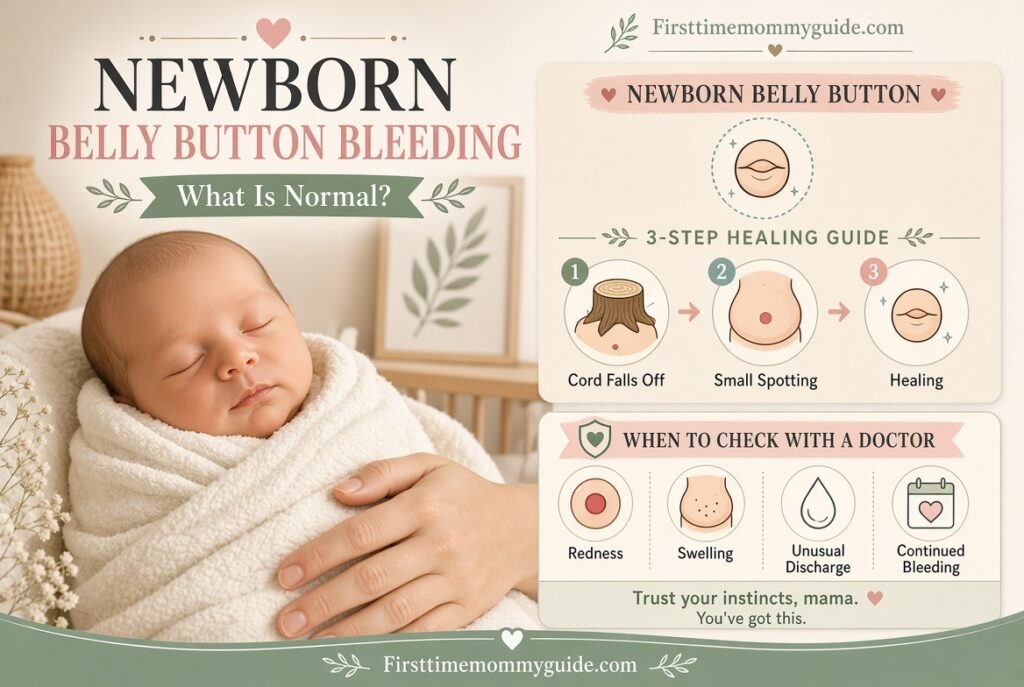
After the stump falls off, the belly button (navel) is a small, healing surface. It may look raw, pink, moist, or slightly crusted.
A few drops of blood at the moment of separation are normal. Small amounts of dried blood in the following days can also be normal.
How Long Can Light Bleeding Last?
Light spotting should stop within minutes to a few days. Mayo Clinic advises calling your baby’s healthcare professional if bleeding gets worse or if you still see a few drops after three days.
Bleeding vs Oozing
Bleeding is red blood. Oozing is fluid that may be clear, pink, or slightly yellow.
A little clear or pink-tinged fluid can be normal early on. Thick, cloudy, or smelly fluid is not.
When Does the Umbilical Cord Fall Off?
Most umbilical cord stumps fall off about 10 to 14 days after birth. A range of roughly 1 to 3 weeks is considered normal.
The AAP says the stump should dry and fall off by the time your baby is about 3 weeks old.
| Stage | What You See | Typical Timing |
|---|---|---|
| Fresh stump | Yellowish-green, moist, jelly-like | Days 0 to 2 |
| Drying stump | Darkens to brown or black, shrinks, feels stiff | Days 3 to 10 |
| Ready to separate | Hangs loosely, may bleed slightly at the base | Days 7 to 21 |
| Just fell off | Small pink or raw area, possibly a few drops of blood | Day of separation |
| Healing belly button | Dry, closing skin, scab-like crust | Up to about 1 week after |
What If the Stump Falls Off Early?
Some stumps fall off around one week. This is usually fine if the belly button looks clean and dry.
Watch for bleeding or infection signs, and mention it at your next checkup.
What If the Stump Stays Longer Than 3 Weeks?
Tell your pediatrician if the stump has not fallen off by about 3 to 4 weeks. Delayed separation can sometimes signal an underlying issue.
Umbilical Cord Care: What Is It and How Do You Do It?
Umbilical cord care means the simple steps you take to keep the stump clean and dry until it falls off. Good care lowers the risk of infection and irritation.
The goal is to keep the area clean, keep it dry, and leave it alone.
Daily Umbilical Cord Care Steps
- Wash your hands before touching the area.
- Change diapers often so urine and stool do not reach the stump.
- Fold the diaper down below the stump.
- Dress your baby in loose, breathable clothing.
- Wipe away dirt or secretions gently with a damp cloth, then pat dry.
What to Avoid
Do not pull, twist, or cut the stump. Do not cover it with a tight diaper, band, or bandage.
Skip creams, powders, and home remedies unless your pediatrician recommends them.
Dry Cord Care: What Is It?
Dry cord care means letting the stump dry naturally, with no alcohol, antiseptic, or ointment applied. Today, most US pediatric guidance supports this approach in healthy newborns.
Seattle Children’s notes that the AAP and the American College of Obstetricians and Gynecologists (ACOG) both advise natural drying.
Why Not Use Rubbing Alcohol?
Parents were once told to wipe the stump with rubbing alcohol. Newer guidance says routine alcohol is not needed.
Alcohol may slow separation by removing helpful bacteria that support natural drying.
Is Alcohol Ever Used?
In some settings with a high risk of cord infection, alcohol or other antiseptics may be advised. Always follow your own pediatrician’s instructions.
Sponge Bath for Newborns: What Is It and Why Does It Matter?
A sponge bath is a wash with a damp cloth or sponge while your baby lies on a soft, warm surface. You clean one small area at a time.
Sponge baths keep the stump from getting soaked. That helps it dry and detach sooner.
How to Give a Safe Sponge Bath
- Use a warm room and a clean, soft cloth.
- Wash the face first, then the body, keeping the belly button area as dry as possible.
- Pat your baby dry, especially around the stump.
- Fold the diaper down before dressing.
When Can You Start Tub Baths?
Many pediatric sources suggest waiting until the belly button looks healed and no longer has drainage or raw skin. That can take about a week after the stump falls off.
Ask your pediatrician if you are unsure.
How to Stop Umbilical Cord Stump Bleeding: Step by Step
If you see a small amount of blood, these steps help. They reflect common pediatric guidance.
Step 1: Wash Your Hands
Use soap and water. Clean hands lower the risk of infection.
Step 2: Look at the Area
Lay your baby on their back in good light. Check how much blood there is and where it comes from.
Step 3: Clean Gently
Wipe blood away with a clean, damp cotton ball, soft cloth, or gauze. Do not scrub or dig into the belly button.
Step 4: Apply Gentle Pressure
Hold clean gauze or cloth against the spot for a few minutes. Seattle Children’s suggests calling if bleeding does not stop after 10 minutes of direct pressure applied twice.
Step 5: Pat Dry and Air Out
Dry the area, fold the diaper below it, and use loose clothing.
Step 6: Recheck at the Next Diaper Change
If bleeding returns or increases, call your pediatrician.
Image suggestion: Step-by-step graphic showing how to clean and apply gentle pressure to a newborn’s belly button. Filename:
how-to-stop-newborn-belly-button-bleeding.webpALT text: Parent gently pressing clean gauze on a newborn’s belly button to stop light bleeding after the cord stump fell off.
Umbilical Granuloma: What Is It?
An umbilical granuloma is a small, moist, pink or red bump of extra scar tissue that can form in the belly button after the stump falls off. It is one of the most common causes of belly button bleeding or oozing.
It may look shiny and wet. It can leak clear or yellow fluid and may spot blood when wiped.
Is an Umbilical Granuloma Dangerous?
It is usually not dangerous and does not hurt your baby. It does need to be checked, because it can stay moist and become a place for infection.
How Is It Treated?
Pediatricians often treat a granuloma in the office with a quick, painless procedure. A common method uses a chemical called silver nitrate.
Do not try to treat it yourself unless your pediatrician gives specific instructions.
How Long Does It Take to Clear Up?
Some small granulomas dry up within a week or so. If it is still there after about a week, ask your pediatrician about in-office treatment.
Omphalitis (Umbilical Cord Infection): What Is It?
Omphalitis is an infection of the umbilical stump and the skin around it. Bacteria can enter through the stump because it is a healing wound.
It is uncommon, but it needs prompt medical treatment. Newborns can become sick quickly, so do not wait.
What Causes Omphalitis?
Germs can reach the stump during or after birth. Poor hygiene, moisture, and irritation can raise the risk.
Keeping the area clean and dry and washing your hands helps prevent it.
How Is It Treated?
Treatment depends on how serious it looks. Your doctor may prescribe antibiotics and may want to check your baby in person.
Signs of an Infected Umbilical Cord: How Do You Recognize Them?
Signs of an infected umbilical cord include spreading redness, swelling, warmth, tenderness, pus, and a bad smell. Fever, poor feeding, or unusual sleepiness can also appear.
Mayo Clinic says to call right away if the area becomes red or red-streaked, or oozes thick yellow fluid.
Signs to Watch For
- Redness on the belly that spreads outward.
- Swelling or a firm, warm belly button.
- Thick, cloudy, or yellow drainage (pus).
- A foul odor.
- Your baby cries when the area is touched.
- Fever or poor feeding.
Infection Signs on Darker Skin
Redness is harder to see on darker skin. Mayo Clinic suggests feeling the skin for warmth, swelling, or firmness.
Compare it with the skin around it. Any difference is worth a call.
Umbilical Cord Stump Oozing: What Is It and Is It Normal?
Umbilical cord stump oozing is a slow leak of fluid from the stump or belly button. The fluid may be clear, pink, or slightly yellow.
Some light oozing is common as the stump dries and separates. It often looks like a sticky crust.
Normal Oozing vs Concerning Oozing
Normal oozing is small in amount, clear or light in color, and has little or no smell. Concerning oozing is thick, cloudy, or yellow, and it smells bad.
If it continues for more than several days after the stump falls off, call your pediatrician.
Normal Healing vs Granuloma vs Infection: Quick Comparison
Parents often struggle to tell these apart. This table helps.
| Feature | Normal Healing | Umbilical Granuloma | Infection (Omphalitis) |
|---|---|---|---|
| Appearance | Dry, pink, scab-like | Moist pink or red bump | Red, swollen, sometimes shiny |
| Drainage | None or tiny clear amount | Clear or yellow, sticky | Thick pus, cloudy or yellow |
| Smell | None | Usually none | Foul odor |
| Blood | A few drops | Occasional spotting | May bleed or ooze |
| Warmth or tenderness | No | No | Often warm and tender |
| Fever | No | No | Possible |
| What to do | Keep clean and dry | See pediatrician | Call right away |
Umbilical Hernia: What Is It?
An umbilical hernia is a soft bulge at the belly button. It happens when the muscles around the navel do not fully close, letting a bit of tissue push through.
It often shows more when your baby cries or strains. It usually does not cause bleeding.
Is an Umbilical Hernia Related to Cord Bleeding?
Not usually. A hernia is a different issue from stump healing. Still, mention any bulge to your pediatrician.
Many umbilical hernias close on their own over time, and your doctor will monitor it.
Patent Urachus: What Is It?
A patent urachus is a rare condition where a small channel between the bladder and the belly button stays open after birth. It can cause urine to leak from the belly button.
If the belly button stays wet and you notice a clear, urine-like fluid, tell your pediatrician. It needs evaluation.
Vitamin K Deficiency Bleeding: What Is It?

Vitamin K helps blood clot. Newborns are born with low levels, so most receive a vitamin K shot shortly after birth to help prevent bleeding problems.
Vitamin K deficiency bleeding is rare, but it can be serious. Tell your pediatrician if your baby did not receive the shot and you see unusual bleeding.
Other Bleeding and Clotting Disorders
Very rarely, ongoing or heavy bleeding from the cord site can point to a clotting disorder. Persistent bleeding that does not stop with pressure needs urgent care.
Newborn Fever: What Is It and Why Is It Urgent?
A fever in a newborn is a rectal temperature of 100.4°F (38°C) or higher. In babies under 12 weeks, it is always urgent.
Fever with belly button redness or drainage can mean a serious infection. Call your pediatrician right away or go to the emergency room.
How to Check Your Baby’s Temperature
Use a digital thermometer, as your pediatrician directs. For newborns, a rectal reading is the most accurate.
Do not give fever medicine to a newborn unless a doctor tells you to.
When to Call the Pediatrician About Umbilical Cord Bleeding
Trust your instincts. If something feels off, calling is always okay.
| Situation | What to Do |
|---|---|
| A few drops when the stump falls off | Normal. Clean gently and monitor. |
| More blood each time you wipe | Call your pediatrician. |
| Bleeding continues or returns after 3 days | Call your pediatrician. |
| Bleeding does not stop after about 10 minutes of gentle pressure | Call the doctor or seek care now. |
| Pus, thick yellow fluid, or foul smell | Call right away. |
| Redness spreading onto the belly | Call right away. |
| Fever of 100.4°F (38°C) or higher in a baby under 12 weeks | Call right away or go to the ER. |
| Heavy bleeding, soaked diaper, or a limp, pale, very sleepy baby | Call 911 or go to the ER. |
What to Tell Your Pediatrician
- When the stump fell off.
- How much blood you saw and how often.
- Whether bleeding stopped with gentle pressure.
- Any redness, swelling, discharge, or smell.
- Your baby’s temperature and feeding.
- Whether your baby got a vitamin K shot.
Do’s and Don’ts for Umbilical Cord Care
| Do | Don’t |
|---|---|
| Keep the area clean and dry | Pull or cut the stump, even if it dangles |
| Fold the diaper below the belly button | Cover the area with a tight diaper or band |
| Give sponge baths until healed | Submerge the belly button too soon |
| Use loose, breathable clothing | Use alcohol, powders, or creams without advice |
| Wash your hands before touching the area | Pick at scabs or crusts |
| Call the doctor for worrying signs | Wait and hope if bleeding is heavy |
Common Mistakes First-Time Parents Make
Everyone learns as they go. These mistakes are the most common.
Pulling the Stump Because It Looks Ready
Pulling early can cause pain, bleeding, and infection. Let it fall off on its own.
Over-Cleaning
Cleaning too often or too roughly irritates healing skin. Once or twice a day, or after a dirty diaper, is usually enough.
Ignoring Diaper Friction
If blood keeps reappearing, check the diaper fold. A small change can stop repeat spotting.
Waiting Too Long to Call
Pediatric offices expect these questions. If you are uneasy, call.
Real-Life Examples: Normal or Not?
These are general examples, not a diagnosis.
Example 1: A Spot on the Onesie
There is a small red spot the morning after the stump fell off. The belly button looks pink and a bit raw, with no smell or swelling.
This is typical. Clean gently and watch.
Example 2: Bleeding That Returns Every Diaper Change
More blood appears each time you wipe, and it has been three days.
Call your pediatrician. Ongoing bleeding needs evaluation.
Example 3: Blood Plus Yellow Fluid and a Smell
There is a little blood, thick yellow fluid, an odd smell, and red skin around the belly button.
This suggests infection. Call right away.
Expert Tips for Calm, Confident Cord Care
- Light bleeding is common, so there is no need to panic.
- Focus on how much and how long, not just whether you see blood.
- Keep a pack of clean gauze nearby.
- Save your pediatrician’s after-hours number in your phone.
- Ask your pediatrician at the first visit to show you what a healthy belly button looks like.
Frequently Asked Questions (FAQs)
Is it normal for umbilical cord stump to bleed after falling off?
Yes, a few drops of blood are normal. The belly button is healing like a scab, and light bleeding usually stops quickly with gentle pressure.
How much bleeding is normal after the umbilical cord falls off?
A few drops or a small spot on the diaper or clothing is normal. More than that, or bleeding that keeps returning, should be checked.
How long can the belly button bleed after the cord falls off?
Light spotting should stop within minutes to a few days. Call if bleeding worsens or you still see blood drops after three days.
When should I worry about umbilical cord bleeding?
Worry if bleeding is heavy, does not stop with gentle pressure, or returns each time you wipe. Also worry about pus, spreading redness, a foul smell, or fever.
How do I stop my newborn’s belly button from bleeding?
Wash your hands, gently clean the area, and apply light pressure with clean gauze for a few minutes. Keep the diaper folded below the belly button.
Why is my baby’s belly button bleeding a week after the cord fell off?
It could be diaper rubbing, a disturbed scab, or an umbilical granuloma. Call your pediatrician to have it checked.
Is blood on the diaper after the stump falls off an emergency?
Usually not. It is an emergency if blood soaks the diaper, spurts, or does not slow with pressure.
Does it hurt my baby when the cord stump falls off?
No. The stump has no nerve endings, so your baby feels no pain when it falls off or when you clean it.
Should I put alcohol on the umbilical cord stump?
Routine alcohol is generally no longer recommended. Keep the area clean and dry, and follow your pediatrician’s advice.
Can I pull the stump off if it is hanging by a thread?
No. Let it fall off on its own. Pulling can cause pain, bleeding, and infection.
What color is normal blood from the umbilical cord?
It may be bright red or pink when fresh and brown when dry. The amount and duration matter more than the color.
What is an umbilical granuloma?
It is a small, moist, pink or red bump of scar tissue that can form after the cord falls off. It may leak fluid or spot blood and is treated by a doctor.
Can a granuloma cause bleeding?
Yes. It can spot blood or leak clear or yellow fluid. It is not usually dangerous, but it should be evaluated.
What does an infected umbilical cord look like?
Look for spreading redness, swelling, warmth, pus, a foul odor, and sometimes fever. Call your pediatrician right away.
Is a little pus normal after the cord falls off?
No. Thick, cloudy, or yellow drainage with odor can signal infection.
Can my baby have a bath after the cord falls off?
Sponge baths are safest until the belly button looks healed. Ask your pediatrician when to begin tub baths.
When does the umbilical cord stump usually fall off?
Most fall off around 10 to 14 days after birth. Anywhere from about 1 to 3 weeks is common.
What if the cord stump has not fallen off after 3 weeks?
Tell your pediatrician. They may look for an underlying issue if it is still attached at about 3 to 4 weeks.
Should I cover the belly button with a bandage?
Usually no. Air exposure helps it dry. Fold the diaper down and use loose clothing instead.
How can I prevent belly button bleeding?
Keep the area clean and dry, fold the diaper down, avoid tight clothing, and never pull or pick at the stump or scab.
Can diaper rubbing make the belly button bleed?
Yes. Friction is a common cause of light bleeding. A lower diaper fold or a newborn diaper with a cutout can help.
Does bleeding mean my baby has a clotting problem?
Rarely. Most light bleeding is normal healing. Heavy or persistent bleeding needs urgent medical care.
Is an umbilical hernia the same as a granuloma?
No. A hernia is a soft bulge from muscles that have not closed. A granuloma is a small lump of scar tissue.
What should I do if I am unsure whether the bleeding is normal?
Call your pediatrician or nurse line. They can tell you quickly whether to watch at home or bring your baby in.
Conclusion
So, is it normal for umbilical cord stump to bleed after falling off? Yes, a few drops of blood are common and usually part of normal healing. What matters is how much, how long, and what else you notice.
Keep the area clean and dry, fold the diaper down, and let nature take its course. Call your pediatrician for heavy bleeding, bleeding that returns after a few days, pus, spreading redness, a foul smell, or any fever in a young baby.
You are not doing anything wrong, and asking questions is part of being a good parent. When in doubt, make the call.

Dilawar Mughal
Founder and editor, First Time Mommy Guide
I research every guide against what the NHS, the AAP and the WHO publish, then write it in plain English — because most new parents are reading with one hand free, not comparing clinical guidelines. I'm not a doctor or a midwife. Every health claim on this site is sourced and linked so you can check it yourself, and anything urgent belongs with your health visitor or GP, not a blog.