General information, not medical advice. Every baby is different — if anything worries you, speak to your midwife, health visitor or GP rather than waiting.
Your body just did something incredible, and now you’re wondering when your cycle will show up again. The after giving birth first period looks and feels different for almost everyone, and that catches a lot of new moms off guard.
Table of Contents
When Does Your After Giving Birth First Period Return?
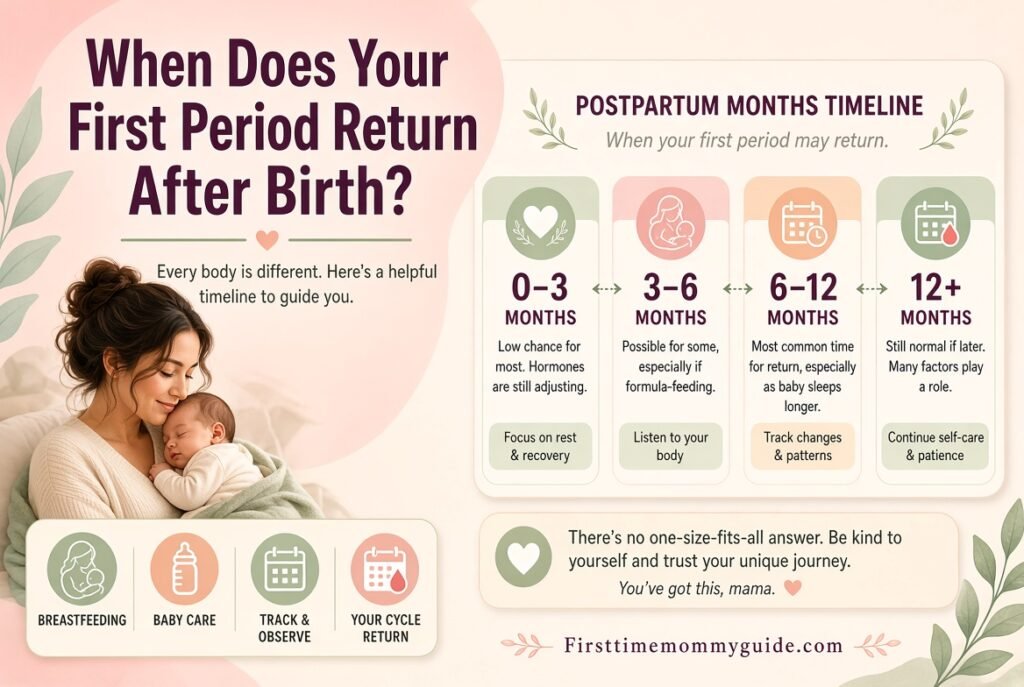
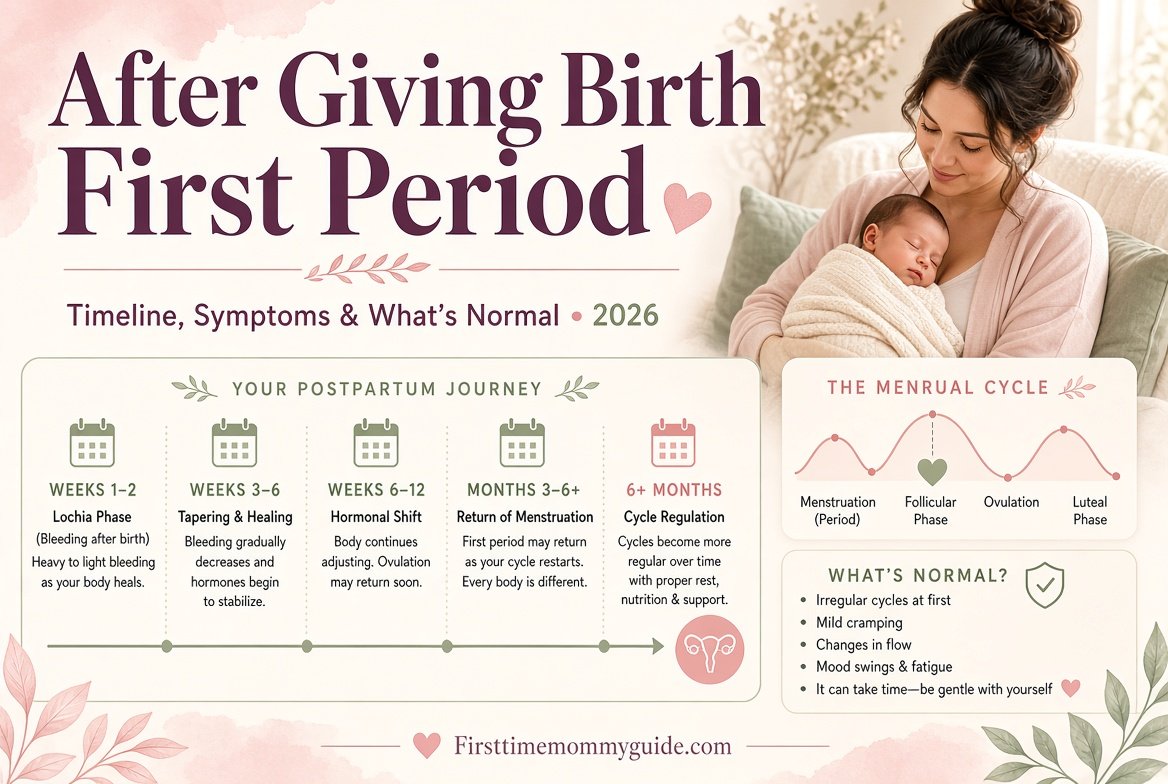
If you’re not breastfeeding, your period usually returns 6 to 8 weeks after delivery. If you’re exclusively breastfeeding, it can take anywhere from several months to over a year, because breastfeeding hormones delay ovulation.
There’s no single “normal” number here. Your timeline depends on feeding choices, hormones, and your body’s own healing pace.
Lochia vs. Your First Period: Know the Difference
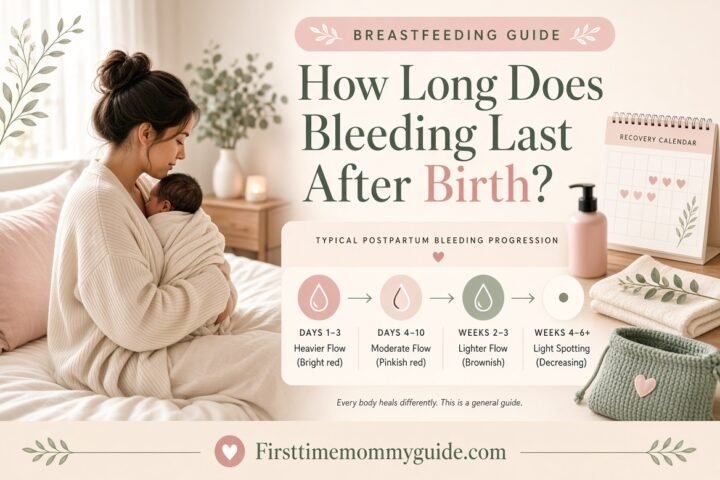
Before your first real period arrives, you’ll experience lochia, which is postpartum bleeding as your uterus sheds pregnancy tissue. Lochia is not a period, even though it can look similar at first.
Lochia usually starts bright red and heavy, then fades to pink, brown, and finally a creamy white over four to six weeks. Once lochia fully stops, any new bleeding that follows is your body restarting its natural cycle.
How to Tell Lochia and Your First Period Apart
- Lochia starts immediately after birth; your first period comes weeks or months later
- Lochia gradually lightens in color over time; a period tends to start suddenly
- Lochia can last up to six weeks; periods typically last 3 to 7 days
- A true period may come with PMS-style symptoms like bloating or mood shifts
Timeline: Formula Feeding vs. Breastfeeding
Feeding method is the single biggest factor in how soon your period returns. Here’s a side-by-side breakdown based on medical guidance.
Comparison Table: Period Return by Feeding Type
| Feeding Method | Typical Period Return | Why |
|---|---|---|
| Formula feeding | 6 to 8 weeks postpartum | No breastfeeding hormones suppressing ovulation |
| Combination feeding | 5 to 6 weeks postpartum | Some suckling stimulation, but not enough to fully delay cycles |
| Exclusive breastfeeding | 4 months to 18+ months postpartum | Prolactin from frequent nursing suppresses ovulation |
| Weaning (any stage) | Cycle usually returns within weeks | Prolactin drops once nursing frequency decreases |
Why Breastfeeding Delays Your Period
Breastfeeding triggers a hormone called prolactin, which suppresses ovulation. This natural, temporary infertility is known as lactational amenorrhea.
The more frequently and consistently you nurse, especially at night, the longer ovulation tends to stay suppressed. This is sometimes used intentionally as the Lactational Amenorrhea Method (LAM) of birth control.
LAM Only Works Under Specific Conditions
- Your baby is younger than 6 months old
- You are exclusively breastfeeding, with no formula or long gaps
- Your period has not yet returned
- Feedings happen roughly every 4 hours in the day and every 6 hours at night
If any of these conditions change, LAM is no longer reliable, and you should use another method if you want to avoid pregnancy.
You Can Ovulate Before Your First Period Returns
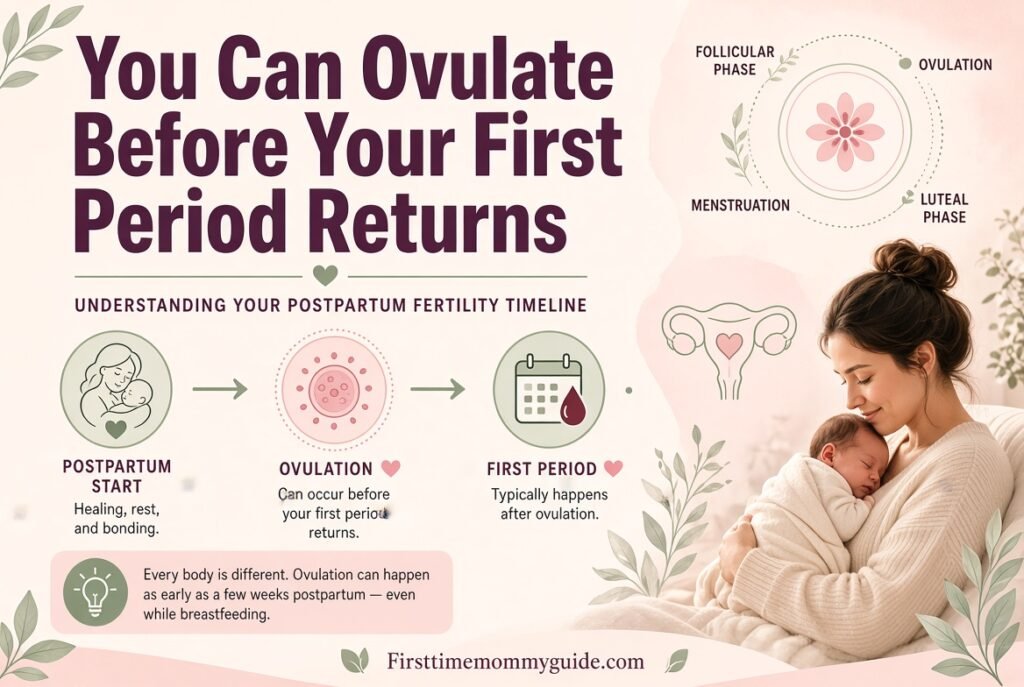
This surprises a lot of new moms. Ovulation always happens before menstruation, which means you can become pregnant again before you ever see a postpartum period.
This is why doctors recommend using contraception once you resume sex, even if your period hasn’t come back yet. Waiting for a period as a “sign it’s safe” can lead to an unplanned pregnancy.
What Your First Postpartum Period Might Feel Like
Most people describe their first period after birth as heavier, crampier, and less predictable than periods before pregnancy. This is completely normal and usually temporary.
Common First-Period Changes
- Heavier flow than your pre-pregnancy periods
- Small blood clots, especially on heavier days
- More intense cramping, sometimes linked to uterine contractions
- Irregular cycle length for the first few months
- Changes in PMS symptoms, better or worse than before
Over the next few cycles, your flow and timing typically settle into a new normal, which may or may not match what you experienced before pregnancy.
When to Call Your Doctor
Most postpartum bleeding changes are harmless, but a few signs need medical attention right away.
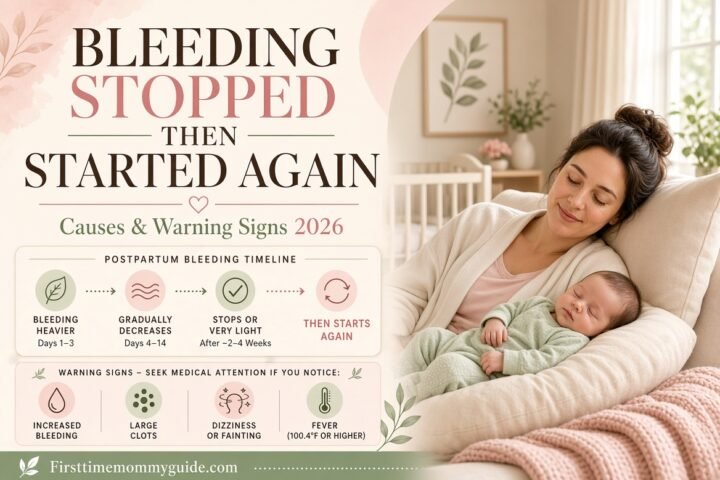
Warning Signs That Need a Doctor’s Attention
- Soaking through a pad every hour for more than two hours
- Passing clots larger than a golf ball
- Bleeding accompanied by fever, severe pain, or foul odor
- Feeling dizzy, lightheaded, or unusually weak
- No period at all by 12 months postpartum, even after weaning
Trust your instincts here. If something feels off, a quick call to your OB-GYN is always worth it.
C-Sections and Your First Period
A C-section doesn’t change when your period returns, since that timeline is driven by hormones, not delivery method. Some research suggests C-section scarring may slightly increase cramping or flow in later cycles.
If your pain feels unusually sharp or localized near your incision, mention it at your postpartum checkup.
Tampons, Pads, or Cups: What’s Safe After Birth
Doctors generally recommend waiting until your 6-week checkup, or until lochia fully stops, before inserting anything into the vagina. Your cervix needs time to close and heal.
Choosing Your First Postpartum Period Product
- Pads are the safest first choice while your body is still healing
- Tampons can be used once cleared by your doctor, though sizing may feel different
- Menstrual cups work well long-term, but confirm fit at your follow-up visit
- Period underwear is a comfortable option for unpredictable early flow
Managing Cramps and Symptoms Naturally
Postpartum cramps often feel similar to labor contractions, especially while breastfeeding, since nursing also releases oxytocin.
Simple Relief Tips
- Use a warm compress or heating pad on your lower abdomen
- Stay hydrated and prioritize iron-rich foods like lentils and leafy greens
- Gentle walking can ease cramping and support circulation
- Rest when you can, since fatigue can intensify period symptoms
Irregular Cycles Are Normal at First
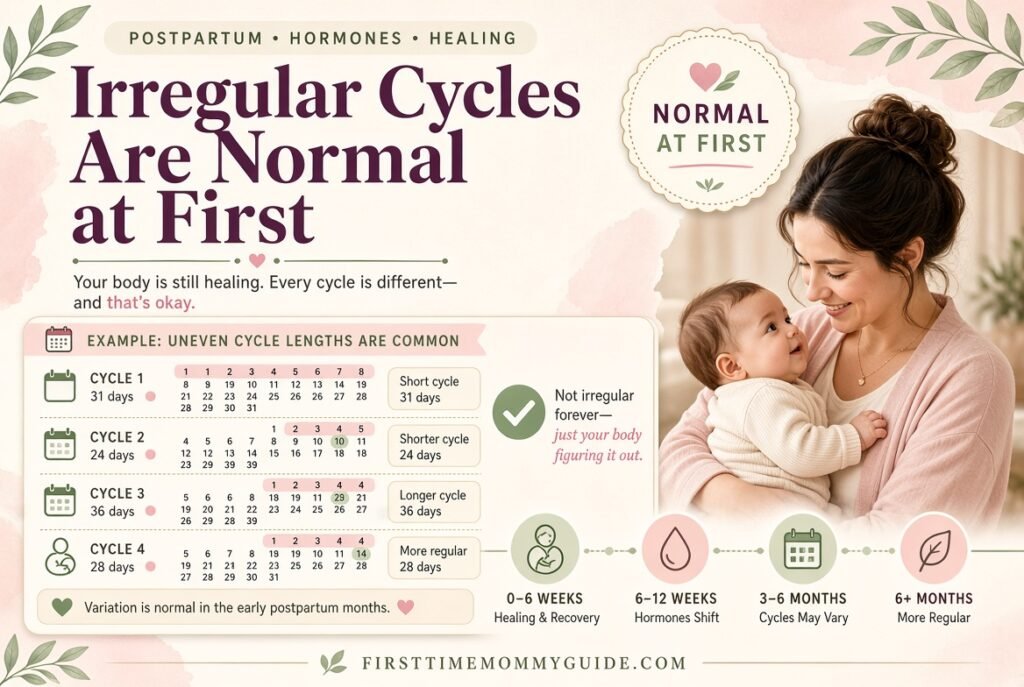
Don’t panic if your first few postpartum cycles vary in length or flow. Your hormones are recalibrating, and it can take three to six cycles to find a consistent pattern again.
If cycles remain wildly unpredictable or absent well past a year, that’s the point to loop in your doctor.
Frequently Asked Questions (FAQs)
How soon can your period come back after giving birth?
If you’re not breastfeeding, your period can return as early as 5 to 6 weeks after delivery. Exclusively breastfeeding mothers may wait several months longer.
Is it normal for your first period after birth to be heavier?
Yes, a heavier first period is very common. It happens because your uterine lining built up more during pregnancy and needs to shed.
Can you get pregnant before your first period returns?
Yes, ovulation happens before menstruation, so you can conceive without ever seeing a period first. Use contraception if you’re not trying to conceive again.
Does breastfeeding stop your period completely?
Breastfeeding can delay your period through lactational amenorrhea, but it doesn’t guarantee it stays away. Some breastfeeding moms get their period within a few months.
Why does my first postpartum period have clots?
Small clots are common as your body clears out extra uterine lining. Clots larger than a golf ball need medical attention.
How long does the first period after birth usually last?
Most first periods last between 3 and 7 days, though some run slightly longer due to hormonal adjustment.
Is it normal to skip periods after breastfeeding stops?
A short delay after weaning is common while hormones rebalance. If periods don’t return within a few months of full weaning, check with your doctor.
Can a C-section delay your first period?
No, delivery method doesn’t affect when your period returns. That timeline is controlled by hormones and feeding choices.
What color is a normal first postpartum period?
Bright to darker red is normal, similar to a typical period. Consistently brown or black blood in small amounts can also be normal spotting.
When should I worry about postpartum bleeding?
Worry if you’re soaking a pad hourly, passing large clots, or have fever and severe pain. These need prompt medical evaluation.
Can my first period after birth be irregular?
Yes, irregular cycles are extremely common for the first three to six cycles postpartum. Regularity usually returns gradually.
Should I use tampons for my first period after birth?
Wait until your doctor clears you at your postpartum checkup, usually around 6 weeks. Your cervix needs time to fully close first.
Does pumping delay your period the same way breastfeeding does?
Exclusive pumping can delay ovulation similarly to direct breastfeeding, since prolactin levels matter more than the feeding method. Reduced pumping frequency speeds up the return.
Can stress delay your first postpartum period?
Yes, stress, sleep deprivation, and low body weight can all further delay ovulation on top of breastfeeding hormones.
Is cramping worse during the first period after birth?
Many women report stronger cramps initially, partly due to uterine changes from pregnancy. This usually improves over the next few cycles.
Do I need birth control if my period hasn’t returned yet?
Yes, if you don’t want to get pregnant, use contraception as soon as you resume sex. Absence of a period doesn’t mean absence of fertility.
How does mixed feeding affect period return timing?
Combining breastfeeding with formula usually brings your period back sooner than exclusive breastfeeding. Less frequent nursing means lower prolactin levels.
Can your cycle length change permanently after having a baby?
Some women notice a shorter or longer cycle than before pregnancy that becomes their new normal. Others return to their pre-pregnancy pattern.
What’s considered a normal amount of bleeding for a first period postpartum?
Needing to change a pad every 2 to 4 hours is typical. Soaking through pads hourly is not normal and needs medical review.
Does the first period after birth mean my body is fully recovered?
Not necessarily. The return of your period signals hormonal recovery, but full physical healing, especially after a C-section, can take longer.
Conclusion
The after giving birth first period is different for every mother, shaped by feeding choices, hormones, and your body’s own timeline. Heavier flow, cramping, and irregular cycles in the first few months are almost always normal.
Keep an eye out for the warning signs covered above, and don’t hesitate to call your doctor if anything feels off. Most importantly, remember that your period returning is simply a sign your body is healing and finding its new rhythm.

Dilawar Mughal
Founder and editor, First Time Mommy Guide
I research every guide against what the NHS, the AAP and the WHO publish, then write it in plain English — because most new parents are reading with one hand free, not comparing clinical guidelines. I'm not a doctor or a midwife. Every health claim on this site is sourced and linked so you can check it yourself, and anything urgent belongs with your health visitor or GP, not a blog.