General information, not medical advice. Every baby is different — if anything worries you, speak to your midwife, health visitor or GP rather than waiting.
Bottle Feeding Schedule Newborn can look surprisingly unpredictable during the first few weeks because newborns have tiny stomachs and often need to feed frequently, including during the night. Unlike older babies, newborns usually follow hunger cues rather than a strict clock-based routine.
In the early days, feeding patterns gradually change as a baby grows. The amount of formula or expressed breast milk offered at each feeding, the number of feeds in 24 hours, and the time between bottles can all vary depending on the baby’s age and individual needs.
Understanding typical feeding patterns can make bottle feeding feel much less confusing. Paying attention to hunger and fullness cues, adequate wet diapers, and steady growth can help indicate whether a newborn is getting enough milk.
A baby’s feeding needs may also change quickly during growth spurts, making flexibility an important part of establishing a healthy routine.
Table of Contents
How Often Should a Newborn Be Bottle Fed?Bottle Feeding Schedule Newborn
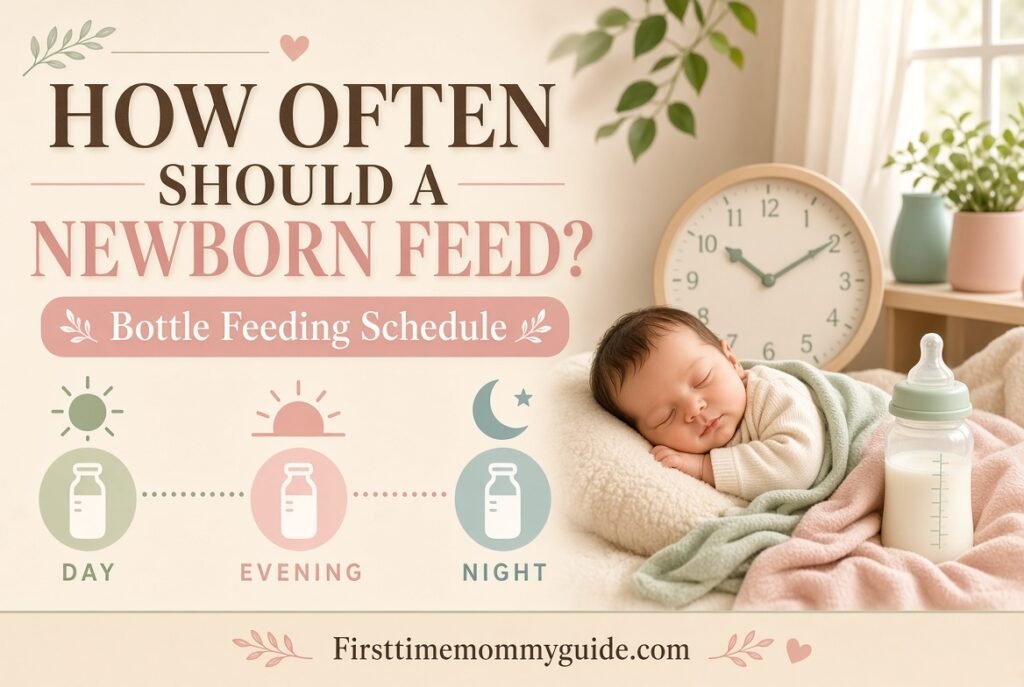
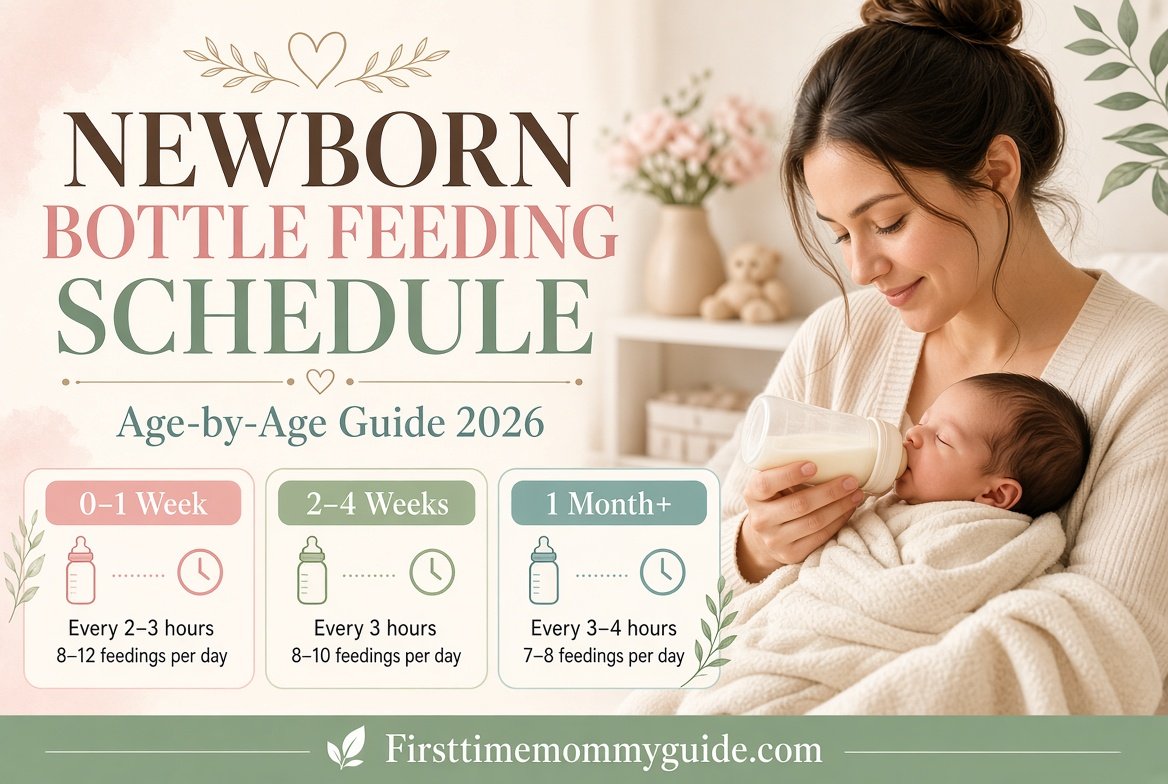
Most newborns need to be bottle fed every 2–3 hours, or 8–12 times in 24 hours during the first few weeks.
Amounts start small, around 1–2 ounces per feeding, and gradually increase as your baby grows.
Bottle Feeding Schedule by Age
| Age | Amount per Feeding | Frequency | Feeds per Day |
|---|---|---|---|
| 0–2 weeks | 1–3 oz | Every 2–3 hours | 8–12 |
| 2–4 weeks | 2–4 oz | Every 2–3 hours | 7–9 |
| 1–2 months | 4–5 oz | Every 3–4 hours | 6–8 |
| 2–4 months | 4–6 oz | Every 3–4 hours | 5–6 |
| 4–6 months | 6–8 oz | Every 4–5 hours | 4–5 |
Weeks 1–2: The First Days
Your newborn’s stomach is tiny, about the size of a cherry at birth. This is why feeds are small and frequent.
Expect to offer 1–2 ounces per feeding, roughly every 2–3 hours, even overnight.
Weeks 3–4: The First Growth Spurt
Around week three, many babies go through a growth spurt and want to eat more often or take larger amounts.
Offer 2–3 ounces per feeding, and don’t be surprised by cluster feeding during this stretch.
Weeks 5–8: More Predictable Patterns
By 5–8 weeks, feeding intervals often stretch to every 3–4 hours as your baby’s stomach capacity grows.
Amounts typically rise to 3–4 ounces per feeding, with 6–8 feeds a day.
2–4 Months: Longer Stretches
Babies in this range usually take 4–6 ounces per feeding and may start sleeping longer stretches at night.
Daytime feeds settle into a more consistent 3–4 hour rhythm.
How to Recognize Hunger Cues
- Rooting or turning the head toward a bottle or hand
- Sucking on fists or fingers
- Smacking or licking lips
- Increased alertness or fussiness
- Crying, which is typically a late hunger sign
Demand Feeding vs Scheduled Feeding
| Approach | How It Works | Best For |
|---|---|---|
| Demand feeding | Feed whenever hunger cues appear | Newborns in the first weeks |
| Scheduled feeding | Feed at set time intervals | Babies with more predictable patterns, usually after 6–8 weeks |
Most pediatricians recommend demand feeding for newborns rather than a strict clock-based schedule.
How Much Total Formula Does a Newborn Need Daily?
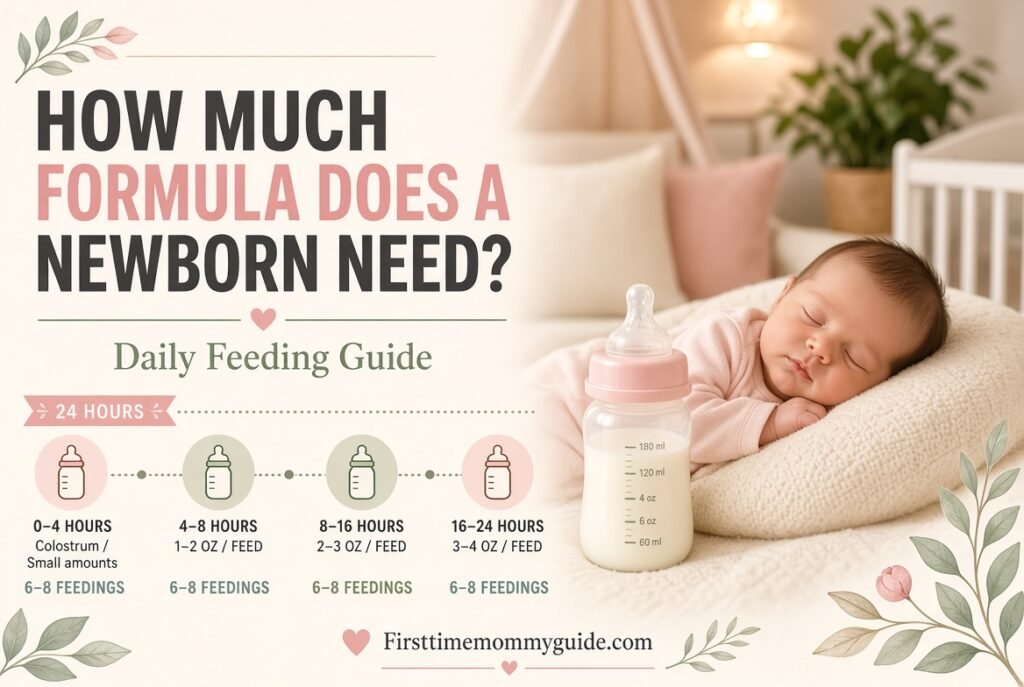
A common guideline is about 2.5 ounces per pound of body weight per day, up to roughly 32 ounces maximum.
For example, an 8-pound newborn would need approximately 20 ounces total across all feedings in a day.
Common Bottle Feeding Mistakes to Avoid
- Forcing your baby to finish a bottle instead of stopping when full
- Propping the bottle instead of holding your baby during feeds
- Feeding too fast with a nipple flow rate that’s too high
- Ignoring fullness cues like turning away or spitting out the nipple
- Skipping regular burping breaks during feeds
Signs Your Baby Is Getting Enough

- At least 6 wet diapers a day after the first week
- Steady weight gain at checkups
- Baby seems satisfied and calm after most feeds
- Regular bowel movements appropriate for age
When to Call Your Pediatrician
- Baby consistently refuses the bottle or feeds very poorly
- Fewer than 6 wet diapers daily after the first week
- Poor weight gain or continued weight loss past the first few days
- Frequent forceful vomiting or signs of pain during feeding
Frequently Asked Questions (FAQs)
How often should a newborn be bottle fed?
Most newborns need to be fed every 2–3 hours, which works out to 8–12 feedings a day. This gradually spaces out as your baby grows.
How many ounces should a newborn drink per feeding?
Newborns typically start with 1–2 ounces per feeding in the first two weeks. This increases to 3–4 ounces by 1–2 months.
Should I wake my newborn to feed at night?
In the first few weeks, yes, especially if your baby isn’t back to birth weight yet. After that, most pediatricians allow babies to sleep longer stretches once weight gain is on track.
How do I know if my baby is hungry versus just fussy?
Hunger cues include rooting, sucking on hands, and lip-smacking, which appear before crying. Crying is usually a later, more urgent hunger sign.
Is it okay to follow a strict feeding schedule instead of feeding on demand?
Demand feeding is generally recommended for newborns since their needs vary. A more predictable schedule can develop naturally after 6–8 weeks.
How much formula does a newborn need in a day?
A common guideline is about 2.5 ounces per pound of body weight daily, up to around 32 ounces. Your pediatrician can help fine-tune this for your baby.
What happens if my baby doesn’t finish the bottle?
That’s completely normal and expected. Babies are good at self-regulating, so never force them to finish a bottle.
How long should a bottle feeding session take?
Most feedings take about 15–20 minutes. Consistently much faster or slower feeds can signal a nipple flow issue worth addressing.
Can overfeeding happen with bottle feeding?
Yes, bottle feeding can make it easier to overfeed since babies drink faster from a bottle than the breast. Paced bottle feeding techniques help prevent this.
What is paced bottle feeding?
It’s a technique using a slow flow nipple and frequent pauses to mimic breastfeeding pace. It helps babies self-regulate intake and reduces overfeeding.
How do I know if my baby needs a different nipple flow?
If feeds are consistently very fast with milk spilling, or very slow with visible frustration, it may be time to adjust nipple flow size. Most bottles are labeled by age or flow stage.
Do breastfed babies need a different bottle schedule than formula-fed babies?
Not drastically different, though formula digests more slowly, so formula-fed babies may go slightly longer between feeds. Breast milk is digested faster, sometimes requiring more frequent feeds.
When do newborn feeding schedules become more predictable?
Most babies develop a more consistent rhythm between 6–8 weeks old. Growth spurts can still temporarily disrupt this pattern.
How many wet diapers confirm my baby is eating enough?
At least 6 wet diapers per day after the first week is a good sign of adequate intake. Fewer than that warrants a call to your pediatrician.
Can I mix breastfeeding and bottle feeding on the same schedule?
Yes, many families combine both successfully using a combination feeding approach. Consistency in cues and amounts still matters, regardless of feeding method.
What are common signs of overfeeding a newborn?
Signs include frequent spit-up, gassiness, discomfort, and excessive weight gain. Slowing the pace of feeds often helps resolve this.
Should bottle feeding amounts increase every week?
Generally yes, amounts increase gradually as your baby grows and their stomach capacity expands. Growth spurts may cause temporary jumps in appetite.
Conclusion
A newborn bottle feeding schedule isn’t about rigid timing, it’s about following your baby’s cues while using age-based amounts as a helpful guide.
Start small and frequent in the early weeks, then expect feeds to space out and grow in volume over the following months. When in doubt about amounts, frequency, or your baby’s weight gain, your pediatrician remains the best resource for personalized guidance.

Dilawar Mughal
Founder and editor, First Time Mommy Guide
I research every guide against what the NHS, the AAP and the WHO publish, then write it in plain English — because most new parents are reading with one hand free, not comparing clinical guidelines. I'm not a doctor or a midwife. Every health claim on this site is sourced and linked so you can check it yourself, and anything urgent belongs with your health visitor or GP, not a blog.