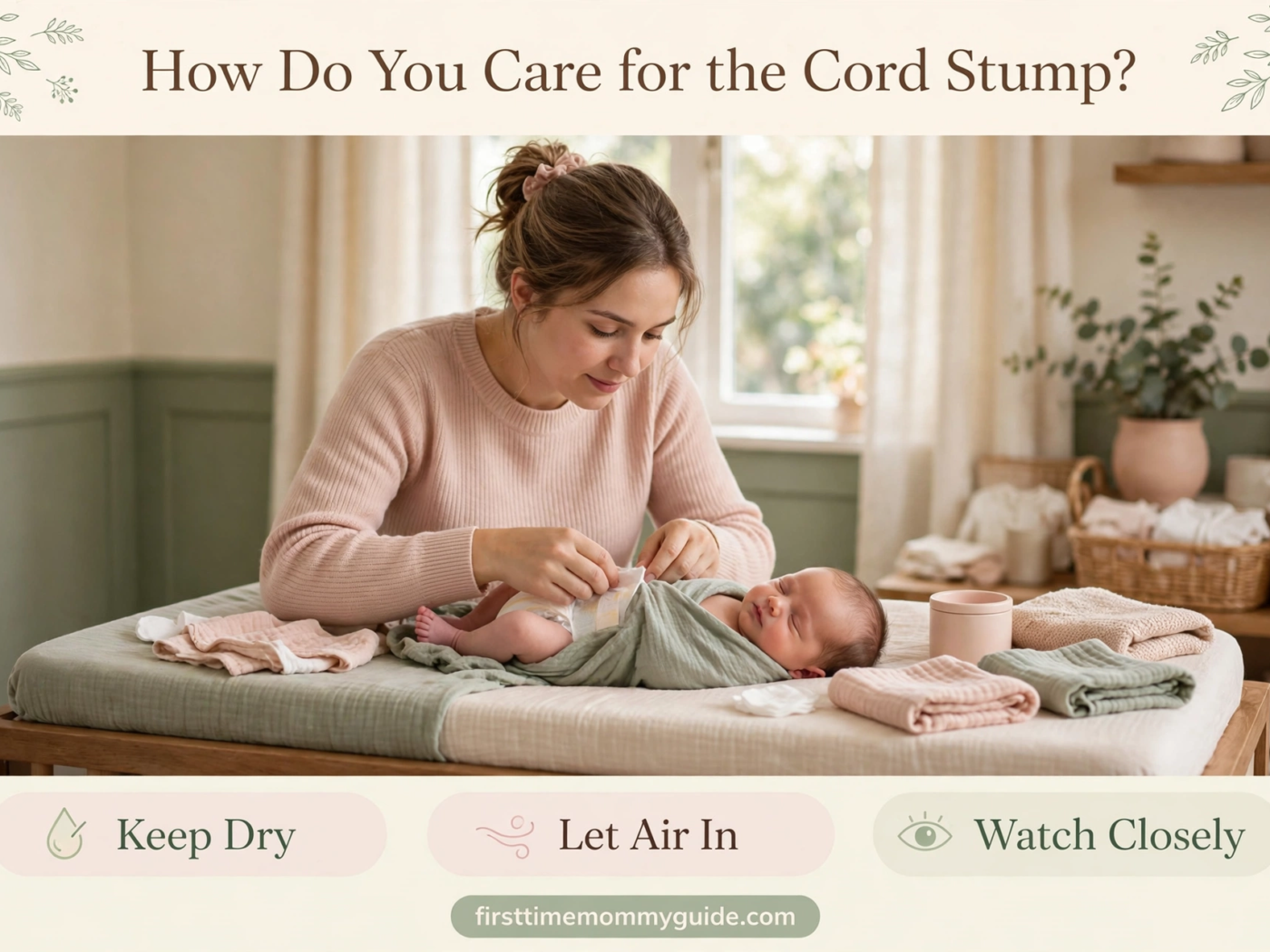
General information, not medical advice. Every baby is different — if anything worries you, speak to your midwife, health visitor or GP rather than waiting.
In the first days at home with a newborn, the small stump where the umbilical cord was cut can feel surprisingly worrying. It looks unusual, it changes colour, and every nappy change brings a new question: is this normal, should I clean it, and when will it fall off? This guide answers those questions clearly, step by step.
The good news is that cord care is usually simple. In most cases, you do not need special products, fancy cleaning routines, or constant checking. You need to keep the stump clean and dry, let air reach it, watch for warning signs, and let nature do its work. This article explains exactly how to do that, what to expect day by day, and when to seek help.
As with all health guidance here, this article is general information only, not medical advice. If you are worried about your baby’s cord, or if your baby seems unwell, contact your midwife, health visitor, or paediatrician promptly. The NHS guidance on caring for a newborn’s umbilical cord (https://www.nhs.uk/start-for-life/baby/baby-basics/caring-for-your-babys-umbilical-cord/) and the American Academy of Pediatrics on newborn care (https://www.healthychildren.org/English/ages-stages/baby/Pages/Caring-For-Your-Babys-Umbilical-Cord.aspx) both emphasise keeping the area clean and dry and watching for infection.
What Is the Umbilical Cord Stump?
During pregnancy, the umbilical cord connects your baby to the placenta. It carries oxygen and nutrients to your baby and removes waste. After birth, the cord is clamped and cut, leaving a short stump attached to your baby’s belly button.
That stump is made of living tissue that no longer has a blood supply. Over the next one to three weeks, it dries out, shrinks, darkens, and eventually falls off. Underneath, a small wound heals and forms the belly button. This process is normal, and it does not hurt your baby in the way a cut on the skin would, because the stump itself has no nerves.
At first, the stump may look moist, yellowish, or slightly swollen. It may have a small clamp on it in the hospital, which is usually removed before you go home or falls off with the stump. Over days, it turns brown, then dark, then almost black as it dries. This colour change often worries new parents, but it is a normal part of drying.
Your baby may have a little dried blood around the base as the stump separates. A small amount is normal. Heavy bleeding, spreading redness, swelling, or a bad smell are not normal, and those signs are covered in detail later in this guide.
How Long Until the Cord Stump Falls Off?
Most cord stumps fall off between five and fifteen days after birth, often around one to two weeks. Some fall off a little earlier, and some take up to three weeks. Both can be normal, especially if your baby was born early or if the stump was kept covered and moist.
Do not pull, twist, or try to remove the stump, even if it looks like it is hanging by a thread. Pulling can cause bleeding, pain, and infection. Let it fall off on its own. You will often find it in the nappy or on a vest, which can be a surprise, but it is a normal milestone.
After it falls off, you may see a small amount of blood or a pink, moist spot in the belly button. Keep the area clean and dry, and it should heal within a few days. If bleeding continues, if the area looks red or swollen, or if there is discharge, contact your healthcare provider.
The Basics: Keep It Clean and Dry
The single most important rule of cord care is simple: keep the stump clean and dry, and let air circulate around it. Moisture slows drying and increases the risk of infection. That is why modern guidance has moved away from routine alcohol cleaning in most healthy, home settings, unless your healthcare provider advises otherwise for a specific reason.
Here is what clean and dry means in practice:
- Wash your hands before and after touching the stump or changing a nappy.
- Do not cover the stump with a bandage, plaster, or tight clothing.
- Fold the top of the nappy down, below the stump, so urine does not soak it and air can reach it. Many newborn nappies have a cut-out for this purpose.
- Dress your baby in loose, breathable clothes. Avoid tight waistbands pressing on the stump.
- If the stump gets dirty with wee or poo, clean it gently with plain water and a soft cloth or cotton pad, then pat dry. Do not scrub.
- Avoid baths that submerge the stump until it has fallen off and healed. Sponge baths are best during this period.
You do not need to clean the stump at every nappy change if it is clean and dry. A quick look is enough. Over-cleaning can irritate the skin around it and slow healing.
Step-by-Step: Cord Care at Each Nappy Change
A simple routine helps you feel confident. Follow these steps, and adapt them only if your midwife or doctor gives you different advice for your baby.
Step 1: Wash your hands
Use soap and water, and dry your hands well. Clean hands protect your newborn, whose immune system is still developing.
Step 2: Look, do not fuss
Check the stump and the skin around it. Is it dry? Is the skin around it normal in colour? Is there any discharge, swelling, or smell? A quick visual check is enough most of the time.
Step 3: Fold the nappy down
Place a clean nappy with the front folded below the stump, or use a nappy with a cord cut-out. This keeps the stump exposed to air and prevents rubbing.
Step 4: Clean only if needed
If the stump is soiled, dampen a clean cotton pad or soft cloth with plain, lukewarm water. Wipe gently around the base, not pulling the stump. Pat dry with a clean, dry cloth. Let it air-dry for a minute before dressing your baby.
Step 5: Dress loosely
Choose a vest or sleep suit that does not press tightly on the belly. If a vest rubs, fold it or choose a looser size for a few days. Comfort matters, and loose clothing helps drying.
Step 6: Note anything unusual
If you see spreading redness, swelling, yellow or green discharge, a bad smell, or bleeding that does not stop, make a note and call your healthcare provider that day. Do not wait to see if it improves on its own if your baby also has a fever or seems unwell.
Bathing Your Newborn Before the Cord Falls Off
Sponge baths are the safest option until the cord stump has fallen off and the belly button has healed. A full bath that soaks the stump can slow drying and introduce germs.
For a sponge bath, lay your baby on a warm, safe surface, keep them covered with a towel except for the area you are washing, and use a soft cloth with warm water. Wash the face, neck, hands, nappy area, and skin folds gently. You do not need soap every time, and if you use it, choose a gentle, fragrance-free product and rinse well.
Once the stump has fallen off and the area looks dry and healed, you can start regular baths. Even then, keep baths short, warm but not hot, and never leave your baby unattended in water, even for a moment. For more on settling into those first weeks at home, see our guide to postpartum recovery in the first weeks (https://firsttimemommyguide.com/postpartum-recovery-first-weeks/).

What Is Normal: Day-by-Day Changes
Knowing what to expect makes the process less worrying. The timeline below is a guide, not a strict schedule. Every baby is slightly different.
| Stage | What you may see | What to do |
| Days 1–3 | Moist, yellowish-white stump, possibly with a clamp | Keep dry, fold nappy down, sponge bath only |
| Days 3–7 | Stump shrinks and starts to darken | Same care, let air reach it, do not pull |
| Days 7–14 | Dark brown or black, dry, smaller | Same care, watch for separation, small dried blood is normal |
| Days 10–21 | Stump falls off, small pink spot remains | Keep area clean and dry until fully healed |
| After healing | Normal belly button, innie or outie | Normal washing, no special care needed |
A small amount of dried blood on the nappy or vest is common as the stump separates. A few spots are not a cause for alarm. A stump that looks a little lumpy or has a small amount of clear discharge in the first days can also be normal, as long as the surrounding skin is not red or swollen and your baby is feeding and behaving normally.
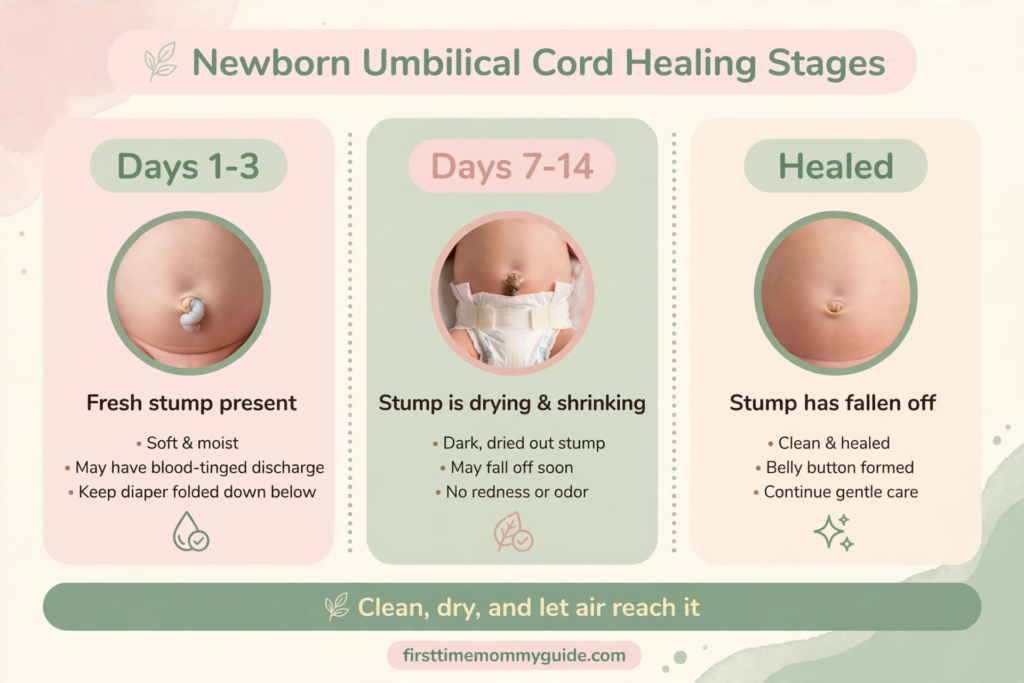
It is also normal for the belly button to look a little raised or swollen immediately after the stump falls off. This usually settles as the skin heals. An “outie” belly button is usually just how the scar tissue formed and is not a problem on its own.
Common Concerns, Explained Calmly
My baby’s stump smells a little
A mild smell as the stump dries can happen, especially if it has been kept moist under a nappy. If the smell is faint and there is no redness, swelling, or discharge, improve air circulation, keep the nappy folded down, and monitor it. A strong, foul smell, especially with redness or discharge, should be checked the same day.
There is a little blood
Small spots of blood are common when the stump is separating. If bleeding is light and stops quickly, keep the area clean and dry and watch it. If bleeding is heavy, continues, soaks a cloth, or your baby seems pale or unwell, seek medical help urgently.
The stump has not fallen off after three weeks
If the stump is still attached after three weeks, contact your health visitor or paediatrician. Delayed separation is sometimes normal, but it can also be a sign that the area is staying too moist, or, rarely, an underlying issue. A professional can check it and reassure you, or advise on next steps.
A small pink lump remains after the stump falls off
This is often an umbilical granuloma, a small piece of pink, moist tissue that remains in the belly button. It may produce a little clear or yellow discharge. It is common and usually painless, but it needs medical review. Treatment is simple, often with a silver nitrate application by a healthcare professional, and it should not be treated at home.
The belly button looks like an outie
An outie is usually just the shape of the healed belly button. It is not caused by how you cared for the cord, and it does not mean you did anything wrong. A true umbilical hernia, where a soft bulge appears and gets bigger when your baby cries, is different and should be checked, but many small hernias close on their own over the first year or two.
My baby cries when I touch near the cord
The stump itself should not be painful, but the skin around it can be sensitive, especially if it is irritated or if your baby is startled by cold hands or a cold cloth. Warm your hands, be gentle, and watch for other signs. If touching the area causes consistent distress, redness, or swelling, have it checked.
What Not to Do
Cord care myths are common, and well-meaning advice from family can sometimes conflict with current guidance. Avoid these:
- Do not apply alcohol, antiseptic, powders, or herbal remedies unless your healthcare provider specifically tells you to. In many settings, routine antiseptic use is no longer recommended for healthy babies at home.
- Do not cover the stump with a coin, bandage, or belly binder to “fix” an outie. This does not help and can trap moisture and germs.
- Do not pull or cut the stump, even if it looks ready to come off.
- Do not use cotton wool that leaves fibres on the stump. Use a clean cotton pad or soft cloth instead.
- Do not submerge the stump in bath water until it has fallen off and healed.
- Do not ignore warning signs because you hope they will pass. Early advice is always better.
If a family member suggests a traditional remedy, thank them, and check with your midwife or doctor first. Your baby’s safety comes first, and modern guidance is based on reducing infection risk.
Warning Signs: When to Call the Doctor
Most cord stumps heal without any problem. But infection, known as omphalitis, can develop quickly in newborns, so knowing the warning signs matters. Contact your healthcare provider the same day, or seek urgent care if your baby is unwell, if you notice any of the following:
- Redness spreading outwards from the base of the stump, especially if it is getting larger.
- Swelling, warmth, or tenderness around the belly button.
- Yellow or green pus, or discharge that increases.
- A strong, foul smell that does not improve with dry care.
- Bleeding that is heavy, continuous, or soaks through clothes.
- Fever, poor feeding, unusual sleepiness, irritability, or vomiting.
- The stump has not fallen off after three weeks.
- A pink, moist lump remains after the stump falls off, with discharge.
Newborns can become unwell quickly, so do not wait overnight if your baby has a fever, is feeding poorly, or seems unusually sleepy or irritable alongside any cord concern. Call your doctor, midwife, health visitor, or local urgent care line, and describe what you see. They may ask you to come in the same day, and that is normal and appropriate.
This section is general information, not medical advice for your baby. If you are unsure, always err on the side of asking. Health professionals would rather see a healthy cord and reassure you than have you worry alone.
Cord Care for Premature Babies and Special Situations
Premature babies, babies who spent time in neonatal care, and babies with certain medical conditions may need slightly different cord care. Their stumps may take longer to fall off, and they may be more vulnerable to infection. Follow the specific advice given by your neonatal team, even if it differs from general guidance here.
If your baby had a cord clamp that stayed on longer, or if the cord was thicker than usual, separation may also take a little longer. Again, patience and dry care are key, plus regular checks by your healthcare team.
Babies born by caesarean section do not need different cord care from babies born vaginally. The stump heals in the same way. If you are recovering from a caesarean yourself, ask someone to help with nappy changes in the first days if bending is painful, so cord checks are not missed. Our postpartum recovery guide (https://firsttimemommyguide.com/postpartum-recovery-first-weeks/) has practical tips for those early days.
Making Nappy Changes Easier
Cord care happens during nappy changes, so making those changes smooth helps everyone. Keep supplies within reach: clean nappies, cotton pads, a soft cloth, and a change of clothes. Wash your hands first, and work on a safe, flat surface.
Talk or sing softly while you change your baby. It calms both of you, and it turns a clinical check into a bonding moment. If your baby cries during changes, that is normal. They dislike being cold and undressed, not necessarily the cord check itself. Work quickly but gently, and wrap them warmly afterwards.
As your baby grows, nappy changes become routine. The cord period is short, even though it feels long when you are in it. Soon you will be onto the next milestone, and the cord will be a distant memory, except for the photos.
Preparing Your Home and Your Support Team
Before your baby arrives, or in the first days home, make cord care easy:
- Stock newborn nappies, preferably with a cord cut-out, or be ready to fold the front down.
- Have clean cotton pads and soft cloths ready, and a gentle, fragrance-free wash product if you use one.
- Choose loose vests and sleep suits for the first weeks.
- Write down your midwife, health visitor, and paediatrician contact numbers, and keep them on the fridge.
- Tell anyone who helps with care about the simple rule: clean, dry, air, do not pull, and watch for redness or discharge.
When visitors want to hold your baby, ask them to wash their hands first. This protects the cord area and your baby generally. Most visitors understand, and it sets a healthy pattern for the newborn period.
Cord Care Checklist for the First Three Weeks
A checklist can turn worry into confidence. Use this one at least once a day during the cord period, and more often if you notice any change.
- Hands washed before touching the stump or changing a nappy.
- Stump looks dry, or is drying, with no spreading redness.
- Skin around the belly button is normal in colour, not swollen or hot.
- Nappy folded down below the stump, or a cut-out nappy is used.
- Clothing is loose around the belly, with no tight waistband pressing on the stump.
- No bandage, powder, oil, or home remedy has been applied.
- Baby is feeding well, has wet nappies, and is alert when awake.
- Any discharge, smell, or bleeding has been noted, and help sought if it is increasing.
If you can tick most of these, you are doing cord care well. If you cannot tick one because something looks different, that is your prompt to look closer or call for advice, not a reason to panic. Most checks will be reassuringly boring, and boring is good when it comes to healing.
Keep the checklist on your phone or on the changing table for the first two weeks. Once the stump has fallen off and the area has healed, you can stop checking so closely. Normal washing during baths is then enough.
Myths About Cord Care, Debunked
New parents hear a lot of conflicting advice about cords, often from loving relatives who cared for babies decades ago. Guidance has changed as research has improved, so it helps to separate myth from fact.
Myth: You must clean the cord with alcohol every day. In the past, alcohol was commonly recommended. Today, for healthy babies born in clean home settings, routine alcohol use is not usually needed and can irritate the skin and delay drying. Plain water for soiling, plus keeping the area dry, is the standard advice from the NHS and the American Academy of Pediatrics. Your provider may still recommend an antiseptic in certain settings, such as where infection risk is higher, so follow their specific advice if given.
Myth: A belly button binder will prevent an outie. Binders, coins, and tight bands do not change how a belly button heals. They trap moisture, irritate skin, and increase infection risk. An outie is simply how scar tissue formed, and it is not a problem that needs fixing.
Myth: The stump must fall off by day seven or something is wrong. Most stumps fall off by two weeks, but up to three weeks can still be normal. A stump that is drying, shrinking, and not red or smelly is usually progressing well, even if it is slower than a friend’s baby.
Myth: Bathing will make the cord fall off faster. Soaking does not help. It keeps the stump moist, which slows drying. Sponge baths until healing is complete are the safer choice.
Myth: A little discharge always means infection. A small amount of clear fluid or dried blood as the stump separates can be normal. Infection is more likely when discharge is yellow or green, increases, smells foul, and comes with redness, swelling, or a baby who seems unwell. When in doubt, ask a professional to look.
Myth: You should not touch the cord at all. Gentle handling during nappy changes is fine and necessary. Wash your hands, be gentle, do not pull, and you will not harm it. Avoiding all contact can mean missing early warning signs.
Understanding these myths helps you stay calm when well-meaning advice conflicts with what your midwife told you. When advice differs, trust your healthcare provider, who knows your baby’s specific situation.
What to Pack and Prepare Before Birth
Preparing for cord care before birth means one less thing to think about when you are exhausted and adjusting to life with a newborn. You do not need a long shopping list.
Pack or buy: newborn nappies, ideally with a cord cut-out, or be ready to fold standard nappies down; soft cotton pads and clean cloths; gentle, fragrance-free baby wash for sponge baths; loose vests and sleep suits in newborn size; a thermometer, so you can check for fever if you are worried; and the phone numbers for your midwife, health visitor, and paediatrician.
At home, set up a changing area with everything within reach. A warm room, a safe changing surface, and a small basket of supplies make nappy changes quicker and calmer. If you are recovering from birth yourself, ask your partner or a helper to set up the station at a comfortable height so you are not bending or straining.
Also plan who to call. In the first two weeks, many parents have routine visits from a midwife or health visitor. Those visits are a perfect time to ask them to look at the cord, even if you think it is fine. A quick professional look can reassure you far more than hours of searching online.
Cord Care and Bonding: Keeping It Calm
Cord care is a small part of newborn care, but it happens many times a day, so it is worth making it calm. Babies pick up on tension. If you are anxious, your hands may be tense and quick. Slowing down, breathing, and talking softly can help both of you.
Use nappy changes as bonding time. Make eye contact, narrate what you are doing in a gentle voice, and smile when your baby looks at you. These small moments build connection, even during routine care. Your baby does not need perfect technique; they need a calm, clean, gentle touch and a parent who notices changes.
If you feel anxious about the cord, it can help to take a photo once a day in good light. Comparing photos over days shows drying and shrinking more clearly than memory, and a photo can be useful if you need to describe a change to a healthcare provider by phone. Do not share photos of your baby’s cord publicly; keep them private for medical use only.
When the Stump Falls Off: What Happens Next
The day the stump falls off often brings relief, and sometimes a little worry about what is underneath. Expect a small, pink, slightly moist spot. It may have a tiny amount of blood. Keep it clean and dry for a few more days, just as before, until it looks fully dry and healed.
You can then start normal baths, provided the area looks healed and your healthcare provider has no other advice. Wash the belly button gently with warm water during baths, and pat dry afterwards. Do not poke inside the belly button or try to clean deep inside it. Surface washing is enough.
Over the following weeks, the belly button will settle into its final shape. Some babies develop a small umbilical hernia, a soft bulge that appears when they cry or strain and disappears when they relax. Many small hernias close on their own by age two. Your paediatrician will check it at routine visits. If the bulge is hard, painful, discoloured, or does not go back in, seek medical advice promptly.
This milestone also marks a shift. Sponge baths end, regular baths begin, and one newborn worry lifts. Celebrate it quietly: you have navigated your baby’s first healing process, and you did it well.
Frequently Asked Questions
1. How do I clean my newborn’s umbilical cord stump?
Keep it clean and dry. If it gets soiled, wipe gently with plain water on a cotton pad, pat dry, and let air reach it. You do not need alcohol or antiseptic unless your healthcare provider advises it.
2. When will the cord stump fall off?
Usually between five and fifteen days, often around one to two weeks. Some take up to three weeks. Do not pull it off; let it fall naturally.
3. Is it normal for the stump to look dark and dry?
Yes. As it dries, it shrinks and turns brown, then dark brown or black. This colour change is normal and shows drying is progressing.
4. Can I bathe my baby before the cord falls off?
Use sponge baths until the stump has fallen off and the belly button has healed. Avoid submerging the stump in bath water, as moisture slows drying.
5. Should I use alcohol on the cord stump?
In most healthy, home settings, routine alcohol cleaning is no longer recommended. Plain water for soiling, plus dry care, is usually enough. Follow your provider’s advice if they recommend otherwise.
6. What does an infected cord look like?
Signs include spreading redness, swelling, warmth, yellow or green discharge, a foul smell, fever, or your baby feeding poorly or seeming unwell. Seek medical advice the same day if you see these signs.
7. Is a little bleeding normal when the stump falls off?
Yes, a small amount of dried blood is common. Heavy or continuous bleeding is not normal and needs prompt medical attention.
8. What is an umbilical granuloma?
It is a small pink, moist lump that sometimes remains after the stump falls off. It may produce a little discharge. It is common and treatable, but it needs medical review, usually with a simple in-clinic treatment.
9. Will my baby have an innie or an outie belly button?
That depends on how the scar tissue heals, not on how you cared for the cord. Both are normal. An outie does not mean you did anything wrong, and belly binders do not change it.
10. What if the stump has not fallen off after three weeks?
Contact your health visitor or paediatrician. Delayed separation can be normal, but it should be checked to rule out moisture problems or other issues.
11. Can I put a bandage over the stump to protect it?
No. Covering traps moisture and increases infection risk. Keep the stump exposed to air, with the nappy folded down below it.
12. Does cord care hurt my baby?
The stump itself has no nerves, so gentle handling should not hurt. If your baby cries when the area is touched, check for redness or swelling, warm your hands, and be gentle. Persistent pain or distress should be checked.
Conclusion
Umbilical cord care is one of those newborn tasks that feels bigger than it is. Keep it clean, keep it dry, let air reach it, fold the nappy down, and let it fall off on its own. Watch for the warning signs, and ask for help early if anything looks or feels wrong.
Soon the stump will be gone, the belly button will heal, and you will move on to the next stage: longer sleeps, first smiles, and all the small milestones that make the newborn period both exhausting and wonderful. For help with the home around those milestones, see our baby-proofing home checklist (https://firsttimemommyguide.com/baby-proofing-home-checklist/), and for safe sleep once the cord has healed, read safe sleep for newborns (https://firsttimemommyguide.com/safe-sleep-for-newborns/). If you are also thinking ahead to outings, our guide on how to choose a baby stroller (https://firsttimemommyguide.com/how-to-choose-baby-stroller/) can help you choose with confidence.

Dilawar Mughal
Founder and editor, First Time Mommy Guide
I research every guide against what the NHS, the AAP and the WHO publish, then write it in plain English — because most new parents are reading with one hand free, not comparing clinical guidelines. I'm not a doctor or a midwife. Every health claim on this site is sourced and linked so you can check it yourself, and anything urgent belongs with your health visitor or GP, not a blog.


