General information, not medical advice. Every baby is different — if anything worries you, speak to your midwife, health visitor or GP rather than waiting.
You just gave birth, and now you are staring at a pad wondering if this much blood is normal. That worry is common, and you deserve a clear answer.
This postpartum bleeding timeline walks you through every stage of lochia, from the heavy first days to the last light spotting. You will also learn how a C-section, breastfeeding, and activity change your flow. Most importantly, you will know which warning signs need care right away.
Most women bleed for about four to six weeks after birth, and it can last up to eight weeks. The flow moves from heavy and bright red, to lighter pink or brown, to pale yellow or white. Soaking a pad in an hour, large clots, fever, or dizziness mean you should call your provider or go to the ER.
Table of Contents
What Is Postpartum Bleeding (Lochia)?

Lochia is the vaginal discharge after birth, made of blood, mucus, and uterine tissue. It is your body clearing out the lining that supported your baby.
Bleeding comes from two places. One is the spot where the placenta was attached to the uterus. The other is any tear or cut in the vaginal canal or vulva.
Postpartum Bleeding Timeline at a Glance
Sources vary slightly on exact day counts, so treat these as typical ranges, not strict deadlines.
| Stage | Typical timing | Color | Flow | What to expect |
|---|---|---|---|---|
| Lochia rubra | Days 1–4 | Bright or dark red | Heaviest | About one thick maxi pad every two to three hours, small clots, period-like cramps |
| Lochia serosa | Days 4–12 | Pink to brown | Lighter, more watery | Fewer and smaller clots |
| Lochia alba | About day 10–12 to week 4–6 | Yellow, cream, or white | Light | A thin panty liner may be enough; traces can last up to eight weeks |
Week-by-Week Postpartum Bleeding Timeline
Days 1–4: Lochia Rubra (Heaviest Bleeding)
Discharge is grossly bloody for the first three to four days. Expect bright or dark red blood and a musty smell similar to a period.
You may pass a few small clots. Cramping is normal, especially when you breastfeed or pump.
Days 4–12: Lochia Serosa (Pink to Brown)
Bleeding lightens and changes color. It often turns pink, then brownish, and becomes more watery.
Clots should get smaller or disappear. If bright red bleeding returns heavily during this stage, call your provider.
Week 2: The Scab-Shedding Bump
Around days 7–14, the scab (eschar) where the placenta was attached can fall off. This happens about one to two weeks after delivery, and the resulting bleeding is usually self-limited.
A short burst of heavier flow that settles within an hour or two can be normal. A rise in lochia between days 7 and 14 can also signal delayed postpartum hemorrhage, so call if it keeps going or worsens.
Weeks 3–6: Lochia Alba (Light Yellow or White)
Blood gradually gives way to mostly mucus and white blood cells. You may see light spotting that starts and stops for a few days.
Most people are finished by week six. A pad may still be helpful, but heavy protection is rarely needed.
Weeks 6–8: The Final Tapering
Some people see faint traces up to eight weeks. If bleeding continues past six weeks or suddenly gets heavier after slowing down, reach out to your doctor or care team.
Bring this up at your postpartum checkup even if it feels minor.
What Normal Postpartum Bleeding Looks Like
Color Changes
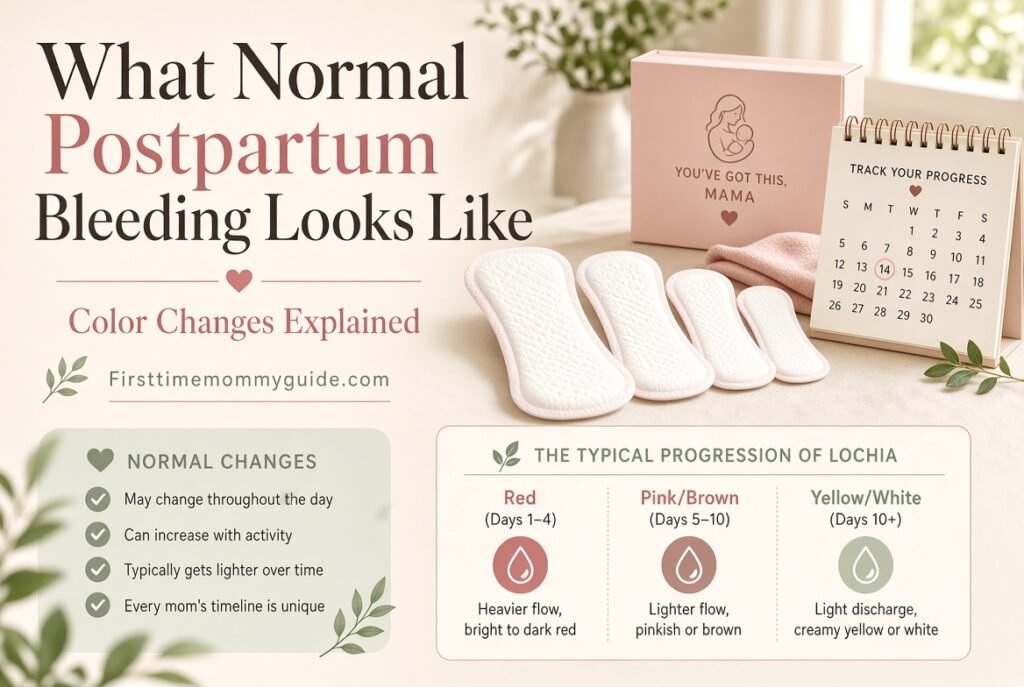
Normal lochia moves through a predictable color pattern. It goes from red to pink or brown, then to yellow or white. If it turns bright red again after lightening, that is worth a call.
Clot Size
Small clots are common early on. In the first one to three days, clots can range from grape-sized to prune-sized.
Guidance on when clots become a concern varies by source. WebMD says clots shouldn’t be bigger than a quarter, Kaiser Permanente says no bigger than an egg, and Healthline advises calling for golf ball-sized clots after the first 24 hours. If you are unsure, call.
Smell
Normal lochia smells stale and musty, like menstrual discharge. A foul or fishy smell is different and can point to infection.
Postpartum Bleeding After a C-Section vs. Vaginal Birth
You bleed either way. A C-section still exposes open blood vessels where the placenta detached, so lochia still happens.
| Factor | Vaginal birth | C-section |
|---|---|---|
| Lochia happens? | Yes | Yes |
| Early flow | Often heavier | May be lighter after the first 24 hours |
| Typical duration | About 4–6 weeks | About 4–6 weeks |
| Extra to watch | Tears or stitches: change pads at least every 4 hours | Pink, watery drainage from the incision can be normal; call if it doesn’t stop |
Vaginal deliveries often bring longer bleeding than C-sections. The difference is usually modest.
Does Breastfeeding Change Postpartum Bleeding?
Yes, in the short term. Nursing raises oxytocin, which triggers uterine contractions and can briefly increase flow during feeds.
You may also notice stronger cramps while nursing. These are usually mild and fade over the first week or two.
Why Bleeding Can Suddenly Increase
You may notice more lochia when you get up in the morning, stay active, or breastfeed. Lying down for a while lets blood pool, then it releases when you stand.
Bleeding can even stop, turn red, and fade again, often after doing too much too soon. If that happens, rest and watch the trend. Heavy flow that doesn’t ease with rest needs a call.
Lochia vs. Your First Period After Birth
Lochia is usually heavier than a period and contains blood plus uterine tissue. Your first true period only starts after lochia has ended completely.
Lochia shouldn’t fully stop and then restart. If it does, it may be your period or a complication, so check in with your provider.
If you are not breastfeeding, bleeding may stop and return as a first period, which can be heavy. Breastfeeding naturally delays ovulation, so periods often return later.
How to Manage Postpartum Bleeding at Home
What to Use
- Use large maxi pads or disposable underwear. Tampons and menstrual cups are not recommended because they may introduce bacteria and raise infection risk.
- Stock several thick pads before you go to the hospital, since you may use many per day for at least a week.
- Use a peri bottle to rinse instead of wiping. It’s gentler on a sore vaginal area.
What to Do
- Change pads often. If you have stitches, change at least every four hours.
- Rest when you can and accept help with chores.
- Drink water and eat iron-rich foods. Hydration and iron support recovery after blood loss.
- Avoid intercourse for at least six weeks after birth.
Postpartum Hemorrhage: When Bleeding Becomes an Emergency
Postpartum hemorrhage means bleeding much heavier than usual, such as soaking through two pads an hour for one to two hours. It usually happens within 24 hours of delivery.
But it isn’t limited to the hospital. It can occur up to 12 weeks after birth. Late cases can be caused by retained tissue, infection, or clotting disorders.
Postpartum Bleeding Warning Signs
| Warning sign | Why it matters | What to do |
|---|---|---|
| Soaking a pad in an hour, or two pads in an hour | Possible hemorrhage | Call now or go to the ER |
| Clots larger than a golf ball | Possible retained tissue or hemorrhage | Call now |
| Dizziness, fainting, or racing heart | Possible major blood loss | Call 911 if you pass out or have chest pain or trouble breathing |
| Bright red bleeding after it had lightened | Bright red blood after day three is a reason to call | Call your provider |
| Foul-smelling discharge or fever | Foul discharge can signal infection | Call the same day |
| Chest pain, leg swelling, or shortness of breath | Blood clots can develop up to three months postpartum | Seek emergency care |
| Severe headache or vision changes | Preeclampsia can begin after delivery | Seek urgent care |
Urgent maternal warning signs apply for up to a year after delivery. If you can’t reach your provider, go to the ER or call 911, and say you were pregnant within the last year.
How to Track Your Postpartum Bleeding

A simple log makes phone calls faster and more accurate. Tracking pad use and clot size gives your provider useful information.
Note these each day:
- How many pads you used and how full they were
- Color (red, pink, brown, yellow)
- Clot size (compare to a coin or fruit)
- Smell
- Pain, dizziness, or fever
How to Describe Your Bleeding on the Phone
Say how many pads you soaked in what time, the biggest clot size, and the current color. Add any dizziness, fever, or pain. Then say how many days postpartum you are and whether you had a C-section or vaginal birth.
Common Mistakes to Avoid
- Using tampons or menstrual cups before you are cleared
- Doing too much in week one or two and blaming the “scab bump”
- Waiting to call because you don’t want to bother anyone
- Assuming a C-section means no bleeding
- Ignoring dizziness, since it can be a sign of significant blood loss
Frequently Asked Questions (FAQs)
How long does postpartum bleeding last?
Lochia typically lasts up to six weeks. Some people have traces for up to eight weeks.
What are the three stages of postpartum bleeding?
The stages are lochia rubra (red), lochia serosa (pink to brown), and lochia alba (yellow to white). Each stage is lighter than the last.
How heavy is normal bleeding in the first week?
Expect about one thick maxi pad every two to three hours in the first three to four days. It should ease after that.
Is it normal for bleeding to get heavier at two weeks?
A short increase can happen when the placental scab sheds. If heavy flow lasts more than an hour or two or keeps worsening, call your provider.
What color is normal postpartum bleeding?
Red at first, then pink or brown, then yellow or white. A return to bright red after lightening is worth a call.
What size clots are normal after birth?
Small clots are common early. Guidance ranges from “no bigger than a quarter” to “no bigger than a golf ball,” so call if you are unsure.
Can postpartum bleeding stop and start again?
Light on-and-off spotting in the alba stage is common. But bloody discharge that stops completely and then restarts could be your period or a complication.
Does bleeding last longer after a C-section?
Not usually. Vaginal deliveries often have longer bleeding than C-sections.
Is bleeding lighter after a C-section?
It may be lighter after the first 24 hours. It is still heavier than a typical period early on.
Does breastfeeding make postpartum bleeding heavier?
It can briefly increase flow during feeds because oxytocin triggers uterine contractions. Overall duration is still about four to six weeks.
Can I use tampons or a menstrual cup after birth?
No, not for lochia. Tampons and menstrual cups may introduce bacteria and raise infection risk. Ask your provider before using them for your first period.
How many pads will I need?
Plan on several large, thick pads per day for at least the first week. Stock up before delivery.
What is postpartum hemorrhage?
It is bleeding much heavier than usual, such as soaking two pads an hour for one to two hours. It is a medical emergency.
When can postpartum hemorrhage happen?
Usually within 24 hours of delivery, but it can occur up to 12 weeks later. Late cases still need urgent care.
How do I tell lochia from my first period?
Lochia starts right after birth, is heavier, and tapers off over weeks. Your first period only begins after lochia has ended completely.
When does my period come back?
It varies. If you aren’t breastfeeding, bleeding may stop and return as a first period. Breastfeeding often delays it.
What does infected lochia smell like?
A foul or fishy odor is a red flag. Foul-smelling discharge can signal infection. Call your provider the same day, especially with fever.
Is bleeding for eight weeks normal?
Light spotting can last that long. Heavy bleeding, or a sudden increase after tapering, should be checked.
When should I go to the ER for postpartum bleeding?
Go if you are soaking through a pad in an hour or feel faint. Also go for chest pain, trouble breathing, or fever with heavy bleeding.
Can walking or exercise increase postpartum bleeding?
Yes, temporarily. More activity can increase lochia. If flow rises, rest and scale back.
When can I have sex again after giving birth?
It is best to avoid intercourse for at least six weeks. Your provider will confirm when you’re healed.
Should I worry about bleeding after week six?
If bleeding continues past six weeks or suddenly gets heavier after slowing, tell your provider. It may be normal tapering, but it deserves a check.
Conclusion
The postpartum bleeding timeline follows a clear pattern. Red bleeding comes first, then pink or brown, then pale yellow or white, usually finishing within four to six weeks.
Bleeding should get lighter over time, even with small bumps around week one or two. If it grows heavier, soaks a pad in an hour, or comes with fever, dizziness, or a foul smell, call your provider right away.
You know your body best, so trust what you notice. This article is for education only and is not medical advice. Use your provider’s guidance for your own recovery.

Dilawar Mughal
Founder and editor, First Time Mommy Guide
I research every guide against what the NHS, the AAP and the WHO publish, then write it in plain English — because most new parents are reading with one hand free, not comparing clinical guidelines. I'm not a doctor or a midwife. Every health claim on this site is sourced and linked so you can check it yourself, and anything urgent belongs with your health visitor or GP, not a blog.