General information, not medical advice. Every baby is different — if anything worries you, speak to your midwife, health visitor or GP rather than waiting.
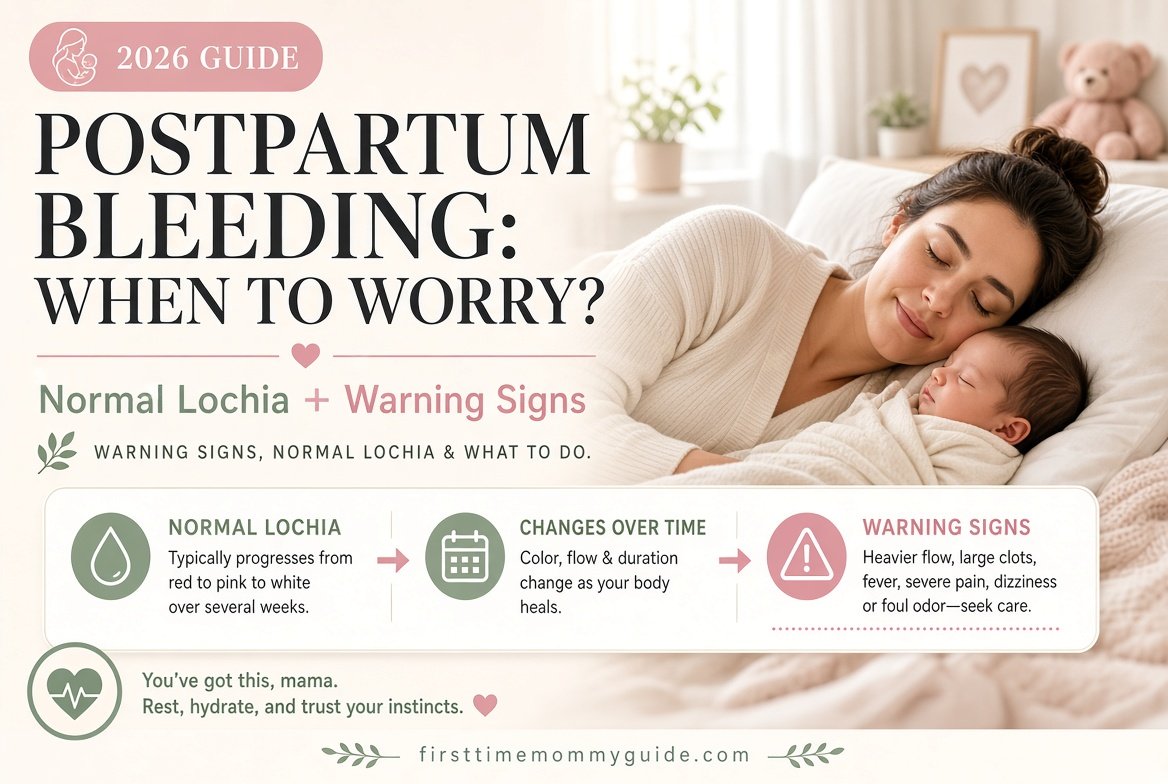
Postpartum Bleeding When to Worry is an important part of understanding the normal recovery process after childbirth. Vaginal bleeding after delivery, known as lochia, is common as the uterus sheds blood, mucus, and tissue left from pregnancy.
The bleeding typically changes in color, amount, and consistency over the days and weeks following birth, gradually becoming lighter as the body heals.
However, very heavy bleeding, large blood clots, a sudden increase in bleeding, dizziness, fainting, severe pain, fever, or a foul-smelling discharge can signal a complication that requires prompt medical attention.
Knowing the difference between expected postpartum bleeding and warning signs can help new mothers recognize when medical care may be needed.
Table of Contents
Postpartum Bleeding When to Worry?
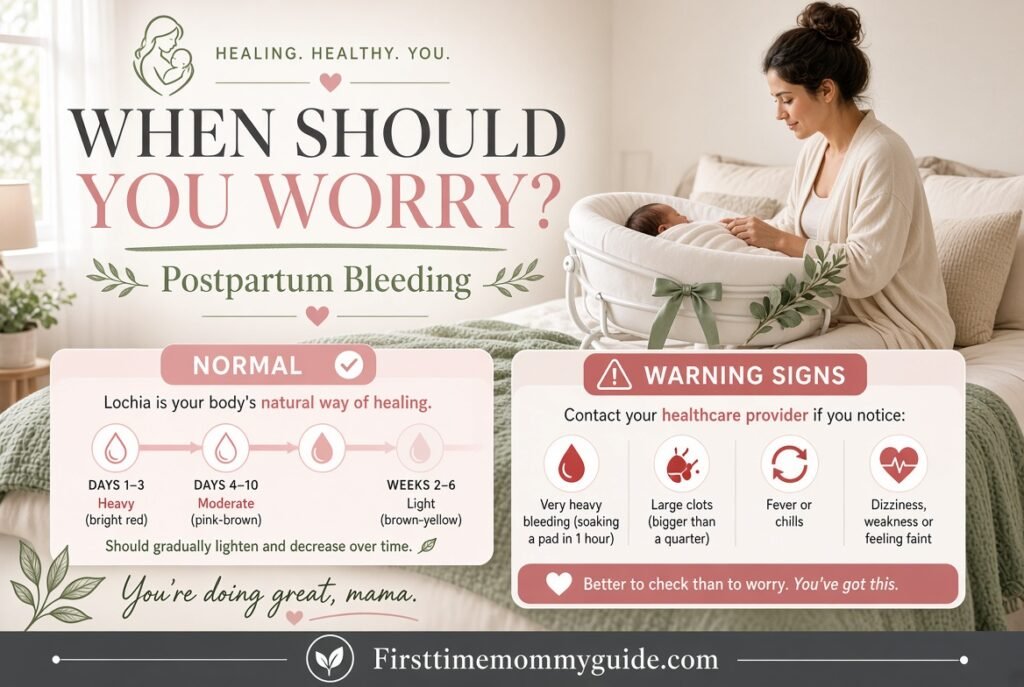
Short answer: Worry if you soak through a heavy pad every hour for two hours or more, pass clots larger than a golf ball, have bleeding that gets heavier instead of lighter, or feel dizzy, faint or have a racing heart. Fever above 100.4°F (38°C) or foul-smelling discharge also needs prompt care.
Normal: Bleeding (lochia) starts red and heavy, then fades to pink or brown, then yellow-white over about 4 to 6 weeks.
When in doubt, call. Providers would much rather hear from you early than late.
Key Takeaways
- Postpartum bleeding (lochia) is normal and can last about 4 to 6 weeks.
- It should slowly get lighter and change color over time.
- Soaking a pad an hour for two hours or more is an emergency warning sign.
- Large clots, fever, foul smell and dizziness need prompt medical attention.
- Postpartum hemorrhage can happen right after birth or days to weeks later.
- Use pads, not tampons, until your provider says otherwise.
- Trust your instincts and call if something feels wrong.
Call 911 or Your Provider: A Quick Decision Guide
| Situation | What to do |
|---|---|
| Bleeding that will not slow or stop, or soaking a heavy pad every hour for 2 hours or more | Call 911 |
| Dizziness, fainting, racing heart, blurry vision, cold clammy skin, confusion | Call 911 |
| Chest pain or trouble breathing | Call 911 |
| Fever of 100.4°F (38°C) or higher, chills, or foul-smelling discharge | Call your provider right away |
| Clots larger than a golf ball, or many clots | Call your provider right away |
| Bright red bleeding returns after it had turned pink or brown | Call your provider the same day |
| Bleeding gets heavier instead of tapering off | Call your provider the same day |
| Bleeding or discharge continuing past 6 weeks | Call your provider’s office |
| Light spotting that comes and goes, gradually easing | Track it and mention it at your checkup |
What Is Normal Postpartum Bleeding (Lochia)?
After birth, your uterus sheds the lining and extra blood that supported your pregnancy. This discharge is called lochia. It is a mix of blood, mucus and uterine tissue.
Lochia is not the same as a period. It comes from the healing of the inside of your uterus, where the placenta was attached.
How Much Blood Loss Is Typical?
Most people lose about half a quart (around 500 mL) during a vaginal birth. After a cesarean birth, the average is about one quart (around 1,000 mL). This early loss happens during and just after delivery, before you even leave the hospital.
Your body prepares for this. Blood volume rises during pregnancy, which helps you cope with normal blood loss.
The Three Stages of Lochia
Timing varies from person to person. Use this table as a general guide, not a strict schedule.
| Stage | Typical timing | Color | Flow | What is normal |
|---|---|---|---|---|
| Lochia rubra | Days 1 to 4 (sometimes up to a week) | Bright to dark red | Heavy, like a heavy period | A few small clots |
| Lochia serosa | About day 4 to weeks 2 | Pink to brownish | Lighter and thinner | Very few or no clots |
| Lochia alba | About weeks 2 to 6 | Yellow, cream or white | Light discharge | Little to no blood |
Bleeding Does Not Always Go Smoothly
Lochia rarely fades in a straight line. You may have a lighter morning and a heavier evening. A brief increase is common when you are more active.
Nursing can also cause a short gush. Breastfeeding releases oxytocin, which makes the uterus contract and pushes out some lochia.
The key is the overall trend. Over days and weeks, bleeding should ease, not build.
What Does Normal Lochia Smell Like?
Normal lochia smells like a period. It is earthy or slightly musty.
A strong, foul or fishy smell is different. Combined with fever or pain, it can point to infection.
Postpartum Bleeding Warning Signs: When to Worry
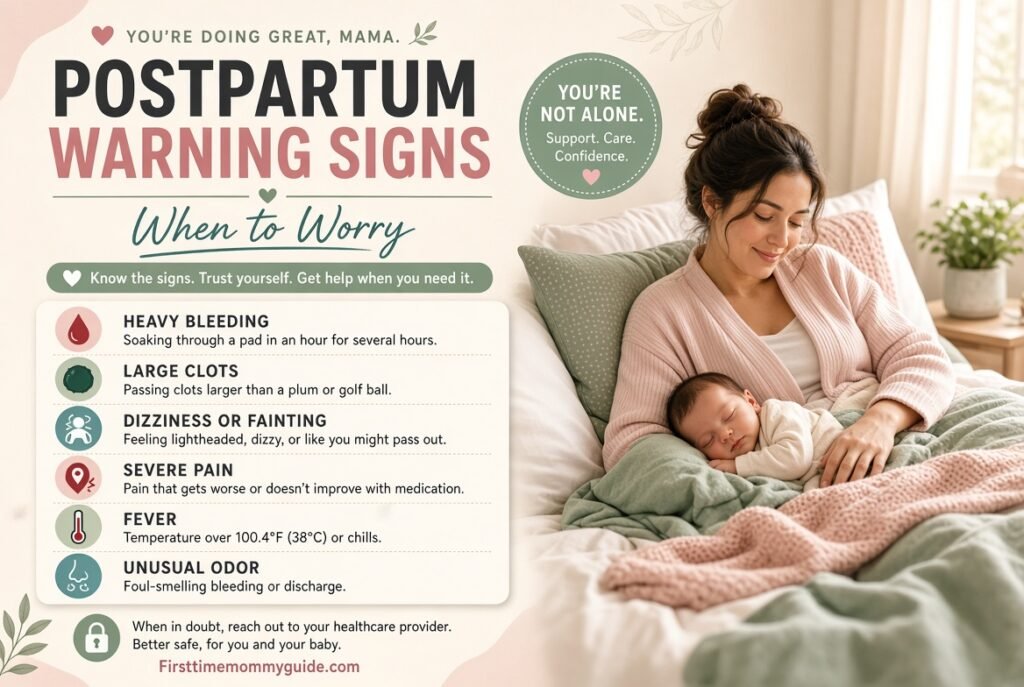
Learn these signs before you need them. They are easy to forget when you are exhausted and caring for a newborn.
Very Heavy Bleeding
Soaking through a heavy pad every hour for two hours or more is a red flag. It can signal postpartum hemorrhage.
Bleeding that comes in a gush or does not slow down is also a reason to call 911.
Large Blood Clots
A few small clots are normal in the first days. Clots larger than a golf ball, or passing many clots, are not.
Save any large clot or tissue in a clean container or bag if you can. Your provider may want to see it.
Bleeding That Gets Heavier
Bleeding should taper. If it lightens, then suddenly turns heavy or bright red again, call your provider.
A quick bump after a busy day can happen. New bright red bleeding that keeps going deserves a check.
Bleeding That Lasts Beyond Six Weeks
Most lochia ends by about six weeks. If you are still bleeding heavily or seeing bright red blood by then, call your provider.
Light spotting near the end can happen. Ask about it at your checkup.
Fever, Chills or Foul Smell
A temperature of 100.4°F (38°C) or higher, especially with heavy bleeding or clots, can signal a uterine infection called endometritis.
Chills, nausea, belly pain and foul-smelling discharge add to the concern.
Signs That You Have Lost a Lot of Blood
Heavy blood loss affects the whole body. Watch for these signs.
- Dizziness or feeling faint
- Racing or pounding heartbeat
- Cold, clammy or pale skin
- Blurry vision
- Confusion or extreme sleepiness
- Weakness or shortness of breath
These are emergency signs. Call 911.
Normal vs Warning Signs at a Glance
| Feature | Usually normal | Warning sign |
|---|---|---|
| Amount | Heavy at first, then lighter | Soaking a pad an hour for 2 hours or more |
| Trend | Slowly tapers | Gets heavier or returns after slowing |
| Clots | A few small ones early on | Larger than a golf ball, or many |
| Color | Red, then pink or brown, then yellow-white | Bright red days after birth or after it had faded |
| Smell | Like a period | Foul or fishy |
| Duration | Up to about 6 weeks | Heavy or bright red bleeding at 6 weeks |
| How you feel | Tired but stable | Dizzy, faint, racing heart, fever |
What Is Postpartum Hemorrhage?
Postpartum hemorrhage (PPH) is heavy bleeding after giving birth. It is serious, but it is not common. About 1 to 5 in 100 people who give birth have it.
Many US guidelines define it as blood loss of about 1,000 mL (one quart) or more, or blood loss with signs of low blood volume.
When Can It Happen?
Most cases happen within the first 24 hours after birth. That is why you are watched closely in the hospital.
It can also happen later, from about 24 hours up to 12 weeks after delivery. This is called late or secondary postpartum hemorrhage. It can start after you are home.
What Causes Postpartum Hemorrhage?
Doctors often group causes into four categories called the “four T’s.”
| Cause | What it means | Approximate share of cases |
|---|---|---|
| Tone | The uterus does not contract firmly enough (uterine atony) | About 70% |
| Trauma | Tears in the uterus, cervix or vagina | About 20% |
| Tissue | Pieces of placenta stay in the uterus | About 10% |
| Thrombin | A blood clotting problem | About 1% |
Who Has a Higher Risk?
Anyone can have postpartum hemorrhage, including people with no risk factors. Some factors raise the odds.
- A long labor
- Twins or more
- A very large baby
- Uterine fibroids
- A previous postpartum hemorrhage
- High blood pressure disorders in pregnancy
- Blood clotting disorders
- Anemia
Tell your care team about any of these before delivery.
How Is Postpartum Hemorrhage Treated?
Treatment depends on the cause. Care teams move fast.
- Uterine massage and medicines to make the uterus contract
- Removing leftover placenta tissue
- Repairing tears
- IV fluids and sometimes blood transfusion
- Procedures to put pressure inside the uterus
- Surgery to find and stop the bleeding
In rare, life-threatening cases, removal of the uterus (hysterectomy) may be needed.
Other Causes of Concerning Postpartum Bleeding
Not all worrying bleeding is hemorrhage. Other problems can look similar.
| Cause | Typical clues |
|---|---|
| Retained placenta tissue | Heavy bleeding or clots days after birth, cramping |
| Uterine infection (endometritis) | Fever, chills, foul-smelling discharge, belly tenderness |
| Tears in the birth canal | Steady bleeding even though the uterus feels firm |
| Uterus not shrinking properly (subinvolution) | Prolonged or heavy lochia, uterus feels soft |
| Blood clotting disorder | Excessive bleeding, history of heavy periods or easy bruising |
Only a provider can tell these apart. If your bleeding worries you, get checked.
How to Track Your Bleeding at Home

A simple log helps you and your provider see the trend. It also helps you stay calm when a day feels heavy.
What to Use
Use sanitary pads or disposable underwear, not tampons. Do not put anything in the vagina for at least six weeks unless your provider says it is fine. Tampons can introduce bacteria and increase infection risk.
What to Write Down
Keep a small notebook or a phone note. Record these details each time you change your pad.
| Time | Pad fullness (light, medium, soaked) | Color | Clots (size) | How I feel |
|---|---|---|---|---|
| 8:00 AM | Medium | Dark red | Two small | Tired |
| 12:00 PM | Light | Pink-brown | None | Okay |
| 6:00 PM | Medium | Red | One small | Dizzy? Call |
What to Say When You Call
Short, clear facts help the nurse decide quickly. Try this script.
- “I gave birth on [date] by [vaginal birth or cesarean].”
- “I am soaking one pad every [time] and passing clots the size of [comparison].”
- “My bleeding was [color] and is now [color].”
- “I feel [dizzy, faint, feverish, fine].”
What to Do If You Think You Are Bleeding Too Much
Act quickly and stay calm. Here are the steps.
- Call 911 if the bleeding is heavy, will not slow, or you feel faint. Do not drive yourself.
- Lie down and keep your feet raised if you can. Stay where someone can find you.
- Ask someone to watch the baby or bring the baby with you.
- Note the time and how many pads you have soaked.
- Save clots or tissue in a clean bag or container to show the care team.
- Follow dispatcher instructions. If a nurse taught you uterine (fundal) massage, you may be told to use it, but never delay calling for help.
What Happens at the Hospital?
Knowing what to expect can lower anxiety. The team will act fast.
They will check your vital signs, feel your belly and uterus and estimate blood loss. They may start IV fluids and order blood tests or an ultrasound.
Treatment is based on the cause. Many people recover fully after prompt care.
Postpartum Bleeding After a C-Section vs Vaginal Birth
You still get lochia after a cesarean birth. The uterus heals either way.
| Feature | Vaginal birth | Cesarean birth |
|---|---|---|
| Lochia | Yes | Yes |
| Typical blood loss at delivery | About 500 mL | About 1,000 mL |
| Lochia duration | About 4 to 6 weeks | About 4 to 6 weeks, sometimes a little lighter |
| Extra concerns | Tears in the birth canal | Incision pain, infection, fever |
| Warning signs | Same | Same |
Warning signs are the same in both cases. Heavy bleeding, fever and dizziness always need attention.
Lochia vs Your First Period After Birth
Your period will return. The timing depends on breastfeeding and your body.
| Feature | Lochia | First period |
|---|---|---|
| When it happens | Starts right after birth | Weeks to months later |
| Cause | Healing of the uterus after birth | Normal menstrual cycle restarting |
| Pattern | Fades from red to pink to yellow-white | Returns to a regular cycle over time |
| Breastfeeding effect | May cause brief gushes | May delay the first period |
If you are not breastfeeding, a period can return as early as about four weeks after birth. The first period is sometimes heavier than usual. If it soaks a pad an hour for two hours, call your provider.
Managing Normal Postpartum Bleeding
You can make normal bleeding more comfortable with a few habits.
- Stock up on large maternity pads before you leave the hospital.
- Change pads often to stay clean and dry.
- Rest as much as you can and let others help.
- Increase activity slowly. Sudden increases can bring on more bleeding.
- Drink water and eat iron-rich foods.
- Wear clothing you do not mind staining.
- Avoid sex until your provider says it is safe, usually around six weeks.
Anemia After Heavy Blood Loss
Heavy bleeding can lower your iron and cause anemia. It can make fatigue feel worse than normal new-parent exhaustion.
Watch for pale skin, dizziness, shortness of breath and a fast heartbeat. Talk to your provider about a blood test and iron if you feel very drained.
Foods rich in iron include lean red meat, poultry, beans, lentils, spinach and iron-fortified cereals. Pair them with vitamin C foods to help absorption.
Common Mistakes to Avoid
| Mistake | Why it matters | What to do instead |
|---|---|---|
| Waiting to see if heavy bleeding stops | Blood loss can become dangerous quickly | Call 911 or your provider right away |
| Using tampons or menstrual cups | Raises infection risk | Use pads for at least 6 weeks |
| Ignoring a fever | May signal infection | Call for temperatures of 100.4°F or higher |
| Driving yourself when dizzy | You could faint | Call 911 |
| Not tracking bleeding | Hard to see trends | Keep a simple pad log |
| Assuming “it’s just my period” | Lochia can hide a problem | Call if unsure |
| Skipping postpartum checkups | Problems can be missed | Attend your visits (ACOG advises early contact and a full visit within 12 weeks) |
| Feeling embarrassed to call | Delays care | Remember that providers expect these calls |
Expert Tips for First-Time Moms
- Learn the warning signs before you leave the hospital. Ask your nurse to go over them.
- Keep your provider’s after-hours number saved in your phone.
- Ask a partner or family member to learn the signs too. They may notice things you miss.
- Do not compare your bleeding to a friend’s. Every recovery is different.
- If you feel dismissed, say it again clearly: “I am worried about my bleeding and want to be seen.”
- Get plenty of rest, even when it feels impossible. Overdoing it can increase bleeding.
Practice Scenarios: Normal or Urgent?
| Scenario | What it likely means |
|---|---|
| Day 3: bright red flow like a heavy period, a few small clots, feeling okay | Usually expected. Keep tracking. |
| Day 10: flow had turned pink-brown, then bright red again after a busy day | Rest, watch closely and call your provider for guidance. |
| Day 5: soaking a pad an hour for 2 hours and feeling dizzy | Emergency. Call 911. |
| Week 3: temperature of 100.6°F and foul-smelling discharge | Call your provider right away. |
| Week 5: light yellow-white discharge, no odor | Typical late lochia. |
| Week 7: still soaking pads with bright red blood | Call your provider. |
Frequently Asked Questions (FAQs)
When should I worry about postpartum bleeding?
Worry if you soak a heavy pad every hour for two hours or more, pass clots larger than a golf ball, or feel dizzy or faint. Also call for fever, foul-smelling discharge, or bleeding that gets heavier instead of lighter.
How much bleeding is normal after birth?
Bleeding is heavy at first, like a heavy period, and then fades. It is normal for lochia to change from red to pink or brown to yellow-white over about 4 to 6 weeks.
How many pads per hour is too much after giving birth?
Soaking through one heavy pad an hour for two hours or more is a warning sign. Call 911 or your provider right away.
What size clot is normal postpartum?
A few small clots in the first days are normal. Clots larger than a golf ball, or many clots, need medical attention.
How long does postpartum bleeding last?
Most people bleed for about 4 to 6 weeks. The flow should gradually lighten and change color during that time.
What color is normal postpartum bleeding?
It starts bright or dark red, becomes pink or brown, and finally turns yellow, cream or white. Bright red blood returning after it had faded is a reason to call.
Can postpartum bleeding get heavier after it slows down?
A brief increase after activity can be normal. Bleeding that keeps getting heavier, or turns bright red again, should be checked by a provider.
Why did my bleeding suddenly increase?
Common triggers are more activity, long periods on your feet, or nursing. A sudden, steady increase can also signal a problem such as retained tissue or infection, so call if it does not settle with rest.
Is bright red bleeding after a week normal?
Not usually. Lochia typically fades to pink or brown after the first several days. Bright red bleeding that returns or stays heavy deserves a call to your provider.
What is postpartum hemorrhage?
It is heavy bleeding after giving birth, often defined as about 1,000 mL of blood loss or bleeding with signs of low blood volume. It is serious and needs emergency care.
Can postpartum hemorrhage happen days or weeks after birth?
Yes. Most cases occur in the first 24 hours, but it can happen up to about 12 weeks after delivery. This is called late or secondary postpartum hemorrhage.
What are the signs of postpartum hemorrhage?
Signs include heavy or gushing bleeding, large clots, dizziness, a racing heart, blurry vision, cold clammy skin and feeling faint. Call 911 right away.
Does breastfeeding affect postpartum bleeding?
Nursing releases oxytocin, which helps the uterus contract. You may notice cramping and a short gush of lochia while feeding. It can also delay the return of your period.
Is bleeding different after a C-section?
You still have lochia after a cesarean birth. The warning signs are the same: very heavy bleeding, large clots, fever and dizziness.
Can I use tampons or menstrual cups after birth?
No, not for at least six weeks unless your provider says it is fine. Anything placed in the vagina can introduce bacteria and cause infection.
What does infected lochia smell like?
It has a strong, foul or fishy odor, unlike the earthy smell of normal lochia. Fever, chills or belly pain often come with it.
Should I go to the ER for postpartum bleeding?
Yes, if bleeding is very heavy, will not slow, or you feel faint, dizzy or short of breath. Call 911 rather than driving yourself.
When does my period return after birth?
If you are not breastfeeding, it can return as early as about four weeks after birth. Breastfeeding often delays it for months.
Does exercise or activity make postpartum bleeding worse?
Too much activity too soon can bring on more bleeding. Rest, and slowly build up. If bleeding turns bright red or heavy, slow down and call your provider.
What if I bleed for more than six weeks?
Call your provider. Light spotting near the end may be fine, but heavy or bright red bleeding after six weeks needs an evaluation.
Conclusion
Knowing postpartum bleeding when to worry can protect your health. Normal lochia fades over about 4 to 6 weeks. Heavy soaking, large clots, fever, a foul smell, dizziness or bleeding that grows heavier are warning signs.
Trust your instincts and call your provider or 911 without waiting. You are never bothering anyone by asking for help.
Keep learning about recovery and newborn care at First Time Mommy Guide, and save your provider’s number where you can find it fast.

Dilawar Mughal
Founder and editor, First Time Mommy Guide
I research every guide against what the NHS, the AAP and the WHO publish, then write it in plain English — because most new parents are reading with one hand free, not comparing clinical guidelines. I'm not a doctor or a midwife. Every health claim on this site is sourced and linked so you can check it yourself, and anything urgent belongs with your health visitor or GP, not a blog.