
General information, not medical advice. Every baby is different — if anything worries you, speak to your midwife, health visitor or GP rather than waiting.
When Do Infants Roll From Tummy to Back? Most infants roll from tummy to back around 6 months old, according to the CDC’s updated 2022 milestone checklist.
Some babies show early signs as young as 3 to 4 months. Every baby develops at their own pace.
Table of Contents
What Does “Rolling From Tummy to Back” Mean
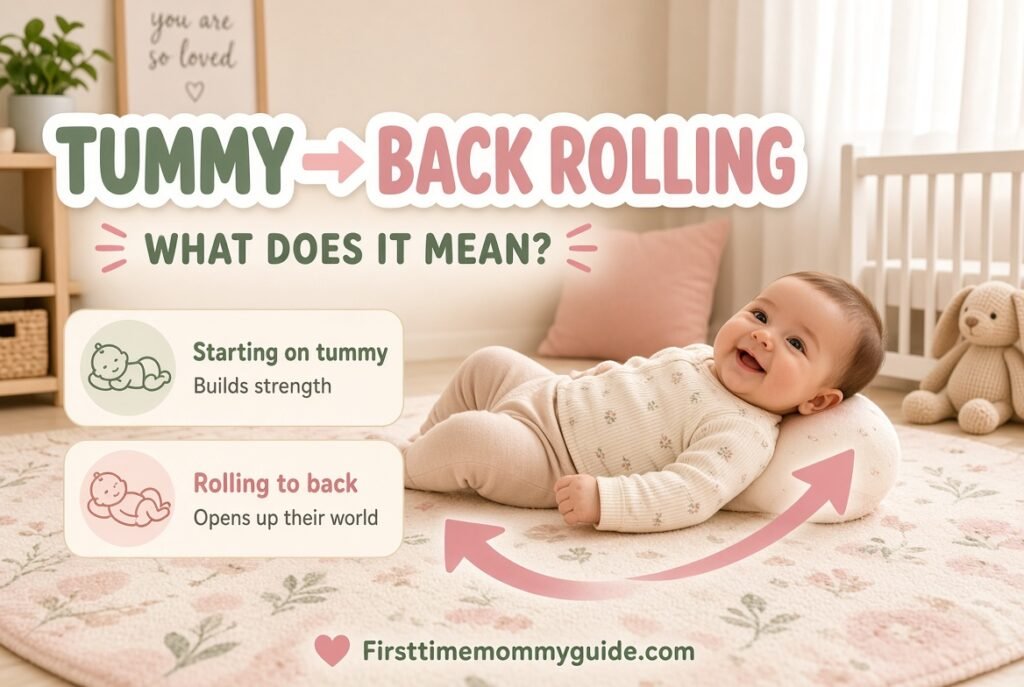
Rolling from tummy to back is when a baby flips their body from a face-down position to lying face-up. It is usually a baby’s first big rolling milestone.
This movement requires coordinated strength in the neck, shoulders, and core. It is often described as a stepping stone toward crawling and sitting.
When Do Infants Roll From Tummy to Back
Most infants roll from tummy to back somewhere between 3 and 6 months of age. The CDC’s 2022 “Learn the Signs. Act Early.” checklist lists this skill as a 6-month milestone.
That means most babies, roughly three out of four, are rolling from tummy to back by the time they reach 6 months. Some babies achieve it earlier, and that is completely normal too.
Why the CDC Changed the Age Guideline
Before 2022, many older resources listed rolling as a 4-month milestone. That earlier guideline was set at the 50th percentile, meaning only half of babies could do it by then.
The CDC’s 2022 update moved rolling to the 6-month checklist and raised the threshold to the 75th percentile. This change reflects when most babies, not just half, can reliably perform the skill.
Rolling Timeline by Age
| Age Range | What to Expect |
|---|---|
| 0 to 2 months | Building early neck and head control |
| 3 months | May show first rocking or rolling attempts |
| 4 to 5 months | Some babies begin rolling tummy to back |
| 6 months | Most babies roll from tummy to back reliably |
| 6 to 8 months | Many babies start rolling back to tummy as well |
Signs Your Baby Is Getting Ready to Roll
- Lifting the head and chest during tummy time.
- Pushing up on straightened arms while on the belly.
- Rocking side to side while lying down.
- Reaching for toys during tummy time.
- Kicking legs with more force and control.
How Tummy Time Helps Rolling

Tummy time is supervised playtime spent on the belly while awake. The American Academy of Pediatrics recommends starting it as soon as a baby comes home from the hospital.
This practice strengthens the neck, shoulder, and core muscles needed for rolling. Babies who get consistent tummy time often reach the rolling milestone with less frustration.
Tummy to Back vs Back to Tummy
| Feature | Tummy to Back | Back to Tummy |
|---|---|---|
| Typical Order | Usually learned first | Usually learned a few weeks later |
| Muscles Needed | Neck, shoulder, upper core | Hip, leg, and core rotation |
| CDC Checklist Status | Listed at 6 months | Not a separate checklist item |
| Difficulty Level | Slightly easier for most babies | Often takes more coordination |
What to Do Once Rolling Begins
Rolling changes how you approach sleep safety right away. Once a baby shows any sign of rolling, swaddling should stop immediately.
Always place a baby on their back to start sleep, following AAP safe sleep guidance. Once a baby can roll both ways independently, you do not need to reposition them during the night.
Premature Babies and Adjusted Age
Babies born prematurely are usually tracked using adjusted age rather than birth age. Adjusted age is calculated from the original due date, not the actual birth date.
This means a baby born 8 weeks early may reach the rolling milestone about 8 weeks later than a full-term baby. Pediatricians use this adjustment for most motor milestones during the first two years.
When to Talk to a Pediatrician
Most babies show at least some rolling attempts by 6 to 7 months. If your baby shows no rolling attempts by this age, it is worth mentioning at the next checkup.
Other signs worth discussing sooner include very stiff or very floppy muscle tone, poor head control, or movement that seems stronger on one side of the body. These are not automatic red flags, but they deserve a professional look.
Common Mistakes Parents Make
- Comparing their baby’s timeline directly to another baby’s.
- Skipping tummy time because the baby dislikes it at first.
- Continuing to swaddle after early rolling signs appear.
- Assuming a slightly later roll means something is wrong.
- Placing too much focus on a single milestone instead of overall progress.
Expert Tip

Progress matters more than a single date on a calendar. Pediatricians look at strength, symmetry, and steady improvement over time, not just whether a baby has rolled by a specific day.
Frequently Asked Questions (FAQs)
When do infants roll from tummy to back?
Most infants roll from tummy to back around 6 months old. Some babies begin showing early signs as young as 3 to 4 months.
Is rolling from tummy to back easier than back to tummy?
Yes, most babies learn tummy to back rolling first. Back to tummy rolling usually follows a few weeks or months later.
What does the CDC say about rolling milestones?
The CDC’s 2022 checklist lists “rolls from tummy to back” as a 6-month milestone. This is set at the age when about three out of four babies can do it.
Why did the rolling milestone age change from 4 months to 6 months?
The CDC updated its guidelines in 2022 to reflect more accurate developmental data. The new 6-month age represents when most babies, not just half, achieve the skill.
What if my baby hasn’t rolled by 6 months?
Many babies are still working on rolling around 6 months, so some delay is common. If there are no rolling attempts by 6 to 7 months, mention it to your pediatrician.
Does tummy time really help babies roll?
Yes, tummy time builds the neck, shoulder, and core strength needed for rolling. The American Academy of Pediatrics recommends starting it early and doing it consistently.
Should I stop swaddling once my baby starts rolling?
Yes, swaddling should stop as soon as a baby shows any sign of rolling. A swaddled baby who rolls cannot free their arms to reposition safely.
Can premature babies roll later than full-term babies?
Yes, premature babies are usually tracked by adjusted age based on their due date. This often means they reach rolling and other motor milestones later than the birth-date calendar suggests.
What are early signs a baby is preparing to roll?
Early signs include lifting the head during tummy time, pushing up on the arms, and rocking side to side. Increased leg kicking and reaching for toys are also common signs.
Is it normal for a baby to roll only once and then stop?
Yes, some babies roll once and then do not repeat it for days or weeks. This is a normal part of practicing and refining a new motor skill.
Does rolling both ways matter for development?
Rolling both ways shows growing strength and coordination on both sides of the body. While it is not a separate CDC checklist item, pediatricians still watch for balanced movement.
What position should I place my baby in for sleep after they start rolling?
Always place your baby on their back to begin sleep, per AAP safe sleep guidance. Once they can roll both ways independently, you do not need to reposition them overnight.
Can delayed rolling be a sign of a medical condition?
Delayed rolling alone is usually not a concern, since babies develop at different paces. However, delayed rolling combined with stiffness, floppiness, or uneven movement is worth discussing with a pediatrician.
How much tummy time does a baby need each day?
There is no single fixed number, but consistent short sessions throughout the day work well. As babies grow stronger, tummy time sessions can gradually get longer.
What is the difference between rolling and true independent rolling?
Early rolling attempts may look accidental, driven by rocking or kicking momentum. True independent rolling happens when a baby can repeat the movement intentionally and reliably.
Conclusion
Most infants roll from tummy to back around the 6-month mark, based on the CDC’s updated 2022 milestone checklist, though early signs can appear as young as 3 to 4 months. Consistent tummy time, patience, and attention to overall strength and symmetry matter more than hitting an exact date.
If your baby hasn’t shown rolling attempts by 6 to 7 months, or shows other signs like stiffness or uneven movement, bring it up at your next pediatrician visit. Otherwise, celebrate this milestone at your baby’s own pace and keep offering safe, supervised floor time to help their progress along.

Dilawar Mughal
Founder and editor, First Time Mommy Guide
I research every guide against what the NHS, the AAP and the WHO publish, then write it in plain English — because most new parents are reading with one hand free, not comparing clinical guidelines. I'm not a doctor or a midwife. Every health claim on this site is sourced and linked so you can check it yourself, and anything urgent belongs with your health visitor or GP, not a blog.