General information, not medical advice. Every baby is different — if anything worries you, speak to your midwife, health visitor or GP rather than waiting.
Bringing a newborn home is one of the most exciting moments for every parent, but knowing what your baby truly needs during the first few months can feel overwhelming. With endless baby products available, it is easy to wonder what is essential and what can wait.
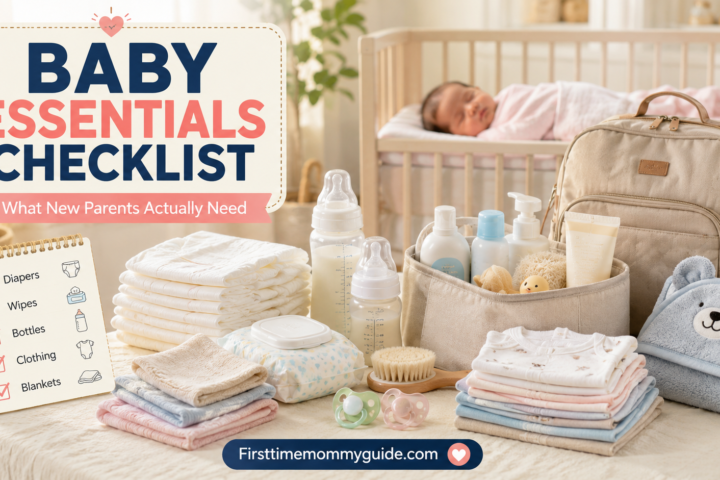
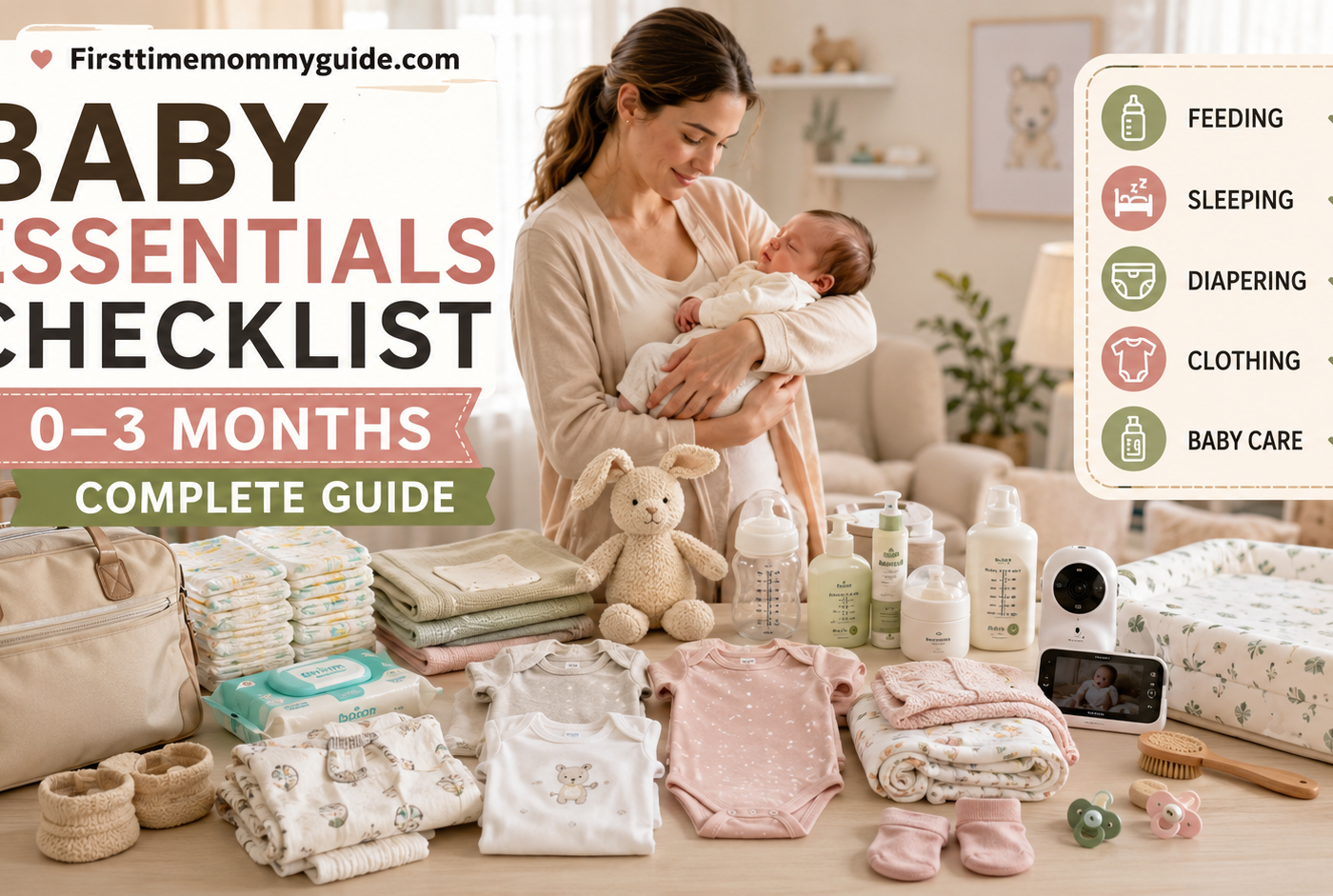
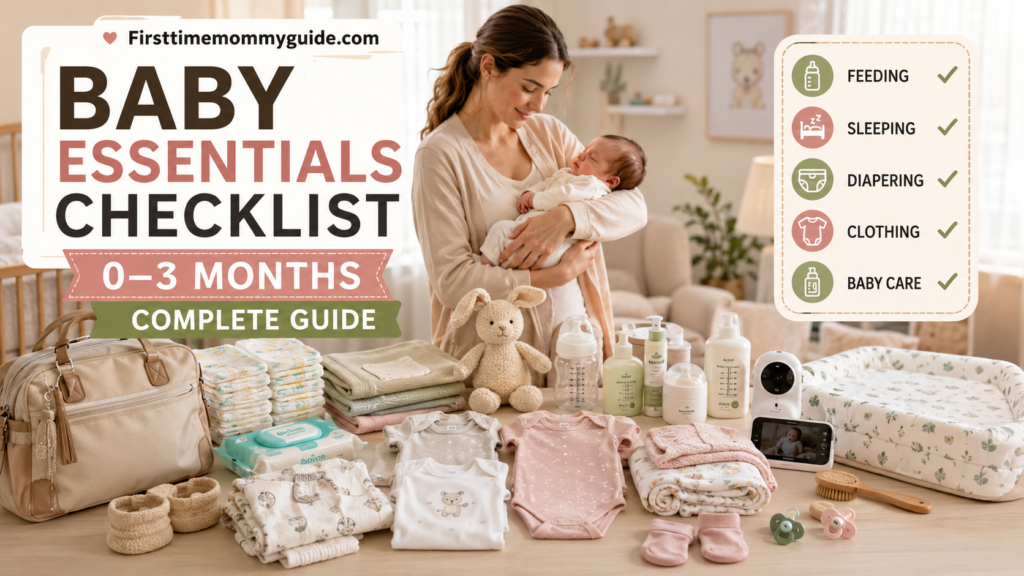
This Baby Essentials Checklist 0–3 Months is designed to help new parents prepare with confidence by covering the must-have items your little one needs for comfort, safety, feeding, sleeping, and everyday care.
Staring at a baby registry with 200 items on it is enough to make anyone’s head spin. The truth is, a newborn only needs a handful of categories covered well: a safe place to sleep, a way to eat, diapers, a few clothes, and basic health and safety gear. Everything else is optional.
Table of Contents
Quick Answer: What a Newborn Actually Needs (0–3 Months)
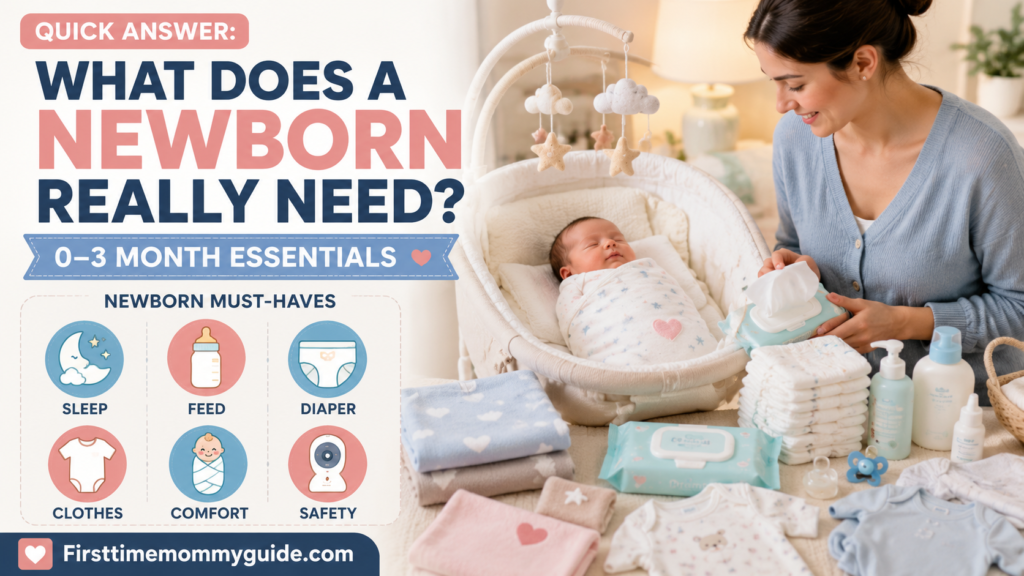
A newborn’s true essentials fall into six categories: a firm, flat sleep space (bassinet or crib); feeding supplies (bottles or breastfeeding gear); 8–12 diapers a day plus wipes; 6–8 onesies and 4–6 footed sleepers; basic health items (thermometer, nasal aspirator); and a properly installed car seat. Nearly everything else can wait until you know your baby’s specific needs.
When to Buy Baby Essentials (Timeline for Expecting Parents)
You don’t need everything the day you bring baby home, but a few items are non-negotiable before delivery.
- By 32–35 weeks pregnant: Car seat purchased and installed, safe sleep space set up, and initial diaper/wipe stock on hand.
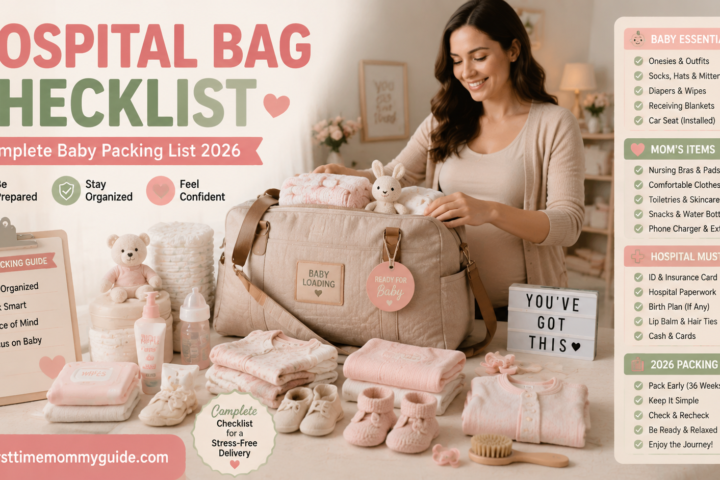
- By 36–37 weeks: Hospital bag packed, going-home outfit ready, basic clothing and feeding supplies stocked.
- First week home: Everything else falls into place as you learn your baby’s patterns — many experienced parents deliberately wait to buy extra items until they see what actually gets used.
Pediatricians often encourage a similar approach: cover the basics before birth, then fill gaps in gradually rather than overbuying up front.
Safe Sleep Essentials (0–3 Months)
Safe sleep is the single most important category on this list, because it’s directly tied to reducing the risk of Sudden Infant Death Syndrome (SIDS) and other sleep-related infant deaths.
Quick answer: The American Academy of Pediatrics (AAP) recommends babies sleep alone, on their back, on a firm, flat surface, in a crib or bassinet that meets Consumer Product Safety Commission (CPSC) standards — with nothing else in the sleep space.
Bassinet vs. Crib — Which Do You Need First?
| Feature | Bassinet | Crib |
|---|---|---|
| Best for | First 3–6 months, room-sharing | Birth through toddlerhood |
| Portability | High — easy to move room to room | Low — stationary |
| Space needed | Small footprint | Larger footprint |
| Typical outgrow point | Around 3–6 months or when baby can push up | N/A — grows with baby (with conversion kits) |
| Cost | Lower upfront cost | Higher upfront cost, but longer-term use |
Many families start with a bassinet next to the bed for the first few months, since the AAP recommends room-sharing without bed-sharing for at least the first six months, then transition to a crib.
What the AAP Recommends for Safe Sleep
The AAP’s ABC rule is an easy way to remember the basics: Alone, on the Back, in a Crib (or bassinet/play yard). Beyond position, a few setup details matter most:
- Sleep surface must be firm — if your hand leaves an indentation when pressed down, it’s too soft.
- No inclined sleep products; the AAP considers surfaces angled more than 10 degrees unsafe for infant sleep.
- No pillows, loose blankets, bumpers, or stuffed animals in the sleep space.
- Room temperature comfortable for a lightly-dressed adult — overheating is a known risk factor.
- Car seats, swings, and strollers are not recommended for routine sleep, especially under 4 months.
Sleep Items to Skip
| Item | Why It’s Not Recommended |
|---|---|
| Crib bumpers | Suffocation and entrapment risk; not shown to prevent injury |
| Sleep positioners/wedges | No proven SIDS benefit; suffocation risk |
| Weighted swaddles or sleepers | Increased suffocation and overheating risk, no proven sleep benefit |
| Inclined sleepers | Considered unsafe by the AAP for routine infant sleep |
| Loose blankets in the crib | Use a wearable blanket or sleep sack instead |
Feeding Essentials (0–3 Months)
Feeding supplies depend heavily on whether you’re breastfeeding, formula feeding, or combination feeding — but a few tools apply either way.
Breastfeeding Essentials
- Nursing pillow
- Nursing bras and pads
- Nipple cream
- Breast pump (many insurance plans cover one — order around 28–35 weeks pregnant so it arrives before baby, since some plans open their ordering window 30–60 days before your due date)
- Milk storage bags or containers
- A few bottles for pumped milk, if needed
Formula Feeding Essentials
- Bottles (start with 4–6, sized for newborns)
- Formula (check with your pediatrician on type)
- Bottle brush and drying rack
- Bottle warmer (optional, not essential)
- Formula dispenser for outings (optional)
Burping and Soothing Tools
- Burp cloths (6–10, since spit-up is frequent in this stage)
- Bibs (a few, mainly for drool and spit-up rather than solid food)
- Pacifier, if you choose to use one
Diapering Essentials
Diapering is the highest-frequency task of the newborn stage, so it’s worth setting up an efficient station from day one.
Quick answer: Newborns typically go through 8–12 diapers per day in the first month, gradually settling to around 6–8 per day by months 2–3 — roughly 250–300 diapers per month in this stage.
| Age | Diapers per Day (approx.) | Diapers per Week (approx.) |
|---|---|---|
| Week 1 | 10–12 | 70–84 |
| Weeks 2–4 | 8–10 | 56–70 |
| Months 2–3 | 6–8 | 42–56 |
Cloth vs. Disposable Diapers
| Factor | Disposable | Cloth |
|---|---|---|
| Upfront cost | Low | Higher (initial stash investment) |
| Ongoing cost | Higher over time | Lower over time |
| Convenience | Higher — no laundering | Lower — requires regular washing |
| Change frequency | Every 2–3 hours | Slightly more frequent |
| Environmental factors | More landfill waste | More water/energy for washing |
Rather than stockpiling one size before birth, buy a small pack of newborn-size diapers and a larger supply of Size 1, since babies move through sizes quickly and it’s hard to predict fit or brand preference in advance.
Diaper Changing Station Setup
- Changing pad (on a dresser, table, or dedicated changing table — a full changing table isn’t required)
- Diapers and wipes within arm’s reach
- Diaper cream or barrier ointment
- A hamper or diaper pail nearby
- Extra clothes on hand for blowouts
Clothing Essentials (0–3 Months Sizing Guide)
Newborn size only fits babies under about 8 pounds, and even then usually for just two to four weeks — many babies skip it entirely. It’s smarter to buy fewer newborn-size pieces and focus your budget on 0–3 month sizing.
How Many Onesies, Sleepers, and Layers You Need
| Item | Recommended Quantity (0–3 months) |
|---|---|
| Onesies/bodysuits (snap closure) | 6–8 |
| Footed sleepers (zip-up preferred) | 4–6 |
| Hats | 2–3 |
| Socks or booties | 6–8 pairs |
| Mittens (anti-scratch) | 2–3 pairs |
| Swaddle blankets or sleep sacks | 3–4 |
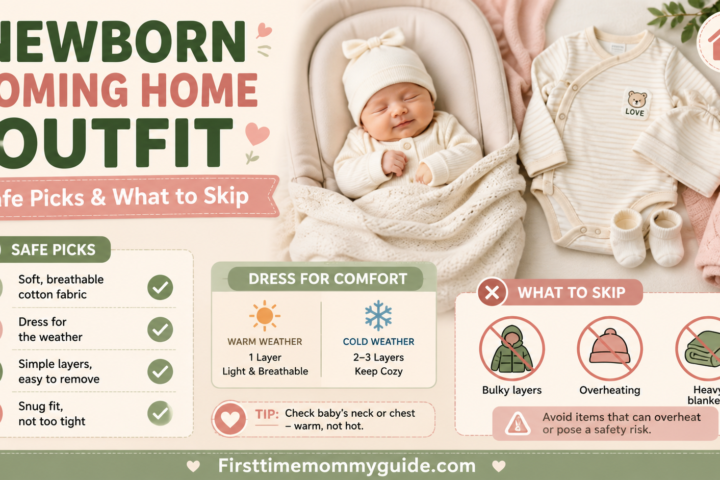
| Going-home outfit | 1 |
This quantity assumes a laundry cycle every 2–3 days. If your baby spits up frequently, add a few extra sleepers to that count.
Newborn Size vs. 0–3 Month Size
Choose side-snap or envelope-neckline styles for the first couple of months rather than pull-over designs — most newborns dislike anything that goes over the head with a small opening. Zip-up sleepers also make nighttime changes faster than snap-all-the-way styles.
Bath and Hygiene Essentials
- Baby bathtub (offers better support and control than bathing directly in the sink)
- Hooded towels (2–3)
- Washcloths (4–6)
- Fragrance-free, tear-free baby wash
- Soft-bristle baby brush
- Nail clippers or a nail file
Most newborns only need a bath 2–3 times per week in this stage, since frequent bathing can dry out delicate skin.
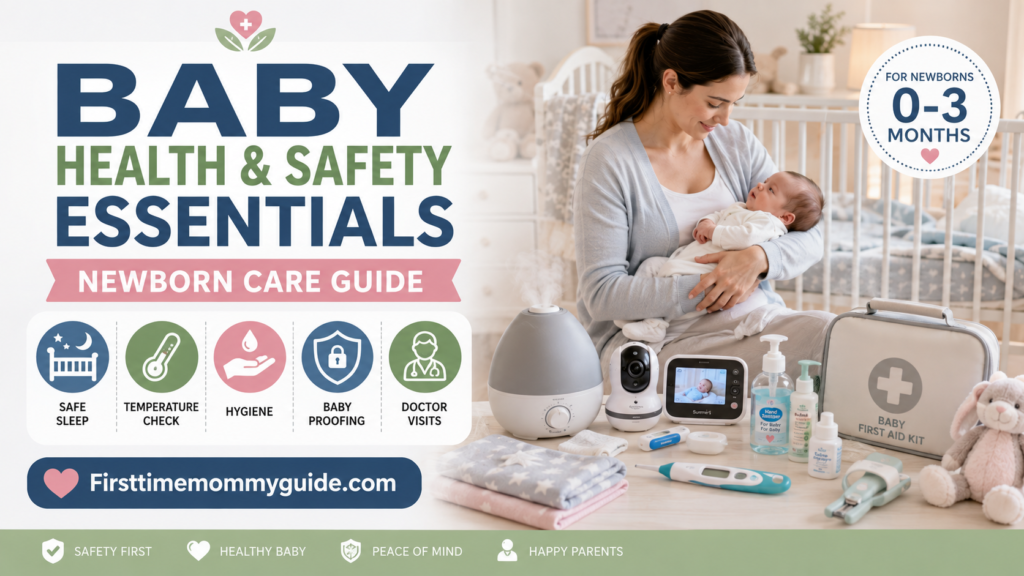
Health and Safety Essentials
Car Seat Safety
A properly installed infant car seat is the single most critical safety purchase on this list — it’s typically required before you can leave the hospital.
- Choose a rear-facing infant car seat with a five-point harness.
- Have it installed and inspected before your due date; many fire stations and hospitals offer free installation checks.
- Register the seat with the manufacturer for recall notifications.
Thermometer, Nasal Aspirator, and Medicine Cabinet Basics
- Digital thermometer (rectal thermometers are considered most accurate for babies under 3 months)
- Nasal aspirator (bulb syringe or suction-style device for congestion)
- Infant nail clippers
- Saline drops
- A baby-safe medicine cabinet stocked per your pediatrician’s guidance — avoid giving any medication without their sign-off in the first months
Out-and-About Essentials (Travel, Stroller, Diaper Bag)
- Stroller (compatible with your car seat, or a standalone model)
- Diaper bag stocked with diapers, wipes, a changing pad, spare outfit, and burp cloth
- Baby carrier or wrap, if you plan to babywear
- Portable changing pad for outings
What You Can Skip in the First 3 Months
| Often-Marketed Item | Why You Can Usually Skip It |
|---|---|
| Wipe warmers | Nice-to-have, not necessary |
| Shoes | Restrict natural foot development; socks or booties are enough |
| Newborn-specific toys in bulk | Simple, high-contrast objects are engaging enough at this stage |
| Changing table | A pad on any flat, stable surface works |
| Large newborn-size clothing stock | Most babies outgrow this size within weeks, if they wear it at all |
| Bottle warmer | Convenient but not essential — many babies take room-temperature or lukewarm milk |
Budget-Friendly Baby Essentials Checklist 0–3 Months (By Tier)
| Tier | What’s Covered | Approach |
|---|---|---|
| Bare minimum | Safe sleep space, car seat, diapers/wipes, 6–8 basic outfits, feeding basics | Prioritize safety-critical items; borrow or buy secondhand where safe (avoid secondhand car seats and crib mattresses) |
| Comfortable | Bare minimum + extra clothing rotation, bath setup, baby monitor, stroller | Balances convenience with cost |
| Fully stocked | Comfortable tier + bottle warmer, wipe warmer, nursery decor, multiple feeding tools | Nice-to-haves layered on top once you know your routine |
Postpartum Essentials for New Parents
It’s easy to focus entirely on the baby and forget the recovering parent. A few items worth having on hand:
- Postpartum pads and comfortable underwear
- Perineal care items (peri bottle, witch hazel pads) if recommended by your provider
- Comfortable, easy-access nursing or recovery clothing
- A water bottle and easy snacks stationed near the feeding spot
Frequently Asked Questions (FAQs)
What are the absolute must-haves for a newborn’s first 3 months?
A safe sleep space, a properly installed car seat, feeding supplies, diapers and wipes, a handful of onesies and sleepers, and basic health items like a thermometer cover nearly all daily needs.
How many onesies does a newborn need for 0–3 months?
Most parents find 6–8 onesies plus 4–6 footed sleepers enough for a laundry cycle every 2–3 days.
How many diapers do I need per day for a newborn?
Expect 8–12 diapers per day in the first month, dropping to about 6–8 per day by months 2–3.
What size clothes should I buy first — newborn or 0–3 months?
Buy mostly 0–3 month sizing. Newborn size only fits babies under roughly 8 pounds and is often outgrown within two to four weeks, if it’s used at all.
Do I need both a bassinet and a crib?
Not immediately. Many families start with a bassinet for room-sharing in the first 3–6 months, then move to a crib.
Is a changing table necessary, or can I use a pad on a dresser?
A dedicated changing table isn’t required — a changing pad on any flat, stable surface works just as well.
What does the AAP recommend for safe infant sleep?
Babies should sleep alone, on their back, on a firm and flat surface, in a crib or bassinet meeting CPSC standards, with nothing else in the sleep space.
Are crib bumpers safe?
No. The AAP advises against crib bumpers due to suffocation and entrapment risk.
Are inclined sleepers safe for newborns?
No. The AAP considers sleep surfaces angled more than 10 degrees unsafe for routine infant sleep.
Should a newborn sleep in the parents’ room?
The AAP recommends room-sharing without bed-sharing for at least the first six months to help lower sleep-related risk.
How many bottles do I need if I’m formula feeding?
Starting with 4–6 newborn-sized bottles is typically enough, adjusting based on your feeding routine.
Do I need a breast pump if I plan to breastfeed exclusively?
Many parents still find one useful for building a small milk stash or managing engorgement, and many insurance plans cover the cost.
What’s the difference between a swaddle and a sleep sack?
A swaddle wraps the arms snugly and is typically used until a baby shows signs of rolling; a sleep sack is a wearable blanket that leaves arms free and can be used longer.
Is swaddling safe for all newborns?
Swaddling should stop once a baby shows any sign of rolling over, since it increases suffocation risk if a swaddled baby rolls onto their stomach.
What temperature should a newborn’s room be kept at?
A room comfortable for a lightly dressed adult is generally appropriate; overheating is a known risk factor for sleep-related infant deaths.
How many burp cloths and bibs do I need?
Around 6–10 burp cloths is typical given how frequently newborns spit up; a few bibs are enough since they’re mainly for drool at this stage.
What car seat features matter most for a newborn?
A rear-facing design with a five-point harness, proper newborn weight range, and correct installation matter most.
When should I install my car seat?
Before your due date — many hospitals and fire stations offer free installation checks.
What’s the difference between cloth and disposable diapers?
Disposables cost more over time but are more convenient; cloth diapers have a higher upfront cost but lower ongoing cost and require regular washing.
How many wipes should I buy for the first month?
Most families use one to three packs of wipes per week in the early weeks, depending on change frequency.
What health items should be in a newborn medicine cabinet?
A digital thermometer, nasal aspirator, saline drops, and nail clippers cover most early needs — check with your pediatrician before adding any medication.
Do I need a baby monitor in the first 3 months?
It’s optional, especially if you’re room-sharing, but many parents find one useful for peace of mind once baby moves to their own room.
What’s the best way to prevent diaper rash?
Change diapers promptly after wetting or soiling, let skin air-dry when possible, and use a barrier cream as needed.
How often should I bathe a newborn?
Two to three times a week is typically enough in the first few months, since frequent bathing can dry out sensitive skin.
What baby bath products are actually necessary?
A fragrance-free, tear-free wash and a soft washcloth cover the basics — most other bath products are optional.
What items can I skip buying for a newborn?
Wipe warmers, shoes, a dedicated changing table, bottle warmers, and large newborn-size clothing stocks are all commonly skippable.
When should I start buying baby essentials before my due date?
Aim to have the car seat, safe sleep space, and basic supplies ready by around 32–35 weeks, with the rest finalized by 36–37 weeks.
How much does it cost to stock up on newborn essentials?
Costs vary widely by tier and brand choice; focusing spending on safety-critical items (car seat, sleep space) first lets you scale everything else to your budget.
What should be in a diaper bag for a newborn?
Diapers, wipes, a portable changing pad, a spare outfit, and a burp cloth cover most outings.
Do newborns need shoes?
No — shoes aren’t necessary and can restrict natural foot development; socks or booties provide enough warmth.
What clothing fabric is safest for newborn skin?
Soft, breathable fabrics like cotton are generally gentlest on sensitive newborn skin.
How many hats and mittens does a newborn need?
Two to three hats and two to three pairs of anti-scratch mittens are typically enough.
What’s the best sleep space for a newborn in a small apartment?
A compact, portable bassinet or bedside sleeper works well for room-sharing in tight spaces.
Do I need a nursing pillow?
It’s optional but many breastfeeding parents find it helpful for positioning and comfort during long feeding sessions.
What is the ABCs of safe sleep?
Alone, on their Back, in a Crib (or bassinet/play yard) — a simple way to remember the AAP’s core safe sleep guidance.
How do I know if a mattress is firm enough?
Press your hand into the surface and lift it — if it leaves an indentation, the mattress is too soft for safe infant sleep.
Are weighted swaddles or sleepers safe?
No. The AAP advises against weighted sleep products for infants due to suffocation and overheating risk, with no proven sleep benefit.
What should I pack in my hospital bag for the baby?
A going-home outfit, a few diapers and wipes (many hospitals provide these), and a car seat for discharge are the core items.
Do I need a wipe warmer or bottle warmer?
Neither is essential — both are convenience items some families enjoy and others skip entirely.
What postpartum essentials should I buy for myself, not just the baby?
Postpartum pads, comfortable recovery clothing, and any perineal care items your provider recommends are worth having ready.
How do I build a baby essentials checklist on a budget?
Focus first on safety-critical items — car seat and sleep space — then add clothing, feeding, and diapering basics, saving convenience items for later or secondhand where safe.
Key Takeaways
- Focus first on safety-critical categories: safe sleep, car seat, feeding, and diapering.
- Buy mostly 0–3 month clothing sizing rather than stocking up on newborn size.
- Follow AAP guidance for safe sleep: alone, on the back, on a firm flat surface, with nothing else in the space.
- It’s easier — and cheaper — to add items after birth than to overbuy beforehand.
- A properly installed car seat and a CPSC-compliant sleep space are the two purchases worth prioritizing before your due date.

Dilawar Mughal
Founder and editor, First Time Mommy Guide
I research every guide against what the NHS, the AAP and the WHO publish, then write it in plain English — because most new parents are reading with one hand free, not comparing clinical guidelines. I'm not a doctor or a midwife. Every health claim on this site is sourced and linked so you can check it yourself, and anything urgent belongs with your health visitor or GP, not a blog.