General information, not medical advice. Every baby is different — if anything worries you, speak to your midwife, health visitor or GP rather than waiting.
Most hospital bag guides hand you a 60-item list and let you sort out what’s actually necessary.
That’s how parents end up lugging a duffel bag of things the hospital already stocks, while missing the one item — a properly installed car seat — that they legally cannot leave without.
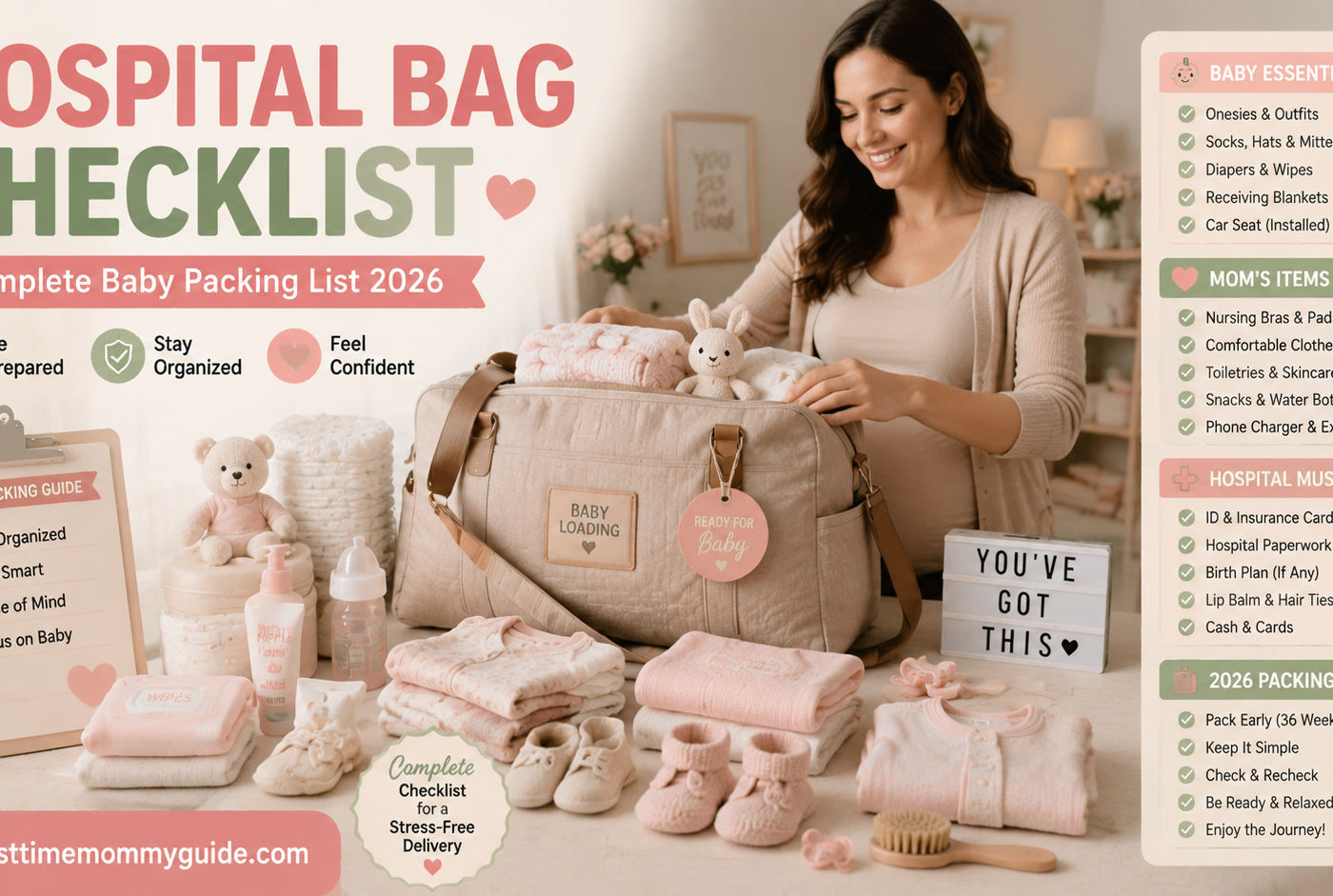
Hospital Bag Checklist for Baby needs going-home and hospital-stay outfits (2–3), a hat, mittens, swaddle blankets, newborn diapers and wipes if you prefer your own brand, and — most importantly — a correctly installed infant car seat, since hospitals will not discharge a newborn without one.
Table of Contents
Key Takeaways
- Hospitals supply the basics — diapers, wipes, blankets, and sometimes a first outfit — so your baby’s bag is smaller than most checklists suggest.
- The car seat is non-negotiable. Hospitals will not discharge a baby without a properly installed, rear-facing infant car seat, and many will check the installation before you leave.
- Pack for the season, not just the size. A newborn going home in winter needs a weather-appropriate outer layer over the going-home outfit, not just a onesie.
- Two to three outfits is plenty — one for the hospital stay, one going-home outfit, and a backup in case of blowouts or spit-up.
- Pack the bag by 36 weeks, or by 34–35 weeks if you’re high-risk or expecting multiples, since babies can arrive earlier than the due date.
- Skip toiletries, bathing supplies, and a full skincare kit for baby — the hospital handles bathing and basic care during the stay.
- Bring the discharge paperwork essentials: your ID, insurance card, and a plan for the birth certificate and Social Security card application, which many hospitals help initiate before you leave.
What the Hospital Usually Provides for Baby
Before packing anything, it helps to know what’s typically already covered, since policies vary by hospital and it’s worth calling ahead to confirm:
- Newborn diapers and wipes for the duration of the stay
- Swaddle blankets (the classic striped hospital blanket)
- A knit hat
- Basic bathing and umbilical cord care
- A bassinet for the room
- Formula, if you choose not to breastfeed or need supplementation
What hospitals do not provide: a car seat, a going-home outfit, or baby-specific items you’ll need for the drive home and first days.
Hospital Bag Checklist for Baby: Full Packing List
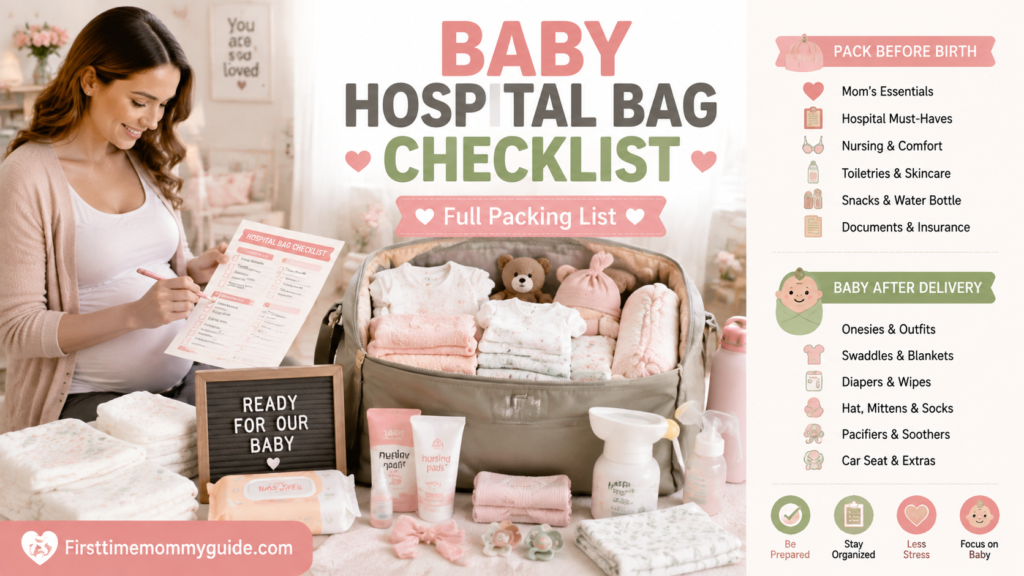
| Category | Item | Notes |
|---|---|---|
| Clothing | 2–3 outfits (onesies or sleepers) | One for the stay, one going-home outfit, one spare |
| Clothing | Hat | Especially important since babies lose heat quickly through the head |
| Clothing | Mittens or socks | Prevents newborns from scratching their face with long nails |
| Clothing | Weather-appropriate outer layer | A jacket, bunting, or blanket for cold-weather discharge |
| Sleep/Comfort | Swaddle blanket (1–2) | The hospital provides some, but a soft one from home can help with the transition |
| Diapering | Newborn diapers | Optional if you prefer a specific brand; hospital supplies enough for the stay |
| Diapering | Wipes | Same as above — bring your own if you have a sensitive-skin preference |
| Transport | Rear-facing infant car seat | Required for hospital discharge — install and inspect it in advance |
| Feeding | Bottles and formula (if not breastfeeding exclusively) | Hospital can supply formula, but bring your own brand if you have a preference |
| Feeding | Nursing cover or burp cloth | Optional comfort item for breastfeeding parents |
| Documents | Baby’s ID bracelet paperwork, insurance card | Needed to add baby to your insurance plan |
| Extras | Going-home photo outfit | Optional, but many families like a special first-photo outfit |
Week-by-Week Packing Timeline
By 28–32 weeks (early third trimester)
Start a running list and buy the essentials — car seat, going-home outfit, diapers — so nothing is a last-minute scramble.
By 34–35 weeks (high-risk or multiples)
Have your hospital bag fully packed and by the door. High-risk pregnancies and multiples are statistically more likely to arrive early.
By 36 weeks (standard timeline)
Most obstetric guidance recommends having your hospital bag ready by 36 weeks, since term labor can begin any time from 37 weeks onward.
Car seat installation
Install the car seat before 36 weeks and have it inspected — many local fire departments and police stations offer free car seat safety checks.
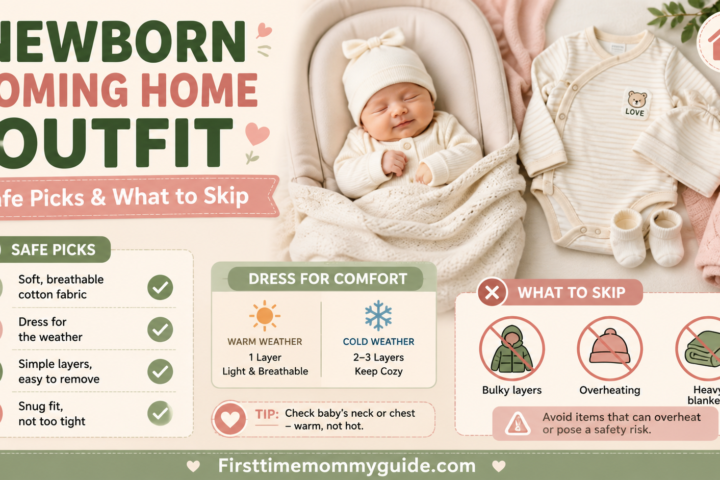
Going-Home Outfit Guide by Season

| Season | Base Layer | Outer Layer | Extras |
|---|---|---|---|
| Summer | Short-sleeve onesie or gown | Light blanket for the car | Sun hat if walking outside |
| Winter | Long-sleeve onesie + sleeper | Bunting, jacket, or car seat cover (not worn under the harness) | Knit hat, mittens |
| Spring/Fall | Long-sleeve onesie | Light layer or swaddle blanket | Hat |
Safety note: Bulky coats and snowsuits should never be worn underneath a car seat harness, since they compress in a crash and leave the harness too loose. Instead, buckle the baby in a thin layer and add a blanket or car seat cover over the straps.
The Car Seat: Why It’s the Most Important Item on This List
Every U.S. hospital requires a rear-facing infant car seat before discharging a newborn — it’s the one item on this checklist that isn’t optional.
- Install it before you go into labor. Trying to figure out car seat installation in the hospital parking lot with a newborn is a stressful way to start.
- Get it checked. Many fire departments, police stations, and some hospitals offer free car seat inspections to confirm correct installation.
- Choose rear-facing, infant-specific. Convertible seats can work but are often bulkier for tiny newborns; a dedicated infant seat with a base is the most common choice for the first several months.
- Some hospitals will not let you leave until a nurse or staff member has confirmed the baby is properly secured.
Hospital Bag for Baby vs. Diaper Bag for Home: What’s the Difference?
| Factor | Hospital Bag | Everyday Diaper Bag |
|---|---|---|
| Purpose | Cover a 1–4 day hospital stay | Cover daily outings after coming home |
| Diaper/wipe quantity | Small — hospital supplies most | Larger — needs to last a full day out |
| Clothing needed | 2–3 outfits | 1–2 backup outfits per outing |
| Extras | Documents, car seat | Toys, snacks, changing pad |
| When to pack | By 36 weeks | Ongoing, restocked regularly |
Many parents pack a small “hospital insert” inside a bag they’ll later use as their everyday diaper bag — a practical way to avoid buying two separate bags.
Common Mistakes to Avoid
- Overpacking baby clothes. Two to three outfits is realistically enough for a 1–3 day stay; more just adds bulk and laundry later.
- Forgetting the car seat until discharge day. Install and inspect it weeks in advance, not the morning you’re leaving.
- Packing a going-home outfit that’s too small. Newborn-size clothing can run tight on larger babies — pack a 0–3 month backup just in case.
- Bundling baby in a bulky coat inside the car seat. This compromises harness safety; use thin layers plus a blanket instead.
- Not confirming what the hospital provides. Calling ahead can save you from packing duplicates of diapers, wipes, and blankets.
- Skipping the insurance and ID documents. You’ll need these on hand to formally add your baby to your health insurance plan.
Expert Tips for a Stress-Free Pack
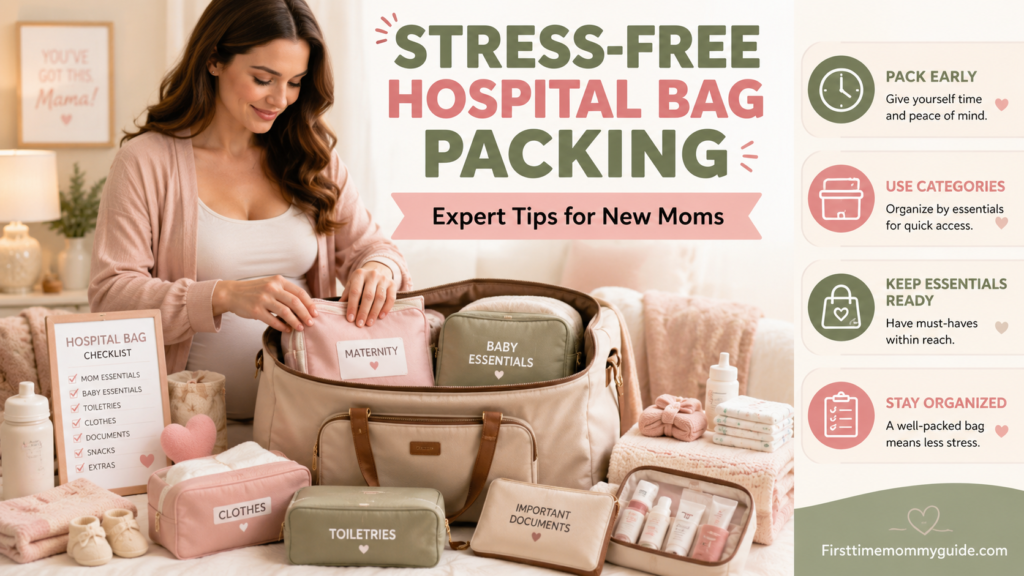
- Pack baby’s items in a separate, clearly labeled bag or packing cube inside your main hospital bag — it’s easier to grab in a hurry.
- Keep the car seat in the car once installed, rather than packing it in a bag, so it’s ready the moment you need it.
- Bring one extra outfit beyond what you think you need — blowouts and spit-up are common in the first days.
- If you’re cloth diapering long-term, still pack a small stash of disposables for the hospital stay; most hospitals aren’t set up for cloth.
- Take a photo of the car seat manual’s installation instructions on your phone as a quick reference.
Related Articles
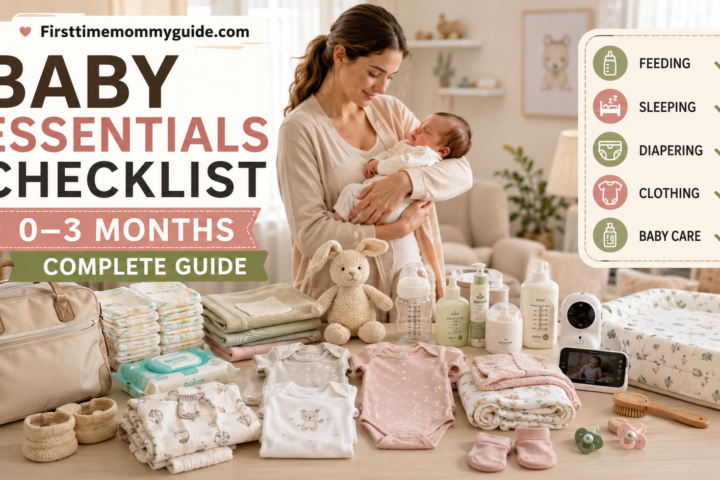
- Baby essentials, 0–3 months: what you genuinely need before your baby arrives
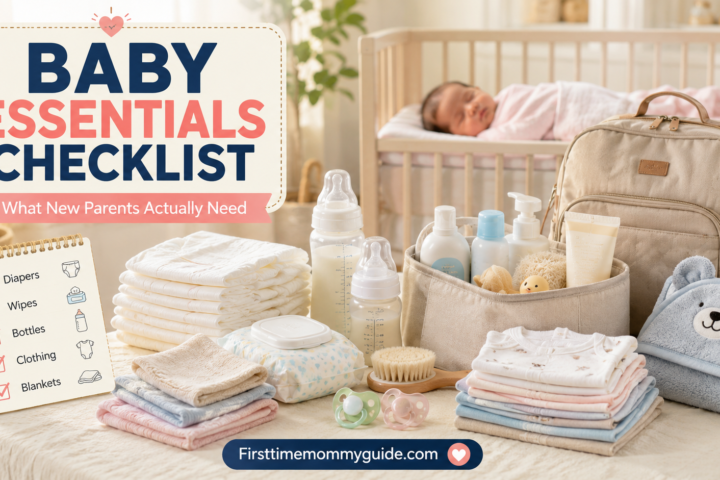
- Baby Essentials Checklist: What New Parents Actually Need
- Pregnancy, month by month: what’s happening and what actually needs doing
- Baby sleep, honestly: what’s normal at each age and safe sleep guidance
- Starting solids, 6–12 months: first foods and a month-by-month feeding chart
- First Foods for Baby at 6 Months: A Complete Guide to Starting Solids
Frequently Asked Questions (FAQs)
1. What should be in a hospital bag for baby?
Two to three outfits, a hat, mittens or socks, a swaddle blanket, and — most importantly — a properly installed rear-facing infant car seat, since the hospital will not discharge your baby without one.
2. When should I pack my hospital bag for baby?
By 36 weeks of pregnancy for a standard timeline, or by 34–35 weeks if you’re high-risk or expecting multiples, since labor can start before the due date.
3. Does the hospital provide diapers and wipes for the baby?
Yes, most hospitals supply newborn diapers and wipes for the length of your stay. Bring your own only if you have a specific brand preference.
4. How many outfits does a newborn need for the hospital?
Two to three is generally enough — one for the hospital stay, one going-home outfit, and one backup for blowouts or spit-up.
5. Do I need to bring a car seat to the hospital?
No — but you do need to bring it with you when you leave, installed and ready in the car, since hospitals require a car seat before discharge.
6. What size clothing should I pack for a newborn?
Pack both newborn and 0–3 month sizes, since babies vary widely in size at birth and newborn clothing can run tight on larger infants.
7. Can my baby wear a coat in the car seat?
Not underneath the harness — bulky coats and snowsuits compress in a crash and loosen the straps. Use a thin layer and add a blanket or car seat cover on top instead.
8. What documents do I need for the hospital bag?
Your ID, health insurance card, and any hospital pre-registration paperwork; most hospitals help initiate the birth certificate and Social Security card process before discharge.
9. Should I pack bottles and formula even if I plan to breastfeed?
It’s optional but can be useful as a backup; most hospitals can also supply formula if needed for supplementation.
10. What’s the difference between a hospital bag and a diaper bag?
A hospital bag covers a short 1–4 day stay with minimal supplies since the hospital provides basics; a diaper bag is stocked for full days out once you’re home.
11. Do hospitals check car seat installation before discharge?
Many do — a nurse or staff member often confirms the baby is properly secured before you’re allowed to leave.
12. What should I NOT pack in baby’s hospital bag?
Bathing supplies, a full skincare kit, and excess clothing — the hospital handles baby’s bathing and basic care during the stay.
13. How early can I have my car seat installed?
It’s safe to install it any time in the third trimester; many parents install it around 34–36 weeks and have it inspected for correct fit.
14. What if my baby is born earlier than expected?
This is exactly why pediatric guidance recommends packing by 36 weeks — babies can arrive any time from 37 weeks onward, and earlier in high-risk pregnancies.
15. Is a swaddle blanket from home necessary if the hospital provides one?
Not necessary, but a soft blanket from home can be a comforting, familiar item during the transition home.
16. What going-home outfit works best for a winter baby?
A long-sleeve onesie and sleeper as a base layer, with a bunting, jacket, or car seat cover placed over (not under) the harness straps.
17. Do I need a separate bag for my baby’s items?
It helps to pack baby’s items in a labeled bag or packing cube inside your main hospital bag, making them easy to find during a busy, tiring stay.
18. What car seat type is recommended for a newborn?
A rear-facing, infant-specific car seat with a base is the most common choice for the first several months, though convertible seats can also work for some newborns.
19. Should I bring my own diapers if I plan to use cloth diapers at home?
Yes — pack a small stash of disposables for the hospital stay, since most hospitals aren’t equipped for cloth diapering during a short stay.
20. What happens if I forget an item for baby at the hospital?
Most hospitals can supply emergency basics like diapers, wipes, and a blanket, though comfort items and a going-home outfit are worth double-checking before you leave home.

Dilawar Mughal
Founder and editor, First Time Mommy Guide
I research every guide against what the NHS, the AAP and the WHO publish, then write it in plain English — because most new parents are reading with one hand free, not comparing clinical guidelines. I'm not a doctor or a midwife. Every health claim on this site is sourced and linked so you can check it yourself, and anything urgent belongs with your health visitor or GP, not a blog.