General information, not medical advice. Every baby is different — if anything worries you, speak to your midwife, health visitor or GP rather than waiting.
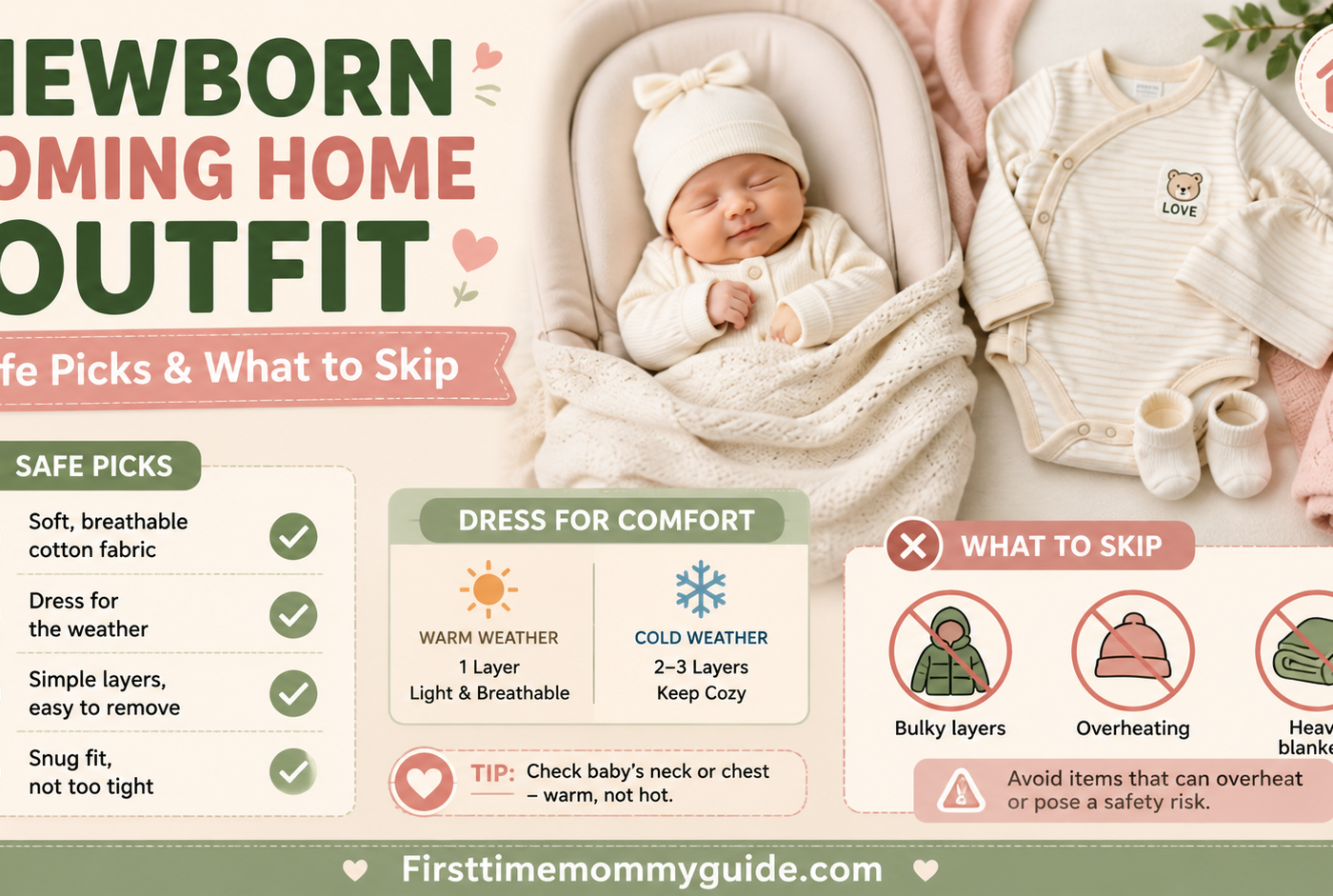
A newborn coming home outfit should be soft, easy to put on a floppy newborn, weather-appropriate, and safe to wear underneath a buckled car seat harness.
Most hospitals will dress your baby in a simple onesie during your stay, but the outfit you pack for the ride home becomes a keepsake and, more importantly, the first real test of your car seat safety knowledge.
Table of Contents
What Should a Newborn Wear Home from the Hospital?
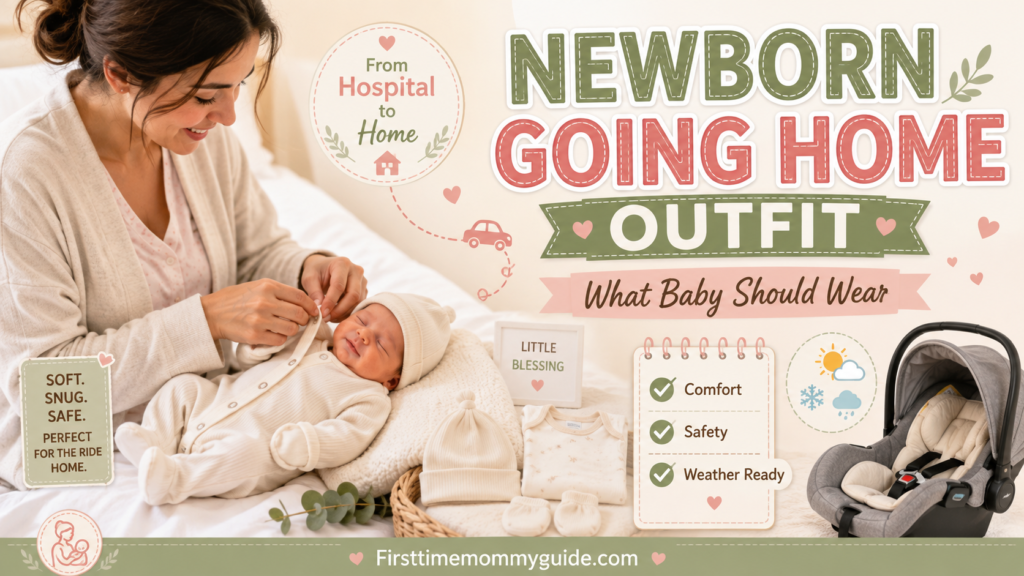
The safest, most practical newborn coming home outfit is a soft one-piece with easy snap or zip closures, in a size that leaves no gap when the car seat harness is buckled.
- Pack both newborn size and 0 to 3 months, since birth weight varies.
- Choose a bodysuit, footed sleeper, or knotted gown over anything bulky or padded.
- Skip winter coats and snowsuits under the harness. Layer them over the buckled straps instead.
- Prioritize snap or zip closures for easy diaper changes and quick dressing.
Why the Coming Home Outfit Matters Beyond Photos
New parents often focus on how the outfit looks in that first photo, and that is a completely reasonable instinct. But this outfit also has to function under a car seat harness, on a baby who cannot regulate temperature well yet, within the first hours after birth.
A newborn’s skin is more sensitive than an older baby’s, so fabric choice matters as much as fit. Hospitals also keep rooms warm, which can make a going home outfit feel very different once you step outside into actual weather.
Sizing a Newborn Coming Home Outfit
Newborn sizing is one of the most common sources of frustration for first-time parents, mostly because “newborn size” varies by brand and does not map cleanly to birth weight.
| Size Label | Typical Weight Range | Best For |
|---|---|---|
| Preemie | Up to 5 lbs | Babies born early or smaller than average |
| Newborn (NB) | 5 to 8 lbs | Most full-term babies at birth |
| 0 to 3 Months | 8 to 12 lbs | Larger newborns or babies who may size up quickly |
Since you will not know your baby’s exact birth weight until delivery, pack both a newborn size and a 0 to 3 month size. If your baby arrives on the larger side, or has a growth spurt in the hospital, the newborn size can run tight within days.
Fabric and Closure: What Actually Matters
Fabric touching a newborn’s skin should be soft, breathable, and free of rough seams or embellishments that could irritate delicate skin.
- Cotton and bamboo rayon are the most breathable and gentle options for sensitive newborn skin.
- Avoid outfits with buttons, bows, or decorative snaps positioned where they could press against the car seat harness.
- Choose envelope necklines or snap shoulders instead of anything that has to be pulled over the head.
- Snap or zip closures at the legs make diaper changes far easier during those first sleep-deprived days.
Coming Home Outfit Ideas by Weather
The right outfit depends heavily on the season and the temperature during your actual drive home, not just the temperature in the hospital room.
Warm Weather Coming Home Outfits
- A short-sleeve bodysuit or lightweight cotton romper.
- A single breathable layer is usually enough, since overheating is a bigger risk than being cold in warm months.
- Bring a light muslin blanket in case the car’s air conditioning runs cold.
Cool or Cold Weather Coming Home Outfits
- A footed sleeper or bodysuit layered under a thin fleece, not a thick coat.
- A hat, since newborns lose a significant amount of body heat through the head.
- A blanket to place over the buckled harness once your baby is secured, rather than a bulky coat worn underneath it.
The Car Seat Safety Rule Every Parent Should Know
This is the single most important thing to understand about a newborn coming home outfit, and it is the part most style guides skip entirely.
Bulky or padded clothing, including winter coats, snowsuits, and heavily padded sleepers, should never be worn underneath a car seat harness. In a crash, that padding compresses almost instantly, leaving several inches of dangerous slack in the straps that were supposed to be snug.
The American Academy of Pediatrics recommends dressing a baby in thin, close-fitting layers for the car seat itself, then adding a coat or blanket over the top of the buckled harness for warmth. This keeps the harness snug against your baby’s body while still allowing extra warmth once they are securely buckled in.
How to Check If an Outfit Is Too Bulky for the Car Seat
A simple pinch test can tell you in seconds whether an outfit is safe to wear underneath the harness.
- Dress your baby in the outfit and buckle the car seat harness snugly, as you normally would.
- Try to pinch the harness strap material at the shoulder between your thumb and finger.
- If you can pinch a fold of extra webbing, the outfit underneath is too bulky and needs to come off before the harness goes back on.
- If the strap feels flat and snug with no fold to pinch, the outfit is safe for that harness fit.
Coming Home Outfit Styles Compared
Different outfit styles solve different problems in those first few days. Here is how the most common options stack up.
| Style | Pros | Cons |
|---|---|---|
| Knotted Gown | No snaps, easiest diaper access, adjustable length | Less structured for photos, can ride up |
| Footed Sleeper | Warm, keeps socks in place, familiar and practical | Full-body zipper can be slower for newborn changes |
| Bodysuit + Pants Set | Coordinated look, breathable, easy to mix and match | More pieces to manage during a diaper change |
| Kimono-Style Wrap Top | Gentle on the belly button area, easy over the head-free dressing | Fewer size options, often pricier |
Preparing the Outfit Before Your Due Date
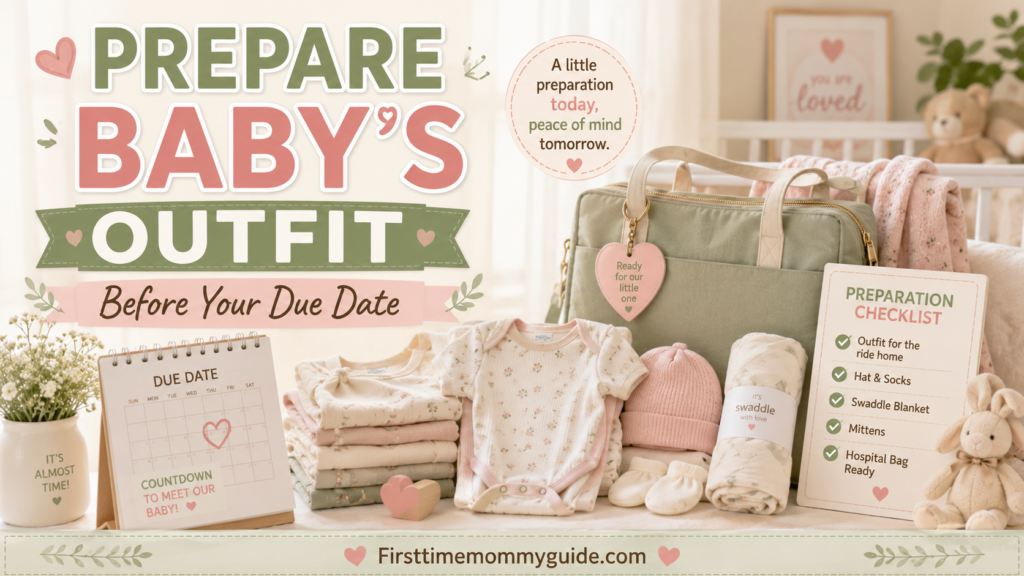
A little prep work in the weeks before delivery removes one more thing to think about during discharge.
- Wash the outfit in fragrance-free detergent as soon as you buy it, then store it separately in your hospital bag so it stays clean.
- Practice snapping the outfit closed on a doll or stuffed animal if the closures feel unfamiliar.
- Confirm your car seat is correctly installed and rear-facing well before your due date, since a last-minute installation adds stress to discharge day.
- If weather is unpredictable in your area, pack a light layering option alongside the primary outfit so you are covered either way.
Common Mistakes When Choosing a Coming Home Outfit
- Buying only one size, then discovering the baby has grown too much in the hospital to fit into it comfortably.
- Choosing an outfit with buttons or decorative hardware positioned right where the car seat harness sits.
- Layering a thick coat or snowsuit underneath the harness for a cold-weather photo, which compromises car seat safety.
- Forgetting to wash the outfit before the hospital stay, since new fabric can carry residue that irritates sensitive skin.
- Prioritizing style over the diaper access needed for frequent newborn changes.
Expert Tips for a Stress-Free First Outfit Change
- Practice snapping and unsnapping the outfit before the big day so it is not your first attempt with a squirming newborn.
- Keep the going-home outfit in your hospital bag separate from everyday going-home items, so it is easy to find.
- Choose a slightly looser fit rather than a snug one, since a newborn’s umbilical cord stump needs airflow and gentle contact.
- If you plan to keep the outfit as a keepsake, consider a second, less precious backup outfit in case of a diaper blowout.
Boy, Girl, and Gender-Neutral Coming Home Outfit Ideas
If you know your baby’s sex before delivery, it can be easier to shop ahead, but plenty of parents also prefer gender-neutral pieces that work regardless of what you find out.
| Style Direction | Example Pieces | Notes |
|---|---|---|
| Gender-neutral | Ivory or sage knotted gown, plain cotton bodysuit | Works for any outcome and photographs well in natural light |
| Baby girl coming home outfit | Soft floral romper, ruffle-trim knot gown | Choose stretch fabric so ruffles do not press under the harness |
| Baby boy coming home outfit | Simple henley bodysuit, striped footed sleeper | Look for flat-lying snaps that will not dig in at the shoulder |
| Personalized sets | Monogrammed gown, name-embroidered romper | Order early enough to allow for shipping and any customization time |
Store-Bought vs Handmade or Gifted Coming Home Outfits
Many parents receive a coming home outfit as a gift, and that can shape the decision more than most shopping guides admit.
A store-bought outfit from a baby-focused brand is usually pre-tested for newborn sizing and closure placement, which takes some guesswork out of the process. A handmade or heirloom outfit, often passed down or gifted by a family member, can carry more sentimental value but may run in vintage sizing that does not match current newborn size charts. If you plan to use a hand-me-down or heirloom piece, try it on a similarly sized doll or stuffed animal beforehand to estimate fit, and always check for loose buttons, ribbons, or embellishments that could become a hazard.
Budget Considerations for a Coming Home Outfit
Coming home outfits range from a few dollars for a simple cotton bodysuit to well over a hundred dollars for a personalized, monogrammed set with a matching hat and blanket.
- Basic cotton sets from mainstream baby retailers typically run $10 to $25 and cover the safety and comfort basics well.
- Mid-range boutique brands, often using bamboo rayon or organic cotton, run $30 to $60 and add softness and design detail.
- Personalized or monogrammed keepsake sets can run $60 to $150 or more, especially with matching accessories like a hat or swaddle.
- Since newborns typically wear a coming home outfit for only a few hours, many parents choose to spend less here and put more budget toward everyday basics they will use daily.
What to Pack Alongside the Outfit
The outfit itself is only part of a smooth hospital discharge. A few companion items make the actual dressing and car seat transition much easier.
- A hat, since newborns lose a meaningful amount of body heat through the head in cooler weather.
- Soft mittens if your baby has long nails or a tendency to scratch their face.
- An extra outfit in the diaper bag in case of a blowout right before you leave.
- A muslin or lightweight blanket that can go over the buckled harness rather than under it.
- Socks or booties that stay on securely, since loose ones tend to come off during the car seat transfer.
Newborn Skin Sensitivities to Keep in Mind
A newborn’s skin barrier is still developing in the first weeks, which is part of why fabric choice matters more here than it will later on.
Look for outfits labeled as free from harsh dyes or synthetic finishes, and always wash a new outfit in a fragrance-free, dye-free detergent before your baby wears it. This removes any manufacturing residue and reduces the chance of irritation. If your baby has a family history of eczema or sensitive skin, natural fibers like cotton or bamboo tend to be better tolerated than synthetic blends.
Postpartum Practicalities Worth Planning For
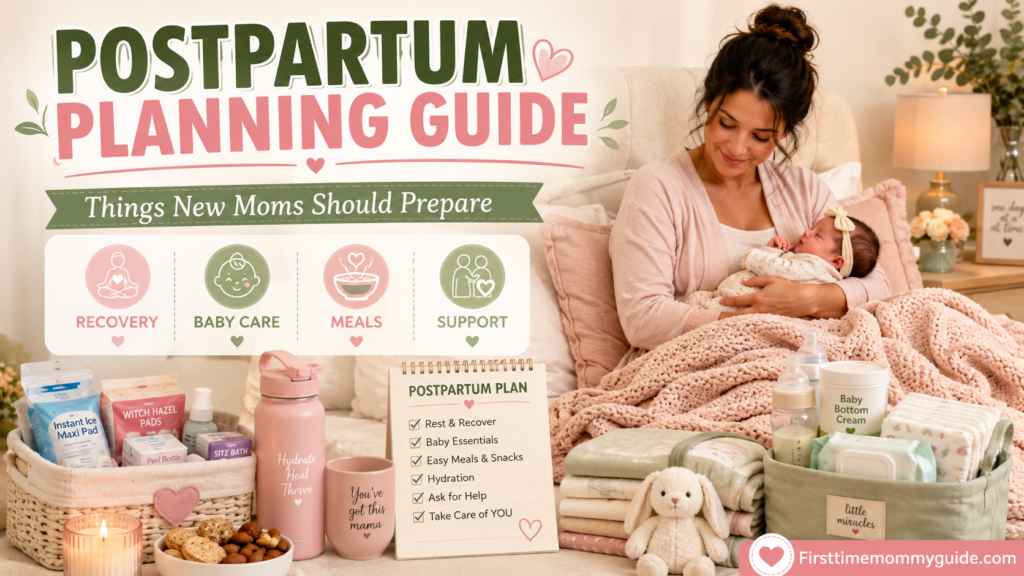
Packing the coming home outfit is often the easy part. Coordinating it with your hospital bag, your own recovery needs, and the actual car seat installation is where most first-time parents feel unprepared.
Installing and testing your car seat before your due date gives you one less thing to figure out on the day you are discharged. Many fire stations and hospitals offer free car seat safety checks, which can be worth scheduling in the weeks before your due date.
Related Articles
Explore more guides on First Time Mommy Guide to get ready for baby’s arrival:
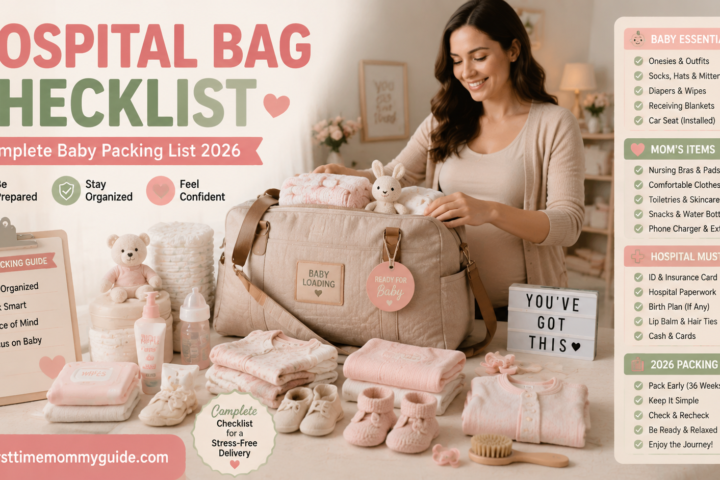
- Hospital Bag Checklist for Baby: The Complete Packing List
- How Many Newborn Outfits Do You Need? A Complete Size-by-Size Guide
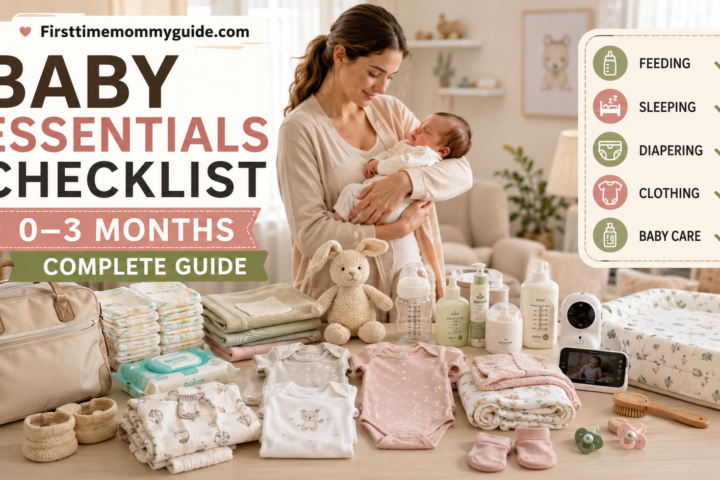
- Baby Essentials, 0–3 Months: The Complete Guide
- Baby Essentials Checklist 0–3 Months (Complete Guide)
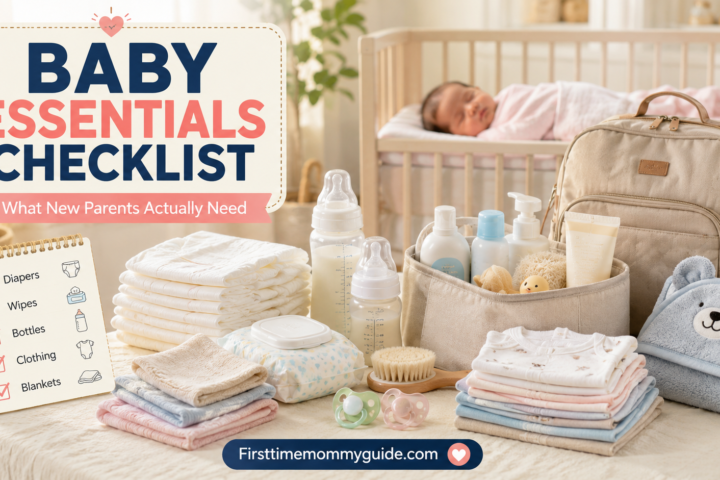
- Baby Essentials Checklist: What New Parents Actually Need
- Baby Shopping List for First-Time Moms: The Complete Checklist
- Pregnancy Guide, Month by Month: Symptoms & Baby Growth
- Baby Sleep, Honestly: The Complete Guide
- When Can My Baby Start Eating Real Food? Age, Signs & First Foods
- First Foods for Baby at 6 Months: A Complete Guide to Starting Solids
- First Food for Baby 6 Months: Best Options, Safety Tips & Feeding Guide
- Baby Food Chart 6 to 12 Months: Free Month-by-Month Feeding
- Starting Solids 6–12 Months: The Complete Guide
- Baby Won’t Eat? Common Reasons, Fixes & When to Worry
- Sweet Potato Puree for Baby: Easy Recipe, Age Guide & Storage Tips
- Apple Puree for Baby: Easy Recipe & Safety Guide
- Blueberry Puree for Baby: Easy Recipe & Choking Safety Guide
- Spinach Puree for Baby: Safe Recipe, Nitrate Facts & Age Guide
- Homemade Pumpkin Puree for Baby: Easy, Safe Recipe (6+ Months)
- Zucchini Puree for Baby: Easy Recipe & Age Guide
- Browse All Baby Essentials Guides
Frequently Asked Questions (FAQs)
What size should I pack for a newborn coming home outfit?
Pack both a newborn size (5 to 8 lbs) and a 0 to 3 month size, since you will not know your baby’s exact size until birth. Hospital growth in the first days can also affect the fit.
Can my baby wear a winter coat in the car seat?
No. Bulky coats and snowsuits compress in a crash and leave the harness too loose to protect your baby. Dress in thin layers and place a coat or blanket over the buckled harness instead.
What is the pinch test for car seat safety?
Buckle your baby in with the outfit on, then try to pinch the harness strap at the shoulder. If you can pinch a fold of extra material, the outfit underneath is too bulky for that harness fit.
Should I buy a going-home outfit before or after the baby is born?
It is fine to buy it beforehand, but pack two sizes since birth weight varies. Wait to remove tags until you are confident about the fit.
What fabric is best for a newborn’s first outfit?
Soft, breathable cotton or bamboo rayon are gentle on sensitive newborn skin. Avoid stiff seams, decorative hardware, or anything scratchy near the neck or diaper area.
Do hospitals provide a going-home outfit?
Most hospitals only provide basic clothing, like a plain onesie, during your stay. Most parents bring their own outfit specifically for the trip home.
Is a knotted gown safe for the car seat?
Yes, as long as it is not bulky or padded. A knotted gown is one of the easiest styles for a car seat, since it avoids extra fabric bunching under the harness.
How do I keep my baby warm in the car seat without bulky clothes?
Dress your baby in thin layers, buckle the harness snugly, then place a coat or blanket over the top of the buckled straps. Warm up the car beforehand to reduce how much extra warmth is needed.
What should I avoid in a newborn coming home outfit?
Avoid bulky padding, tight elastic near the neck, decorative buttons near the harness area, and anything that has to be pulled over the head. Prioritize snap or zip closures instead.
Can I use a car seat cover instead of dressing my baby warmly?
Only use a car seat cover if it has no layer underneath your baby’s body, since anything bulky beneath the baby can interfere with harness fit the same way a padded coat does. Always leave your baby’s face uncovered.
Key Takeaways Before You Pack the Bag
- Fit matters more than style. Pack two sizes and skip anything with a snug neckline or bulky padding.
- Layer over the harness, never under it. This single habit prevents the most common car seat safety mistake with newborn clothing.
- Fabric should be soft, breathable, and pre-washed. Cotton and bamboo rayon are the safest bets for sensitive skin.
- Snap or zip closures beat pullover styles for both diaper changes and reducing handling of a floppy newborn.
- A quick pinch test after buckling the harness is the fastest way to confirm an outfit is car seat safe.
Conclusion
A newborn coming home outfit only needs to do a few things well: fit comfortably, suit the weather, and stay safe underneath a properly buckled car seat harness.
Packing two sizes solves most fit problems, and choosing soft, breathable fabric with easy closures solves the rest. The one rule worth remembering above everything else is to dress your baby in thin layers for the car seat, then add warmth over the top of the buckled harness rather than underneath it.
Once you have that outfit picked, tested against a pinch check, and packed alongside a backup for diaper blowouts, one more piece of the hospital bag is fully sorted, and you can focus on the moment itself.

Dilawar Mughal
Founder and editor, First Time Mommy Guide
I research every guide against what the NHS, the AAP and the WHO publish, then write it in plain English — because most new parents are reading with one hand free, not comparing clinical guidelines. I'm not a doctor or a midwife. Every health claim on this site is sourced and linked so you can check it yourself, and anything urgent belongs with your health visitor or GP, not a blog.