General information, not medical advice. Every baby is different — if anything worries you, speak to your midwife, health visitor or GP rather than waiting.
Baby First Dentist Visit: Age, What to Expect and How to Prepare
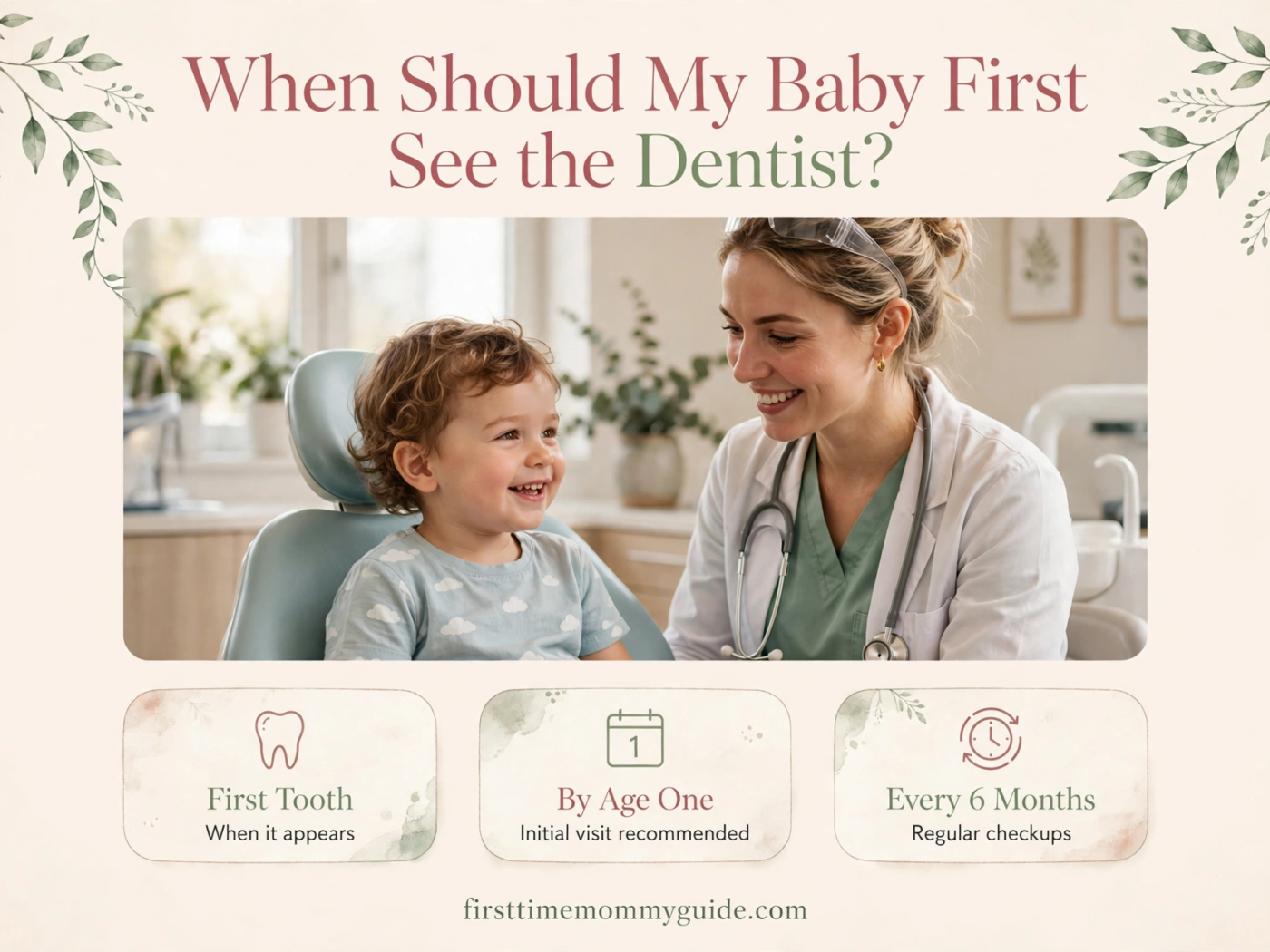
When should your baby first see the dentist? The answer surprises many first-time parents: by their first birthday, or within six months of the first tooth appearing — whichever comes first.
That first visit is short, gentle, and mostly about you. The dentist checks your baby’s teeth and gums, shows you how to clean tiny teeth, talks about fluoride and feeding habits, and answers your questions. It sets up a relationship that protects your child’s smile for years.
This guide covers the right age, what actually happens at the appointment, how much it costs, how to prepare your baby, and what to do if the visit does not go to plan. The guidance here follows the American Academy of Pediatric Dentistry (AAPD), the American Academy of Pediatrics (AAP), and NHS dental guidance for children.
Quick Answer: When Should a Baby First See the Dentist?
Book your baby’s first dental visit by their first birthday, or within six months of the first tooth erupting — whichever comes first. The visit is a gentle check of teeth and gums, a fluoride assessment, and a chance to ask questions. Start brushing with a smear of fluoride toothpaste as soon as the first tooth appears, and book check-ups every six months after that.
Why the First Birthday Matters
Tooth decay is the most common chronic disease of childhood. It can start as soon as the first tooth appears, and it can progress fast in small teeth. A cavity in a baby tooth matters — baby teeth hold space for adult teeth, help your child chew and speak, and a painful tooth can affect eating and sleep.
An early first visit catches problems before they become painful. The dentist can spot early signs of decay, check how the teeth are coming in, and look at the gums, tongue, and soft tissues. Just as importantly, the visit gives you personalised advice on brushing, fluoride, bottles, dummies, and diet.
What the evidence says
The AAPD recommends the first dental visit by age one. The AAP supports the same timing in its guidance on oral health for infants. The NHS advises parents to take their child to the dentist as soon as their first teeth come through, and notes that NHS dental care is free for children under 18 in the UK.
Parents who wait until age three or four — the age many people assume is right — miss the window when prevention is easiest. By three, a child who has never seen a dentist may already have decay that needs a filling.
Does my baby need a dentist if they have no teeth yet?
If your baby has no teeth by their first birthday, still book the visit. The dentist will check the gums, look at how the mouth is developing, and talk you through what to expect when teeth arrive. Some babies cut their first tooth as late as 15 months, and that is usually normal — but a dentist can confirm there is nothing to worry about.
Baby Dental Milestones by Age
| Age | What happens | Dental action |
|---|---|---|
| Birth–6 months | No teeth; gums are firm and smooth | Wipe gums with a damp cloth after feeds |
| 6–12 months | First teeth erupt, usually the lower front teeth | Start brushing with a smear of fluoride toothpaste; book the first dental visit |
| 12–18 months | More front teeth and first molars appear | First dental visit if not done yet; check-up every 6 months |
| 18–24 months | Canine teeth erupt; most babies have 12–16 teeth | Brush twice daily; dentist checks bite and spacing |
| 2–3 years | Full set of 20 baby teeth, usually by age 3 | Regular 6-month check-ups; discuss thumb sucking and dummies |
When do babies get their first tooth?
Most babies cut their first tooth between 6 and 10 months. The lower front teeth usually come first, followed by the upper front teeth. Some babies teethe as early as 3 months, others as late as 15 months. Both ends of that range are usually normal.
Teething can bring drooling, chewing, irritability, and slightly disturbed sleep. For help with this stage, see our guide on baby teething signs and remedies.
How many teeth should my baby have at one year?
Most one-year-olds have between 2 and 8 teeth, usually the front teeth. The exact number varies widely and is not a cause for concern on its own. Your dentist will check that the teeth are coming through in a healthy pattern and that the gums look well.
What Happens at the First Dentist Visit?
A first visit for a baby is nothing like an adult check-up. There are no drills, no scraping, and no long stretches of sitting still. Most visits last 15 to 30 minutes.
Step 1: A friendly welcome
The dental team will greet you and your baby warmly. Many practices have a play area or a few toys. The goal is to make the room feel safe, not clinical. Tell the receptionist it is your baby’s first visit so the team can take extra time.
Step 2: A chat about your baby’s health
The dentist will ask about your baby’s feeding, teething, brushing routine, and any concerns you have. Be honest about habits such as night bottles, juice, or dummy use — the dentist needs the full picture to give useful advice, and there is no judgement.
Step 3: The knee-to-knee exam
For babies and toddlers, dentists often use the knee-to-knee position. You sit facing the dentist, knee to knee, with your baby lying across both laps — their head in the dentist’s lap, their body in yours. You hold your baby’s hands gently and can see their face throughout.
The dentist lifts the lip and looks at each tooth and the gums with a small mirror and light. The exam takes a minute or two. Your baby may cry, and that is completely normal. Crying does not mean they are in pain — it means the situation is new and strange.
Step 4: Cleaning and fluoride
The dentist may gently wipe the teeth with gauze or a soft brush. If the teeth have been out for a while, they may apply a fluoride varnish — a sticky coating painted onto the teeth that strengthens the enamel and helps prevent decay. Fluoride varnish is quick, painless, and safe for babies.
Step 5: Advice and questions
This is the most valuable part of the visit. The dentist will show you how to brush tiny teeth, how much toothpaste to use, and how to position your baby for brushing. They will talk about fluoride, diet, bottles, and dummies. Ask every question you have — no question is too small.
Step 6: Booking the next visit
Before you leave, the practice will usually book the next check-up in six months. Regular visits mean the dentist can track development and your child grows up seeing the dentist as a familiar, friendly place.
How to Prepare Your Baby for the First Visit
Preparation makes the difference between a calm visit and a stressful one. Most of it is simple, and it starts days before the appointment.
Talk about it positively
Even a one-year-old picks up on your tone. Talk about the dentist as a friendly helper who counts teeth. Avoid words like “hurt”, “pain”, or “needle” — even in a reassuring sentence, your baby hears the scary word. If you are nervous about dentists yourself, try not to show it.
Read a book or play dentist at home
For toddlers, a picture book about visiting the dentist helps. Play a game where you count their teeth with a clean finger, and let them count yours. Familiarity reduces fear.
Bring comfort items
Bring your baby’s favourite toy, blanket, or comforter. A familiar object in a new place is calming. Bring a snack and a drink for after the visit, and a spare nappy in case the appointment runs long.
Time the appointment well
Book a morning appointment when your baby is rested and fed. Avoid nap time and meal times. A hungry or tired baby will not cope well with a new experience. Arrive a few minutes early so you are not rushed.
What to bring
- Your baby’s health record or red book (UK) if you have one
- A list of medicines your baby takes
- Your questions, written down so you do not forget them
- A comfort toy or blanket
- A spare nappy, wipes, and a snack for afterwards
What to wear
Dress your baby in comfortable clothes that are easy to move in. Avoid bulky outfits that make the knee-to-knee position awkward. You will be holding your baby on your lap, so wear something you can sit comfortably in too.
Brushing Baby Teeth: The Basics
Brushing should start as soon as the first tooth appears. It takes less than a minute, and it is the single most effective thing you can do to prevent decay.
Which toothbrush should I use?
Choose a small, soft-bristled toothbrush made for babies. A small head fits a tiny mouth, and soft bristles protect delicate gums. Some parents start with a silicone finger brush, which slips over your finger and lets you feel what you are doing. Either is fine — use whichever your baby tolerates best.
Replace the brush every three months, or sooner if the bristles splay. A worn brush cleans poorly and can scratch the gums.
How much toothpaste?
For children under three, use a smear of fluoride toothpaste — about the size of a grain of rice. Children aged three to six should use a pea-sized amount. The toothpaste should contain at least 1,000 ppm fluoride; check the tube. Fluoride strengthens enamel and protects against decay.
Do not worry if your baby swallows the toothpaste. A rice-grain smear is a tiny amount and is safe to swallow.
How to brush a baby’s teeth
- Sit your baby on your lap, facing away from you, with their head resting against your chest.
- Lift the lip gently so you can see the teeth and gum line.
- Brush in small circles on all surfaces of each tooth — front, back, and chewing surfaces.
- Brush the gum line lightly, where plaque collects.
- Brush twice a day: once in the morning and once before bed.
- Do not rinse with water afterwards. Spit out the excess if your child can, but leave a thin film of toothpaste on the teeth so the fluoride keeps working.
If your baby resists, try brushing in front of a mirror so they can watch, sing a short song, or let them hold a second brush. Keep the mood light — a minute of imperfect brushing beats a battle every time.
For a deeper guide to early oral care, see our article on how to clean baby’s first teeth.
Fluoride: What Parents Need to Know
Fluoride is a mineral that strengthens tooth enamel and repairs early decay. It is one of the best-studied and most effective tools in children’s dentistry. The AAPD and the AAP both recommend fluoride toothpaste from the first tooth.
Fluoride in toothpaste
Use a fluoride toothpaste from the first tooth. The smear for under-threes is deliberately small so that swallowing it is harmless. Do not use fluoride-free “training toothpaste” as a substitute — it does not protect against decay.
Fluoride varnish at the dentist
Fluoride varnish is a concentrated fluoride coating painted onto the teeth. It sets on contact with saliva and slowly releases fluoride over several hours. It is safe for babies and toddlers, takes seconds to apply, and is usually offered at check-ups. Ask your dentist about it if it is not mentioned.
Fluoride in drinking water
In many areas, the tap water contains fluoride, either naturally or added by the water supply. If you use bottled water or a filter that removes fluoride, mention it to your dentist. They can advise whether your child needs a supplement.
Is fluoride safe for babies?
Yes, at the levels used in toothpaste and varnish. The rice-grain smear recommended for under-threes is well within safe limits. Problems only arise from swallowing large amounts of fluoride over a long period, which is why the amount is kept tiny and why adult-strength products should be kept out of reach.
Bottles, Dummies and Diet: What Affects Baby Teeth
Night bottles and tooth decay
Falling asleep with a bottle of milk or juice is one of the main causes of decay in baby teeth. Milk and juice contain sugars, and when they pool around the teeth overnight, bacteria feed on them and produce acid that attacks the enamel. This pattern is sometimes called baby bottle tooth decay.
Do not put your baby to bed with a bottle. If your baby needs a bottle to settle, fill it with water only. After the last milk feed, wipe or brush the teeth before sleep.
Juice and sugary drinks
Babies under one year do not need juice at all. The AAP recommends no juice for children under 12 months, and only small amounts of 100% juice for toddlers. Water and milk are the best drinks. Sugary drinks, including flavoured milk and squash, increase decay risk significantly.
Dummies and thumb sucking
A dummy used in the first year is generally fine and may even reduce SIDS risk. Prolonged dummy use or thumb sucking beyond age two or three can affect how the teeth and jaw develop. If your baby sucks their thumb, see our guide on how to stop baby thumb sucking for gentle strategies.
Never dip a dummy in sugar, honey, or juice. Honey should not be given to babies under one year at all, because of the risk of infant botulism.
Snacks and tooth-friendly foods
Frequent snacking on sugary or starchy foods keeps the teeth under acid attack all day. Offer tooth-friendly snacks such as cheese, plain yoghurt, cucumber, and soft fruit. Save sweet treats for mealtimes rather than as between-meal snacks, and brush afterwards.
For guidance on starting solids safely, see our articles on signs baby is ready for solid foods and baby-led weaning.
How Much Does a Baby’s First Dentist Visit Cost?
Cost depends on where you live and whether you use public or private care.
United Kingdom: NHS dental care is free for children
In the UK, NHS dental treatment is free for children under 18. That includes check-ups, fluoride varnish, and any treatment your child needs. Register your baby with an NHS dentist — you can search for one on the NHS website — and book the first visit as soon as the first tooth appears.
Some NHS dentists have waiting lists, so register early. If you cannot find an NHS dentist taking new patients, ask your GP or health visitor for help, or contact NHS 111 for local options.
United States: costs and coverage
In the US, a first visit typically costs between $50 and $150 without insurance, depending on the practice and location. Most dental insurance plans, including Medicaid and CHIP, cover children’s preventive visits. Many paediatric dentists offer a free or low-cost first visit for babies — ask when you book.
Other countries
Coverage varies widely. In many countries, children’s dental check-ups are subsidised or free. Check with your national health service or insurer before booking, and ask the practice for a price list so there are no surprises.

Choosing a Dentist for Your Baby
Paediatric dentist vs family dentist
A paediatric dentist specialises in children’s oral health and has extra training in treating babies and young children. Their practices are usually set up for children, with small chairs, toys, and a calm approach. A family dentist who is comfortable with babies is also a good choice.
Either is fine for a first visit. The most important thing is a dentist who is patient, gentle, and experienced with very young children.
Questions to ask when choosing
- Do you see babies under one year old?
- How do you handle a baby’s first visit?
- What is your approach if my child is anxious?
- Do you apply fluoride varnish?
- What are your fees, and do you accept my insurance or NHS registration?
What if there is no paediatric dentist near you?
A general dentist who sees children is perfectly suitable. Ask friends, your health visitor, or your GP for recommendations. Many family practices welcome babies and will take the same gentle approach.
What If the First Visit Goes Badly?
Sometimes the first visit does not go to plan. Your baby cries, refuses to open their mouth, or the dentist cannot complete the exam. This is normal, and it does not mean the visit was wasted.
Crying is normal
Most babies cry at their first dental visit. The room is unfamiliar, a stranger is looking in their mouth, and they are lying in an odd position. Crying is a healthy response, not a sign of trauma. The dentist is used to it and will work quickly and gently.
If the exam cannot be completed
If your baby will not cooperate, the dentist will do what they can and give you advice based on what they saw. A partial exam is still useful. The dentist may suggest a shorter follow-up visit to build familiarity. Some practices offer a “happy visit” — a short, no-treatment appointment where your child sits in the chair, meets the team, and gets a sticker.
Building positive associations
After a difficult visit, do not make a fuss. Praise your baby, give them a small reward, and talk about the dentist positively at home. Play dentist with a toy, count teeth together, and keep brushing fun. The next visit is usually easier.
Dental anxiety in parents
If you are anxious about dentists, your child will sense it. Tell the practice about your own anxiety — they deal with it every day. Some parents find it easier if the other parent brings the child, at least for the first visit.
Common Baby Dental Problems
Early childhood cavities
Cavities can appear soon after teeth erupt, especially if a baby falls asleep with a bottle or drinks juice frequently. Early decay looks like white spots or chalky lines near the gum line. Later it becomes brown or black holes. If you see white spots, book a dental visit promptly — early decay can sometimes be reversed with fluoride.
Teething pain
Teething discomfort is normal and usually managed with a chilled teething ring, a clean finger to chew on, or a gentle gum massage. Avoid teething gels containing lidocaine or benzocaine — the US Food and Drug Administration warns against them for babies. If your baby has a fever over 38°C (100.4°F) or diarrhoea, see your doctor, because these are not caused by teething alone.
Tongue-tie
A tongue-tie is a tight band of tissue under the tongue that can restrict movement. It can affect feeding and, later, speech. A dentist or paediatrician can assess it. Not every tongue-tie needs treatment — many stretch naturally as the baby grows.
Delayed tooth eruption
Most babies have their first tooth by 15 months. If no teeth have appeared by 18 months, mention it to your dentist or paediatrician. It is usually just late development, but it is worth checking.
Tooth injury
Babies who are learning to walk fall often, and a fall can chip or knock a tooth. If a baby tooth is knocked out, do not try to put it back — unlike adult teeth, baby teeth are not re-implanted. Contact your dentist the same day for advice, especially if there is bleeding, swelling, or your baby seems in pain.

Baby Dental Care Routine: A Daily Checklist
A simple daily routine protects your baby’s teeth with very little effort.
- Morning: Brush teeth with a smear of fluoride toothpaste after breakfast.
- After meals: Offer water to drink. Wipe the teeth if your baby has eaten something sticky.
- Snacks: Choose tooth-friendly snacks. Avoid frequent sugary snacks between meals.
- Evening: Brush teeth before bed, after the last milk feed. Do not give milk or juice after brushing.
- Night: No bottle in bed. If your baby wakes thirsty, offer water.
- Weekly: Check the teeth and gums for white spots, redness, or swelling.
- Every 6 months: Dental check-up, including fluoride varnish if recommended.
Myths About Baby Teeth
“Baby teeth don’t matter because they fall out”
They matter a great deal. Baby teeth hold space for adult teeth, help your child chew and speak clearly, and guide the jaw as it grows. Losing a baby tooth early to decay can cause crowding and bite problems later.
“Babies don’t need to see a dentist until age three”
The first visit should happen by age one. Waiting until three misses the window for early prevention and means decay may already be established before a dentist ever looks.
“Fluoride is dangerous for babies”
Fluoride is safe at the recommended levels. The rice-grain smear for under-threes is carefully sized so that swallowing it is harmless. Fluoride is one of the most effective ways to prevent decay.
“Sugar is the only cause of cavities”
Sugar is a major cause, but the pattern matters too. Frequent snacking, night bottles, and juice all keep the teeth under acid attack. How often teeth meet sugar matters as much as how much sugar there is.
“My baby’s teeth are fine because they look white”
Early decay starts as white spots that are easy to miss. Regular dental check-ups catch problems before they are visible to parents. That is why the six-month check-up schedule matters.
“Brushing baby teeth is not necessary until they eat solid food”
Brushing should start with the first tooth, even if your baby only drinks milk. Milk contains sugars that feed the bacteria responsible for decay. A quick brush twice a day from the start builds a lifelong habit.
Frequently Asked Questions
What age should a baby first see the dentist?
By their first birthday, or within six months of the first tooth appearing — whichever comes first. This is the recommendation of the American Academy of Pediatric Dentistry and the American Academy of Pediatrics.
How much does a baby’s first dentist visit cost?
In the UK, NHS dental care is free for children under 18. In the US, a first visit typically costs $50–$150 without insurance, but most plans including Medicaid and CHIP cover it. Many paediatric dentists offer a free first visit — ask when booking.
What happens at a baby’s first dentist appointment?
The dentist chats with you about feeding and brushing, examines your baby’s teeth and gums — often in the knee-to-knee position — may apply fluoride varnish, and gives you personalised advice. The visit usually lasts 15 to 30 minutes.
Will my baby cry at the dentist?
Probably, and that is normal. Babies cry because the situation is new, not because they are in pain. The dentist is used to it and will work quickly and gently.
When should I start brushing my baby’s teeth?
As soon as the first tooth appears. Use a soft baby toothbrush and a smear of fluoride toothpaste about the size of a grain of rice. Brush twice a day.
How much toothpaste should I use for a baby?
A smear the size of a grain of rice for children under three. From age three to six, use a pea-sized amount. The toothpaste should contain at least 1,000 ppm fluoride.
Is fluoride safe for babies?
Yes, at the recommended levels. A rice-grain smear of fluoride toothpaste is safe even if swallowed. Fluoride varnish applied by a dentist is also safe for babies and toddlers.
Do I need a paediatric dentist or will a family dentist do?
Either is fine. A paediatric dentist has extra training in children’s oral health, but a family dentist who is comfortable with babies is a good choice too. The most important thing is a gentle, patient approach.
What if my baby has no teeth at 12 months?
Book the visit anyway. The dentist will check the gums and mouth development. Some babies do not cut their first tooth until 15 months, and that is usually normal.
How often should my baby see the dentist?
Every six months after the first visit, unless your dentist recommends a different schedule. Regular visits let the dentist track development and catch problems early.
Can my baby get cavities?
Yes. Tooth decay can start as soon as teeth appear. Night bottles, juice, and frequent sugary snacks are the main causes. Early decay looks like white spots near the gum line.
Should I put my baby to bed with a bottle?
No. Falling asleep with milk or juice pooling around the teeth is a major cause of decay in baby teeth. If your baby needs a bottle to settle, fill it with water only.
Is it safe to use a dummy after teeth come in?
A dummy in the first year is generally fine. Prolonged use beyond age two or three can affect tooth and jaw development. Never dip a dummy in sugar, honey, or juice.
What should I do if my baby knocks out a tooth?
Do not try to put a baby tooth back in. Contact your dentist the same day for advice, especially if there is bleeding, swelling, or pain. Control bleeding with gentle pressure from a clean cloth.
How do I prepare my toddler for the dentist?
Talk about it positively, read a picture book about the dentist, and play a counting-teeth game at home. Bring a comfort toy, book a morning appointment, and arrive a few minutes early.
What is fluoride varnish?
A concentrated fluoride coating painted onto the teeth at a dental visit. It strengthens enamel and helps prevent decay. It takes seconds to apply, is painless, and is safe for babies.
Can babies have dental X-rays?
X-rays are rarely needed for babies. If your dentist recommends one, it will be a very low dose, and they will explain why it is necessary. Routine X-rays are not part of a baby’s first visit.
What if my baby won’t open their mouth at the dentist?
This is common and not a problem. The dentist will do what they can, often using the knee-to-knee position where you can gently help. A partial exam is still useful, and the next visit is usually easier.
When do babies get all their baby teeth?
Most children have all 20 baby teeth by age three. The order and timing vary, and late eruption is usually normal. Your dentist will check the pattern at each visit.
Is NHS dental care free for babies?
Yes. In the UK, NHS dental treatment is free for children under 18, including check-ups and fluoride varnish. Register your baby with an NHS dentist as soon as the first tooth appears.
Conclusion
Your baby’s first dentist visit is a small appointment with a long payoff. Book it by the first birthday, or within six months of the first tooth. The visit is short, gentle, and mostly about giving you the knowledge to protect tiny teeth — how to brush, how much fluoride to use, and which habits to avoid.
Start brushing with the first tooth, skip the bedtime bottle, keep sugary drinks away, and return every six months. Those simple habits, started early, protect your child’s smile through toddlerhood and beyond.
For more everyday baby-care help, explore our guides on how to clean baby’s first teeth, baby teething signs and remedies, and how to stop baby thumb sucking.
This article is for general information only and is not a substitute for medical or dental advice. If you are concerned about your baby’s teeth, gums, or oral health, speak to your dentist, GP, health visitor, or paediatrician.

Dilawar Mughal
Founder and editor, First Time Mommy Guide
I research every guide against what the NHS, the AAP and the WHO publish, then write it in plain English — because most new parents are reading with one hand free, not comparing clinical guidelines. I'm not a doctor or a midwife. Every health claim on this site is sourced and linked so you can check it yourself, and anything urgent belongs with your health visitor or GP, not a blog.


