General information, not medical advice. Every baby is different — if anything worries you, speak to your midwife, health visitor or GP rather than waiting.
Staring at a baby registry with 200 items on it is enough to make any first-time mom’s head spin. You don’t need all of it — but you do need to get the essentials right.
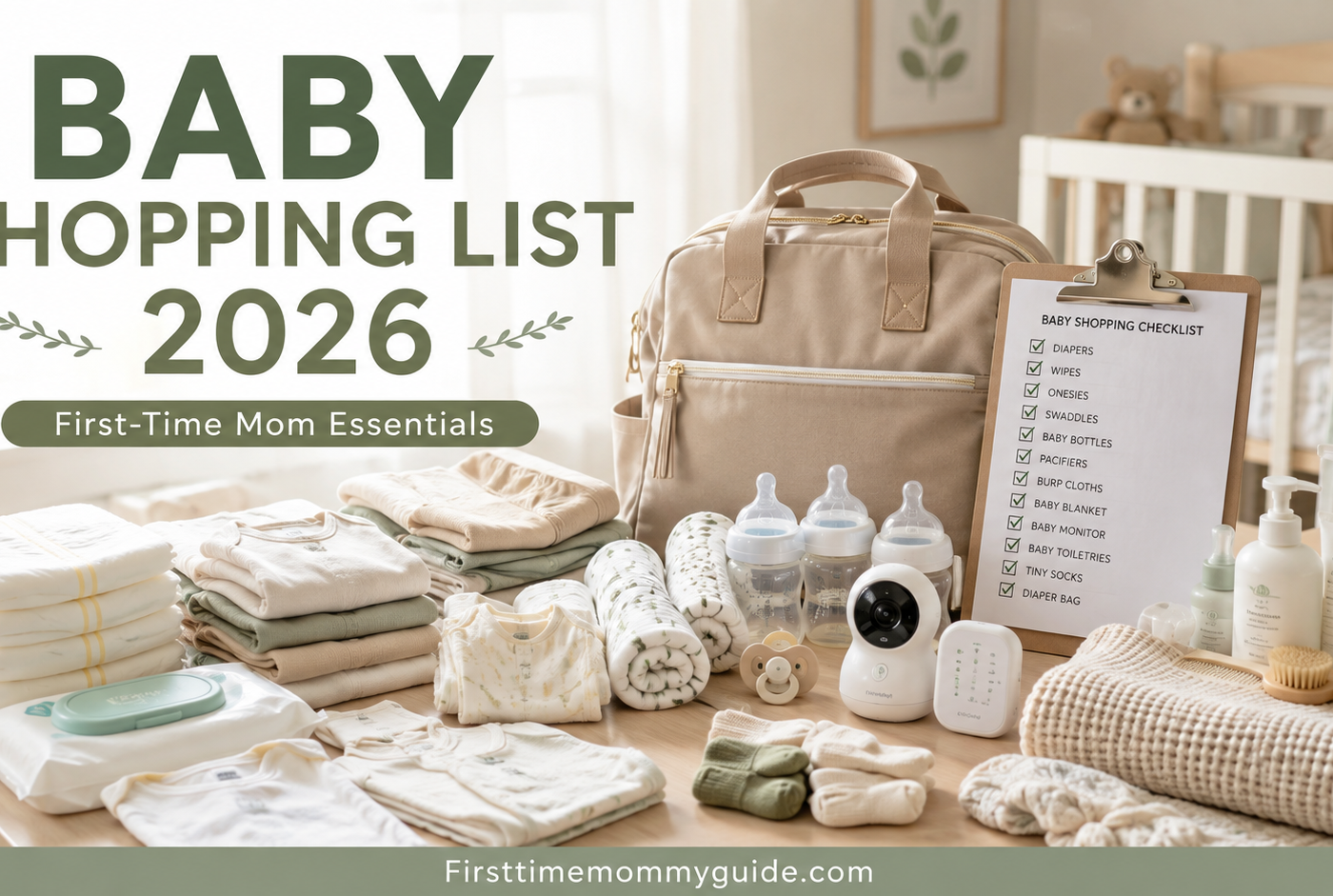
This baby shopping list for first-time moms cuts through the noise. It’s built around what a newborn actually needs in the first three months, organized by category, with real cost ranges, a printable checklist, and a clear list of things you can safely skip.
By the end, you’ll know exactly what to buy, when to buy it, how much to budget, and which “must-haves” are really just marketing.
Table of Contents
Quick Answer: What Does a Newborn Actually Need?
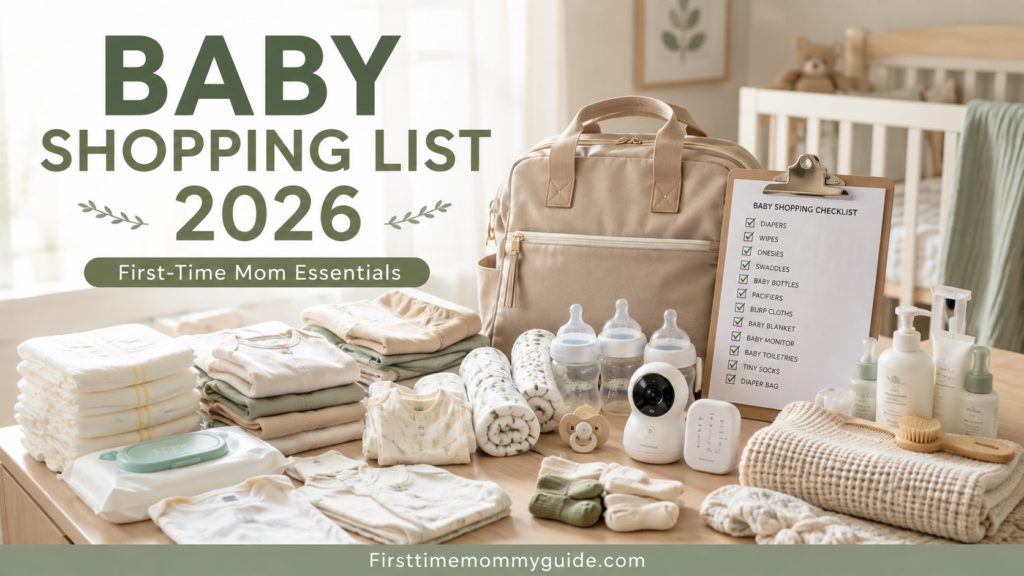
At minimum, a newborn needs a safe place to sleep, a rear-facing car seat, diapers and wipes, feeding supplies (bottles and/or breastfeeding gear), 8–10 onesies or sleepers, and a few basic health items like a thermometer and nail clippers. Everything else is optional or can wait.
When to Start Buying Baby Essentials
Most first-time moms start shopping in the second trimester and finish major purchases by week 32–34 of pregnancy, since some babies arrive early.
- Weeks 12–20: Research and start your baby registry
- Weeks 20–28: Buy big-ticket items (crib, car seat, stroller) so you have time to compare and return if needed
- Weeks 28–34: Fill in clothing, feeding, and diapering essentials
- Weeks 34+: Pack your hospital bag and finalize the nursery
Expert tip: Install your car seat by week 34–36 and have it inspected — many fire departments and hospitals offer free car seat safety checks.
The Complete Baby Shopping List by Category
Sleep & Nursery Essentials
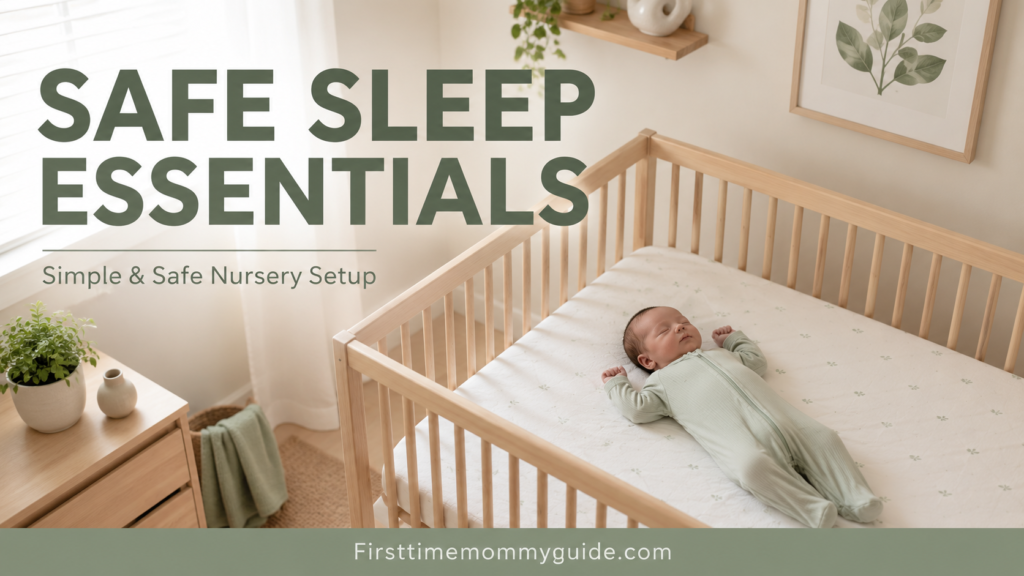
Safe sleep is the single most important category on this list. The American Academy of Pediatrics (AAP) recommends a firm, flat sleep surface with no loose bedding, bumpers, or pillows for at least the first 12 months.
| Item | Needed? | Why |
|---|---|---|
| Crib or bassinet | Essential | Safe sleep space that meets current CPSC standards |
| Fitted crib sheets (2–3) | Essential | For quick changes overnight |
| Sleep sacks or swaddles | Essential | Safer than loose blankets |
| Baby monitor | Helpful | Peace of mind, not required |
| White noise machine | Helpful | Supports better sleep, optional |
| Crib bumpers, pillows, blankets | Skip | Not recommended by the AAP for safe sleep |
Bassinet vs. Crib: Which Do You Need First?
| Feature | Bassinet | Crib |
|---|---|---|
| Best for | First 4–6 months, bedside sleeping | Birth through toddlerhood |
| Portability | High — easy to move room to room | Low — stationary |
| Cost | $100–$300 | $200–$700 |
| Lifespan | Short (until baby rolls or hits weight limit) | Long-term investment |
Bottom line: You don’t need both on day one. Many parents start with a bassinet for convenience and move to the crib around month 4–6.
Feeding Essentials
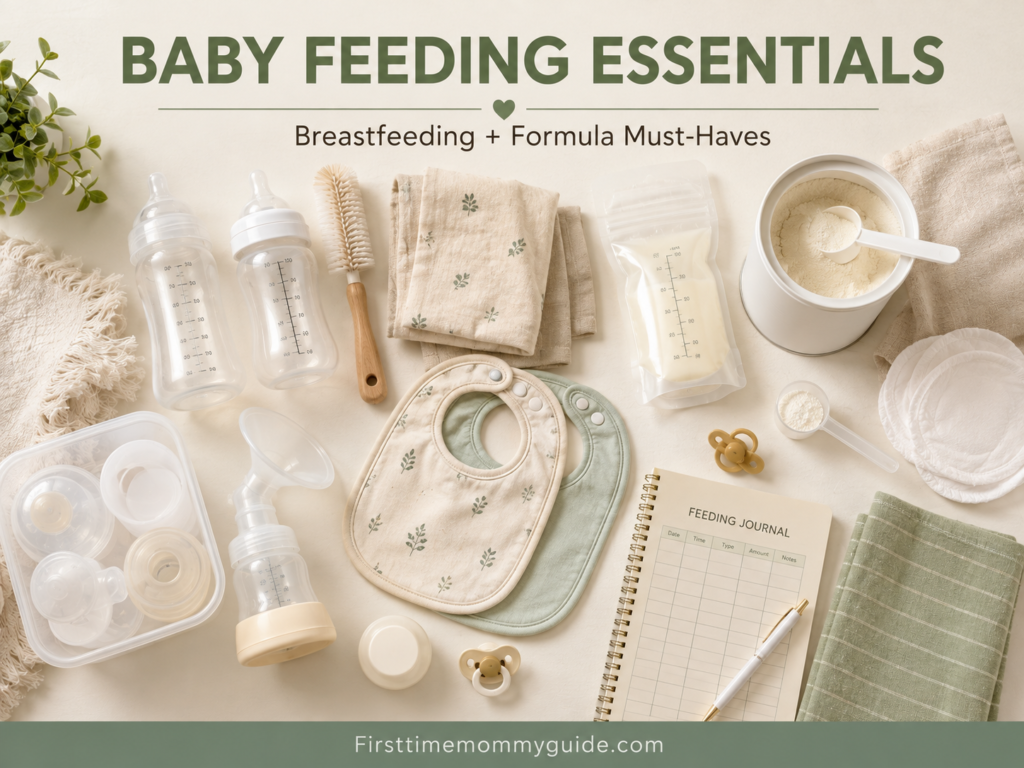
Whether you breastfeed, formula-feed, or combination-feed, feeding supplies are a top priority in the first weeks.
Breastfeeding essentials:
- Nursing pillow
- Nursing bras and pads
- Breast pump (check if it’s covered by your insurance)
- Milk storage bags
- Nipple cream
Formula/bottle-feeding essentials:
- Bottles (start with a small variety pack)
- Bottle brush and drying rack
- Formula (confirm the type with your pediatrician)
- Bottle warmer (optional, not essential)
Breast Pump vs. Bottle-Feeding Essentials
| Category | Breastfeeding Focus | Formula/Bottle Focus |
|---|---|---|
| Core gear | Nursing pillow, pump, storage bags | Bottles, formula, sterilizer |
| Monthly cost | Lower (pump often insurance-covered) | $50–$150/month for formula |
| Flexibility | Requires mom’s presence unless pumped | Anyone can feed baby |
| Overlap tip | Most moms keep a few bottles on hand regardless of feeding method for flexibility and rest | — |
Expert tip: Even exclusively breastfeeding moms are often glad to have a few bottles on hand — for a partner to help with nighttime feeds, or simply so mom can rest.
Diapering Essentials
- Newborn-size diapers (start with one small pack — babies outgrow this size fast)
- Wipes
- Diaper cream
- Changing pad
- Diaper pail or trash system
How many diapers does a newborn go through? Expect 8–12 diaper changes per day in the first few weeks, so budget accordingly rather than stockpiling a single size.
Clothing Essentials
Newborns grow fast, and clothing is one of the most over-bought categories on any registry.
| Item | Quantity | Note |
|---|---|---|
| Onesies/bodysuits | 8–10 | Machine washable, easy to layer |
| Sleepers/footed pajamas | 6–8 | For nights and lounging |
| Swaddle blankets | 4–6 | Lightweight, breathable fabric |
| Socks/mittens | 3–4 pairs | Prevents scratching and keeps feet warm |
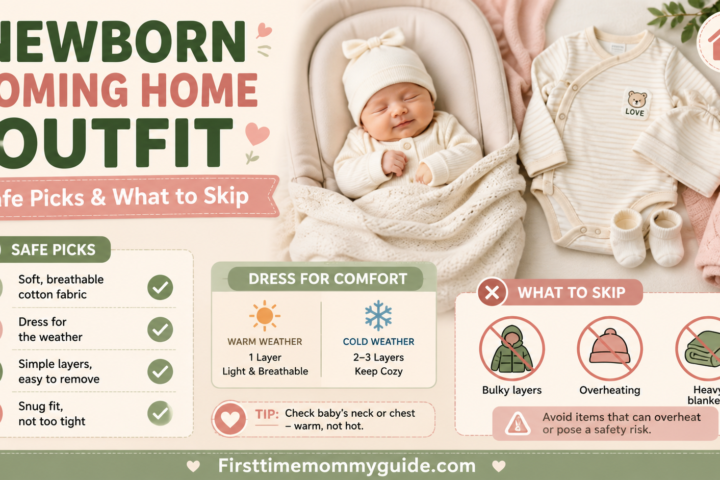
| Going-home outfit | 1–2 | Season-appropriate |
Newborn Clothing Sizing Tip: Many newborns skip the “newborn” size within 2–4 weeks. Buy most of your wardrobe in the 0–3 month size, and keep only a small amount of true newborn-size clothing.
Bathing & Hygiene Essentials
- Baby bathtub or sink insert
- Hooded towels (2–3)
- Baby wash and shampoo (fragrance-free, gentle formula)
- Soft-bristle baby brush
- Nail clippers or file
- Thermometer
Travel & Safety Essentials
| Item | Why It’s Essential |
|---|---|
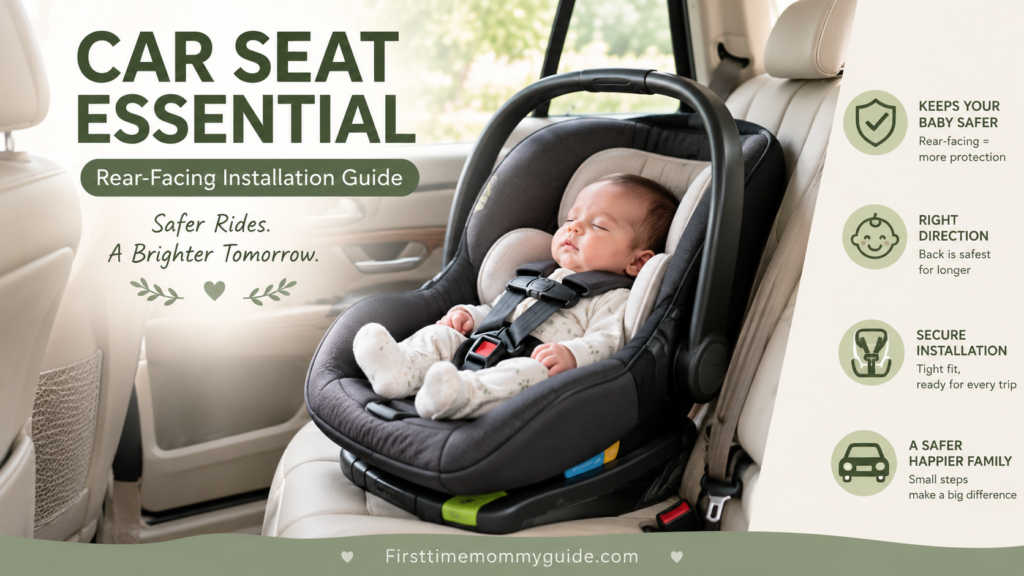
| Rear-facing infant car seat | Legally required to leave the hospital by car in every U.S. state |
| Stroller | Everyday mobility |
| Diaper bag | Organized on-the-go supplies |
| Babyproofing basics | Outlet covers, cabinet locks — needed before baby becomes mobile, not day one |
Convertible Car Seat vs. Infant Car Seat
| Feature | Infant Car Seat | Convertible Car Seat |
|---|---|---|
| Age range | Birth to ~12 months | Birth to ~4–7 years |
| Portability | Detaches, clicks into stroller | Stays installed in the car |
| Cost | $150–$350 | $200–$500 |
| Best for | New parents who want portability | Budget-conscious families who want one seat long-term |
Safety note: Every car seat has an expiration date (usually 6–10 years from manufacture) and must meet current federal safety standards. Always register your car seat with the manufacturer for recall notices.
Health & Safety Kit
- Infant thermometer
- Baby-safe pain reliever (as advised by your pediatrician)
- Nasal aspirator/bulb syringe
- Gas drops (as needed)
- First-aid kit
How Much Does a Baby Shopping List Really Cost?
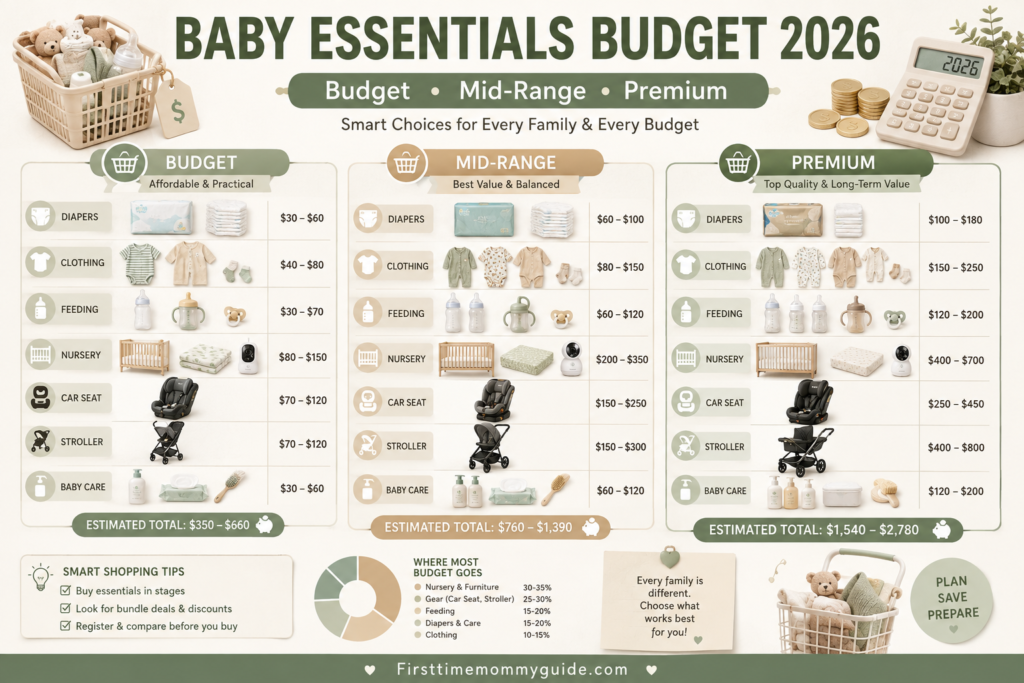
Costs vary widely depending on whether you buy new, secondhand, or receive baby shower gifts.
| Budget Tier | Estimated First-Year Cost | What’s Included |
|---|---|---|
| Budget-conscious | $800–$1,500 | Secondhand furniture, basic gear, essentials only |
| Mid-range | $1,500–$3,000 | New furniture, name-brand core gear, moderate extras |
| Premium | $3,000–$6,000+ | High-end travel systems, smart monitors, designer nursery |
Diapers, formula (if used), and clothing sizes will be ongoing monthly costs well beyond the initial shopping list.
What You Don’t Need (Registry Regrets)
Many first-time parents overspend on items that go unused. Common regrets include:
- Wipe warmers — most babies don’t mind room-temperature wipes
- Baby shoes for newborns — unnecessary before walking age
- Excess newborn-size clothing — babies outgrow this size within weeks
- Diaper genie-style pails in bulk — one is usually enough
- Overly specific “themed” nursery decor — form over function, high cost for low use
Practical rule: If you’re unsure whether you’ll need an item, wait until after baby arrives. It’s easier to buy something later than to return unused gifts.
Baby Essentials Timeline: 0–3, 3–6, 6–12 Months
| Age Range | New Needs That Emerge |
|---|---|
| 0–3 months | Core sleep, feeding, diapering, clothing essentials (this list) |
| 3–6 months | Play mat, teething toys, transition to larger clothing sizes |
| 6–12 months | High chair, baby-proofing supplies, solid food gear, walking shoes |
Cloth vs. Disposable Diapers
| Factor | Cloth Diapers | Disposable Diapers |
|---|---|---|
| Upfront cost | Higher ($300–$600 starter set) | Lower per-purchase |
| Long-term cost | Lower over time | Higher over time (ongoing purchases) |
| Convenience | Requires washing | Throw-away convenience |
| Environmental impact | Reusable, less landfill waste | More landfill waste |
Frequently Asked Questions (FAQs)
What do I really need for a newborn baby?
At minimum: a safe sleep space, a rear-facing car seat, diapers, feeding supplies, and 8–10 onesies. Everything else can be added gradually.
What is the 5-5-5 rule for baby registries?
It’s a popular registry guideline suggesting 5 items you need, 5 items you want, and 5 items to hold in reserve or add later — a simple way to avoid over-registering.
How much does it cost to buy baby essentials for the first year?
Total first-year costs typically range from $800 to $6,000+, depending on whether items are new, secondhand, or gifted, and how premium the gear is.
What are the top 10 baby essentials for first-time moms?
Crib or bassinet, car seat, diapers, wipes, onesies, sleepers, bottles, thermometer, swaddle blankets, and a diaper bag.
What should I NOT buy for a newborn?
Wipe warmers, newborn shoes, excess newborn-size clothing, and overly themed decor are commonly regretted purchases.
When should I start buying baby items during pregnancy?
Most parents begin in the second trimester and finish major purchases by around week 34.
Do I need both a bassinet and a crib?
No. Many parents start with a bassinet for convenience near their bed and move baby to the crib around 4–6 months.
How many onesies does a newborn need?
8–10 onesies is a practical starting point, since newborns go through frequent outfit changes.
What size diapers should I buy first?
Buy a small pack of newborn-size diapers first, since many babies size up within a few weeks.
Is a wipe warmer necessary?
No, it’s a nice-to-have but not essential — most babies adjust fine to room-temperature wipes.
Do I need a breast pump if I plan to breastfeed exclusively?
Many exclusively breastfeeding moms still find a pump useful for flexibility, milk storage, and letting a partner help feed. Check if your insurance covers one.
What’s the safest sleep setup for a newborn?
A firm, flat mattress with a fitted sheet only — no pillows, blankets, or bumpers — following AAP safe sleep guidelines.
How many bottles do I need if I’m formula-feeding?
Start with 6–8 bottles to allow for feeding, washing, and drying cycles.
What’s the difference between a swaddle and a sleep sack?
A swaddle wraps baby snugly with arms in; a sleep sack is a wearable blanket, typically used once baby starts rolling and swaddling is no longer recommended.
Do I need a baby monitor?
It’s helpful for peace of mind, especially in a larger home, but not medically necessary.
What car seat features are required by law?
All states require an approved, properly installed rear-facing car seat to leave the hospital; specific requirements vary slightly by state.
What baby items can I buy secondhand safely?
Clothing, some toys, and strollers are generally fine secondhand. Always check expiration dates and recall status first.
What baby items should never be bought used?
Car seats (due to unknown crash history and expiration dates) and cribs (due to evolving safety standards) are best bought new.
Do I need a diaper bag or can I use a regular bag?
A dedicated diaper bag with built-in organization saves time, but a regular bag with an insert can work as a budget alternative.
What’s a realistic total budget for baby essentials?
Most first-time parents spend between $1,000 and $3,000 on initial baby essentials, excluding ongoing costs like diapers and formula.
How early should I install my car seat?
Install and have it inspected by week 34–36 of pregnancy so it’s ready before your due date.
Should I buy a high chair before baby is born?
No — high chairs are needed around 6 months when starting solid foods, so they can wait.
Conclusion
You don’t need everything on a 200-item registry to be a great mom — you need a small set of the right things, chosen with intention.
Focus first on safe sleep, feeding, diapering, clothing, and car seat safety. Add the extras later, once you know what your baby (and your routine) actually needs.
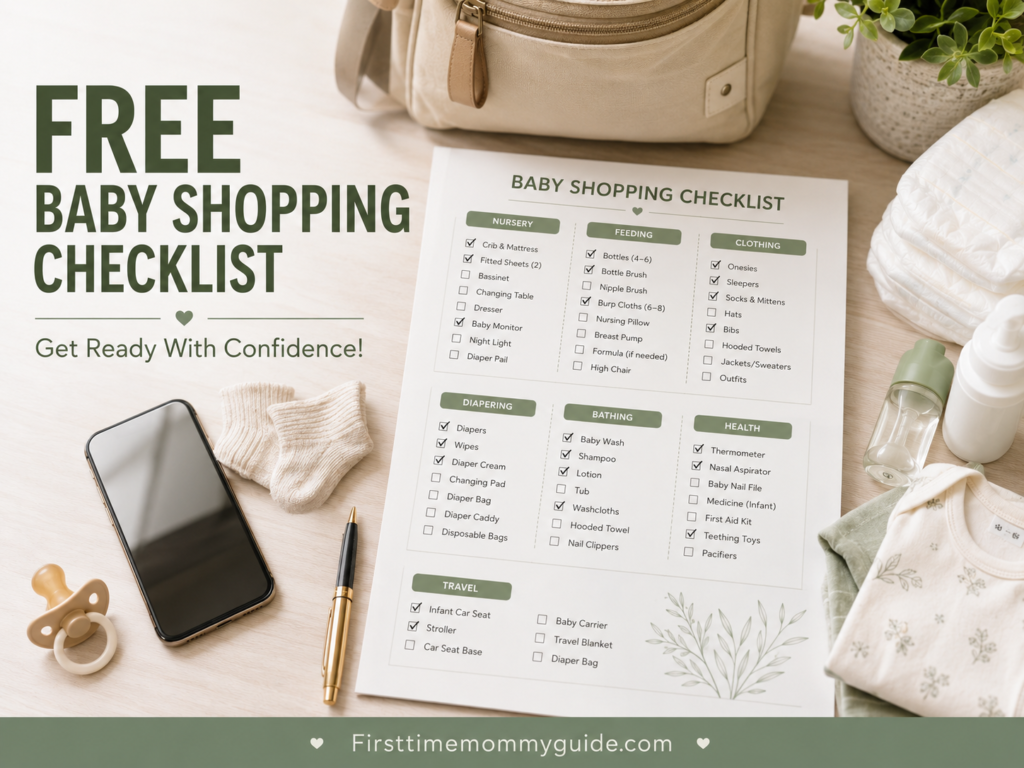
Ready to shop smarter? Save or print this baby shopping list for first-time moms so you can check items off as you go, and revisit the budget breakdown above to plan your spending with confidence.

Dilawar Mughal
Founder and editor, First Time Mommy Guide
I research every guide against what the NHS, the AAP and the WHO publish, then write it in plain English — because most new parents are reading with one hand free, not comparing clinical guidelines. I'm not a doctor or a midwife. Every health claim on this site is sourced and linked so you can check it yourself, and anything urgent belongs with your health visitor or GP, not a blog.