General information, not medical advice. Every baby is different — if anything worries you, speak to your midwife, health visitor or GP rather than waiting.
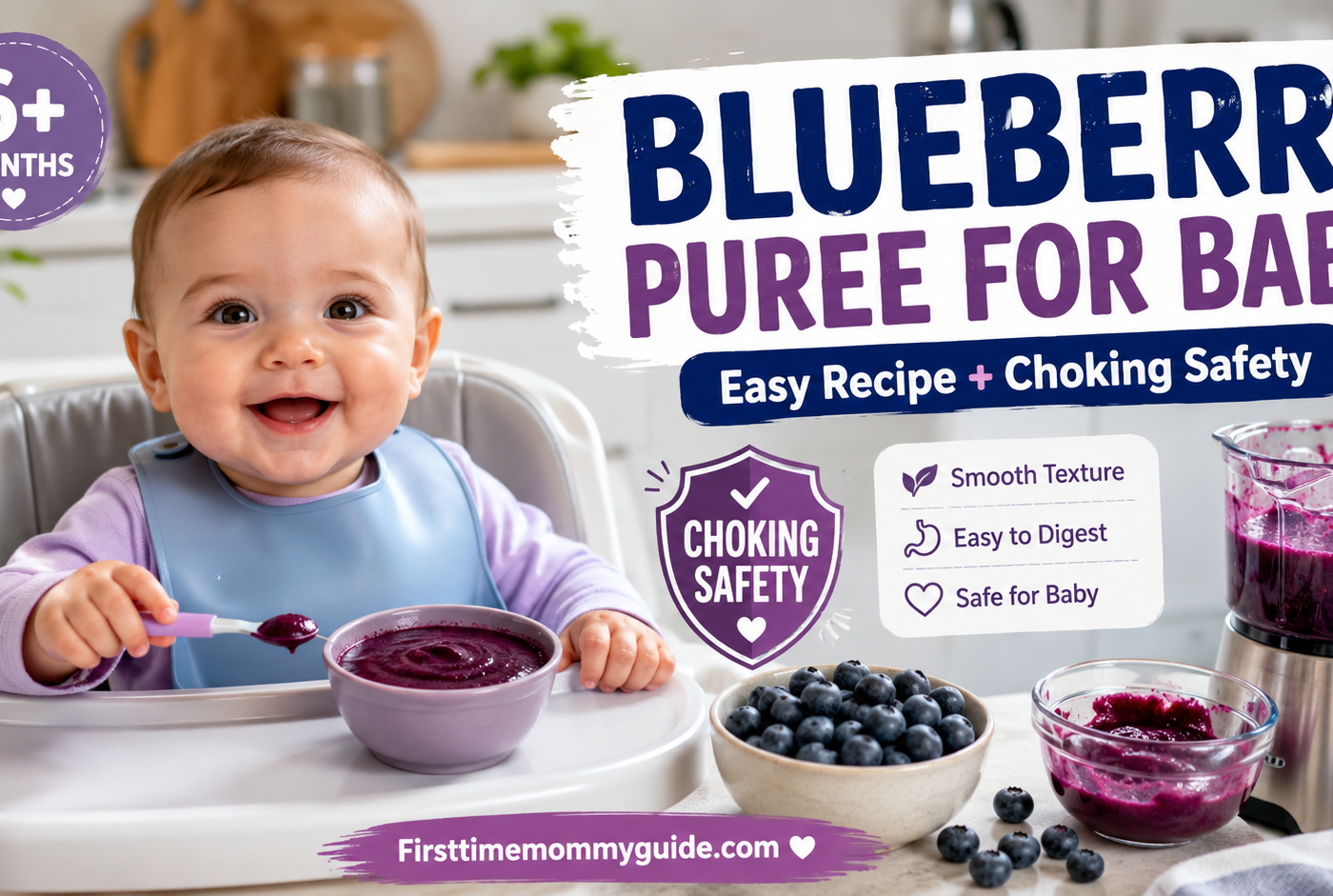
Blueberries are one of the easiest first fruits to love — naturally sweet, antioxidant-rich, and gentle on a new digestive system.
But there’s an important distinction most recipe pages blur together: Blueberry Puree for Baby is safe from around 6 months, while whole blueberries stay a genuine choking hazard for years longer than most parents expect.
Blueberry puree is safe for babies from around 6 months old. Simmer fresh or frozen blueberries until soft, then blend until smooth.
Whole blueberries, however, remain a choking hazard until roughly age 4 due to their round, firm shape, so they need to be flattened, quartered, or cooked soft long after purees are no longer needed.
Table of Contents
Key Takeaways
- Blueberry puree can be introduced around 6 months old, alongside other first foods.
- Blueberries rarely cause allergic reactions, making them a low-risk first fruit choice.
- The real safety issue with blueberries isn’t the puree — it’s the whole berry, which health authorities consider a choking hazard until around age 4.
- When your baby moves past purees, whole blueberries still need to be flattened, quartered, or cooked until they burst.
- Blueberry puree keeps 3–4 days in the fridge or up to 3 months in the freezer.
- Blueberries are high in fiber and can have a mild laxative effect — useful to know if your baby is dealing with constipation from other foods.
Is Blueberry Puree Safe for Babies?
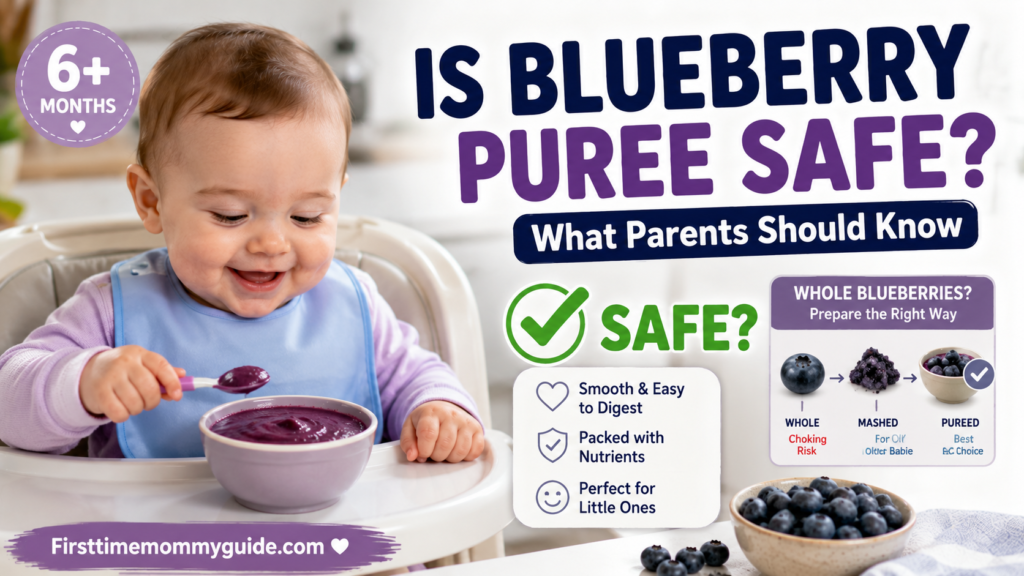
Yes. Blueberry puree is considered one of the safer, easier fruits to introduce as a first food. Unlike strawberries or tomatoes, which can sometimes cause a mild rash around the mouth in very young babies, blueberries are one of the few berries you can introduce early on in a baby’s weaning process, as they’re unlikely to cause an allergic reaction. That makes puree form a genuinely low-risk starting point around 6 months old.
Where the real caution lives is after purees, once your baby starts eating whole or cut fruit. Major health advisory bodies consider whole blueberries a common choking hazard until age four because of their round, firm shape — a small, firm, round object is exactly the shape most likely to lodge in a young child’s airway. The round shape, small size, and firmness of a blueberry is what makes it risky, and to minimize that risk, you flatten fresh blueberries into a disc shape between your fingers, quarter them, or cook them until they burst.
This is why blueberry puree and whole blueberries deserve two completely different safety conversations — and why “safe from 6 months” without more context can be misleading.
When Can Babies Eat Blueberries?
| Age | Form | Notes |
|---|---|---|
| 6+ months | Smooth puree | Safe as a first food; thin with breastmilk, formula, or water if needed |
| 7–9 months | Thicker puree, mashed | Can mix into oatmeal, yogurt, or other purees |
| 9–12 months | Flattened or quartered berries | Never serve whole; flatten between fingers or quarter |
| 12–18 months | Quartered berries, cooked-soft berries | Continue modifying; whole berries still risky |
| ~4 years | Whole berries | Generally considered safe once chewing skills are fully developed |
Important: fresh blueberries in their whole form should generally wait until at least 9-10 months, and even then, they must be cut into quarters to prevent choking, with truly whole blueberries typically only appropriate once a child is a confident, experienced chewer, usually around age 2 or 3.
What You’ll Need
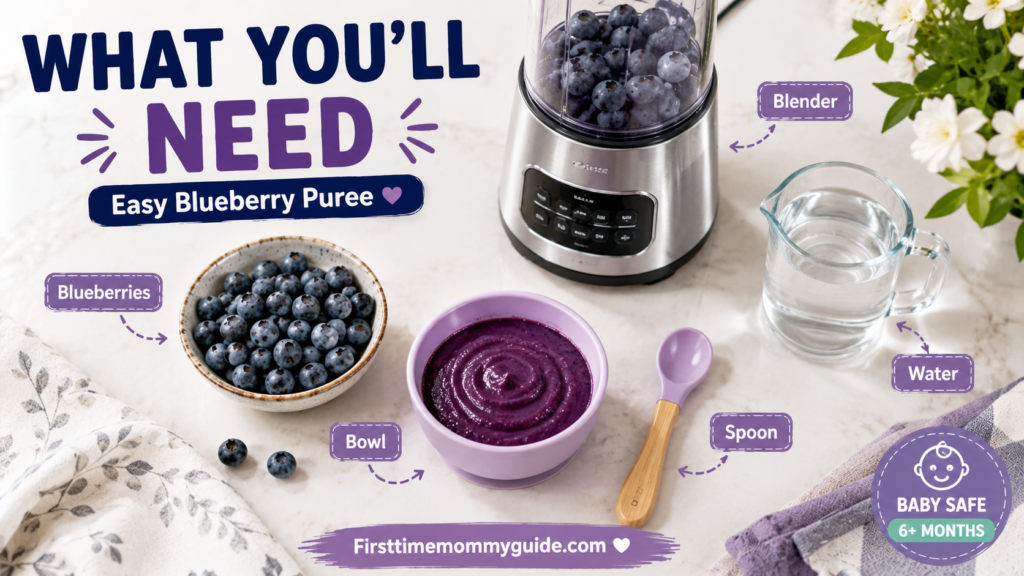
Choosing Blueberries
- Fresh blueberries: Look for plump, firm berries with a deep blue-purple color and a light silvery bloom; avoid any that are shriveled, soft, or leaking juice.
- Frozen blueberries: A great year-round option — frozen at peak ripeness, they retain nutrients well and are often more economical.
- Organic vs. conventional: Blueberries are sometimes listed among produce with higher pesticide residue when grown conventionally, so if this is a priority for you, organic is a reasonable choice, though thorough washing helps either way.
Equipment
- Small saucepan
- Blender or food processor
- Fine-mesh strainer (optional, for a smoother texture)
- Ice cube trays or silicone freezer trays
- Airtight storage containers
How to Make Blueberry Puree for Baby (Step-by-Step)
Method 1: Stovetop Simmering (Most Common)
- Rinse 2 cups of fresh or frozen blueberries thoroughly.
- Add to a small saucepan with 2–3 tablespoons of water.
- Bring to a gentle simmer over medium heat, stirring occasionally.
- Cook for 8–10 minutes, until the berries burst and soften completely.
- Transfer to a blender and blend until smooth, adding a little of the cooking liquid if needed to reach the right consistency.
- For an ultra-smooth texture (useful for very young babies), press the puree through a fine-mesh strainer to remove the skins.
Method 2: Steaming
- Rinse blueberries and place in a steamer basket over boiling water.
- Steam for 5–7 minutes, until soft and bursting.
- Blend until smooth, thinning with breastmilk, formula, or water as needed.
Method 3: No-Cook Blend (For Very Ripe Berries)
- Rinse very ripe, soft blueberries well.
- Blend directly with a small amount of breastmilk, formula, or water until smooth.
- Strain if a smoother texture is needed, since raw blueberry skins can leave a slightly grainy texture.
| Method | Time | Texture | Best For |
|---|---|---|---|
| Stovetop simmering | 8–10 min | Smooth, rich flavor | Most babies, batch cooking |
| Steaming | 5–7 min | Smooth, slightly lighter flavor | Retaining more nutrients |
| No-cook blend | 2–3 min | Can be slightly grainy unless strained | Very ripe fresh berries only |
Expert tip: If your baby is new to solids, strain the puree the first several times you serve it. Blueberry skins can create small flecks of texture that some babies aren’t ready for yet, even in puree form.
Boosting Nutrition and Flavor Pairings
Blueberries pair naturally with many other first foods, which makes them useful for building a varied palate early on:
- Banana or pear puree (for natural sweetness)
- Plain oatmeal or baby cereal
- Plain whole-milk yogurt
- Sweet potato or butternut squash puree
- Avocado puree (for healthy fats)
Mixing blueberry puree into greens like spinach or kale purees is also a well-known trick for making greens more palatable to a baby who’s hesitant about vegetables.
Digestive Effects: What to Expect
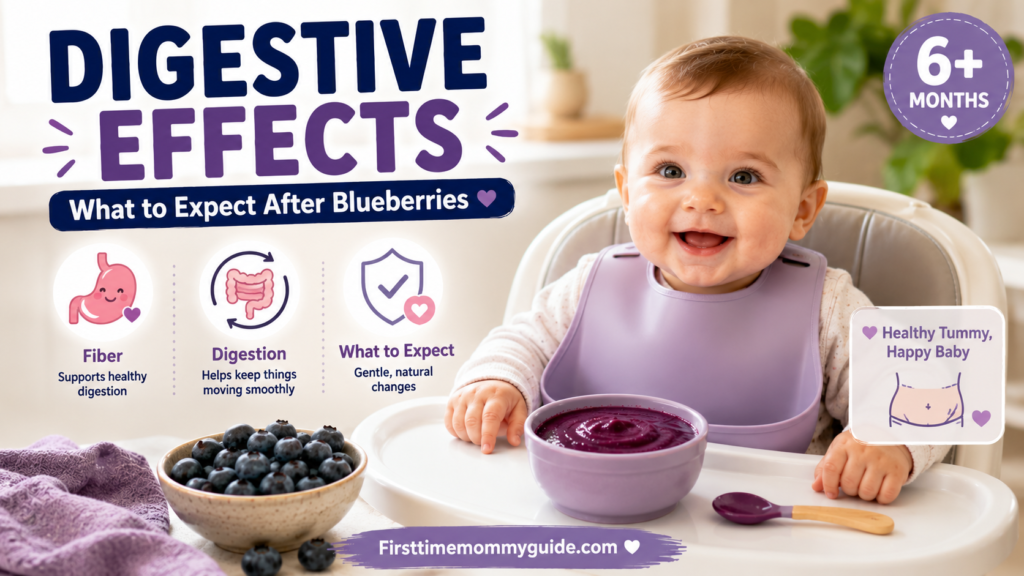
Blueberries are high in fiber, which is generally a benefit — but it’s worth knowing upfront that fiber-rich fruits like blueberries can have a mild natural laxative effect in some babies. If your baby is dealing with constipation from other foods like rice cereal or bananas, blueberry puree can genuinely help. If you notice looser stools after introducing it, that’s a normal digestive response, not a sign of intolerance, though it’s worth mentioning to your pediatrician if it seems excessive.
Storing Blueberry Puree
- Refrigerator: Store in an airtight container for 3–4 days.
- Freezer: Freeze in ice cube trays, then transfer the frozen cubes to a labeled freezer bag for up to 3 months.
- Thawing: Thaw in the refrigerator overnight, or warm gently on the stovetop or in a bowl of warm water.
- Batch cooking tip: Blueberry puree freezes exceptionally well and holds its color and flavor better than many fruit purees, making it a good candidate for larger batches.
Whole Blueberries vs. Blueberry Puree
| Factor | Blueberry Puree | Whole Blueberries |
|---|---|---|
| Safe starting age | ~6 months | Not recommended until ~9–12 months at earliest, modified |
| Choking risk | None (fully blended) | High until roughly age 4 |
| Preparation needed | Cook and blend | Flatten, quarter, or cook until soft |
| Best for | First foods, mixing into other purees | Older babies practicing pincer grasp and chewing |
Common Mistakes to Avoid
- Assuming whole blueberries are fine once puree is fine. These are two separate safety questions — puree readiness doesn’t mean whole-berry readiness.
- Serving whole or halved blueberries too early. Even halved, a blueberry can still be round enough to pose risk; quartering or flattening is safer.
- Skipping the strain for very young babies. Blueberry skins can create unexpected texture that catches new eaters off guard.
- Over-freezing without labeling. Blueberry puree freezes well, but unlabeled batches are easy to lose track of past the 3-month window.
- Adding sugar or honey. Blueberries are naturally sweet enough; honey should never be given before 12 months due to botulism risk.
Frequently Asked Questions (FAQs)
When can babies start eating blueberry puree?
Most babies can try blueberry puree around 6 months old, alongside other first foods.
Are whole blueberries safe for babies?
No, not right away. Whole blueberries are considered a choking hazard until roughly age 4 because of their round, firm shape, even though blueberry puree is safe much earlier.
How should I prepare blueberries once my baby moves past purees?
Flatten each berry between your fingers into a disc shape, quarter them, or cook them until they burst and soften — never serve them whole to a young child.
Are blueberries a common allergen?
No, blueberries rarely cause allergic reactions, which is part of why they’re recommended as an early first fruit.
Can blueberry puree cause loose stools?
It can, due to its fiber content. This is a normal digestive response and can even help with constipation from other foods.
Can I use frozen blueberries instead of fresh?
Yes, frozen blueberries work just as well and are often picked at peak ripeness, making them a reliable year-round option.
How long does blueberry puree last in the fridge?
About 3–4 days in an airtight container.
Can I freeze blueberry puree?
Yes, freeze in ice cube trays for up to 3 months, then thaw individual portions as needed.
Do I need to peel or strain blueberries before pureeing?
Peeling isn’t necessary, but straining the cooked puree through a fine-mesh strainer can remove skins for an extra-smooth texture, which is helpful for very new eaters.
Should I buy organic blueberries for my baby?
It’s a reasonable choice if pesticide exposure is a concern for you, but thoroughly washing conventional blueberries is also an effective precaution.
Can I mix blueberry puree into other baby foods?
Yes, it pairs well with oatmeal, yogurt, banana, pear, sweet potato, and avocado, and can help make green vegetable purees more palatable.
Is blueberry puree a good food for teething babies?
Some parents freeze small amounts of blueberry puree in a mesh feeder for a soothing, cold texture, though this should always be supervised.
What’s the difference between wild and cultivated blueberries for baby food?
Wild blueberries are smaller and slightly more concentrated in antioxidants, but their small size can make them a slightly higher choking risk once your baby moves to whole berries.
Can blueberries stain my baby’s clothes or skin?
Yes, blueberries stain easily; an old bib and easy-to-wash clothing are worth having on hand at mealtime.
How do I know if my baby is having a reaction to blueberries?
Watch for hives, a rash, swelling, or vomiting after the first serving, though true blueberry allergies are uncommon.
Conclusion
Blueberry puree is one of the easiest, most nutrient-dense first foods you can offer your baby, and it’s genuinely low-risk starting around 6 months.
The one thing worth holding onto long after this recipe becomes routine is that whole blueberries are an entirely different safety question — flatten, quarter, or cook them soft well into toddlerhood, even once purees are a distant memory.
Handled that way, blueberries can be a safe, well-loved part of your baby’s diet from their very first bites through early childhood.

Dilawar Mughal
Founder and editor, First Time Mommy Guide
I research every guide against what the NHS, the AAP and the WHO publish, then write it in plain English — because most new parents are reading with one hand free, not comparing clinical guidelines. I'm not a doctor or a midwife. Every health claim on this site is sourced and linked so you can check it yourself, and anything urgent belongs with your health visitor or GP, not a blog.