General information, not medical advice. Every baby is different — if anything worries you, speak to your midwife, health visitor or GP rather than waiting.
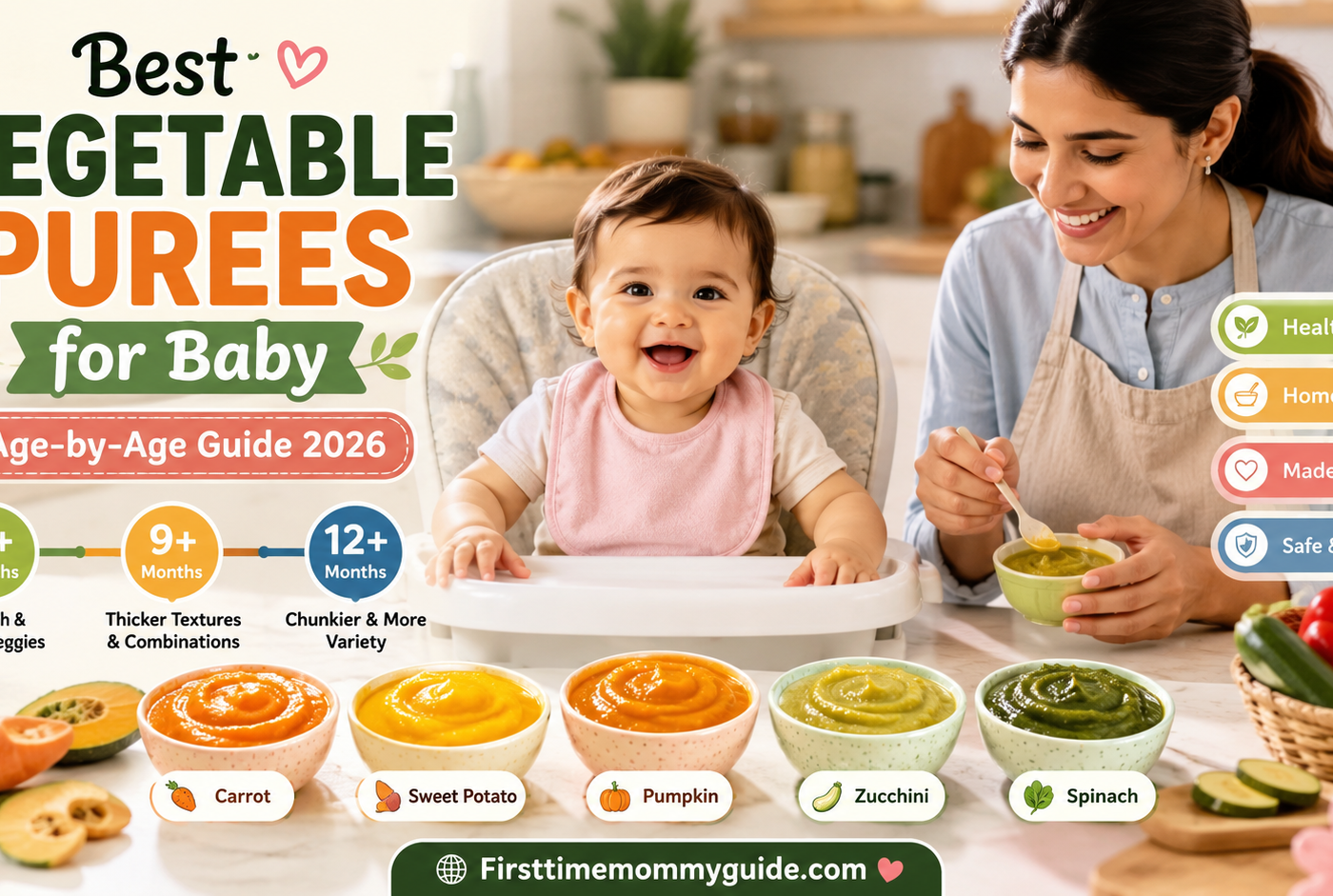
The best vegetable purees for baby are mild, naturally sweet, and easy to digest, which is why sweet potato, carrot, butternut squash, pea, and pumpkin are usually the first ones pediatricians and parents reach for.
Vegetables give a growing baby fiber, vitamins, and minerals they cannot get from milk alone, and starting with the right ones makes the whole process smoother for both of you.
Table of Contents
What Are the Best Vegetable Purees for Baby?
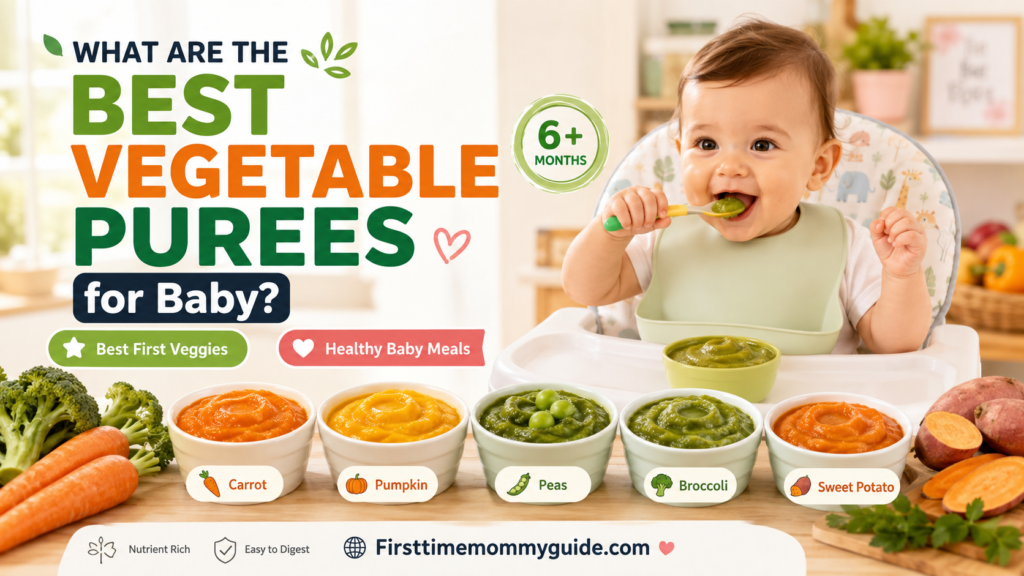
The best beginner vegetable purees are naturally sweet and low in fiber, which makes them gentle on a baby’s new digestive system.
- Sweet Potato Puree
- Carrot Puree
- Butternut Squash Puree
- Pea Puree
- Pumpkin Puree
- Zucchini Puree
These vegetables are mild in flavor and easy to steam into a completely smooth texture, which is exactly what a baby needs in the first weeks of solids.
Why Vegetables Matter So Early
Breast milk or formula covers a baby’s core nutrition needs through the first year, but solids introduce nutrients and textures that milk cannot provide on its own.
Vegetables deliver fiber that supports digestion, along with vitamins A and C, potassium, and folate that support growth. Starting with vegetables before fruit, or offering both in whatever order works for your family, has no proven effect on whether a baby later accepts vegetables. What actually predicts acceptance is repeated exposure over time, not the order of introduction.
When to Start Vegetable Purees
Most pediatric feeding guidance points to the same general window for starting any solid food, including vegetable purees.
- Around 6 months of age, once your baby sits with minimal support, has good head control, and shows real interest in food.
- After your baby has doubled their birth weight, which is another common readiness marker pediatricians look for.
- One new vegetable at a time, waiting two to three days before adding another, to watch for any reaction.
The American Academy of Pediatrics recommends starting solids around 6 months rather than earlier, since a baby’s digestive system and feeding skills are better prepared by that point.
Best Vegetable Purees by Stage
Stage 1: Smooth, Single-Vegetable Purees (6 to 8 Months)
Keep textures thin and completely smooth at this stage, using just one vegetable at a time.
| Vegetable Puree | Why It Works | Texture Tip |
|---|---|---|
| Sweet Potato | Naturally sweet, iron-supportive, easy to digest | Steam and thin with breast milk or formula |
| Carrot | Mild sweetness, rich in vitamin A | Steam until fork-tender, blend fully smooth |
| Butternut Squash | Mild, creamy texture once cooked | Roast for extra depth before blending |
| Pea | Gentle first green vegetable | Push through a mesh strainer to remove skins |
| Pumpkin | Naturally sweet and easy to mash | Roast or steam, avoid canned pie filling |
| Zucchini | Very mild, high water content | Steam briefly, drain excess liquid before blending |
Stage 2: Thicker and Combined Vegetable Purees (8 to 10 Months)
Babies at this stage can usually handle more texture and combinations of two or more vegetables.
| Vegetable Puree | Why It Works | Texture Tip |
|---|---|---|
| Carrot + Sweet Potato | A double dose of vitamin A with a sweet base | Mash with a fork instead of blending |
| Broccoli + Cauliflower + Spinach | Nutrient-dense greens balanced by mild cruciferous veg | Stop steaming as soon as color brightens to keep flavor mild |
| Spinach + Pear | Iron-rich green balanced by fruit sweetness | Blend spinach very finely to avoid stringy texture |
| Green Bean + Potato | Creamy texture, gentle plant fiber | Steam beans until very soft before blending |
| Pumpkin + Apple | Warm, naturally sweet combination | Add a pinch of cinnamon once tolerated |
Stage 3: Chunky Vegetable Purees and Finger Foods (9 to 12 Months)
If your baby is moving toward baby-led weaning, the same vegetables can be served differently rather than fully pureed.
- Steamed carrot sticks, soft enough to squish between two fingers.
- Roasted sweet potato wedges, cut into finger-sized strips.
- Soft-cooked broccoli florets, left slightly textured for practice chewing.
- Mashed peas mixed with a small amount of olive oil for easier pickup.
- Zucchini rounds, steamed soft and cut into baby-safe strips.
A Nitrate Safety Note Most Guides Skip
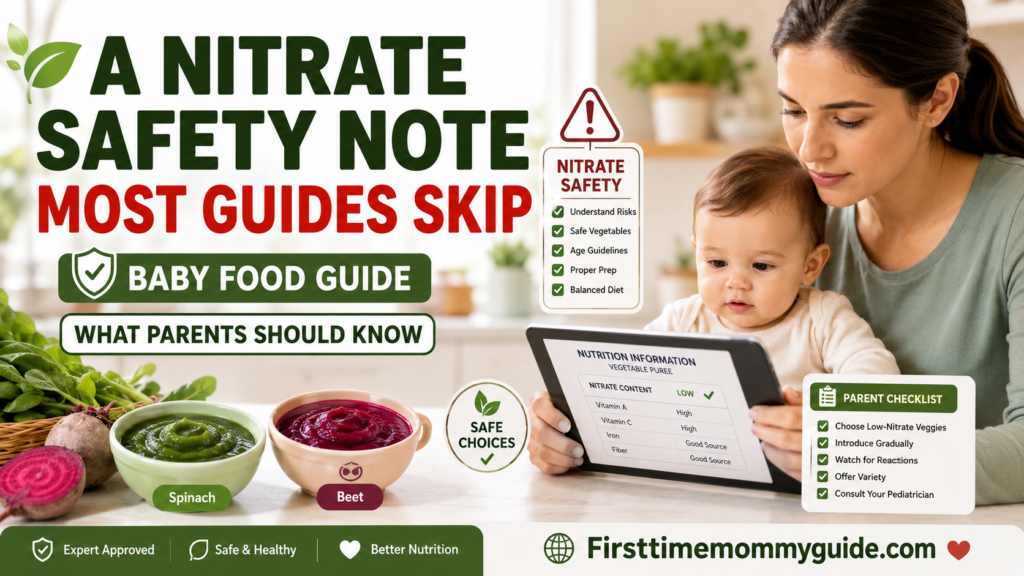
Some vegetables, including spinach, beets, carrots, green beans, and squash, can naturally contain higher levels of nitrates than other produce.
The American Academy of Pediatrics has noted that home-prepared purees from these vegetables should be avoided before 3 months of age, which is well before solids typically start anyway.
Since babies rarely begin any solid food before 6 months in the United States, this mainly translates into two practical habits once purees do start: use fresh water rather than the vegetable’s steaming water when blending, and avoid storing and reheating cooked spinach or beet purees repeatedly, since nitrate levels can increase during storage.
Nutrient Snapshot by Vegetable
Different vegetables bring different strengths to a baby’s diet, so rotating through several is more valuable than relying on just one or two.
| Vegetable | Key Nutrients | Best Paired With |
|---|---|---|
| Sweet Potato | Vitamin A, fiber, natural sugars | Apple, cinnamon, chicken |
| Carrot | Vitamin A, beta-carotene | Apple, lentil, orange |
| Spinach | Non-heme iron, folate, vitamin K | Pear, tomato, citrus for absorption |
| Butternut Squash | Vitamin A, potassium | Pear, apple, sage |
| Pea | Plant protein, fiber, vitamin C | Mint, potato, pear |
| Broccoli | Vitamin C, fiber, calcium | Cauliflower, cheese, apple |
| Zucchini | Vitamin C, hydration | Pear, oat cereal, potato |
Store-Bought vs Homemade Vegetable Purees
Both routes can give your baby a nutritious meal. The right choice usually comes down to time, budget, and your baby’s texture stage.
| Factor | Store-Bought Pouches | Homemade Vegetable Purees |
|---|---|---|
| Convenience | High, ready to serve | Lower, requires prep and storage |
| Cost over time | Higher per serving | Lower, especially in batches |
| Ingredient control | Limited to the label | Full control over ratios and add-ins |
| Texture control | Fixed by the manufacturer | Fully adjustable to your baby’s stage |
| Best use case | Travel, backup meals, busy days | Everyday meals and nitrate-sensitive vegetables |
Commercially prepared vegetable purees are generally considered safe with regard to nitrate levels, since manufacturers test for this during production, which can make store-bought a reasonable choice for higher-nitrate vegetables like spinach and beets if you prefer not to manage the storage rules at home.
How to Cook Vegetables for Purees
- Steaming preserves more nutrients than boiling, since fewer vitamins leach into the cooking water.
- Roasting deepens flavor in mild vegetables like squash and pumpkin, which can help with acceptance later in the first year.
- Always use fresh water, not the vegetable’s steaming liquid, when blending vegetables prone to higher nitrate levels.
- Avoid adding salt, sugar, or seasoning blends to any homemade vegetable puree in the first year.
Sample 7-Day Vegetable Puree Meal Plan (Stage 1 to 2)
This sample plan assumes each vegetable has already been introduced on its own with no reaction. Adjust portions to your baby’s appetite.
| Day | Vegetable Puree |
|---|---|
| Monday | Sweet Potato |
| Tuesday | Carrot + Apple |
| Wednesday | Butternut Squash |
| Thursday | Pea + Potato |
| Friday | Broccoli + Cauliflower + Spinach |
| Saturday | Pumpkin + Cinnamon |
| Sunday | Zucchini + Pear |
Rotating vegetables like this keeps your baby exposed to a wide range of flavors and nutrients without leaning too heavily on just one or two favorites.
Combining Vegetable Purees With Other Foods
Once a vegetable has been tried on its own, blending it into a food your baby already enjoys is one of the easiest ways to increase acceptance.
- Stir a spoonful of vegetable puree into oatmeal or iron-fortified cereal.
- Mix pureed vegetables into plain whole-milk yogurt for a creamy, familiar base.
- Blend a stronger-flavored vegetable, like spinach or broccoli, with a naturally sweet fruit to soften the taste.
- Add a small amount of vegetable puree into a meat or lentil puree to boost both flavor and nutrition.
Texture Progression by Age
Texture matters as much as the vegetable itself. Serving a puree that is too thick for a 6-month-old, or too smooth for a 10-month-old, can slow down feeding skills or cause unnecessary gagging.
| Age | Texture | Example Vegetable Puree |
|---|---|---|
| 6 months | Thin, fully smooth, drips off a spoon | Sweet potato, thinned with breast milk or formula |
| 7 to 8 months | Thicker puree, mashed with small soft lumps | Carrot, fork-mashed instead of blended |
| 9 to 10 months | Soft, chunky, or minced pieces | Broccoli and cauliflower, coarsely mashed |
| 10 to 12 months | Small soft finger-food pieces | Steamed zucchini rounds, cut into safe strips |
Vegetable Purees for Common Allergen Introduction
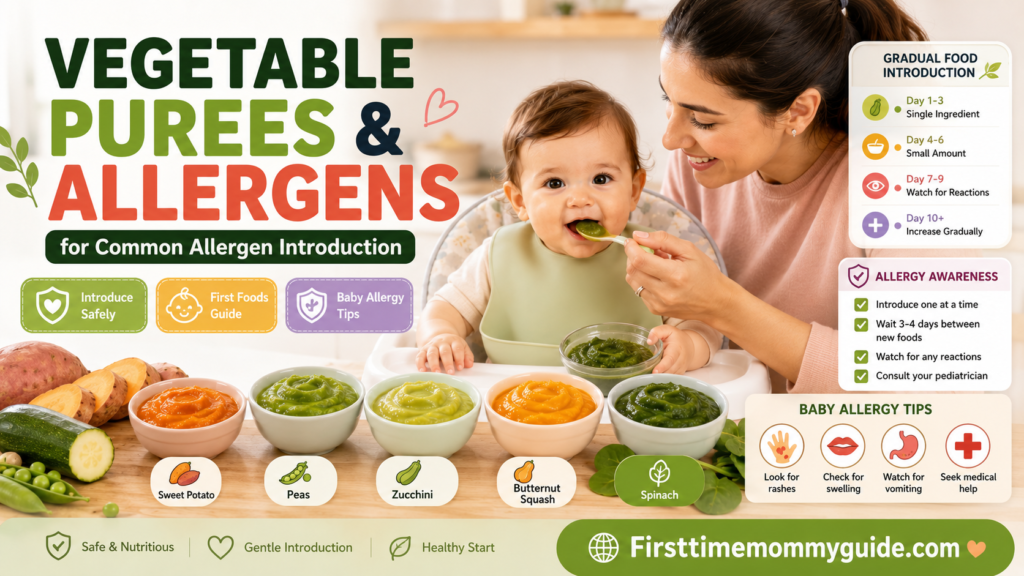
Vegetables themselves are rarely allergens, but they are often the base used to introduce common allergens gradually.
| Allergen | Suggested Vegetable Pairing | Notes |
|---|---|---|
| Egg | Well-cooked scrambled egg mixed into pureed sweet potato | Cook fully, avoid runny yolk for infants |
| Dairy (yogurt) | Plain whole-milk yogurt with pureed pumpkin | Choose unsweetened, plain yogurt only |
| Peanut | Thin peanut butter stirred into pureed carrot or squash | Never serve whole or chunky peanut butter |
| Wheat | Iron-fortified wheat cereal mixed with vegetable puree | Introduce after rice or oat cereal is tolerated |
Introduce each allergen on its own in a small amount first, ideally earlier in the day so you can watch for a reaction, before folding it into a vegetable-based meal.
Signs Your Baby Is Enjoying (or Rejecting) a Vegetable Puree
Babies communicate long before they can talk, and learning to read those cues makes vegetable feeding far less stressful.
Leaning forward, opening the mouth eagerly, or reaching for the spoon usually signals genuine interest in a puree. Turning the head away, pushing the spoon out repeatedly, or making a strong face at a stronger-flavored vegetable like spinach or broccoli are all normal reactions, not permanent verdicts. Spitting out a first taste is not always rejection either. It can simply be a baby adjusting to an unfamiliar flavor or texture, so a second and third offering on separate days is worth trying before ruling a vegetable out.
Common Mistakes to Avoid
- Serving vegetables that are too watery or too thick for your baby’s current stage, which can affect acceptance more than flavor does.
- Reusing the vegetable’s own cooking water when blending nitrate-prone vegetables like spinach or beets.
- Storing and repeatedly reheating cooked spinach or beet purees over several days.
- Giving up on a vegetable after one refusal, when most babies need 8 to 10 exposures before accepting a new flavor.
- Adding salt, sugar, or seasoning blends to make a vegetable more appealing.
Storage and Batch-Prep Tips
- Freeze single-vegetable purees in ice cube trays, then mix and match combinations at mealtime once each has been tried alone.
- Store any prepared vegetable puree in the refrigerator for up to 48 hours, or freeze for up to one month.
- Label containers with the vegetable and date, especially for higher-nitrate vegetables where freshness matters more.
- Thaw only the portion you plan to serve, and never refreeze a puree after your baby has eaten from it.
Troubleshooting: When Baby Refuses a Vegetable Puree
Vegetable refusal is extremely common, especially with stronger-flavored greens, and it rarely means a baby dislikes a food permanently.
- Offer the same vegetable again on a different day rather than switching to something new right away.
- Pair a stronger vegetable, like spinach or broccoli, with a naturally sweet fruit your baby already accepts.
- Adjust the temperature slightly, since some babies prefer purees closer to room temperature.
- Mix the vegetable into a favorite base, like oatmeal or yogurt, rather than only serving it plain on a spoon.
Expert Tips for Confident Vegetable Feeding
- Keep a simple running list of every vegetable your baby has tried, so you always know which combinations are safe to offer.
- Rotate your go-to vegetables weekly instead of relying on the same two or three, since variety early on supports broader acceptance later.
- Trust texture over age. Some babies handle chunkier vegetable purees earlier than the general timelines above, and that is normal too.
- When in doubt about a specific vegetable, storage method, or your home water supply, check with your pediatrician before combining it into regular meals.
Seasonal Vegetable Puree Ideas
Buying vegetables in season often means better flavor, lower cost, and less reliance on frozen or imported produce.
- Spring and summer: zucchini, peas, and green beans tend to be freshest and most affordable.
- Fall and winter: butternut squash, pumpkin, and sweet potato are at their peak and store well.
- Year-round staples: carrots and potatoes are widely available and reliable regardless of season.
- Frozen vegetables are a nutritious backup any time of year, since they are typically flash-frozen shortly after harvest.
Key Takeaways Before You Start
- Begin with mild, naturally sweet vegetables like sweet potato, carrot, and squash before moving to stronger flavors.
- Introduce one vegetable at a time and wait two to three days before adding another.
- Use fresh water, not the vegetable’s own cooking water, for nitrate-prone vegetables like spinach, beets, and carrots.
- Expect refusals. Most babies need repeated exposure before a new vegetable is accepted.
- Rotate vegetables weekly to build a varied palate rather than relying on the same two or three.
Related Articles
Explore more guides on First Time Mommy Guide to build out your baby’s full feeding journey:
- Spinach Puree for Baby: Safe Recipe, Nitrate Facts & Age Guide
- Sweet Potato Puree for Baby: Easy Recipe, Age Guide & Storage Tips
- Homemade Pumpkin Puree for Baby: Easy, Safe Recipe (6+ Months)
- Zucchini Puree for Baby: Easy Recipe & Age Guide
- Apple Puree for Baby: Easy Recipe & Safety Guide
- Blueberry Puree for Baby: Easy Recipe & Choking Safety Guide
- First Foods for Baby at 6 Months: A Complete Guide to Starting Solids
- First Food for Baby 6 Months: Best Options, Safety Tips & Feeding Guide
- When Can My Baby Start Eating Real Food? Age, Signs & First Foods
- Baby Food Chart 6 to 12 Months: Free Month-by-Month Feeding
- Starting Solids 6–12 Months: The Complete Guide
- Baby Won’t Eat? Common Reasons, Fixes & When to Worry
- Baby Essentials Checklist 0–3 Months (Complete Guide)
- Baby Essentials Checklist: What New Parents Actually Need
- Baby Essentials, 0–3 Months: The Complete Guide
- Baby Shopping List for First-Time Moms: The Complete Checklist
- Hospital Bag Checklist for Baby: The Complete Packing List
- How Many Newborn Outfits Do You Need? A Complete Size-by-Size Guide
- Pregnancy Guide, Month by Month: Symptoms & Baby Growth
- Baby Sleep, Honestly: The Complete Guide
- Browse All Baby Food Guides
Frequently Asked Questions (FAQs)
What is the best first vegetable puree for a baby?
Sweet potato, carrot, and butternut squash are the most common first choices because they are naturally sweet, easy to digest, and simple to blend fully smooth.
When can babies start eating vegetable purees?
Most babies are ready around 6 months, once they sit with minimal support and show interest in food. Introduce one new vegetable at a time.
Are spinach and carrot purees safe for babies?
Yes, once your baby has started solids around 6 months. Use fresh water rather than the vegetable’s cooking water when blending, and avoid storing these purees for more than a day or two.
Should I introduce vegetables before fruit?
There is no evidence that introducing fruit first causes babies to reject vegetables later. Repeated exposure matters far more than the order of introduction.
How many times should I offer a vegetable before giving up?
Most babies need 8 to 10 exposures before accepting a new flavor, so it is worth reoffering a refused vegetable several times before assuming it is disliked.
Can I combine two vegetable purees together?
Yes, once each vegetable has been introduced individually without a reaction. Combining a mild and a stronger-flavored vegetable often improves acceptance.
Is homemade or store-bought vegetable puree better for baby?
Both can be nutritious. Homemade offers more control over texture and ingredients, while store-bought pouches are convenient and tested for nitrate safety in higher-risk vegetables.
How long can I store a vegetable puree in the fridge or freezer?
A prepared vegetable puree keeps safely in the refrigerator for up to 48 hours, or in the freezer for up to one month, in an airtight, labeled container.
Why should I avoid using the vegetable’s cooking water in a puree?
Vegetables like spinach, beets, and carrots can release nitrates into their cooking water. Using fresh water instead reduces your baby’s nitrate exposure.
What if my baby refuses a vegetable puree?
Offer it again on a different day, adjust the temperature, or mix it into a familiar food like oatmeal or yogurt. A single refusal rarely predicts long-term dislike.
Conclusion
The best vegetable purees for baby start mild, sweet, and single-ingredient, then build toward combinations and thicker textures as your baby grows.
Sweet potato, carrot, butternut squash, and pumpkin remain reliable first choices, while spinach, beets, and other nitrate-prone vegetables just need a little extra care around fresh water and storage.
Introduce one vegetable at a time, expect some refusals along the way, and lean on repeated exposure rather than giving up too quickly.
With a stocked freezer of single-vegetable cubes and a few reliable combinations in rotation, you can build weeks of varied, nutritious meals without much daily effort.

Dilawar Mughal
Founder and editor, First Time Mommy Guide
I research every guide against what the NHS, the AAP and the WHO publish, then write it in plain English — because most new parents are reading with one hand free, not comparing clinical guidelines. I'm not a doctor or a midwife. Every health claim on this site is sourced and linked so you can check it yourself, and anything urgent belongs with your health visitor or GP, not a blog.