General information, not medical advice. Every baby is different — if anything worries you, speak to your midwife, health visitor or GP rather than waiting.
Sweet potato is one of the most common first foods pediatricians and parents reach for — and for good reason. It’s naturally sweet, gentle on a baby’s stomach, and turns into a silky-smooth puree with almost no effort.
If you’re staring at a bag of sweet potatoes and a hungry 6-month-old, this guide walks you through exactly when to start, how to cook it three different ways, how to get the texture right for your baby’s age, and how to store it so you’re not cooking every single day.
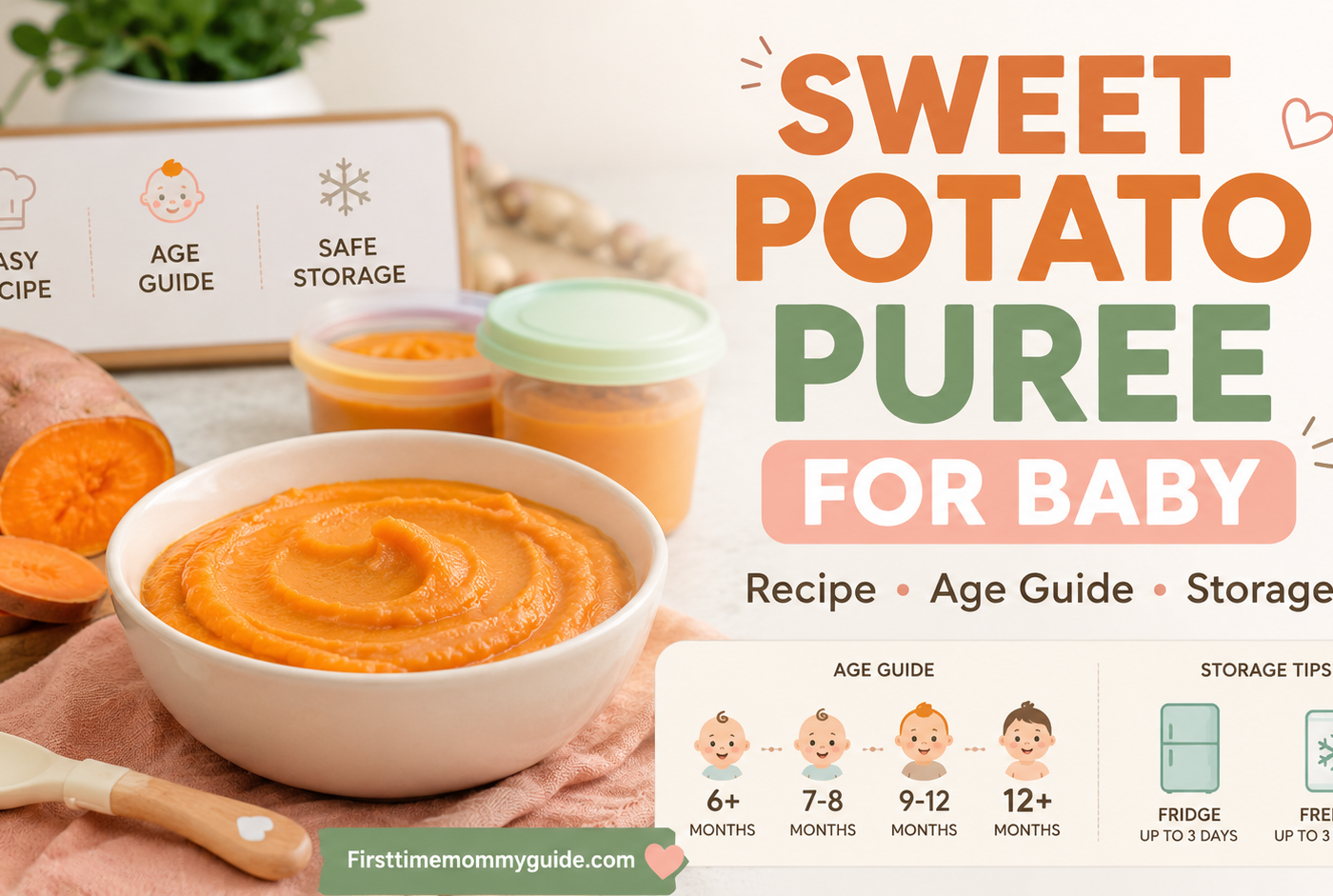
Most Sweet Potato Puree for Baby can start around 6 months old, once they show signs of readiness for solids.
Cook peeled, cubed sweet potato until fork-tender (by steaming, boiling, baking, or pressure-cooking), then blend with breast milk, formula, or water until smooth. No added salt or sugar is needed.
Table of Contents
What Is Sweet Potato Puree for Baby?
Sweet potato puree is simply cooked sweet potato blended or mashed until smooth enough for a baby to swallow safely. It’s usually made with just two ingredients — sweet potato and a liquid (water, breast milk, or formula) — with no added salt, sugar, or seasoning needed for babies under 12 months.
It’s popular as a first food because sweet potato is naturally low-allergen, easy to digest, and has a mild sweetness that most babies accept right away, even before they’ve developed a taste for less sweet vegetables.
When Can Babies Eat Sweet Potato?
Sweet potato can be introduced as soon as your baby is developmentally ready for solid foods, which for most babies is around 6 months old. Current U.S. pediatric guidance (echoed by the American Academy of Pediatrics and the World Health Organization) recommends starting solids around the middle of the first year, alongside continued breast milk or formula, rather than tying it to an exact calendar date.
A few practical notes:
- Sweet potato is not considered a top allergen, so it’s a low-risk choice for one of baby’s first foods.
- Because it contains a natural sugar called mannitol, it can cause gassiness in some babies — if your baby already has digestive sensitivity, some parents choose to introduce it after a few other foods rather than as the very first one.
- Always check with your pediatrician before starting solids, especially if your baby was premature or has a diagnosed medical condition.
Signs Your Baby Is Ready for Solids
Age is only part of the picture — readiness matters more. Look for:
- Can sit upright with minimal support and hold their head steady
- Has lost the tongue-thrust reflex (stops automatically pushing food back out)
- Shows interest in food, such as watching you eat or reaching for your plate
- Can move food from the front to the back of the mouth to swallow
- Has roughly doubled their birth weight (a common pediatric benchmark)
Nutritional Benefits of Sweet Potato for Babies
| Nutrient | Why It Matters for Babies |
|---|---|
| Vitamin A (beta-carotene) | Supports eye development, immune function, and skin health |
| Vitamin C | Aids iron absorption and supports the immune system |
| Vitamin B6 | Involved in brain and nervous system development |
| Fiber | Supports digestion and can help with constipation |
| Potassium | Supports healthy muscle and nerve function |
| Complex carbohydrates | Provide steady energy for growth |
Because sweet potato is naturally rich in beta-carotene, eating large amounts very frequently can occasionally cause a harmless, temporary yellow-orange tint to a baby’s skin. This isn’t dangerous and fades once intake is reduced — it’s a good reason to serve sweet potato as part of a varied diet rather than daily.
Ingredients You’ll Need
- 1–2 medium sweet potatoes (about 1 lb / 450g)
- 2–4 tablespoons breast milk, formula, or water (adjust for desired thickness)
- Optional, after 6 months and once tolerated: a pinch of cinnamon, a spoon of plain whole-milk yogurt, or a splash of coconut milk for variety
No salt or added sugar is necessary or recommended for babies under 1 year.
How to Make Sweet Potato Puree (3 Methods)
| Method | Time | Texture Result | Best For |
|---|---|---|---|
| Steaming | 20–25 min | Retains the most nutrients, very soft | Everyday batch cooking |
| Boiling | 15–20 min | Fast, very soft, slightly more nutrient loss into water | Quick weeknight prep |
| Baking/Roasting | 45–60 min | Deepens natural sweetness, caramelized flavor | Best flavor, meal-prep days |
Steaming
Peel and cube the sweet potato, place it in a steamer basket over simmering water, cover, and steam until it’s easily pierced with a fork.
Boiling
Peel and cube the sweet potato, add to a pot of water, bring to a boil, and cook until fork-tender. Save a little of the cooking water — it’s useful for thinning the puree later.
Baking
Preheat the oven to 400°F (200°C). Pierce the whole, unpeeled sweet potato several times with a fork, place on a baking sheet, and roast for about an hour, until the skin wrinkles and the inside is completely soft.
Step-by-Step Recipe
- Wash and prep. Scrub the sweet potato under running water. Peel it (unless baking whole) and cut into evenly sized cubes for faster, more even cooking.
- Cook. Choose steaming, boiling, or baking from the methods above and cook until completely fork-tender — there should be no resistance at all.
- Cool slightly. Let the cooked sweet potato cool for a few minutes so it’s safe to handle.
- Blend. Transfer to a blender or food processor. Add 2–4 tablespoons of breast milk, formula, or water and blend until completely smooth, scraping down the sides as needed.
- Adjust texture. Add more liquid a tablespoon at a time until you reach the right consistency for your baby’s age (see the texture guide below).
- Cool and serve. Test the temperature on your wrist before offering it — it should be lukewarm, not hot.
Getting the Right Texture by Age
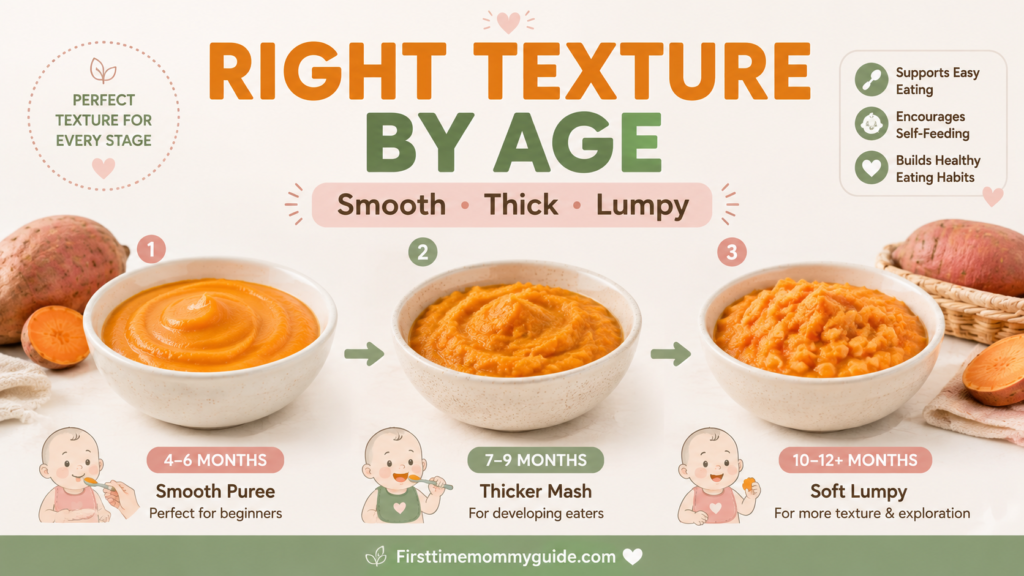
| Age | Texture | Serving Style |
|---|---|---|
| 6 months | Completely smooth, thin, runny puree | Spoon-fed |
| 7–9 months | Thicker puree, mashed with small soft lumps | Spoon-fed or pre-loaded spoon for self-feeding |
| 9–12 months | Soft mashed texture or small diced soft cubes | Spoon-fed and finger foods |
| 12+ months | Soft-cooked wedges or sticks | Finger foods, family-style |
A simple rule of thumb: babies should be progressing toward thicker, lumpier textures within a few weeks of starting solids, not staying on thin purees for months, since this supports normal oral-motor and chewing development.
Flavor Combinations and Add-Ins
Once plain sweet potato is well tolerated, it pairs easily with other first foods:
- Sweet potato + apple or pear puree
- Sweet potato + banana
- Sweet potato + plain whole-milk yogurt
- Sweet potato + iron-rich foods like pureed chicken, lentils, or beans (sweet potato’s vitamin C can help with iron absorption)
- Sweet potato + a pinch of cinnamon, nutmeg, or mild curry powder for older babies exploring new flavors
How to Store and Freeze Sweet Potato Puree
| Storage Method | Duration |
|---|---|
| Refrigerator (airtight container) | 3–4 days |
| Freezer (ice cube trays or silicone trays, then bagged) | Up to 2–3 months |
To freeze: Spoon cooled puree into a silicone baby food tray or ice cube tray, freeze until solid, then pop out the cubes into a labeled freezer bag. This makes portioning easy — one cube is roughly 1–2 tablespoons.
To thaw: Move a portion to the fridge overnight, or thaw gently in a bowl of warm water. Always reheat thoroughly and test the temperature before serving; avoid refreezing thawed puree.
Allergies and Safety Considerations
- Sweet potato is not a common allergen, but any new food can, in rare cases, trigger a reaction. Watch for hives, swelling, vomiting, or difficulty breathing after the first few servings, and contact your pediatrician if these occur.
- Introduce one new food at a time and wait a few days before adding another, so it’s easier to identify the source if a reaction happens.
- Always supervise feeding and stay within arm’s reach of your baby throughout the meal.
- Avoid added salt, honey, and cow’s milk as a main drink before 12 months.
Common Mistakes to Avoid
- Serving it too thin for too long. Thinning every meal indefinitely can slow a baby’s progress toward chewing.
- Adding salt or sugar. Babies don’t need it, and their kidneys aren’t ready to process much sodium.
- Skipping the cool-down step. Puree straight off the stove or out of the oven can be much hotter than it looks.
- Overcooking in the microwave unevenly. Microwaves can create hot spots — stir thoroughly and test the temperature before serving.
- Refreezing thawed puree. This increases the risk of bacterial growth; only refrigerate leftovers once thawed.
Expert Tips
- Roasting rather than boiling brings out more natural sweetness, which can help when introducing less-sweet vegetables alongside it.
- Save the vitamin-rich cooking liquid from steaming or boiling to thin the puree instead of using plain water.
- Batch-cook on a weekend and freeze in small portions to avoid cooking daily.
- Reintroduce sweet potato in different textures every couple of weeks to help your baby build chewing skills over time.
Frequently Asked Questions (FAQs)
1. What age can babies start eating sweet potato puree?
Most babies can start around 6 months old, once they show signs of readiness for solids, such as sitting with support and losing the tongue-thrust reflex.
2. Is sweet potato a good first food for babies?
Yes. It’s naturally sweet, easy to digest, low-allergen, and rich in vitamin A, making it one of the most commonly recommended first foods.
3. Do I need to add salt or sugar to sweet potato puree?
No. Babies under 12 months don’t need added salt or sugar, and their bodies aren’t ready to process much sodium.
4. How do I make sweet potato puree smoother?
Blend the cooked sweet potato longer and add breast milk, formula, or water a tablespoon at a time until the desired consistency is reached.
5. Can I use the microwave to cook sweet potato for puree?
Yes, though stovetop, steaming, or baking are more common for even cooking. If using a microwave, stir thoroughly afterward and check for hot spots before serving.
6. How long does homemade sweet potato puree last in the fridge?
About 3–4 days when stored in an airtight container.
7. Can I freeze sweet potato puree?
Yes. Freeze in ice cube trays or silicone baby food trays, then transfer to a labeled freezer bag for up to 2–3 months.
8. How do I thaw frozen sweet potato puree?
Move a portion to the refrigerator overnight, or thaw it in a bowl of warm water for a quicker option.
9. Can sweet potato cause constipation or gas in babies?
Sweet potato is generally fiber-rich and can support regular digestion, though its natural sugar (mannitol) causes gassiness in some babies. Watch how your baby responds and adjust portions if needed.
10. Is sweet potato a common allergen?
No, it’s considered low-risk, but any new food can trigger a reaction in rare cases, so introduce it and monitor for a few days.
11. What’s the best way to cook sweet pot or after cooking?
Either works. Peeling before cooking is faster for cubed methods; if baking whole, it’s easiest to peel after cooking once the potato has cooled slightly.
13. Can I mix sweet potato puree with other foods?
Yes. It pairs well with apple, pear, banana, plain yogurt, and iron-rich foods like pureed meat or legumes.
14. How much sweet potato puree should a baby eat?
Start with just 1 teaspoon to 1 tablespoon per feeding and gradually increase based on your baby’s appetite and cues, alongside continued breast milk or formula.
15. Why did my baby’s skin turn slightly orange?
This can happen with frequent, high intake of beta-carotene-rich foods like sweet potato and carrots. It’s harmless and fades once intake decreases; mention it to your pediatrician if you’re concerned.
16. Can I use canned sweet potato or canned pumpkin instead?
Plain canned sweet potato with no added salt or sugar can work in a pinch, but check the label carefully, as many canned products contain added seasoning not suitable for babies.
17. What’s the difference between sweet potato and yam for baby food?
In the U.S., most “yams” sold in grocery stores are actually a variety of sweet potato. True yams are a different, starchier tuber less commonly used for baby food.
18. Can babies with eczema or a family history of allergies eat sweet potato?
Sweet potato itself is low-allergen, but always discuss your baby’s individual introduction plan with your pediatrician if there’s a family history of food allergies.
19. Is store-bought sweet potato baby food as good as homemade?
Store-bought purees are convenient and safety-tested, while homemade purees let you control texture, freshness, and ingredients — both can be nutritious choices.
20. Can I add spices like cinnamon or curry powder?
Once your baby is tolerating plain sweet potato well, a small pinch of mild spices like cinnamon or curry powder can be introduced for flavor variety.
21. How do I know if the puree is the right temperature to serve?
Stir it well and test a small amount on the inside of your wrist — it should feel lukewarm, never hot.
22. Can I give sweet potato as a finger food instead of puree?
Yes, especially from around 9–12 months onward. Cut cooked sweet potato into soft wedges or sticks sized for your baby’s grip, and always supervise closely.
Key Takeaways
- Sweet potato puree is one of the most common, low-allergen first foods, typically introduced around 6 months.
- Steam, boil, or bake until fork-tender, then blend with breast milk, formula, or water — no salt or sugar needed.
- Progress the texture from thin puree to lumpier, thicker mash, and eventually soft finger foods as your baby develops.
- Refrigerate for 3–4 days or freeze in portioned cubes for up to 2–3 months.
- Always consult your pediatrician before starting solids or if you notice signs of an allergic reaction.

Dilawar Mughal
Founder and editor, First Time Mommy Guide
I research every guide against what the NHS, the AAP and the WHO publish, then write it in plain English — because most new parents are reading with one hand free, not comparing clinical guidelines. I'm not a doctor or a midwife. Every health claim on this site is sourced and linked so you can check it yourself, and anything urgent belongs with your health visitor or GP, not a blog.