General information, not medical advice. Every baby is different — if anything worries you, speak to your midwife, health visitor or GP rather than waiting.
That first spoonful is a huge moment, and fruit is usually the easiest way in.
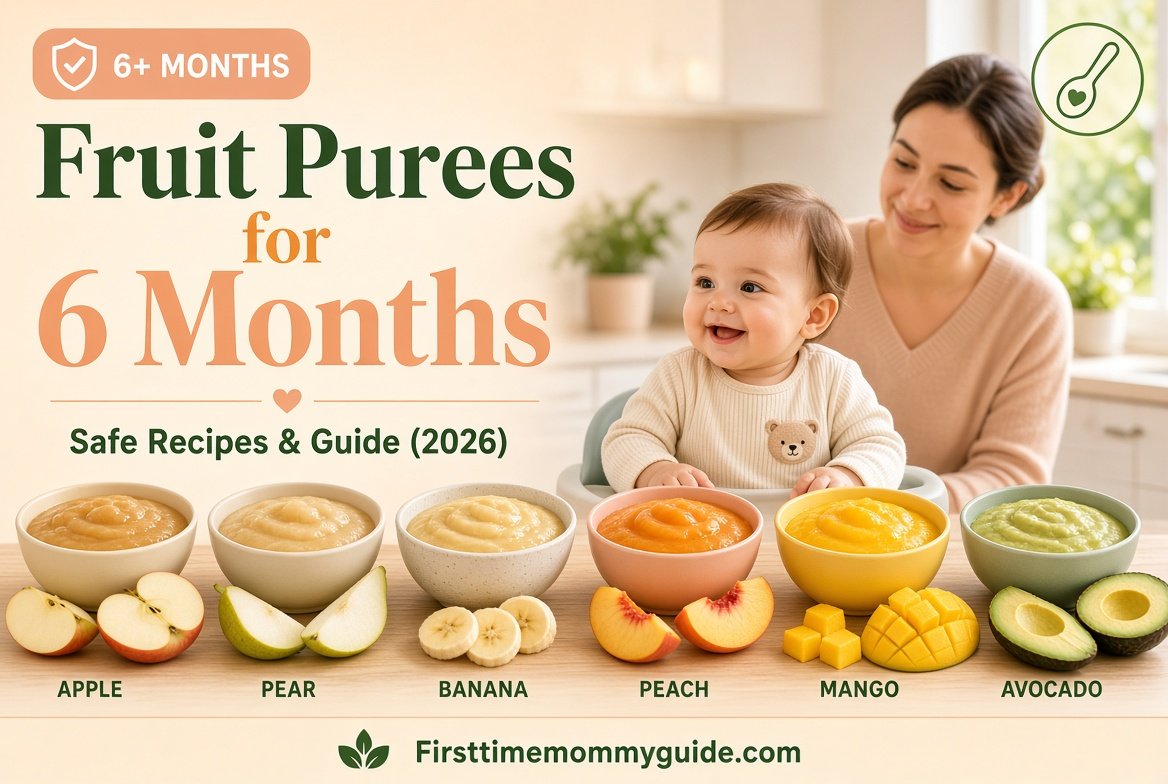
Fruit Purees for 6 Month Old Babies are naturally sweet, gentle on a new digestive system, and simple to prepare at home with almost no equipment.
Table of Contents
Why Start With Fruit Purees at 6 Months?
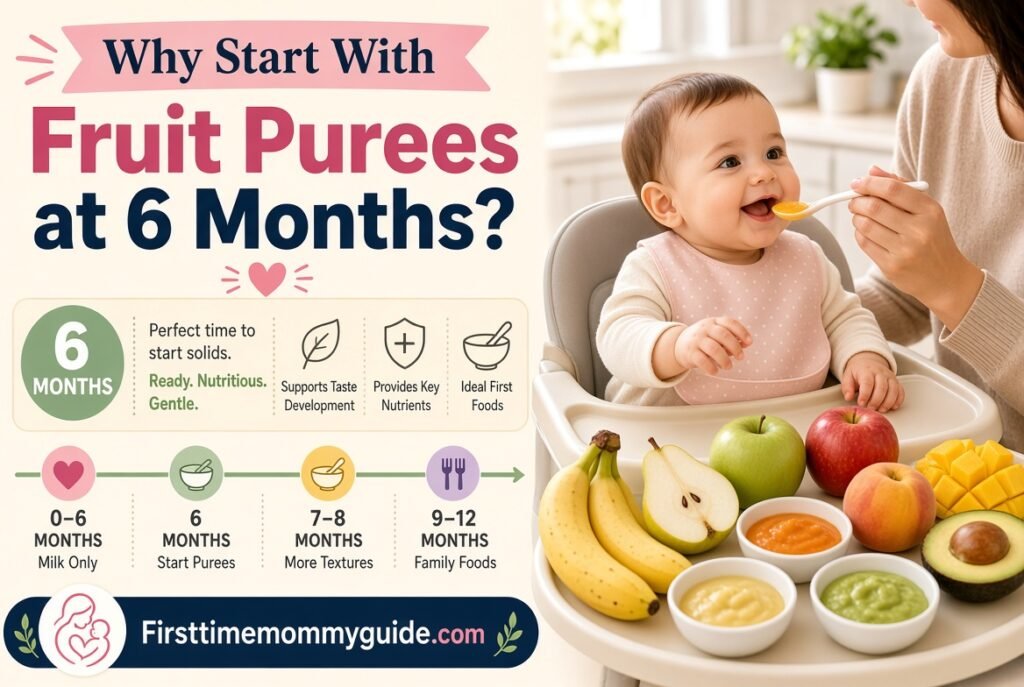
Around 6 months, most babies show the developmental signs needed for solids, like sitting with support and losing the tongue-thrust reflex.
Fruit is a gentle starting point because its natural sweetness is familiar after months of breast milk or formula.
Many pediatric guidelines, including those referenced by the NHS and the AAP, note that the order of first foods matters less than starting around 6 months with iron-rich foods also introduced early.
Signs Your Baby Is Ready for Solids
- Can sit upright with minimal support.
- Has good head and neck control.
- Shows interest in food, like reaching or opening their mouth.
- No longer pushes food out automatically with their tongue.
- Can move food from the front of the mouth to the back for swallowing.
The Safest First Fruits for 6 Month Olds
| Fruit | Why It Works Well | Prep Method |
|---|---|---|
| Banana | No cooking needed, naturally soft and sweet | Mash with a fork, no water needed |
| Avocado | Creamy texture, healthy fats | Mash ripe flesh directly |
| Apple | Mild flavor, widely tolerated | Steam or boil until soft, then blend |
| Pear | Gentle on digestion, naturally sweet | Steam until soft, then blend |
| Peach | Soft texture when ripe | Peel, steam if firm, then mash or blend |
| Blueberry | Mild, antioxidant-rich | Steam briefly, then blend and strain if needed |
How to Make a Basic Fruit Puree
- Wash and peel the fruit, removing seeds, pits, or tough skins.
- Steam or boil firmer fruits like apple or pear until fork-tender.
- Blend or mash to a smooth, lump-free consistency for a first-time eater.
- Thin with breast milk, formula, or water if the texture is too thick.
- Cool completely before offering the first spoonful.
Fruit Purees That Need No Cooking
Ripe banana, ripe avocado, and ripe peach can all be mashed raw, saving time on busy days.
Always check ripeness first, since underripe fruit can be too firm or fibrous for a first-time eater.
Single-Ingredient vs Combination Purees
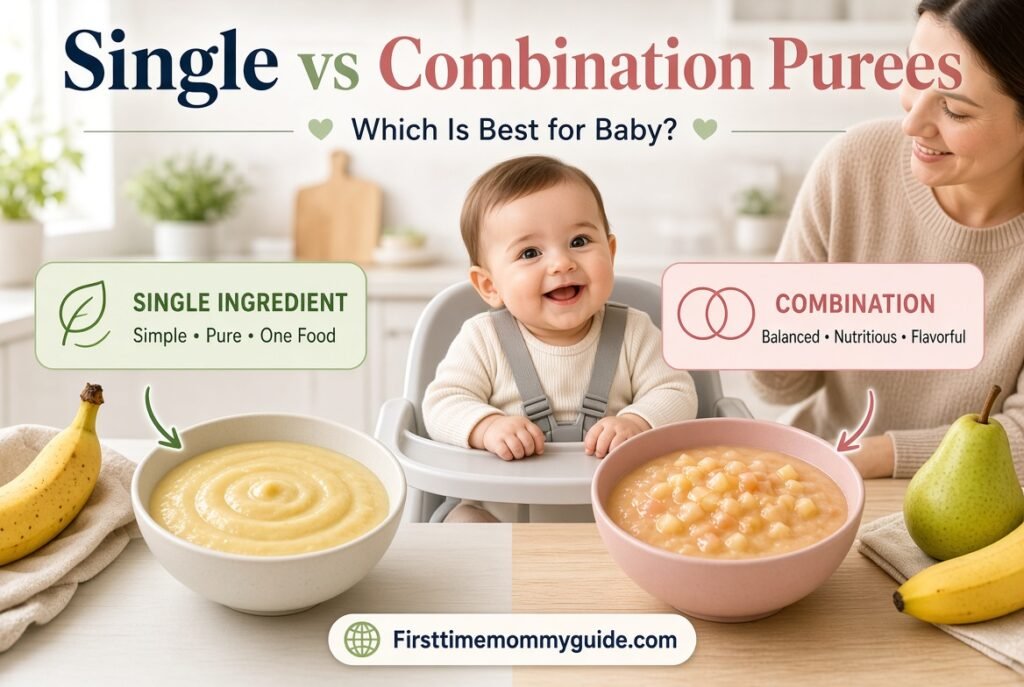
Most pediatric guidance recommends starting with single-ingredient purees for the first few days of any new food.
This makes it far easier to identify a reaction if one occurs, before moving on to combinations.
Once a handful of single fruits are tolerated well, combining two purees, like apple and pear, adds variety without much extra risk.
Texture and Consistency Guide by Age
| Age | Texture | Example |
|---|---|---|
| 6 months | Thin, completely smooth puree | Well-blended banana or pear |
| 7–8 months | Slightly thicker, small soft lumps | Mashed banana with tiny soft pieces |
| 9–12 months | Soft finger-food pieces | Small chunks of ripe, soft fruit |
Allergens and Fruit Purees
True fruit allergies are less common than allergies to foods like peanuts, egg, or dairy.
Still, introduce any new fruit on its own first, and wait a couple of days before adding another new food.
Watch for signs like hives, swelling, vomiting, or unusual fussiness after a new fruit, and contact your pediatrician if anything seems concerning.
Fruits to Introduce With Extra Care
- Citrus fruits, since their acidity can occasionally upset a sensitive tummy.
- Strawberries, best mashed well and offered in small first amounts.
- Whole grapes, which are a choking hazard and should never be given whole to babies.
- Dried fruit, which is a choking risk and too concentrated in sugar for this age.
Common Mistakes to Avoid
- Adding sugar, honey, or salt to any fruit puree before 12 months.
- Introducing several new fruits on the same day.
- Serving fruit puree straight from the fridge without warming slightly.
- Leaving pits, seeds, or tough skins in the puree by mistake.
- Storing puree at room temperature for more than two hours.
How to Store Fruit Purees Safely
Refrigerate fresh puree in an airtight container for up to 48 hours.
For longer storage, freeze puree in an ice cube tray, then transfer the cubes to a labeled freezer bag for up to one month.
Always thaw frozen puree in the fridge or gently on the stove, never at room temperature.
How Much Fruit Puree Should a 6 Month Old Eat?
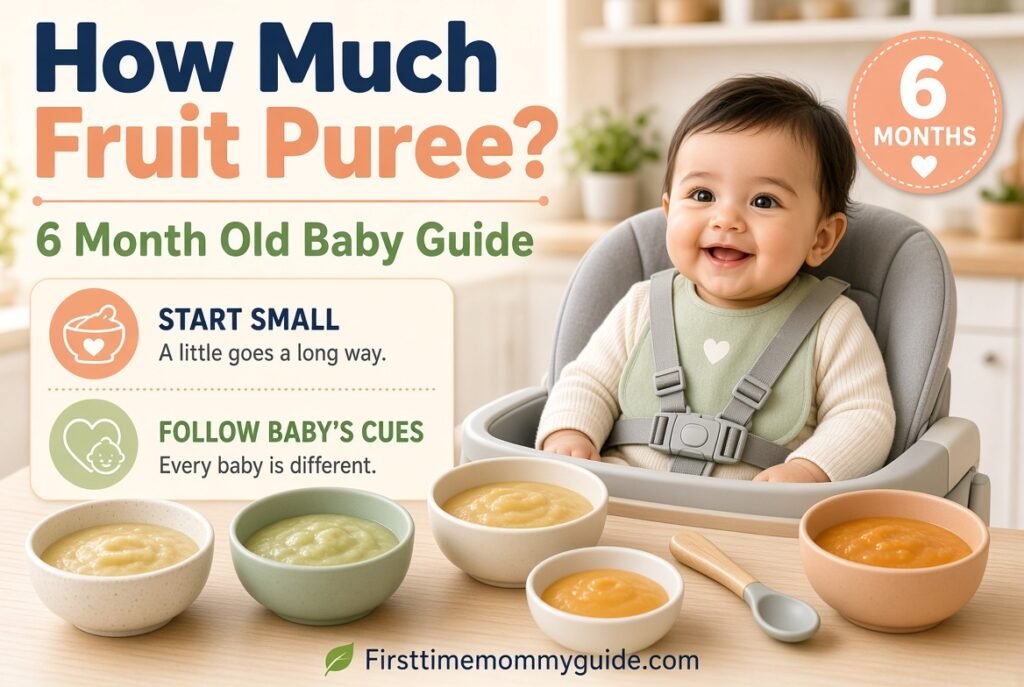
Start with just 1 to 2 teaspoons once a day, since the goal at 6 months is exposure, not volume.
Milk, whether breast milk or formula, remains the main source of nutrition at this stage.
Portions naturally increase over the following weeks as your baby gets more comfortable with the spoon.
Also Read:
- First Foods for Baby at 6 Months: A Complete Guide to Starting Solids
- First Food for Baby 6 Months: Best Options, Safety Tips & Feeding Guide
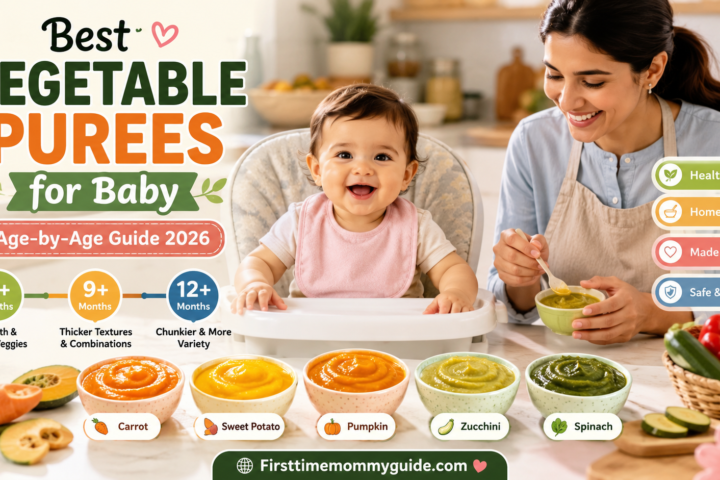
- Best Vegetable Purees for Baby: A Complete Age-by-Age Guide
- Baby Food Combo Purees: The Complete Age-by-Age Guide
- Best Baby Food Combinations: A Complete Age-by-Age Guide
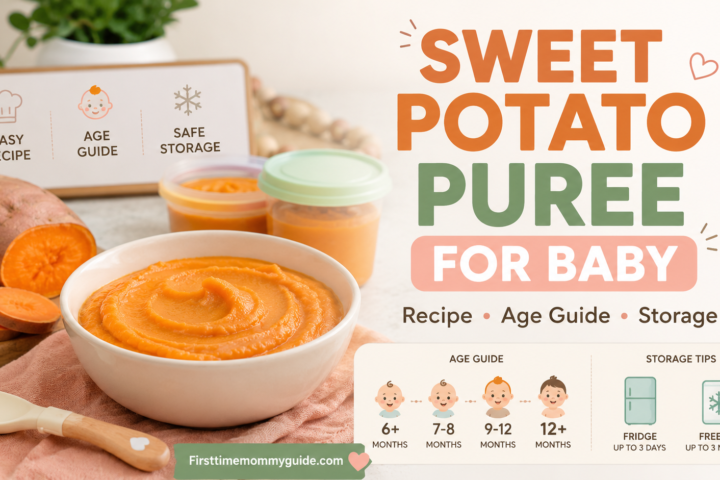
- Sweet Potato Puree for Baby: Easy Recipe, Age Guide & Storage Tips
- Apple Puree for Baby: Easy Recipe & Safety Guide
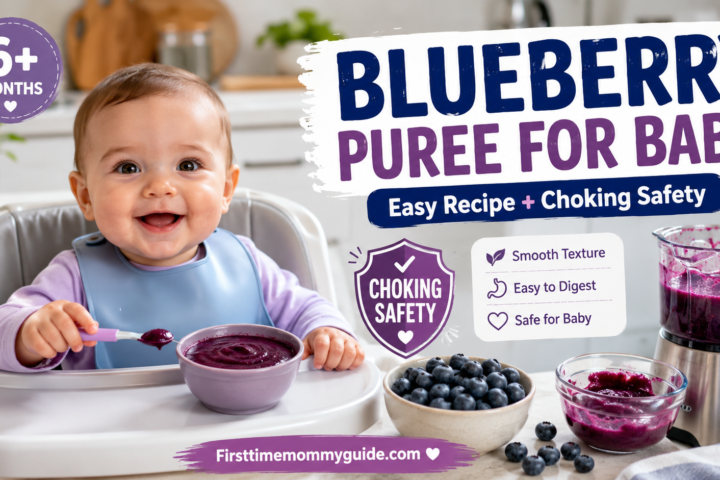
- Blueberry Puree for Baby: Easy Recipe & Choking Safety Guide
- Spinach Puree for Baby: Safe Recipe, Nitrate Facts & Age Guide
- Homemade Pumpkin Puree for Baby: Easy, Safe Recipe (6+ Months)
- Zucchini Puree for Baby: Easy Recipe & Age Guide
- When Can My Baby Start Eating Real Food? Age, Signs & First Foods
- Baby Won’t Eat? Common Reasons, Fixes & When to Worry
- Baby Food Chart 6 to 12 Months: Free Month-by-Month Feeding
- Baby Food Guide, 6–12 Months (Full Guide)
- Baby Essentials Checklist: What New Parents Actually Need
- Baby Essentials Checklist 0–3 Months (Complete Guide)
- Baby Essentials, 0–3 Months (Full Guide)
- Baby Shopping List for First-Time Moms: The Complete 2026 Checklist
- Hospital Bag Checklist for Baby: The Complete Packing List
- How Many Newborn Outfits Do You Need? A Complete Size-by-Size Guide
- Newborn Coming Home Outfit: What to Pick, What to Skip, and How to Keep Baby Safe
- Pregnancy Guide Month by Month: Symptoms & Baby Growth
- Baby Sleep Guide: What’s Normal at Each Age
Frequently Asked Questions (FAQs)
What is the first fruit puree to give a 6 month old?
Banana, avocado, and cooked pear are commonly recommended first fruit purees because they are gentle and easy to prepare.
Can 6 month old babies eat raw fruit puree?
Yes for very ripe, soft fruits like banana or avocado, but firmer fruits like apple or pear should be cooked first.
How do I know if my baby is allergic to a fruit?
Watch for hives, swelling, vomiting, or unusual fussiness within a couple of hours of a new fruit, and contact your pediatrician if you’re concerned.
Should I add sugar to fruit puree for my baby?
No, added sugar is not recommended for babies under 12 months, and ripe fruit is naturally sweet enough on its own.
How much fruit puree should a 6 month old eat per day?
Start with 1 to 2 teaspoons once a day, since milk remains the main source of nutrition at this age.
Can I mix fruit purees together for my baby?
Yes, once each fruit has been introduced individually and tolerated well, combining two or more is generally fine.
How long can fruit puree be stored in the fridge?
Up to 48 hours in an airtight container, and always check for any change in smell or texture before serving.
Can fruit purees be frozen for later use?
Yes, freeze in an ice cube tray, then transfer to a labeled freezer bag for up to one month.
Is banana a good first food for babies?
Yes, banana requires no cooking, is naturally soft, and is one of the most commonly recommended first fruits.
What fruits should I avoid giving my baby at 6 months?
Whole grapes, dried fruit, and hard raw fruits are best avoided due to choking risk at this age.
Do I need to peel fruit before making puree?
Yes, peels and skins are usually removed for younger babies since they can be tough to digest or a choking hazard.
Can citrus fruits upset my baby’s stomach?
Some babies are sensitive to citrus acidity, so it is worth introducing citrus fruits on their own and in small amounts first.
How thin should fruit puree be for a first-time eater?
Very thin and completely smooth, thinned with breast milk, formula, or water if needed.
When can I move from smooth puree to lumpier textures?
Most babies can start slightly thicker textures with small soft lumps around 7 to 8 months, depending on readiness.
Is it normal for my baby to refuse fruit puree at first?
Yes, many babies need several exposures to a new food before accepting it, so gentle repetition usually helps.
Conclusion
Fruit purees for 6 month old babies are one of the simplest, gentlest ways to begin the solids journey.
Start with single ripe fruits, keep portions small, watch for reactions, and let your baby set the pace.
For a full month-by-month feeding plan, check the Baby Food Chart 6 to 12 Months next.

Dilawar Mughal
Founder and editor, First Time Mommy Guide
I research every guide against what the NHS, the AAP and the WHO publish, then write it in plain English — because most new parents are reading with one hand free, not comparing clinical guidelines. I'm not a doctor or a midwife. Every health claim on this site is sourced and linked so you can check it yourself, and anything urgent belongs with your health visitor or GP, not a blog.