General information, not medical advice. Every baby is different — if anything worries you, speak to your midwife, health visitor or GP rather than waiting.
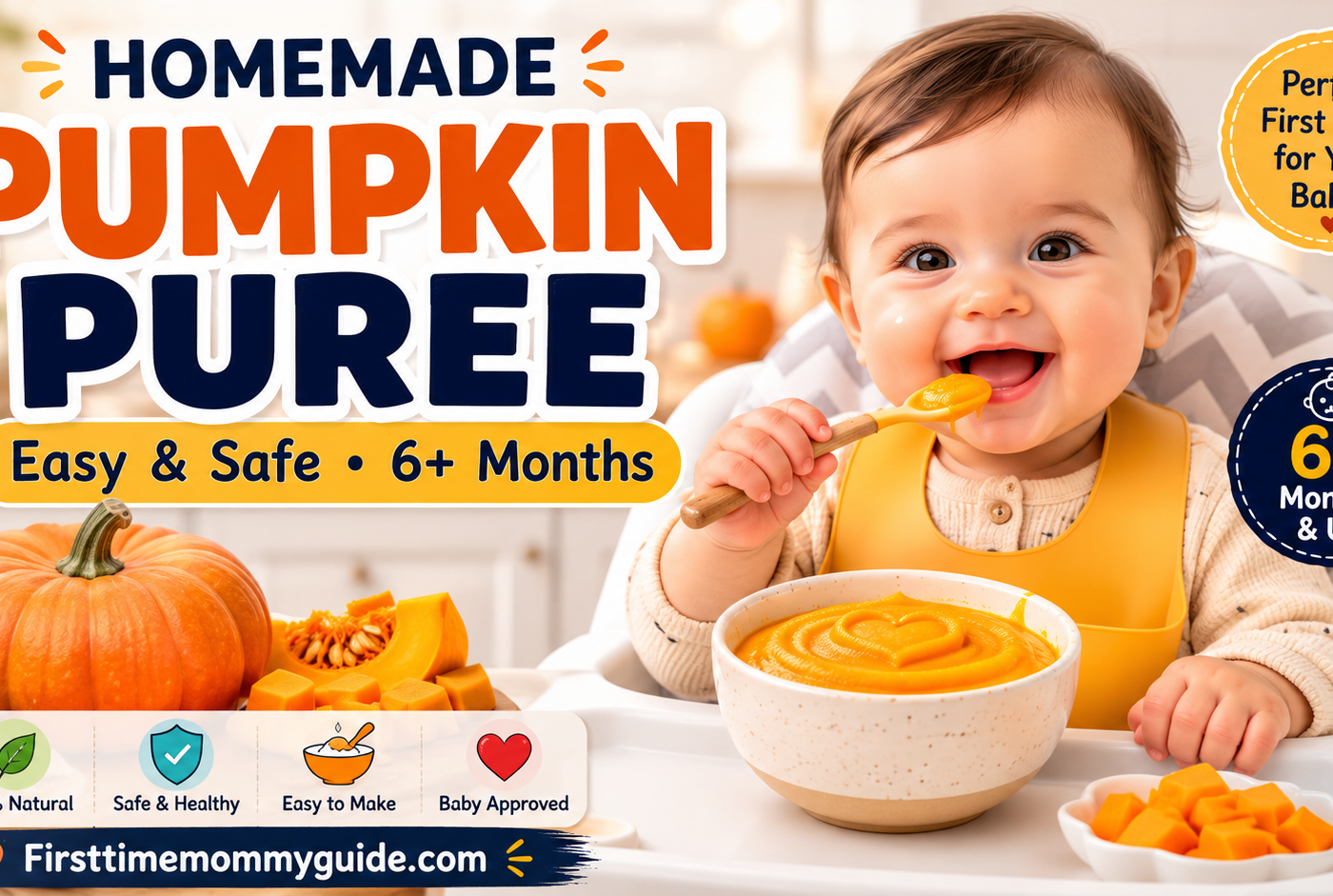
Pumpkin is one of the easiest first foods you can put in front of a baby — naturally sweet, soft enough to mash with a fork, and packed with vitamin A.
If you’ve ever wondered whether homemade pumpkin puree for baby is actually safe, how it compares to canned pumpkin, or how to store it without wasting half the batch, this guide walks through every step: from picking the right pumpkin to freezing perfect portions for months of easy meals.
Homemade pumpkin puree is safe for babies from around 6 months old. Roast or steam peeled, deseeded pumpkin chunks until fork-tender, then blend until smooth (adding breastmilk, formula, or water to thin if needed). It keeps 3–5 days in the fridge or up to 3 months in the freezer.
Table of Contents
Key Takeaways
- Pumpkin can be introduced as a first food around 6 months, when your baby is developmentally ready for solids.
- Sugar pumpkins (pie pumpkins) — not carving pumpkins — give the smoothest, sweetest puree.
- Roasting produces a more concentrated flavor; steaming is faster and slightly better for retaining water-soluble nutrients.
- No salt, sugar, or honey should be added to purees for babies under 12 months.
- Homemade pumpkin puree keeps 3–5 days refrigerated or up to 3 months frozen in an airtight container.
- Nitrate concerns around squash apply mainly to infants under 3–4 months — not to babies starting solids at 6 months, per pediatric guidance.
Is Pumpkin Safe for Babies?
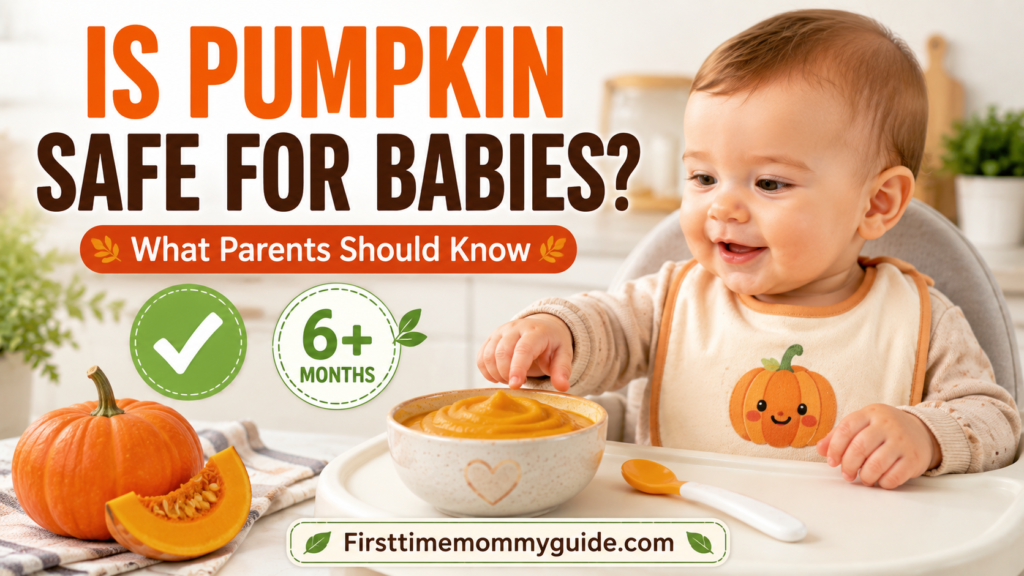
Yes. Pumpkin is considered a low-allergen, easy-to-digest first food, and it’s commonly recommended by pediatric feeding specialists as one of the first vegetables to introduce. It’s naturally soft, mild, and mildly sweet, which makes it an easy food for babies to accept.
You may have seen warnings online that squash-family vegetables like pumpkin are “high in nitrates” and unsafe for homemade baby food. This advice is outdated and often misapplied. Pediatric guidance places the nitrate concern with home-prepared vegetables like squash on infants younger than about 3 months old — well before solids are typically introduced at 4 to 6 months. By the time your baby is developmentally ready for solids, this risk has effectively passed. Always check with your pediatrician if you have specific concerns, especially if you use well water.
A true pumpkin allergy is rare. Watch for the standard first-time-food signals — hives, a rash around the mouth, swelling, vomiting, or unusual fussiness — and introduce it on its own the first time so any reaction is easy to trace.
What You’ll Need
Choosing the Right Pumpkin
Not every pumpkin is created equal in the kitchen. Skip the big carving pumpkins (they’re grown for size, not flavor, and their flesh is stringy and watery). Instead, look for:
- Sugar pumpkins / pie pumpkins – small, dense, and naturally sweet
- Butternut squash – technically a squash, but works identically and blends into a very smooth, mild puree
- Kabocha squash – dense, sweet, and turns a rich golden color when pureed
| Pumpkin Type | Flavor | Texture | Best For |
|---|---|---|---|
| Sugar/Pie Pumpkin | Sweet, mild | Smooth, dense | First purees |
| Butternut Squash | Sweet, nutty | Very smooth | Beginners, thin purees |
| Kabocha Squash | Very sweet | Dense, creamy | Older babies, mixed purees |
| Carving Pumpkin | Watery, bland | Stringy, fibrous | Not recommended |
Equipment
- Sharp chef’s knife
- Baking sheet or steamer basket
- Food processor or high-powered blender
- Ice cube trays or silicone freezer trays (for portioning)
- Airtight storage containers or freezer bags
How to Make Homemade Pumpkin Puree for Baby (Step-by-Step)
Method 1: Roasting (Best Flavor)
- Preheat the oven to 400°F (200°C) and line a baking sheet with parchment paper.
- Prep the pumpkin. Wash it, cut it in half through the stem, and scoop out the seeds and stringy pulp with a spoon.
- Roast cut-side down for 40–50 minutes, until the flesh is completely fork-tender.
- Cool, then scoop. Once cool enough to handle, scoop the flesh away from the skin.
- Blend the flesh in a food processor or blender until completely smooth, adding breastmilk, formula, or water a tablespoon at a time to reach the right consistency for your baby’s stage.
Method 2: Steaming (Fastest, Most Nutrient-Retentive)
- Peel the pumpkin and cut it into 1-inch chunks, removing seeds and pulp.
- Place in a steamer basket over boiling water.
- Steam for 15–20 minutes, until a fork slides through easily.
- Blend until smooth, thinning with a little of the reserved fresh water if needed.
Method 3: Boiling (No Equipment Needed)
- Peel and chop the pumpkin into chunks.
- Add to a pot of boiling water and cook 20–30 minutes until tender.
- Drain well (boiled purees hold extra water) and blend until smooth.
| Method | Time | Flavor | Nutrient Retention | Difficulty |
|---|---|---|---|---|
| Roasting | 40–50 min | Richest, most concentrated | Good | Easy |
| Steaming | 15–20 min | Mild, fresh | Best | Easy |
| Boiling | 20–30 min | Mildest, can be watery | Lower (nutrients leach into water) | Easiest |
Expert tip: Whichever method you use, always discard the cooking water rather than using it to thin the puree — this avoids concentrating anything the water may have picked up from the vegetable’s skin, and it keeps the final texture more predictable.
Serving Pumpkin by Age and Stage
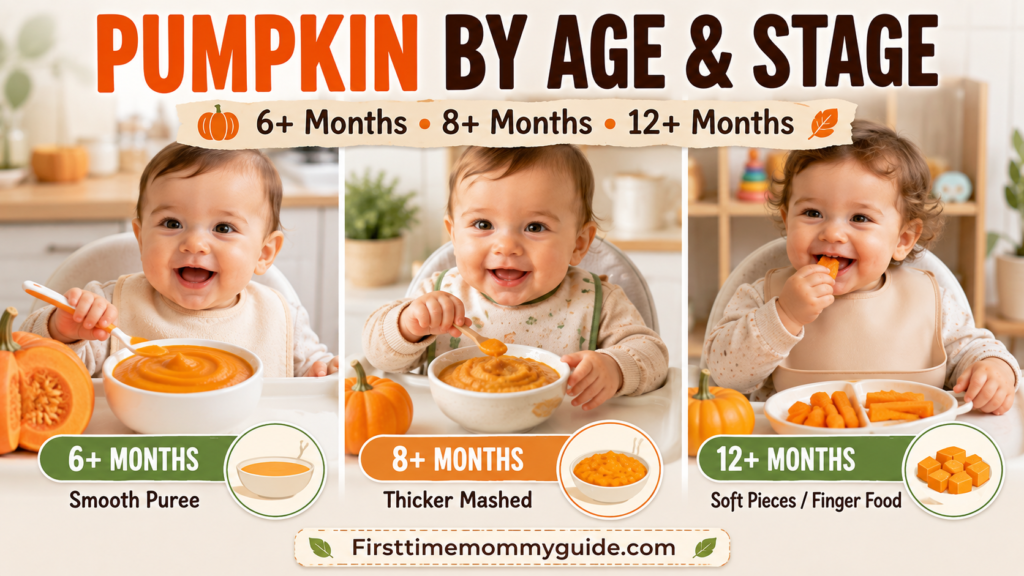
Texture should evolve as your baby’s oral motor skills develop. Here’s a simple progression:
| Age | Texture | How to Serve |
|---|---|---|
| 6 months | Smooth, thin puree | Pre-loaded spoon or offered plain in a bowl |
| 7–9 months | Thicker puree, mashed with soft lumps | Spoon-fed or mixed into oatmeal/yogurt |
| 9–12 months | Soft mashed or small soft chunks | Finger food, pincer-grasp practice |
| 12+ months | Small diced, roasted cubes | Table food alongside family meals |
For babies doing baby-led weaning, skip the blender at the finger-food stage: soft roasted pumpkin wedges (rind removed) are easy for baby to hold and gum, and they build the same oral motor skills purees don’t.
Storing Homemade Pumpkin Puree
- Refrigerator: Store in an airtight glass container for 3–5 days.
- Freezer: Freeze in ice cube trays or silicone freezer trays, then transfer cubes to a labeled freezer bag once solid. Keeps for up to 3 months.
- Thawing: Thaw overnight in the fridge, or place the sealed bag in a bowl of warm water for a quick thaw. Always rewarm gently and check the temperature before serving.
- Never refreeze puree that has already been thawed and served, since utensils and saliva can introduce bacteria.
Nutritional Benefits of Pumpkin for Babies
Pumpkin is a genuinely nutrient-dense first food, not just a seasonal novelty:
- Vitamin A (as beta-carotene): supports eye development and immune function
- Vitamin C: supports immune health and iron absorption
- Fiber: supports healthy digestion
- Potassium: supports muscle and nerve function
- Low allergen risk: rarely triggers reactions, making it a confident first food choice
Homemade vs. Canned Pumpkin Puree
| Factor | Homemade | Canned (Pure Pumpkin) |
|---|---|---|
| Ingredients | 100% pumpkin, nothing added | Usually just pumpkin, check the label |
| Cost | Cheaper per batch, more prep time | Convenient, slightly pricier per serving |
| Texture control | Fully adjustable | Fixed, usually thicker |
| Shelf life (unopened) | N/A | Long shelf life before opening |
| Best for | Batch-cooking, BLW, flavor control | Busy weeks, year-round availability |
If you use canned pumpkin, choose a can labeled “100% pure pumpkin” — never pumpkin pie filling, which contains added sugar and spices unsuitable for babies. Look for a BPA-free can where possible.
Common Mistakes to Avoid
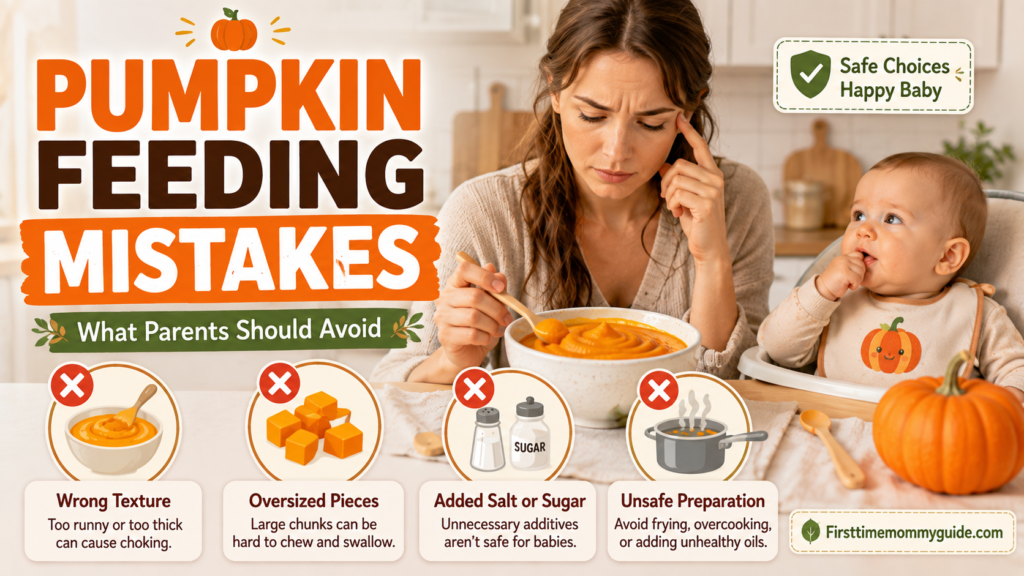
- Using a carving pumpkin. It produces a watery, stringy puree that’s hard for baby to eat and doesn’t blend smoothly.
- Adding salt, sugar, or honey. Babies under 12 months should never have honey (botulism risk) and don’t need added salt or sugar in early foods.
- Skipping the seed removal. Seeds and stringy pulp can affect texture and should always be fully removed before cooking.
- Over-thinning with the cooking water. This can make the puree watery and less nutrient-dense; use fresh liquid instead.
- Storing puree too long. Bacteria can grow even in the fridge; stick to the 3–5 day window.
Frequently Asked Questions (FAQs)
When can babies start eating pumpkin?
Most babies can try pumpkin as soon as they’re developmentally ready for solids, typically around 6 months.
Is homemade pumpkin puree safe, or should I only use canned?
Both are safe. Homemade puree gives you full control over ingredients and texture; canned pure pumpkin is a convenient, equally safe alternative as long as it doesn’t include added sugar or spices.
Do I need to worry about nitrates in pumpkin puree?
Nitrate concerns mainly apply to infants under 3–4 months. By the time a baby is ready for solids around 6 months, this is not a significant risk factor.
What’s the best pumpkin variety for baby food?
Sugar pumpkins (pie pumpkins) are best — smaller, sweeter, and smoother than large carving pumpkins.
Can I mix pumpkin puree with other foods?
Yes. Pumpkin pairs well with apple, pear, carrot, sweet potato, oatmeal, and yogurt.
How long does homemade pumpkin puree last in the fridge?
Up to 3–5 days when stored in an airtight container.
Can I freeze pumpkin puree for baby?
Yes, freeze in ice cube trays for up to 3 months. Thaw in the fridge before serving.
Should I add salt, sugar, or spices?
No. Babies under 12 months don’t need added salt or sugar, and honey should never be given before age 1.
Is pumpkin a common allergen?
No, pumpkin allergies are rare, though any new food should be introduced individually and watched for reactions.
Can I use pumpkin puree in baking for my baby?
Yes — it works well in muffins, pancakes, and oatmeal as a natural sweetener and moisture booster.
What’s the difference between pumpkin and squash for baby food?
Pumpkin is technically a type of winter squash, so butternut and kabocha squash can be prepared and served the same way.
How do I know if my baby is allergic to pumpkin?
Watch for hives, a rash, swelling, vomiting, or unusual fussiness after the first serving, and contact your pediatrician if symptoms appear.
Can I give pumpkin seeds to my baby?
Whole pumpkin seeds are a choking hazard and shouldn’t be given to babies; finely ground pepitas can sometimes be introduced later, with pediatrician guidance.
What texture should pumpkin puree be for a 6-month-old?
Thin and completely smooth, with no lumps, thinned with breastmilk, formula, or water as needed.
Can pumpkin help my baby sleep better?
There’s no strong clinical evidence for this claim; it’s best treated as folklore rather than fact.
Conclusion
Homemade pumpkin puree for baby is simple, affordable, and easy to make in batches that last for months in the freezer. Choose a sugar pumpkin, roast or steam it until tender, blend it smooth, and skip the salt and sugar — that’s really all there is to it.
As your baby grows, let the texture grow with them, moving from smooth purees to soft finger foods around 9–12 months. Whichever method you choose, you’ll end up with a nutrient-rich, naturally sweet food that most babies genuinely enjoy.

Dilawar Mughal
Founder and editor, First Time Mommy Guide
I research every guide against what the NHS, the AAP and the WHO publish, then write it in plain English — because most new parents are reading with one hand free, not comparing clinical guidelines. I'm not a doctor or a midwife. Every health claim on this site is sourced and linked so you can check it yourself, and anything urgent belongs with your health visitor or GP, not a blog.