General information, not medical advice. Every baby is different — if anything worries you, speak to your midwife, health visitor or GP rather than waiting.
Staring at a wall of tiny onesies and wondering How Many Newborn Outfits Do You Need? You’re not alone.
Most new parents either overbuy out of anxiety or underbuy out of budget worry — and both mistakes are easy to avoid once you know the real numbers.
Table of Contents
Quick Answer: How Many Newborn Outfits Do You Need?
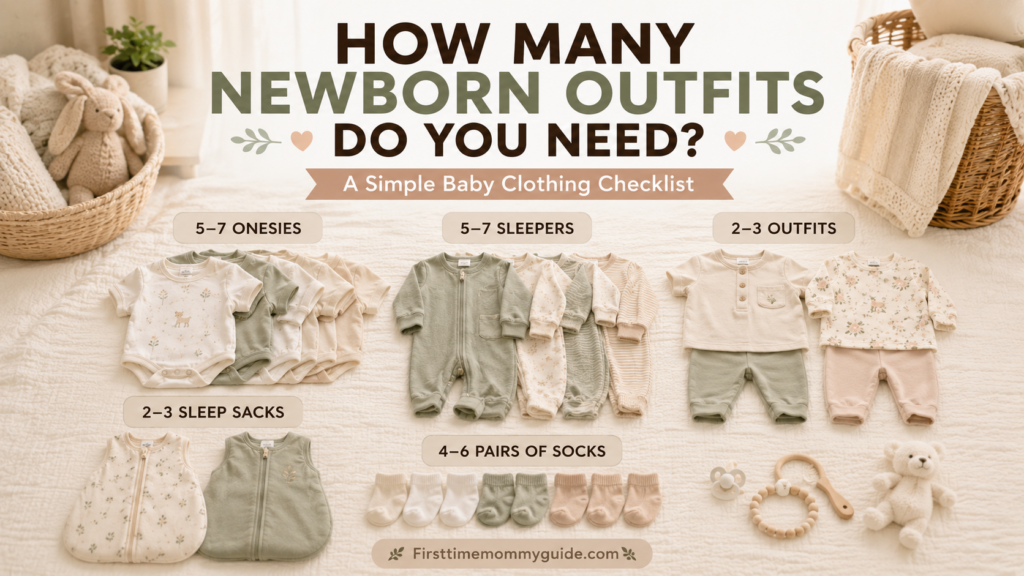
Most newborns need 5–7 everyday outfits and 6–10 sleepers. That’s enough to get through 2–3 days between laundry loads, even with the spit-up and diaper blowouts that come with the territory. If you plan to do laundry daily, you can comfortably go lower. If you’d rather wash every 3–4 days, aim for the higher end of that range.
Why the “Right” Number Depends on 3 Factors
There’s no single correct number — the right wardrobe size depends on your specific situation.
Laundry Frequency
If you’re doing a load of baby laundry every day, 5–6 outfits is plenty. If you’re washing every 2–3 days (more realistic for most postpartum households), plan for 8–10 so you’re never caught without a clean option.
How Often Your Baby Spits Up or Has Blowouts
Newborns go through 6–10 diaper changes a day, and outfit changes often follow. Some babies barely spit up; others go through several outfits before lunch. Build in a buffer of 2–3 extra pieces for the messier days.
Season and Climate
A summer baby needs more short-sleeve onesies and fewer layers. A winter baby needs footed sleepers, layering pieces, and warmer fabrics like fleece. Climate also affects how often you’ll need a fresh layer versus a full outfit change.
Newborn Clothing Checklist by Category (With Quantities)
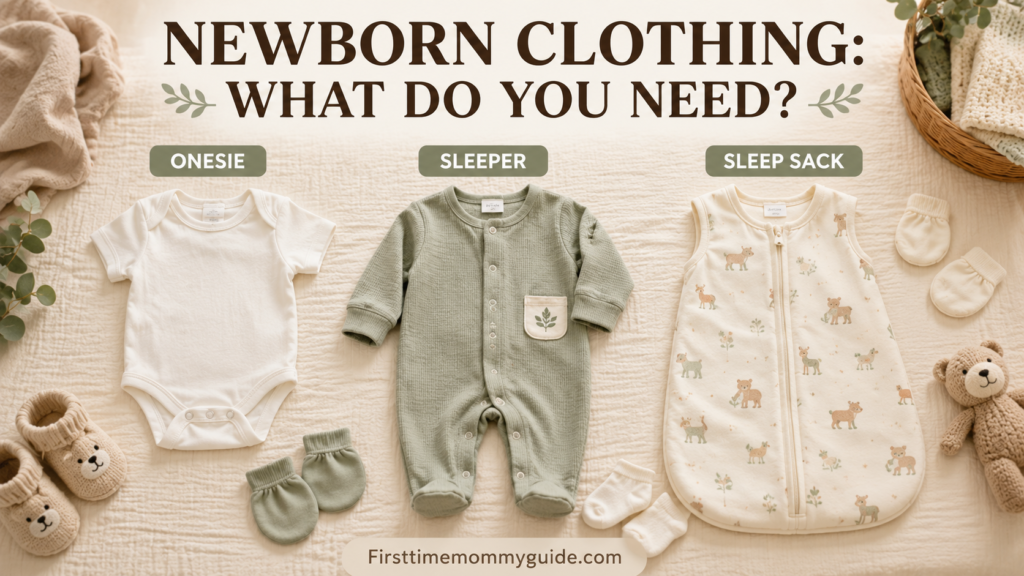
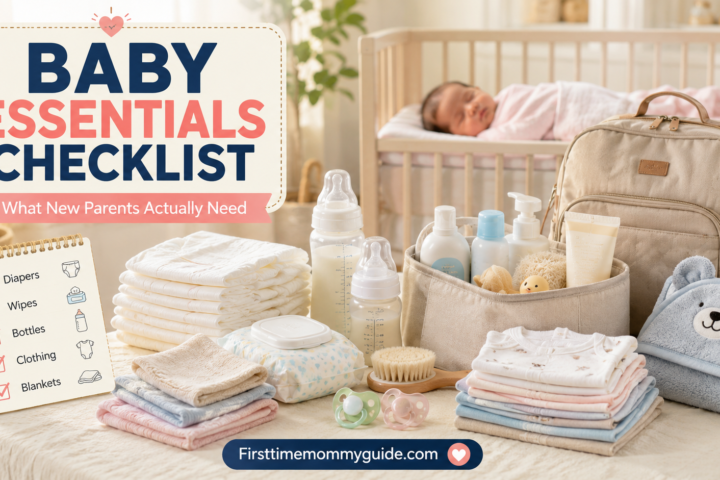
Here’s a realistic breakdown by item type, based on typical laundry cycles.
| Item | Low End (daily laundry) | High End (laundry every 2–3 days) | Notes |
|---|---|---|---|
| Onesies / bodysuits | 5 | 10–12 | Foundation layer for almost every outfit |
| Sleepers / footed pajamas | 4–6 | 8–10 | Doubles as day and night wear early on |
| Sleep sacks or swaddles | 2 | 4 | Not washed as often as clothing |
| Socks and mittens | 3–4 pairs | 6–10 pairs | Babies lose these constantly |
| Hats | 2 | 3–4 | One lightweight, one warm |
| Going-home / special outfit | 1 | 1–2 | Photos, hospital discharge, visitors |
| Cardigan or light jacket | 1 | 2 | Weather-dependent |
Onesies and Bodysuits
Onesies are the true workhorse of a newborn wardrobe. They layer under sleepers, work alone in warm weather, and handle the bulk of daily changes. Snap or zip-front designs make diaper changes faster and reduce the need to pull anything over your baby’s head.
Sleepers and Footed Pajamas
Because newborns sleep most of the day, sleepers often double as daytime outfits too. Look for two-way zippers, which unzip from the bottom for quick diaper access without fully undressing your baby at 3 a.m.
Sleep Sacks and Swaddats
Newborns kick socks off constantly, so having extra pairs on hand saves frustration. A hat helps with temperature regulation in the first few weeks, especially in cooler climates.
Going-Home Outfit
You only need one or two special outfits — one for the hospital discharge photo, and maybe a backup in case of a last-minute blowout.
The 3-3-3 Rule vs. the 5-5-5 Rule vs. Category-Based Planning
Two popular shorthand rules show up often in parenting circles. Here’s how they compare.
| Method | What It Means | Best For |
|---|---|---|
| 3-3-3 Rule | 3 outfits per day for 3 days (about 9 total) | Parents who want a simple mental shortcut |
| 5-5-5 Rule | 5 vests, 5 sleepsuits, 5 pairs of socks | Parents who prefer round numbers per category |
| Category-Based Planning | Different quantities per item type (see table above) | Parents who want a realistic, laundry-based plan |
All three land in a similar range. The category-based approach tends to match real-world use most closely, since it accounts for the fact that sleepers get washed less often than onesies.
How Long Do Babies Actually Wear Newborn Size?
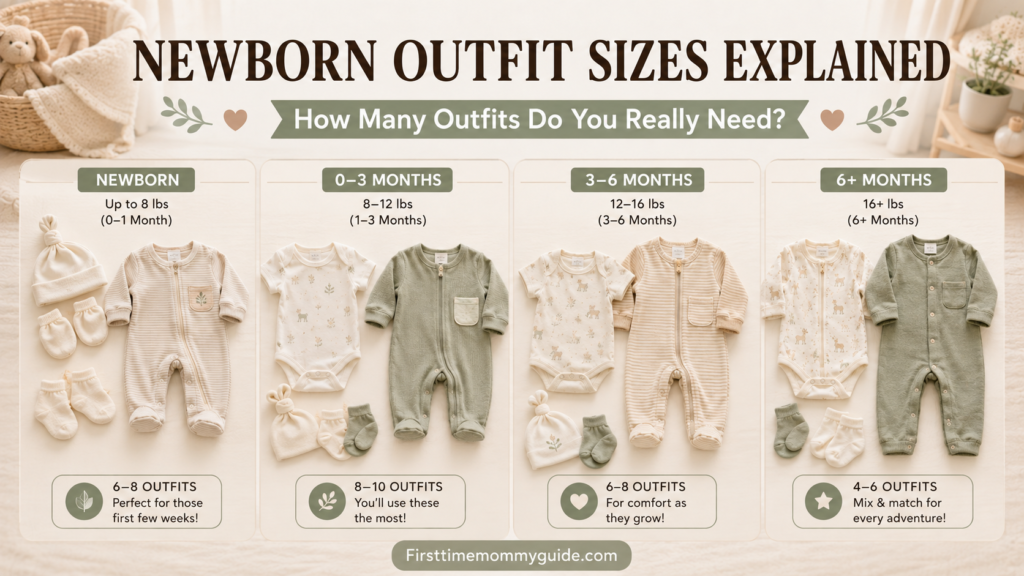
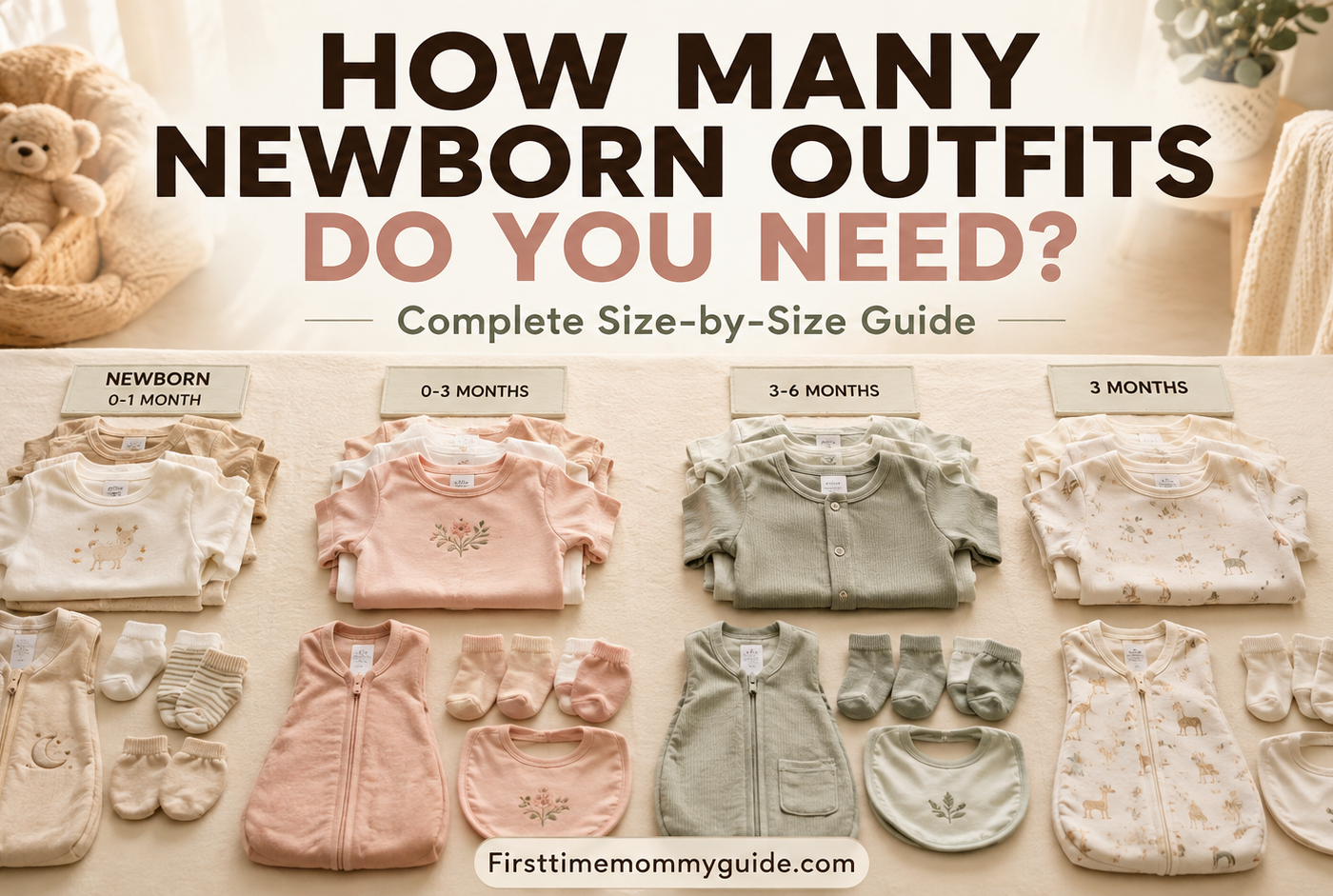
Newborn-size clothing is generally built for babies weighing about 6–8 pounds and up to roughly 21.5 inches long. Most babies wear it for 2 to 4 weeks, though smaller or premature babies may stay in newborn size for up to 6 weeks. Because this window is short, it’s smart to keep newborn-size purchases modest and invest more heavily in 0–3 month sizing.
Newborn Size vs. 0-3 Months: What to Buy More Of
A common mistake is overbuying newborn size before the baby arrives, only to have your baby outgrow it within weeks — sometimes before it’s even been worn. A safer split:
- Newborn size: 5–7 outfits, 4–6 sleepers (enough to get through the first few weeks)
- 0–3 months: Buy more generously here, since babies spend far longer in this size
If you’re unsure how big your baby will be, hold off on bulk newborn-size purchases until after birth, and lean on gifts and hand-me-downs to fill gaps.
What to Pack for the Hospital Bag
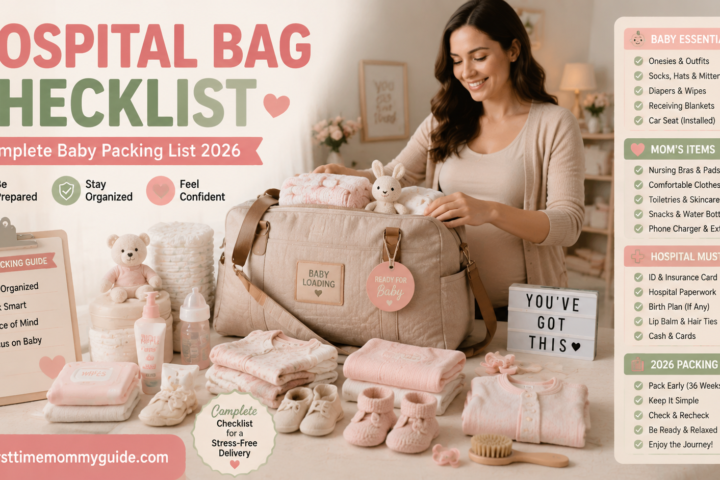
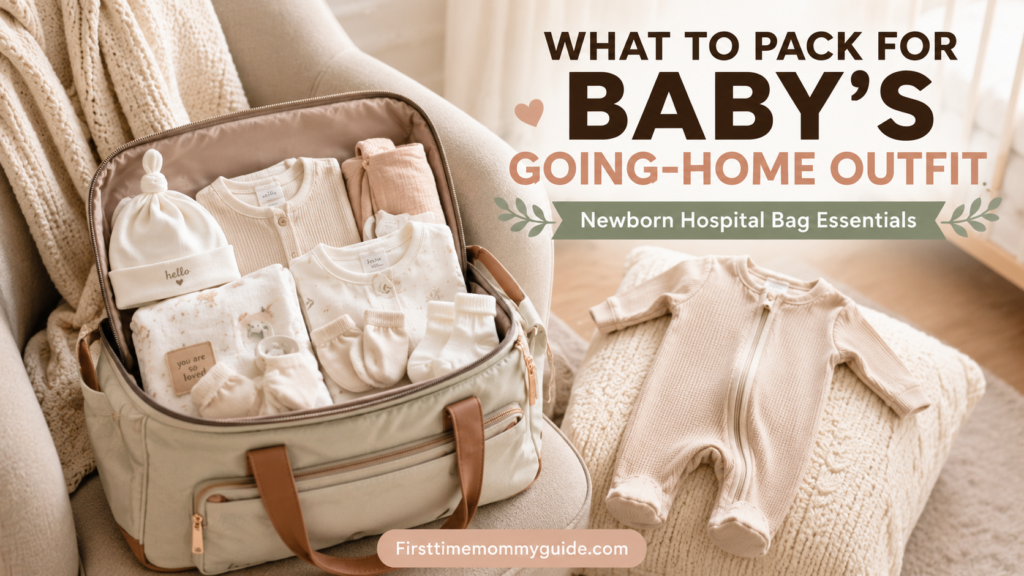
Most guides skip this, but it’s one of the most common related questions. Pack:
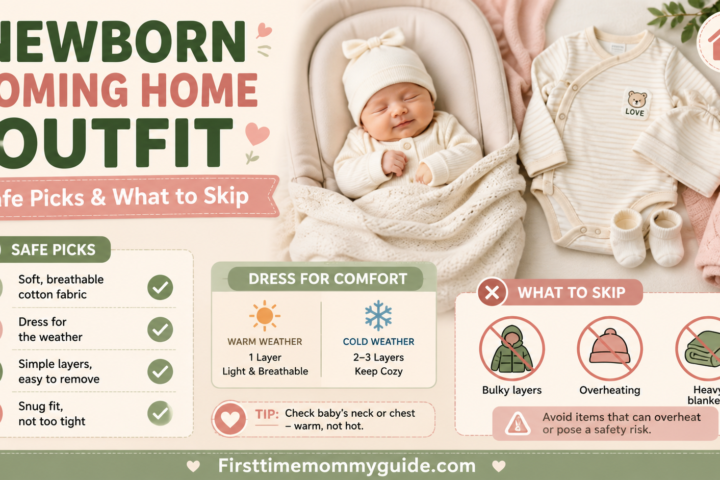
- 2–3 going-home outfits (sizes vary — pack both newborn and 0–3 months in case of a bigger baby)
- 1–2 sleepers
- A hat
- A swaddle blanket
- Socks or mittens
Hospitals typically provide basic onesies and blankets during the stay, so you mainly need enough for discharge day and the ride home.
Seasonal Considerations (Summer vs. Winter Babies)
- Summer babies: Prioritize short-sleeve onesies, lightweight footless sleepers, and breathable cotton. Skip heavy layering pieces.
- Winter babies: Add fleece sleepers, a warm hat, mittens, and a going-home outfit that layers well under a car seat cover (avoid bulky snowsuits in the car seat itself, for safety reasons).
Mistakes to Avoid When Buying Newborn Clothes
- Buying too much newborn size. It’s the shortest-lived size your baby will ever wear.
- Choosing complicated outfits. Anything with lots of buttons or over-the-head designs slows down 3 a.m. changes.
- Ignoring your laundry routine. The “right” quantity is really a laundry-frequency decision in disguise.
- Skipping fabric checks. Rough seams, scratchy tags, or synthetic blends can irritate sensitive newborn skin.
- Forgetting gifts are coming. Baby showers and hospital visitors often bring outfits — leave room in your budget and drawers.
Registry and Gift Tips to Avoid Overbuying
If you’re building a registry, request more items in 0–3 months and 3–6 months than in newborn size — you’ll get plenty of newborn-size gifts anyway from well-meaning visitors. Keep tags on unworn items until your baby arrives so you can exchange sizes if needed.
Frequently Asked Questions (FAQs)
How many outfits does a newborn need per day?
Most babies go through 2–4 outfit changes daily, factoring in spit-up, diaper leaks, and general mess.
Is 5 onesies enough for a newborn?
Only if you’re doing laundry daily. For a 2–3 day laundry cycle, 8–10 is more comfortable.
How many sleepers do I need for a newborn?
Plan for 6–10, since sleepers often double as daytime wear in the early weeks.
What is the 3-3-3 rule for baby clothes?
It suggests three outfits per day for three days without laundry — about nine outfits total.
What is the 5-5-5 rule for baby clothes?
Five vests (onesies), five sleepsuits, and five pairs of socks as a starter wardrobe.
Should I buy newborn size or go straight to 0-3 months?
Buy modestly in newborn size and more generously in 0-3 months, since babies outgrow newborn size within weeks.
How long do babies wear newborn size clothing?
Typically 2–4 weeks, though smaller babies may wear it up to 6 weeks.
How many going-home outfits does a newborn need?
One is enough, though a backup is smart in case of a last-minute mess before discharge.
Do newborns need a lot of clothes?
No — a small, practical rotation of 5–7 outfits and several sleepers covers most needs.
How many hats does a newborn need?
Two to four, depending on climate — one lightweight and one warmer option.
How many pairs of socks does a newborn need?
Six to ten pairs, since babies kick them off frequently.
How many swaddles or sleep sacks do I need?
Two to four is typically enough, since these aren’t laundered as often as clothing.
What should I pack in the hospital bag for the baby?
Two to three going-home outfits in mixed sizes, a sleeper, a hat, a swaddle, and socks.
How many burp cloths does a newborn need?
Six to ten, especially if your baby spits up frequently.
Do I need to buy a jacket or cardigan for e per day?
Newborns typically need 6–10 diaper changes daily, which often lines up with outfit changes too.
Should I buy gender-neutral newborn clothes?
Neutral colors and simple designs are more versatile, especially since gifts often add to your baby’s newborn wardrobe.
Is it better to buy fewer clothes and do laundry more often?
Yes, for many parents this reduces clutter and unworn items, as long as you’re comfortable with frequent wash loads.
Key Takeaways
- Most newborns need 5–7 everyday outfits and 6–10 sleepers.
- The right number depends on laundry frequency, spit-up habits, and season.
- Buy modestly in newborn size — most babies outgrow it in 2–4 weeks.
- Invest more in 0–3 month sizing, since babies stay there longer.
- Don’t forget the hospital bag: 2–3 going-home outfits, a sleeper, a hat, and a swaddle.

Dilawar Mughal
Founder and editor, First Time Mommy Guide
I research every guide against what the NHS, the AAP and the WHO publish, then write it in plain English — because most new parents are reading with one hand free, not comparing clinical guidelines. I'm not a doctor or a midwife. Every health claim on this site is sourced and linked so you can check it yourself, and anything urgent belongs with your health visitor or GP, not a blog.