General information, not medical advice. Every baby is different — if anything worries you, speak to your midwife, health visitor or GP rather than waiting.
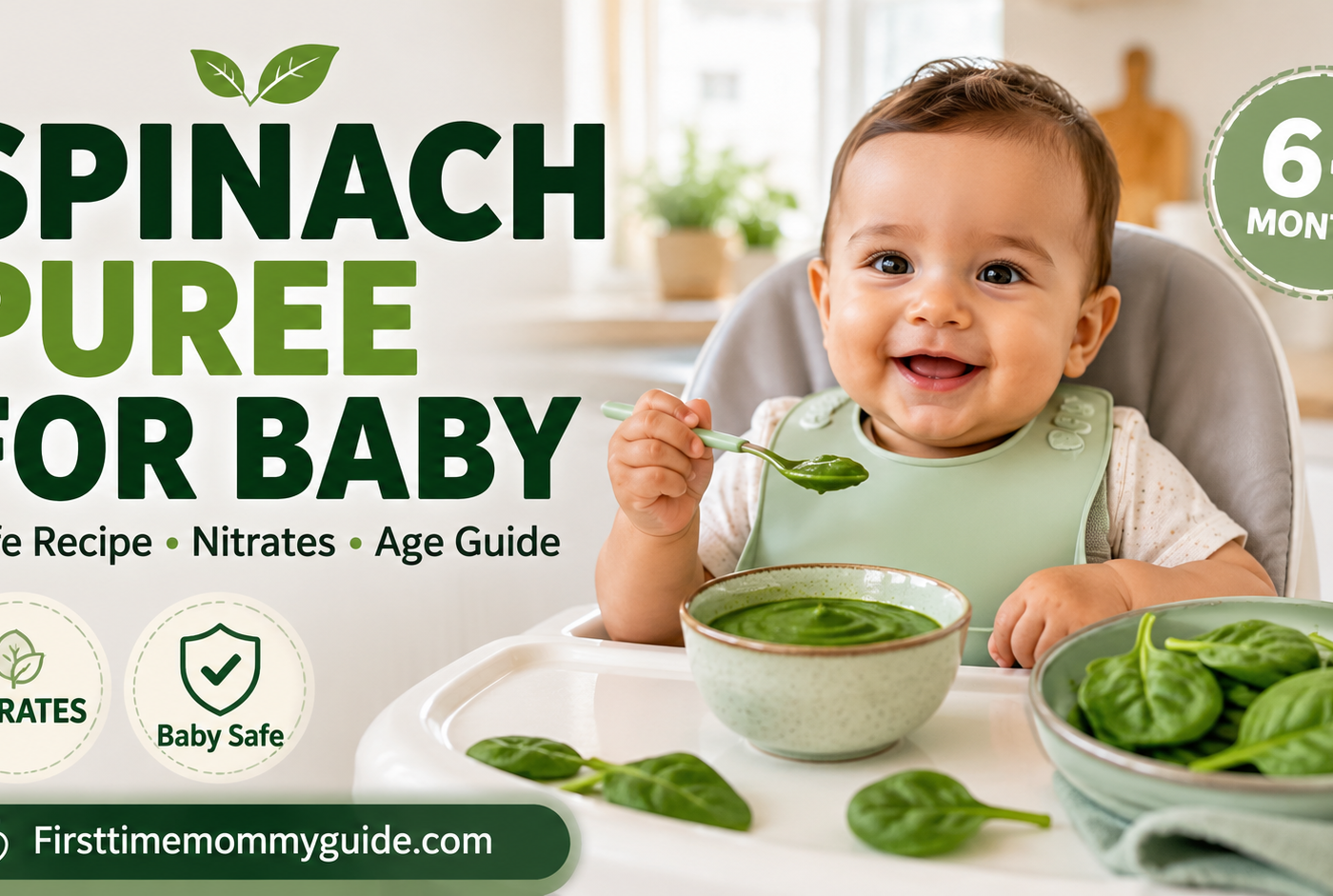
Spinach Puree for Baby is one of the most nutrient-dense greens you can feed your baby — but it’s also one of the few first foods with a genuine, pediatrician-documented safety consideration worth understanding before you start blending.
Spinach puree is generally safe for babies from around 6 months old, prepared in small, occasional portions rather than as a daily staple early on.
It should never be given to infants under 3 months, and homemade spinach puree should always be made with clean tap or filtered water, never untested well water.
Table of Contents
Key Takeaways
- Spinach is naturally high in nitrates, and pediatric guidance treats it with more caution than most other first vegetables.
- The AAP’s clinical guidance is that nitrate-containing vegetables like spinach should be avoided before 3 months of age; by 6 months, when solids typically begin, the risk has dropped substantially.
- Even so, many pediatric sources recommend serving spinach in moderation rather than as an everyday staple for very young babies, simply because it tends to run higher in nitrates than other vegetables.
- Spinach’s iron is non-heme and not well absorbed on its own — pairing it with a vitamin C food (like sweet potato, broccoli, or citrus) meaningfully improves absorption.
- Homemade spinach puree spoils faster than most purees: refrigerate for 24 hours to 3 days maximum, and freeze for up to 2–3 months.
- Never use untested well water to cook or thin spinach puree — this is the leading real-world cause of infant nitrate problems, not the spinach itself.
Is Spinach Safe for Babies? (The Nitrate Question, Explained Clearly)
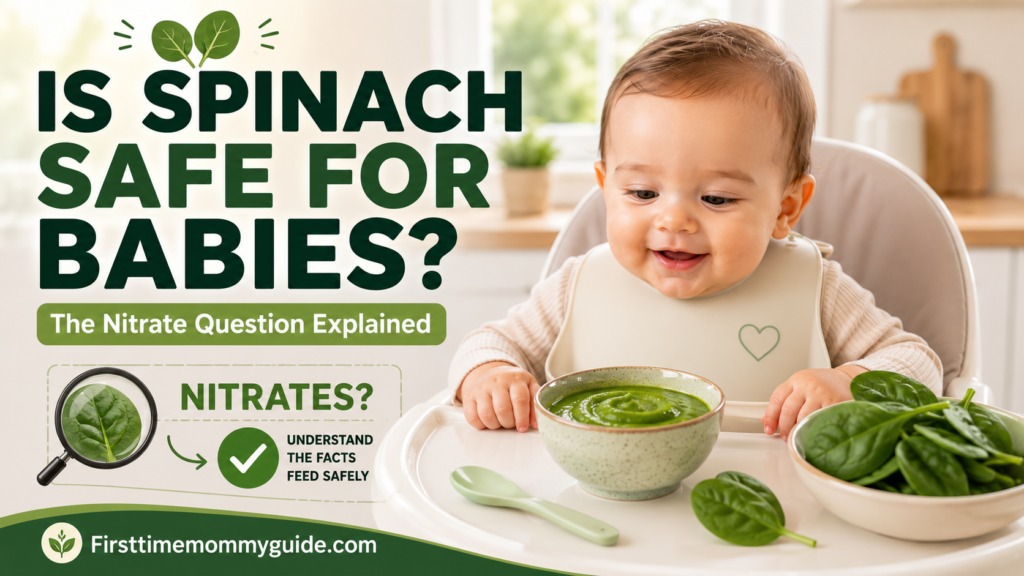
Yes — with a bit more care than most first vegetables. Nitrates are naturally occurring compounds found in soil, water, and fertilizer, and leafy greens like spinach absorb them more readily than many other vegetables.
In large amounts, nitrates can convert to nitrites in the body and interfere with how blood carries oxygen, a rare condition called methemoglobinemia. The AAP recommends that foods with naturally occurring nitrates — including spinach — be avoided before three months of age, since an infant’s intake from these foods can be as high as intake from contaminated well water. Because spinach in particular often exceeds the desirable nitrate-nitrogen target for infant food, commercial spinach baby food is commonly labeled as unsuitable for infants under three months.
Here’s the reassuring part: this risk is age-dependent, not spinach-dependent in isolation. Very young infants lack the digestive enzymes to safely process high nitrate loads, but the core issue is the age of the baby — by six months, the stomach has acidified and the risk has dropped considerably. Breastfeeding also offers extra protection, since beneficial gut bacteria in breastfed babies help guard against methemoglobinemia even with nitrate exposure.
What pediatric sources actually recommend for babies starting solids at 6 months:
- Introduce spinach in small amounts, not as a daily staple, particularly in the early weeks of solids
- Never prepare any baby food — spinach included — with untested well water
- If you’re concerned, the simplest approach is to avoid homemade spinach puree until after 6 months, since solids of any kind aren’t recommended before that age regardless
- Municipal tap water and store-bought vegetables are lower risk than home-grown produce or well water, since contamination can come from the soil or groundwater the plant grew in
Important context: nitrates aren’t the only cause of methemoglobinemia — certain antibiotics and the numbing agents in some teething gels can also trigger it — and the single most common real-world cause in infants, even those older than 6 months, is infant formula mixed with nitrate-contaminated well water, not homemade vegetable puree. If your water comes from a private well, have it tested; this matters more than any single vegetable choice.
When Can Babies Eat Spinach Puree?
Most babies can try spinach puree once they’re developmentally ready for solids, generally around 6 months old. There’s no nutritional need to introduce it earlier, and waiting until 6 months naturally sidesteps the nitrate window pediatric guidance is most cautious about.
| Age | Recommendation |
|---|---|
| 0–3 months | Not applicable — no solids of any kind |
| 3–6 months | Avoid spinach and other nitrate-containing vegetables as homemade purees |
| 6+ months | Safe to introduce in small, occasional portions |
| 9–12 months | Can be served more regularly, mixed into a variety of textures |
What You’ll Need
Choosing Spinach
- Fresh spinach: Look for crisp, deep-green leaves with no tears, sliminess, or yellowing.
- Frozen spinach: A convenient, nutritionally similar alternative — frozen at peak ripeness, which can retain nutrients well.
- Organic vs. conventional: Either is fine; if nitrate exposure is a specific concern for you, organic produce grown without synthetic nitrogen fertilizer is one option, though it isn’t a guarantee of lower nitrate content on its own.
Equipment
- Steamer basket or saucepan
- Blender or food processor
- Colander
- Ice cube trays or silicone freezer trays
- Airtight storage containers
How to Make Spinach Puree for Baby (Step-by-Step)
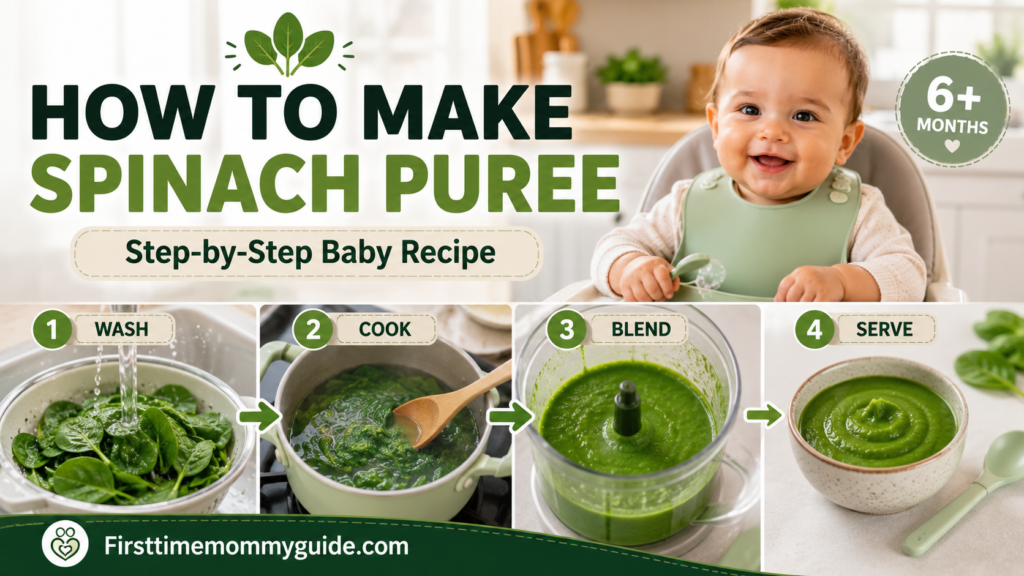
Method 1: Steaming (Best for Nutrient Retention)
- Remove any tough stems and rinse the spinach thoroughly.
- Place in a steamer basket over boiling water.
- Steam for 3–5 minutes, until wilted and bright green.
- Transfer to a blender with a splash of water, breastmilk, or formula.
- Blend until completely smooth, scraping down the sides as needed.
Method 2: Blanching
- Bring a pot of water to a boil.
- Add washed spinach and blanch for about 1 minute.
- Drain well and rinse briefly with cool water to stop the cooking process.
- Blend with a small amount of fresh liquid until smooth.
Method 3: Sautéing (More Flavor, Slightly More Prep)
- Heat a small amount of water or oil in a skillet.
- Add washed spinach and cook until wilted, about 2–3 minutes.
- Transfer to a blender with a splash of liquid and blend until smooth.
| Method | Time | Nutrient Retention | Flavor | Best For |
|---|---|---|---|---|
| Steaming | 3–5 min | Best | Mild, fresh | First-time purees |
| Blanching | 1–2 min | Good | Mild | Quick batches |
| Sautéing | 2–3 min | Moderate | Slightly richer | Older babies, mixed dishes |
Expert tip: Spinach reduces dramatically in volume once cooked — a large bunch will yield a surprisingly small amount of puree, so plan accordingly if you’re batch-cooking.
Boosting Iron Absorption: Why Pairing Matters
Spinach is often marketed as an iron-rich baby food, and it does contain iron — but there’s an important nuance competitors rarely explain. The iron in spinach is non-heme iron, a form the body absorbs far less efficiently than the heme iron found in meat. Spinach also contains oxalates, naturally occurring compounds that further bind to iron and calcium and reduce how much your baby’s body actually absorbs.
The practical fix is simple: pair spinach with a source of vitamin C, which significantly improves non-heme iron absorption. Good pairings include:
- Sweet potato puree
- Broccoli puree
- Kiwi or citrus puree
- Bell pepper puree (for older babies)
This doesn’t mean spinach isn’t worth serving — it’s still a good source of fiber, folate, and vitamins A, C, and K — but treating it as your baby’s primary iron source would be a mistake. Iron-fortified cereals, meat, beans, and lentils remain more efficient iron sources for infants.
Storing Spinach Puree
Spinach puree has a shorter safe storage window than most vegetable purees, largely because leafy greens are more prone to bacterial growth and nitrate-to-nitrite conversion once cooked and left standing.
- Refrigerator: 24 hours to 3 days maximum in an airtight container — err toward the shorter end.
- Freezer: Up to 2–3 months, portioned into ice cube trays and transferred to a labeled freezer bag once solid.
- Thawing: Thaw in the refrigerator, not on the counter, and use within 24 hours of thawing.
- Never reheat spinach puree more than once, and discard any portion your baby didn’t finish rather than saving it.
Mixing Spinach Puree with Other Foods
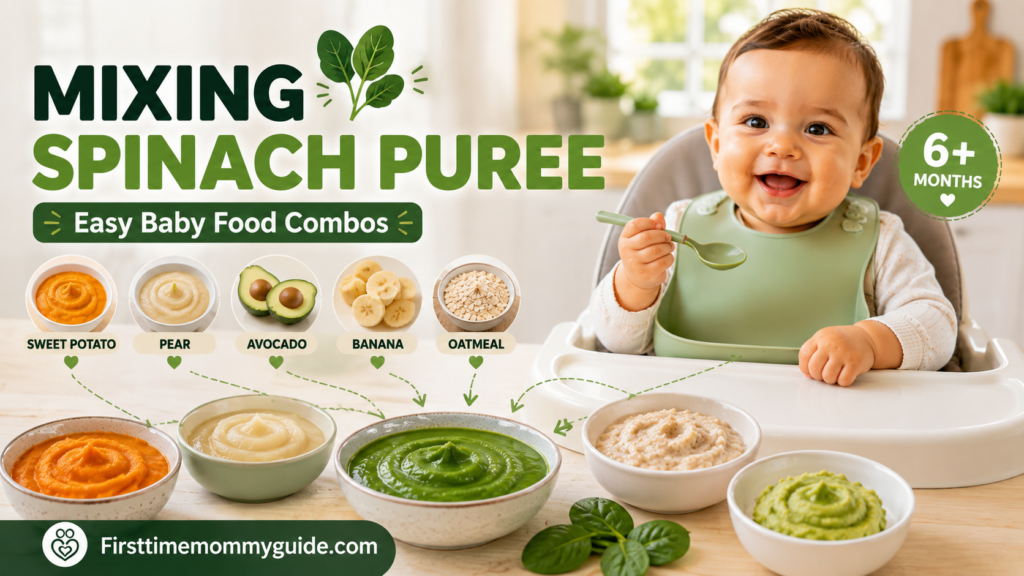
Spinach has an earthy, slightly bitter flavor that some babies accept right away and others need eased into. Blending it with milder or sweeter purees is a reliable way to build acceptance:
- Apple or pear puree
- Sweet potato or pumpkin puree
- Banana puree
- Plain whole-milk yogurt (for babies 6+ months, per your pediatrician’s guidance)
- Oatmeal or baby cereal
Common Mistakes to Avoid
- Using untested well water. This is the single biggest real-world risk factor for infant nitrate issues — far more significant than the spinach itself.
- Serving spinach as a daily staple in the first weeks of solids. Occasional, varied servings are the safer approach early on.
- Skipping the vitamin C pairing. Without it, your baby absorbs only a fraction of the iron spinach contains.
- Storing puree too long. Spinach puree degrades faster than most; don’t push past the 3-day refrigerator window.
- Adding salt. Babies under 12 months don’t need — and shouldn’t have — added salt in their food.
Frequently Asked Questions (FAQs)
When can babies start eating spinach?
Most babies can try spinach puree around 6 months old, once they’re ready for solids generally.
Is spinach dangerous for babies because of nitrates?
Not when introduced appropriately. The real risk window is before 3 months of age; by 6 months, when solids typically start, the risk is substantially lower, especially if you avoid untested well water.
Should I avoid homemade spinach puree entirely?
No, but many pediatric sources suggest serving it in moderation rather than as a daily food for very young babies, simply as a precaution given spinach’s naturally higher nitrate content.
How much spinach puree can I give my baby?
Start with a small amount (a spoonful or two) and offer it occasionally rather than daily, especially in the first weeks after introducing solids.
Does spinach puree provide iron for my baby?
It contains iron, but it’s non-heme iron that’s poorly absorbed, especially since spinach also contains oxalates that inhibit absorption. Pair it with vitamin C-rich foods to help.
Can I use frozen spinach instead of fresh?
Yes, frozen spinach works well and is often just as nutritious as fresh, since it’s typically frozen shortly after harvest.
How long does spinach puree last in the fridge?
Only 24 hours to about 3 days — shorter than most purees, so plan to use or freeze it quickly.
Can I freeze spinach puree?
Yes, freeze in ice cube trays for up to 2–3 months, then thaw individual portions as needed.
Is spinach a common allergen?
No, spinach is not a common allergen, though rare reactions can occur; watch for hives, swelling, or vomiting after first exposure.
Can spinach cause constipation in babies?
Spinach is generally fine for digestion and contains fiber; if you notice digestive changes, introduce it more gradually and in smaller amounts.
Should I use organic spinach to avoid nitrates?
Organic farming avoids synthetic nitrogen fertilizer, but it doesn’t guarantee lower nitrate levels on its own; water quality and soil conditions matter just as much.
What water should I use to cook spinach puree?
Use clean municipal tap water or filtered water. Avoid untested well water, which is the leading real-world source of infant nitrate exposure.
Can I mix spinach puree into pasta sauce or smoothies for my baby?
Yes, once your baby is eating a variety of foods, spinach puree blends well into sauces, smoothies, and baked goods.
Is spinach puree better steamed or boiled?
Steaming retains more nutrients than boiling, since many of spinach’s vitamins are water-soluble and can leach into boiling water.
Does breastfeeding protect against nitrate risk?
Yes, some research suggests breastfed infants have added protection due to differences in gut bacteria that reduce nitrate-to-nitrite conversion.
Conclusion
Spinach puree for baby is nutritious, easy to prepare, and safe when you understand the two things that actually matter: timing and water source.
Wait until your baby is ready for solids around 6 months, serve spinach in moderate, occasional portions rather than daily at first, always use clean water, and pair it with a vitamin C food to help your baby actually absorb the iron it offers.
Handled this way, spinach makes a genuinely valuable addition to your baby’s growing diet.

Dilawar Mughal
Founder and editor, First Time Mommy Guide
I research every guide against what the NHS, the AAP and the WHO publish, then write it in plain English — because most new parents are reading with one hand free, not comparing clinical guidelines. I'm not a doctor or a midwife. Every health claim on this site is sourced and linked so you can check it yourself, and anything urgent belongs with your health visitor or GP, not a blog.