General information, not medical advice. Every baby is different — if anything worries you, speak to your midwife, health visitor or GP rather than waiting.
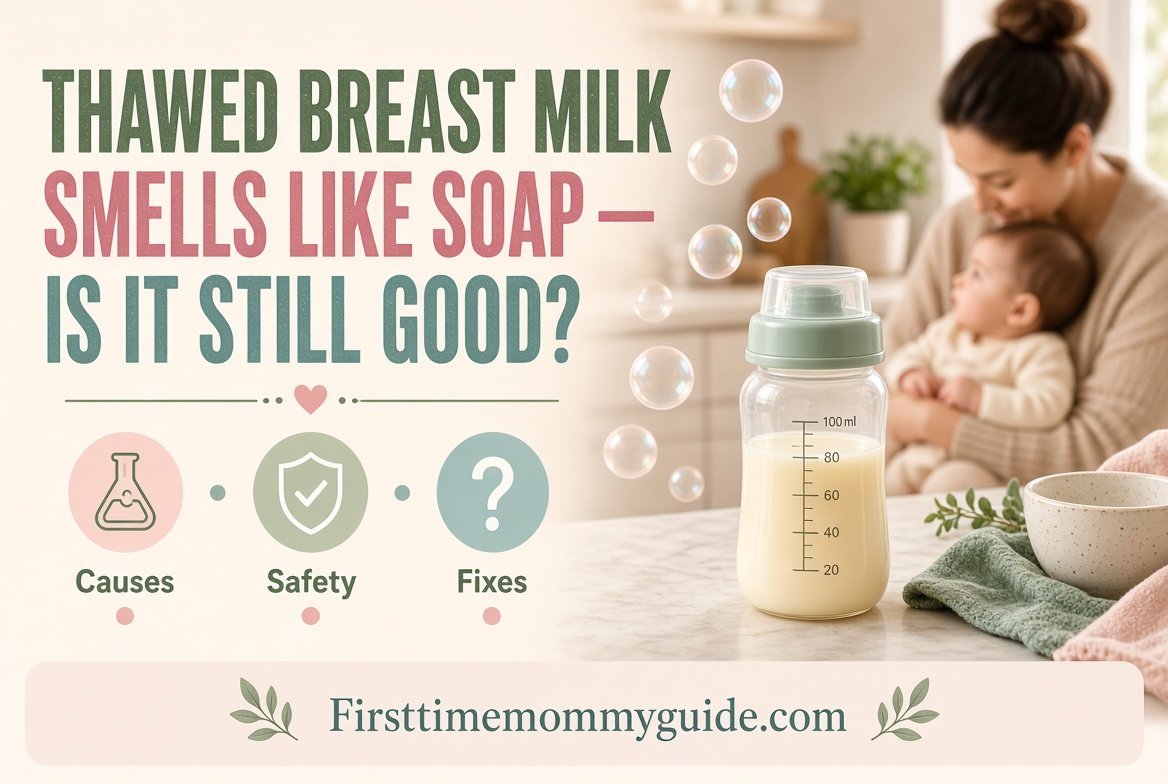
Thawed Breast Milk Smells Like Soap Is It Still Good? in most cases, safe to feed your baby. The soapy smell usually comes from a natural enzyme in your milk called lipase, not from bacteria or spoilage.
Still, a strange smell coming out of a bag you carefully pumped, labeled, and froze can feel alarming. You may wonder if the milk has gone bad, if your freezer is to blame, or if you did something wrong.
The answer depends on the type of smell. Soapy and metallic odors point to lipase activity, which is harmless. Sour, rancid, or spoiled-dairy odors point to real spoilage, and that milk should be thrown out.
Table of Contents
Is Thawed Breast Milk That Smells Like Soap Still Good?
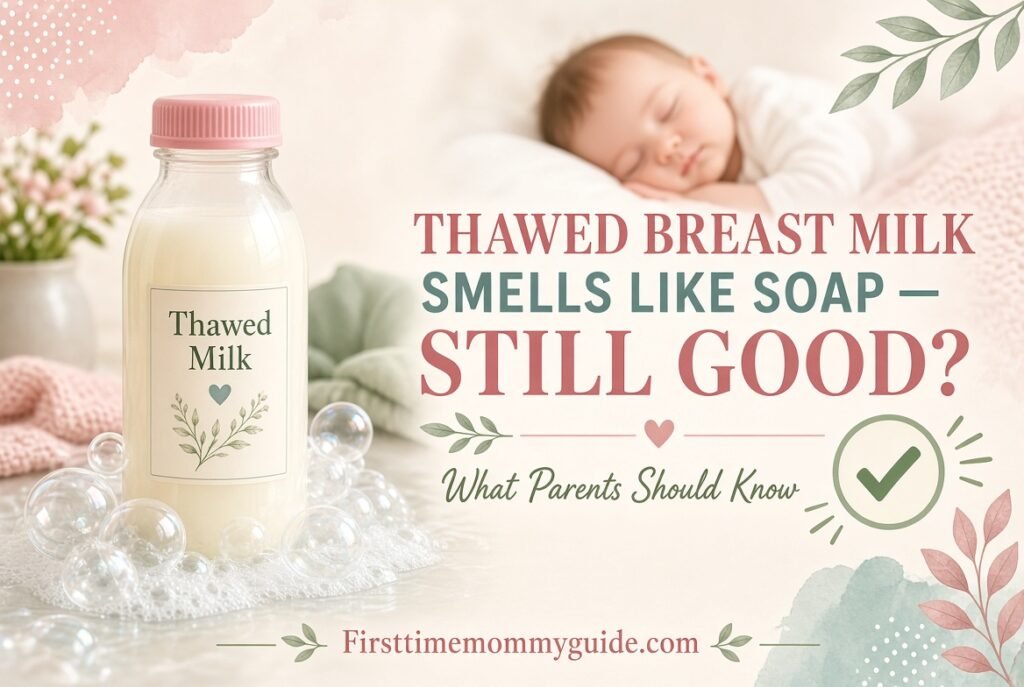
Yes, soapy-smelling thawed breast milk is usually safe. The smell is caused by high lipase activity breaking down milk fat. It changes the smell and taste but does not make the milk harmful.
Throw the milk away if it smells sour, rancid, or like spoiled cow’s milk. Also discard it if it was stored or thawed incorrectly.
| Smell or Sign | Most Likely Cause | Safe to Feed? |
|---|---|---|
| Soapy | High lipase activity | Yes, if baby accepts it |
| Metallic | High lipase activity | Yes, if baby accepts it |
| Mild “off” or different from fresh | Normal change from freezing | Yes |
| Fishy or “freezer” smell | Freezer odors or fat changes | Usually yes, check carefully |
| Sour, like spoiled milk | Bacterial spoilage | No, discard |
| Strong rancid, foul smell | Spoilage or long storage | No, discard |
| Thawed longer than allowed | Unsafe handling | No, discard |
Key Takeaways
- A soapy smell after thawing is common and usually caused by lipase.
- Lipase-affected milk is generally considered safe, and the nutrition is still there.
- A sour or rancid smell means spoilage, and the milk must be discarded.
- Scalding fresh milk before freezing can prevent the soapy smell in future batches.
- Scalding after the milk has already thawed will not fix the smell.
- Never refreeze breast milk once it has been thawed.
- When you are truly unsure, it is safer to throw it out.
What Does “Soapy” Breast Milk Actually Mean?
When parents say their milk smells or tastes soapy, they often describe it in different ways. Some say it smells like dish soap, others like metal, and others like a soapy rag.
The smell shows up mostly after freezing and thawing. It can also appear in refrigerated milk after a day or two.
How Soapy Breast Milk Smells and Tastes
Soapy breast milk may smell like dish soap, bar soap, or laundry detergent. Some people also notice a metallic, bitter, or slightly fishy note.
The taste often matches the smell. Many babies notice the change and may turn their head away from the bottle.
How Fresh Breast Milk Normally Smells
Fresh breast milk usually smells mild and slightly sweet. Many people describe the taste as similar to lightly sweetened almond milk.
Smell can still vary from one person to the next. What you eat, your hydration, and the time of day can all shift the scent slightly.
Why the Change Appears After Thawing
Fresh milk may smell perfectly normal when you pump it. The smell often develops slowly as the milk sits in the fridge or freezer.
By the time you thaw the milk, enough fat has been broken down to create a noticeable soapy odor. That is why the problem usually shows up only when you are ready to feed.
Why Thawed Breast Milk Smells Like Soap: The Role of Lipase
The most common reason for soapy breast milk is the enzyme lipase. Lipase is a normal part of human milk and is present in every mother’s milk, though the amount varies.
Understanding lipase explains almost everything about this problem.
What Is Lipase in Breast Milk?
Lipase is an enzyme that breaks down fat. In breast milk, it helps pre-digest fat globules so that your baby can absorb them more easily.
This is a useful job, especially for newborns whose digestive systems are still maturing. It is one of the reasons breast milk is so easy to digest.
How Lipase Turns Milk Fat Into a Soapy Smell
Lipase splits milk fat into free fatty acids. These free fatty acids are what you smell and taste as soapy, metallic, or sour.
Some mothers have more active lipase in their milk. In their milk, the fat continues to break down while the milk sits in storage, so the smell gets stronger over time.
Does Freezing Stop Lipase?
Freezing slows the process but does not stop it. Lipase stays active at cold temperatures and keeps working on the fat even in the freezer.
This is why milk can smell perfectly fine on the day you pump it, then smell soapy weeks later when you thaw it.
What Is High Lipase Breast Milk?
“High lipase” is a popular term for milk with more active lipase than average. It is not a disease, a defect, or a sign that your milk is unhealthy.
It is simply a natural variation. Some mothers have it with one baby but not with another, and levels can change over time.
Is High Lipase Breast Milk Harmful?
No. The breakdown of fat by lipase is not considered harmful to your baby. The milk remains nutritious and safe to drink.
The main problem is acceptance. Some babies dislike the smell and taste and refuse to drink it, while others do not mind at all.
Why Lipase Is Actually Helpful
In your baby’s gut, lipase assists with fat digestion. That means this enzyme is part of what makes breast milk so well suited to infants.
It only becomes a nuisance when milk is stored for later use, because the same process that helps digestion also changes the smell.
Signs Your Milk May Have High Lipase
Not every strange smell means lipase. These signs help you recognize the pattern.
Common Signs of High Lipase Activity
- Fresh milk smells and tastes normal.
- Milk smells soapy, metallic, or sour only after refrigeration or freezing.
- The smell gets stronger the longer the milk is stored.
- Your baby accepts fresh milk but refuses thawed milk.
- The problem happens with most of your stored milk, not just one bag.
How Quickly Does the Smell Develop?
In some people, the smell develops within a day or two in the refrigerator. In others, it appears only after weeks in the freezer.
The faster the smell appears, the higher the lipase activity is likely to be.
Is It Lipase or Spoilage? A Quick Comparison
| Feature | Lipase (Soapy Milk) | Spoiled Milk |
|---|---|---|
| Smell | Soapy, metallic, mildly sour | Strongly sour, rancid, or foul |
| Cause | Enzyme breaking down fat | Bacterial growth |
| Appearance | Normal separation, creamy top | May look curdled or chunky even after swirling |
| Safe to feed | Generally yes | No |
| Pattern | Fresh milk smells fine | Often linked to long storage or poor handling |
| Fix for future batches | Scald before freezing | Follow storage and hygiene rules |
Other Reasons Thawed Breast Milk May Smell Like Soap or Taste Off
Lipase is the leading cause, but it is not the only one. Before you decide your milk has high lipase, rule out these other possibilities.
Soap or Detergent Residue on Pump Parts and Bottles
Because the smell is described as soapy, it is worth checking for actual soap. Residue from dish soap on pump parts, bottles, or storage containers can transfer a soapy smell to milk.
Rinse every piece thoroughly with clean running water after washing, and let it air dry completely.
Freezer Odors and Food Smells
Milk can absorb odors from other foods in your freezer, especially if bags are not sealed tightly. Strong smells such as fish, onions, or garlic can drift into storage containers.
Store milk in sealed bags inside a second freezer bag or a hard container to reduce this risk.
Freezer Burn and Oxidation
Milk stored for a long time or in poorly sealed bags can develop off flavors through oxidation. The fat can take on a stale or cardboard-like smell.
This is different from lipase, but the milk may still be safe if it has not spoiled and was stored within recommended times.
Storage Container Material
Some people notice a plastic or chemical smell from certain containers. Use containers made for breast milk storage, such as breast milk bags or BPA-free bottles.
Glass containers are an option for some people but may crack in a freezer if not designed for freezing, and you must leave room for expansion.
Foods and Supplements in Your Diet
Strong foods such as garlic, spices, and some vegetables can change the flavor of your milk. Certain supplements and medications may also alter taste or smell.
Dietary changes usually affect taste in both fresh and stored milk, so fresh milk would smell off too.
Hormonal Changes and Mastitis
Milk can taste or smell different during hormonal shifts, such as the return of your period or a new pregnancy. Mastitis or a breast infection can also make milk taste salty.
If you have breast pain, redness, fever, or flu-like symptoms, contact your healthcare provider. Do not wait.
Milk Left Out Too Long
Milk left on the counter beyond the recommended time can grow bacteria and smell sour. That is spoilage, not lipase.
Always check the storage times in the next sections before deciding.
How to Tell if Thawed Breast Milk Is Bad
You can tell if thawed breast milk is bad by using your senses and checking how it was stored. Smell is the most reliable test.
Spoiled breast milk smells like spoiled cow’s milk. The odor is strong enough that most parents do not second-guess it.
The Smell Test
Gently swirl the milk first, because the fat layer can trap odors. Then smell it carefully.
Soapy, metallic, or slightly different smells are usually lipase. A distinctly sour, rancid, or sharp smell means the milk has spoiled.
The Look Test
Breast milk naturally separates into a creamy top layer and a thinner bottom layer. This is normal and does not mean it is bad.
Swirl gently to mix it. If the milk stays curdled, chunky, or stringy after swirling, discard it.
The Taste Test
If you are still unsure, you can taste a tiny drop. Fresh milk tastes mildly sweet, while lipase-affected milk tastes soapy or metallic.
Spoiled milk tastes sour or bitter in a way that is clearly unpleasant. If anything about the taste worries you, do not feed it.
The Storage History Test
Ask yourself how the milk was handled. Was it frozen in time? Was it thawed in the refrigerator or under warm water? How long has it been thawed?
Milk that was stored or thawed outside the recommended guidelines should be thrown out, even if it smells fine.
What Normal Changes in Thawed Milk Look Like
Frozen and thawed milk can look different from fresh milk without being spoiled. These changes are normal:
- The color may look yellow, bluish, or slightly brown.
- Early milk may look orange.
- The fat may separate into a creamy layer.
- Small fat clumps may appear before swirling and then mix back in.
Signs the Milk Is Spoiled
- Strong sour or rancid smell similar to spoiled dairy.
- Curdled or chunky texture that does not mix back together.
- Foul taste.
- Milk that was thawed longer than the guidelines allow.
- Milk that was left out beyond the recommended time.
Breast Milk Safety Checklist
| Question | If Yes | If No |
|---|---|---|
| Does it smell sour or rancid? | Discard | Continue checking |
| Does it stay curdled after swirling? | Discard | Continue checking |
| Was it thawed longer than allowed? | Discard | Continue checking |
| Was it previously thawed and refrozen? | Discard | Continue checking |
| Does it only smell soapy or metallic? | Likely lipase, usually safe | Continue checking |
| Does your baby accept it? | Feed as usual | See the solutions below |
Is Soapy Breast Milk Safe for Your Baby?
In general, yes. Major health sources, including the Mayo Clinic and children’s health organizations, note that thawed milk may smell or taste different and is still fine as long as it does not smell spoiled.
Lipase breaks down fat, which is not harmful to a healthy baby. The nutrition remains.
What Experts Say About Soapy-Smelling Milk
Lactation experts commonly explain that soapy milk caused by lipase is safe to feed. Children’s hospitals also advise that soapy smell or taste results from fat breakdown and that most babies will not have a problem.
The practical advice is simple: if the milk does not smell spoiled and your baby takes it, feed it.
Is the Nutrition Still There?
Yes. Lipase changes the smell and taste of the fat, but the milk still provides protein, carbohydrates, vitamins, and antibodies in the amounts expected from frozen milk.
Freezing itself reduces some of the live immune activity compared with fresh milk. Even so, frozen milk is far better than no breast milk and much better than formula in terms of antibodies.
When Soapy Milk Might Not Be Okay
There are a few cases where you should be more careful:
- The milk smells sour or rancid, not just soapy.
- Your baby is premature or has a medical condition, and the care team has given specific instructions.
- The milk was stored incorrectly or for too long.
- You are unsure how the milk was handled.
In those situations, ask your baby’s doctor or a lactation consultant, or discard the milk.
CDC Breast Milk Storage Guidelines
Correct storage prevents real spoilage and gives you the best chance of a normal-smelling thaw. The numbers below follow the widely used CDC guidelines for healthy full-term babies.
Storage Times Table
| Type of Breast Milk | Room Temp (77°F / 25°C or colder) | Refrigerator (40°F / 4°C) | Freezer (0°F / -18°C or colder) |
|---|---|---|---|
| Freshly expressed | Up to 4 hours | Up to 4 days | Best within 6 months, acceptable up to 12 months |
| Thawed (previously frozen) | 1 to 2 hours | Up to 24 hours | Never refreeze |
| Leftover from a feeding | Use within 2 hours after the baby finishes | Use within 2 hours | Use within 2 hours |
These times apply to healthy full-term babies. Babies who are premature, hospitalized, or medically fragile may need different rules.
Storage Duration in Detail
Freshly pumped milk can sit at room temperature for up to four hours. In the refrigerator, it keeps for up to four days.
In the freezer, the best quality is within six months. Up to twelve months is considered acceptable, especially in a deep freezer kept at a very low temperature.
Freezer Types and Storage Time
Different freezers hold milk for different lengths of time. A freezer section of a refrigerator-freezer with a shared door has more temperature swings.
A separate-door freezer or a deep chest freezer stays colder and more stable. This is better for long-term storage.
| Storage Location | Typical Time Frame |
|---|---|
| Freezer section inside a refrigerator (shared door) | About 2 weeks |
| Freezer with a separate door | Up to 6 months |
| Deep freezer at 0°F (-18°C) or colder | Up to 12 months |
Does Longer Storage Increase the Soapy Smell?
For milk with high lipase, yes. The longer the milk sits, the more fat breaks down, and the stronger the smell can become.
If you have a soapy-milk problem, using your oldest milk first and keeping a smaller stash can help.
What Happens After Thawing
Once milk is thawed, the clock starts. Thawed milk can stay at room temperature for one to two hours or in the refrigerator for up to 24 hours.
Do not refreeze it. Once your baby starts drinking from a bottle, use or discard the leftover milk within one to two hours.
How to Thaw Breast Milk Safely
Correct thawing protects the milk and your baby. It also helps you judge whether the smell is normal.
Safe Thawing Methods
| Method | How to Do It | Notes |
|---|---|---|
| Refrigerator | Move the frozen milk to the fridge overnight | Safest and gentlest method |
| Warm water bowl | Place the sealed container in a bowl of warm (not hot) water | Faster, use right away |
| Running warm water | Hold the container under warm running water | Fast, avoid contaminating the opening |
Methods to Avoid
Never use a microwave to thaw or warm breast milk. Microwaves create hot spots that can burn your baby’s mouth.
Heat can also damage some of the protective proteins and antibodies in the milk. Do not boil milk after thawing either.
How to Mix the Fat Layer Back In
After thawing, gently swirl the container to blend the fat layer back into the milk. Do not shake it hard.
Swirling gently helps you judge the true smell. It also helps your baby get the fat and calories that settle at the top.
Smell and Taste After Thawing
Check the smell once the milk has thawed and been swirled. Do this before warming it, since warm milk can smell stronger.
If it only smells different, not sour, you can continue to the next steps.
Does Soapy Breast Milk Happen in the Refrigerator Too?
Yes. Lipase works in the refrigerator as well as the freezer. Some mothers notice a soapy smell after only a day or two of refrigeration.
If your fresh milk smells soapy within a day or two in the fridge, that strongly suggests high lipase activity.
What to Do When Refrigerated Milk Smells Soapy
If your baby takes milk soon after pumping, you may not need to change anything. Feeding fresh or freshly refrigerated milk within a short window avoids the problem.
Only mothers who store milk for later use need to take extra steps.
Should You Scald Refrigerated Milk?
Scalding is only necessary if you plan to store the milk and your baby rejects it. If your baby drinks the milk happily, there is no need.
Scalding also removes some beneficial components, so it should be used only when needed.
Can You Still Use Soapy Breast Milk If Your Baby Refuses It?
Even when milk is safe, a baby who dislikes the taste may refuse it. This is one of the most frustrating parts of the problem.
A refusal does not mean you have failed, and it does not mean the milk is unsafe.
Why Babies Refuse Lipase-Affected Milk
Babies have a strong sense of smell and taste, and they quickly learn the flavor of their mother’s fresh milk. A sudden change can feel unfamiliar.
Some babies adapt after a few tries, while others consistently reject it.
Signs Your Baby Does Not Like the Milk
- Turning away or pushing the bottle out of the mouth.
- Making faces or gagging.
- Taking only a small amount, then refusing more.
- Crying when the bottle is offered.
- Refusing thawed milk but taking fresh milk happily.
What If the Baby Refuses All Bottles?
Sometimes a baby is refusing the bottle itself and not the milk. This happens often when a baby prefers feeding at the breast.
Test this by offering fresh milk in the same bottle. If the baby refuses that as well, taste is not the issue.
How to Get Rid of the Soapy Smell in Thawed Breast Milk
Once milk has frozen and thawed, there is little you can do to remove the soapy smell. The fat has already been broken down.
The best solutions either prevent the smell in future batches or make the existing milk more acceptable.
Fix 1: Scald Fresh Milk Before Freezing (Prevention)
Scalding means heating fresh milk until small bubbles form around the edge, then cooling it quickly. This deactivates lipase before it can change the fat.
Scalding must be done before freezing, ideally right after pumping. It will not fix milk that has already thawed and smells soapy.
Fix 2: Mix Thawed Milk With Fresh Milk
If your baby tolerates a mild smell, you can blend a small amount of thawed milk with fresh milk. The fresh milk masks the flavor.
Start with a small proportion of thawed milk and slowly increase it. Cool freshly pumped milk in the refrigerator before combining it with chilled milk.
Fix 3: Offer Thawed Milk in Small Amounts
Offer small portions at first, such as one ounce, and see how your baby reacts. This prevents wasting a full bottle if the baby refuses.
Never mix a refused leftover bottle with fresh milk and refreeze it. Use or discard it within the recommended time.
Fix 4: Warm the Milk to a Comfortable Temperature
Some babies take thawed milk more easily when it is warmed gently to body temperature. Use a bowl of warm water, not a microwave.
A comfortable temperature can make the milk seem closer to fresh milk from the breast.
Fix 5: Try a Different Nipple, Bottle, or Cup
A change in feeding method sometimes helps a baby who is picky. Try a different nipple shape or flow rate, or use a small cup or spoon for older babies.
Always follow safe feeding practices and ask your pediatrician or a lactation consultant about alternatives that suit your baby’s age.
Fix 6: Use the Milk in Other Ways
For older babies who have started solids, thawed milk can be mixed into cereal or other foods. Ask your pediatrician about the right timing and use.
Do not add thawed milk to foods for a baby who is not ready for solids.
What Does Not Work
- Scalding milk after it has thawed to remove the soapy smell.
- Adding sweeteners or flavorings to the milk.
- Boiling thawed milk for long periods.
- Refreezing leftover thawed milk.
How to Scald Breast Milk Before Freezing: Step-by-Step
Scalding is the standard method for stopping lipase from creating a soapy smell. It is done on fresh milk, shortly after pumping, before the milk goes into the freezer.
Do not scald milk that you plan to feed within a day or two unless your baby rejects it.
What Is Scalding Breast Milk?
Scalding means heating milk to just below boiling, until small bubbles appear around the edges of the pan. It is not the same as boiling.
The heat deactivates lipase. Once the enzyme is inactive, it can no longer break down the fat during storage.
Step-by-Step Scalding Method
- Wash your hands and use a clean small saucepan.
- Pour the freshly expressed milk into the pan.
- Heat over medium-low heat and stay with the pan the whole time.
- Watch for small bubbles forming around the edge of the milk. Remove the pan from the heat right away.
- Do not let the milk come to a full rolling boil.
- Cool the pan quickly by placing it in a bowl of ice water.
- Pour the cooled milk into clean storage bags or bottles.
- Label with the date and freeze.
Important Scalding Tips
- Use a small, clean pan and avoid walking away.
- Cool the milk fast to limit time at warm temperatures.
- Scald small batches so you can test your baby’s acceptance.
- Never use a microwave for scalding.
- Scald only after pumping, never after the milk has been frozen and thawed.
Does Scalding Remove Nutrients?
Scalding reduces some of the live protective components in breast milk, such as certain immune factors. Some sources note that scalded milk loses part of its immunological benefit.
Even so, scalded milk still provides fat, protein, carbohydrates, and many nutrients. It is much better than discarding the milk or giving up on breast milk entirely.
Scalding vs Not Scalding
| Factor | Scalded Milk | Unscalded Milk |
|---|---|---|
| Soapy smell after thawing | Usually prevented | Possible with high lipase |
| Immune components | Some reduced | More retained |
| Baby acceptance when lipase is high | Usually better | May be refused |
| Extra work | Yes | No |
| Best for | Mothers with soapy stored milk | Mothers with normal-smelling stored milk |
When Scalding Is Worth It
Scalding is worth it when your thawed milk smells soapy and your baby refuses it. It is also worth it if you have a large freezer stash and need it to be usable.
If your baby drinks thawed milk without fuss, there is no reason to scald.
How to Test Whether You Have High Lipase Milk
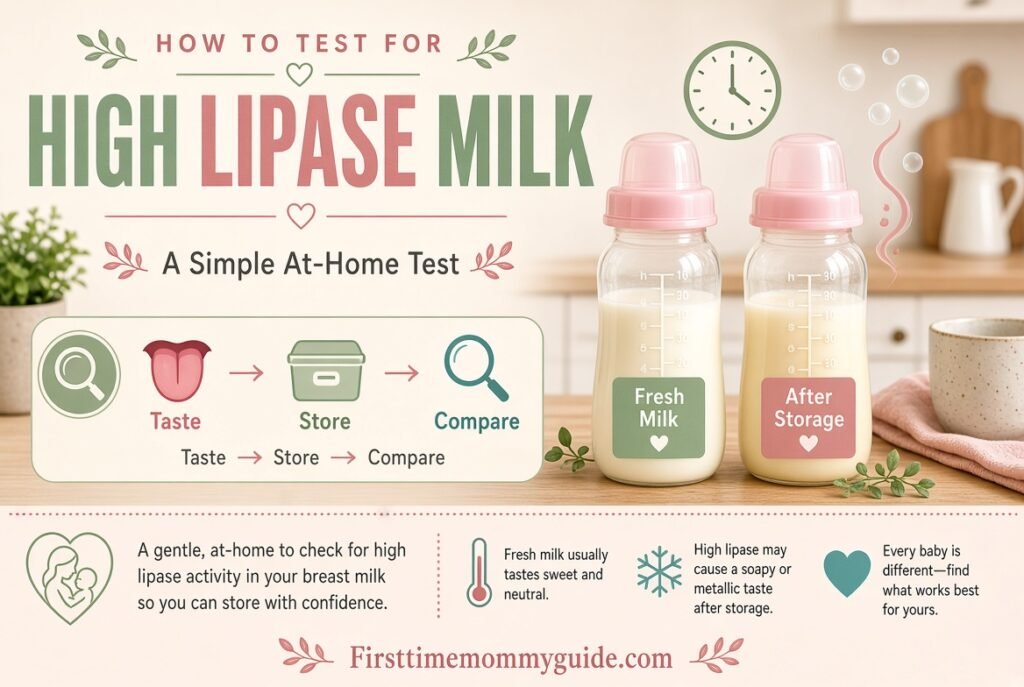
Before you scald a whole freezer’s worth of milk, test a small sample. A simple test tells you whether lipase is the cause of the smell.
This saves time and avoids needless scalding.
The Freezer Test
- Pump a small amount of milk and store it in a clean container.
- Freeze it right away, then leave it for two to three days.
- Thaw it using safe methods and swirl it gently.
- Smell and taste a drop.
If it smells soapy or sour compared with fresh milk, lipase is likely active. If it smells normal, the issue may be something else, such as storage or cleaning.
The Fridge Test
You can also store a sample in the refrigerator for a day or two. Compare its smell with fresh milk.
A soapy smell in refrigerated milk is another strong sign of high lipase.
Testing a Scalded Sample
After you identify high lipase, scald a small sample, cool it, freeze it, and thaw it a few days later. Check whether the soapy smell is gone.
If scalding does not help, look at other causes such as soap residue or freezer odors.
How to Prevent Soapy Smelling Breast Milk
Prevention focuses on three things: managing lipase, keeping everything clean, and storing milk properly.
Prevention Checklist
- Scald milk before freezing if you have confirmed high lipase.
- Rinse pump parts and bottles thoroughly so no soap remains.
- Use storage bags or containers made for breast milk.
- Seal containers tightly, and double-bag if your freezer has strong odors.
- Label every container with the date.
- Store milk at the back of the freezer, away from the door.
- Freeze milk in small portions of two to four ounces.
- Use the oldest milk first.
- Avoid building a huge stash that will sit for many months.
Freeze Smaller Batches
Small batches thaw faster and reduce waste. If your baby refuses a bag, you lose only a little milk.
Smaller portions also let you test acceptance before committing to a big batch.
Cool Milk Before Combining
Never add warm fresh milk to a bag of frozen or refrigerated milk. Cool the fresh milk in the refrigerator first.
Warm milk can partially thaw frozen milk and raise the temperature of stored milk.
Label and Rotate Your Stash
Write the pumping date on every bag. Feed the oldest milk first so nothing sits too long.
For mothers with high lipase, shorter storage times help a lot.
Keep Pump Parts Clean
Wash all pump parts that touch milk after each use with warm water and dish soap, then rinse well. Air dry on a clean surface.
Check manufacturer instructions for sanitizing, especially for very young babies, and follow the guidance from your pediatrician.
Soapy Breast Milk Quick Troubleshooting Guide
Use this table to decide what to do next.
| Situation | What It Likely Means | What to Do |
|---|---|---|
| Fresh milk smells fine, thawed milk smells soapy | High lipase | Scald fresh milk before freezing in future |
| Fresh milk also smells soapy | Soap residue, diet, or other cause | Rinse pump parts well and review diet or supplements |
| Thawed milk smells sour or rancid | Spoilage | Discard |
| Baby refuses thawed milk but milk smells normal | Taste preference or bottle refusal | Try mixing, different bottle, or fresh milk |
| Milk smells like freezer or food | Freezer odors | Double-bag and store in a sealed container |
| Milk smells fine but was thawed too long | Unsafe handling | Discard |
| Only some bags smell soapy | Different storage time or lipase variation | Use oldest first and test bag by bag |
What to Do With a Large Stash of Soapy Milk
Many parents discover the problem after they have built a large freezer stash. Throwing it all away feels painful.
You have options before you give up on it.
Thaw and Test Bag by Bag
Thaw one bag at a time, starting with the oldest. Smell each one before deciding what to do.
Sometimes the smell varies from bag to bag, and some bags are fine.
Mix With Fresh Milk
If a bag smells mildly soapy, mix a small amount with fresh milk and offer it to your baby. Increase the ratio of thawed milk as your baby accepts it.
Keep in mind that fresh milk must be cooled before mixing and that unused portions follow the thawed milk time limits.
Consider Other Uses
If your baby will not drink the milk, there are other uses for it. Some parents use it in baths or skin care for the baby, though this is a personal choice.
Milk that is truly spoiled should not be used for these purposes.
Donation Considerations
Milk banks and milk-sharing arrangements have strict rules. Soapy milk is often not accepted, and unsafe or improperly handled milk should never be given to another baby.
Contact a milk bank directly to learn about their screening and storage requirements.
Feeding Thawed Breast Milk to Premature or Medically Fragile Babies
Everything above applies to healthy full-term babies. Premature babies and babies with medical conditions have different needs.
Always follow the instructions from your baby’s care team.
Why Guidelines Differ for Fragile Babies
Premature babies are more vulnerable to infection. Hospitals often use stricter storage times and handling rules.
Some NICUs also have specific policies about milk with strong odors or changes in fat content.
What to Do If You Have a Preterm Baby
Ask the NICU staff or your baby’s doctor before scalding, mixing, or discarding milk. Do not change the plan without their advice.
A hospital lactation consultant can help you handle storage and smell concerns safely.
Fresh vs Refrigerated vs Frozen Breast Milk: What Changes in Storage
Every storage method changes breast milk a little. Knowing these differences helps you judge whether the smell you notice is normal.
Fresh milk is the gold standard, but stored milk is still valuable and nutritious.
Fresh Breast Milk
Freshly expressed milk has the most active living components, such as immune cells and enzymes. It also has the mildest smell and taste.
If your baby can take milk right after pumping, fresh milk avoids most storage problems.
Refrigerated Breast Milk
Refrigeration slows bacterial growth but does not stop lipase. Milk in the fridge keeps for up to four days under CDC guidelines.
Some live immune properties decline compared with fresh milk, but the milk stays nutritious.
Frozen Breast Milk
Freezing preserves the nutrients, fat, protein, and many protective proteins. It reduces some live immune activity more than refrigeration does.
Frozen milk is the best option for long-term storage and still gives your baby major benefits.
Comparison Table
| Feature | Fresh | Refrigerated | Frozen and Thawed |
|---|---|---|---|
| Typical smell | Mild and sweet | Mild, sometimes soapy if lipase is high | May smell soapy if lipase is high |
| Storage time | Up to 4 hours at room temp | Up to 4 days | 6 months best, up to 12 acceptable |
| Live immune components | Highest | Reduced | Lowest of the three |
| Nutrition | Complete | Complete | Complete |
| Lipase effect | None yet | Starts slowly | Can build over time |
| Best for | Immediate feeding | Short-term storage | Long-term storage |
Why Spoilage and Lipase Are Two Different Problems
Parents often use “gone bad” to describe both situations. They are very different in cause, risk, and solution.
Understanding this difference removes most of the fear around soapy milk.
What Happens During True Spoilage
Spoilage happens when bacteria multiply in milk that has been left too long at unsafe temperatures. These bacteria produce acids and other compounds that create a sour smell.
The milk can also change texture, curdling or becoming stringy. This milk can make a baby sick.
What Happens During Lipase Activity
During lipase activity, the enzyme splits fat into fatty acids. No bacterial growth is required.
The milk is chemically changed, but it is not contaminated. That is why the soapy smell does not signal danger on its own.
Why Freezing Helps With Bacteria but Not Lipase
Cold temperatures slow bacteria and prevent most growth in the freezer. That makes frozen milk safe for long periods.
Lipase is an enzyme, not a living organism, so cold slows it without fully stopping it. This is the reason milk can be safe and soapy at the same time.
A Simple Rule of Thumb
Think of it this way: bacteria make milk sour, while lipase makes milk soapy. Sour means discard, and soapy means check carefully and use if your baby accepts it.
Choosing the Right Storage Containers for Breast Milk
The container you choose affects freezer space, odor protection, and ease of use. Each type has pros and cons.
Storage Container Comparison
| Container | Pros | Cons |
|---|---|---|
| Breast milk storage bags | Save space, lie flat, thaw quickly | Can leak or tear, may absorb freezer odors |
| Hard BPA-free plastic bottles | Reusable, sturdy, easy to pour | Take more space |
| Glass bottles with tight lids | Durable and reusable, no plastic smell | Can crack if overfilled, heavier |
| Pump-compatible bags | Pump directly into the bag, less transfer | Cost more per bag |
Tips for Using Storage Bags
- Use bags made for breast milk, not ordinary sandwich bags.
- Squeeze out extra air before sealing.
- Lay bags flat to freeze, then stack them.
- Place bags inside a larger freezer bag or box for extra protection.
- Leave about an inch of space at the top for expansion.
Tips for Using Bottles and Hard Containers
- Never fill to the top, because milk expands as it freezes.
- Make sure lids fit tightly.
- Wash and rinse thoroughly with no soap left behind.
- Check glass containers for cracks before freezing.
Where to Store Milk in the Freezer
Store milk toward the back of the freezer, where the temperature is more stable. Avoid the door, which warms each time you open it.
A stable freezer temperature protects the milk and reduces the chance of partial thawing.
How to Clean Breast Pump Parts and Storage Containers
Clean equipment protects your baby and also rules out soap residue as the cause of a soapy smell.
Cleaning does not have to be complicated, but it must be thorough.
Step-by-Step Cleaning
- Take apart every pump piece that touches your breasts or milk.
- Rinse the parts under running water to remove milk.
- Wash in a clean basin with warm water and dish soap, scrubbing with a brush used only for baby items.
- Rinse each part well under clean running water until no suds remain.
- Air dry completely on a clean drying rack or paper towel.
- Store parts in a clean, covered place.
Why Rinsing Matters So Much
Soap residue can leave a film on plastic. When milk touches it, you may smell or taste soap even if the milk is perfectly fine.
If your fresh milk also smells soapy, extra rinsing is the first thing to try.
Sanitizing for Young or High-Risk Babies
For babies under about three months, premature babies, and babies with weakened immune systems, public health guidance recommends sanitizing pump parts and bottles regularly. Sanitizing can be done by boiling, steaming, or using a dishwasher with a hot water or sanitize setting.
Ask your pediatrician which routine is right for your baby.
Avoid Strong Scents
Scented soaps and strong cleaning products can leave odors on equipment. Use a mild, fragrance-free dish soap where possible.
Handling Breast Milk at Daycare, Work, and During Travel
Milk often gets stored in a bag, a cooler, and a fridge before it reaches your baby. Each step is a chance for spoilage or odor problems.
Good habits keep the milk safe and predictable.
Transporting Milk
An insulated cooler bag with ice packs keeps milk cold for up to 24 hours according to common CDC-based guidance. Keep the milk cold until you place it in a refrigerator or freezer.
Frozen milk can start to thaw during travel. If it has fully thawed, treat it as thawed milk and do not refreeze it.
Giving Milk to a Daycare Provider
- Label every bottle with your baby’s name and the date.
- Send small portions so little is wasted.
- Tell the provider how long thawed milk can be kept.
- Explain that soapy-smelling milk can still be safe, and give instructions if your baby refuses it.
- Remind them to discard leftover milk after one to two hours.
Pumping at Work
Store milk in a clean refrigerator or cooler right after pumping. Make sure it stays cold on the way home.
If you pump several times a day, cool each batch before combining it with milk already in the fridge.
Traveling With Frozen Milk
Pack frozen bags tightly with ice packs or dry ice and open the cooler as little as possible. Check milk when you arrive, and refrigerate or use it according to its condition.
If milk is partly thawed with ice crystals still present, it may be kept cold and used soon. If it is fully thawed, follow the thawed milk rules.
Real-Life Examples of Soapy Breast Milk
Examples help you see how the rules apply in real situations. The scenarios below are common ones.
Scenario 1: Fresh Milk Is Fine, Thawed Milk Smells Soapy
You pump on Monday and freeze a bag. Three weeks later, you thaw it and it smells like soap, but it is not sour.
This is classic lipase. The milk is generally safe, and you can scald fresh milk before freezing next time.
Scenario 2: Milk Smells Sour After Thawing
You thaw a bag and it smells like spoiled milk. You recall that it sat at room temperature for several hours before freezing.
Discard it. The sour smell and the storage history both point to spoilage.
Scenario 3: Baby Refuses Soapy Milk
Your baby takes fresh milk happily but turns away from thawed milk. The milk smells soapy and not sour.
Try mixing in a little fresh milk, warm it gently, and offer small amounts. Scald future batches before freezing.
Scenario 4: Soapy Smell in Fresh Milk Too
Even fresh milk smells slightly soapy. This suggests the problem is not lipase alone.
Check whether pump parts are fully rinsed, whether you changed soap, and whether your diet or supplements changed. A lactation consultant can help narrow it down.
Scenario 5: Only One Bag Smells Off
One bag smells strange while the rest smell normal. Check how long it was stored, whether the seal was tight, and whether it sat near strong-smelling food.
Use your judgment, and discard it if you are unsure.
Breast Milk Smell and Storage Myths vs Facts
Online advice about stored milk is full of confusion. These myths come up again and again.
| Myth | Fact |
|---|---|
| Soapy milk means the milk has spoiled | Usually it means lipase has broken down fat, and it is generally safe |
| Soapy milk means my diet is bad | Lipase activity is not caused by a poor diet |
| Boiling thawed milk removes the soapy smell | Heating after thawing does not remove it |
| High lipase means low-quality milk | Lipase is natural, and the milk is still nutritious |
| All frozen milk must be thrown away if it smells soapy | Many babies accept it, and you can mix it with fresh milk |
| Frozen milk has no value | Frozen milk still gives your baby important nutrition and protection |
| Scalding must be done to every batch | Only needed if soapy milk is a problem for your baby |
| You can refreeze thawed milk if it was only partly used | Never refreeze thawed milk |
A Simple Decision Guide for Soapy Thawed Milk
When you are standing at the counter with a bag of thawed milk, use these questions in order.
Step 1: Check the Smell
If the smell is sour, rancid, or foul, discard it. If it is soapy, metallic, or just different, continue.
Step 2: Check the Handling
Confirm that the milk was frozen within safe times, thawed safely, and has not been thawed longer than allowed. If any answer is no, discard it.
Step 3: Check the Texture
Swirl it gently. If it mixes smoothly, continue. If it stays curdled or chunky, discard it.
Step 4: Offer a Small Amount
Warm the milk gently and offer a small portion. If your baby drinks it, continue feeding normally.
Step 5: Adjust if the Baby Refuses
If your baby refuses, mix a little with fresh milk or try a different feeding method. For future batches, scald fresh milk before freezing.
Step 6: Ask for Help When Needed
If you are unsure at any point, ask your pediatrician or a lactation consultant. Throwing out one bag is better than risking your baby’s health.
Common Mistakes With Soapy or Thawed Breast Milk
These errors waste milk or put your baby at risk.
Mistake 1: Throwing Out Milk Too Soon
Many parents discard safe milk because they confuse a soapy smell with spoilage. Check carefully before tossing.
Mistake 2: Trying to Scald Milk After Thawing
Scalding works only on fresh milk before freezing. Once the fat is broken down, heating will not reverse it.
Mistake 3: Refreezing Thawed Milk
Never refreeze breast milk that has been fully thawed. Use it within the recommended window or discard it.
Mistake 4: Microwaving Milk
Microwaves create hot spots that can burn your baby. Use warm water for warming.
Mistake 5: Boiling Milk
Boiling is harsher than scalding and destroys more of the milk’s beneficial components. Stop heating as soon as bubbles form at the edges.
Mistake 6: Mixing Warm and Cold Milk
Adding warm milk to chilled or frozen milk can raise the temperature of the stored milk. Cool fresh milk first.
Mistake 7: Ignoring Cleaning Residue
If the smell is actually from soap on pump parts, scalding will not help. Rinse everything thoroughly.
Mistake 8: Forcing the Baby to Drink
Never force a baby to take milk they strongly reject. Offer again calmly or try a different approach.
Expert Tips for Parents Who Pump and Freeze Milk
These practical habits reduce waste and stress.
Tip 1: Test Before You Build a Stash
Freeze a small test batch in the first weeks of pumping. If it smells soapy, you can adjust early.
Tip 2: Keep Fresh and Frozen Milk Separate
Record which milk is fresh, refrigerated, or frozen. A simple label prevents mix-ups.
Tip 3: Trust Smell Over Guessing
Smell the milk every time before feeding. Your nose is your best tool.
Tip 4: Keep Notes
Write down how your baby reacts to different batches. Patterns help you figure out whether storage time or lipase is the issue.
Tip 5: Ask a Lactation Consultant
An International Board Certified Lactation Consultant (IBCLC) can assess your situation, look at your storage routine, and suggest a plan that fits your baby.
When to Call Your Pediatrician or Lactation Consultant
Most soapy-milk cases are harmless. Some situations deserve professional advice.
This guide is educational and does not replace advice from your baby’s doctor or a lactation consultant.
Call Your Baby’s Doctor If
- Your baby has vomiting, diarrhea, fever, or unusual fussiness after drinking stored milk.
- Your baby is premature or has a medical condition.
- You are unsure whether the milk is spoiled.
- Your baby refuses feeds and is not getting enough milk.
Contact a Lactation Consultant If
- Your milk smells soapy and you need help with a plan.
- Your baby refuses bottles or thawed milk.
- You have concerns about milk supply or pumping.
- You need help building or managing a freezer stash.
Seek Care for Breast Symptoms
If you have breast pain, redness, swelling, fever, or flu-like symptoms along with a change in how your milk tastes, contact your healthcare provider promptly.
Breast Milk Smell Cheat Sheet
| Smell | Meaning | Action |
|---|---|---|
| Sweet, mild | Normal fresh milk | Feed |
| Soapy | Lipase | Feed if baby accepts, scald future batches |
| Metallic | Lipase | Feed if baby accepts |
| Slightly different from fresh | Normal change | Feed |
| Sour | Spoilage | Discard |
| Rancid or foul | Spoilage | Discard |
| Smells like freezer food | Odor absorption | Check carefully, double-bag later |
| Smells like detergent | Soap residue on equipment | Rinse and wash again |
Frequently Asked Questions (FAQs)
Thawed breast milk smells like soap, is it still good?
Usually yes. A soapy smell is most often caused by lipase breaking down milk fat, which is harmless. Discard the milk if it smells sour or rancid.
Why does my frozen breast milk smell like soap?
Lipase continues to break down fat in the freezer. The resulting free fatty acids create a soapy or metallic smell.
What does spoiled breast milk smell like?
Spoiled breast milk smells sour or rancid, like spoiled cow’s milk. The smell is strong and clearly unpleasant.
Is lipase in breast milk bad for my baby?
No. Lipase is a normal enzyme that helps your baby digest fat. It only changes the smell and taste of stored milk.
Can I feed my baby breast milk that smells soapy?
Yes, if the milk was stored and thawed safely and does not smell sour. Many babies drink it without trouble.
What if my baby refuses soapy milk?
Try mixing a small amount with fresh milk, warming it gently, or offering it in a different bottle. You can also scald fresh milk before freezing in future.
How do I get the soapy smell out of thawed breast milk?
You cannot remove it once the milk has thawed. You can only mask it with fresh milk or prevent it in future batches by scalding before freezing.
How do you scald breast milk?
Heat fresh milk in a clean pan until small bubbles form around the edges, then remove from heat and cool quickly. Freeze it after cooling.
Can I scald milk after it has been frozen?
No. The fat breakdown has already happened, so scalding will not remove the soapy smell.
Does scalding destroy nutrients in breast milk?
Scalding reduces some immune components, but the milk still contains fat, protein, and many nutrients. It is mainly worth doing when your baby will not accept soapy milk.
How do I know if I have high lipase milk?
Fresh milk smells fine, but stored milk turns soapy or metallic. Freeze a small sample for a few days, thaw it, and compare the smell.
Does soapy breast milk happen in the refrigerator?
Yes. Some milk develops a soapy smell after only a day or two in the fridge.
How long can thawed breast milk stay in the refrigerator?
Up to 24 hours. At room temperature, use thawed milk within one to two hours.
Can I refreeze thawed breast milk?
No. Once breast milk has been thawed, do not refreeze it.
How long does frozen breast milk last?
Within six months is best, and up to twelve months is acceptable in a deep freezer at very cold temperatures.
Can pump parts make milk smell like soap?
Yes. Leftover dish soap on pump parts or bottles can cause a soapy smell. Rinse everything thoroughly and let it air dry.
Why does my breast milk smell fishy or metallic?
Fishy or metallic smells can come from lipase activity, freezer odors, or fat oxidation. If the milk does not smell sour, it is often still safe.
Is it normal for breast milk to separate?
Yes. A creamy top layer and thinner bottom layer are normal. Swirl gently to mix them.
Can I mix soapy milk with fresh milk?
Yes. Cool freshly pumped milk first, then mix a small amount of thawed milk with it. Increase the ratio gradually if your baby accepts it.
Is it safe to microwave breast milk to warm it?
No. Microwaves create hot spots that can burn your baby, so warm milk in a bowl of warm water instead.
What if my milk smells soapy and my baby is premature?
Ask the NICU team or your baby’s doctor before changing how you store or handle the milk. Premature babies may need stricter guidelines.
Should I taste breast milk to check if it is bad?
Smell is the most reliable check. A tiny taste can help if you are unsure, but if the smell is sour or rancid, discard it without tasting.
When should I throw out thawed breast milk?
Throw it out if it smells sour or rancid, stays curdled after swirling, was thawed too long, or was refrozen. When in doubt, throw it out.
Conclusion
Thawed breast milk that smells like soap is usually still good. The cause is most often lipase, a natural enzyme that breaks down milk fat and creates a soapy or metallic smell without making the milk harmful.
The key is telling soapy from spoiled. Soapy, metallic, or slightly different smells are generally safe, while sour, rancid, or curdled milk should be thrown out.
If your baby refuses the milk, you have options. Mix it with fresh milk, warm it gently, try a different bottle, and scald fresh milk before freezing in the future. Remember that scalding only works before freezing.
Follow the CDC storage times, thaw milk safely, never refreeze it, and keep pump parts well rinsed. When you are unsure, or if your baby is premature or unwell, ask your pediatrician or a lactation consultant. Your pumped milk is valuable, and a careful check can help you save it without taking risks.

Dilawar Mughal
Founder and editor, First Time Mommy Guide
I research every guide against what the NHS, the AAP and the WHO publish, then write it in plain English — because most new parents are reading with one hand free, not comparing clinical guidelines. I'm not a doctor or a midwife. Every health claim on this site is sourced and linked so you can check it yourself, and anything urgent belongs with your health visitor or GP, not a blog.