General information, not medical advice. Every baby is different — if anything worries you, speak to your midwife, health visitor or GP rather than waiting.
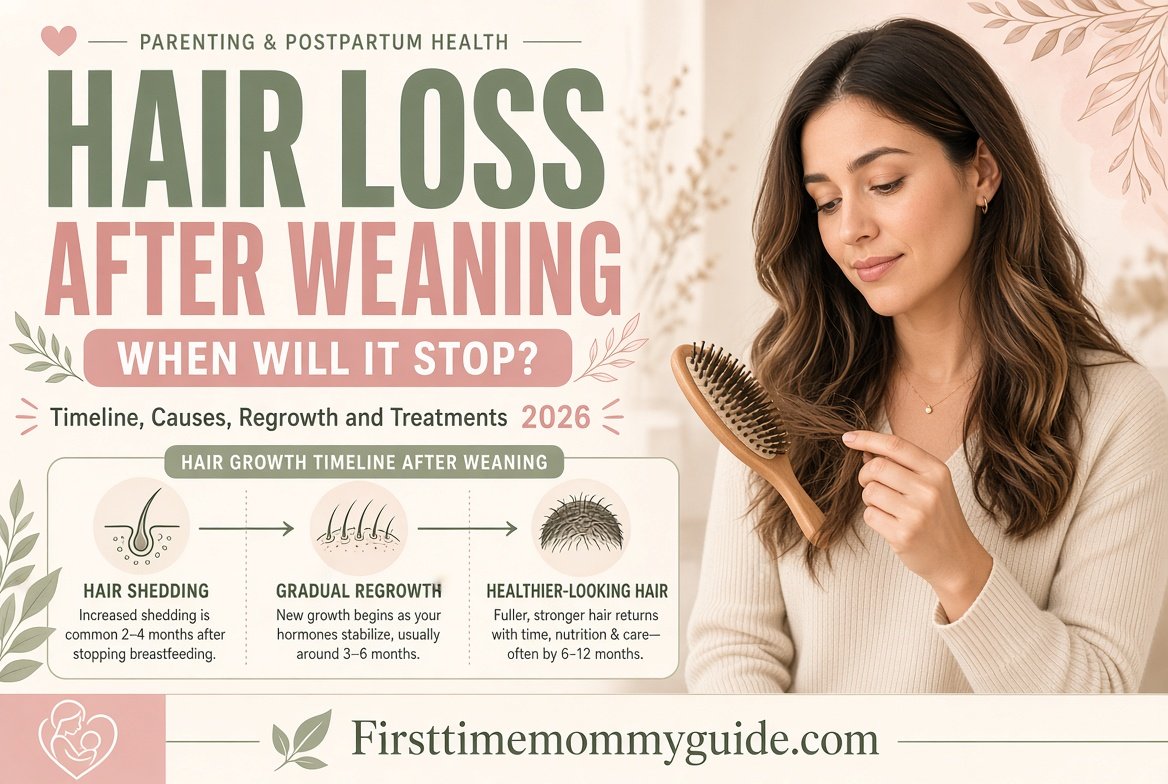
Hair Loss After Stopping Breastfeeding When Will It Stop? Hair shedding after weaning is often related to hormonal changes as the body adjusts after pregnancy and breastfeeding.
Many women notice increased hair shedding during the postpartum period, and changes in breastfeeding patterns can coincide with shifts in hair growth and shedding cycles.
Hair regrowth typically happens gradually, although the timeline varies from person to person. Hormonal changes, stress, nutritional deficiencies, and thyroid problems can also contribute to hair loss.
Understanding the possible causes and expected regrowth timeline can help distinguish temporary shedding from hair loss that may need medical evaluation.
Table of Contents
Hair Loss After Stopping Breastfeeding When Will It Stop?
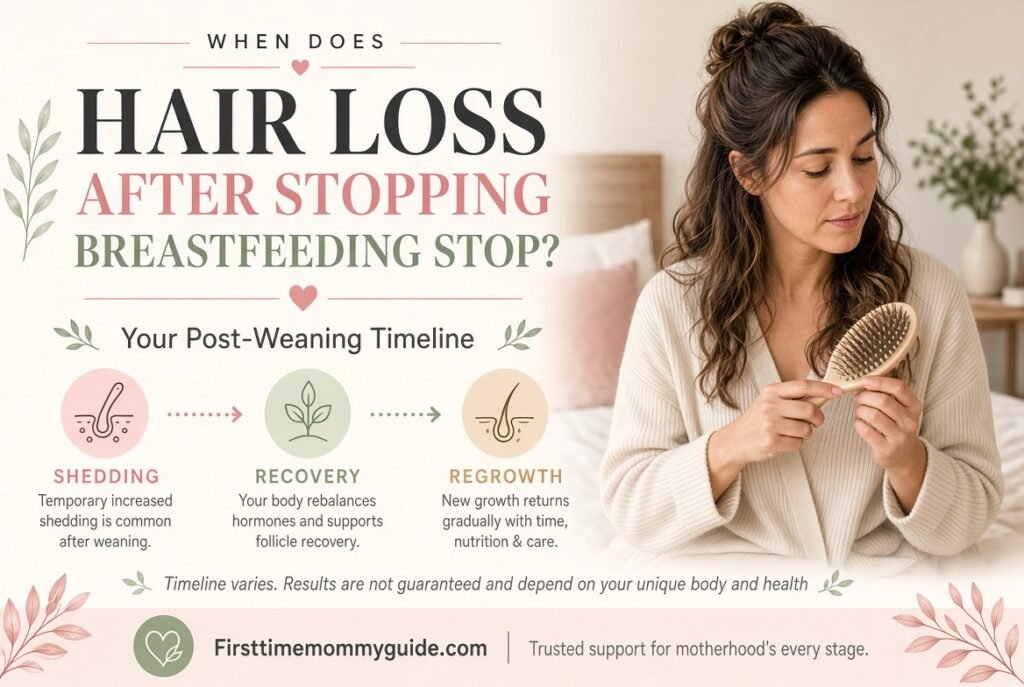
For most women, hair shedding after weaning slows down within about three to six months. New growth then takes several more months to look full, so many moms feel back to normal somewhere between six and twelve months.
This is a general pattern, not a promise. Your own timeline depends on hormones, nutrition, stress, sleep, and how quickly you weaned.
Usually normal:
- Sudden shedding of more hair than usual in the shower, brush, and pillow
- Even thinning across the scalp, often most noticeable at the temples and part line
- Short baby hairs appearing around the hairline as regrowth starts
- Shedding that begins roughly one to three months after you wean
- Hair that gradually looks thicker over six to twelve months
Worth a doctor’s visit:
- Bald patches or clearly smooth, round areas
- Shedding that continues hard beyond six to nine months
- Hair loss with extreme tiredness, pale skin, or a racing heart
- Hair loss with weight changes, feeling cold, or mood changes
- Itchy, painful, red, or scaly scalp
- Eyebrow or body hair loss along with scalp shedding
Is Hair Loss After Stopping Breastfeeding Normal?
Yes, it is normal and very common. Many mothers are surprised, because they already went through hair shedding in the first months after birth.
When it returns after weaning, it can feel unfair. It is usually the same mechanism, just triggered by a new hormone shift.
How Common Is It?
Postpartum hair shedding is reported by a large share of new mothers. One questionnaire-based study of 331 women, published on PubMed, found that over 90 percent reported some postpartum hair loss.
The same study found a link between longer breastfeeding and postpartum hair loss. That does not prove breastfeeding causes it, but it fits what many mothers describe.
Why It Feels So Dramatic
Telogen shedding happens in a wave, not gradually. A large number of hairs enter the resting phase at the same time, and they all fall out within a short window.
You may lose far more than the usual 50 to 100 hairs a day for a few months. That is why it can feel like your hair is disappearing, even when you are not actually going bald.
What Is Happening to Your Hair? Understanding Telogen Effluvium
The medical name for this kind of shedding is telogen effluvium. It is a temporary form of hair loss triggered by a body-wide change such as childbirth, illness, stress, or hormone shifts.
Knowing how hair grows makes the pattern much less scary.
The Hair Growth Cycle in Simple Terms
Every hair follicle cycles through stages. At any moment, most of your hairs are growing, while a small number are resting or shedding.
| Phase | What Happens | How Long It Lasts |
|---|---|---|
| Anagen (growth) | Hair actively grows | Several years |
| Catagen (transition) | Growth stops and the follicle shrinks | A few weeks |
| Telogen (rest) | Hair rests before it sheds | About three months |
| Exogen (shedding) | The old hair falls out and a new one starts | Ongoing |
In telogen effluvium, too many follicles jump into the resting phase at once. Shedding then shows up about two to three months after the trigger.
Why the Delay Matters
The trigger and the shedding do not happen at the same time. That is why hair loss after weaning often appears weeks after you have already stopped nursing or pumping.
It also explains why the timing can feel random. The hormone change happens first, and the hair falls out later.
Telogen Effluvium vs Permanent Hair Loss
Telogen effluvium is reversible. The follicles are not destroyed, so hair grows back once the trigger settles.
This is different from conditions like female pattern hair loss, which gradually thins hair over time. We compare these later in the article.
Why Does Hair Fall Out After You Stop Breastfeeding?
Hormones sit at the center of the story. Your body goes through a series of hormone changes from pregnancy to birth to weaning, and your hair follows each one.
Research on weaning-specific shedding is limited. Still, the explanation that clinicians commonly give is consistent and makes biological sense.
Hormones During Pregnancy
During pregnancy, high estrogen levels extend the growth phase of your hair. Fewer hairs shed than normal, which is why many women feel their hair looks thicker.
You are not growing new hair so much as keeping hair you would normally have lost.
Hormones After Birth
After delivery, estrogen drops quickly. Those extra hairs that were held in the growth phase move into the resting phase and then fall out.
This is the classic postpartum shedding, typically seen a few months after birth.
Hormones During Breastfeeding
While you breastfeed, prolactin stays elevated and estrogen stays lower for many people. Your hormones are in a kind of holding pattern.
Because of that, some women find their shedding was mild or delayed during breastfeeding. Others shed the whole time.
Hormones After Weaning
When you wean, prolactin falls and your usual cycle hormones start to return. For many women, periods come back and estrogen and progesterone rise and fall again.
That shift can nudge another group of hairs into the resting phase, which leads to a second round of shedding a few weeks later.
Does Breastfeeding Delay Postpartum Hair Loss?
For some women, yes. The hormone environment during nursing may hold off or soften shedding, and then it appears after weaning.
Not everyone follows this pattern. Some people shed heavily at three to four months postpartum regardless of nursing.
It Is Not the Hair Loss From Breastfeeding Itself
A common worry is that breastfeeding “took your hair” or “used up your nutrients.” In most healthy, well-fed mothers, the shedding pattern is hormonal rather than a sign that the baby took something from you.
Nutrition still matters, as we will cover. But the main driver is the hormone shift, not milk production.
Hair Loss After Stopping Breastfeeding Timeline: What to Expect Month by Month
Hair loss feels endless when you are in the middle of it. A rough timeline can give you something to hold onto.
These are typical ranges, and your own experience may be earlier or later.
| Time After Weaning | What Often Happens | What to Do |
|---|---|---|
| Weeks 1 to 4 | Little visible change, hormones begin shifting | Keep eating well and sleeping when you can |
| Months 1 to 3 | Shedding begins and ramps up | Be gentle with hair, start tracking |
| Months 3 to 6 | Shedding usually peaks, then slows | Stay consistent with care, avoid harsh treatments |
| Months 6 to 9 | Shedding settles, short new hairs appear | Check labs if shedding is still heavy |
| Months 9 to 12 | Regrowth gets longer, hair looks fuller | Continue gentle routines, consider a trim |
| Beyond 12 months | Density returns for most people | See a doctor or dermatologist if it has not |
When Does Hair Loss Start After Stopping Breastfeeding?
Shedding typically begins about one to three months after you wean. Because of the growth cycle delay, you may not notice anything right away.
If you stopped abruptly, the hormone change is sharper and the shedding may feel more sudden. Gradual weaning tends to soften the transition for some women.
When Does the Shedding Peak?
The heaviest shedding commonly lands in the second to fourth month after the trigger. This is when many women see handfuls of hair on the shower floor.
It can look alarming, but the peak is also a sign that the wave is nearly over.
When Does It Finally Stop?
Most shedding fades after about three to six months. New hairs follow, but they start short, so fullness lags behind.
Hair grows slowly. Even after shedding stops, it takes many months for new strands to reach a length that fills out your style.
How Long Does Hair Loss Last After Weaning?
Most women see shedding last about three to six months after it begins. Regrowth and thickness then take several more months, so the full recovery often stretches toward a year.
That can feel long when you are watching your drain. Breaking the question into stages is more helpful than chasing a single number.
The Shedding Phase
This is the stage where hair is falling out. It commonly lasts around three to six months.
A gradual slowdown is the main thing to watch for. If each week feels a little less intense, you are on track.
The Regrowth Phase
New hair grows roughly half an inch a month, so it takes time to become visible. You may first notice short, upright baby hairs along the temples and forehead.
These short hairs can look odd at first. They are a good sign that your follicles are active again.
The Full Recovery Phase
For many women, hair looks close to normal again between six and twelve months. Some feel like it takes longer, especially if they have long hair.
If density is still clearly reduced after a year or more, ask a clinician to check for other contributors.
What Can Stretch the Timeline
- Ongoing stress or poor sleep
- Low iron or other nutrient shortfalls
- Thyroid problems
- Another hormone change, such as starting or stopping birth contraception
- Crash dieting or very low calorie intake
- Underlying female pattern hair loss
Hair Loss 3 Months, 6 Months, and 1 Year After Stopping Breastfeeding
The same symptom can mean different things at different times. Here is how to read your own timeline.
Hair Loss 3 Months After Stopping Breastfeeding
At three months, you are often in or near the peak of shedding. You may see lots of hair on your brush, pillow, and in the shower.
This is the most stressful point for many moms. It is also usually the point where things start to improve.
Hair Loss 6 Months After Stopping Breastfeeding
By six months, shedding commonly slows. You might still lose more than you used to, but the amount tends to be lower.
Short hairs around the front hairline often become noticeable now. That regrowth is a hopeful sign.
Hair Loss 9 Months After Stopping Breastfeeding
At nine months, many women see a clear improvement in volume. The hair is not fully back to its old length, but the thin look begins to fade.
If heavy shedding is still going strong, it is a good time to ask about blood tests.
Hair Loss 1 Year After Stopping Breastfeeding
By a year, most people have regained much of their density. A few areas, such as the temples, may lag behind.
If you have noticeable thinning that has not improved, ask a doctor or dermatologist to look at your scalp.
Hair Loss After a Year or More
Persistent thinning beyond a year is less likely to be simple postpartum shedding. It can still happen, but other causes become more likely.
Thyroid issues, iron deficiency, hormonal conditions, or female pattern hair loss may need to be checked.
Hair Loss After Stopping Breastfeeding at 12 Months, 18 Months, or 2 Years
Many mothers wean later than the early months, and the shedding pattern can look different. Some women are surprised to shed again long after their first postpartum wave.
Timing depends on your hormones more than on a fixed calendar.
After a Longer Nursing Journey
If you breastfed for a year or more, your hormones may have stayed in the nursing pattern for a long time. When you stop, the change can feel bigger.
Some mothers on forums describe heavy shedding after weaning at 18 months, even after a normal shedding period early on. Their reports often say the hair grew back over the following months.
What the Research Suggests
A PubMed-listed questionnaire study of 331 women reported that longer breastfeeding was associated with postpartum hair loss. The study relies on self-report and cannot prove cause, but it matches the experience many mothers describe.
More research would help. For now, the most useful message is that late shedding after weaning is not unusual.
Is It Still Postpartum Hair Loss?
Technically, you may be well beyond the usual postpartum window. Still, the same type of shedding, telogen effluvium, can be triggered again by a hormone shift.
If the pattern fits and your labs are normal, it is likely a temporary shedding episode.
Abrupt Weaning vs Gradual Weaning: Does It Change Hair Loss?
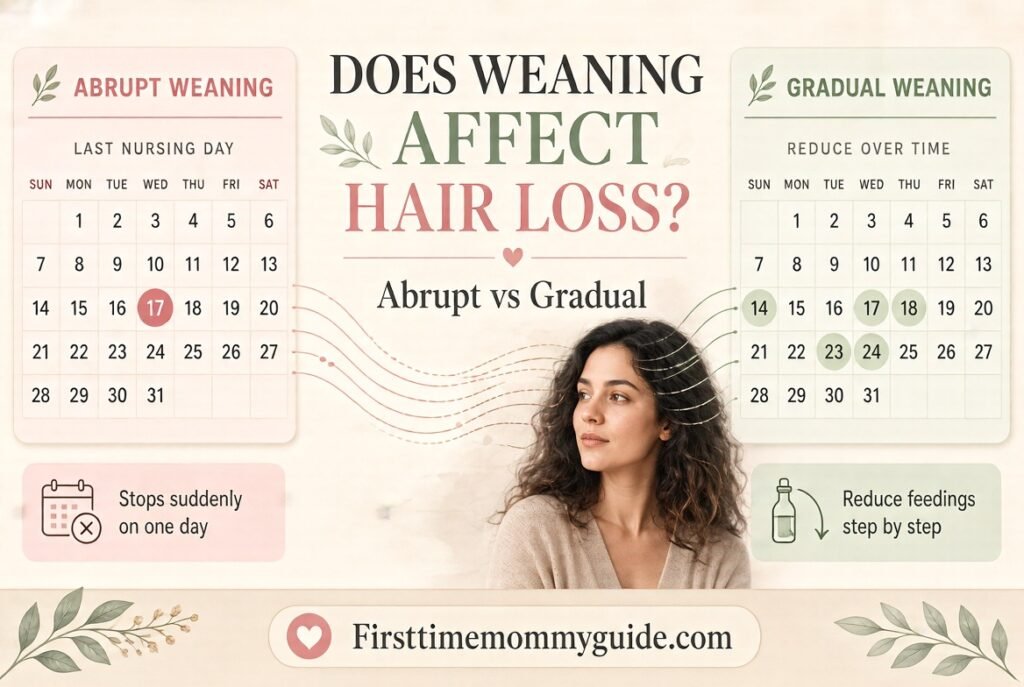
Many parents wonder whether stopping fast makes hair fall out more. There is little research on this exact question.
Still, hormones change faster when you wean quickly, and a faster shift may trigger a stronger reaction in some people.
Abrupt Weaning
Stopping suddenly causes prolactin to fall and cycle hormones to move quickly. Some mothers notice mood changes, breast discomfort, and shedding about a month or two later.
This is not always a choice. Illness, medication, separation, or work can make it necessary.
Gradual Weaning
Dropping one feed at a time gives your body more time to adjust. For many mothers it is more comfortable physically and emotionally.
It may also soften hormone swings, though it does not guarantee that you will avoid shedding.
If You Are Weaning Right Now
- Go slowly if you can, but do not force it if it is not possible
- Eat regular meals with plenty of protein
- Prioritize sleep when your baby allows
- Ask your provider about iron and thyroid checks if you feel unwell
- Plan for possible shedding a couple of months from now
Our guide to bottle feeding schedules for newborns can help you plan feeds while you transition away from nursing.
Hair Loss After Stopping Pumping or Exclusive Pumping
Pumping parents face the same hormone shifts as nursing parents. When you stop pumping, milk production signals fall and your body moves toward its pre-pregnancy rhythm.
So shedding after you stop pumping is also normal.
Why Pumpers Notice It
Exclusive pumpers often maintain high prolactin for many months. When they finally stop, the change can be just as noticeable as weaning from nursing.
If you are in the middle of that transition, our guide to how much breast milk to put in each storage bag can help you use up your stash efficiently.
Tips for Pumping Parents
- Cut back one session at a time if you can
- Stay hydrated and eat regularly
- Do not skip meals because you are busy with pump schedules
- Watch for signs of low iron if you feel unusually tired
Hair Thinning at the Temples, Hairline, and Part Line
Many mothers notice that the front of the hair changes first. Receding temples and a thin part line are some of the most common complaints.
This pattern is often temporary, but it can feel very visible.
Why the Hairline Often Shows It First
Hairs around the temples and forehead are finer and shorter. When many of them shed at once, the change shows up quickly.
They are also the first to regrow, which is why you see little baby hairs there.
What Baby Hairs Mean
Short, fine hairs standing up along the hairline are usually regrowth. They are not a sign that your hair is breaking.
They can be awkward to style. Soft headbands, light hairspray, or a different part can help while they grow.
Hairline Loss That Needs Attention
- A hairline that keeps receding without regrowth
- A widening part that is not improving after several months
- Scalp pain, redness, or scaling
- Hair loss in distinct patches
These signs may point to another condition and deserve a professional exam.
Is It Postpartum Hair Loss, Weaning Hair Loss, or Something Else?
Not all hair loss after weaning is simple hormone shedding. Other causes can overlap, and some need treatment.
This table helps you sort out the most common patterns.
| Pattern | Likely Cause | Typical Clues |
|---|---|---|
| Sudden diffuse shedding 1 to 3 months after weaning | Telogen effluvium from hormone shift | Even thinning, no bald patches, short regrowth hairs |
| Shedding with fatigue, pale skin, or breathlessness | Iron deficiency or anemia | Tiredness, dizziness, brittle nails |
| Shedding with weight change, feeling cold or hot, mood changes | Thyroid problem, including postpartum thyroiditis | Changes in energy, heart rate, or weight |
| Gradual widening part over months or years | Female pattern hair loss | Slow, steady thinning at the crown or part |
| Round, smooth bald patches | Alopecia areata | Distinct patches, sometimes with nail changes |
| Itchy, flaky, or painful scalp | Scalp skin condition | Scaling, redness, irritation |
| Breakage along the hair shaft, not at the root | Damage from styling or tight hairstyles | Short broken pieces, not whole hairs with bulbs |
Telogen Effluvium vs Female Pattern Hair Loss
Telogen effluvium causes widespread shedding that eventually recovers. Female pattern hair loss causes gradual, progressive thinning, often at the part line or crown.
Sometimes pregnancy and weaning reveal an underlying pattern that was already starting. A dermatologist can tell the difference.
Hair Breakage vs Hair Shedding
A shed hair usually has a small white bulb at the root end. A broken hair is short with no bulb.
If you see lots of short, snapped hairs, the problem may be styling, dryness, or damage rather than shedding.
Other Causes of Hair Loss After Weaning
Hormones are the main cause of post-weaning shedding, but they are not the only one. Other issues can make shedding heavier or longer.
Checking for these is especially important if the shedding does not ease by about six to nine months.
Iron Deficiency and Low Ferritin
Blood loss in childbirth and the demands of pregnancy and nursing can leave iron stores low. Low iron can worsen shedding and cause tiredness.
A doctor can check your ferritin and hemoglobin. Do not start high-dose iron on your own, since too much can cause problems.
Thyroid Problems
The thyroid can become overactive or underactive after pregnancy. This is called postpartum thyroiditis in some cases.
Thyroid changes can cause hair thinning, fatigue, mood shifts, and temperature sensitivity. A simple blood test can check it.
Vitamin D, B12, and Other Nutrient Gaps
Low levels of vitamin D, B12, or other nutrients can affect hair health. Dietary patterns, absorption, and past deficiencies play a role.
Your doctor can decide which tests make sense. Do not guess at supplements without testing when possible.
Stress and Poor Sleep
New parenthood is stressful, and chronic stress can itself trigger telogen effluvium. Broken sleep adds to the load.
Even small improvements can help. Rest when you can, accept help, and lower your standards for chores.
Crash Dieting and Low Calorie Intake
Cutting calories sharply to lose baby weight can cause shedding. Hair is a low priority for the body when energy and protein are short.
Aim for steady, balanced meals. If you have been restricting heavily, talk with your provider.
Hormonal Contraception Changes
Starting or stopping birth control can cause a shedding episode in some people. If you changed contraception around the time you weaned, mention it to your doctor.
It can be hard to separate this from weaning, so keep a simple timeline of changes.
PCOS and Other Hormone Conditions
Conditions such as polycystic ovary syndrome can affect hair growth. Signs include irregular cycles, acne, or excess facial hair.
If these sound familiar, ask your provider about testing.
Medications
Some medications can cause hair shedding as a side effect. Review everything you take with your doctor or pharmacist.
Do not stop prescribed medicines on your own because of hair loss.
Will My Hair Grow Back After Stopping Breastfeeding?
For most women, yes. Telogen effluvium does not destroy follicles, so hair returns once the shedding wave passes.
The pace is the hard part. Hair grows slowly, so regrowth is easy to miss at first.
What Regrowth Looks Like
Regrowth starts as short, fine hairs. They are most visible along the hairline and part, and they may stick up or curl.
Over months, they lengthen and blend with the rest of your hair. Many mothers feel the difference in volume well before they see length.
How Fast Does Hair Grow?
Scalp hair typically grows about half an inch per month. That means a new hair that started growing at month three may only be a few inches long by month nine.
This is why short layers are common during recovery. They are a normal stage, not a sign of damage.
Will It Be the Same Texture?
Some women notice a change in texture or curl pattern after pregnancy and weaning. Waves can become straighter or curlier for a while.
These changes are often temporary as hormones settle, though some people keep the new texture.
Hair Regrowth Timeline
| Stage | Typical Timing | What You May Notice |
|---|---|---|
| Shedding slows | 3 to 6 months after it begins | Less hair in the brush and shower |
| Baby hairs appear | 4 to 8 months | Short hairs along the hairline |
| Noticeable thickness returns | 6 to 12 months | Ponytail feels fuller, part looks narrower |
| Length catches up | 12 months and beyond | Even length, less visible regrowth |
How to Support Healthy Hair Regrowth After Weaning
You cannot rush the hair cycle, but you can support it. Most of what helps is basic, and consistency matters more than any single trick.
Start with the foundations before you buy anything expensive.
Eat Enough Protein
Hair is made mostly of protein. When intake is low, the body prioritizes vital organs over hair.
Include a protein source at each meal, such as eggs, fish, poultry, beans, lentils, dairy, or tofu.
Get Enough Iron
Iron supports hair follicles and oxygen delivery. Good food sources include red meat, poultry, fish, beans, lentils, and iron-fortified cereals.
Pair plant-based iron with vitamin C, like citrus fruit or peppers, to help absorption.
Include Zinc, Healthy Fats, and Vitamins
Zinc, omega-3 fatty acids, and vitamins A, C, D, and B vitamins all support skin and hair. A varied diet usually covers most of these needs.
Foods like nuts, seeds, oily fish, leafy greens, eggs, and whole grains are all useful.
Do Not Skip Meals
Busy parents often forget to eat. Long gaps and very low calories can push more hairs into the resting phase.
Keep easy snacks nearby. Yogurt, cheese, nuts, fruit, and boiled eggs are quick options.
Keep Taking Your Prenatal Vitamin If Your Doctor Advises It
Many providers suggest continuing a prenatal or multivitamin for a while after birth. This depends on your own needs and diet.
Ask your provider what is right for you instead of doubling up on products.
Stay Hydrated
Water supports general health, including skin and scalp. You do not need extreme amounts, but regular drinking is helpful.
If you are still producing some milk or just stopped, keep up your fluids as thirst guides you.
Do Hair Supplements Work for Hair Loss After Breastfeeding?
Supplements are heavily marketed to postpartum moms. The truth is more mixed than the packaging suggests.
If you are truly low in a nutrient, correcting it can help. If you are not, extra supplements often do little.
| Supplement | What to Know |
|---|---|
| Iron | Helpful if you are deficient. Test first, since excess iron can be harmful |
| Vitamin D | Useful if levels are low. Ask your doctor to test |
| Zinc | Needed in small amounts. Very high doses can cause problems |
| Biotin | Helps mainly if you are deficient, which is uncommon. Can interfere with some lab tests |
| Collagen | Popular, but evidence for postpartum hair loss is limited |
| Multivitamin | Reasonable for general coverage if your diet is inconsistent |
A Note About Biotin and Lab Tests
High-dose biotin can interfere with some blood tests, including certain thyroid and heart tests. Tell your doctor and the lab if you take it.
Consider pausing it before blood work if your clinician advises that.
How to Choose Supplements Safely
- Check with your provider first, especially if you are still partly breastfeeding or planning another pregnancy
- Choose products with third-party testing when possible
- Avoid mega-doses and “hair growth” blends with long ingredient lists
- Give any change a few months before judging results
Gentle Hair Care Routine During Shedding and Regrowth
How you treat your hair during this time can reduce breakage and make your hair look fuller. It will not stop true shedding, but it can protect what you have.
The goal is to be kind to both your scalp and your strands.
Washing and Conditioning
- Wash as often as your scalp needs, not less out of fear
- Use a gentle shampoo, and condition the lengths
- Detangle with a wide-tooth comb, starting at the ends
- Pat dry instead of rubbing with a rough towel
A Common Fear: Does Washing Cause More Hair Loss?
Washing does not cause shedding. It reveals hairs that were already ready to fall out.
Skipping washes just leaves the hairs on your head until you do wash, and you see a bigger clump later.
Brushing and Styling
- Use a soft brush or a wide-tooth comb
- Avoid tight ponytails, buns, braids, and pulling styles
- Choose soft scrunchies or spiral hair ties instead of elastic bands
- Skip tight hair accessories at the hairline
Heat and Chemical Treatments
Frequent heat styling and harsh chemical services can stress hair that is already fragile. Consider limiting them while your hair recovers.
If you color your hair, ask your stylist about gentler options and spacing out appointments.
Satin or Silk Pillowcases
A smooth pillowcase can reduce friction while you sleep. It does not prevent shedding, but it can limit breakage for some people.
It is a small, low-cost change that may be worth trying.
Protect Baby From Loose Hairs
Shed hairs can wrap around tiny fingers and toes, which can be dangerous for babies. Check your baby’s hands and feet regularly if you notice a lot of loose hair.
Brush your hair away from the baby, and tie it back during feeding and cuddles.
Our baby essentials checklist for the first three months includes other everyday safety habits worth building early.
Haircuts and Styling Ideas While Your Hair Recovers
The right cut can make thin hair look fuller and help you feel like yourself. You do not need to chop everything off, but small changes can help.
Options That Add Visual Volume
- A blunt cut that makes ends look thicker
- Soft layers around the face to blend in baby hairs
- A side part, which can cover a widening center part
- Bangs or fringe, if you like them, to cover temple thinning
Quick Fixes for Thin Hairlines
- Soft headbands and scarves
- Root-lifting sprays or light volumizing mousse
- Hair fibers or powders that match your color
- Switching your part to a different side
Talk to Your Stylist
Be honest about what is going on. A good stylist has seen postpartum hair many times and can suggest a cut that works with it.
Ask for gentle products and avoid heavy treatments until your hair has recovered.
Treatments for Hair Loss After Stopping Breastfeeding
Most weaning-related shedding resolves without treatment. When it does not, or when it is severe, there are options.
What you can use depends on whether you are still breastfeeding or pumping at all, and on whether you may become pregnant again.
Treatments Considered Safe or Low Risk
- Balanced nutrition and correcting deficiencies
- Gentle hair care and styling changes
- Managing stress and sleep as much as possible
- Treating thyroid problems or anemia if found
Topical Minoxidil
Topical minoxidil is a common treatment for female pattern hair loss. Its safety during breastfeeding is not fully established, so many clinicians advise avoiding it while nursing.
If you have fully weaned and are not pregnant or planning pregnancy, ask a dermatologist whether it makes sense for you. It is usually considered for ongoing thinning, not routine postpartum shedding.
Prescription and Procedural Options
Dermatologists may also discuss in-office treatments, low-level light therapy, or platelet-rich plasma for certain types of hair loss. Evidence varies by condition.
Some oral treatments for hair loss are not appropriate during pregnancy or breastfeeding. Always tell your doctor about any current or planned pregnancy.
Shampoos and Topical Products
Many anti-hair-loss shampoos make modest claims. Some can help your scalp feel healthy or make hair look thicker, but they do not reverse true shedding.
Choose gentle, fragrance-free options if your scalp is sensitive.
What About Home Remedies?
Rosemary oil, onion juice, and scalp massage are popular online. Evidence is limited, and strong ingredients can irritate the skin.
Gentle scalp massage is low risk and may feel relaxing. Patch test anything new, and stop if irritation develops.
When to See a Doctor About Hair Loss After Weaning
Most shedding is harmless, but some patterns need a closer look. Getting checked early is a good idea if anything feels off.
You do not have to wait for a set deadline if you are worried.
See Your Doctor If You Notice
- Shedding that is still heavy after about six to nine months
- Visible bald patches or a clearly widening part
- Hair loss with extreme tiredness, pale skin, dizziness, or palpitations
- Weight changes, heat or cold intolerance, or mood changes
- A painful, itchy, scaly, or inflamed scalp
- Loss of eyebrows, eyelashes, or body hair
- Irregular periods, acne, or excess facial hair
- Hair loss that is making you feel anxious or low
Tests Your Doctor May Suggest
| Test | Why It May Be Done |
|---|---|
| Complete blood count | Check for anemia |
| Ferritin | Check iron stores |
| Thyroid tests (such as TSH) | Check thyroid function |
| Vitamin D and B12 | Look for nutrient gaps |
| Hormone tests | If PCOS or other hormone issues are suspected |
| Scalp exam or dermoscopy | Look at follicle patterns and scalp health |
Seeing a Dermatologist
A dermatologist can tell telogen effluvium from other types of hair loss and plan treatment. Ask for one who sees many women with postpartum hair concerns.
They may also examine your scalp closely and, in rare cases, take a small sample.
What to Bring to the Appointment
- A timeline of pregnancy, birth, and weaning dates
- A list of medicines and supplements
- Photos of your hair over time, taken in the same light
- Notes on your diet, stress, sleep, and any recent illness
- Questions you want answered
How Much Hair Loss Is Normal After Weaning?
Everyone loses hair daily. The usual range is around 50 to 100 hairs a day, and that can feel like a lot when you have long hair.
During a shedding wave, the number can climb well above that. Counting every strand is not practical, so use simple at-home checks instead.
Easy Ways to Track Shedding
- Brush check: Look at your brush after a gentle brushing session
- Shower check: Note how much collects in the drain trap
- Ponytail check: Compare how thick your ponytail feels over time
- Photo check: Take a monthly photo of your part and hairline in the same light
The Gentle Pull Test
Take a small bunch of about 50 to 60 hairs and gently tug along the length. If more than a few hairs come away, shedding may be active.
Do this occasionally, not daily, since repeated pulling can cause irritation.
What a Good Trend Looks Like
You do not need the amount to drop to zero. You want a gradual decline over weeks, plus some short regrowth hairs.
A steady, slow improvement is the most reassuring pattern.
Hair Loss After Weaning in Curly, Coily, and Textured Hair
Textured hair can respond differently to shedding and styling. It is also more prone to breakage and tension-related loss.
That makes careful care especially important.
Why Texture Changes the Picture
Curly and coily hair is naturally more fragile at the bends of each strand. It also tends to be drier, so breakage can be mistaken for shedding.
Looking at the root end of fallen hairs helps. A white bulb means it shed from the root, while a short snapped piece suggests breakage.
Protective Styles and Tension
Tight braids, weaves, extensions, and slicked-back styles can pull on the hairline. Combined with hormone-related shedding, this can lead to traction hair loss.
During recovery, choose looser styles and give your edges a break. If your scalp feels sore, loosen the style or take it down.
Moisture and Gentle Detangling
- Use leave-in conditioners and moisturizing routines
- Detangle in sections with a wide-tooth comb on damp, conditioned hair
- Avoid rough combing on dry hair
- Seal moisture with a lightweight oil or butter if it suits your hair
Scarring Hair Loss
Some types of hair loss in women of color can cause permanent scarring if left untreated, such as central centrifugal cicatricial alopecia. Early dermatology care matters.
See a specialist if you notice a growing patch, tenderness, burning, or a smooth shiny scalp.
Hair Loss After Weaning and Your Period Returning
Periods often return during or after weaning, and cycle hormones can fluctuate for a while. This overlap can make it hard to tell what is causing what.
Your hair is responding to several changes at once.
How Cycle Return Affects Hair
When ovulation resumes, estrogen and progesterone start rising and falling again. That can contribute to a shedding wave in some women.
Irregular cycles are common in the first months after weaning. They usually settle, but persistent irregularity deserves a check.
Birth Control and Hair
Starting, stopping, or changing hormonal birth control can contribute to hair shedding. If you changed methods around the time you weaned, tell your doctor.
Do not stop or switch contraception only because of hair loss without medical advice, especially if avoiding pregnancy is important to you.
Signs That Hormones May Need Attention
- Very irregular or absent periods months after weaning
- Acne, excess facial hair, or oily skin
- Mood swings that feel out of proportion
- Unexplained weight changes
Bring these up with your provider. They can check for conditions like PCOS or thyroid imbalance.
Hair Loss After Weaning and a New Pregnancy
Some mothers wean because they are pregnant again or are planning another baby. Hair changes then follow another set of hormone shifts.
Knowing what to expect can reduce surprise.
Hair Shedding Between Pregnancies
You may go through postpartum shedding, weaning shedding, and then pregnancy thickening within a short span. It can feel confusing, but each stage follows the same hormone pattern.
Keep your nutrition steady and see your doctor if shedding is heavy or you feel unwell.
Treatments and Planning Another Pregnancy
Some hair loss treatments are not recommended during pregnancy or breastfeeding. If you may become pregnant, ask your doctor before starting anything beyond gentle care.
This is especially important for prescription or oral options.
If you are preparing for another baby, our pregnancy guide month by month walks through what to expect at each stage.
The Emotional Side of Postpartum and Weaning Hair Loss
Hair is tied to identity for many people. Watching it fall out while you are also adjusting to motherhood can feel heavy.
Your feelings are valid, even if others say “it is only hair.”
Common Feelings
- Shock at how much hair is falling out
- Embarrassment about thinning at the hairline
- Sadness about not recognizing yourself
- Anxiety that it may not grow back
- Guilt about caring about your appearance
Ways to Cope
Talk about it with a partner, a friend, or other mothers who have been through it. You will likely hear that many of them have had the same experience.
A haircut you like, a new accessory, or a style that makes you feel put together can lift your mood while hair recovers.
When to Seek Support
If hair loss comes with persistent sadness, anxiety, or a sense that you cannot cope, tell your provider. Postpartum mood changes are common and treatable.
You deserve support for how you feel, not only for how your hair looks.
Weaning Itself Can Be Emotional
Many mothers feel grief, relief, guilt, or all of these when they stop breastfeeding. Hormone changes can add to mood swings.
Be gentle with yourself. Your feelings about weaning are normal, and they can shift over time.
If your baby is moving to solids, our baby food chart for 6 to 12 months can make feeding changes feel more manageable.
Common Myths About Hair Loss After Stopping Breastfeeding
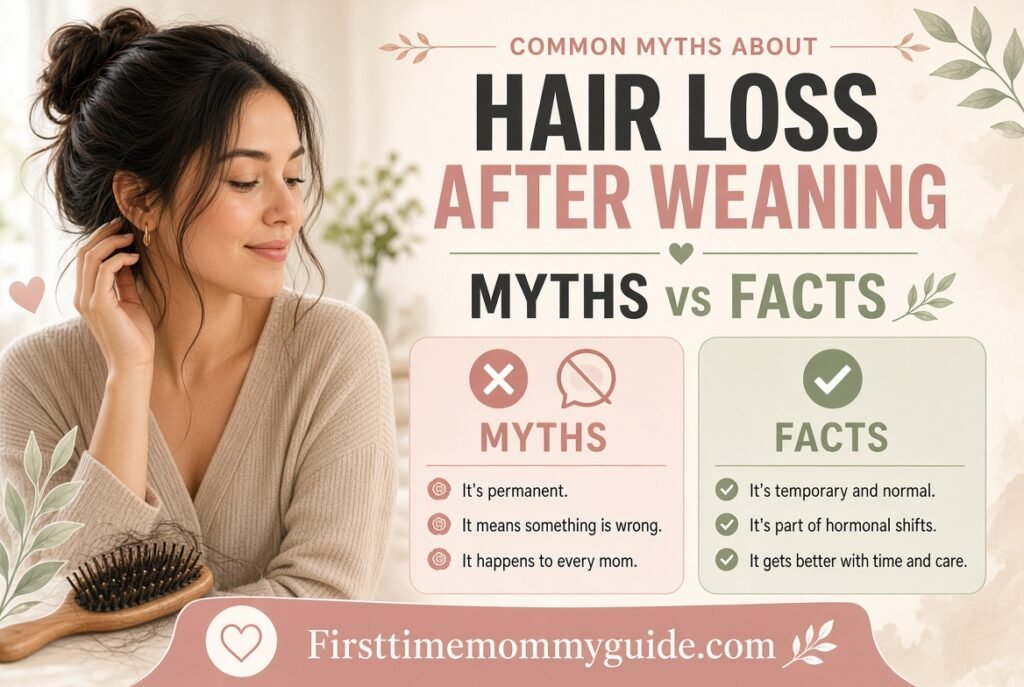
Plenty of advice floating around is confusing or wrong. Here are a few common myths, along with what is closer to the truth.
| Myth | What Is Closer to the Truth |
|---|---|
| “Breastfeeding steals your hair” | Hormone shifts drive most shedding, not milk production |
| “You will go bald” | Telogen effluvium is temporary, and follicles are not destroyed |
| “Washing your hair makes it fall out faster” | Washing only removes hairs that were already shed |
| “Cutting your hair makes it grow faster” | Trimming does not speed growth, but it can reduce breakage and make hair look fuller |
| “Biotin fixes postpartum hair loss” | Biotin helps mainly in true deficiency, and it can affect lab tests |
| “It always stops at exactly six months” | Timing varies, and weaning can restart the cycle |
| “Only bad nutrition causes it” | Hormones are the main cause, though nutrition can add to it |
| “Everyone gets it” | Many do, but not all, and severity varies |
Hair Loss During Breastfeeding vs Hair Loss After Weaning
Many mothers shed hair while still nursing, then shed again after weaning. The two episodes can look the same, but they often have different triggers.
Understanding the difference helps you set realistic expectations.
| Feature | Shedding While Breastfeeding | Shedding After Weaning |
|---|---|---|
| Typical timing | About 2 to 5 months after birth | About 1 to 3 months after you stop |
| Main trigger | Drop in estrogen after delivery | Shift in prolactin and cycle hormones |
| Possible extras | Sleep loss, blood loss, stress | Cycle return, contraception changes, emotional stress |
| Usual duration | Several months | Often several months |
| Outlook | Usually regrows | Usually regrows |
Why Some Mothers Skip the First Wave
Some women barely notice hair loss in the early months, then shed after weaning. That fits the idea that nursing hormones can hold shedding back.
Others have both waves. Neither pattern is a sign that something is wrong.
Why Some Mothers Never Notice Much
Hair density, genetics, hair length, and hair color all change how visible shedding is. Someone with thick, short hair may lose the same number of hairs as someone with long, fine hair and notice far less.
If you did not shed much, that is also normal.
Iron Deficiency and Hair Loss After Weaning
Iron is one of the most common and fixable contributors to hair shedding. Pregnancy, birth, and months of nursing can use up stores.
Low iron does not always cause obvious symptoms at first, which is why a blood test is helpful.
Symptoms That Suggest Low Iron
- Constant tiredness that rest does not fix
- Pale skin, especially inside the lower eyelids
- Shortness of breath on mild effort
- Dizziness or a racing heart
- Brittle nails or cracked corners of the mouth
- Strong cravings for ice or non-food items
What a Ferritin Test Shows
Ferritin reflects your stored iron. Hemoglobin shows whether you are anemic. Doctors may look at both, since you can have low stores before anemia develops.
Ask what your numbers mean for you, instead of relying on a general cutoff from the internet.
Safe Ways to Raise Iron
- Eat iron-rich foods regularly
- Combine plant iron with vitamin C
- Avoid drinking tea or coffee right with iron-rich meals, since they can reduce absorption
- Take iron supplements only if your doctor advises it and tells you the dose
Why You Should Not Self-Treat
Too much iron can cause stomach upset and can be harmful in some people. It is also dangerous for children, so store iron products out of reach.
A quick test avoids guesswork.
Postpartum Thyroiditis and Hair Loss
The thyroid gland controls metabolism, and it can be disturbed after pregnancy. Some people go through a temporary overactive phase, followed by an underactive phase.
Thyroid changes can affect hair, energy, weight, and mood. They can also look like normal postpartum tiredness.
Signs of an Overactive Thyroid
- Racing heart or palpitations
- Feeling hot or sweaty
- Anxiety, shakiness, or trouble sleeping
- Weight loss without trying
Signs of an Underactive Thyroid
- Feeling cold and tired
- Weight gain or fluid retention
- Constipation and dry skin
- Low mood and slowed thinking
When to Ask for a Thyroid Test
If your hair loss comes with several of these signs, ask your provider for a thyroid check. It is a simple blood test, and treatment is available if needed.
Do not assume that everything is just baby blues or exhaustion.
Scalp Health While Your Hair Recovers
A healthy scalp supports healthy hair growth. Scalp problems can make shedding look worse or cause itching and discomfort.
Postpartum changes in oil production and hormones can make some scalps oilier, drier, or more sensitive.
Dandruff and Seborrheic Dermatitis
Flaky, itchy scalps are common and can be managed with anti-dandruff shampoos. Look for ingredients your doctor or pharmacist recommends, and follow the label directions.
Scratching hard can irritate the scalp and cause extra hair breakage.
Dry or Sensitive Scalp
If your scalp feels tight or itchy, choose a gentle shampoo and avoid very hot water. Limit heavy styling products that build up on the skin.
A light scalp massage with your fingertips can feel soothing and increases comfort.
Signs of Scalp Infection or Inflammation
- Painful bumps or pus
- Thick scaling or crusting
- Red, swollen patches
- Patchy hair loss with soreness
These need a professional exam. Do not try to treat them with random home remedies.
Sleep, Stress, and Movement: The Quiet Hair Helpers
Hair is not at the top of your body’s priority list. When you are exhausted and stressed, it is one of the first things to suffer.
Small improvements in rest and mood can help your overall recovery, even if they do not fix hair directly.
Protect Your Sleep Where You Can
Newborn and toddler nights are unpredictable. Still, small habits help, such as sharing night duty, napping when possible, and keeping a simple bedtime routine.
Our baby sleep guide for new moms offers realistic ideas for better rest for the whole family.
Lower Stress in Small Ways
- Ask for specific help instead of waiting to be offered it
- Drop one low-value task from your daily list
- Step outside for a few minutes of fresh air
- Talk to someone you trust about how you feel
Move Your Body Gently
Walking, stretching, and light exercise support mood, sleep, and circulation. Choose activities that feel good, not punishing.
Intense exercise with very low food intake can add stress to the body and may worsen shedding.
A Simple Hair-Friendly Day of Eating
You do not need a special diet. A regular pattern with enough protein, iron, healthy fats, and produce is a solid base.
Here is an easy example of how a day could look. Adjust it to fit your tastes, culture, and dietary needs.
| Meal | Example |
|---|---|
| Breakfast | Eggs or Greek yogurt with fruit and oats |
| Snack | A handful of nuts and an orange |
| Lunch | Lentil or chicken salad with leafy greens and olive oil |
| Snack | Hummus with vegetables or cheese with whole-grain crackers |
| Dinner | Salmon or beans with rice and cooked vegetables |
| Evening | A piece of fruit or a small bowl of yogurt |
Tips for Busy Parents
- Prep simple protein foods ahead, like boiled eggs or roasted chickpeas
- Keep frozen vegetables and canned beans or fish on hand
- Eat while your baby naps instead of rushing through chores
- Ask your partner or family to handle one meal a day
If You Follow a Vegetarian or Vegan Diet
Plant-based diets can support healthy hair with planning. Pay particular attention to iron, B12, zinc, and protein, and talk to your provider about testing and supplements.
Pair beans, lentils, tofu, nuts, and seeds with vitamin C-rich foods for better iron absorption.
Is It Only Scalp Hair? Eyebrows, Body Hair, and Other Changes
Most weaning-related shedding affects the scalp. Some women notice changes elsewhere, which can be confusing.
Knowing what is likely benign and what needs checking can save worry.
Body Hair Changes
Body hair can also cycle through shedding and regrowth, though it is less noticeable. Light changes on the legs or arms are usually nothing to worry about.
Sudden, widespread loss along with other symptoms deserves a medical check.
Eyebrows and Eyelashes
Losing outer eyebrow hair or lashes is less typical for simple postpartum shedding. It can be a sign of thyroid problems or other conditions.
If you notice this, mention it at your next visit.
New Hair in Unusual Places
If you notice new coarse hair on the face, chest, or abdomen, along with irregular periods or acne, ask your doctor about hormone testing. Conditions like PCOS can cause these changes.
How Partners and Family Can Help
Hair loss is not just a beauty concern. It can affect confidence, mood, and the way you see yourself as a new or recovering mom.
Support from the people around you makes a real difference.
What Helpful Support Looks Like
- Listening without minimizing it
- Taking over a meal or bedtime routine so you can rest
- Encouraging you to see a doctor if you are worried
- Offering to go with you to a haircut or appointment
- Reminding you that this phase is usually temporary
What Is Not Helpful
- Telling you to “just be grateful”
- Joking about your hair in a way that hurts
- Pressuring you to try expensive treatments
- Ignoring signs that you are struggling emotionally
Your Hair Loss After Stopping Breastfeeding Action Plan
Use this simple plan to stay organized and calm. It breaks recovery into steps you can follow without overthinking.
Right Now
- Eat regular meals with protein and iron-rich foods
- Switch to gentle hair care and loose styles
- Take a baseline photo of your hairline and part
- Note the dates of birth, weaning, and any contraception changes
Months 1 to 3
- Expect possible shedding to begin or increase
- Keep hair routines gentle and consistent
- Prioritize sleep and stress relief where possible
- Avoid starting multiple new products at once
Months 3 to 6
- Watch for the shedding peak and early slowdown
- Take monthly photos to track change
- Ask your doctor for iron and thyroid tests if you feel unwell
- Consider a flattering trim or style to manage regrowth
Months 6 to 12
- Look for short regrowth and gradual thickening
- See a doctor or dermatologist if shedding is still heavy
- Review any supplements with your provider
- Continue gentle care while hair grows out
After 12 Months
- Expect most density to have returned
- Seek a specialist if thinning remains
- Discuss treatment options that fit your pregnancy plans
Do and Do Not for Hair Loss After Weaning
| Do | Do Not |
|---|---|
| Eat balanced meals with enough protein | Crash diet or skip meals |
| Use gentle shampoo and a wide-tooth comb | Brush aggressively when hair is wet and fragile |
| Choose loose hairstyles | Wear tight braids, buns, or ponytails daily |
| Ask for blood tests if symptoms suggest a cause | Self-prescribe high-dose supplements |
| Be patient with regrowth | Expect overnight results from products |
| Tell your doctor about breastfeeding or pregnancy plans | Start oral or prescription treatments without medical advice |
| Look after your sleep and stress | Ignore low mood or anxiety |
Trusted Medical Sources to Check
Good information makes it easier to tell fact from social media advice. These organizations publish evidence-based guidance on postpartum recovery, hair loss, and breastfeeding.
- American Academy of Dermatology (AAD)
- American College of Obstetricians and Gynecologists (ACOG)
- Cleveland Clinic
- Johns Hopkins Medicine
- Mayo Clinic
- National Health Service (NHS)
- Centers for Disease Control and Prevention (CDC)
- La Leche League International
- PubMed, for peer-reviewed research on postpartum hair loss
Also Read:
- Low Milk Supply Signs and Fixes: What Every Breastfeeding Mom Should Know
- Breastfeeding Latch Problems: Causes, Fixes & When to Get Help
- Signs of Cluster Feeding: Complete Guide for New Parents
- How Long Does Newborn Cluster Feeding Last Each Night?
- Bottle Feeding Schedule Newborn: Complete Age-by-Age Guide
- How Much Breast Milk to Put in Each Storage Bag (Complete Guide)
- How to Do the Pitcher Method for Breast Milk Step by Step
- How to Scald Breast Milk for High Lipase Before Freezing
- Thawed Breast Milk Smells Like Soap Is It Still Good? Causes, Safety, and Fixes
- Baby Sleep Guide for New Moms: Safe Sleep & Schedules
- Baby Essentials Checklist: 0 to 3 Months
- Hospital Bag Checklist for Baby: The Complete Packing List
- Pregnancy Guide: Month by Month
- When Can I Sleep on My Side After C Section? Safe Timeline, Positions & Tips
- How to Poop After C Section Without Pain: Complete Recovery Guide for New Moms
- Baby Won’t Eat? Common Reasons, Fixes & When to Worry
- When Can My Baby Start Eating Real Food? Age, Signs & First Foods
- Baby Food Chart 6 to 12 Months: Free Month-by-Month Feeding
- Fruit Purees for 6 Month Old Babies: Safe Recipes & Guide
- Best Vegetable Purees for Baby: A Complete Age-by-Age Guide
- Newborn Grunting in Sleep Normal or Should I Call the Doctor?
- Is It Normal for Umbilical Cord Stump to Bleed After Falling Off?
Frequently Asked Questions (FAQs)
Is hair loss after stopping breastfeeding normal?
Yes, it is common. Hormone changes after weaning can push many hairs into the resting phase at once, which leads to temporary shedding. It usually resolves without permanent damage.
When does hair loss start after stopping breastfeeding?
Shedding typically begins about one to three months after weaning. The delay comes from the hair growth cycle, so you may not notice anything right away.
How long does hair loss last after stopping breastfeeding?
Most shedding lasts about three to six months once it starts. Regrowth and thickness then take several more months, so many women feel back to normal within six to twelve months.
When will my hair stop falling out after weaning?
For most women, the heavy shedding slows after about three to six months. If it is still intense after six to nine months, ask your doctor to check for other causes.
Will my hair grow back after I stop breastfeeding?
In most cases, yes. This kind of shedding, called telogen effluvium, does not destroy follicles. New hairs usually appear as short baby hairs along the hairline within months.
Why is my hair falling out months after I stopped breastfeeding?
The hormone shift from weaning can trigger shedding weeks later. Other possible contributors include low iron, thyroid problems, stress, poor sleep, crash dieting, or changes in birth control.
Does breastfeeding delay postpartum hair loss?
For some women, yes. The hormone environment while nursing may soften or delay shedding, and it can show up after weaning. Others shed at three to four months postpartum even while nursing.
Why does my hair fall out when I stop breastfeeding?
Falling prolactin and returning cycle hormones, including estrogen and progesterone, can move more hairs into the resting phase. They then shed a few weeks later. Research on weaning specifically is limited, but this is the usual explanation.
Is it normal to lose hair at the temples after weaning?
Yes. The hairline and temples have finer hairs, so thinning is easy to see there. Short regrowth hairs often appear in the same area first.
Can stopping breastfeeding suddenly cause more hair loss?
It may, in some people, because hormones change faster. There is little direct research, but a gradual wean is often more comfortable. Either way, shedding is usually temporary.
Is hair loss after stopping breastfeeding permanent?
Usually not. Most women regain much of their hair within six to twelve months. Persistent thinning beyond a year should be checked for other causes.
How much hair loss is too much after weaning?
Losing more than the usual 50 to 100 hairs a day is common during a shedding wave. See a doctor if you notice bald patches, shedding that continues well beyond six to nine months, or symptoms like extreme tiredness or a painful scalp.
Could my hair loss be from low iron or thyroid problems?
Yes. Both are common after pregnancy and can worsen or prolong shedding. Ask your doctor to check ferritin, a blood count, and thyroid function if you also feel tired, cold, or unwell.
What vitamins help hair loss after stopping breastfeeding?
Vitamins help most when you are low in them. Iron, vitamin D, zinc, and B vitamins are the usual suspects, so ask your doctor to test before taking high doses. Biotin can interfere with some lab tests.
Can I use minoxidil after I stop breastfeeding?
Topical minoxidil is not well established as safe while breastfeeding, so doctors often advise avoiding it during nursing. After weaning, a dermatologist can advise whether it suits you, especially if you may become pregnant again.
Does washing my hair make weaning hair loss worse?
No. Washing only releases hairs that were already ready to fall out. Skipping washes just lets them build up until the next wash.
Can stress make hair loss after weaning worse?
Yes. Chronic stress and poor sleep can add to telogen effluvium. Small steps such as accepting help, resting when you can, and keeping meals regular are worth the effort.
Is hair loss after weaning the same as postpartum hair loss?
It can still be a form of postpartum shedding, triggered again by hormone changes. If it comes with other symptoms, or lasts longer than expected, ask your doctor to check for other causes.
Does stopping pumping cause hair loss?
It can, because the hormone changes are similar to weaning from nursing. Cutting back gradually may feel easier on your body, though hair shedding is still possible.
Why do I have baby hairs around my hairline?
These short hairs are new growth from follicles that have restarted. They are a good sign that your hair is recovering.
Will my hair texture change after weaning?
It can. Some women notice a different wave or curl pattern after pregnancy and weaning. It often returns to normal over time, but some changes may stay.
Can birth control cause hair loss after I stop breastfeeding?
Starting, stopping, or switching hormonal contraception can trigger shedding in some people. Tell your doctor about any recent changes, and do not stop a method without medical advice.
When should I see a dermatologist about hair loss after weaning?
See one if you have patches, scalp pain or scaling, shedding beyond nine months, or thinning that does not improve after a year. A dermatologist can identify the type of hair loss and suggest treatment.
How can I make my hair look fuller while it grows back?
A blunt cut, soft layers, a side part, root-lifting products, and gentle styling can help. Avoid tight styles and heavy heat while your hair is fragile.
Can hair loss after weaning happen again with my next baby?
Yes. Many women experience shedding with each pregnancy and weaning, though the amount can differ. Healthy habits and patience help each time.
Conclusion
Hair loss after stopping breastfeeding is common, and it usually stops on its own. Most women see shedding slow within three to six months after it starts, and hair looks fuller again somewhere between six and twelve months.
The cause is typically a hormone shift that triggers temporary telogen effluvium, not permanent damage. Gentle hair care, balanced meals with enough protein and iron, and patience are the most reliable tools.
Pay attention to the bigger picture. Bald patches, a painful scalp, heavy shedding beyond six to nine months, or signs like exhaustion and weight changes mean it is time to ask your doctor about iron, thyroid, and other causes.
You are not losing your hair for good, and you did nothing wrong by nursing or by stopping. Give your body time, ask for help when you need it, and remember that those little baby hairs at your hairline are the first sign that things are growing back.

Dilawar Mughal
Founder and editor, First Time Mommy Guide
I research every guide against what the NHS, the AAP and the WHO publish, then write it in plain English — because most new parents are reading with one hand free, not comparing clinical guidelines. I'm not a doctor or a midwife. Every health claim on this site is sourced and linked so you can check it yourself, and anything urgent belongs with your health visitor or GP, not a blog.