General information, not medical advice. Every baby is different — if anything worries you, speak to your midwife, health visitor or GP rather than waiting.
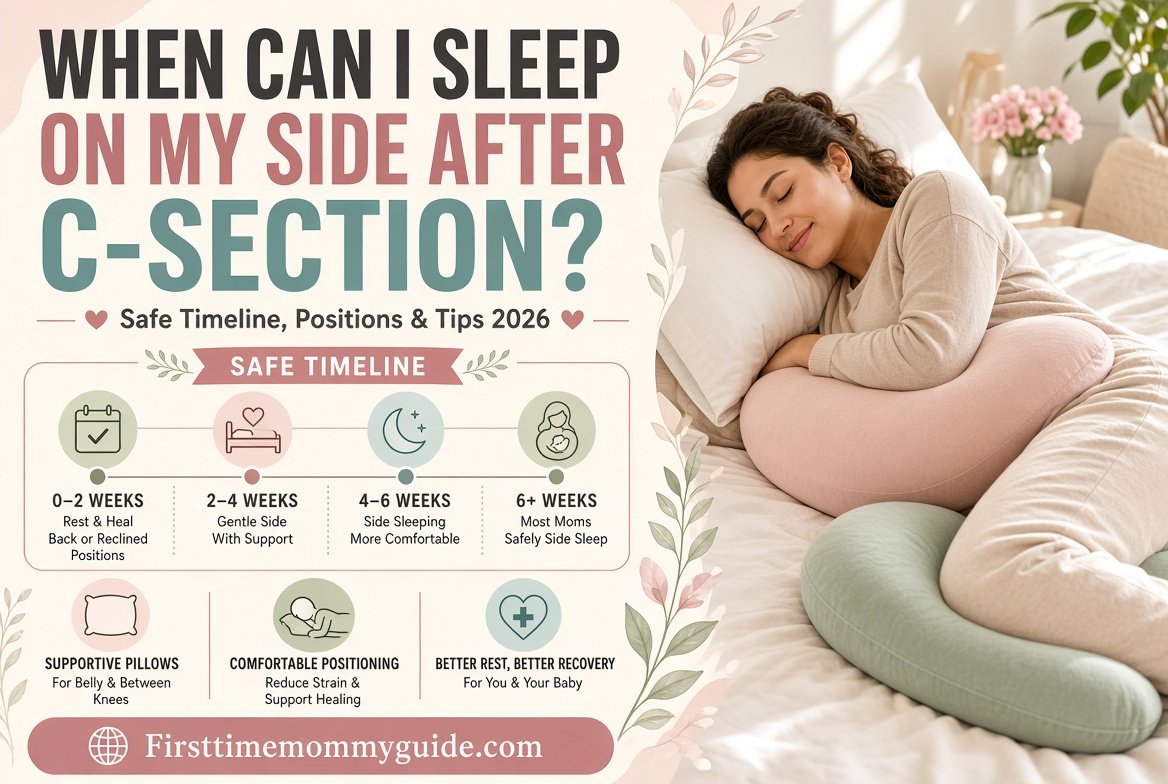
When can I sleep on my side after c section surgery? Most moms can try side sleeping somewhere between a few days and one week after delivery, once they can roll over with support and their pain is under control. Some need two to three weeks, and that is normal too.
There is no single date that works for everyone. Your incision, your pain level, your type of delivery, and how your body feels at 2 a.m. all decide when side sleeping becomes comfortable instead of painful.
A cesarean birth is major abdominal surgery. Doctors cut through skin, fat, muscle layers, and the uterus to deliver your baby. Cleveland Clinic notes that about 31.7% of deliveries in the U.S. are C-sections, so you are far from alone in wondering how to sleep while you heal.
Table of Contents
When Can I Sleep on My Side After C Section?
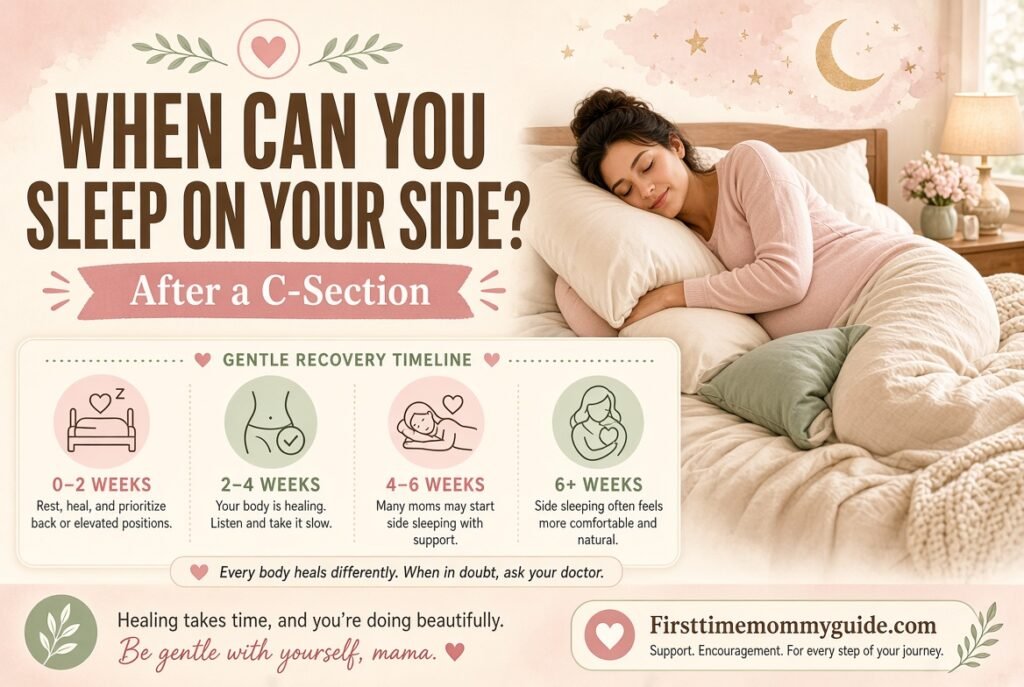
Most women can start sleeping on their side within the first week after a C-section. The real rule is comfort, not the calendar. If you can turn onto your side without sharp pain or a tearing feeling, you can usually do it.
Many moms sleep on their back for the first few nights, then move to a pillow-supported side position. Others side-lie in the hospital with a nurse helping them turn.
Your surgeon always has the final say. If your doctor gave you specific instructions, follow those first.
Side Sleeping Timeline at a Glance
| Time After C-Section | What Is Usually Possible | What Helps Most |
|---|---|---|
| First 24 to 72 hours | Back sleeping, head of bed slightly raised, assisted turns | Nurse help, pain medication on schedule, pillow under knees |
| Days 3 to 7 | Short stretches on one side with pillows | Pillow against the incision, log rolling, body pillow behind your back |
| Weeks 2 to 3 | Side sleeping for longer stretches | Pregnancy pillow, pillow between knees, easy bed height |
| Weeks 4 to 6 | Side sleeping on either side for most moms | Gentle walking, regular check-ins with your doctor |
| After 6 weeks | Most sleep positions feel normal again | Doctor clearance, gradual return to stomach sleeping |
The Short Rule to Remember
If side sleeping causes sharp, stabbing, or tearing pain, stop and go back to your back. Try again in a day or two.
Mild pulling or tightness is common. Pain that gets worse, new bleeding, or fluid leaking from the incision is not normal and needs a call to your doctor.
How Soon Can You Sleep on Your Side After a C Section?
How soon you can sleep on your side after a C-section depends on how your body is healing, not on what another mom did. One mom may roll onto her side on day two. Another may wait three weeks.
Online mom forums show how wide the range is. Some women side-sleep within days, and others say it took a few weeks before it felt right. All of those stories can be normal.
Factors That Change Your Timeline
Several things affect how soon side sleeping feels okay. Knowing them helps you set realistic expectations.
- Your pain level and how well your pain medication is working
- Whether your C-section was planned, emergency, or repeat
- Your incision closure, such as stitches, staples, or surgical glue
- How much movement you had after surgery
- Your core strength before pregnancy
- Whether you have swelling, a hematoma, or an infection
- How well you slept and how much rest you are getting
- Whether you are dealing with gas pain or constipation
Planned C-Section vs Emergency C-Section
After a planned C-section, many moms feel ready to try side sleeping a little earlier, because the body is not recovering from a long labor first.
After an emergency C-section, you may also be recovering from hours of labor, exhaustion, and extra stress on your body. Side sleeping may take a bit longer to feel comfortable.
Neither path is better or worse. Both heal on their own schedule.
Repeat C-Section Recovery
Moms who have had a second or third C-section often report that recovery feels different the next time. Some say it is easier because they know what to expect. Others say it feels harder because they are also chasing a toddler.
Scar tissue from earlier surgeries can change how the tissue feels. Give yourself the same patience you gave yourself the first time.
C-Section Recovery Timeline: What Happens Week by Week
Understanding the full recovery timeline makes the side sleeping question easier to answer. Your sleep position changes as your body heals.
Cleveland Clinic says it takes about six weeks to recover from a C-section, although each person’s timeline is different. Most people spend two to four days in the hospital.
First 24 to 72 Hours: Hospital Recovery
Right after surgery, you will be lying on your back with the head of the bed slightly raised. Your legs may feel heavy or numb from the spinal or epidural anesthesia.
Nurses usually help you sit up, stand, and walk within the first day. Early movement lowers the risk of blood clots and helps your bowels wake up.
During this stage, back sleeping is the default. Many hospitals also help moms turn to the side with pillows for short periods.
Days 3 to 7: First Days at Home
Most moms go home between days two and four. Your incision still feels tender, and the first nights at home can feel harder than the hospital.
This is when many women begin testing side sleeping. A pillow tucked against your belly and another behind your back make it much easier.
Expect to wake up often, partly from your newborn and partly from discomfort.
Weeks 2 and 3: Gaining Comfort
By the second week, many moms feel a clear shift. Getting out of bed hurts less, and rolling over feels more natural.
Side sleeping for longer stretches is common now. You may still need a pillow for support.
Your skin may feel numb or itchy around the scar. That is a normal part of nerve healing.
Weeks 4 to 6: Almost There
Most of the surface healing is done, but deeper tissues are still repairing. You may feel pulling when you stretch or turn quickly.
Sleeping on either side is usually fine at this point. Some moms are even ready to try different positions.
Keep avoiding heavy lifting. Cleveland Clinic recommends not lifting anything heavier than your baby during recovery.
After Six Weeks: The Postpartum Checkup
Many doctors review your incision and recovery around the six-week mark. ACOG also recommends contact with your provider within the first three weeks and a full postpartum visit no later than 12 weeks after birth.
If you still have pain with side sleeping at this point, mention it. Your doctor can check for scar tissue, a hernia, or other issues.
Full internal healing can take several months, even when you feel fine on the outside.
Why Back Sleeping Is Usually Easier After a C-Section
For the first few nights, sleeping on your back is the safest and most comfortable position for most moms. It keeps weight and pressure off your incision.
It also makes it easier to breathe deeply, which helps prevent lung problems after surgery. Lying flat can feel strange, so most moms prop themselves up a bit.
How to Make Back Sleeping More Comfortable
Small changes make a big difference. Try these setups:
- Place a pillow under your knees to reduce tension on your abdomen
- Raise your upper body slightly with a wedge pillow or stacked pillows
- Keep a small pillow within reach to hold against your incision when you cough
- Add pillows on both sides so you do not roll by accident
Why Flat Back Sleeping Can Feel Uncomfortable
Some moms find that lying completely flat makes their incision feel pulled. Others get back pain, especially if they had a spinal or epidural.
If flat feels bad, a semi-reclined position often works better. Think of the angle of a comfortable recliner.
Gas pain can also settle in your shoulders or chest when you are lying flat. Gentle walking during the day helps.
Best Sleeping Positions After a C-Section
The best sleeping position after a C-section is the one that keeps your incision relaxed and lets you rest without pain. Most moms rotate between three options.
Semi-Reclined on Your Back
This is the go-to position for the first few days. Prop your back and head at about a 30 to 45 degree angle with a wedge or pillows.
Put one pillow under your knees. This takes tension off your abdominal muscles.
It is also a good position for nighttime feeding and for sitting up quickly when your baby cries.
Supported Side-Lying
Once you are ready, side-lying with pillows is a great option. Place a pillow between your knees and another small pillow against your belly.
A long body pillow or pregnancy pillow behind your back stops you from rolling flat. It also lets you relax instead of bracing all night.
Either side is generally fine. Choose whichever feels better.
Flat on Your Back With Support
Once the incision feels stronger, many moms sleep flat on their backs with one pillow under the knees. This position lets your abdominal wall stay completely neutral.
It is a good fallback on nights when your incision feels extra sore.
Slightly Elevated Side-Lying
A great middle ground is lying on your side with your upper body raised a little. This gives you the comfort of side sleeping with less pull on your core.
A wedge pillow under your upper back or a stack of pillows works well. Many moms use this setup for the first two weeks.
How to Sleep on Your Side After a C-Section Step by Step
Rolling straight onto your side is the fastest way to feel that sharp pull. The log roll method protects your incision and your core.
Practice it during the day first, so you are not figuring it out half asleep.
The Log Roll Method
- Lie on your back with your knees bent and feet flat on the mattress.
- Hold a small pillow firmly against your incision.
- Tighten your lower abdomen gently, as if you are zipping up a tight pair of jeans.
- Move your shoulders, hips, and knees together as one unit toward your side.
- Use your arm to push into the mattress and support your upper body.
- Slide your top knee forward and rest it on a pillow.
- Place a pillow behind your back so you do not roll back flat.
Getting Comfortable Once You Are on Your Side
Once you are on your side, adjust your position slowly. Keep your knees slightly bent and your hips stacked.
Slide a small pillow under your belly if you feel any drag from gravity. This is the same trick many moms used in late pregnancy.
Take a few slow breaths. If you feel strong pulling, ease back until the tension fades.
Switching Sides in the Night
Turning over at night is often harder than the first roll. Do not twist your upper body while keeping your hips still.
Return to your back first, then roll to the other side using the same log roll steps. It takes a little longer but protects your incision.
A pillow tucked under your belly can stay in place while you switch.
How to Get In and Out of Bed After a C-Section
Getting in and out of bed is often the hardest part of C-section sleep. Many moms say the move itself hurts more than lying in one position.
Your core muscles do most of the work when you sit up, so you need a method that avoids using them.
Getting Out of Bed Safely
- Roll onto your side using the log roll method.
- Bring your legs over the edge of the bed.
- Push through your bottom arm to lift your upper body.
- Let the weight of your legs help swing you upright.
- Sit for a few seconds before you stand.
- Hold a pillow against your incision if you need extra support.
Getting Into Bed Safely
- Sit on the edge of the mattress with your hips near the headboard side.
- Lower yourself onto your elbow and forearm.
- Lift your legs onto the bed one at a time or together.
- Roll onto your back or into your side-lying position as one unit.
Make the Bed Easier to Use
If your bed is high, a small step stool can help. Mumsnet moms often suggest sleeping on the lowest bed in the house in the first weeks.
A bedside rail, a sturdy nightstand, or a partner’s arm can also make standing easier. Keep a lamp and water within reach.
Best Pillows for Sleeping on Your Side After a C-Section
The right pillow setup can be the difference between a miserable night and a decent one. You do not need to buy everything, but a few key pieces help a lot.
Many moms reuse the pregnancy pillow they already own.
Pregnancy Pillow or Full-Length Body Pillow
A long body pillow supports your back, belly, and knees at once. It acts like a gentle wall that keeps you from rolling flat or onto your stomach.
C-shaped and U-shaped pillows are popular. Pick one that fits your bed size so you still have room.
Wedge Pillow
A wedge raises your upper body, which helps with back sleeping and elevated side sleeping. It also helps with heartburn and breathing.
Place it under your back or tuck a small wedge under your belly.
Small Pillow for Your Incision
A small, firm pillow pressed against your belly gives counter-pressure when you turn, cough, sneeze, or laugh. This is called splinting.
Hospitals often give you one. Keep it by your bed at home.
Knee Pillow
A pillow between your knees keeps your hips aligned and lowers strain on your lower back. Any firm pillow works.
Pillow Comparison Table
| Pillow Type | Best For | Main Benefit | Things to Consider |
|---|---|---|---|
| Full-length body pillow | Side sleeping | Supports back, belly, and knees | Takes up bed space |
| C-shaped or U-shaped pillow | Side sleeping and rolling prevention | Wraps around your body | Can feel hot at night |
| Wedge pillow | Back sleeping and elevated side sleeping | Raises upper body | Needs a stable base |
| Small splinting pillow | Turning, coughing, standing | Protects the incision | Needs to be within reach |
| Standard knee pillow | Side sleeping | Aligns hips and spine | Can slip out during the night |
Left Side vs Right Side After a C-Section
Moms often ask whether one side is better than the other after a C-section. For incision healing, either side is generally fine.
The best side is the one that feels comfortable and lets you rest. Some mothers prefer the side that gives easier access to the baby’s bassinet or the side where they can get out of bed more easily.
Is There a Medical Reason to Pick One Side?
During pregnancy, doctors often recommend left-side sleeping to improve blood flow. After birth, that guidance no longer applies in the same way, because your baby is not pressing on your blood vessels anymore.
Some websites claim that one side speeds healing or helps digestion. Strong evidence for this is limited, so do not stress about it.
How to Choose Your Side
Pick the side that does not pull on your incision more than the other. Pain from your anesthesia site or a tender area around your scar may make one side more comfortable.
Switch sides when you need to. Staying in one position all night can cause stiffness.
Can You Sleep on Your Stomach After a C-Section?
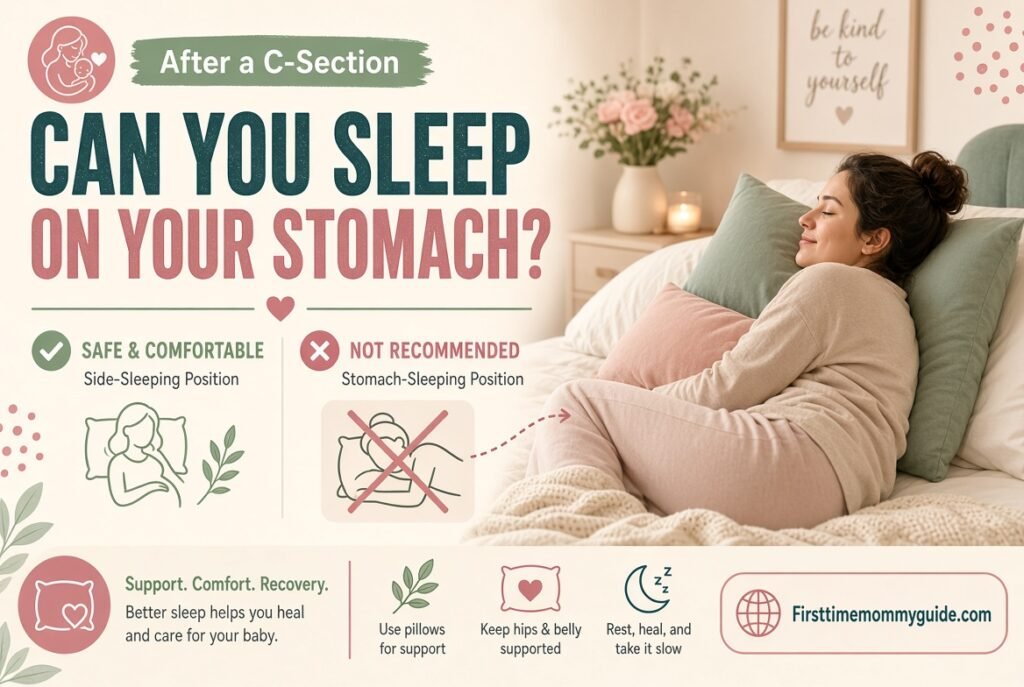
Most doctors suggest waiting several weeks before sleeping on your stomach after a C-section. Many moms feel ready around six weeks, although some need longer.
Lying on your stomach puts direct pressure on your incision and uterus. It can also be uncomfortable if your breasts are full or tender from milk coming in.
When Stomach Sleeping May Feel Okay
Try stomach sleeping only when your incision no longer feels tender, you can press gently around the scar without sharp pain, and your doctor has cleared you.
Start with a short test during the day. If it feels tight or painful, wait a little longer.
Tips for Easing Back to Stomach Sleeping
Place a thin pillow under your hips to reduce pressure on your belly. Keep your breasts comfortable with a soft sleep bra if needed.
Do not rush this step. Many people find they sleep better on their side or back for a while anyway.
Sleeping Positions to Avoid After a C-Section
Some positions put extra strain on your healing incision. Avoiding them in the first weeks lowers your pain and helps you rest.
Sleeping Flat on Your Stomach
Pressure on your incision can cause pain and may slow comfortable healing. Wait until your doctor says it is okay.
Twisting or Curled-Up Positions
Twisting your torso while your hips stay still tugs on your abdominal wall. Curling tightly into a ball can also pull on your incision.
Keep your hips and shoulders aligned when you turn.
Sitting Up Straight Using Your Core
Using your abdominal muscles to sit straight up is painful and strains your incision. Always roll to your side first and push up with your arms.
Sleeping in a Soft Chair or Sofa With Your Baby
Never fall asleep in a recliner, couch, or armchair with your baby. The American Academy of Pediatrics warns that sleeping with an infant on a sofa or armchair is extremely dangerous.
If you feel yourself nodding off while feeding, set up a safe plan beforehand, such as a partner or support person taking over.
Sleeping With C-Section Pain: How to Rest Better at Night
Pain makes sleep harder, and poor sleep can make pain feel worse. Breaking that cycle is one of the best things you can do for your recovery.
Hinge Health also points out that poor sleep can increase pain sensitivity, which makes the cycle even tougher.
Time Your Pain Medication
Take pain medication as directed by your doctor, ideally before the pain becomes severe. Many moms take a dose before bedtime so it is working when they lie down.
Do not change your dose without talking to your doctor or pharmacist. If you were prescribed an opioid, be extra careful about sleepiness while caring for your baby.
Always tell your doctor if your pain is not controlled.
Use Heat Safely
Mayo Clinic suggests that a heating pad can help ease discomfort. Use a low setting, keep a cloth between the pad and your skin, and avoid placing it directly on a fresh incision unless your doctor says it is okay.
Do not fall asleep with a heating pad on.
Splint Your Incision
Hold a firm pillow over your incision when you cough, sneeze, laugh, or get out of bed. This reduces pulling and pain.
Manage Gas Pain
Trapped gas after surgery can cause sharp pain in your belly or shoulders. Walking, drinking water, and eating small meals help.
Ask your provider before taking any gas relief medication.
Walk During the Day
Short, slow walks improve circulation and bowel function. Cleveland Clinic and Hinge Health both note that gentle walking supports recovery.
Better movement during the day often leads to better sleep at night.
Stitches, Staples, and Dressings: Do They Affect Side Sleeping?
Your closure type can change how comfortable side sleeping feels. Surgeons close C-section incisions with stitches, staples, surgical glue, or adhesive strips.
Staples
If you have staples, they are usually removed before you leave the hospital or at a short follow-up visit. Some moms on forums said staples made lying on either side feel sore for about 10 days.
Once the staples are out, many report feeling a clear difference.
Dissolving Stitches and Glue
Dissolving stitches break down on their own. Surgical glue or strips fall off gradually.
Avoid picking at them. Keep the area clean and dry unless your doctor gives different instructions.
Dressing Care
Follow your hospital’s instructions for the dressing. A loose, breathable layer can reduce friction against your sheets.
High-waisted, soft underwear that sits above or below your scar, not on it, helps a lot at night.
Pulling, Tugging, and Numbness: What Is Normal?
Feeling odd sensations around your scar is very common. Knowing what is normal can calm a lot of worry.
Normal Sensations
- A mild pulling or stretching feeling when you roll over
- Numbness or tingling around the scar and lower belly
- Itching as nerves and skin heal
- Occasional twinges when you cough or laugh
- Mild cramping in the first days as your uterus shrinks
Mayo Clinic notes that you may feel contractions for a few days after a C-section, as your uterus returns to its pre-pregnancy size.
Sensations That Need Medical Attention
- Sharp, tearing pain that does not ease with rest
- Bulging near the incision
- Pain that is getting worse instead of better
- Warmth, spreading redness, or pus
- A sudden gush of fluid from the wound
When Numbness Lasts Longer
Numbness around the scar can last for months and, for some people, longer. It usually improves slowly. Tell your doctor if you notice severe nerve pain or strange burning sensations.
Side-Lying Breastfeeding After a C-Section
Side-lying nursing is a favorite position for many moms after a C-section. It takes pressure off the incision and lets you rest while you feed.
Mayo Clinic lists several breastfeeding positions that work well after a C-section, and side-lying is among the most comfortable once you can turn safely.
How to Set Up Side-Lying Breastfeeding
- Lie on your side with a pillow behind your back and another between your knees.
- Place your baby on their side facing you, tummy to tummy.
- Bring your baby to your breast instead of leaning toward them.
- Support your baby’s head and make sure their nose is clear.
- Keep your incision relaxed with a small pillow against your belly.
Other Breastfeeding Positions That Protect Your Incision
The football hold keeps your baby’s weight off your belly. A cradle hold with a pillow on your lap can also work well.
Use whichever position helps your baby latch without pain. If latch problems appear, support from a lactation consultant can make a big difference.
Safety When You Feel Sleepy
Feeding at night after surgery can leave you extremely tired. Plan ahead so your baby goes back to a safe sleep space when the feed is over.
The AAP recommends that babies sleep on their backs, on a firm, flat surface, in the same room as parents but not in the same bed.
Safe Sleep for Your Baby While You Recover
Your recovery should never put your baby’s sleep safety at risk. A tired, sore parent is more likely to fall asleep unexpectedly, so a clear plan matters.
Use a Bassinet or Sidecar Sleeper
Place your baby’s bassinet close to your bed so you can reach them without twisting or standing. A sidecar-style sleeper can bring the baby closer without sharing the mattress.
Make sure the sleeper meets current safety standards and is used exactly as directed.
Keep Your Bed Free of Loose Items
Your extra pillows are great for you, but they are dangerous around a baby. Soft pillows, thick blankets, and body pillows can block a baby’s breathing.
Keep the baby in their own sleep space, away from your support pillows.
Ask for Help at Night
If possible, ask your partner or a trusted adult to bring the baby to you and return them after feeds. This saves your incision from repeated bending and lifting.
Our guide to baby sleep covers safe sleep rules in more detail.
Be Careful With Medication
Some pain medications cause drowsiness. If you feel very sleepy, do not feed your baby in bed alone. Ask someone to stay with you.
How to Set Up Your Bedroom for Comfortable C-Section Sleep
A good setup lowers the number of movements you need at night. Fewer movements mean less pain and more sleep.
Night Essentials Within Arm’s Reach
- Water bottle with a lid
- Pain medication and a written schedule
- Small splinting pillow
- Phone and charger
- Nursing supplies, burp cloths, and diapers
- Soft lamp or nightlight
- Snacks for night feeds
Choose Your Sleep Space Wisely
If your bedroom is upstairs, you may want to set up a recovery spot downstairs for the first days. Reduce stair climbing as much as you can.
Place the bassinet where it is easy to reach and see.
Bedding and Clothing
Choose loose, soft pajamas that do not press on the scar. Button-front tops make nursing easier.
Keep the room cool and dark. Sleep can already be broken, so any help counts.
Mistakes to Avoid When Sleeping on Your Side After a C-Section
A few simple mistakes can make the process harder than it needs to be. Avoiding them can save you pain.
Rolling Straight Onto Your Side
Skipping the log roll method puts sudden strain on your incision. Take the extra few seconds to move slowly.
Skipping Pain Medication to Be Tough
Waiting until pain is severe makes it harder to control. Take medication as directed.
Forcing Side Sleeping Too Early
If your body says no, listen. Back sleeping with support is still a valid and healing position.
Using Too Few Pillows
Pillows are tools, not luxuries. Use enough to keep you stable and comfortable.
Sleeping With Your Baby on a Sofa or in a Recliner
This is one of the most dangerous mistakes. Always plan a safe sleep space for your baby.
Ignoring Warning Signs
Pain, fever, or a leaking incision is not something to sleep off. Call your doctor.
Warning Signs: When to Call Your Doctor
Most C-section recovery is uneventful, but complications can happen. Knowing the warning signs helps you act early.
Call your doctor or seek urgent care if you notice any of these:
- Fever of 100.4°F (38°C) or higher
- Soaking a pad in an hour or passing large clots
- Redness, swelling, warmth, or pus at the incision
- Foul-smelling discharge
- The incision opening or leaking fluid
- Pain that is getting worse
- Pain, swelling, or warmth in one leg
- Chest pain or trouble breathing
- Severe headache or vision changes
- Feelings of hopelessness or thoughts of harming yourself or your baby
Chest pain, trouble breathing, or heavy bleeding are emergencies. Call 911 right away.
Why One-Sided Leg Pain Matters
Pain or swelling in one calf can be a sign of a blood clot. Surgery and pregnancy both raise clot risk, so this symptom needs fast attention.
Why Fever Matters After a C-Section
A fever can signal an infection in the incision, uterus, bladder, or breasts. Treating infections early prevents bigger problems.
Gentle Movement That Supports Better Sleep
Moving a little each day helps you sleep and heal. The goal is gentle, not intense.
Walking
Start with short walks around your home. Increase slowly as you feel stronger.
Cleveland Clinic advises skipping heart-pounding exercise like running or lifting weights, while walking helps your body heal.
Ankle Pumps and Leg Movements
Pump your ankles up and down while lying in bed. This helps circulation and lowers clot risk.
Deep Breathing
Slow belly breathing relaxes your body and supports your core. Hold a pillow against your incision while you breathe deeply or cough.
Gentle Core Reconnection
Ask your doctor or a pelvic floor physical therapist before starting core exercises. Many moms begin light pelvic tilts or gentle core engagement after medical clearance.
Check for diastasis recti if you notice a bulge in your belly when you sit up. A physical therapist can guide you.
Sleep Deprivation, Mood, and Postpartum Recovery
Poor sleep affects more than your energy. It can change your mood, patience, and pain tolerance.
Between night feeds, incision pain, and hormone shifts, many new moms feel overwhelmed. You are not failing. You are healing.
Baby Blues vs Postpartum Depression
Baby blues often start in the first days and fade within about two weeks. Postpartum depression lasts longer and feels heavier.
Signs include constant sadness, anxiety, trouble bonding, or thoughts of self-harm. Tell your doctor right away.
Where to Get Support in the U.S.
The National Maternal Mental Health Hotline is available 24/7 at 1-833-852-6262. Postpartum Support International also offers a helpline at 1-800-944-4773.
If you feel unsafe or in crisis, call or text 988 or go to the nearest emergency room.
Ways to Protect Your Sleep
Sleep when your baby sleeps if you can, even for short stretches. Accept help with meals, laundry, and older children.
Trade night shifts with your partner so each of you gets one longer block of rest.
Sleeping in the Hospital After a C-Section
The first nights in the hospital are not restful for anyone. You are connected to monitors, nurses check your vitals, and your baby may need frequent care.
A few small steps can make hospital sleep easier and set up good habits for home.
What to Expect in the First Night
You will probably have an IV, a urinary catheter for a short time, and compression devices on your legs. Your bed will usually be raised slightly.
Nurses will help you turn, walk, and sit up within the first day. Ask for help every time you move until you feel steady.
Ask for Pain Relief Before You Need It
Do not wait for pain to peak. Press your call button when pain starts to rise, especially before you try turning onto your side for the first time.
Pack Items That Help You Sleep
- A small pillow from home for splinting
- A long body pillow if the hospital allows it
- Soft, high-waisted underwear and loose pajamas
- Lip balm, since hospital air is dry
- Earplugs and an eye mask
- A phone charger with a long cord
Our hospital bag checklist covers more items worth packing.
Use the Nursery or Rest Time Wisely
Many hospitals let your baby stay in your room while you recover. If you are exhausted, ask the nurses whether they can watch the baby for a short rest period.
Accepting help early in your stay is not a weakness. It is part of recovery.
A Sample Night Routine for the First Two Weeks
A steady routine tells your body it is time to rest. It also keeps you from rushing around in pain.
Here is a simple routine many moms find helpful.
Before Bed
Take your pain medication as directed. Use the bathroom, drink some water, and set up your pillows.
Place everything you might need within reach. Dim the lights and keep screens to a minimum.
Getting Into Position
Use the log roll method to move onto your back or side. Add your knee pillow, belly pillow, and back support.
Take five slow breaths. Relax your jaw, shoulders, and belly.
During Night Feeds
Use a low light. Keep your baby’s feed as simple as possible. Use side-lying or a supported position that protects your incision.
After the feed, return your baby to their safe sleep space before you rest again.
In the Morning
Roll to your side, push up with your arms, and sit for a moment before standing. Take your morning medication on time and eat something before getting busy.
Common Myths About Sleeping After a C-Section
Advice from friends, family, and the internet can be confusing. Some of it is helpful, and some of it is not.
| Myth | Reality |
|---|---|
| You must sleep flat on your back for six weeks | Most women switch to side sleeping within days or weeks, once it feels comfortable |
| Side sleeping will make your incision open | A normal incision is strong enough for gentle side sleeping with support, but stop if you feel tearing pain |
| Only the left side is safe | Either side is generally fine after birth |
| You should be fully back to normal sleep in two weeks | Many moms need four to six weeks, and some need longer |
| Pain means you are doing something wrong | Some soreness is normal, but sharp or worsening pain needs attention |
| Sleeping propped up is a bad habit | Elevated sleeping is common and helpful in the early weeks |
| A belly binder replaces proper movement | Binders may feel supportive, but ask your doctor before using one |
Do Belly Bands and Abdominal Binders Help You Sleep?
Many moms wonder whether an abdominal binder or belly band helps with C-section pain. Some find the gentle compression comforting, especially when standing or walking.
Others find it hot, itchy, or tight at night. Evidence about binders is mixed, so it is best to ask your doctor before you rely on one.
How to Use a Binder Safely
If your doctor approves, choose a soft, breathable one. It should feel snug but not tight.
Do not wear it so tightly that it restricts breathing or presses hard on your incision. Take it off if you feel sharp pain, numbness, or skin irritation.
Should You Sleep in One?
Many moms remove the binder for sleep. Wearing it all night is not necessary for most people.
If it helps you rest, check with your provider first.
How Scar Healing Affects Your Sleep Position
Your visible scar is only the surface. Under it, several layers of muscle and tissue are healing, and each layer heals at a different speed.
Understanding this helps you stay patient when your skin looks fine but your belly still feels tender.
The Stages of Healing
In the first days, inflammation causes swelling and tenderness. Over the next weeks, new tissue forms and the wound gets stronger.
Deeper layers continue to remodel for months. That is why doctors advise against heavy lifting for around six weeks.
Scar Tissue and Tightness
As the scar matures, it can feel firm, tight, or slightly raised. A shelf-like overhang above the scar is common and may soften with time.
After your doctor says the incision is fully healed, gentle scar massage may help some people. A physical therapist can show you the right technique.
Why Pulling May Come Back
Moms sometimes feel pulling again around three to four weeks, when they become more active. This is usually just the tissue adjusting.
If the pain is sharp or you notice bulging, call your provider.
Special Situations: Side Sleeping After a C-Section
Not every recovery looks the same. These situations come up often.
Sleeping With Large Breasts or Engorgement
When your milk comes in, around day three to five, your breasts can become full and tender. Side lying may feel uncomfortable at first.
A soft sleep bra and a small rolled towel can support your breast without pressure. Hand expressing a little milk can ease fullness.
Sleeping With Heartburn or Reflux
Lying flat can worsen reflux. A wedge pillow or semi-reclined position helps.
Sleeping With a Higher Body Weight
Some mothers have more skin and tissue around the incision, which can cause moisture or rubbing. Keep the area clean and dry, and use soft fabrics.
Ask your provider if you have questions about incision care.
Sleeping With a Partner in the Bed
Your partner may accidentally bump your belly in the night. Place a pillow wall between you, or ask them to sleep on the side that protects your incision.
If your partner is a restless sleeper, a temporary separate sleep space can protect your healing.
Sleeping With Older Children
Toddlers love to climb on mom. Make a plan so they do not jump on your belly in the morning.
Set simple rules, like “gentle hugs” and “sit next to Mommy, not on Mommy.”
Sleeping After a C-Section With Twins
Twin pregnancies often lead to a bigger belly and more tissue stretching. Recovery can feel heavier, and sleep may be even more broken.
Plan extra help for night feeds and give yourself more time before expecting comfortable side sleeping.
How Long Until You Can Sleep Normally Again?
Most moms can sleep in their usual position somewhere around six weeks, but it varies. Some are comfortable sooner, and others take two or three months.
Cleveland Clinic and Mayo Clinic both describe a recovery that takes several weeks, with the six-week postpartum visit as a common checkpoint.
Signs You Are Ready for Your Normal Sleep Position
- You can get into position without bracing or holding your breath
- You feel no sharp pain at your scar
- Your doctor has said the incision is healing well
- You are not relying on strong pain medication
- You can sleep several hours without waking from incision pain
What If Side Sleeping Still Hurts at Six Weeks?
Talk to your provider. Ongoing pain may come from scar tissue, nerve irritation, muscle weakness, or a hernia.
A pelvic floor or women’s health physical therapist can help you recover core strength and ease pain.
Returning to Daily Activity Alongside Sleep Recovery
Your sleep position is only one part of recovery. How you move during the day affects how you feel at night.
Lifting
Avoid lifting anything heavier than your baby, as Cleveland Clinic advises. That includes car seats with a baby inside, laundry baskets, and older children.
Driving
Many providers say you can drive again when you can brake hard without pain and you are no longer taking strong pain medication. Always ask your own doctor.
Stairs
Take stairs slowly. Use the railing and rest when you need to.
Exercise
Walking is encouraged early. Wait for your provider’s clearance before starting abdominal workouts, running, or heavy lifting.
Tips for Partners and Family Supporting a C-Section Mom
Partners play a huge role in helping a new mom sleep. Simple actions can protect her incision and her rest.
Practical Ways to Help
- Bring the baby to her for night feeds and return the baby afterward
- Set up pillows before bedtime
- Keep water, snacks, and medication within reach
- Handle diaper changes and burping
- Take over household chores
- Watch for warning signs and encourage her to call the doctor
Emotional Support
Listen without trying to fix everything. A tired, sore mom needs patience.
Remind her that healing takes time and that asking for help is smart.
Helpful Products for Better C-Section Sleep
You do not need to buy a lot, but a few items can help. Choose what suits your budget and needs.
| Item | How It Helps |
|---|---|
| Pregnancy or body pillow | Supports side sleeping and prevents rolling |
| Wedge pillow | Raises your upper body for easier breathing and getting up |
| Small splinting pillow | Protects the incision when coughing or turning |
| High-waisted postpartum underwear | Keeps fabric off the scar |
| Soft sleep bra | Supports tender breasts at night |
| Bedside bassinet or sidecar sleeper | Keeps baby close without bed sharing |
| Step stool | Helps with high beds |
| Water bottle with straw | Lets you drink without sitting up |
| Night light | Makes night feeds safer |
Normal Soreness vs a Problem: How to Tell the Difference
New moms often ask how they can tell whether night pain is part of normal healing. A simple comparison can help, but it never replaces a call to your doctor when you are worried.
| What You Feel | Usually Normal | Call Your Doctor |
|---|---|---|
| Soreness when rolling over | Mild to moderate, easing day by day | Sharp, tearing, or getting worse |
| Pulling at the scar | Brief, eases with pillow support | Constant, severe, or with bulging |
| Numbness near the scar | Common and may last months | Spreading numbness or burning nerve pain |
| Light bleeding | Decreasing over days to weeks | Soaking a pad in an hour or large clots |
| Warmth at the scar | Mild and short-lived | Spreading redness, pus, or fever |
| Leg discomfort | General achiness | Pain or swelling in one calf |
| Mood changes | Tearful in the first days | Lasting sadness, panic, or scary thoughts |
Night Sweats, Hot Flashes, and Hormones After Birth
Many new moms wake up drenched in sweat in the first weeks after birth. Your hormones drop quickly, and your body sheds extra fluid.
This can make you restless and uncomfortable, especially when you are already trying to find a comfortable side-lying position.
How to Stay Comfortable
Use breathable cotton sheets and loose pajamas. Keep a spare top and a dry towel by the bed.
Layer your bedding so you can remove a blanket without moving much. A fan or cool room can help.
Hydrate Without Disrupting Sleep
Drink plenty of water during the day, especially if you are breastfeeding. Keep a bottle with a straw by the bed so you can sip without sitting up.
Nighttime Bathroom Trips After a C-Section
Getting up to use the bathroom at night can feel like a major task in the early days. Your urinary catheter is usually removed within the first day, and moving to the toilet becomes part of your routine.
Plan for it so it does not wreck your sleep.
Make the Path Easy
Keep a night light on in the hallway and bathroom. Remove rugs and clutter so you do not trip.
Use the log roll method every time, even when you are in a hurry.
Ease Pain When You Pee or Have a Bowel Movement
Hold a pillow against your belly while sitting on the toilet. Take your time and do not strain.
A footstool can raise your knees and make bowel movements easier.
Sleeping in a Recliner or Adjustable Bed
Some moms sleep better semi-upright in a recliner or on an adjustable bed during the first week. The raised angle takes strain off the incision and makes it easier to get up.
If a recliner works for you, use it for yourself only. Never fall asleep in a recliner with your baby on your chest or lap.
Pros and Cons of Sleeping Semi-Upright
| Pros | Cons |
|---|---|
| Easier to get up without using your core | Can cause lower back or neck stiffness |
| Helps with reflux and breathing | May feel too inclined for long sleep |
| Good for the first few nights | Not safe for sleeping with a baby |
| Makes nighttime feeding easier | Needs support under the knees |
Side Sleeping, Diastasis Recti, and Core Weakness
Pregnancy stretches the abdominal muscles, and many women develop a gap between the two sides of the rectus abdominis. This is called diastasis recti.
After a C-section, you may also feel that your core is weak or disconnected. This can make getting in and out of bed feel harder than expected.
Signs of Diastasis Recti
You may notice a ridge or dome down the middle of your belly when you sit up or lift your head. The area may also feel soft or sunken.
Tell your provider or a physical therapist if you notice this.
Sleep Tips if You Have Diastasis Recti
Use the log roll method every time you move. Avoid sitting straight up from lying flat.
Supported side sleeping often feels better than flat back sleeping when your core is weak.
Why Pelvic Floor Physical Therapy Can Help After a C-Section
Many people assume pelvic floor therapy is only for vaginal birth. A C-section still follows pregnancy, hormonal changes, and major abdominal surgery.
A pelvic floor or women’s health physical therapist can teach you safe ways to move, breathe, and rebuild strength. This often makes sleeping and getting out of bed easier.
What a Therapist May Check
A therapist looks at your scar mobility, core function, posture, and any pain with movement. They may show you how to roll, lift, and feed your baby with less strain.
When to Ask for a Referral
Ask your doctor about a referral if side sleeping still hurts after six weeks, if you have pain with movement, or if you feel a bulge or weakness in your belly.
Questions to Ask Your Doctor Before You Leave the Hospital
Going home with a newborn is overwhelming. A short list of questions can help you remember what matters most.
- When can I start sleeping on my side?
- Which pain medications can I take, and how often?
- How do I care for my incision and dressing?
- When will my staples or stitches come out?
- What is my lifting limit?
- When can I drive?
- What symptoms should make me call you right away?
- When is my next appointment?
- What activities should I avoid and for how long?
- Who should I contact after hours?
Write the answers down or ask your partner to do it for you. Sleep-deprived brains forget quickly.
How to Fall Asleep Faster After a C-Section
Even when your body is exhausted, falling asleep can be hard. Pain, worry, and a baby who wakes often all play a part.
A few habits help your body switch off when the chance comes.
Build a Wind-Down Habit
Dim the lights, take your medication, and do a few minutes of slow breathing. Keep the routine short and repeatable.
Even five calm minutes before sleep tells your brain it is time to rest.
Nap Without Guilt
Short naps during the day add up. Nap when your baby naps, or when someone else holds the baby.
Do not use nap time for chores. Rest is part of healing.
Support Digestion for Better Sleep
Constipation and gas can make nights miserable after surgery. Drink water, eat fiber-rich foods, and keep walking.
Ask your doctor about a stool softener if you are taking iron or opioid pain medicine.
Limit Late-Night Screen Time
Scrolling feels easy when you are stuck in bed, but bright screens can keep you awake. Use a dim setting or listen to a calming podcast instead.
Keep the Room Comfortable
A cool, quiet, dark room helps most people sleep. A white noise machine can cover household sounds and soften baby noises that are not urgent.
Also Read:
- After Giving Birth First Period: Timeline, Symptoms & What’s Normal 2026
- How Long Do You Bleed After You Give Birth? Full Timeline Guide 2026
- Baby Sleep Guide for New Moms: Safe Sleep & Schedules (2026)
- Baby Sleep Guide: Safe Sleep, Schedules and What Is Normal
- Hospital Bag Checklist for Baby: The Complete Packing List 2026
- Baby Essentials Checklist 0 to 3 Months
- Pregnancy Guide Month by Month: Symptoms & Baby Growth
- Breastfeeding Latch Problems: Causes, Fixes & When to Get Help 2026
- Low Milk Supply Signs and Fixes: What Every Breastfeeding Mom Should Know 2026
- Signs of Cluster Feeding: Complete Guide for New Parents 2026
- How Long Does Newborn Cluster Feeding Last Each Night? A Complete Guide for New Parents 2026
- Newborn Grunting in Sleep Normal or Should I Call the Doctor? A Complete Parent Guide 2026
- Bottle Feeding Schedule Newborn: Complete Age-by-Age Guide 2026
- Newborn Coming Home Outfit: What to Pick, What to Skip, and How to Keep Baby Safe
- Is It Normal for Umbilical Cord Stump to Bleed After Falling Off? What Parents Should Know 2026
- Sunny Side Up Baby: What It Means, Why It Happens & How to Turn Baby (2026 Guide)
- Pelvic Pain During Pregnancy: Causes, Relief & When to Worry 2026
- SPD Pregnancy: Symptoms, Causes & Relief Tips (2026 Guide)
- When Do Babies Start Rolling Over? (2026 Guide)
- When Do Infants Roll From Tummy to Back? (2026 Guide)
- How Much Breast Milk to Put in Each Storage Bag (Complete Guide) 2026
- How to Do the Pitcher Method for Breast Milk Step by Step: A Safe, Simple Guide for Pumping Moms 2026
- Thawed Breast Milk Smells Like Soap Is It Still Good? Causes, Safety, and Fixes 2026
- How to Scald Breast Milk for High Lipase Before Freezing: Step-by-Step Guide for Pumping Moms
Frequently Asked Questions (FAQs)
When can I sleep on my side after a C-section?
Most women can try side sleeping within the first week, once they can roll over with support and pain is controlled. Some need two to three weeks. Comfort is the best guide.
How soon can you sleep on your side after a C-section?
Some moms side-lie with pillows in the hospital, with a nurse’s help. Many feel ready between days three and seven. Always follow your surgeon’s instructions.
Is it safe to sleep on my side after a C-section?
Yes, for most women it is safe once the pain is manageable and you can turn without sharp pulling. Use pillows for support and stop if you feel tearing pain.
Which side is best to sleep on after a C-section?
Either side is generally fine. Choose the side that feels more comfortable and puts less pull on your incision.
Can side sleeping open my C-section incision?
A healing incision is usually strong enough for gentle side sleeping with pillow support. Sharp, tearing pain, bulging, or leaking fluid needs a call to your doctor.
How do I sleep on my side after a C-section without pain?
Use the log roll method, hold a pillow against your belly, and put a pillow between your knees. Take pain medication on schedule and avoid twisting.
What is the best sleeping position after a C-section?
Most moms start with a semi-reclined back position with a pillow under the knees. Later they switch to supported side sleeping.
How should I sleep the first night after a C-section?
You will be on your back with your head slightly raised, and nurses will help you turn. Ask for pain medication before it gets severe.
Can I sleep on my back after a C-section?
Yes, back sleeping is the safest and most common position in the early days. A pillow under your knees and a slight incline make it more comfortable.
Can I sleep on my stomach after a C-section?
Wait until your incision is no longer tender and your doctor says it is okay. Many moms wait about six weeks or longer.
Why does my incision pull when I lie on my side?
Mild pulling is common as the tissue heals and stretches. Support with pillows usually helps. Strong or worsening pain is not normal.
Is it normal for it to take weeks to sleep on my side?
Yes. Many moms report waiting two to four weeks, and some take longer. Healing speed differs from person to person.
How long does it take to sleep normally after a C-section?
Most moms feel close to normal around six weeks, though full healing can take several months.
How do I get out of bed after a C-section?
Roll onto your side, drop your legs over the edge, and push up with your arms. Hold a pillow against your belly for support.
What pillow is best for sleeping after a C-section?
A long body or pregnancy pillow is popular because it supports your back, belly, and knees. A wedge pillow and a small splinting pillow also help.
Should I use a belly band for sleeping after a C-section?
Some moms find a binder comforting, but evidence is mixed. Ask your doctor first, and take it off if it causes pain or irritation.
Can I breastfeed lying on my side after a C-section?
Yes. Side-lying nursing is a comfortable option once you can turn safely. Use pillows to protect your incision.
Is it safe to sleep with my baby after a C-section?
The American Academy of Pediatrics recommends that babies sleep in their own safe sleep space in your room, not in your bed or on a sofa or armchair.
Can pain medication make me too sleepy to care for my baby?
Some medications can cause drowsiness. Ask your doctor about side effects and have someone help with night feeds if you feel very sleepy.
What if I cannot sleep after my C-section?
Pain, gas, hormones, and newborn care can all disrupt sleep. Take pain medication on time, set up your pillows, nap during the day, and tell your doctor if insomnia continues.
How do I sleep after a C-section with staples?
Back sleeping or pillow-supported side sleeping both work. Staples are usually removed within days, and many moms feel more comfortable afterward.
Why do I feel numb around my C-section scar?
Nerves around the scar are cut during surgery, so numbness is common. It can last for months and usually improves slowly.
When should I call the doctor about C-section pain at night?
Call if you have a fever of 100.4°F or higher, worsening pain, incision redness or pus, heavy bleeding, one-sided leg swelling, or fluid leaking from the wound.
Can I sleep on my side after an emergency C-section?
Yes, but recovery may take a little longer because your body also went through labor. Follow the same comfort-based approach.
Can I sleep on my side after a second C-section?
Yes. Some moms find repeat C-section recovery easier, while others find it harder. Listen to your body and use the same pillow support.
Does sleeping on my side help C-section healing?
There is no strong evidence that side sleeping speeds healing. It helps because it can be more comfortable and easier for nursing.
How can I protect my incision while rolling over?
Hold a small pillow against it, tighten your lower abdomen gently, and roll your shoulders, hips, and knees together.
Is it okay to sleep in a recliner after a C-section?
Some moms sleep semi-upright in a recliner to ease pain, but you should never fall asleep in one with your baby.
How can my partner help me sleep after a C-section?
They can bring the baby for feeds, set up pillows, handle diaper changes, and keep medication and water within reach.
When can I sleep through the night after a C-section?
Your own pain should ease within a few weeks, but newborn feeding often interrupts sleep for months. Share night duties and rest when you can.
Do I need to see a doctor if side sleeping still hurts after six weeks?
Yes. Ongoing pain may be due to scar tissue, nerve irritation, a hernia, or muscle weakness. A pelvic floor physical therapist can also help.
Conclusion
When can I sleep on my side after c section surgery? For most moms, the answer is within the first week, once pain is controlled and you can roll onto your side with pillow support. Some moms need two to three weeks, and that is completely normal.
Back sleeping with a slight incline is the safest starting point. Moving to a supported side position with pillows behind your back, between your knees, and against your belly makes the change easier.
Use the log roll method, take your pain medication on time, and never fall asleep with your baby on a sofa or armchair. Stop side sleeping if you feel sharp, tearing pain, and call your doctor for fever, heavy bleeding, wound changes, or one-sided leg swelling.
Be patient with your body. You are recovering from major surgery while caring for a newborn, so rest, accept help, and follow your surgeon’s guidance. Your comfort, your incision, and your baby’s safety all come first.

Dilawar Mughal
Founder and editor, First Time Mommy Guide
I research every guide against what the NHS, the AAP and the WHO publish, then write it in plain English — because most new parents are reading with one hand free, not comparing clinical guidelines. I'm not a doctor or a midwife. Every health claim on this site is sourced and linked so you can check it yourself, and anything urgent belongs with your health visitor or GP, not a blog.