General information, not medical advice. Every baby is different — if anything worries you, speak to your midwife, health visitor or GP rather than waiting.
You made the puree, warmed the spoon, did the airplane noises — and your baby clamped their mouth shut and turned away.
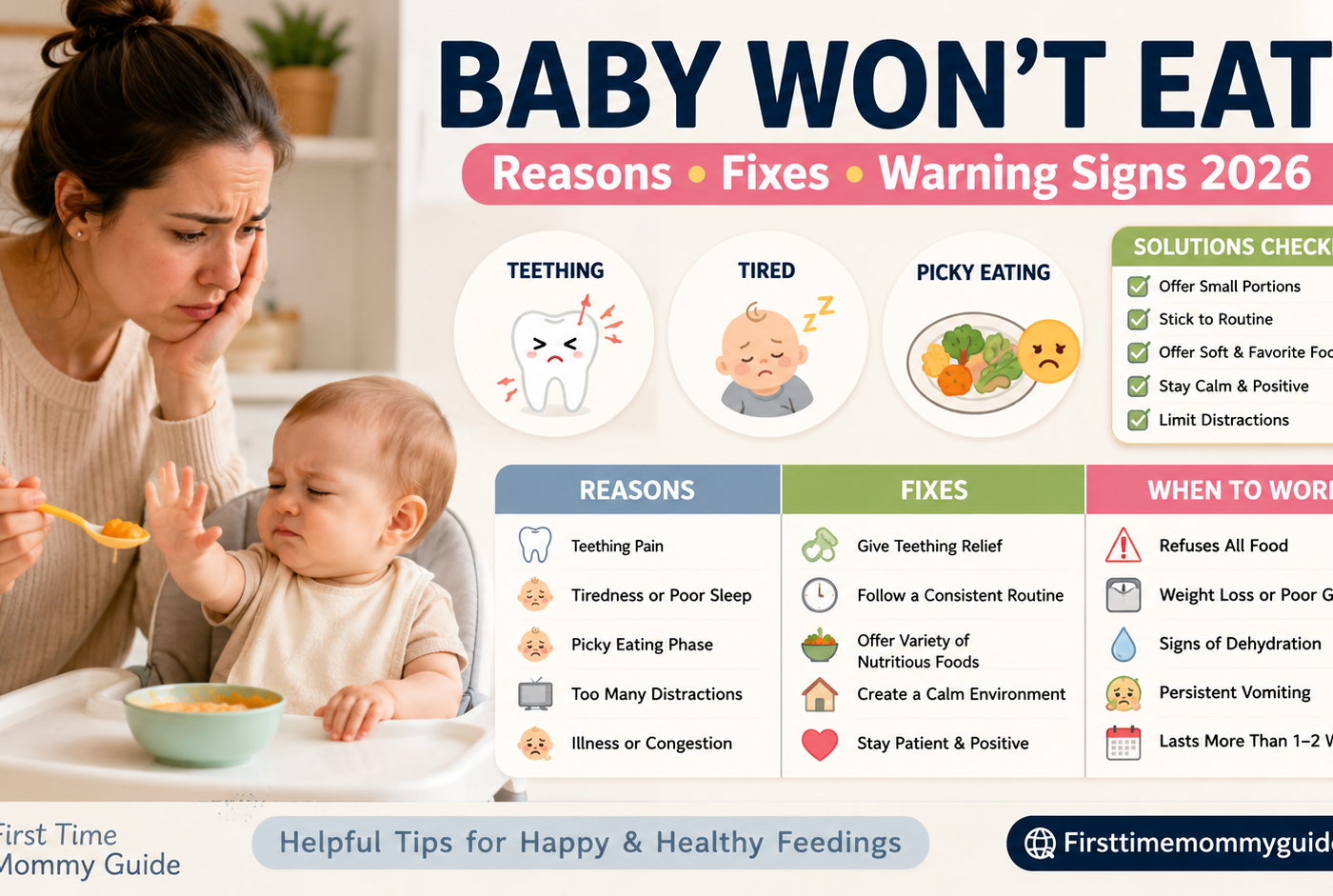
If your baby won’t eat, you are far from alone, and in the vast majority of cases, it isn’t a sign that something is wrong. It’s usually a normal, temporary phase tied to development, teething, illness, or simply how eating skills are learned.
Table of Contents
Baby Won’t Eat?
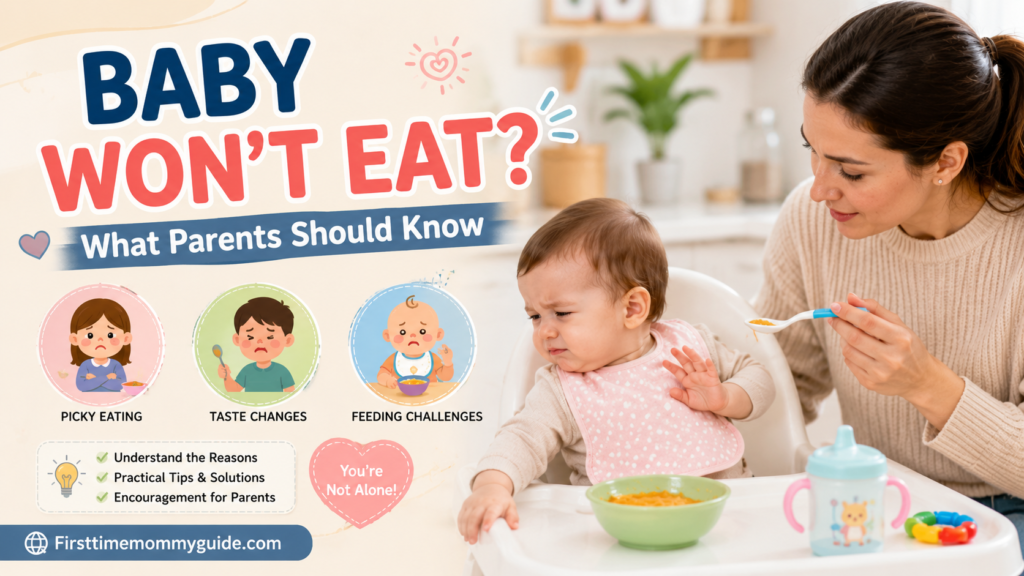
Babies commonly refuse food due to teething, illness, being overtired, sensory sensitivity to new textures, an immature swallow reflex, or simply not being developmentally ready yet.
Most food refusal resolves on its own within a week or two. Contact your pediatrician if refusal lasts more than a few days, is paired with weight loss, dehydration, lethargy, or vomiting, or your baby consistently gags and chokes on food.
Why Won’t My Baby Eat? The Most Common Reasons
Food refusal rarely has one single cause — it’s usually a mix of age, timing, and how your baby is feeling that day. Here’s a breakdown of the reasons that come up again and again.
1. They Aren’t Developmentally Ready Yet
Even at 6 months, some babies simply need more time. Six months of age is generally the right time to introduce solid foods, but sometimes a baby just isn’t ready — this is especially common closer to 4 and 5 months, and is still completely normal at 6 months. If your baby still pushes the spoon back out every time, that persistent tongue-thrust reflex often just means they need a bit more time.
2. Teething
Sore, swollen gums make chewing genuinely uncomfortable. When gums are sore from teething, solid foods can be more painful to chew, so many babies show a temporary preference for milk feeds during this time. This usually resolves once the tooth breaks through.
3. Illness
A cold, ear infection, or upset stomach can flatten appetite fast. Babies coming down with an illness will often refuse solid food in favor of breast milk or formula, since it’s easier to take in and more comforting when they’re not feeling well.
4. Sensory Sensitivity to Texture
Some babies are simply more sensitive to new textures, temperatures, or the feeling of mess on their hands. Some babies feel overwhelmed by sensory information, including texture, and may pull away from certain foods or become distressed if their hands get messy.
5. Overfull From Milk
If your baby is drinking a lot of breast milk or formula close to mealtime, they may simply not have room for solids. Babies who drink large volumes of milk — especially over 32 ounces a day around 9–10 months — may be too full to want solid food, and spacing milk earlier in the wake window, or waiting 30–45 minutes after a bottle before offering solids, can make a real difference.
6. Feeding Pressure or High-Stress Mealtimes
Ironically, pushing harder often backfires. High-pressure environments, spoon-feeding without respecting a baby’s cues, or unrealistic expectations can all cause resistance at the table.
7. A Normal Independence Phase
Around 8–9 months, a lot of “refusal” is actually about control, not dislike of the food itself. “Feeding the floor” — dropping and playing with food more than eating it — is a classic sign of feeding independence that often shows up around the ninth month, when babies want more control over their own feeding.
8. Gagging on New Textures
A little gagging is a normal, protective reflex — not necessarily choking. If your baby is having a hard time swallowing solids, try putting less food on the spoon; if gagging continues, they may not be ready for that texture yet, and your baby’s healthcare provider can help rule out other causes of persistent gagging.
Reasons by Age: What’s Typical at Each Stage
| Age | Most Likely Reason | What Usually Helps |
|---|---|---|
| 4–6 months | Not developmentally ready; tongue-thrust reflex still active | Wait, retry in 1–2 weeks, watch for readiness signs |
| 6–8 months | Teething, adjusting to new textures | Offer cool, soft foods; avoid pressure |
| 8–10 months | Independence/control, illness, gagging on new textures | Let them self-feed; reduce spoon amounts; slow down new textures |
| 9–12 months | Filling up on milk, distraction, teething molars | Adjust milk timing; keep meals short and calm |
What to Do When Your Baby Refuses to Eat
Step 1 — Rule Out Illness or Teething First
Check for a fever, swollen or red gums, congestion, or general fussiness. First make sure your baby isn’t ill or teething before troubleshooting further.
Step 2 — Don’t Force It
Avoid the temptation to distract with a screen or trick your baby into “one more bite.” Forcing food, even gently, tends to build negative associations with mealtime over time.
Step 3 — Take the Pressure Off Yourself, Too
Focus on your role — offering nutritious food at consistent times — and let your baby decide whether and how much to eat; keeping mealtimes calm and free of persuasion helps build a positive relationship with food.
Step 4 — Adjust Texture and Temperature
If your baby seems uncomfortable, try cooler or softer options rather than pushing through with the same texture.
Step 5 — Try Again Later, Not Immediately
If your baby refuses a new food, don’t overreact — simply move on and try offering the same food again at another meal. During illness specifically, it’s okay for a child to eat poorly for several days, as long as they’re staying hydrated.
Step 6 — Watch Hydration, Not Just Food Intake
The priority during appetite dips is making sure your baby is drinking enough fluids and staying hydrated — with pediatricians typically looking for at least three wet diapers or urinations a day.
Feeding Approach: Pressure vs. Responsive Feeding
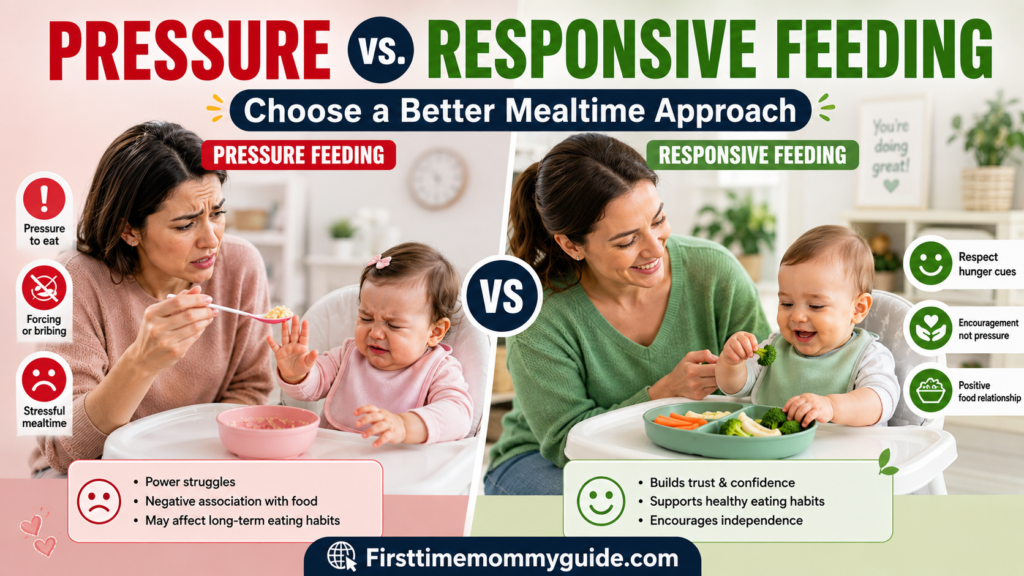
| Approach | What It Looks Like | Effect on Baby |
|---|---|---|
| Pressure feeding | Coaxing, distraction, insisting on “one more bite” | Can increase resistance and mealtime stress over time |
| Responsive feeding | Offering food, respecting fullness cues, no coaxing | Builds trust and a calmer relationship with food |
Picky Eating vs. a Feeding Problem
Most food refusal is ordinary picky eating, which is developmentally normal — a baby can seem picky for dozens of reasons, from an immature digestive system to teething, an infection, or simply not yet being ready for solids, and most of these resolve with time. A true feeding disorder looks different and more persistent.
| Sign | Typical Picky Eating | Possible Feeding Disorder |
|---|---|---|
| Duration | Days to a couple of weeks | Weeks to months, no improvement |
| Range of foods | Rejects some foods, accepts others | Accepts fewer than 20 distinct foods total |
| Growth | Growing normally | Loses weight or fails to gain weight for three consecutive months |
| Physical symptoms | Occasional gagging on new textures | Gags, chokes, or vomits during most meals |
| Behavior at meals | Mild fussiness | Panic, crying, or shutting down around food |
When to Call the Doctor
Most refusal phases pass on their own, but certain signs mean it’s time to check in with your pediatrician rather than wait it out.
- Your baby appears to be losing weight
- Signs of lethargy or dehydration
- Persistent vomiting, gagging, or diarrhea, especially tied to certain foods
- Abdominal pain
- Refusal lasting longer than a week with no improvement
- Ongoing refusal of solids at 7–8 months old
- No weight gain across three consecutive months
If you notice any of these, it’s worth mentioning even if you’re unsure it’s “important enough” — a quick pediatric check rules out underlying issues and gives you peace of mind either way.
Common Mistakes That Make Feeding Harder
- Offering a screen to distract during meals — this teaches a baby to eat without noticing fullness cues, not to enjoy food.
- Switching foods too fast after one rejection. Most babies need several exposures before accepting something new.
- Skipping meals entirely after a refusal. Keep offering meals on schedule, even if your baby eats little.
- Assuming refusal always means dislike. It’s often about fullness, fatigue, or discomfort, not taste.
- Increasing pressure when refusal continues. More coaxing usually increases resistance, not appetite.
- Not checking milk volume. A baby filling up on milk close to mealtime has little room left for solids.
Expert Tips for Smoother Mealtimes

- Keep meals to a reasonable length — around 20–30 minutes is enough, without letting mealtime drag on indefinitely.
- Let your baby touch and explore new food before expecting them to eat it.
- Offer new foods alongside familiar favorites rather than replacing them entirely.
- Keep a simple feeding log for a few days if refusal continues — it often reveals a pattern (teething, timing, texture) you hadn’t noticed.
- Eat together as a family when possible; babies often eat better when they see you eating too.
Related Articles
- First Food for Baby 6 Months: Best Options, Safety Tips & Feeding Guide
- First Foods for Baby at 6 Months: A Complete Guide to Starting Solids 2026
- Apple Puree for Baby: Easy Recipe & Safety Guide (2026)
- Baby Essentials Checklist: What New Parents Actually Need
- Baby Essentials, 0–3 Months
- Baby Sleep Guide
Frequently Asked Questions (FAQs)
Why does my baby refuse to eat solids but still drink milk fine?
This is common and usually points to teething, illness, or simply not being ready for the amount or texture of solids offered — milk is easier and more comforting.
Is it normal for a 6-month-old to refuse solids?
Yes. Six months is a starting point, not a strict deadline — some babies need more time to build the coordination and interest needed to eat solids.
Can teething cause a baby to stop eating?
Yes. Sore, swollen gums can make chewing uncomfortable, leading to a temporary drop in appetite that usually resolves once the tooth comes through.
Should I force my baby to eat if they refuse?
No. Forcing or pressuring a baby to eat tends to increase resistance and can create negative associations with mealtime.
How long can a baby go without eating solids before I should worry?
A few days of reduced solid intake is normal, especially during illness or teething. Refusal lasting more than a week, or paired with weight loss or dehydration, warrants a pediatrician visit.
Does gagging mean my baby isn’t ready for solids?
Occasional gagging on new textures is normal and protective. Frequent gagging or choking on most meals is worth discussing with your pediatrician.
Why does my baby eat well some days and refuse the next?
This is typical. Appetite naturally fluctuates with growth spurts, teething, tiredness, and mood — it doesn’t usually signal a problem.
Could my baby be full from milk instead of hungry for solids?
Yes. Babies drinking large volumes of milk close to mealtime, especially over 32 ounces a day, may simply not have room for solids.
Is picky eating the same as a feeding disorder?
No. Picky eating is normal and usually temporary. A feeding disorder involves a very limited food range, poor growth, or significant distress at nearly every meal.
What foods help a teething baby who won’t eat?
Cool, soft foods like chilled purees, yogurt, or soft fruit can be soothing on sore gums while still providing nutrition.
When should I take my baby’s food refusal seriously?
When it’s paired with weight loss, dehydration signs, lethargy, persistent vomiting, or lasts well beyond a week without improvement.
Can illness make my baby refuse food entirely?
Yes, and it’s common. As long as your baby stays hydrated, several days of reduced eating during illness is generally not a concern.
Should I switch foods immediately if my baby rejects one?
Not right away. Babies often need multiple exposures — sometimes 8 to 12 tries — before accepting a new food.
Is it okay to let my baby feed themselves if they refuse the spoon?
Yes. Self-feeding, even messy, can reduce mealtime resistance and build confidence with food.
Why does my baby refuse food around 8–9 months when they ate fine before?
This age often brings a natural push for independence and control, which can look like sudden pickiness rather than true dislike.
Does screen time during meals help a picky eater?
No. It distracts from hunger and fullness cues and doesn’t address the underlying reason for refusal.
How much weight loss in a baby is concerning?
Any noticeable or ongoing weight loss should be evaluated by a pediatrician, rather than monitored at home alone.
Can stress at mealtimes make food refusal worse?
Yes. High-pressure or tense mealtimes tend to increase resistance rather than encourage eating.
Is it normal for babies to have “off” weeks with food and then eat normally again?
Yes, appetite naturally fluctuates, and most refusal phases resolve within one to two weeks without intervention.
When should I ask my pediatrician about seeing a feeding specialist?
If refusal persists for weeks despite consistent, low-pressure feeding, or your baby shows extreme distress at nearly every meal, a referral may help.

Dilawar Mughal
Founder and editor, First Time Mommy Guide
I research every guide against what the NHS, the AAP and the WHO publish, then write it in plain English — because most new parents are reading with one hand free, not comparing clinical guidelines. I'm not a doctor or a midwife. Every health claim on this site is sourced and linked so you can check it yourself, and anything urgent belongs with your health visitor or GP, not a blog.