General information, not medical advice. Every baby is different — if anything worries you, speak to your midwife, health visitor or GP rather than waiting.
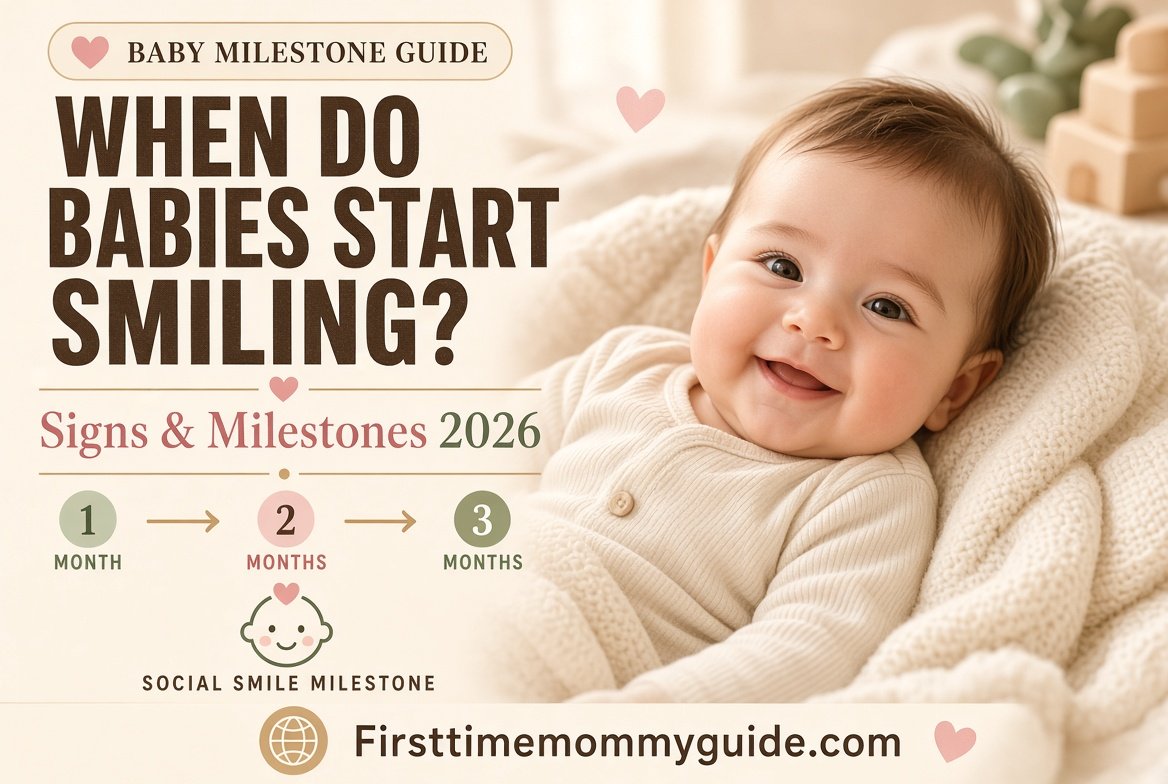
When Do Babies Start Smiling? Most babies start smiling for real — a true “social smile” — between 6 and 12 weeks old, with many pediatricians pointing to around 6-8 weeks as the average.
Before that, you might catch tiny reflex smiles, usually while your baby is sleeping, but these aren’t yet an intentional response to you.
If your baby hasn’t smiled by around 12 weeks, it’s worth mentioning at their next checkup — though timing varies a lot from baby to baby, and that alone rarely means anything is wrong.
Table of Contents
Key Takeaways
- Reflex smiles can appear from birth, even in utero around 33 weeks gestation.
- True “social smiles” — the ones that respond to your face or voice — typically show up between 6 and 12 weeks.
- The American Academy of Pediatrics often checks in about smiling at the 2-month well-baby visit.
- If there’s no smiling by 12 weeks, flag it with your pediatrician, especially alongside other missed milestones.
- Smiling is one of the first building blocks of your baby’s social and emotional development.
Reflex Smiles vs. Social Smiles
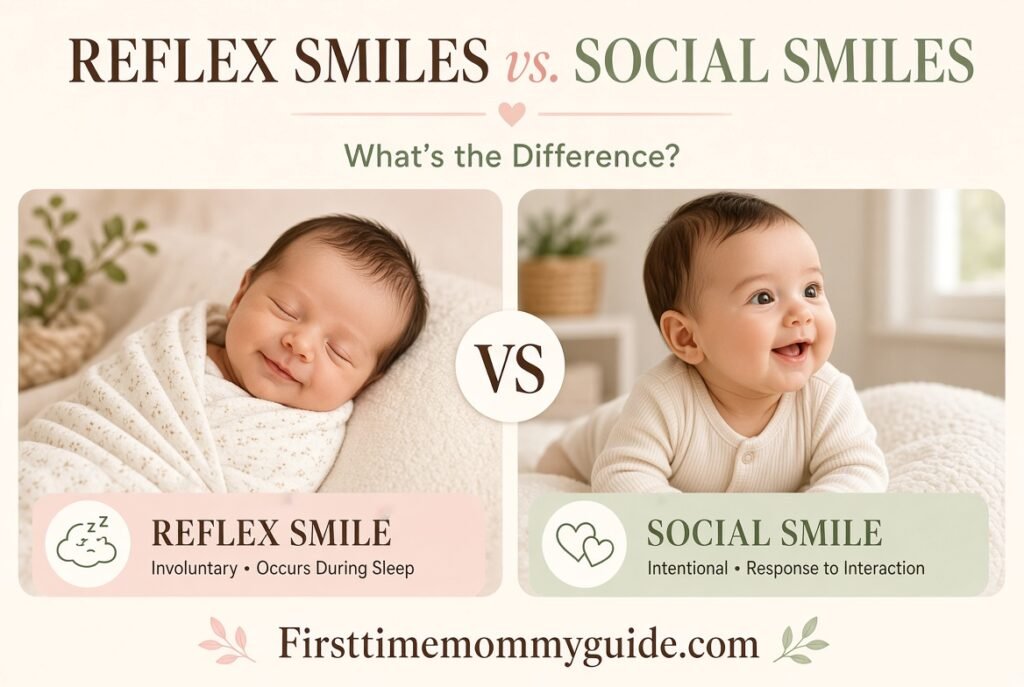
Not all baby smiles mean the same thing. Understanding the difference helps you know what you’re actually seeing.
Reflex smiles (newborn stage)
These early smiles are involuntary. They often happen during sleep and aren’t a response to anything happening around your baby.
Some babies even practice this expression before birth, with reflex-like mouth movements observed on ultrasound in the third trimester.
Social smiles (6-12 weeks)
This is the “real” smile parents wait for. It happens when your baby is awake, alert, and reacting to something they see, hear, or feel — usually your face.
Social smiling marks a real leap in development. It shows your baby’s vision and facial recognition are maturing, and that they’re starting to connect a smile with a pleasant feeling.
Age-by-Age Smiling Timeline
| Age | What to Expect |
|---|---|
| Birth-6 weeks | Reflex smiles, often during sleep, not aimed at anyone |
| 6-8 weeks | Many babies show their first true social smile |
| 8-12 weeks | Social smiling becomes more frequent and consistent |
| 3-4 months | Baby smiles more expressively and starts cooing |
| 4-6 months | Baby smiles to get your attention and begins laughing |
Why Babies Start Smiling When They Do
The 6-12 week window isn’t random. Two things are developing at the same time.
Your baby’s vision is sharpening enough to recognize faces clearly, especially yours. At the same time, their brain is learning that smiling gets a warm response back from you.
Every time you smile back, you’re reinforcing that connection. It teaches your baby that the world is responsive, safe, and worth engaging with.
How to Encourage Your Baby to Smile
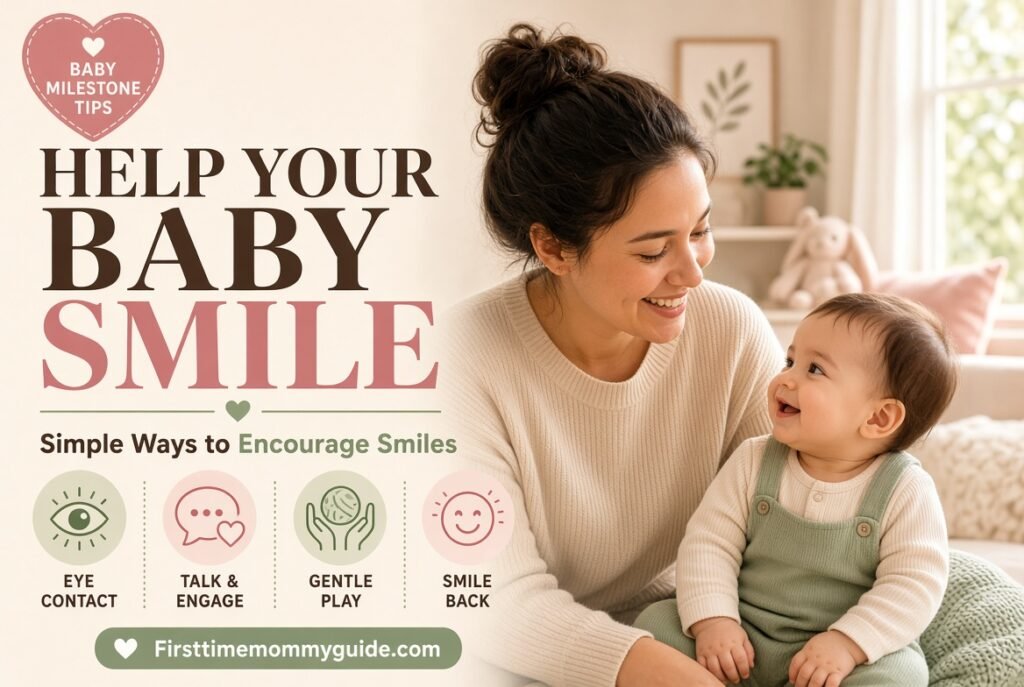
You can’t force a smile, but you can create more chances for one to happen.
Get face-to-face often
Hold your baby close enough to focus on your face. Babies this age see best at a short distance, roughly the space between your face and theirs during feeding or cuddling.
Exaggerate your expressions
Smile broadly, widen your eyes, and use a warm, animated voice. Babies pick up on and often mimic expressive faces.
Play simple games
Peekaboo, gentle surprises, and silly sounds spark delight. The element of surprise is often what triggers those early giggly smiles.
Respond to every smile
When your baby smiles, smile right back and talk to them. This back-and-forth is what builds trust and encourages more smiling over time.
When to Talk to Your Pediatrician
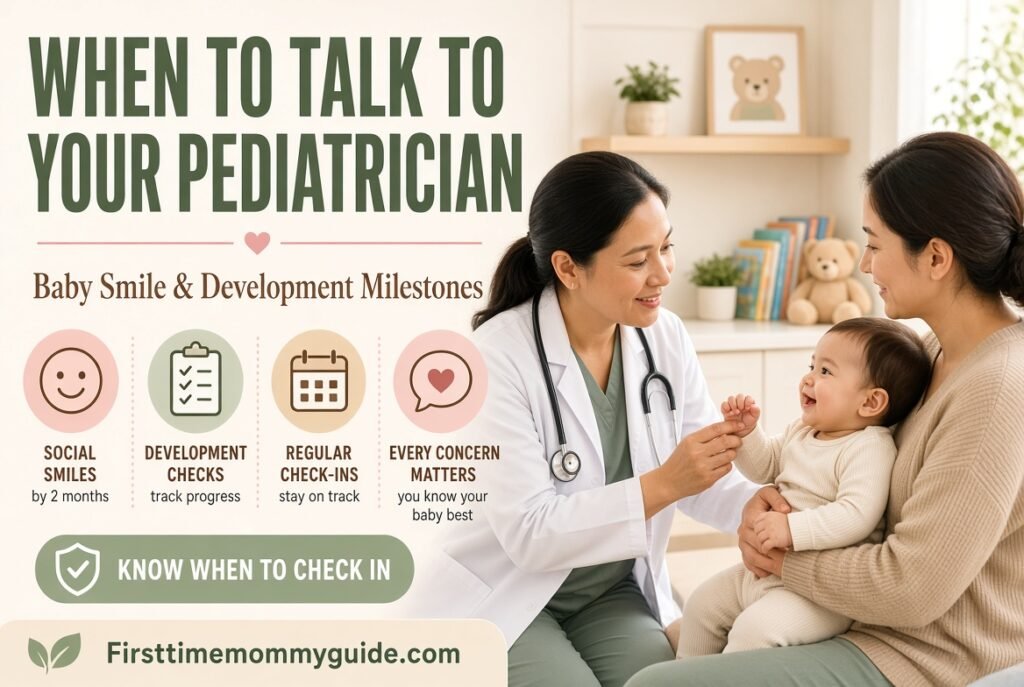
Every baby has their own pace and personality, and some are simply less smiley than others without anything being wrong.
That said, mention it to your pediatrician if your baby hasn’t smiled at all by around 12 weeks. It’s also worth flagging reduced eye contact, little response to your voice, or a lack of interest in faces alongside no smiling.
Your pediatrician can look at the full picture of your baby’s development, not just one milestone in isolation. Bringing it up early simply gives you peace of mind and, if needed, an early start on support.
Also Read:
- Baby Food Guide: 6 to 12 Months
- Baby Essentials Checklist: 0-3 Months
- Pregnancy Guide: Month by Month
- Baby Sleep Guide
- Zucchini Puree for Baby: Easy Recipe & Age Guide
- Homemade Pumpkin Puree for Baby: Easy, Safe Recipe (6+ Months)
- Baby Food Combo Purees: The Complete Age-by-Age Guide
- Best Baby Food Combinations: A Complete Age-by-Age Guide
- Fruit Purees for 6 Month Old Babies: Safe Recipes & Guide
- Best Vegetable Purees for Baby: A Complete Age-by-Age Guide
Frequently Asked Questions (FAQs)
1. When do babies start smiling for real?
Most babies show their first true social smile between 6 and 12 weeks old, with many pediatricians citing 6-8 weeks as typical.
2. What’s the difference between a reflex smile and a real smile?
Reflex smiles are involuntary and often happen during sleep. Social smiles happen while awake, in response to a face, sound, or pleasant sensation.
3. Can newborns smile on day one?
Yes, some newborns show reflex smiles within their first days, and these expressions have even been observed before birth on ultrasound.
4. Is it normal if my baby hasn’t smiled by 2 months?
It can still be normal, since timing varies by baby. If there’s no smile by around 12 weeks, mention it at your next checkup.
5. Why do doctors ask about smiling at the 2-month checkup?
Social smiling is an important early marker of social and emotional development, so pediatricians often check in on it as part of routine screening.
6. What triggers a baby’s first social smile?
Improving vision and facial recognition, combined with positive responses from caregivers, come together around 6-12 weeks to produce that first real smile.
7. Do premature babies smile later?
Yes, premature babies often reach smiling and other milestones later than their due date would suggest, based on their adjusted age rather than birth date.
8. How can I get my baby to smile more?
Spend more face-to-face time together, exaggerate your expressions, play simple games like peekaboo, and respond warmly every time your baby smiles.
9. Does my baby’s smile mean they recognize me?
Yes, by the time social smiling appears, your baby’s vision is sharp enough to recognize familiar faces, especially yours.
10. When do babies start laughing after they start smiling?
Laughter typically follows smiling, usually appearing somewhere between 4 and 6 months of age.
11. Is smiling linked to a baby’s temperament?
Yes, some babies are naturally more expressive and smile easily, while others take more effort to engage, and both patterns are normal.
12. Can a lack of smiling be a sign of a developmental concern?
In some cases, reduced smiling combined with other missed milestones, like limited eye contact, can be worth discussing with a pediatrician.
13. Should I be worried if my baby only smiles at certain people?
No, it’s common and healthy for babies to smile most at familiar caregivers first before smiling more broadly at others.
14. What comes after social smiling in development?
After smiling, babies typically move on to cooing, then babbling, and eventually laughing as their communication skills grow.
15. Do babies smile while dreaming?
Yes, reflex smiles often occur during active sleep, and researchers believe this may relate to brain development rather than any actual emotion.
16. Can I do anything to speed up my baby’s first smile?
You can’t rush it, but frequent face-to-face interaction, talking, and smiling at your baby help create the best conditions for it to happen.
17. Does screen time affect when a baby smiles?
There isn’t strong evidence linking screen time to smiling milestones directly, but real, in-person interaction is what best supports early social development.
18. What if my baby smiles but avoids eye contact?
Occasional avoided eye contact is common, but if it’s a consistent pattern alongside reduced smiling, it’s worth mentioning to your pediatrician.
19. Are girls or boys likely to smile earlier?
There’s no strong, consistent evidence that a baby’s sex affects when their first social smile appears.
20. How do I know if my baby’s smile is real and not gas?
A real social smile happens while your baby is awake and alert, usually paired with eye contact, rather than during sleep or straining.
Conclusion
Most babies begin true social smiling somewhere between 6 and 12 weeks old, once their vision sharpens and they learn that smiling brings a warm response.
Reflex smiles may show up earlier, even before birth, but they aren’t yet aimed at you the way a social smile is. Every baby moves at their own pace, so try not to compare too closely with other babies.
If you’re still waiting for that first real smile by around 12 weeks, mention it to your pediatrician just to be safe. Otherwise, keep smiling back — it’s one of the simplest, most powerful ways to support your baby’s development.

Dilawar Mughal
Founder and editor, First Time Mommy Guide
I research every guide against what the NHS, the AAP and the WHO publish, then write it in plain English — because most new parents are reading with one hand free, not comparing clinical guidelines. I'm not a doctor or a midwife. Every health claim on this site is sourced and linked so you can check it yourself, and anything urgent belongs with your health visitor or GP, not a blog.