
General information, not medical advice. Every baby is different — if anything worries you, speak to your midwife, health visitor or GP rather than waiting.
If your baby treats their pacifier like a best friend, the thought of taking it away can feel overwhelming. You might worry about sleepless nights, endless crying, and whether you are doing the right thing at the right time. Take a deep breath. Almost every parent faces this moment, and almost every baby gets through it.
Weaning a baby off a pacifier is not a single event. It is a gradual process of replacing one comfort habit with others. Some babies let go easily. Others protest for a few days and then move on. Either way, there is a method that fits your child's age and temperament.
This guide walks you through when to start, which method to choose, how to handle naps and bedtime, and what to do when the crying starts. You will also find expert-backed advice on dental health, common mistakes to avoid, and answers to the questions parents ask most.
Quick Answer: How Do You Wean a Baby Off a Pacifier? Start by limiting pacifier use to sleep times only, then remove it from naps first and bedtime last — or go cold turkey and remove it completely. Most babies adjust within three to seven days. Offer comfort in other ways: extra cuddles, a lovey, a bedtime routine, and soothing words. The American Academy of Pediatrics (AAP) suggests considering weaning after six months and aiming to stop by age two to three to protect developing teeth and speech. If your child is over age three and still using a pacifier regularly, talk to your paediatrician or dentist.
Why Babies Love Pacifiers (And Why Weaning Matters)
Sucking is one of a baby's first reflexes. It calms them, helps them fall asleep, and gives them a way to self-soothe when the world feels too big. A pacifier taps directly into that instinct, which is why it works so well.
Pacifiers also have real benefits in the early months. Research reviewed by the AAP links pacifier use at sleep times with a lower risk of sudden infant death syndrome (SIDS) in the first year. That is one reason many hospitals and paediatricians support pacifier use for young babies.
But the habit has a natural expiry date. As babies grow into toddlers, the pacifier can start to interfere with speech development, sleep quality, and dental alignment. Prolonged use past age two increases the risk of an open bite or crossbite, where the front teeth do not meet properly. The American Academy of Pediatric Dentistry recommends weaning from pacifiers by age three at the latest.
None of this means you have done anything wrong by giving your baby a pacifier. It means the tool has served its purpose, and your child is ready for the next stage. Weaning is a milestone, not a punishment.
When to Start Weaning Off the Pacifier
Timing matters more than technique. Start too early and your baby may not have other soothing skills yet. Wait too long and the habit becomes deeply entrenched. The sweet spot for most families is between six and eighteen months, with flexibility either way.
Pacifier Weaning by Age
| Age | What to expect | Best approach |
|---|---|---|
| 0–6 months | Sucking reflex is strong; pacifier helps with SIDS risk reduction | Do not wean yet; use freely at sleep times |
| 6–12 months | Baby is developing other self-soothing skills; separation awareness grows | Begin limiting to sleep times only; try gradual reduction |
| 12–18 months | Strong attachment may form; toddler understands simple explanations | Ideal window for gradual weaning or cold turkey |
| 18–24 months | Habit is well established; child can understand the "pacifier fairy" idea | Cold turkey or pacifier fairy often works well |
| 2–3 years | Dental effects become a real concern; child can reason and be motivated | Gentle but firm removal; use stories, rewards, and praise |
| 3+ years | Prolonged use risks bite problems and speech delays | Wean now; involve your paediatrician or dentist if needed |
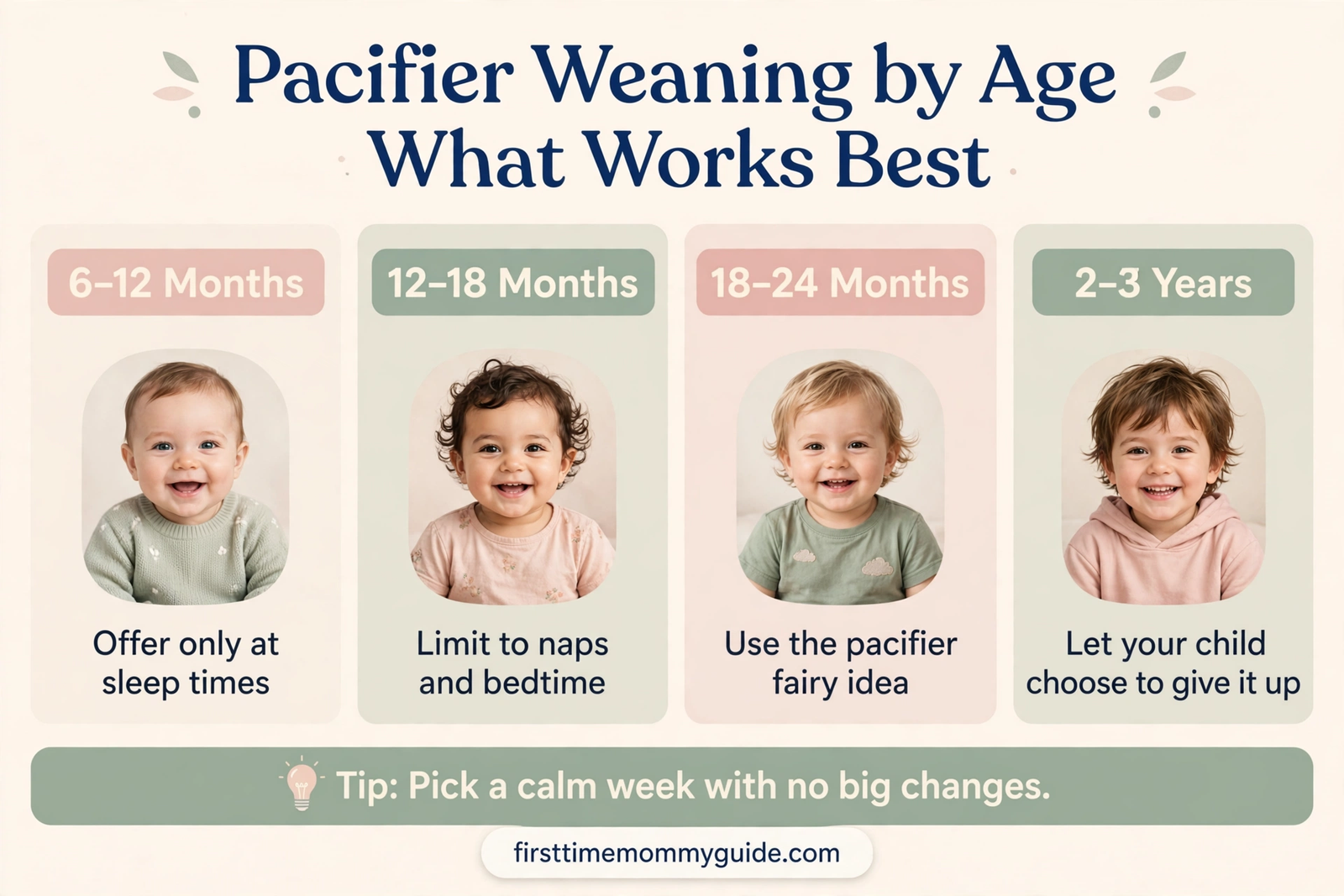
The AAP notes that pacifier use beyond age two is associated with more ear infections and dental concerns. The NHS advises that dummy use should ideally stop by twelve months, and certainly before permanent teeth arrive. These are guidelines, not deadlines. Your child's readiness matters as much as the calendar.
Signs Your Baby Is Ready
Watch for these signs that weaning may go smoothly:
- Your baby sometimes falls asleep without the pacifier or spits it out during sleep.
- They can self-soothe in other ways, such as cuddling a blanket or sucking a thumb briefly.
- They are eating solid foods and drinking from a cup, so sucking is less central to feeding.
- They are going through a calm period, not teething badly, moving house, or starting nursery.
- You feel ready. Your confidence matters. If you are anxious and inconsistent, your baby will sense it.
When to Wait
Delay weaning if your child is ill, teething heavily, has just started daycare, or your family is going through a big change such as a move or a new sibling. Pick a calm week with no travel planned. You need a few ordinary days at home to get through the hardest part.
Step-by-Step Pacifier Weaning Methods

There is no single best method. The right one depends on your child's age, temperament, and how attached they are. Here are the five approaches parents use most, with honest pros and cons for each.
Method 1: Gradual Reduction
Gradual reduction is the gentlest path. Instead of removing the pacifier all at once, you slowly shrink the times and places it is allowed.
Start by setting a rule: the pacifier is only for sleep. Remove it during playtime, car rides, and meals. If your baby asks for it outside sleep times, distract them with a toy, a snack, or a cuddle. Most babies accept this step within a few days.
Next, shorten the time the pacifier is available at sleep. Offer it to help your baby fall asleep, then gently remove it once they are drowsy. Over a week or two, offer it later and later, until they fall asleep without it most nights.
Finally, remove it from naps first, then bedtime. Naps are shorter and daytime crying is easier to manage, which makes them a good training ground. Once naps are pacifier-free, bedtime usually follows within a few days.
Gradual reduction works best for babies under eighteen months and for parents who prefer a low-drama transition. The downside is that it takes longer, sometimes two to four weeks, and it requires consistency. If you give in and reintroduce the pacifier at 2 a.m., your baby learns that crying long enough brings it back.
Method 2: Cold Turkey
Cold turkey means removing the pacifier completely, all at once, and not bringing it back. It sounds harsh, but for many toddlers it is actually the clearest and kindest option. There is no confusion about when the pacifier is allowed. It is simply gone.
Pick a day, remove every pacifier from the house, and prepare for two to three hard nights. The first night is usually the worst. Expect more crying at bedtime and more night wakings. By night three or four, most children have found new ways to settle and sleep improves.
Cold turkey works best for toddlers over eighteen months who are strongly attached and would be confused by partial rules. It also suits parents who know they will struggle to stay consistent with a gradual plan. The downside is the intensity. The first forty-eight hours can be rough, and you need to be prepared to comfort your child without caving.
Make the break clean. Throw the pacifiers away or give them to a friend. If one is still in the house, you will be tempted to use it at 3 a.m. Remove the temptation entirely.
Method 3: Cut the Tip
The cut-the-tip method is a clever middle ground. You snip a tiny piece off the tip of the pacifier nipple. The pacifier looks the same, but sucking on it no longer feels satisfying. Many babies lose interest on their own within a day or two.
Cut only a very small amount at first. If your baby still enjoys it, trim a little more the next day. Some parents cut a small slit instead, which reduces suction. Stop using the pacifier once the tip is significantly altered, and check it regularly for tears or loose pieces.
This method works well for babies between twelve and twenty-four months who are attached to the feel of sucking. It lets the child decide the pacifier is no longer fun, which reduces the sense of loss. The main risk is safety: a damaged pacifier can tear and become a choking hazard, so inspect it before every use and discard it at the first sign of damage. Never cut the tip of a pacifier for a baby under twelve months.
Method 4: The Pacifier Fairy
The pacifier fairy is a story-based method for toddlers aged two and up. You tell your child that the pacifier fairy collects pacifiers from big kids and leaves a small gift in exchange. Together, you place the pacifiers in a bag or box by the bed. In the morning, the gift has arrived and the pacifiers are gone.
This method works because it gives your child a sense of control and pride. They are not losing something. They are trading up, like a milestone. Choose a gift your child will genuinely love, such as a special toy, a new book, or a small stuffed animal. Let them pick it if possible.
Prepare your child for a few days before the big night. Read books about giving up the pacifier. Talk about the fairy. Let them say goodbye to their pacifiers. On the night itself, keep the bedtime routine warm and familiar. Expect some sadness even with the gift, and comfort them through it.
The pacifier fairy is less effective for children under two, who will not understand the story. It also requires follow-through. If your child asks for the pacifier the next night, remind them gently that the fairy took it and the gift is theirs to keep.
Method 5: The Book Method
The book method uses stories to prepare your child emotionally before the pacifier disappears. For a week or two before weaning, read picture books about characters who give up their pacifiers. Talk about the story as you read. Ask your child what they think the character feels.
Good stories normalise the transition. Your child sees that other children go through the same thing and come out fine. Some parents combine this with a gradual plan, reading the book each night while reducing pacifier time. Others use it as preparation for cold turkey.
The book method is gentle and works well for toddlers who are anxious about change. On its own it will not remove the habit, so pair it with one of the other methods. Think of it as preparation, not the plan itself.
Choosing the Right Method for Your Child
If you are unsure which method to pick, match it to your child's age and personality.
A baby under twelve months usually does best with gradual reduction. They cannot understand stories or trades, but they can adapt to slowly shrinking pacifier time. A determined toddler who asks for the pacifier by name may do better with cold turkey, because partial rules will only frustrate them. A sensitive toddler who loves stories may respond beautifully to the pacifier fairy.
There is no wrong choice as long as you stay consistent for at least a week. Switching methods every two days teaches your child that protesting brings the pacifier back. Give your chosen method a fair trial before deciding it is not working.
What to Do at Naps and Bedtime
Sleep is where pacifier weaning is hardest, because the pacifier is most closely tied to falling asleep. Handle sleep separately from daytime weaning and give it extra attention.
Weaning at Naps
Start with naps. They are shorter than night sleep, and daytime crying is easier to comfort. For the first nap without a pacifier, keep everything else the same: the same room, the same routine, the same lovey.
Use a short, predictable nap routine. Change the nappy, read a brief story, sing a song, and lay your baby down drowsy but awake. Stay nearby if that helps, patting their back or humming softly. Some babies cry for ten minutes and then sleep. Others need several days of shorter naps before they settle.
If your baby becomes overtired, they will find it even harder to fall asleep without the pacifier. Keep wake windows age-appropriate and watch for sleepy cues such as rubbing eyes or going quiet. A well-timed nap is half the battle. For more on building a routine that supports independent sleep, see our guide to baby sleep training methods.
Weaning at Bedtime
Once naps are pacifier-free, tackle bedtime. Or, if you chose cold turkey, tackle both at once. Either way, build a bedtime routine that replaces the soothing the pacifier provided.
A good routine has three or four calm steps in the same order every night: a warm bath, pyjamas, a story, and a lullaby. The predictability itself is soothing. Your baby learns that these steps mean sleep is coming, which reduces the need for a pacifier to signal it.
Offer a comfort object, such as a small soft toy or blanket, if your baby is over twelve months. The AAP advises keeping soft objects out of the crib for babies under twelve months, so for younger babies rely on your presence, gentle patting, and white noise instead. A newborn sleep routine guide can help you build the right sequence for your baby's age.
Keep the room dark, cool, and quiet. White noise can help mask household sounds during the transition. If your baby wakes at night asking for the pacifier, go in, comfort them briefly, and leave while they are still drowsy. Avoid turning on bright lights or starting a play session.
Handling Crying and Sleep Disruption
Crying is the part every parent dreads. It helps to know what is normal and how to respond without undoing your progress.
Why Your Baby Cries Without the Pacifier
Your baby is not crying because they are in pain. They are crying because a familiar comfort has disappeared and they have not yet learned a replacement. That is a normal, healthy protest. It does not mean you are harming them or that weaning was the wrong choice.
Crying usually peaks on the first or second night and fades fast. Most families find that by night three or four, crying is shorter and sleep is returning to normal. If crying is still intense after a week, the timing may be wrong or your child may need a slower approach.
How to Comfort Without the Pacifier
You do not need to leave your baby to cry alone. Comfort them in ways that build new sleep associations:
- Hold and rock them until they are calm, then lay them down drowsy.
- Pat their back rhythmically or hum a low, steady tune.
- Offer water in a sippy cup if they are over six months and thirsty.
- Use a lovey or comfort blanket for toddlers over twelve months.
- Stay in the room for a few minutes, sitting quietly, until they settle.
The goal is to replace the pacifier with your calm presence and then gradually reduce your presence too. Over a week, move from holding to patting to simply sitting nearby. Your baby learns to fall asleep without either the pacifier or being held.
If the crying feels unmanageable, review our guide on how to soothe a crying baby for techniques that work beyond pacifier weaning.
Sleep Regression and Night Wakings
Some babies wake more often for a few nights after the pacifier goes. This is temporary. Keep your response boring and brief: a quick check, a reassuring word, and back to bed. Avoid feeding, playing, or turning on lights unless your baby genuinely needs it. Babies who were using the pacifier to fall back asleep between sleep cycles need a few nights to learn to do that on their own.
If night feeds are part of the picture, you may find that weaning the pacifier also changes night waking patterns.
Do not reintroduce the pacifier for one "emergency" night and expect no consequences. Your baby will learn that crying hard enough brings it back, and the next night will be harder. If you genuinely feel the timing was wrong, stop weaning properly and try again in a few weeks, rather than flip-flopping night by night.
What NOT to Do When Weaning Off the Pacifier
Good intentions can backfire. Avoid these common mistakes.
Do not dip the pacifier in sugar, honey, or juice. Sweetening the pacifier damages emerging teeth and creates a new habit. Honey is also unsafe for babies under twelve months because of the risk of infant botulism, a serious illness the CDC warns about.
Do not punish or shame your child. Taking the pacifier away as a punishment, or teasing a toddler about still using one, creates anxiety around the change. Weaning works best when it feels like growing up, not like being punished.
Do not tie the pacifier to the crib or clothing. Strings, ribbons, and cords around a baby's neck are a strangulation hazard. The AAP and NHS both warn against attaching a pacifier with a cord or string.
Do not use a pacifier that is damaged or too small. Check pacifiers regularly for tears, cracks, or loose parts. Replace them every four to six weeks, and always use the size recommended for your baby's age.
Do not wean during illness or teething. A sick or teething baby needs comfort more than a lesson in independence. Wait until they are well and settled before starting.
Do not let different caregivers follow different rules. If grandparents or nursery staff keep offering the pacifier, your baby will be confused. Tell everyone the plan and ask them to follow it.
Mistakes to Avoid
Beyond the clear don'ts, there are quieter mistakes that slow weaning down.
The first is starting and stopping. Parents often remove the pacifier for two nights, feel guilty, and give it back. The baby then has to go through the hardest part all over again next time. Commit to at least five to seven days before judging whether a method works.
The second is weaning too many things at once. Do not try to stop the pacifier, the bottle, and night feeds in the same week. Pick one change, let it settle, then move to the next.
The third is ignoring the emotional side. For a toddler, the pacifier is a friend. Acknowledge that. Saying "I know you miss your paci, and I am here" is far more effective than pretending nothing has changed.
The fourth is forgetting daytime comfort. Weaning is not only about sleep. If your toddler reaches for the pacifier when they are bored, upset, or tired during the day, offer an alternative: a cuddle, a drink, a toy, or a change of scene. Fill the gap the pacifier leaves.
The fifth is comparing your child to others. Some babies drop the pacifier in a day. Others take a month. Neither is a sign of good or bad parenting. Your child's pace is the right pace.
Expert Tips for a Smoother Transition
Paediatricians and dentists who work with families every day share the same advice: keep it simple, stay consistent, and make your child feel proud, not punished.
Pick a calm week. Check your calendar before you start. Avoid weaning during travel, illness, teething, or nursery transitions. A quiet week at home gives your child the best chance.
Offer a replacement comfort. A special blanket, a soft toy, or extra cuddles can fill the gap. Let your toddler choose their comfort object so it feels like theirs. For teething babies, a chilled teething ring can help with sore gums.
Use praise generously. Notice and name every success. "You fell asleep without your paci tonight — you are such a big girl" builds pride. A simple sticker chart can motivate toddlers who love visible rewards.
Keep the pacifier out of sight. If your baby sees pacifiers in a drawer or on a counter, they will ask for them. Remove them from view completely.
Distract during the day. Boredom is a major trigger for pacifier-seeking. When your toddler reaches for it, offer an activity, a snack, or a walk outside. Busy hands forget about pacifiers faster.
Stay consistent across caregivers. Everyone who looks after your child should follow the same plan. A quick message to grandparents, partners, and nursery staff prevents mixed signals.
Watch for thumb sucking. Some babies replace a pacifier with thumb sucking, which is harder to stop later. If you notice this, gently redirect the hand and offer a toy or cuddle. Our guide on how to stop baby thumb sucking has more strategies if this becomes a habit.
Be patient with yourself. You may feel guilty on night one. That is normal. You are not taking away comfort. You are helping your child build new, healthier ways to soothe themselves. That is good parenting.
Pacifiers, Teeth, and Speech
Many parents worry most about teeth. Here is what the evidence says.
Short-term pacifier use in the first year rarely causes lasting dental problems. Issues arise when use continues past age two or three, or when the pacifier is used intensely for many hours a day. The most common effects are an open bite, where the front teeth do not meet, and a crossbite, where the upper teeth sit inside the lower teeth. The good news is that these changes often correct themselves if the habit stops before permanent teeth arrive, usually around age six.
Speech can also be affected. A child with a pacifier in their mouth talks less and practises sounds less. If your toddler uses a pacifier for hours during the day, they have fewer chances to babble, form words, and hold conversations. Limiting the pacifier to sleep times protects those talking hours.
Good oral care matters alongside weaning. Start cleaning your baby's teeth as soon as they appear, and book a first dentist visit by their first birthday or within six months of the first tooth. Our guides to how to clean baby's first teeth and your baby's first dentist visit walk you through both steps.
When to Talk to a Paediatrician or Dentist
Most pacifier weaning can be handled at home. But seek professional advice if:
- Your child is over three and still using a pacifier regularly.
- You notice changes in their bite, such as front teeth that do not meet or teeth that stick out.
- Your child has frequent ear infections, which the AAP links to pacifier use after six months.
- Speech seems delayed, or your child talks noticeably less than peers their age.
- Your child has replaced the pacifier with intense thumb sucking that is affecting their teeth.
- Weaning attempts repeatedly fail and your child becomes very distressed, withdrawing or refusing food.
Your paediatrician or dentist can check your child's teeth and mouth, reassure you about what is normal, and suggest a plan that fits your child. There is no shame in asking. They answer this question every week.
For general guidance, the AAP's parent site HealthyChildren.org (healthychildren.org) covers pacifier safety and weaning, the NHS (nhs.uk) offers advice on dummy use and dental health, and the American Academy of Pediatric Dentistry (aapd.org) publishes guidance on oral habits in young children. The CDC (cdc.gov) also provides information on infant botulism and why honey should never be given to babies under twelve months.
Frequently Asked Questions
1. What is the best age to wean a baby off a pacifier?
Most experts suggest starting between six and twelve months and aiming to stop by age two to three. The ideal window for many families is twelve to eighteen months, when babies can adapt quickly. There is no single perfect age — your child's readiness and your family's circumstances matter too.
2. How long does it take to wean a baby off a pacifier?
With cold turkey, most babies adjust within three to seven days. Gradual reduction takes two to four weeks. The first two or three nights are usually the hardest, and then crying and night wakings fade. If it is still very hard after a week, consider pausing and trying again later.
3. Is cold turkey or gradual weaning better?
Neither is better for every child. Cold turkey is faster and clearer, and suits determined toddlers. Gradual reduction is gentler and suits younger babies and anxious parents. The best method is the one you can stay consistent with for at least a week.
4. Will my baby cry a lot when we stop the pacifier?
Probably, for a few nights. Crying is a normal protest when a comfort disappears. It usually peaks on night one or two and fades by night four. Comfort your baby with cuddles, patting, and soothing words rather than bringing the pacifier back.
5. Can I wean the pacifier at night only?
Yes. Many parents start by removing the pacifier at naps, then at bedtime, or vice versa. Keeping it for one sleep time while removing it from the other can work, but some babies find partial rules confusing. If it works for your child, it is a valid approach.
6. What if my baby only falls asleep with a pacifier?
This is very common. Replace the pacifier's role with a consistent bedtime routine, white noise, and your calm presence. Lay your baby down drowsy but awake and pat or hum until they settle. It takes a few nights, but babies learn to fall asleep without it.
7. Is it okay to cut the tip off the pacifier?
Yes, for babies over twelve months, cutting a small piece off the tip can reduce the satisfaction of sucking and help them lose interest. Inspect the pacifier before every use and discard it at the first sign of tearing, as a damaged pacifier can be a choking hazard.
8. Does pacifier use affect teeth?
Prolonged use past age two or three can cause an open bite or crossbite. Short-term use in the first year rarely causes lasting problems, and bite changes often correct themselves if the habit stops before permanent teeth arrive. Ask your dentist if you are concerned.
9. Does pacifier use delay speech?
It can, if a toddler uses a pacifier for many hours during the day. A pacifier in the mouth means fewer opportunities to practise sounds and words. Limiting pacifier use to sleep times protects talking time and supports speech development.
10. What is the pacifier fairy?
The pacifier fairy is a story for toddlers aged two and up. The child leaves their pacifiers out overnight, and the fairy takes them and leaves a small gift. It turns weaning into a proud milestone instead of a loss, and it works well for children who understand stories and trades.
11. What if my baby starts sucking their thumb instead?
Some babies do. Gently redirect the hand and offer a toy, a cuddle, or a teething ring. Thumb sucking is harder to stop than pacifier use, so it is worth addressing early. If it becomes a strong habit, talk to your paediatrician or dentist.
12. Should I wean the pacifier before starting nursery?
Not necessarily, but it helps to avoid starting weaning in the same week as nursery. Too many changes at once can overwhelm a baby. Wean a few weeks before nursery starts, or wait until they have settled in.
13. Can I use a pacifier while weaning from night feeds?
You can, but the two changes interact. Some babies use the pacifier to fall back asleep instead of feeding, so removing it may temporarily increase night wakings. Tackle one change at a time where possible, and keep night responses calm and brief.
14. What if grandparents keep giving the pacifier back?
Talk to them kindly but clearly. Explain your plan and ask them to follow it, even when your child cries. Mixed messages confuse babies and make weaning take much longer. Most grandparents will support you once they understand the plan.
15. Is it safe to give a pacifier to a newborn?
Yes, once breastfeeding is established, usually after three to four weeks. The AAP supports pacifier use at sleep times in the first year because of the link with lower SIDS risk. Always use a one-piece pacifier in the right size, and never attach it with a string or cord.
16. How do I wean a two-year-old off a pacifier?
Two-year-olds understand simple explanations, so cold turkey or the pacifier fairy often work best. Prepare them for a few days with stories and praise, then remove all pacifiers. Offer a comfort object, a reward chart, and lots of encouragement. Expect two to three hard nights.
17. What if my toddler only uses the pacifier at nursery?
Ask nursery staff about their policy. Many nurseries limit pacifier use to sleep times. If the nursery allows it at other times, ask them to follow your plan. Consistency between home and nursery makes weaning much faster.
18. Can pacifier use cause ear infections?
Research links pacifier use after six months with a higher rate of ear infections. The AAP suggests considering weaning after six months partly for this reason. If your child has frequent ear infections, talk to your paediatrician about whether earlier weaning would help.
19. What do I do if weaning fails?
If you have tried consistently for a week and your child is still very distressed, it is okay to pause. Give the pacifier back, wait a few weeks, and try again with a different method. A failed attempt is not a failure. It usually means the timing was not right.
20. Will stopping the pacifier affect breastfeeding?
Weaning from a pacifier does not affect breastfeeding. If anything, removing the pacifier may slightly increase feeding in the short term, as babies seek comfort at the breast. This settles within a few days. If you are worried about your milk supply, talk to a lactation consultant or your paediatrician.
21. Should I throw all pacifiers away at once?
For cold turkey, yes. Removing every pacifier from the house prevents a 3 a.m. relapse. For gradual weaning, keep one or two for sleep times only, stored out of sight. Either way, do not leave pacifiers lying around where your baby can see them.
Conclusion
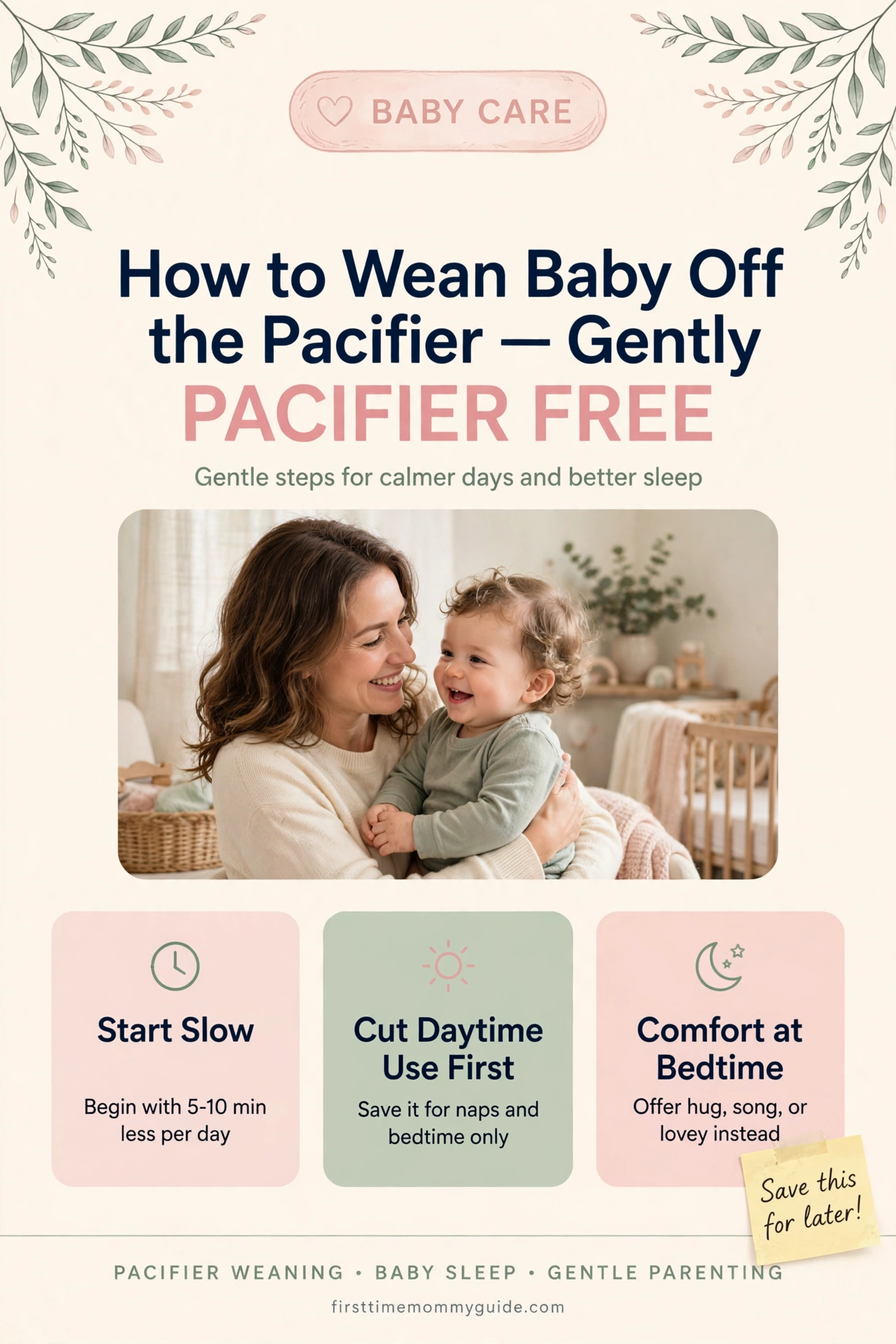
Weaning your baby off a pacifier is one of those parenting moments that feels bigger before it starts than it does afterwards. Your baby has relied on it for comfort, and letting it go is a genuine milestone — for them and for you.
Choose a calm week. Pick the method that fits your child's age and personality. Stay consistent for at least five to seven days, even when the nights are hard. Comfort your baby with cuddles, routines, and reassuring words. Praise every small success. And remember that most babies adjust within a week, often faster than their parents expect.
If your child is over three, has dental changes, frequent ear infections, or speech concerns, talk to your paediatrician or dentist. They can guide you with advice tailored to your child.
You are not taking something away. You are helping your child grow into new ways of feeling safe and falling asleep. That is a gift, even if it does not feel like one on night two. Trust the process, trust your child, and trust yourself. You have got this.

Dilawar Mughal
Founder and editor, First Time Mommy Guide
I research every guide against what the NHS, the AAP and the WHO publish, then write it in plain English — because most new parents are reading with one hand free, not comparing clinical guidelines. I'm not a doctor or a midwife. Every health claim on this site is sourced and linked so you can check it yourself, and anything urgent belongs with your health visitor or GP, not a blog.


