
General information, not medical advice. Every baby is different — if anything worries you, speak to your midwife, health visitor or GP rather than waiting.
Those tiny shoes in the shop window are almost impossible to resist. They are soft, sweet, and impossibly small, and it is tempting to buy a pair long before your baby can even stand.
But the best time to buy baby's first shoes is not when they look cute in the shop. It is when your baby actually needs them — and for most babies, that moment comes later than many parents expect. This guide will help you get the timing right, measure tiny feet at home, and choose a first pair that supports healthy development without getting in the way of those exciting first steps.
Quick Answer: When Should You Buy Baby's First Shoes?
Buy your baby's first shoes when they start walking outdoors, usually between 12 and 15 months. Before that, bare feet — or soft socks and soft-soled booties — are best for learning to move.
Shoes are mainly for protection. Your baby needs them to shield delicate feet from cold, heat, rough surfaces, and sharp objects outside. Inside the house, on clean, safe floors, bare feet help your baby balance, grip, and feel the ground. If your baby is crawling, cruising along furniture, or taking a few wobbly steps indoors, you do not need proper shoes yet. A simple rule to remember is this: no walking outdoors, no real shoes needed.
Do Babies Need Shoes Before Walking?
For most babies, the short answer is no. Babies do not need shoes before they can walk, and going barefoot actually helps them learn to move. A baby's feet are still developing. The bones are soft and mostly cartilage, the muscles are strengthening, and the arches have not yet formed. Bare feet let your baby spread their toes, grip the floor, and receive feedback from the surface beneath them.
That feedback matters. When a baby can feel the floor, they learn balance and coordination more easily. They can adjust their weight, sense a change in texture, and build the small muscles in their feet and ankles that will later support walking. Shoes, especially stiff ones, can get in the way of that learning. A rigid sole blocks sensation, restricts toe movement, and can make a new walker feel unsteady.
The American Academy of Pediatrics, through HealthyChildren.org, notes that barefoot walking helps babies develop balance and coordination, and that shoes are mainly needed for protection outdoors. The American Podiatric Medical Association offers similar guidance for children's foot health, emphasising flexible, well-fitting footwear once walking begins.
That does not mean your baby must never wear anything on their feet. Soft socks keep little feet warm, and soft-soled booties protect feet on a cold floor or during a short trip outside. What your baby does not need is a stiff, structured shoe before they are walking. A pair bought too early may also be outgrown before it is ever truly used.
The Benefits of Bare Feet
Barefoot time supports healthy development in several ways. First, it strengthens the muscles in the feet, ankles, and lower legs. Those muscles work harder when they are not supported by a stiff shoe, and that strength helps with balance later. Second, bare feet improve proprioception — your baby's sense of where their body is in space. Feeling the floor helps the brain map movement, which is an important part of learning to crawl, stand, and walk.
Third, bare feet allow natural toe splay. Babies use their toes to grip and stabilise themselves, much like fingers. A narrow or stiff shoe can squeeze toes together and limit that natural movement. Fourth, barefoot babies often fall less indoors. Socks on smooth floors can be slippery, but bare skin grips better. If your home has wooden or tiled floors, bare feet are usually safer than socks alone — though non-slip socks are a good middle ground.
A short time in soft shoes for a photo will not harm their feet. The guidance is about everyday wear: for daily play and learning to move, bare feet win. If you have concerns about your baby's feet or development, speak to your paediatrician.
When Are First Shoes Actually Needed?
Shoes become necessary when your baby starts walking outside regularly. That is the moment when protection matters more than barefoot freedom. The table below shows what your baby needs at each stage.
First Shoes by Stage
| Stage | Typical age | What your baby is doing | Footwear needed |
|---|---|---|---|
| Pre-walking | 0–9 months | Kicking, rolling, sitting, early crawling | Socks or soft booties for warmth only |
| Crawling | 7–11 months | Crawling, pulling to stand | Bare feet indoors; soft-soled booties outdoors |
| Cruising | 9–13 months | Walking while holding furniture | Bare feet indoors; soft pre-walkers for outings |
| First steps | 11–15 months | A few independent steps indoors | Bare feet indoors; soft, flexible shoes outdoors |
| Confident walking | 13–18 months | Walking steadily, outdoors often | Flexible first-walker shoes for outdoors |

Ages are approximate. Every baby develops at their own pace, and that is completely normal. Some babies walk at 10 months, others at 16 months, and both can be perfectly healthy. The stage matters more than the birthday. If you are wondering when do babies start walking, the usual range is between 9 and 18 months, with most babies taking their first independent steps around 12 to 13 months. Shoes do not make walking happen sooner, and they will not delay it either if they are flexible and well fitted — but there is no reason to rush them.
Pre-Walking and Crawling
In the first months, your baby's feet need warmth and freedom, not shoes. Socks are enough in cool weather, and bare feet are fine in warm weather indoors. Soft booties can keep feet cosy in the pram or car seat. Avoid anything tight or restrictive at this stage. Your baby spends a lot of time kicking, and that movement builds leg strength.
Crawling babies need grip and flexibility, and bare feet are ideal on safe indoor floors. If the floor is cold, choose socks with non-slip grips. For outings, soft-soled shoes or booties protect feet without restricting movement. Learning to crawl is a big milestone, and you can read more about the signs and stages in our guide on when do babies start crawling.
Cruising and First Steps
Cruising is when your baby walks sideways while holding onto sofas, tables, and your hands. Their feet are working hard to balance, and bare feet give the best feedback. At this stage, you might buy a first pair of soft pre-walkers for trips outside the house. Choose something very light, with a thin, bendable sole and a wide toe area. Your baby will still spend most of their time barefoot at home, and that is exactly right.
Those first independent steps are a moment you will never forget. Indoors, keep your baby barefoot so they can feel the floor and build confidence. Outdoors, it is time for proper first shoes. First-walker shoes should be flexible, lightweight, and easy to put on. The sole should bend at the ball of the foot, where toes naturally bend when walking.
Confident Walking
Once your baby is walking steadily and spending more time outside — at the park, on pavements, in the garden — shoes become part of everyday life. You will still want barefoot time at home, especially for play, but outdoor walks need protection. At this stage, check the fit often. Your baby's feet grow quickly, and a shoe that fitted last month may already be snug.
How to Choose First Shoes
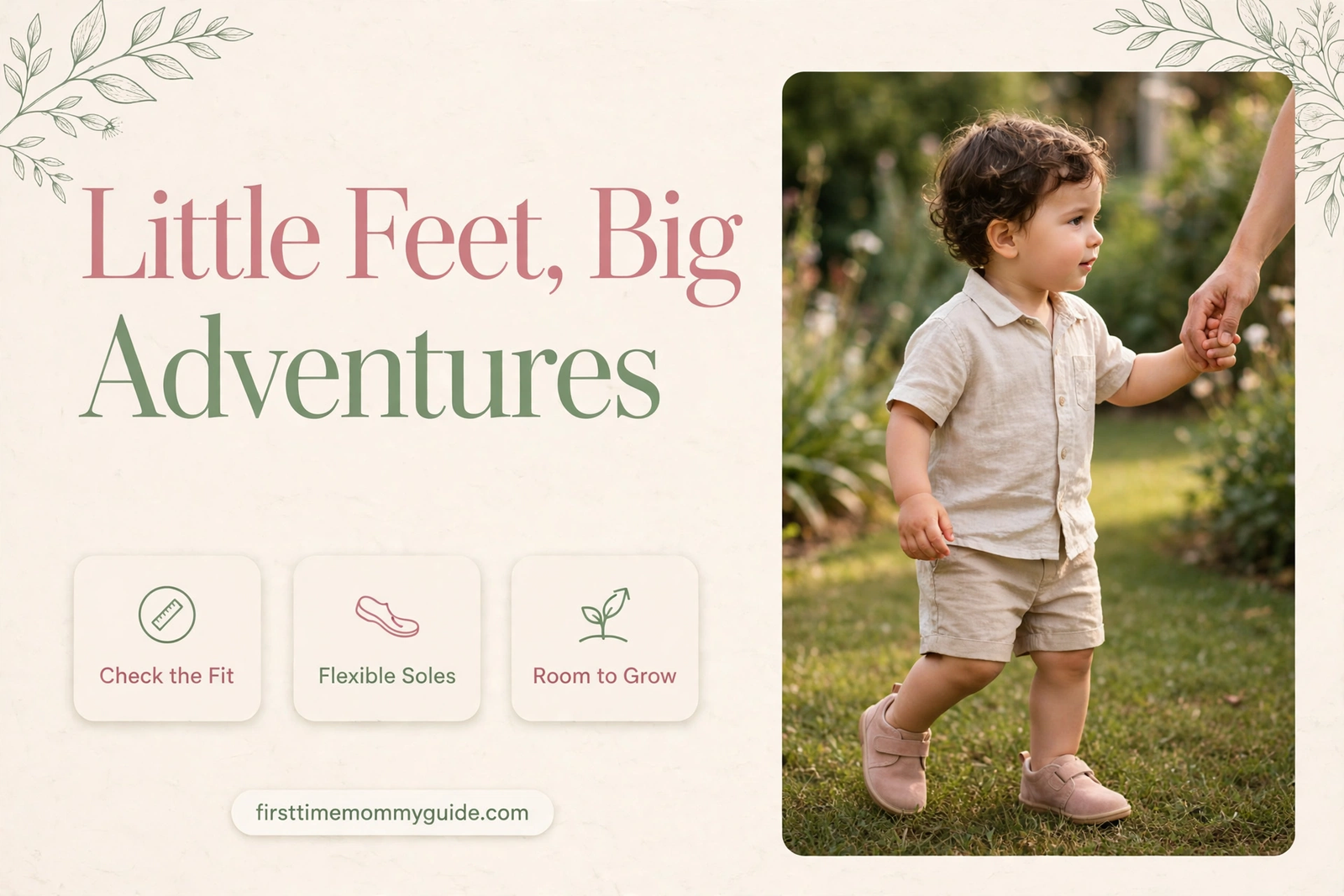
Choosing first shoes is simpler than the shop displays make it look. You do not need the most expensive brand or a shoe with added arch support. You need a shoe that is flexible, light, breathable, and the right size. Use the checklist below when you shop, whether in a store or online.
1. Flexible Soles
The sole is the most important feature of a first shoe. It should bend easily at the ball of the foot — the point just behind the toes. Hold the shoe in both hands and try to bend it. If it bends easily, it is a good choice. If it stays stiff, put it back. A flexible sole lets your baby's foot move naturally. It allows the toes to push off the ground and the foot to roll through each step. Look for a thin sole rather than a thick, chunky one. A thin sole keeps your baby close to the ground, which helps balance and lets them feel the surface beneath them.
2. Lightweight and Roomy
First shoes should feel almost weightless. Heavy shoes tire little legs quickly and can change the way your baby walks. Pick up the shoe and notice its weight. Light materials such as soft leather, canvas, and breathable mesh are good choices. Avoid heavy boots or shoes with thick platforms for everyday first walking.
Your baby's toes also need space to spread and move. The front of the shoe — the toe box — should be wide and rounded, not narrow or pointed. A rounded toe shape follows the natural shape of a baby's foot. Pointed or narrow shoes can pinch toes and cause discomfort, even if the length seems right.
3. Breathable Materials and Secure Fastening
Babies' feet sweat, and sweaty feet in non-breathable shoes can lead to irritation. Choose natural, breathable materials such as soft leather or canvas. Mesh panels can also help air circulate in warm weather. Avoid shoes made entirely from stiff plastic or synthetic materials that do not let air through.
First shoes need to stay on without cutting into the ankle. Velcro straps are often the easiest choice — they are quick to adjust and easy for parents to fasten. Laces can work well too, if they are kept tied and are not a tripping hazard. Whichever fastening you choose, check that the ankle opening is soft and padded. A stiff collar can rub and cause blisters.
4. Low, Flat Heel and the Right Fit
First shoes should have a flat sole with little or no heel. A raised heel changes your baby's posture and balance, and it is not needed for a new walker. A small amount of tread is useful outdoors, especially on smooth pavements, but it should not be so deep that it makes the sole stiff.
Fit matters more than brand. A shoe that is too small will pinch toes and restrict growth. A shoe that is too large will slip, cause tripping, and rub the heel. The correct fit leaves about a thumb's width — roughly 10 to 12 millimetres — between the end of the longest toe and the end of the shoe. Check the width as well as the length. The shoe should feel snug around the heel and midfoot, but not tight across the toes. Always try shoes on both feet, fit the larger foot, and bring the socks your baby will usually wear.
What to Avoid in First Shoes
Avoid shoes with rigid arch support, stiff ankle support, or a hard, inflexible sole. A healthy baby's foot does not need built-in support — the muscles and arches develop naturally through movement. Avoid high-top boots as everyday first shoes unless your paediatrician recommends them for a specific reason. They can restrict ankle movement and make it harder to balance.
Avoid hand-me-down shoes that are worn unevenly. A used shoe has already moulded to another child's foot, and the worn sole can affect the way your baby walks. Avoid buying shoes a size too big to "grow into." A shoe that is more than one size too large is a tripping hazard. Finally, avoid choosing shoes by looks alone. The cutest pair in the shop may have a stiff sole, a narrow toe, or a slippery bottom. Pick function first, then choose the prettiest option among the shoes that pass the flexibility and fit tests.
How to Measure Baby Feet at Home
You do not need a special tool to measure your baby's feet, although a shop fitting service is helpful if one is available. A simple paper tracing at home gives you a good guide to length, and you can compare that measurement with a brand's size chart before you buy. Measure in the afternoon or evening, when feet are at their largest. Measure both feet, while your baby is standing if they can, and with the socks they will wear with the shoes.
Step-by-Step Measuring Guide
Step 1: Prepare your materials. You will need a piece of plain paper larger than your baby's foot, a pen or pencil, a ruler, and a pair of socks. Place the paper on a hard floor, not on carpet, so the measurement stays accurate.
Step 2: Place the foot on the paper. Place your baby's foot flat on the paper, with the heel near the edge. If your baby can stand, let them stand with weight on the foot. Standing gives a truer measurement than sitting, because the foot spreads slightly under weight.
Step 3: Trace around the foot. Hold the pen upright and trace carefully around the whole foot. Keep the pen close to the skin without pressing into it. Include the heel and the longest toe, which is often the big toe but is sometimes the second toe.
Step 4: Measure the length and width. Draw a straight line at the back of the heel and another at the tip of the longest toe, then measure the distance between them. Repeat for the other foot and use the longer measurement. Add about 10 to 12 millimetres for growing room. Also measure the widest part of the tracing, usually across the ball of the foot.
Step 5: Compare with a size chart. Every brand sizes slightly differently, so always check the brand's own chart rather than assuming your baby's usual size. Match your measurement to the chart's insole length, not just to the age label. Age labels on shoes are only a rough guide.
Try measuring during play, when your baby is relaxed. Check the fit again once the shoes arrive by standing your baby on a removable insole, with a thumb's width of space in front of the longest toe.
How Often Do Baby Feet Grow? When to Size Up
Baby feet grow remarkably quickly in the first years of life. In the first year, a baby's foot can grow by about 1.5 millimetres per month on average, although growth happens in spurts rather than steadily. Between the ages of one and three, feet typically grow by about a size every two to four months. After age three, growth slows a little, to about a size every four to six months.
These are general patterns, not rules. Some babies grow faster, others slower, and growth spurts can mean a sudden jump in size. The only reliable approach is to check the fit often, rather than relying on a calendar. For babies under two, check shoe fit every six to eight weeks. For toddlers aged two to three, check every two to three months. A quick check takes less than a minute: feel for the longest toe while your baby is standing in the shoes, and look for signs of rubbing or redness after wear.
Signs It Is Time to Size Up
Watch for these signs that shoes have become too small. Your baby may resist putting shoes on, or may pull them off repeatedly. You may see red marks or blisters on the toes or heel after wearing shoes. The toes may press visibly against the front or sides of the shoe. Your baby may also start tripping more often, or their walking may look less steady than usual. A shoe that is too short restricts toe movement and changes the way the foot lands, which can affect balance. If you press the front of the shoe and cannot feel any space beyond the longest toe, it is time for the next size.
Do not wait until shoes are painful. Babies cannot always tell you that shoes hurt, and they may simply become fussy or refuse to walk. When you do size up, measure both feet again, as styles vary. Most parents replace first-walker shoes every two to three months in the first year of walking. Our baby clothes size guide can help with sizing in general.
Soft-Soled vs Hard-Soled Shoes: Which Is Best?
The choice between soft-soled and hard-soled shoes causes a lot of confusion for first-time parents. The short version is that soft soles are best for pre-walkers and new walkers, while a slightly firmer — but still flexible — sole is better once your child is walking confidently outdoors.
| Feature | Soft-soled shoes | Hard-soled shoes |
|---|---|---|
| Best stage | Pre-walking, cruising, first steps | Confident walking outdoors |
| Sole | Thin, very bendy, often suede or soft rubber | Thicker, more protective, still flexible at the toes |
| Protection | Light protection from cold and rough floors | Better protection from stones, heat, and uneven ground |
| Foot movement | Allows full natural movement | Allows movement but with more structure |
| Balance feedback | Excellent — baby feels the ground | Good, but less ground feedback |
| Weight | Very light | Slightly heavier |
| Use | Indoors and short outings | Regular outdoor walking, parks, pavements |
Soft-soled shoes are often called pre-walkers, crib shoes, or soft-sole booties. They usually have a suede or thin rubber sole that bends in every direction. They protect the foot from cold and rough surfaces while letting the toes move freely. Hard-soled shoes have a thicker sole that offers more protection. The key word is "harder," not "hard." Even a good hard-soled first shoe should bend at the ball of the foot and twist gently when you hold it. If you cannot bend it, it is too stiff for a new walker.
The NHS guidance on children's feet and footwear emphasises that children's shoes should be flexible, well fitting, and comfortable, and that barefoot time is valuable for development. A useful approach is to keep both types at home. Use soft-soled shoes or bare feet indoors, and switch to a flexible hard-soled pair for outdoor walks, the park, or nursery.
Socks vs Shoes: What Should Baby Wear?
Socks and shoes serve different purposes, and your baby will need both. Socks provide warmth and a little protection. Shoes provide protection from the outside world. At home, socks are usually enough in cool weather, and bare feet are best in warm weather. Choose socks that fit well — not so tight that they squeeze the toes, and not so loose that they bunch up inside a shoe.
Non-slip socks are a helpful choice for babies who are crawling or cruising on smooth floors. The grips on the sole help prevent slipping, while the soft fabric keeps feet warm. Shoes come into their own outdoors. They protect against hot pavement in summer, cold ground in winter, stones, glass, and rough surfaces. One common mistake is putting shoes on a baby for warmth alone. Socks, booties, and a warm all-in-one suit do that job better, without restricting foot movement. Always wear socks with closed shoes. Socks reduce friction and help prevent blisters, especially in new shoes.
Shoes for Outdoors vs Indoors
Indoors, the best footwear is usually no footwear. Bare feet give your baby the grip, balance, and sensory feedback they need to learn to move. If the floor is cold, use socks or soft slippers with a flexible sole. Avoid hard-soled shoes indoors. They are unnecessary on clean, safe floors, and they reduce the sensory feedback that helps your baby learn. If your baby attends nursery or a playgroup, ask what the setting prefers — many nurseries encourage bare feet or soft indoor shoes for young walkers.
Outdoors, shoes are important once your baby is walking. Pavements, gravel, grass, and playground surfaces can be rough, hot, or cold. A flexible first-walker shoe protects the sole of the foot while still allowing natural movement. For garden play, soft-soled shoes may be enough on grass, but a flexible hard-soled pair is better on paths and patios. Keep a spare pair of socks in your changing bag. Wet feet in shoes quickly become cold and uncomfortable.
Seasonal Guidance: Shoes for Summer and Winter
The right first shoe changes with the seasons. Your baby's feet need different protection in summer heat and winter cold, and the material and style should reflect that.
Summer
In warm weather, choose light, breathable shoes. Canvas, soft leather with mesh panels, and open-toe sandals designed for first walkers can all work well. Sandals should have a closed toe to protect little toes from stubbing, and a secure strap at the heel so the sandal does not slip off. Avoid plastic jelly shoes that make feet sweat. They can cause rubbing and blisters, and they are often slippery when wet. On very hot days, check the pavement with your own hand before letting your baby walk barefoot outside. If it is too hot for your hand, it is too hot for tiny feet.
Winter
In cold weather, warmth is the priority. Choose shoes made from soft leather or warm, breathable materials, and pair them with warm socks. A boot-style first shoe can keep ankles warm, but make sure the sole is still flexible and the ankle is not restricted. Avoid heavy, stiff winter boots for a new walker. They are tiring to walk in and can make balance harder. Keep feet dry. Wet socks and shoes make feet cold quickly, so dry shoes thoroughly before the next wear and always have a dry pair of socks ready.
Mistakes to Avoid When Buying First Shoes
Even careful parents can make simple mistakes when buying first shoes. Knowing what to watch for will save you money, frustration, and a fussy baby.
Buying too early. The most common mistake is buying proper shoes months before they are needed. A pair bought at six months may be outgrown before your baby takes a first step. Wait until outdoor walking is close, then buy.
Buying too big. Sizing up to "grow into" seems sensible, but a shoe that is too large causes tripping, blistering, and poor balance. Buy the size that fits now, with only the small growth allowance recommended earlier.
Choosing stiff shoes. A shoe that does not bend is not suitable for a first walker, however smart it looks. Always do the bend test before you buy, and do not be swayed by a brand name or a stiff, structured design.
Ignoring width. Length is not the only measurement that matters. A shoe that is long enough but too narrow will pinch toes. Check the width, and look for wide-fit options if your baby has broad feet.
Skipping the fitting. Buying shoes without measuring or trying them on is a gamble. Sizes vary between brands, and age labels are unreliable. Measure, try on, and check the fit while your baby is standing.
Using worn hand-me-downs. A shoe that has moulded to another child's foot will not fit your baby in the same way. Check used shoes carefully for uneven wear, and replace them if the sole is worn on one side.
Forgetting socks. Shoes should be fitted with the socks your baby will wear. A shoe fitted on bare feet may feel tight once socks are added. Bring the usual socks when you shop.
Ignoring your baby's reaction. If your baby cries when shoes go on, pulls them off constantly, or walks less confidently in them, the shoes may be uncomfortable. Check the fit, try a more flexible style, and do not force your baby to wear shoes they clearly dislike.
Expert Tips for First Shoes
Let your baby try shoes at home first. Let them wear new shoes indoors for short periods before a long outing. That gives them time to get used to the feel and weight, and gives you time to check for rubbing or discomfort. Watch how your baby walks in new shoes. A good pair should not change their gait dramatically. If they walk stiffly or trip often, the shoes may be too stiff or too large.
Keep barefoot time every day. Even once your baby is walking outdoors in shoes, keep barefoot time at home. It supports foot strength and balance, and most babies enjoy the freedom. Check feet after wear. After your baby wears new shoes, check for red marks, blisters, or pressure spots. A little redness that fades quickly is normal, but marks that last or blisters that appear mean the fit is wrong.
Buy shoes in the afternoon, when feet are slightly larger, for a more realistic fit. Do not worry about flat feet. Most babies and toddlers have flat feet because the arch has not yet developed. This is normal and usually resolves as the muscles strengthen. Arch support in a first shoe is not needed for a healthy foot. If you are concerned, ask your paediatrician.
Keep shoes clean and dry, and let them air dry naturally. Replace shoes when they are outgrown, not when they look worn. Fit is the reason to replace first shoes, not appearance.
Before your baby starts walking, it also helps to make your home safe for those first steps. Our baby proofing home checklist covers the key hazards to check, from furniture corners to stair gates. Milestones such as sitting and rolling over build the strength your baby needs for walking. Our guides on when do babies start sitting up and how to help baby roll over explain what to expect.
Frequently Asked Questions
When should I buy my baby's first shoes?
Buy first shoes when your baby starts walking outdoors regularly, usually between 12 and 15 months. Before that, bare feet or soft-soled booties are best. Shoes are for protection outside, not for learning to walk inside.
Do babies need shoes before they can walk?
No, babies do not need shoes before they can walk. Bare feet help them develop balance, strength, and coordination. Soft socks or booties are enough for warmth and comfort until walking begins.
What age do babies usually get their first shoes?
Most babies get their first proper shoes between 12 and 15 months, when they start walking outside. Some need them a little earlier, around 11 months, and others a little later, around 16 to 18 months. The stage matters more than the exact age.
Are barefoot babies better at walking?
Barefoot time indoors can help babies learn to balance and coordinate their movements, because they can feel the floor and grip with their toes. Flexible, well-fitting shoes should not harm walking. The best approach is bare feet at home and shoes outside.
What are the best first shoes for a baby?
The best first shoes are lightweight, flexible, and breathable, with a wide toe box and a sole that bends at the ball of the foot. Soft leather or canvas uppers work well. Avoid stiff soles, high heels, and narrow toes.
Should first shoes be soft-soled or hard-soled?
Soft-soled shoes are best for pre-walkers and new walkers. Once your baby is walking confidently outdoors, a flexible hard-soled shoe offers more protection. Even then, the sole should still bend easily at the toes.
How do I know if baby shoes fit correctly?
There should be about a thumb's width — 10 to 12 millimetres — between the longest toe and the end of the shoe when your baby is standing. The heel should feel snug, the toes should have room to spread, and there should be no red marks after wear.
How much room should be in baby shoes?
Leave about 10 to 12 millimetres of growing room beyond the longest toe. More than that makes the shoe too large and can cause tripping. Less than that means the shoe is already too small and will soon pinch.
How often should I check my baby's shoe size?
Check the fit every six to eight weeks for babies under two, and every two to three months for toddlers aged two to three. Feet grow in spurts, so a regular check is more reliable than guessing by age.
How fast do baby feet grow?
In the first year, feet grow by about 1.5 millimetres a month on average, though growth happens in spurts. Between one and three years, many children go up a shoe size every two to four months. Always measure rather than relying on averages.
Do babies need arch support in their first shoes?
Healthy babies do not need built-in arch support. Their arches are still developing, and the muscles strengthen naturally through barefoot play and walking. A flat, flexible shoe is the right choice unless a paediatrician recommends otherwise.
Can babies wear shoes all day?
Babies can wear well-fitting, flexible shoes for outings and outdoor play, but they do not need to wear them all day indoors. Give them barefoot time at home each day to support foot development and comfort. Remove shoes when they are resting or sleeping.
Should babies wear socks with shoes?
Yes, babies should wear socks with closed shoes. Socks reduce friction, absorb sweat, and help prevent blisters. Choose breathable cotton or bamboo socks that fit well and do not bunch up inside the shoe.
Are hand-me-down baby shoes okay?
Hand-me-down shoes can be okay if they are in good condition, with no uneven wear on the sole and no collapsed shape. Avoid shoes that are worn down on one side, as they have moulded to another child's foot and may affect your baby's gait.
What shoes are best for a baby learning to walk?
For a baby learning to walk indoors, bare feet are best. For outdoor walking, choose a lightweight first-walker shoe with a flexible sole, a wide toe box, and a secure fastening such as Velcro. The shoe should bend easily and feel light in your hand.
Should my baby wear shoes in the house?
No, your baby does not need shoes in the house. Bare feet or non-slip socks are better indoors. Shoes are for protection outside. If your floor is cold, soft slippers with a flexible sole are a good option.
Do expensive baby shoes make a difference?
Price does not guarantee a better first shoe. A moderately priced shoe that is flexible, lightweight, breathable, and well fitted is better than an expensive stiff shoe. Focus on fit and flexibility, not on the brand or price tag.
Can shoes delay my baby walking?
Flexible, well-fitting shoes should not delay walking. Stiff, heavy, or poorly fitting shoes can make walking feel harder and may reduce confidence. Barefoot time indoors and flexible shoes outdoors give your baby the best chance to practise.
What should I do if my baby's feet look flat?
Flat feet are normal in babies and toddlers because the arch has not yet formed. Most children's arches develop naturally as they grow and their foot muscles strengthen. If you are worried, or if walking looks painful or very uneven, speak to your paediatrician.
Conclusion
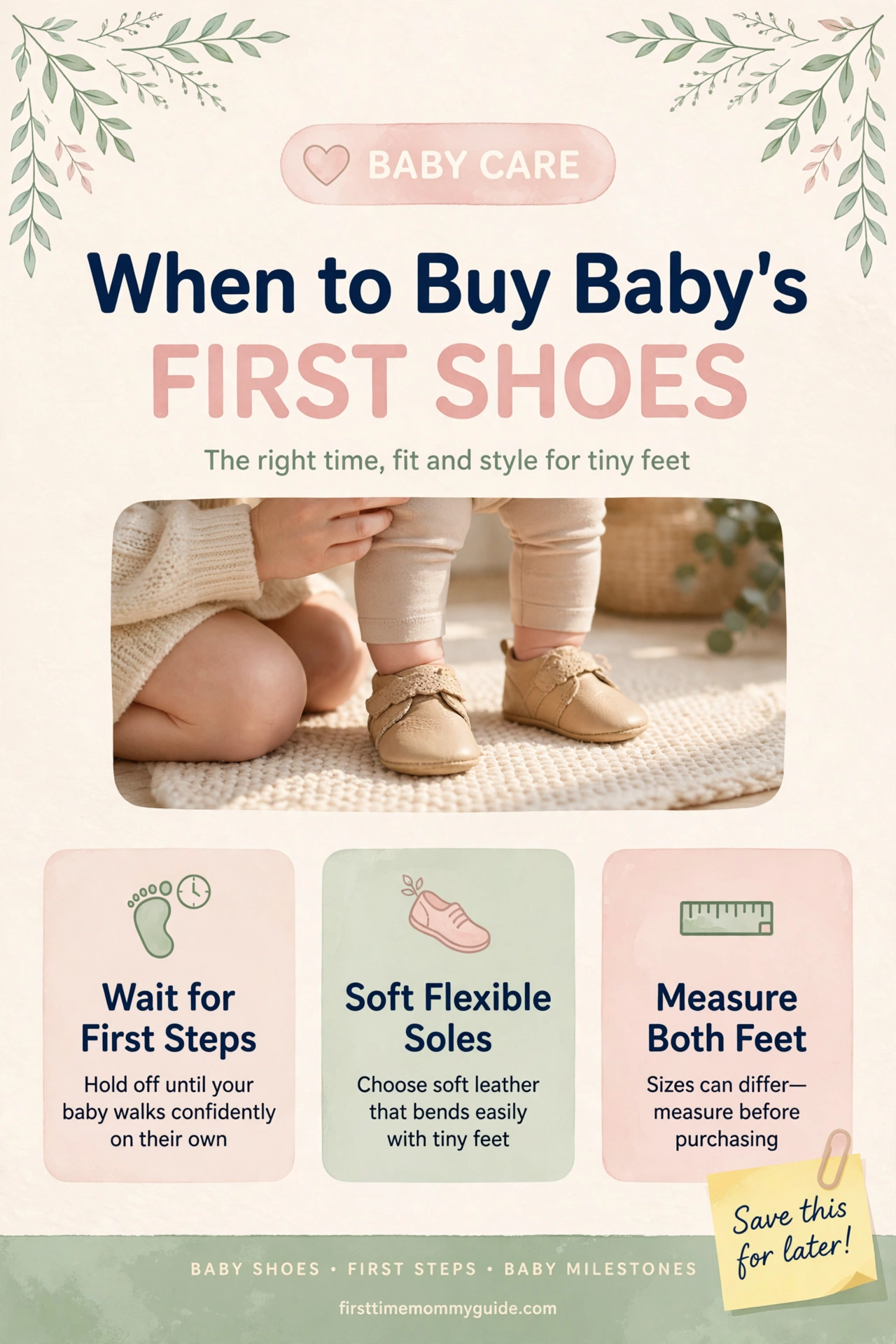
The right time to buy baby's first shoes is when your baby starts walking outdoors — not when the shoes look cute in the shop, and not months before they are needed. Until then, bare feet are your baby's best teacher. They build strength, balance, and coordination, and they let tiny toes grip and explore. Soft socks and soft-soled booties are all your baby needs for warmth and short outings before walking begins.
When the time comes, choose shoes that are flexible, lightweight, breathable, and well fitted. Check the bend of the sole, leave a thumb's width of growing room, and measure both feet before you buy. Enjoy this stage — those first wobbly steps are a milestone worth remembering.
If you have concerns about your baby's feet, walking, or development, speak to your paediatrician. This article is general guidance, not medical advice.

Dilawar Mughal
Founder and editor, First Time Mommy Guide
I research every guide against what the NHS, the AAP and the WHO publish, then write it in plain English — because most new parents are reading with one hand free, not comparing clinical guidelines. I'm not a doctor or a midwife. Every health claim on this site is sourced and linked so you can check it yourself, and anything urgent belongs with your health visitor or GP, not a blog.


