
General information, not medical advice. Every baby is different — if anything worries you, speak to your midwife, health visitor or GP rather than waiting.
Introduction
One week your baby feeds calmly every three hours and sleeps in predictable stretches. The next week, everything changes. Your baby wants to feed constantly, cries more, sleeps badly, and seems impossible to settle. You wonder whether your milk supply has dropped, whether something is wrong, or whether you have lost your touch.
In many cases, the answer is simpler and more reassuring. Your baby is having a growth spurt. Growth spurts are short periods of rapid growth when babies need more milk, more sleep, and more comfort than usual. They are normal, temporary, and a sign that your baby is developing.
This guide covers the typical ages for growth spurts, the signs to look for, and how long they usually last. It also explains how to tell a growth spurt from illness or hunger alone, and gives practical coping strategies for feeding, sleep, and your own wellbeing. You will finish knowing what to expect, what to do, and when to call your doctor.
What Is a Baby Growth Spurt?
A growth spurt is a short burst of faster-than-usual growth. During a spurt, a baby may gain weight and length more quickly, develop new skills, and need extra calories. Their appetite rises sharply, often seeming out of proportion to their size.
Growth spurts are not the same as steady growth. Babies grow every day, but spurts concentrate that growth into a few intense days. Parents often notice the change in behaviour before they notice a change in size. Clothes may suddenly feel tight, or a nappy size may need changing sooner than expected.
Doctors and health visitors do not diagnose a growth spurt with a test. It is a pattern recognised from behaviour, feeding, and growth measurements over time. Weight and length checks at routine appointments help confirm that growth is on track overall, even when individual weeks feel chaotic.
It helps to think of a spurt as a developmental leap as well as a physical one. Many spurts coincide with new skills such as smiling, rolling, or babbling. A baby’s brain is working hard, which can affect sleep and mood just as much as physical growth does.
Typical Growth Spurt Ages
Every baby is different, and spurts do not follow a calendar exactly. Still, health professionals commonly describe spurts around certain ages. These ages are guides, not deadlines. A spurt a week early or late is still normal.
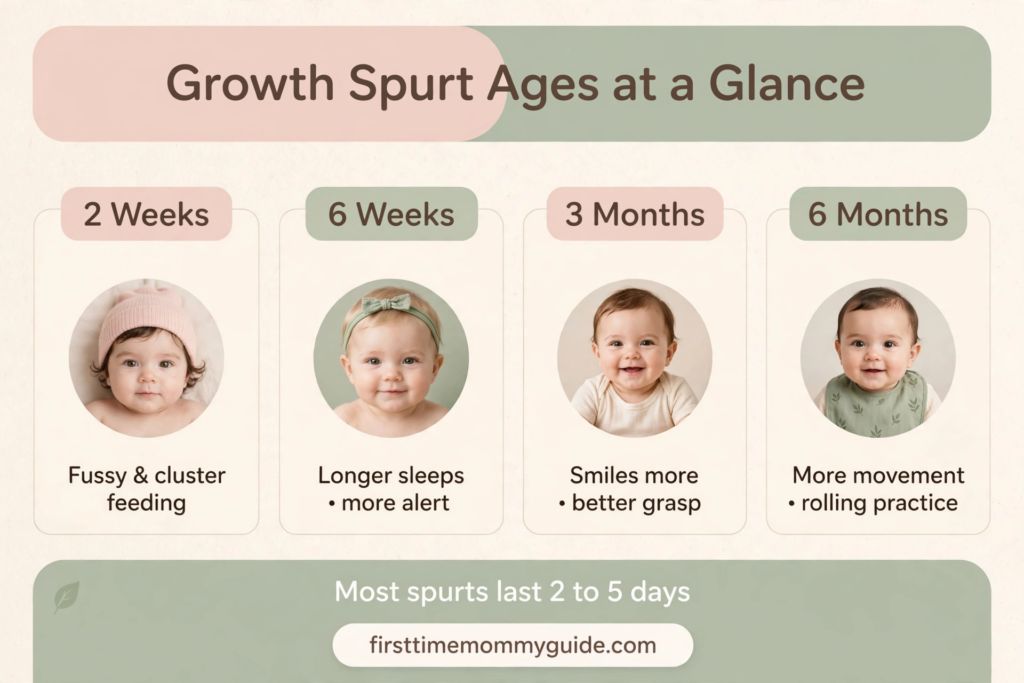
The first weeks: around 7 to 10 days
The first spurt often arrives in the second week. Feeding suddenly increases, and a baby who had begun to settle may want the breast or bottle far more often. This spurt can feel alarming because feeding is still new, but it is a normal part of establishing supply and intake.
Around 2 to 3 weeks
A second early spurt often follows at two to three weeks. Cluster feeding is common here, with feeds grouped closely together in the evening. Parents sometimes worry that milk has run out. In most cases, frequent feeding is the baby’s way of increasing supply and meeting new needs.
Around 6 weeks
The six-week spurt is one of the most noticeable. Babies are more awake, more aware, and often fussier in the evenings. Sleep may become shorter or more broken. Many parents remember this spurt because it coincides with tiredness catching up after the newborn weeks.
Around 3 months
At around three months, babies often feed more, sleep differently, and show new social skills. They may smile more, follow faces, and stay awake longer. A spurt here can disrupt a routine that had just begun to feel stable, which is frustrating but normal.
Around 6 months
The six-month spurt often coincides with other big changes. Many babies are starting solids, sitting with support, and becoming more mobile. Appetite rises, and milk feeds may increase alongside new foods. For more on readiness for solids, see our guide to signs your baby is ready for solid foods.
Around 9 months
At nine months, mobility and curiosity surge. Babies may crawl, pull to stand, and explore constantly. Growth spurts here often bring extra hunger, clinginess, and disrupted sleep. Separation awareness also grows, which can add to fussiness at bedtime.
Around 12 months
The first birthday spurt can be less obvious because growth slows slightly after infancy. Still, many toddlers eat more for a few days, sleep differently, and seem unsettled. Appetite in toddlers also varies naturally, so a short hungry phase is not automatically a spurt.
| Approximate age | What parents often notice | Typical duration |
|---|---|---|
| 7–10 days | Very frequent feeds, unsettled evenings | 2–3 days |
| 2–3 weeks | Cluster feeding, short sleeps | 2–3 days |
| 6 weeks | Fussiness, evening crying, broken sleep | 3–4 days |
| 3 months | More feeds, longer wake times, new smiles | 2–4 days |
| 6 months | Bigger appetite, solids interest, restless sleep | 3–5 days |
| 9 months | Clinginess, hunger, crawling and standing practice | 3–5 days |
| 12 months | Variable appetite, sleep changes, new skills | 2–4 days |
These durations are typical, not guaranteed. Some spurts last a day, others last up to a week. A spurt that lasts much longer, or a baby who seems unwell, deserves a check rather than an assumption.
Signs of a Growth Spurt
Constant hunger and cluster feeding
The clearest sign is hunger that seems endless. A breastfed baby may want to feed every hour, or feed for longer at each session. A formula-fed baby may finish bottles quickly and still seem hungry. Cluster feeding, where feeds bunch together, is especially common in the evening.
This hunger is real, not manipulation. A growing baby genuinely needs more calories during a spurt. Responding with extra feeds supports growth and, for breastfeeding mothers, helps adjust milk supply to the new demand.
Fussiness and clinginess
Many babies become fussier during a spurt. They may cry more, want to be held constantly, and resist being put down. This clinginess can feel exhausting, particularly when it follows a calmer period. It usually passes as the spurt ends.
Fussiness during a spurt is different from persistent, inconsolable crying. Spurt fussiness often eases with feeding, holding, or movement. If crying is high-pitched, prolonged, or accompanied by fever or poor feeding, seek medical advice rather than assuming a spurt.
Changes in sleep
Sleep often changes in both directions during a spurt. Some babies sleep more, taking longer naps and sleeping deeply. Others sleep less, waking more often at night and resisting naps. Both patterns can occur in the same baby at different spurts.
Night waking during a spurt usually reflects hunger. A baby who wakes and feeds well, then settles, is behaving typically. A baby who wakes distressed and cannot settle, or who is hard to wake at all, needs closer attention. For sleep foundations, our newborn sleep routine guide covers wake windows and bedtime cues.
More wet and dirty nappies
Extra feeds usually mean extra nappies. More wet nappies are reassuring, because they show intake is keeping up with demand. Stool patterns may also change temporarily, becoming more frequent or different in consistency, without indicating illness.
Track nappies loosely during a spurt rather than obsessively. A clear drop in wet nappies, very dark urine, or no stools for an unusual period should be mentioned to your doctor. Intake and output together give a better picture than either alone.
Developmental leaps
After a spurt, parents often notice a new skill. A baby may smile socially, roll over, babble, or grasp objects with new control. These leaps explain part of the fussiness, because learning new skills is tiring and sometimes frustrating for a baby.
Not every skill follows a spurt immediately, and not every spurt brings an obvious leap. Development varies widely, and a baby who is a little early or late with a skill is usually still within the normal range. Routine checks track this over time.
Growth Spurt or Something Else?
Growth spurts share signs with other common baby issues, so it helps to know the differences. Hunger alone can look like a spurt, but a spurt also brings sleep changes, fussiness, and a return to normal within days. A single hungry day is not necessarily a spurt.
Illness looks different in important ways. A baby with a fever, vomiting, diarrhoea, a rash, breathing difficulty, or unusual lethargy is not simply spurt-fussy. Poor feeding, fewer wet nappies, or a baby who is hard to wake should prompt a medical call. Trust your instinct when something feels wrong.
Teething can also cause fussiness, drooling, and disturbed sleep, especially from around four to six months. Teething fussiness often comes with gum discomfort and chewing, while spurt fussiness centres on hunger. The two can overlap, which is why patterns over several days matter more than a single symptom.
Sleep regressions, such as the well-known four-month regression, last longer than a typical spurt and involve a permanent change in sleep cycles. A spurt usually resolves within a week, while a regression reshapes sleep for longer. Our guide to the 4-month sleep regression explains that distinction in detail.
Colic involves prolonged, inconsolable crying, often in the evening, in an otherwise healthy baby. Spurt crying usually responds to feeding or comfort. If crying lasts hours daily for weeks, discuss colic and other causes with your doctor. Our colic symptoms and soothing guide may help you compare patterns.
How Long Do Growth Spurts Last?
Most growth spurts last two to five days. Early spurts tend to be shorter, while later spurts may last up to a week. The intense phase, with constant feeding and fussiness, is usually the middle of the spurt. Behaviour often improves quite suddenly once the spurt passes.
A spurt that lasts beyond a week is not automatically a problem, but it is worth reviewing. Feeding technique, milk intake, sleep environment, and general health can all affect how long unsettled behaviour lasts. A health visitor or paediatrician can help sort out whether a longer phase is still a spurt or something else.
Growth itself continues after the spurt ends. Weight and length gains may show up at the next routine check rather than immediately. Do not weigh your baby daily to chase a spurt, as normal daily variation can cause unnecessary worry. Weekly or appointment-based weighing gives a clearer trend.
How to Cope: Feeding During a Growth Spurt
Feed on demand during a spurt, even if that means feeding far more often than usual. For breastfeeding, frequent feeding signals your body to increase supply. It can feel relentless, but it is the mechanism that meets your baby’s new needs.
Do not worry that frequent feeding means your milk is insufficient. Supply adjusts over a few days in response to demand. Signs of adequate intake include regular wet nappies, steady weight gain over weeks, and a baby who seems satisfied at least some of the time. Persistent concerns about supply deserve lactation support, not self-blame.
For formula feeding, follow your health team’s guidance on amounts, but expect your baby to take more during a spurt. Prepare bottles efficiently, keep supplies ready, and avoid diluting formula to stretch it. If your baby consistently drains bottles and still seems hungry, ask your doctor about amounts.
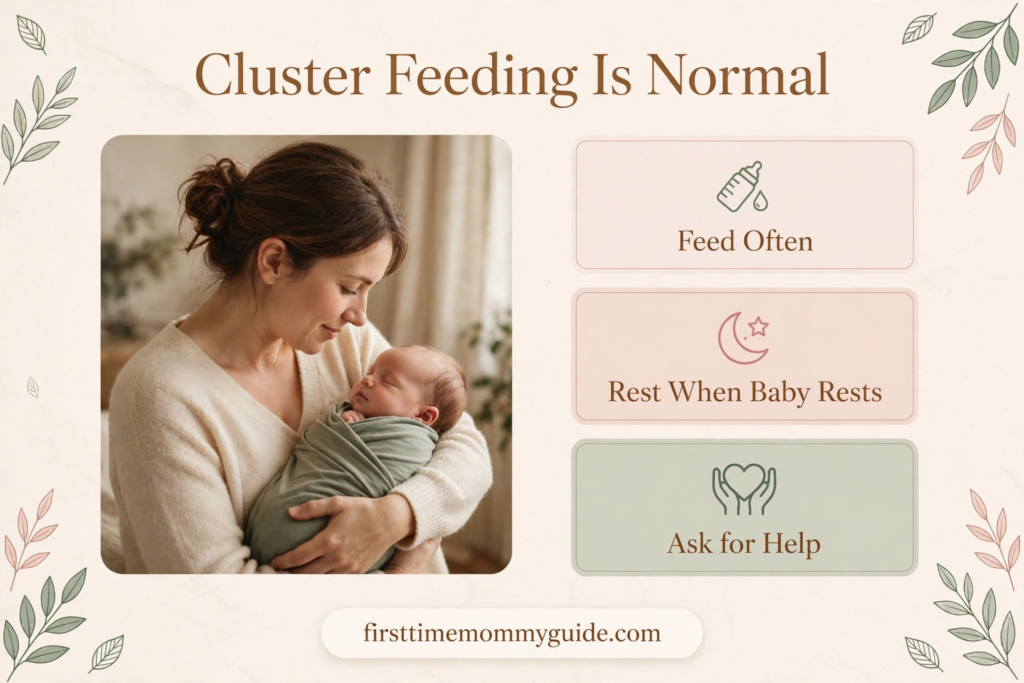
Cluster feeding in the evening is normal during spurts. Plan for it by resting earlier in the day, eating and drinking well, and keeping the feeding area comfortable. Partners can help by bringing water, snacks, and pillows, and by handling nappy changes between feeds.
Night feeds during a spurt are tiring but temporary. Keep lights low, keep interaction calm, and avoid stimulating play. After feeding, settle your baby with the usual routine. For safe sleep reminders, see our guide to safe sleep for newborns.
How to Cope: Sleep and Soothing
Protect sleep where you can, even though spurt sleep is disrupted. Keep a consistent bedtime routine, even if bedtime itself shifts. A bath, a feed, a story or song, and a dark room give your baby cues that sleep is coming, even on unsettled nights.
Use soothing techniques that work for your baby: holding, rocking, walking, white noise, or a dummy if your baby uses one. Swaddling can help younger babies, provided it is done safely and stopped once rolling begins. Our how to swaddle a newborn guide covers safe technique step by step.
Accept help during a spurt. A partner, family member, or friend can hold the baby while you nap, prepare meals, or take a shower. Short breaks do not harm bonding, and they protect your ability to cope. Exhaustion makes every cry feel harder, so rest is practical, not selfish.
Lower expectations during spurt days. Housework, visitors, and non-urgent tasks can wait. A few days of simplified routines will not harm your baby, but pushing yourself to maintain normal life while feeding hourly can harm your wellbeing. Give yourself permission to do less.
How to Cope: Looking After Yourself
Growth spurts test parents as much as babies. Constant feeding, broken sleep, and crying can leave you feeling drained and doubtful. Those feelings are normal, and they do not mean you are failing. They mean you are in an intense phase of parenting.
Eat regularly and drink plenty of water, especially if breastfeeding. Keep snacks and water near your feeding spot. Small, frequent meals are easier than large cooking sessions during cluster feeding days. Accept offered meals and practical help without guilt.
Talk to someone about how you feel. A partner, friend, health visitor, or parent group can normalise the experience. If low mood, anxiety, or overwhelm persists beyond spurt days, or feels severe, seek support promptly. Postpartum mood difficulties are common and treatable, and asking for help is a sign of strength.
Watch for your own warning signs: feeling unable to cope, feeling detached from your baby, or feeling angry or panicked during crying. These feelings deserve support, not shame. Contact your doctor, midwife, or health visitor, or a trusted support service, and describe what you are experiencing honestly.
Growth Spurts and Milestones
Growth spurts and developmental milestones often travel together, but they are not the same thing. A milestone is a skill, such as rolling, sitting, or first words. A spurt is a period of rapid growth that may precede or accompany new skills. Both vary widely in timing.
Our guide to baby milestones at 6 months gives a realistic range for skills around that age. Use milestone guides as a broad map, not a strict test. Babies develop at different rates, and a baby who is later with one skill may be earlier with another.
If you notice your baby practising a new skill intensely during a spurt, give them safe opportunities to practise. Tummy time, floor play, and reaching games support development. Keep sessions short and follow your baby’s cues. Frustration during practice is normal and usually passes.
If a milestone seems significantly delayed, or you notice loss of a previously gained skill, discuss it with your doctor. Regression of skills is different from a slow pace, and it deserves assessment. Routine developmental checks are designed to catch such concerns early.
Mistakes to Avoid During a Growth Spurt
Do not assume every fussy phase is a growth spurt without checking for illness. Fever, vomiting, poor feeding, and lethargy are not spurt signs. When in doubt, call your doctor. A quick check is always better than a missed illness.
Do not introduce solids early because your baby seems hungry during a spurt. Most health guidance recommends starting solids around six months, when readiness signs are present. Extra milk, not early solids, meets a young baby’s spurt needs. Readiness signs are covered in our solids guide linked above.
Do not supplement with formula automatically if you are breastfeeding and worried about supply, unless advised. Extra formula can reduce breastfeeding frequency and slow supply adjustment. If you are concerned, seek lactation support first and discuss a plan with your health team.
Do not sleep train during the peak of a spurt. A baby who is genuinely hungry needs feeding, not a new sleep method. Sleep training, if you choose it, works better when growth, feeding, and health are stable. Our baby sleep training methods guide explains timing considerations.
Do not compare your baby’s spurt pattern too closely with other babies. Timing, duration, and signs vary. One baby may cluster feed dramatically, another may mainly sleep more. Both can be normal. Track your own baby’s pattern over time instead.
Do not ignore your own exhaustion. Pushing through without rest, food, or support makes coping harder and can affect mood and safety. Ask for help early, share night duties where possible, and keep your doctor informed if you feel overwhelmed.
When to Call the Doctor
Call your doctor promptly if your baby has a fever, is unusually lethargic or hard to wake, feeds very poorly, or has a sharp drop in wet nappies. Call for vomiting, diarrhoea, blood in stool, breathing difficulty, or a rash that does not fade when pressed. These signs are not typical of a growth spurt.
Call if fussiness lasts well beyond a week without improvement, or if crying becomes inconsolable for hours daily. Call if weight gain stalls, weight loss continues beyond the early days, or you are worried about milk intake. Clinicians expect these calls and would rather assess early.
Call also if you feel unable to cope, or if your mood is severely affected. Postpartum support is medical care, not an extra. Your health team can connect you with help, and early support makes a real difference.
For routine questions, your health visitor or paediatrician’s office can advise. For urgent concerns, use your local urgent care or emergency service and explain your baby’s age, symptoms, and feeding pattern clearly.
Checklist: Surviving a Growth Spurt
- Feed on demand and expect cluster feeding, especially in the evening.
- Track wet nappies loosely; a clear drop is a reason to call.
- Keep bedtime routines consistent, even if sleep is broken.
- Use holding, rocking, and white noise for soothing.
- Rest when your baby rests and accept practical help.
- Eat and drink regularly; keep water and snacks by your feeding spot.
- Lower housework and visitor expectations for a few days.
- Watch for illness signs and call promptly if they appear.
- Note new skills after the spurt; they often follow intense days.
- Be kind to yourself; spurts are temporary, even when they feel endless.
Keep this checklist somewhere visible during the first year. When the next spurt arrives, you will recognise it faster and cope with less panic. Experience does not make spurts easy, but it does make them familiar.
When a Spurt Coincides with Illness or Vaccination
Growth spurts do not pause for colds, teething, or vaccinations, and overlapping events can make a week feel especially hard. A baby who is both spurt-hungry and mildly unwell after vaccinations may feed more, sleep worse, and cry more than usual. That combination is common, but it also makes it harder to spot illness, so watch more closely, not less.
After vaccinations, mild fever, soreness, and fussiness for a day or two are commonly reported. If fever is high, lasts beyond the expected window, or your baby feeds very poorly, contact your doctor rather than attributing everything to a spurt. Keep a note of vaccination dates, temperatures, and feeding patterns, so you can describe the timeline clearly if you call.
During a cold, nasal congestion can make feeding harder, which conflicts with spurt hunger. Saline drops, upright feeding positions, and smaller, more frequent feeds can help, following your doctor’s guidance. If breathing becomes laboured, feeding drops sharply, or your baby becomes lethargic, seek medical review promptly, even if a spurt seems likely.
The key principle is simple: a spurt explains hunger, fussiness, and sleep change in an otherwise well baby. It does not explain fever, vomiting, breathing difficulty, or dehydration. When those signs appear, medical advice takes priority over spurt coping strategies, and early calls are always appropriate.
Frequently Asked Questions About Baby Growth Spurts
How do I know if my baby is having a growth spurt?
Look for a cluster of signs rather than one symptom: much more frequent feeding, fussiness, clinginess, and changed sleep lasting a few days, followed by a return to normal. If your baby is otherwise well, feeding well, and producing wet nappies, a spurt is likely. Illness signs such as fever or poor feeding point elsewhere and deserve a medical call.
At what ages do growth spurts happen?
Common ages include around 7 to 10 days, 2 to 3 weeks, 6 weeks, 3 months, 6 months, 9 months, and 12 months. These are guides, not fixed dates, and every baby varies by a week or more. A spurt that arrives early or late is still normal, provided your baby is growing well overall.
How long does a growth spurt last?
Most last two to five days, with some lasting up to a week. The most intense feeding and fussiness usually sits in the middle of the spurt. Behaviour often improves suddenly once it passes. A phase lasting well beyond a week, or accompanied by illness signs, should be reviewed by your doctor.
Why does my baby feed constantly during a growth spurt?
Your baby genuinely needs more calories to fuel rapid growth. Frequent feeding meets that need and, for breastfeeding mothers, signals the body to increase milk supply. Cluster feeding, especially in the evening, is a normal part of this process, not a sign that feeding has failed.
Does cluster feeding mean my milk supply is low?
Not usually. Cluster feeding during a spurt is a normal demand signal, and supply typically adjusts within a few days. Adequate wet nappies and steady weight gain over weeks are reassuring signs. If you remain worried about supply, seek lactation support rather than assuming a problem.
Should I wake my baby to feed during a growth spurt?
In the early weeks, health teams often advise waking a sleepy newborn for regular feeds. Once feeding and weight gain are well established, many parents can follow their baby’s cues during a spurt, including night waking for hunger. Follow your doctor’s guidance for your baby’s age and weight pattern.
Do formula-fed babies have growth spurts?
Yes. Formula-fed babies also go through spurts, with increased appetite and fussiness. They may finish bottles faster and want more milk for a few days. Follow your health team’s guidance on amounts, keep preparation hygienic, and call if intake drops sharply or your baby seems unwell.
Can a growth spurt cause sleep problems?
Yes, sleep often changes during a spurt. Some babies sleep more, others wake more often, especially for night feeds. These changes are usually temporary. Keep routines consistent, respond to hunger at night, and avoid starting sleep training during the peak of a spurt.
Is fussiness during a growth spurt normal?
Yes, increased fussiness and clinginess are typical. Your baby may want constant holding and resist being put down. Fussiness that eases with feeding or comfort, and that resolves within days, fits a spurt. Prolonged, inconsolable crying or fussiness with fever or poor feeding needs medical review.
How can I tell a growth spurt from a sleep regression?
A spurt usually lasts a few days and centres on hunger, while a sleep regression lasts longer and reflects a permanent change in sleep cycles. The four-month regression, for example, reshapes sleep for weeks. If sleep disruption persists well beyond a week without extra hunger, consider a regression or another cause.
Should I start solids early if my baby is hungry during a spurt?
No. Most guidance recommends starting solids around six months when readiness signs are present, such as sitting with support and showing interest in food. A hungry young baby needs more milk, not early solids. Discuss readiness with your doctor if you are unsure.
Do growth spurts affect nappies?
Yes, extra feeds usually mean more wet nappies, which is reassuring. Stool frequency and consistency may also change temporarily. A sharp drop in wet nappies, very dark urine, or blood in stool is not a normal spurt sign and should be reported promptly.
Will my baby gain weight noticeably after a spurt?
Weight gain may show at the next routine check rather than immediately. Daily weighing can be misleading because of normal variation. Weekly or appointment-based weighing gives a clearer trend. Your health visitor can advise on a sensible weighing schedule for your baby.
Do all babies have obvious growth spurts?
No. Some babies have very obvious spurts, while others grow more steadily with subtler changes. A baby without dramatic spurts is not necessarily growing poorly. Routine growth checks, feeding patterns, and developmental progress together give the full picture.
Can growth spurts happen at the same time as teething?
Yes, and the combination can be challenging. Teething often brings gum discomfort, drooling, and chewing, while a spurt brings hunger and sleep changes. Both are temporary. If your baby has a fever, diarrhoea, or seems unwell, do not attribute everything to teething or a spurt; seek advice.
How can my partner help during a growth spurt?
Partners can bring water and snacks, handle nappy changes, settle the baby between feeds, and take a shift so the feeding parent can rest. Practical help with meals and housework also matters. Sharing the load during spurt days protects both parents’ wellbeing and keeps feeding sustainable.
When should I worry about a growth spurt?
Worry and call your doctor if your baby has a fever, is hard to wake, feeds very poorly, has far fewer wet nappies, vomits repeatedly, has breathing difficulty, or cries inconsolably for hours. Also call if unsettled behaviour lasts well beyond a week, weight gain stalls, or you feel unable to cope.
Trusted Sources
For authoritative feeding and growth guidance, see the American Academy of Pediatrics guidance on infant nutrition and brain development in the first 1,000 days. It explains why frequent feeding in infancy supports growth and development, and why breastfeeding is recommended alongside solids. Your own paediatrician or health visitor remains the best source for advice about your baby’s individual growth pattern.
Conclusion
Growth spurts are intense, exhausting, and completely normal. A few days of constant feeding, fussiness, and broken sleep usually signal that your baby is growing fast and learning new skills. Responding with extra feeds, comfort, and rest helps both of you through it.
Recognising the pattern makes the next spurt easier. You will spot the hunger surge, expect the sleep disruption, and know that calm usually returns within days. Keep routines steady, accept help, and call your doctor whenever illness signs appear or worry persists.
Your baby is not being difficult during a spurt. They are growing, and they need you more than usual for a little while. That need passes, and the skills and growth that follow are worth the tired days.
This article is for general information only and is not medical advice. Seek prompt medical care if your baby shows illness signs, feeds poorly, or you are concerned about growth, feeding, or your own wellbeing.

Dilawar Mughal
Founder and editor, First Time Mommy Guide
I research every guide against what the NHS, the AAP and the WHO publish, then write it in plain English — because most new parents are reading with one hand free, not comparing clinical guidelines. I'm not a doctor or a midwife. Every health claim on this site is sourced and linked so you can check it yourself, and anything urgent belongs with your health visitor or GP, not a blog.


