General information, not medical advice. Every baby is different — if anything worries you, speak to your midwife, health visitor or GP rather than waiting.
Bleeding after childbirth is something almost every new mom experiences, yet it rarely gets talked about before the baby arrives.
If you just gave birth or are preparing for delivery, you’re probably asking exactly How Long Do You Bleed After You Give Birth? how long this bleeding lasts and what counts as normal.
Table of Contents
How Long Do You Bleed After You Give Birth?
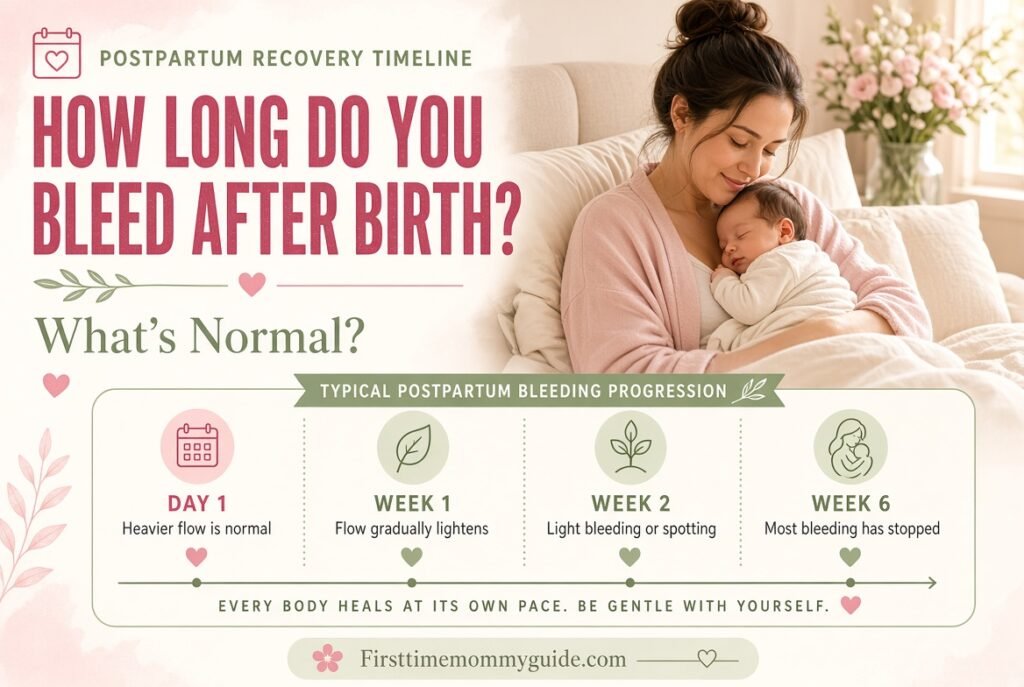
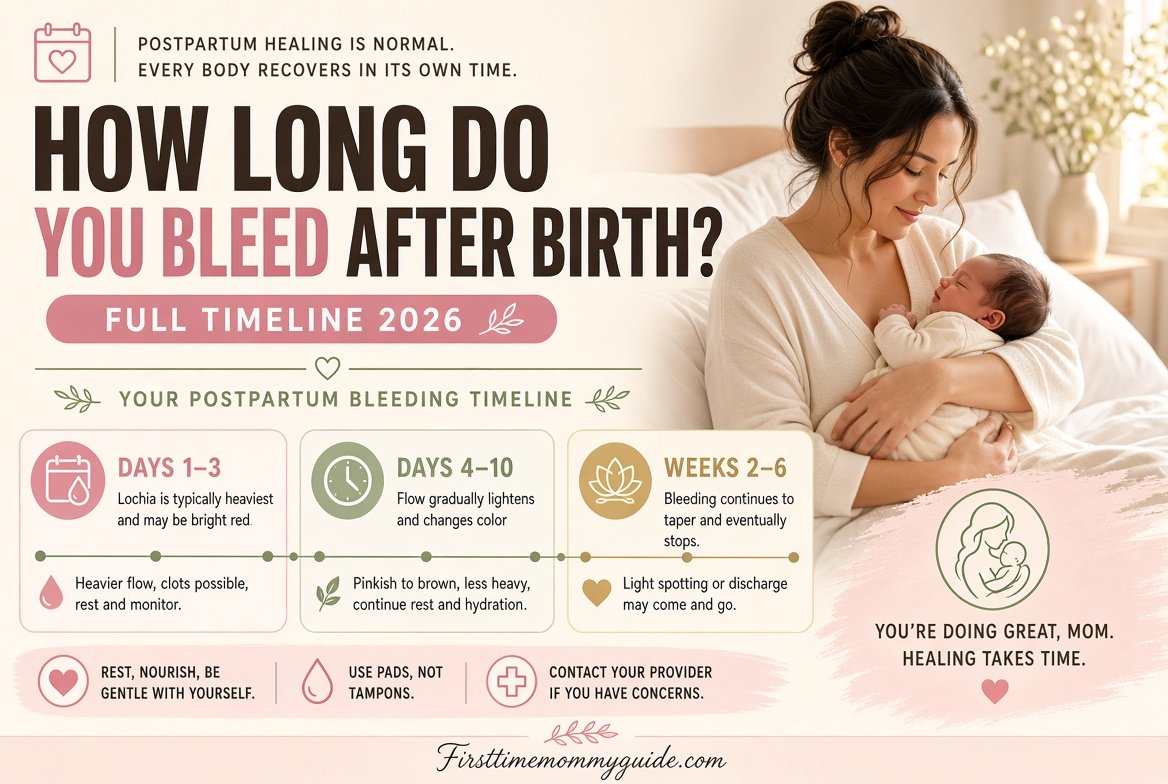
Most women bleed for four to six weeks after giving birth, though it can last up to eight weeks in some cases. This bleeding is called lochia, and it happens whether you had a vaginal delivery or a C-section.
The flow starts heavy and bright red in the first few days. It then gradually lightens in color and amount as your uterus heals.
What Is Postpartum Bleeding (Lochia)?
Lochia is the vaginal discharge your body produces after delivery. It’s made up of blood, mucus, and leftover uterine tissue that supported your baby during pregnancy.
Your uterus contracts after birth to shed this lining, similar to a menstrual period but longer and heavier. This process is completely normal and is your body’s natural way of healing.
The 3 Stages of Postpartum Bleeding
Lochia moves through three distinct stages. Each one looks and behaves differently as your uterus recovers.
Stage 1: Lochia Rubra (Days 1–4)
This is the heaviest stage, with bright or dark red blood that may include small clots. You’ll likely need hospital-grade pads during this time.
Clots the size of a grape are usually fine, but anything larger than a quarter should be reported to your provider.
Stage 2: Lochia Serosa (Days 5–10)
The flow becomes lighter and changes to a pinkish-brown color. Clots should shrink or disappear entirely during this phase.
You may notice bleeding increases slightly after activity, breastfeeding, or standing up. This is normal and tied to your uterus contracting.
Stage 3: Lochia Alba (Days 10–42)
Discharge turns to a whitish or yellowish color with little to no blood. This stage can continue on and off for several weeks until it tapers off completely.
By six weeks postpartum, most women see bleeding stop altogether.
Vaginal Birth vs. C-Section: Bleeding Differences
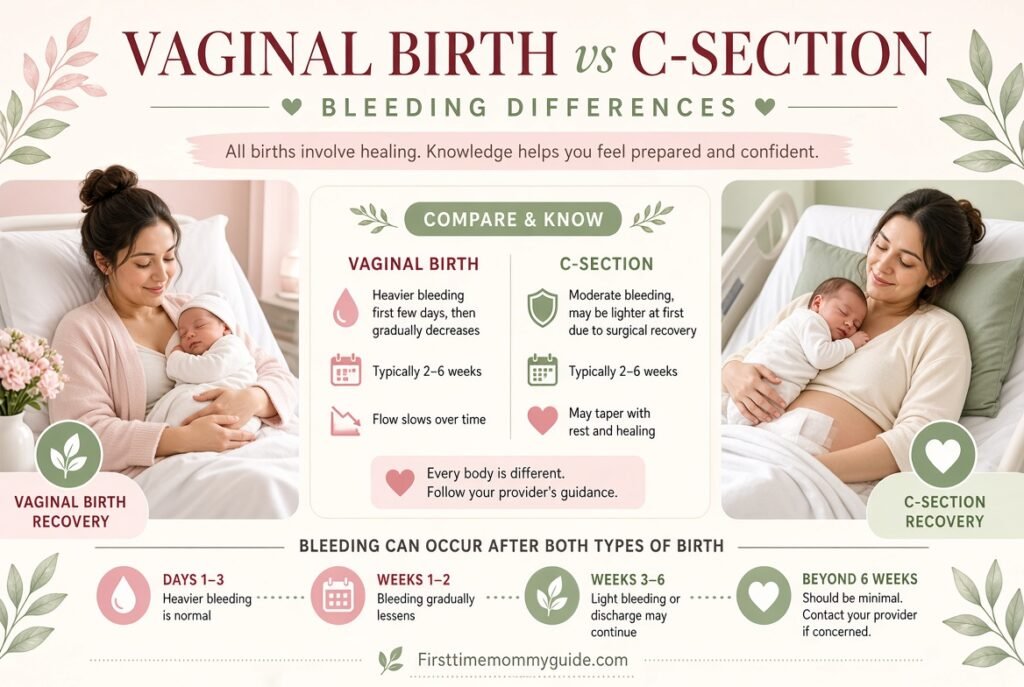
Both delivery types cause lochia, but the experience isn’t identical. Here’s a quick comparison to help you know what to expect.
| Factor | Vaginal Birth | C-Section |
|---|---|---|
| Typical bleeding duration | 4–6 weeks | 3–5 weeks |
| Initial flow | Heavier | Often lighter |
| Reason | Uterus sheds full lining | Some tissue removed during surgery |
| Cramping | Moderate | Can feel sharper near incision |
| Activity restrictions | Pelvic rest 6 weeks | Pelvic rest plus incision care |
Even with a C-section, you should still expect several weeks of bleeding. The uterus still needs to shed its lining regardless of how the baby was delivered.
What’s Normal vs. When to Call Your Doctor
Most postpartum bleeding follows a predictable pattern of tapering off. Knowing the difference between normal and concerning symptoms helps you act quickly if something’s wrong.
Normal signs include:
- Bright red blood for the first few days
- Gradual lightening in color and amount
- Occasional small clots, especially after rest
- Brief increases in flow during breastfeeding or exercise
Signs to call your doctor include:
- Soaking through a pad in under an hour
- Bright red bleeding that continues past day 5–7
- Clots larger than a quarter or golf ball
- Foul-smelling discharge
- Fever, chills, or dizziness
Postpartum Hemorrhage Warning Signs
Postpartum hemorrhage is rare but serious, affecting up to 5% of women who give birth. It most often happens within the first 24 hours but can occur up to 12 weeks after delivery.
Seek emergency care right away if you experience heavy bleeding that soaks a pad in under an hour, feel lightheaded or faint, or notice a racing heartbeat alongside heavy blood loss. These can be signs of dangerously low blood pressure.
Hygiene Tips During Postpartum Bleeding
Taking care of yourself during this stage matters just as much as watching the bleeding itself. A few simple habits can lower your infection risk and keep you more comfortable.
- Use sanitary pads only, never tampons, until cleared by your provider
- Change pads every 4–6 hours, more often if flow is heavy
- Avoid sexual intercourse until your six-week postpartum checkup
- Keep the perineal area clean with warm water after using the bathroom
- Rest as much as possible to avoid triggering heavier flow
When Does Your Period Return?
Your first postpartum period depends heavily on whether you’re breastfeeding. Non-breastfeeding moms often see their period return within 6–8 weeks after delivery.
Breastfeeding moms, especially those nursing exclusively, may not see a period for several months. It’s important to remember you can still get pregnant even before your period comes back.
Factors That Affect How Long You Bleed
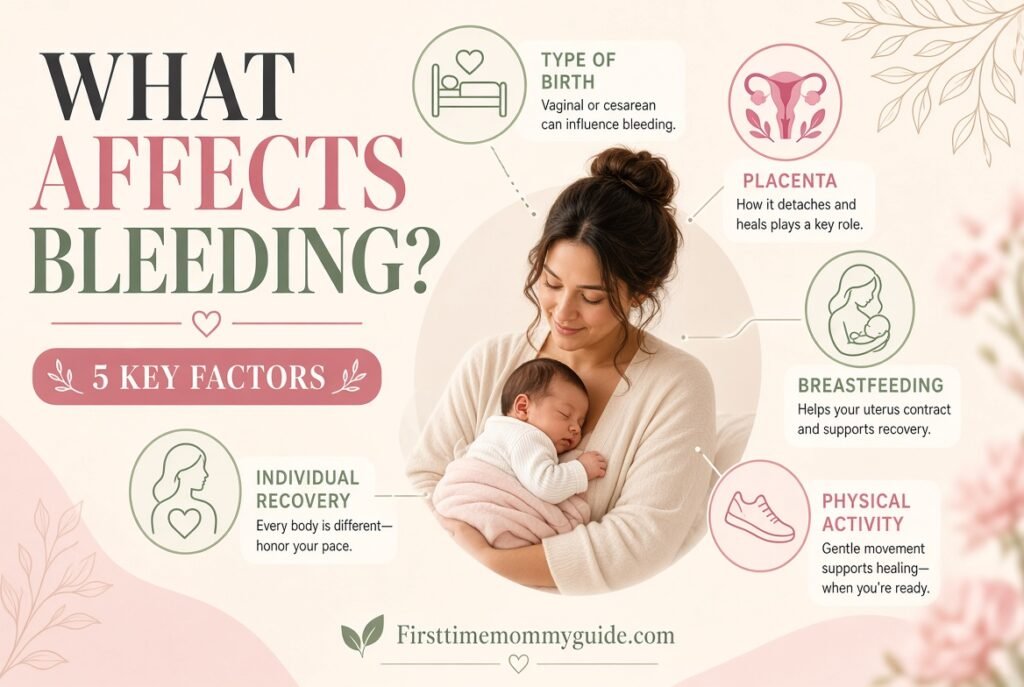
Several individual factors can shift your bleeding timeline slightly longer or shorter. None of these are cause for concern on their own.
- Delivery method: Vaginal births typically involve slightly longer bleeding than C-sections
- Breastfeeding: Nursing releases oxytocin, which helps the uterus contract faster
- Physical activity: Movement and exertion can temporarily increase flow
- Birth control: Progestin-only methods can cause spotting for several extra weeks
- Multiple pregnancies: Carrying twins or more can affect uterine recovery time
Also Read:
Also Read:
- SPD Pregnancy: Symptoms, Causes & Relief Tips (2026 Guide)
When Do Babies Start Sitting Up? Month-by-Month Milestone Guide 2026 - When Do Babies Start Rolling Over? (2026 Guide)
- Maternity Leggings: The Complete Guide for Every Trimester 2026
- Leggings in Pregnancy: Is It Safe to Wear Them Every Trimester? 2026
Frequently Asked Questions (FAQs)
How long do you bleed after you give birth on average?
Most women bleed for four to six weeks, though some experience light spotting for up to eight weeks. The heaviest bleeding is usually limited to the first several days.
Is it normal to bleed for 8 weeks after birth?
Yes, bleeding up to eight weeks can still be within normal range for some women. If it stays heavy or bright red the entire time, contact your provider to rule out complications.
How long do you bleed after a C-section?
C-section bleeding typically lasts three to five weeks, slightly shorter than vaginal birth. You’ll still go through the same three lochia stages either way.
What does postpartum bleeding look like on day 1?
Day 1 bleeding is usually bright or dark red and fairly heavy, similar to a strong period. Small clots the size of a grape are considered normal at this stage.
When should postpartum bleeding turn brown?
Bleeding often shifts to a brownish-pink color between days five and ten. This shows your uterus is healing and the flow is naturally slowing down.
Can bleeding stop and then start again after birth?
Yes, this is common and usually tied to increased activity or breastfeeding. A short return of bleeding after it seemed to stop isn’t automatically a red flag, but sudden heavy bleeding should be checked.
How much bleeding after birth is too much?
Soaking a pad in under an hour, especially with clots larger than a quarter, is considered too much. This can be a sign of postpartum hemorrhage and needs immediate medical attention.
Do you bleed more with breastfeeding?
You may notice brief increases in flow while nursing because breastfeeding triggers uterine contractions. This is a normal and even helpful part of your uterus shrinking back down.
Can I use tampons during postpartum bleeding?
No, tampons should be avoided until your provider clears you at your postpartum checkup. Using them earlier increases your risk of introducing bacteria and infection.
What are the 3 stages of lochia?
The three stages are lochia rubra, lochia serosa, and lochia alba. They move from heavy red bleeding to pink-brown discharge to light yellow-white discharge over several weeks.
How long until lochia turns white?
Lochia typically reaches the white or yellow stage around day ten and can continue at that light level for several more weeks. Complete stopping usually happens by six weeks.
Is postpartum bleeding heavier than a period?
Yes, especially in the first few days, postpartum bleeding is noticeably heavier than a typical period. It also lasts significantly longer than an average menstrual cycle.
When does postpartum bleeding get lighter?
Bleeding usually starts noticeably lightening around day four to seven. By the second week, most women see mostly light spotting instead of heavy flow.
Can postpartum bleeding last longer than 6 weeks?
Yes, some women bleed lightly for up to eight weeks, which can still be considered normal. If heavy bleeding continues past six weeks, reach out to your provider.
What causes heavy bleeding weeks after giving birth?
Retained placental tissue, infection, or the uterus not contracting properly can all cause delayed heavy bleeding. Any sudden increase in flow after it had slowed down deserves a call to your doctor.
Does exercise increase postpartum bleeding?
Yes, physical activity can temporarily increase blood flow as your uterus is still healing. It’s best to ease back into exercise gradually and rest if bleeding picks up.
How do I know if I’m hemorrhaging after birth?
Warning signs include soaking a pad within an hour, large clots, dizziness, and a rapid heartbeat. Postpartum hemorrhage is a medical emergency that requires immediate attention.
When does your period return after giving birth?
Non-breastfeeding moms often see their period return within six to eight weeks. Breastfeeding moms may not have a period for several months, depending on nursing frequency.
Can you get pregnant before your period returns postpartum?
Yes, ovulation can happen before your first postpartum period arrives. Use contraception if you’re not trying to become pregnant again right away.
What’s the difference between lochia and a period?
Lochia contains uterine tissue, mucus, and blood, while a period is primarily blood from the shed uterine lining. Lochia also lasts much longer, typically four to six weeks compared to a few days for a period.
Should postpartum bleeding smell?
A mild, period-like smell is normal, but a strong or foul odor is not. Foul-smelling discharge can be a sign of infection and should be checked by your provider.
Does a second birth cause longer bleeding?
Bleeding duration doesn’t reliably increase with each pregnancy and depends more on delivery type and individual healing. Some women notice slight differences, but it varies person to person.
Can stress affect postpartum bleeding?
Stress itself doesn’t directly cause bleeding but can affect rest and recovery, which may influence healing pace. Prioritizing rest supports your body’s natural recovery process.
Is spotting for weeks after the 6-week mark normal?
Occasional light spotting slightly past six weeks can happen, especially with breastfeeding-related hormone shifts. Bright red or heavy bleeding at this point should be evaluated by a doctor.
What pads are best for postpartum bleeding?
Hospital-grade or overnight maternity pads work best for the first several days of heavy flow. You can switch to regular pads once the flow noticeably lightens, usually after the first week or two.
Conclusion
Postpartum bleeding is a normal, expected part of recovery that most women experience for four to six weeks after birth. Understanding the three stages of lochia and knowing the warning signs can help you feel confident instead of anxious during this time.
If anything feels off, whether it’s unusually heavy bleeding, foul odor, or large clots, don’t hesitate to reach out to your healthcare provider. Trusting your instincts and giving your body the rest it needs will support a smoother recovery.

Dilawar Mughal
Founder and editor, First Time Mommy Guide
I research every guide against what the NHS, the AAP and the WHO publish, then write it in plain English — because most new parents are reading with one hand free, not comparing clinical guidelines. I'm not a doctor or a midwife. Every health claim on this site is sourced and linked so you can check it yourself, and anything urgent belongs with your health visitor or GP, not a blog.