General information, not medical advice. Every baby is different — if anything worries you, speak to your midwife, health visitor or GP rather than waiting.
Your regular leggings start pinching by week 14, and nobody warns you how fast that happens. Maternity leggings solve that problem with a stretchy panel built specifically for a growing bump.
Table of Contents
What Are Maternity Leggings?
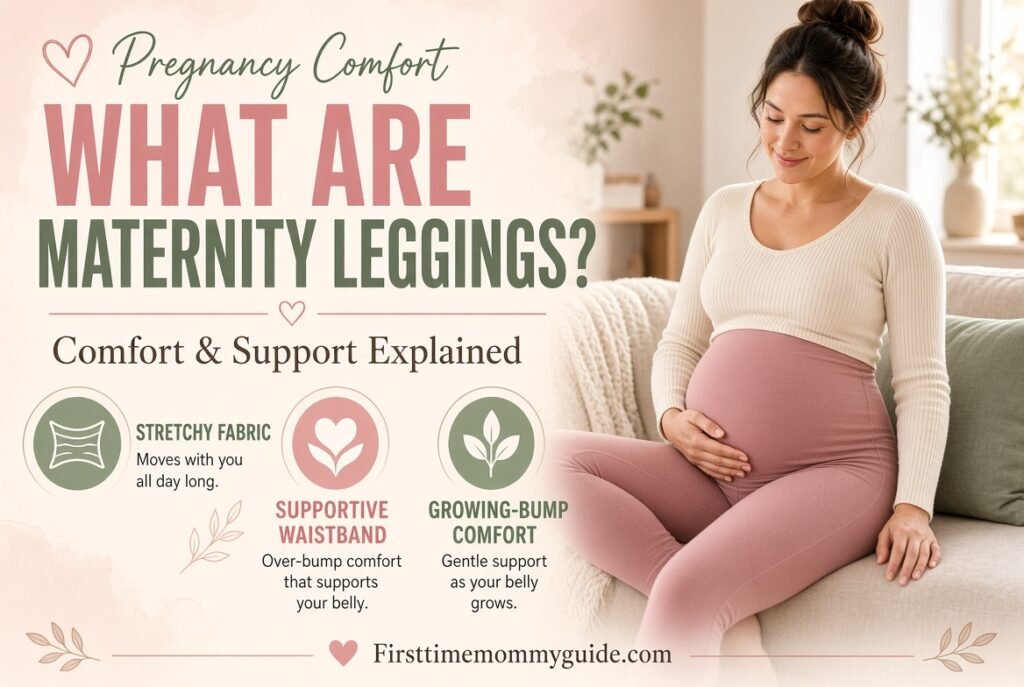
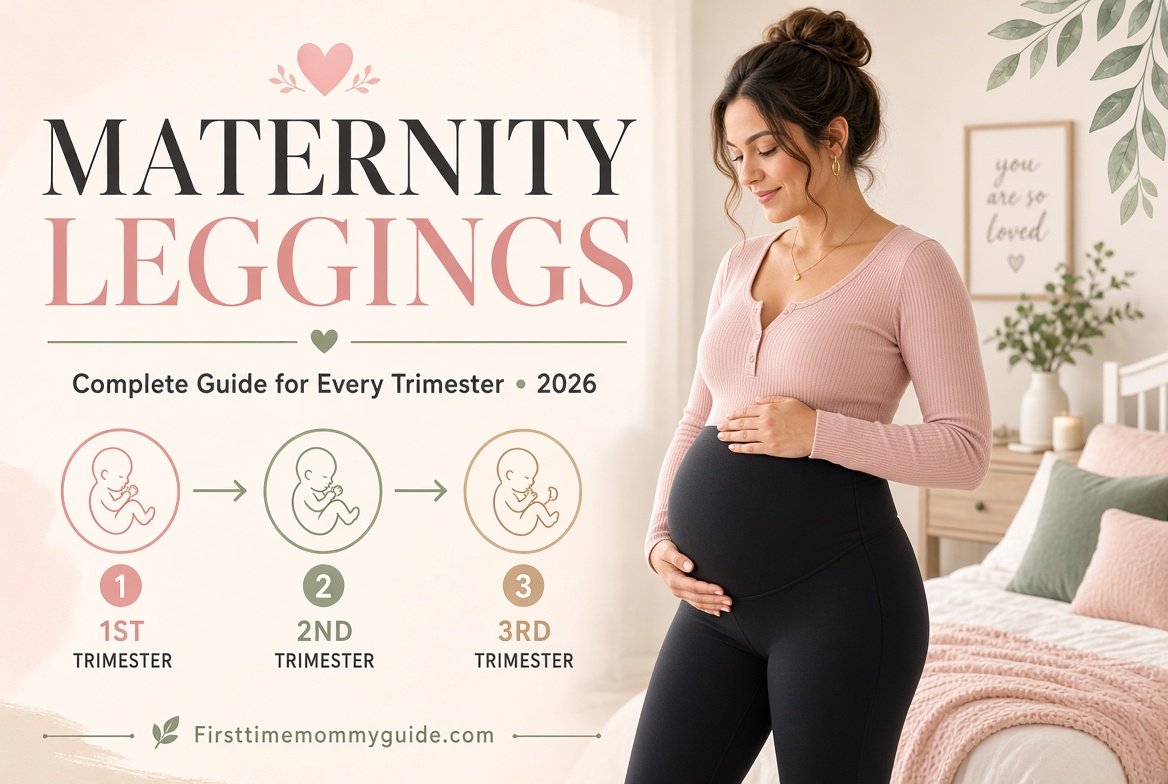
Maternity leggings are leggings built with a stretchable belly panel, usually over-the-belly or under-the-belly, designed to move with a growing bump through pregnancy and often into postpartum.
Unlike regular leggings, they use four-way stretch fabric and a wider waistband so they never roll down or dig into the belly as it expands.
Most moms need at least two to three pairs, since sizing needs change noticeably between the first and third trimester.
Why Regular Leggings Stop Working During Pregnancy
Regular leggings are cut for a stable waistline, so the waistband sits right where the bump grows fastest. That means constant rolling, digging, and discomfort by the second trimester.
Maternity leggings solve this with a belly panel that stretches rather than resists, so the fabric moves with you instead of against you.
Many moms also notice regular leggings restrict circulation late in pregnancy, which maternity styles are specifically designed to avoid.
Over-the-Belly vs Under-the-Belly Maternity Leggings
Over-the-Belly Style
Over-the-belly maternity leggings have a tall panel that covers the entire bump, offering gentle compression and back support. Most moms find these the most comfortable option from the second trimester onward.
Under-the-Belly Style
Under-the-belly leggings sit low, below the bump, and work well in the first trimester or for moms who prefer less coverage. They also transition easily into early postpartum wear.
| Feature | Over-the-Belly | Under-the-Belly |
|---|---|---|
| Best trimester | 2nd and 3rd | 1st and early 2nd |
| Back support | Higher | Lower |
| Postpartum use | Good with C-section recovery | Limited support |
| Coverage | Full bump | Partial bump |
Best Fabrics for Maternity Leggings
Cotton-Spandex Blends
Cotton blends are breathable and soft against sensitive skin, which many moms prefer for daily wear and sleep. They tend to stretch out slightly faster with repeated washing.
Nylon-Spandex or Polyester Blends
These fabrics hold their shape longer and offer stronger compression, making them a better choice for workouts and long days on your feet.
Modal Blends
Modal fabric feels exceptionally soft and drapes well, often used in premium lounge-style maternity leggings. It is a strong option for postpartum recovery wear too.
How to Choose the Right Size
Buying your pre-pregnancy size in a maternity legging usually works, since the belly panel is designed to stretch and expand around your regular size.
If you are between sizes, most brands recommend sizing up rather than down, especially if you plan to wear the same pair through the third trimester.
Always check the brand’s specific size chart, since maternity sizing is not standardized across brands the way regular clothing sizing tends to be.
What to Look for When Shopping
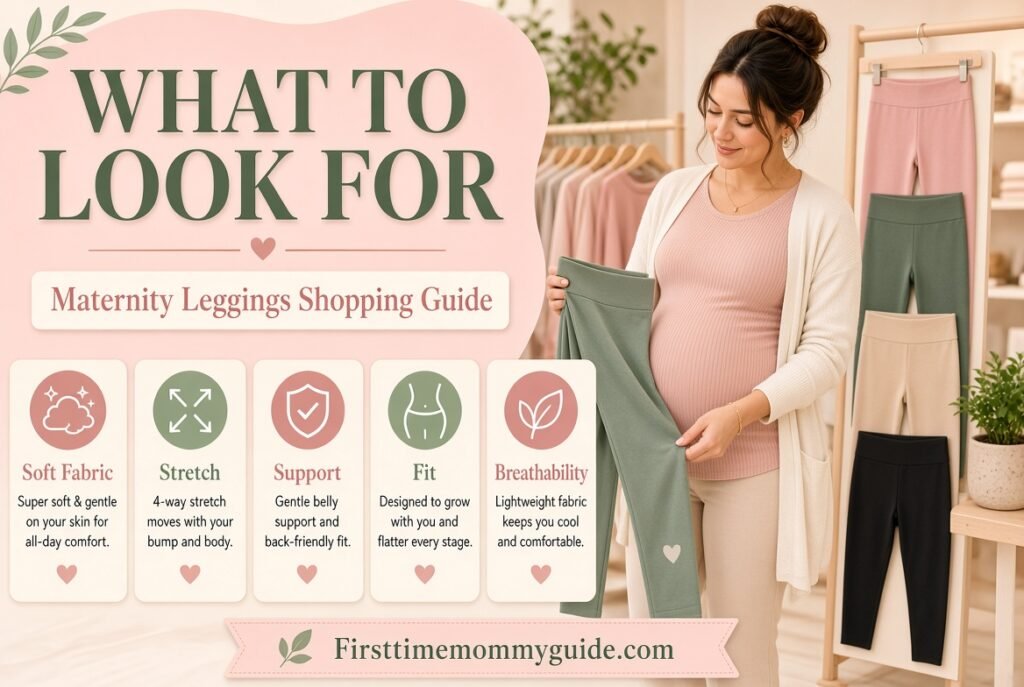
- A four-way stretch fabric that recovers its shape after washing.
- A wide, soft waistband with no hard elastic edges.
- Flat or minimal seams to avoid chafing against a sensitive belly.
- Enough length so the waistband does not roll down during the day.
- A fabric weight suited to your climate and how often you plan to wear them.
Common Mistakes to Avoid
Buying only one pair early in pregnancy is a common mistake, since sizing needs shift noticeably by the third trimester.
Choosing under-the-belly styles too early can also backfire, since they offer less support once the bump grows larger.
Skipping a wash-and-wear test before buying multiples is another mistake, since some fabrics shrink or lose stretch after the first wash.
Maternity Leggings by Trimester
First Trimester
Regular leggings often still fit, but many moms switch early for comfort since bloating can start before the bump shows. An under-the-belly style works well here.
Second Trimester
This is when most moms fully transition to maternity leggings, since the bump grows quickly and regular waistbands stop being comfortable. Over-the-belly styles start to shine here.
Third Trimester
Full belly support becomes important for comfort and back support. Over-the-belly leggings with a wide, soft panel are typically the most comfortable option in these final weeks.
Maternity Leggings vs Regular Leggings
| Feature | Maternity Leggings | Regular Leggings |
|---|---|---|
| Belly panel | Yes, stretchable | No |
| Waistband placement | Adjustable, over or under bump | Fixed at natural waist |
| Fabric stretch | Higher, four-way stretch | Standard two-way or four-way |
| Postpartum use | Often usable | Not designed for bump support |
| Price range | Slightly higher | Standard |
Can You Wear Maternity Leggings Postpartum?
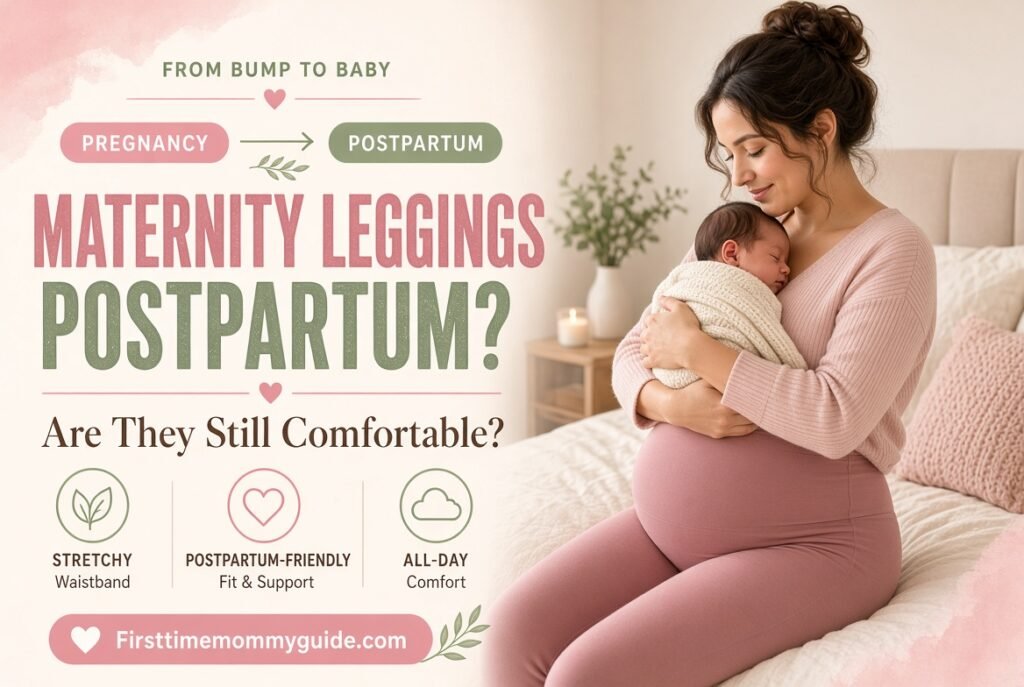
Yes, many moms continue wearing maternity leggings after delivery, especially over-the-belly styles that offer gentle compression during recovery. This is especially helpful after a C-section, when waistband pressure needs to stay low on the abdomen.
Some brands specifically market “pregnancy to postpartum” leggings for exactly this transition.
Also Read
If you are working through other pregnancy wardrobe and body questions, these related guides may help.
- Leggings in Pregnancy: Is It Safe to Wear Them Every Trimester? 2026
- 33 Weeks Pregnant: Symptoms, Baby Development & What to Expect 2026
- 25 Weeks Pregnant: Symptoms, Baby Size & What to Expect 2026
- 17 Weeks Pregnant: Symptoms, Baby Size & What to Expect 2026
- Pregnancy Week By Week 7: Symptoms & Baby Size 2026
- FBS Test for Pregnant: Normal Range, Purpose & Next Steps 2026
- Pregnancy, month by month
- Baby Essentials, 0–3 months
- Baby Essentials Checklist: What New Parents Actually Need
- Baby Essentials Checklist 0–3 Months (Complete Guide)
- How Many Newborn Outfits Do You Need? A Complete Size-by-Size Guide
- Baby Shopping List for First-Time Moms: The Complete 2026 Checklist
- Baby Sleep Guide for New Moms: Safe Sleep & Schedules (2026)
- Baby sleep guide
- When Do Babies Start Smiling? Signs & Milestones 2026
- Starting solids, 6–12 months
- Baby Food Chart 6 to 12 Months: Free Month-by-Month Feeding 2026
- First Foods for Baby at 6 Months: A Complete Guide to Starting Solids 2026
- First Food for Baby 6 Months: Best Options, Safety Tips & Feeding Guide
- Sweet Potato Puree for Baby: Easy Recipe, Age Guide & Storage Tips
- Apple Puree for Baby: Easy Recipe & Safety Guide (2026)
- Blueberry Puree for Baby: Easy Recipe & Choking Safety Guide
- Spinach Puree for Baby: Safe Recipe, Nitrate Facts & Age Guide
- Homemade Pumpkin Puree for Baby: Easy, Safe Recipe (6+ Months)
- Zucchini Puree for Baby: Easy Recipe & Age Guide
- Best Vegetable Purees for Baby: A Complete Age-by-Age Guide 2026
Frequently Asked Questions
What are maternity leggings?
Maternity leggings are leggings with a stretchable belly panel designed to fit comfortably over or under a growing pregnant belly.
When should I start wearing maternity leggings?
Most moms switch by the end of the first trimester or early second trimester, once regular waistbands start feeling tight or uncomfortable.
How many pairs of maternity leggings do I need?
Most moms find two to three pairs enough to rotate through laundry, though some prefer more for workout-specific pairs.
Are maternity leggings true to size?
Most brands recommend buying your pre-pregnancy size, since the belly panel is designed to stretch and expand as needed.
Can I wear maternity leggings after giving birth?
Yes, especially over-the-belly styles, which many moms continue wearing during postpartum recovery for gentle abdominal support.
What is the difference between over-the-belly and under-the-belly leggings?
Over-the-belly styles cover the full bump with a tall support panel, while under-the-belly styles sit lower and offer less coverage.
Do maternity leggings run small or large?
They generally run true to size, though fit varies by brand, so checking the specific size chart before buying is important.
Are maternity leggings safe for workouts during pregnancy?
Yes, many maternity leggings are designed specifically for workouts, using compression fabric that supports the belly during movement.
What fabric is best for maternity leggings?
Cotton-spandex blends are soft and breathable, while nylon-spandex blends offer stronger compression and durability for active wear.
Can maternity leggings help with back pain?
Yes, over-the-belly styles with a supportive panel can reduce strain on the lower back by gently supporting the belly’s weight.
Do maternity leggings have pockets?
Many modern styles include side pockets, though this varies by brand, so checking the product description is worth doing before buying.
Are maternity leggings see-through?
Quality maternity leggings use thicker, non-see-through fabric, but cheaper pairs can be thinner, so checking reviews for opacity is recommended.
Can I wear maternity leggings in the first trimester?
Yes, though many moms find regular leggings still fit comfortably in the first trimester, switching to maternity styles becomes more common in month four or five.
How do I wash maternity leggings without ruining the stretch?
Washing in cold water and air-drying or using a low-heat tumble dry setting helps preserve the elastic fibers longer.
Do maternity leggings work for C-section recovery?
Yes, over-the-belly styles with a soft, wide waistband are often recommended for C-section recovery since they avoid pressure on the incision area.
What is the price range for good maternity leggings?
Quality maternity leggings typically range from $20 to $90, with budget options performing well for casual wear and premium options offering longer-lasting compression fabric.
Can maternity leggings be worn for sleeping?
Yes, softer cotton-blend maternity leggings are commonly used as comfortable sleepwear, especially in the third trimester.
Do all maternity leggings have a belly panel?
Most do, but some brands sell maternity-cut leggings without a dedicated panel, so checking the product details before buying matters.
Are maternity leggings different from postpartum leggings?
Some overlap exists, but postpartum-specific leggings often add extra core compression, while maternity leggings focus on belly stretch and support.
What size should I buy if I am between sizes?
Most brands recommend sizing up if you are between sizes, especially if you plan to wear the leggings through the third trimester.
Conclusion
Maternity leggings are one of the simplest wardrobe upgrades that make daily comfort noticeably better throughout pregnancy. Choosing the right style for your trimester, checking the fabric blend, and getting the sizing right the first time saves you from buying multiple pairs out of frustration.
Whether you go with an over-the-belly style for full support or an under-the-belly pair for early pregnancy, the right maternity leggings should feel like they were made to move with you, not against you.

Dilawar Mughal
Founder and editor, First Time Mommy Guide
I research every guide against what the NHS, the AAP and the WHO publish, then write it in plain English — because most new parents are reading with one hand free, not comparing clinical guidelines. I'm not a doctor or a midwife. Every health claim on this site is sourced and linked so you can check it yourself, and anything urgent belongs with your health visitor or GP, not a blog.