General information, not medical advice. Every baby is different — if anything worries you, speak to your midwife, health visitor or GP rather than waiting.
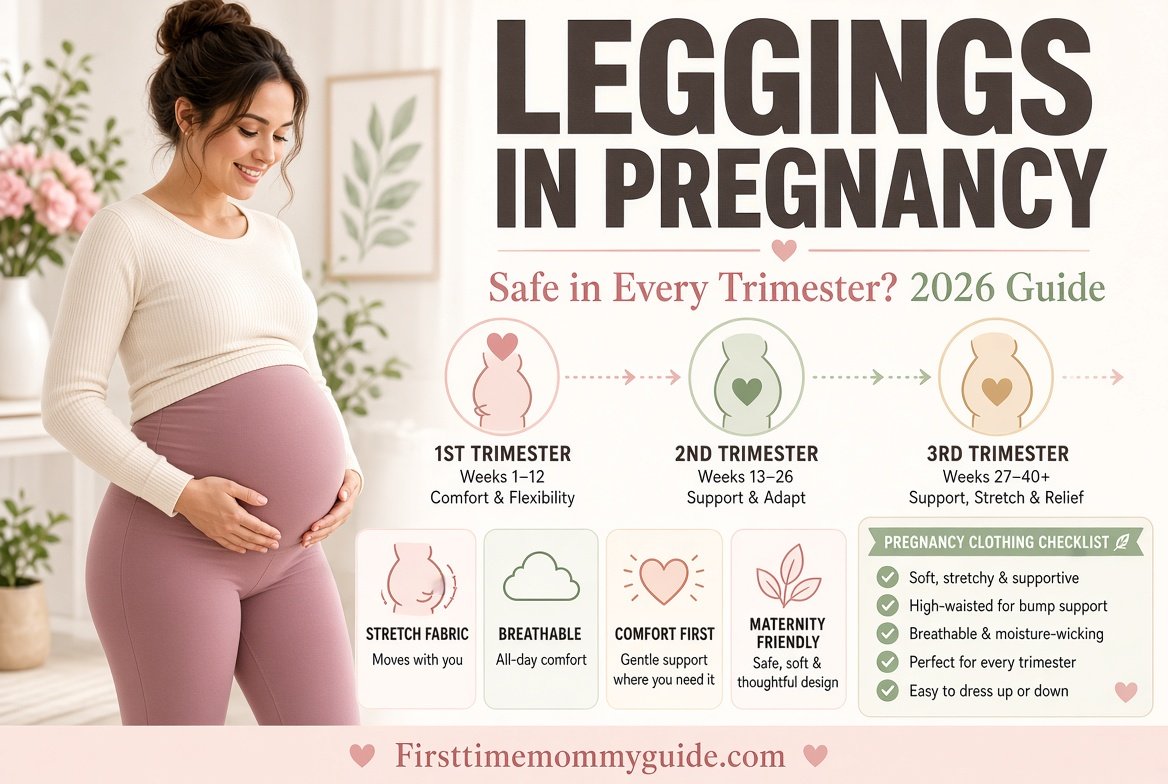
Leggings in pregnancy are one of the most searched clothing questions among expecting moms, and for good reason. As your body changes week to week, comfort suddenly matters more than anything else in your closet.
Table of Contents
Are Leggings Safe to Wear During Pregnancy?
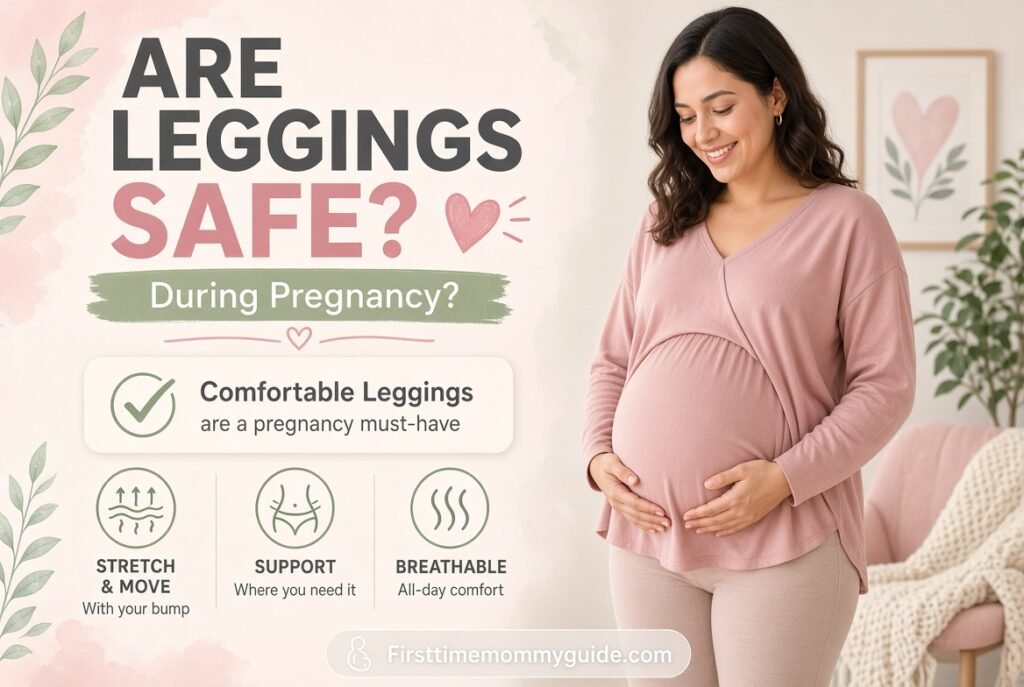
Yes, leggings in pregnancy are generally safe as long as they aren’t painfully tight or restrictive. Clothing itself does not harm your baby, since your baby is protected inside the uterus by amniotic fluid and layers of your own body.
The real concern isn’t your baby’s safety — it’s your own comfort and circulation. Overly tight leggings can cause issues for you, even though they won’t reach your baby directly.
What Doctors and Health Experts Actually Say
The American College of Obstetricians and Gynecologists advises pregnant women to stay hydrated, avoid overheating, and choose loose-fitting clothing, especially during exercise. This is because your body’s temperature regulation shifts significantly during pregnancy.
Some research also suggests tight clothing can slow digestion, reduce trunk muscle activity, and worsen constipation for women who already struggle with it. None of this means leggings are off-limits — it just means fit matters.
Signs Your Leggings Are Too Tight
Your body will usually tell you before any real problem develops. A simple rule works well here: if you feel instant relief the moment you take them off, they were too tight.
- Leaving deep red marks on your skin after removal.
- Constantly rolling down or needing to be pulled up.
- Digging into your lower belly or waistline.
- Making you feel overheated or overly sweaty.
- Causing numbness or tingling around the hips and thighs.
Best Fabric and Fit for Leggings in Pregnancy
The ideal pair has a soft stretch, a smooth waistband, and breathable fabric. Cotton-spandex blends and moisture-wicking activewear fabrics both work well for everyday wear.
Look for a waistband that gently expands rather than one with a rigid, non-stretch edge. A rigid waistband is far more likely to dig in as your bump grows week by week.
Leggings vs Maternity Leggings vs Compression Leggings
Not all leggings serve the same purpose during pregnancy, and knowing the difference helps you choose the right pair for each stage.
| Type | Best For | Key Feature |
|---|---|---|
| Regular leggings | Early pregnancy, first trimester | Standard rise and stretch |
| Maternity leggings | Growing belly, all trimesters | Over-the-belly or under-the-belly panel |
| Compression leggings | Swelling, varicose veins, long standing | Graduated pressure, tighter at ankles |
Benefits of Compression Leggings in Pregnancy
Compression leggings apply graduated pressure, meaning they’re tighter at the ankle and gradually looser moving upward. This helps push blood back toward the heart instead of letting it pool in your legs.
Many pregnant women use compression leggings to manage swelling, heaviness, and varicose veins, especially in the second and third trimesters. Look for a compression level around 10 to 20 mmHg for safe daily wear.
Risks of Wearing Overly Tight Leggings
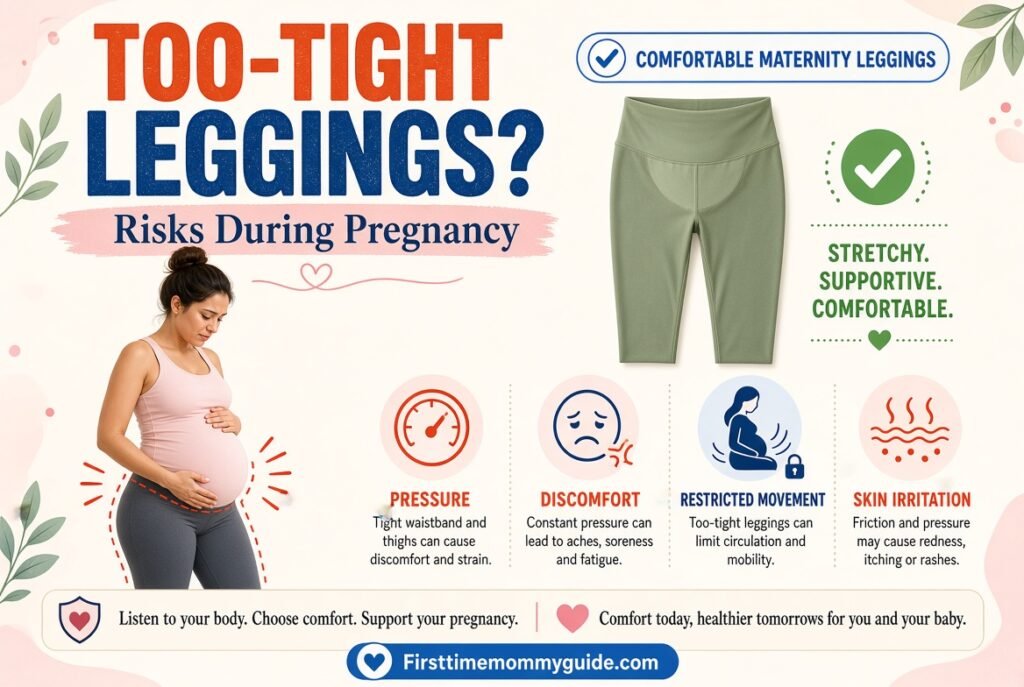
Tight leggings won’t hurt your baby directly, but they can cause a handful of uncomfortable side effects for you. Knowing these risks helps you decide when to switch to a looser or maternity style.
- Meralgia paresthetica: a compressed thigh nerve causing tingling, numbness, or pain.
- Heartburn and acid reflux: pressure on the stomach can push acid upward.
- Reduced circulation: especially a concern in early pregnancy when blood pressure can already run low.
- Yeast infections: tight, non-breathable fabric traps moisture and warmth.
When to Size Up During Pregnancy
Most women start reaching for maternity leggings early in the second trimester, once the bump becomes noticeable and regular leggings start to feel restrictive. Your maternity size usually matches your pre-pregnancy size.
There’s no single “right” week to size up. The better approach is to size up the moment your current leggings start leaving marks or require constant adjusting.
Common Mistakes to Avoid
A few small wardrobe habits can make pregnancy far less comfortable than it needs to be.
- Sticking with pre-pregnancy leggings well past the point of comfort.
- Choosing shapewear or compression garments not designed for pregnancy.
- Ignoring numbness or tingling instead of switching styles.
- Wearing thick, non-breathable fabric during hot weather or workouts.
Leggings After Birth (Postpartum Considerations)
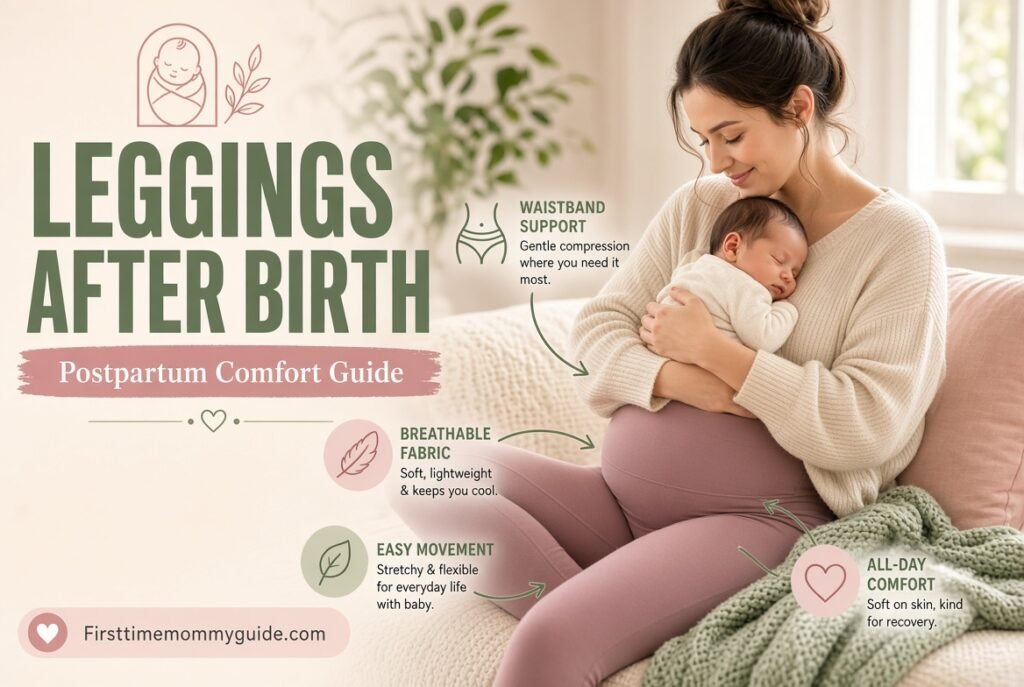
Many women continue wearing maternity or compression leggings for a few months postpartum while their body gradually changes back. Postpartum compression leggings can also offer gentle support during recovery.
If you had a C-section, choose a pair with a soft, low waistband that won’t press on your incision site while it heals.
Also Read:
- Spinach Puree for Baby: Safe Recipe, Nitrate Facts & Age Guide
- Blueberry Puree for Baby: Easy Recipe & Choking Safety Guide
- Fruit Purees for 6 Month Old Babies: Safe Recipes & Guide (2026)
- Best Vegetable Purees for Baby: A Complete Age-by-Age Guide 2026
- Sweet Potato Puree for Baby: Easy Recipe, Age Guide & Storage Tips
- Pregnancy Guide Month by Month
- Baby Essentials Checklist 0 to 3 Months
- Baby Food Guide 6 to 12 Months
- Baby Sleep Guide
Frequently Asked Questions (FAQs)
Can leggings in pregnancy harm my baby?
No. Your baby is protected by amniotic fluid and the uterus, so clothing pressure does not reach or affect them directly.
What week of pregnancy should I switch to maternity leggings?
Most women switch early in the second trimester, but the better signal is comfort, not a specific week. Switch as soon as your regular leggings feel tight or leave marks.
Are compression leggings safe throughout pregnancy?
Yes, when using an appropriate compression level, typically 10 to 20 mmHg. Medium to high compression is best worn during the day rather than while sleeping.
Can tight leggings cause a miscarriage?
No scientific evidence supports this claim. Tight clothing can cause discomfort, but it does not cause miscarriage.
Do leggings restrict blood flow to the baby?
No. Your baby receives oxygen through your bloodstream, and it’s highly unlikely that leggings could compress internal blood vessels enough to affect that supply.
Is it safe to wear leggings while exercising during pregnancy?
Yes, as long as they’re breathable and not restrictive. ACOG recommends loose, breathable clothing during exercise to help regulate body temperature.
Why do my leggings feel tighter after lying down?
As your abdomen grows, snug garments can feel tighter after lying down due to shifting pressure and fluid distribution. This is normal and not a sign of danger.
Can leggings cause yeast infections during pregnancy?
Tight, non-breathable fabric can trap moisture and warmth, which may increase the risk of yeast infections. Choosing breathable fabric helps reduce this risk.
What is meralgia paresthetica and can leggings cause it?
It’s a condition where a nerve in the thigh becomes compressed, causing tingling, numbness, or pain. Overly tight pants or waistbands are one possible trigger.
Should I size up or buy true maternity leggings?
Either can work. Some women simply size up their regular leggings, while others prefer true maternity leggings with a dedicated belly panel for extra support.
Can leggings make heartburn worse during pregnancy?
Yes, tight leggings that press on the stomach can push acid upward and worsen heartburn, especially in the second and third trimesters.
Are over-the-belly or under-the-belly leggings better?
It depends on personal comfort. Over-the-belly styles offer more support and coverage, while under-the-belly styles feel less restrictive for some women.
Can I keep wearing leggings for months after giving birth?
Yes, many women wear maternity or compression leggings for a few months postpartum while their body adjusts and recovers.
Do leggings need to be maternity-specific to be safe?
No. Regular leggings are safe as long as they fit comfortably and aren’t restrictive. Maternity leggings simply offer more room and belly support as your body changes.
What’s the simplest test for knowing if leggings are too tight?
If you feel noticeable relief right after taking them off, they were too tight for your current stage of pregnancy.
Conclusion
Leggings in pregnancy are safe in almost every case, and your baby is never at risk from clothing pressure alone. The real priority is your own comfort, circulation, and skin health as your body changes week by week.
Pay attention to marks, numbness, overheating, or constant readjusting, and treat those as your cue to size up or switch styles. With the right fabric, fit, and compression level, leggings can stay one of the most comfortable parts of your pregnancy wardrobe from the first trimester through postpartum recovery.

Dilawar Mughal
Founder and editor, First Time Mommy Guide
I research every guide against what the NHS, the AAP and the WHO publish, then write it in plain English — because most new parents are reading with one hand free, not comparing clinical guidelines. I'm not a doctor or a midwife. Every health claim on this site is sourced and linked so you can check it yourself, and anything urgent belongs with your health visitor or GP, not a blog.