General information, not medical advice. Every baby is different — if anything worries you, speak to your midwife, health visitor or GP rather than waiting.
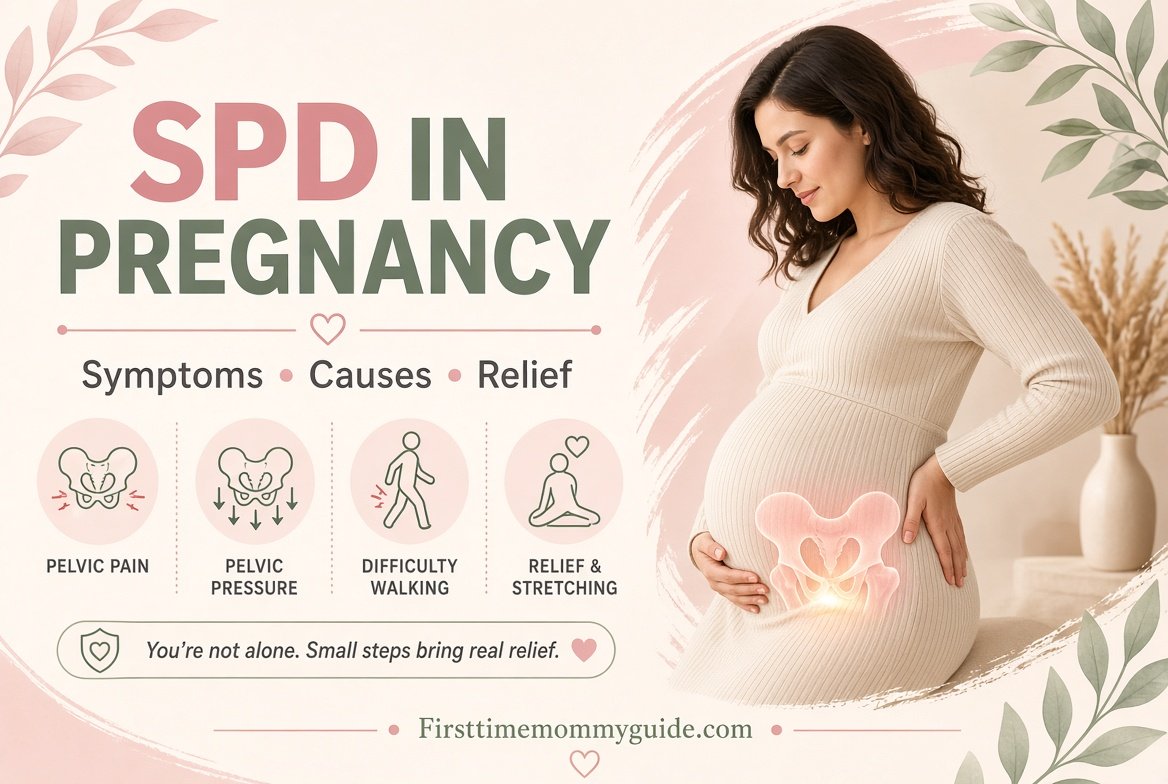
If a sharp, grinding pain in your pubic bone is stopping you mid-step, you’re probably dealing with SPD pregnancy pain. It’s more common than most first-time moms realize.
Table of Contents
What Is SPD in Pregnancy?
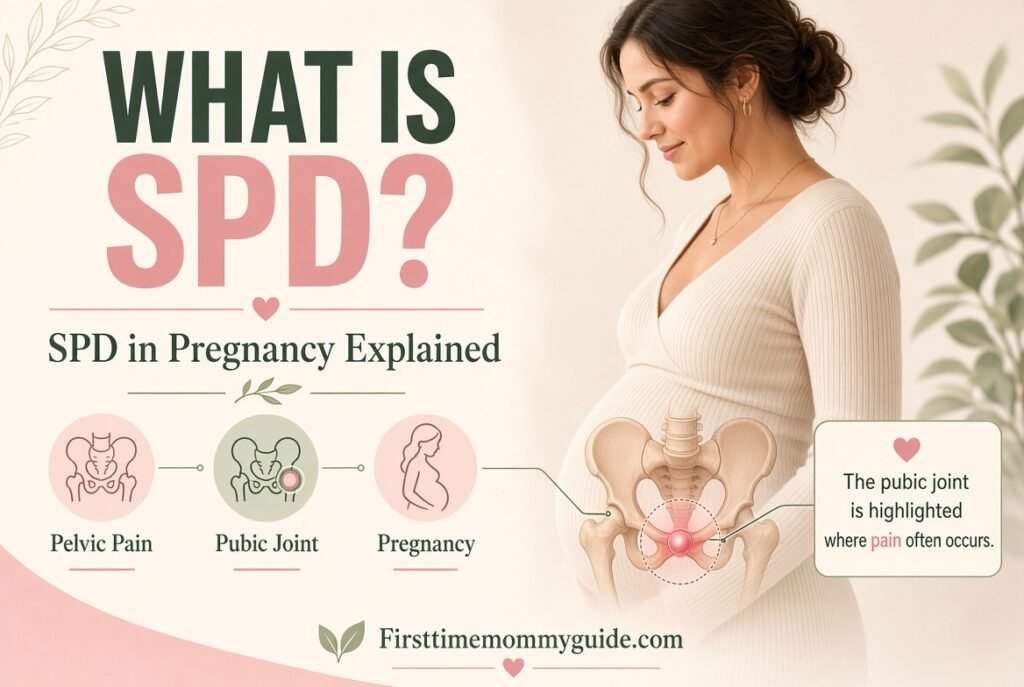
SPD (symphysis pubis dysfunction) is pelvic pain caused by extra movement in the joint that connects your two pubic bones during pregnancy. It’s also called pelvic girdle pain (PGP).
Your pubic symphysis is normally a tight, stable joint. During pregnancy, the hormone relaxin loosens it to help your pelvis prepare for birth.
In some women, this loosening goes too far. The joint becomes unstable, and that instability strains the surrounding ligaments and muscles.
SPD does not harm your baby. It’s uncomfortable and sometimes debilitating for you, but your baby is safe.
How Common Is SPD Pregnancy Pain?
Estimates vary a lot depending on the study and how it’s diagnosed. Some research puts it around 1 in 5 pregnant women, while other estimates run much higher.
It’s one of the most under-discussed pregnancy symptoms, largely because many providers don’t screen for it routinely.
What Causes SPD During Pregnancy?
There isn’t one single cause. Most cases come from a combination of hormonal, mechanical and physical factors working together.
- Relaxin hormone surge — loosens pelvic ligaments to prepare for delivery
- Growing uterus weight — puts added strain on the pelvic joints and ligaments
- Posture changes — your center of gravity shifts as your bump grows
- Previous pelvic injury — an old injury can make the joint more prone to instability
- Multiple pregnancies — each pregnancy can increase the likelihood of recurrence
- Weak core or pelvic floor muscles — less support for the pelvic joints
When Does SPD Usually Start?
SPD can technically start at any point in pregnancy, but it’s most common in the second half — typically from around week 18 onward, as the uterus gets heavier.
Some women notice it earlier, especially in second or third pregnancies.
Symptoms of SPD in Pregnancy
Symptoms range from a mild ache to pain severe enough to affect walking. Severity doesn’t always match how “serious” the underlying instability is.
- Sharp or shooting pain in the center of the pubic bone
- A grinding, clicking or popping sensation in the pelvis
- Pain that worsens with walking, climbing stairs or standing on one leg
- Difficulty turning over in bed
- Pain radiating to the lower back, hips, groin or inner thighs
- Discomfort during or after sex
- Waddling gait as pregnancy progresses
Pain Triggers to Watch For
Most SPD pain flares up with movements that separate the legs unevenly — getting out of a car, climbing stairs one leg at a time, or standing on one foot to dress.
Recognizing your personal triggers is one of the fastest ways to reduce daily flare-ups.
How Is SPD Diagnosed?
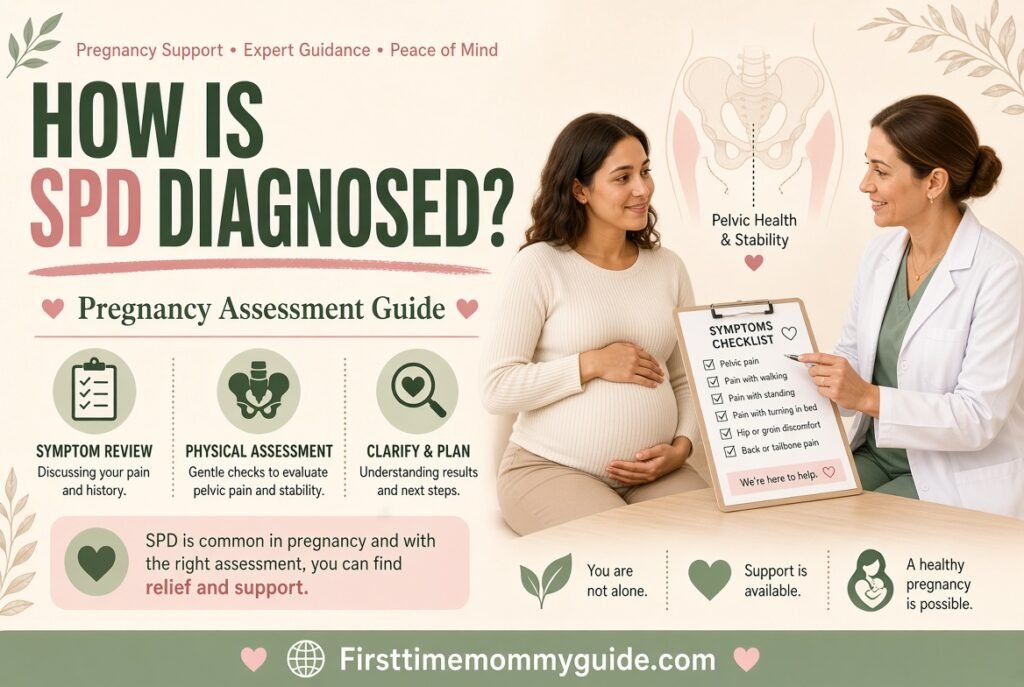
There’s no blood test for SPD. Diagnosis is mostly clinical, based on your symptoms and a physical exam.
Your provider or a physical therapist may check pelvic alignment, ask you to walk, and press gently on the pubic bone to check for tenderness.
Imaging like ultrasound or MRI is rarely needed, and X-rays are generally avoided during pregnancy unless absolutely necessary.
SPD vs Round Ligament Pain vs Sciatica
These three pregnancy pains get confused often because they can overlap. Here’s a quick comparison to help you tell them apart.
| Condition | Pain Location | Typical Trigger | Feels Like |
|---|---|---|---|
| SPD (Pelvic Girdle Pain) | Front pubic bone, groin, inner thighs | Walking, stairs, turning in bed | Grinding, sharp, clicking |
| Round Ligament Pain | Lower belly, one or both sides | Sudden movement, standing up fast | Quick, stabbing twinge |
| Sciatica | Lower back down through one leg | Sitting, standing long periods | Shooting, burning, numbness |
How to Relieve SPD Pain During Pregnancy
Most SPD pregnancy pain responds well to conservative management. Full elimination isn’t always possible, but most women get meaningful relief.
- See a pelvic floor physical therapist — they can assess alignment and build a targeted plan
- Wear a maternity support belt — stabilizes the pelvis during daily movement
- Sleep with a pillow between your knees — keeps hips aligned side-lying
- Move symmetrically — keep knees together when getting in and out of bed or a car
- Sit down for dressing tasks — avoid standing on one leg
- Use a pool noodle or towel between knees while sleeping for extra stability
- Apply heat or cold packs to the pubic area for short-term relief
- Avoid activities that separate the knees, like wide squats or lunges
Safe Exercises for SPD Pregnancy Pain
Gentle, targeted movement often helps more than rest alone. A pelvic floor physical therapist can tailor these to your body.
- Pelvic tilts done slowly and gently
- Seated or supported cat-cow stretches
- Water-based exercise or aquatic therapy, which reduces joint load
- Gentle glute and inner-thigh activation exercises
Movements to Avoid With SPD
Certain everyday movements make symptoms noticeably worse. Skipping these reduces flare-ups significantly.
- Standing on one leg to put on trousers
- Crossing your legs while sitting
- Straddling movements, like getting out of a car sideways
- Lifting heavy objects or older children
- Wide-leg squatting or lunging
Best Sleeping Position for SPD Pregnancy
Side-sleeping with a pillow between your knees is generally the most comfortable option. It keeps your hips level and reduces strain on the joint.
To get into bed, sit first, then lie down on your side and bring both legs up together, keeping your knees aligned the whole time.
Getting up works in reverse — swing both legs down together before pushing up to sit, rather than twisting.
SPD and Labor: What to Know
SPD doesn’t automatically mean a complicated birth, but it does mean labor positioning needs some planning.
Talk to your midwife or OB ahead of time about positions that limit how wide your knees need to go.
Many women with SPD do well laboring on hands and knees, side-lying with one knee supported, or upright with support, rather than flat on the back with legs in stirrups.
Pain Relief Options in Labor With SPD
Your care team can adjust delivery positioning around your SPD, and pain relief options like epidurals remain available as usual.
Flag SPD in your birth plan so the delivery team can avoid unnecessary hip-opening positions during pushing.
Does SPD Go Away After Birth?
For most women, SPD symptoms improve significantly within weeks to a few months after delivery, once relaxin levels drop and the joint restabilizes.
A smaller number of women have symptoms that linger longer and may need continued pelvic floor physical therapy postpartum.
When to Call Your Doctor About SPD
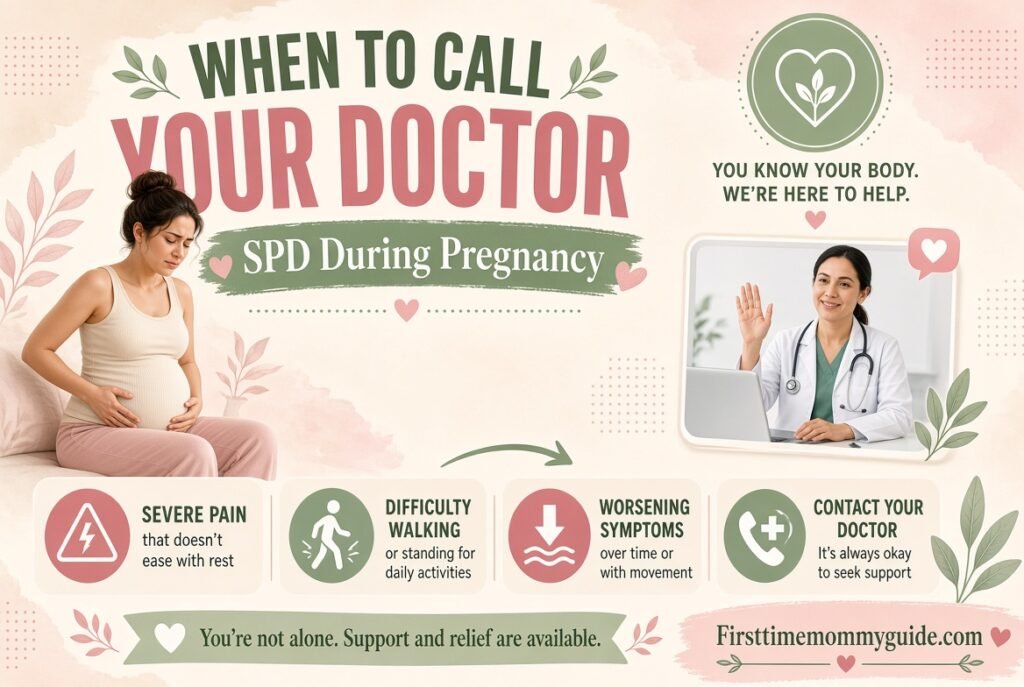
Most SPD pain is manageable at home, but a few signs mean it’s time to get checked.
- Pain severe enough that you can’t walk or bear weight at all
- Sudden, intense pain after a fall or specific movement
- Fever alongside pelvic pain
- Numbness, tingling or leg weakness
- Pain that isn’t improving at all with rest and support measures
Products That Can Help With SPD Pregnancy Pain
A few tools consistently come up in physical therapy recommendations for SPD, though what works varies person to person.
| Product Type | What It Does | Best For |
|---|---|---|
| Maternity support belt | Compresses and stabilizes the pelvis | Walking, standing, daily errands |
| Pregnancy pillow | Keeps hips aligned while side-sleeping | Nighttime pain and turning over |
| Pelvic floor physical therapy | Corrects alignment and builds support | Long-term management |
| Heat/cold pack | Reduces localized pain and inflammation | Short-term flare-up relief |
Pros and Cons of Common SPD Treatments
| Treatment | Pros | Cons |
|---|---|---|
| Support belt | Immediate relief, easy to use daily | Needs correct fit, not a long-term fix alone |
| Physical therapy | Addresses root cause, builds strength | Requires appointments, takes time to show results |
| Rest and activity modification | Free, reduces flare-ups | Doesn’t resolve underlying instability |
| Pain medication | Fast symptom relief | Must be pregnancy-safe and doctor-approved |
Also Read:
- Pregnancy Guide Month by Month: Symptoms & Baby Growth
- 17 Weeks Pregnant: Symptoms, Baby Size & What to Expect
- 25 Weeks Pregnant: Symptoms, Baby Size & What to Expect
- 33 Weeks Pregnant: Symptoms, Baby Development & What to Expect
- Pregnancy Week By Week 7: Symptoms & Baby Size
- Leggings in Pregnancy: Is It Safe to Wear Them Every Trimester?
- Maternity Leggings: The Complete Guide for Every Trimester
- FBS Test for Pregnant: Normal Range, Purpose & Next Steps
- Hospital Bag Checklist for Baby: The Complete Packing List
- Baby Essentials 0–3 Months Checklist
- Baby Shopping List for First-Time Moms: The Complete Checklist
- How Many Newborn Outfits Do You Need?
- Newborn Coming Home Outfit: What to Pick, What to Skip
- Baby Sleep Guide for New Moms: Safe Sleep & Schedules
- Baby Sleep Guide, Honestly
- When Do Babies Start Smiling? Signs & Milestones
- When Do Babies Start Rolling Over? (2026 Guide)
- When Can My Baby Start Eating Real Food? Age, Signs & First Foods
- First Food for Baby 6 Months: Best Options, Safety Tips & Feeding Guide
- Baby Food Guide 6 to 12 Months
- Baby Food Chart 6 to 12 Months: Free Month-by-Month Feeding
- Fruit Purees for 6 Month Old Babies: Safe Recipes & Guide
- Best Vegetable Purees for Baby: A Complete Age-by-Age Guide
- Best Baby Food Combinations: A Complete Age-by-Age Guide
- Baby Won’t Eat? Common Reasons, Fixes & When to Worry
Frequently Asked Questions (FAQs)
What does SPD pain feel like in pregnancy?
Most women describe a sharp, grinding or clicking pain right at the center of the pubic bone, often worse when walking or turning in bed.
Is SPD dangerous for my baby?
No. SPD affects your pelvic joint and ligaments only. It doesn’t harm your baby’s development or safety.
At what week does SPD usually start?
It’s most common from around 18 weeks onward, though it can start earlier, especially in second or later pregnancies.
Can SPD go away on its own during pregnancy?
Symptoms can ease with rest and support, but full resolution usually happens after delivery once relaxin levels drop.
How long does SPD last after birth?
Most women see major improvement within a few weeks to a few months postpartum. A smaller number need continued physical therapy.
Is walking bad for SPD pregnancy pain?
Not necessarily, but long walks or uneven strides can worsen symptoms. Shorter, supported walks with good footwear are usually better tolerated.
Can I still exercise with SPD?
Yes, with modifications. Water-based exercise, gentle pelvic floor work and physical-therapist-approved movements are generally safe.
What is the best sleeping position for SPD?
Side-sleeping with a pillow between your knees, keeping your hips level, is the most commonly recommended position.
Does a maternity belt actually help SPD?
Many women find real relief from a properly fitted support belt, especially during walking and standing tasks.
Can SPD affect how I give birth?
It can influence labor positioning, but it doesn’t rule out a vaginal birth. Discuss position preferences with your care team in advance.
Is SPD the same as pelvic girdle pain?
Yes, SPD and pelvic girdle pain (PGP) are often used interchangeably, though PGP is now the more commonly used clinical term.
Can SPD happen in a first pregnancy?
Yes. While it can become more likely in later pregnancies, plenty of first-time moms experience SPD.
What triggers SPD flare-ups?
Uneven leg movements are the most common trigger — getting out of a car, climbing stairs one leg at a time, or standing on one foot.
Should I see a physical therapist for SPD?
A pelvic floor physical therapist is one of the most effective resources for managing SPD, both during and after pregnancy.
Can SPD cause lower back pain too?
Yes, pain can radiate to the lower back, hips and thighs, since the pelvic joints and surrounding muscles are all connected.
Is it safe to take pain medication for SPD while pregnant?
Only pregnancy-approved medications should be used, and always after checking with your provider first.
Can SPD come back in a future pregnancy?
It’s common for SPD to recur, and sometimes appear earlier or more intensely, in subsequent pregnancies.
Does SPD affect every pregnant woman the same way?
No. Severity varies widely — some women have mild discomfort, while others need mobility aids like crutches.
Can stairs make SPD worse?
Yes, climbing stairs one leg at a time is one of the most common pain triggers. Going up sideways, two feet per step, often helps.
Is SPD linked to a difficult delivery?
Not directly. SPD relates to pelvic joint stability, not labor progress, though positioning adjustments may be needed.
Can I prevent SPD in pregnancy?
There’s no guaranteed prevention, but core and pelvic floor strengthening before and during pregnancy may reduce severity for some women.
What is the difference between SPD and normal pregnancy aches?
SPD pain is typically localized to the pubic bone and worsens with specific asymmetrical movements, unlike general pregnancy soreness.
Can SPD be diagnosed with an ultrasound?
Rarely needed. SPD is usually diagnosed clinically through symptoms and a physical exam, not imaging.
Does resting completely help SPD?
Total rest isn’t usually recommended. Gentle, guided movement combined with activity modification tends to work better than complete inactivity.
Conclusion
SPD pregnancy pain is uncomfortable, but it’s manageable with the right support, movement habits and, when needed, physical therapy. It also isn’t a sign that something is wrong with your baby.
If pain is affecting your daily life, don’t wait it out quietly — a pelvic floor physical therapist or your OB can make a real difference. With the right plan, most women get through pregnancy far more comfortably than the early weeks of SPD might suggest.

Dilawar Mughal
Founder and editor, First Time Mommy Guide
I research every guide against what the NHS, the AAP and the WHO publish, then write it in plain English — because most new parents are reading with one hand free, not comparing clinical guidelines. I'm not a doctor or a midwife. Every health claim on this site is sourced and linked so you can check it yourself, and anything urgent belongs with your health visitor or GP, not a blog.