
General information, not medical advice. Every baby is different — if anything worries you, speak to your midwife, health visitor or GP rather than waiting.
If your baby is like most babies, everything goes straight into the mouth. Toys, teethers, rattles, board books, and even the odd sock all get tasted, chewed, and sucked. That is completely normal. Babies explore the world with their mouths, especially in the first year, and mouthing helps them learn about texture, shape, and taste.
It also means toys pick up a lot. Drool, milk, food, dust, germs from hands, and whatever has been on the floor all end up on the surface your baby is chewing. Cleaning baby toys safely is not about keeping your home sterile. It is about removing visible dirt and germs regularly, using gentle methods that do not leave harmful residue behind.
Quick Answer: How to Clean Baby Toys Safely Wash most hard plastic, silicone, and rubber toys in warm water with mild dish soap, rinse well, and air-dry completely. Wash fabric and plush toys in the washing machine on a gentle cycle when the label allows it, then air-dry or tumble-dry on low. Wipe wooden toys with a damp cloth and mild soap, then dry them right away. Clean bath toys after every bath and let them dry fully to prevent mould. Avoid bleach, harsh disinfectants, and strong fragrances on toys your baby mouths. When in doubt, check the toy label and your paediatrician's advice.
Why Cleaning Baby Toys Matters
Babies put toys in their mouths because that is how they explore. Mouthing is a normal part of development, and it helps babies learn. It also means that anything on a toy can end up in your baby's mouth. Regular cleaning reduces that exposure without needing to disinfect everything every day.
Toys collect germs in ordinary ways. They are dropped on the floor, shared with siblings or friends, carried outside, coughed on, and covered in drool. A toy that looks clean can still carry dirt and germs. A toy that has been in the nappy bag, the car, or the park needs a wash before it goes back into the mouth.
Cleaning also helps you spot damage. When you wash a toy, you notice cracks, loose parts, peeling paint, torn seams, and worn batteries covers. A cracked plastic toy can trap moisture and germs inside. A plush toy with a loose eye can become a choking hazard. A quick wash doubles as a safety check.
If your baby has a health condition, was born prematurely, or has a weakened immune system, talk to your paediatrician about how often to clean and whether extra steps are needed. General guidance in this article is for healthy babies, and your paediatrician can tailor it to your child.
How Often Should You Clean Baby Toys?
How often to clean baby toys depends on how your baby uses them and where they have been. A teether that is in the mouth all day needs cleaning more often than a soft toy that sits on a shelf. A toy that has been dropped in the park needs cleaning sooner than one used only at home.
Use the table below as a starting point. Adjust it to your baby's age, habits, and health. Younger babies mouth more, so their toys need cleaning more often. Older babies still mouth toys, but they also play with them in more places.
| Toy Type | How Often to Clean | Notes |
|---|---|---|
| Teethers and toys mouthed daily | Daily, or after each heavy use | Rinse or wash after feeds and naps |
| Plastic and silicone toys used daily | At least once a week | More often if dropped outside |
| Plush and fabric toys | Every 1 to 2 weeks | Wash sooner if soiled or drooled on |
| Bath toys | After every bath | Dry fully to prevent mould |
| Wooden toys | Every 1 to 2 weeks | Wipe, do not soak |
| Electronic toys | Weekly wipe-down | Never submerge; wipe surface only |
| Toys shared with other children | After each play session | Clean before your baby uses them again |
| Toys dropped outside or in public places | As soon as possible | Wash before next use |
| Toys after illness in the household | Daily during illness, then a full clean after recovery | Focus on mouthed toys |
Before You Start: Read the Label

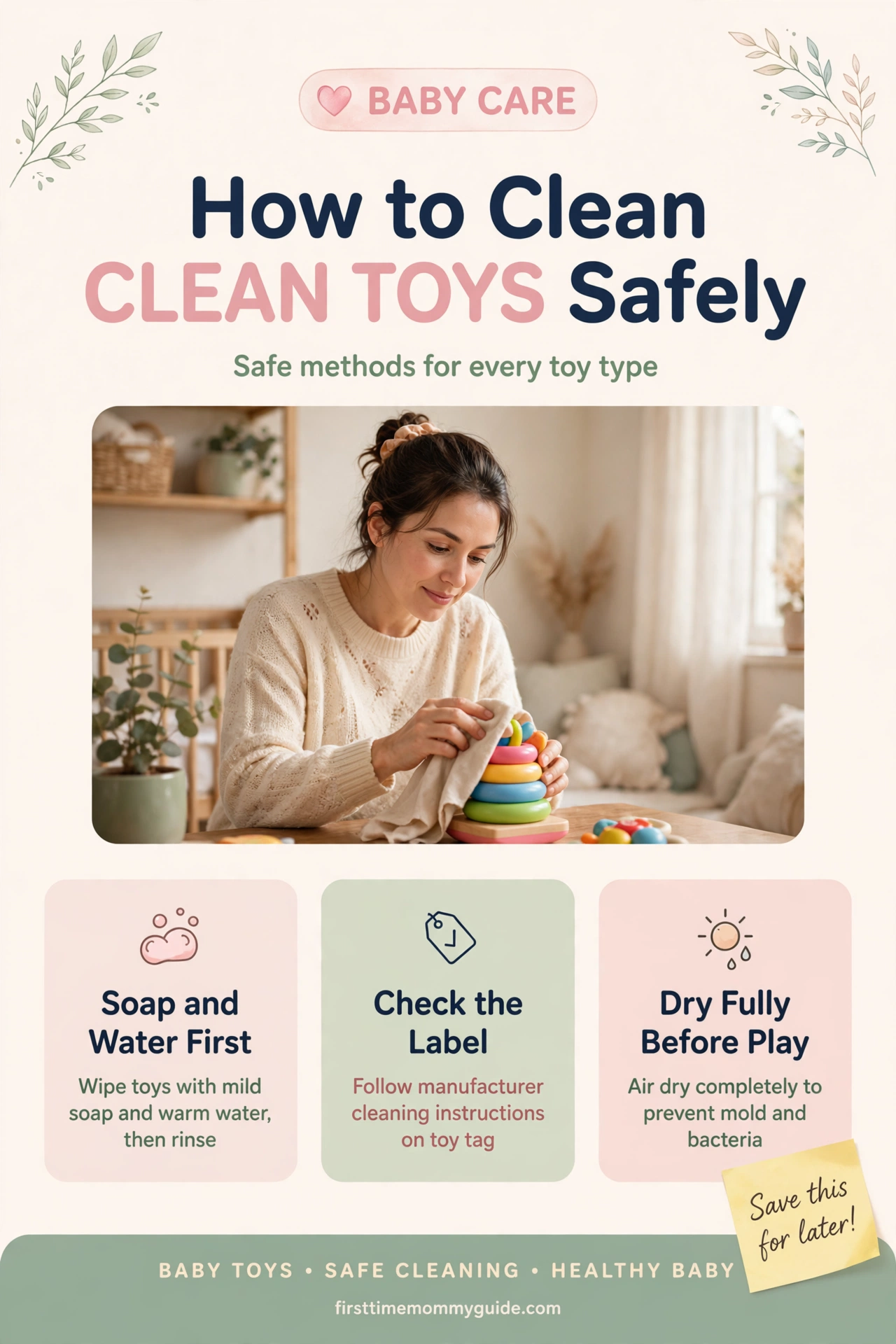
Before you wash any toy, check the label or the manufacturer's instructions. Most toys include care guidance. Some say hand-wash only. Some say machine-washable. Some say wipe clean only. Following the label protects the toy and keeps it safe for your baby.
Remove batteries before cleaning any electronic toy. Take out any removable parts, such as fabric covers, rings, or detachable pieces, and wash them separately if the label allows it. Check for damage before and after cleaning. If a toy is cracked, torn, or has loose parts, set it aside until you can repair it or replace it.
For general guidance on keeping your home safe for a crawling, mouthing baby, see our baby-proofing home checklist. Cleaning toys is one part of a safer play space.
How to Clean Plastic Baby Toys
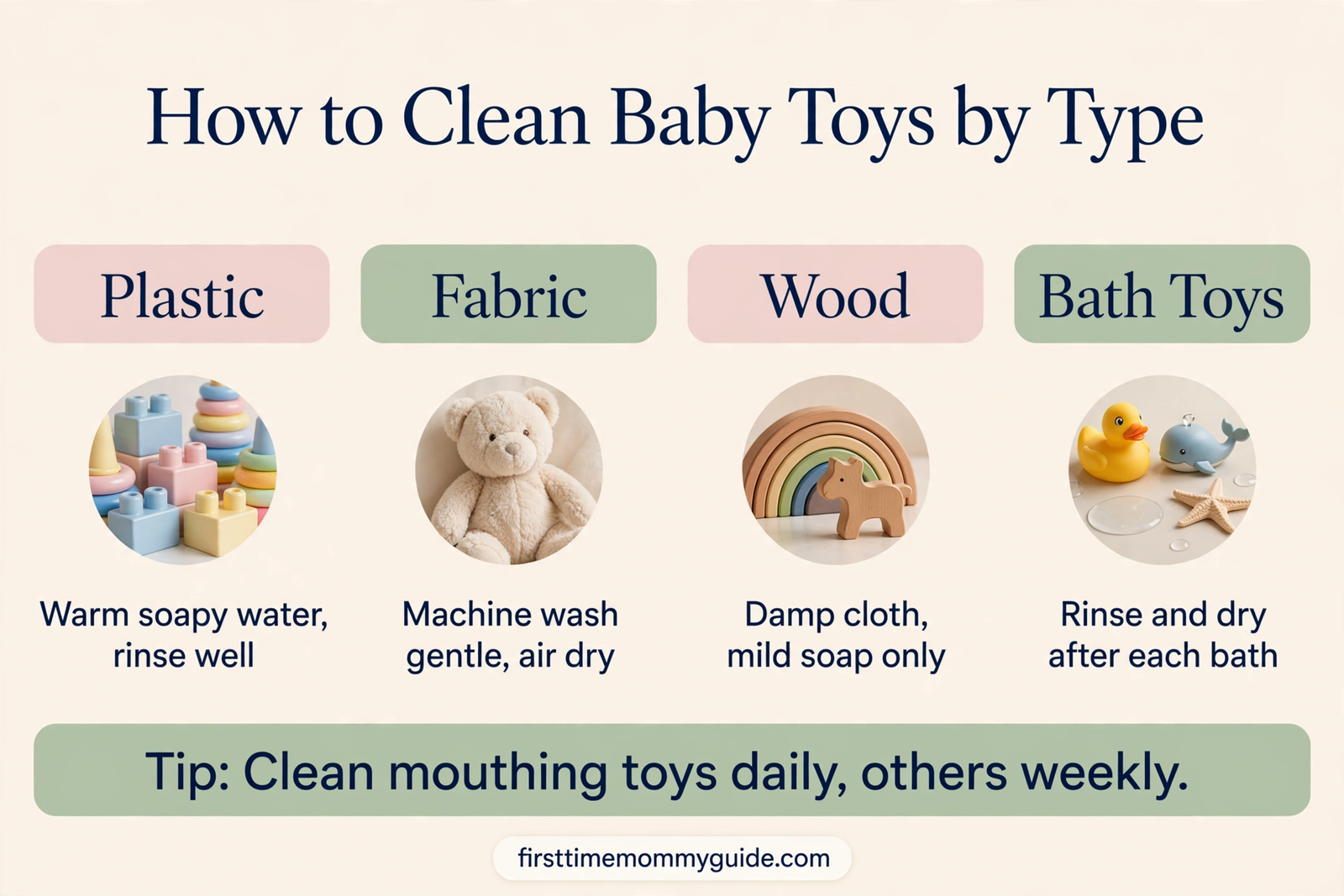
Plastic toys are the easiest to clean. Most hard plastic rattles, stacking rings, blocks, and bath toys can be washed in warm, soapy water. Use mild dish soap and warm water. Scrub all surfaces, including crevices, seams, and holes where drool and dirt can hide.
Rinse the toy well under clean running water. Soap residue can irritate a baby's mouth and stomach, so rinse until the water runs clear and the toy no longer feels slippery. Shake off excess water, then air-dry on a clean towel or drying rack. Make sure the toy is completely dry before you put it away, especially if it has holes or hollow parts.
For a deeper clean, many solid plastic toys without batteries or electronics can go in the dishwasher. Place them on the top rack, use a normal cycle with mild detergent, and skip heated dry if the label warns against high heat. Check the toy label first. Not all plastic toys are dishwasher-safe, and some can warp or melt.
How to Clean Silicone and Rubber Toys
Silicone toys are popular for good reason. They are soft, flexible, easy to grip, and simple to clean. Most silicone teethers, bath toys, and soft blocks can be washed in warm, soapy water, just like plastic toys. Rinse well and air-dry.
Many silicone toys can also be boiled or put in the dishwasher, but always check the label first. Boiling is useful after illness or if a toy has been dropped in a dirty place. Place the toy in a pot of boiling water for a few minutes, following the manufacturer's time, then remove it carefully and let it cool and dry completely.
Rubber toys need a little more care. Natural rubber can break down if it is boiled or exposed to high heat. Wash rubber toys in warm, soapy water and air-dry them. Avoid harsh chemicals, which can damage the surface and leave residue. Check rubber toys regularly for cracks, tears, or stickiness, and replace them when they wear out.
How to Clean Wooden Baby Toys
Wooden toys need gentle care. Wood is porous, so soaking it in water can cause swelling, cracking, and mould. Never soak wooden toys or put them in the dishwasher. Wipe them instead.
Dampen a clean cloth with warm water and a small amount of mild soap. Wipe all surfaces, then wipe again with a clean damp cloth to remove soap. Dry the toy immediately with a towel, then leave it to air-dry completely before storing it. Do not leave wooden toys damp in a closed box.
For a deeper clean, you can use a diluted white vinegar solution on unfinished wood, if the manufacturer allows it. Wipe with the solution, then wipe with plain water, and dry well. Avoid bleach and harsh disinfectants on wood. They can damage the finish and leave chemicals that your baby may mouth.
Check wooden toys for splinters, cracks, and peeling paint. Sand down a small rough spot if the manufacturer allows it, and replace a toy if the paint is peeling or the wood is splitting. Store wooden toys in a dry place, away from damp rooms, so they stay in good condition.
How to Clean Fabric and Plush Toys
Fabric and plush toys collect drool, milk, food, and dust. They also absorb smells. Most plush toys can be machine-washed if the label says so. Put the toy in a mesh laundry bag or pillowcase to protect it, use a gentle cycle with mild, fragrance-free detergent, and wash in warm or cool water as the label directs.
After washing, air-dry plush toys when possible. Tumble-dry on low heat if the label allows it. Make sure the toy is completely dry inside before you give it back. A damp plush toy can develop a musty smell and mould, especially in the stuffing. If the toy has a music box, batteries, or electronic parts, do not machine-wash it unless the label says those parts are removable.
For plush toys that cannot be machine-washed, spot-clean them. Use a damp cloth with mild soap to clean the soiled area, then wipe with clean water and let the toy air-dry. A soft brush can help lift dust and surface dirt. Vacuum a plush toy with a brush attachment now and then to remove dust.
Check seams, eyes, noses, and buttons after washing. Pull gently to make sure nothing is loose. If a seam has opened, stitch it closed before your baby plays with it again. A loose button or eye can become a choking hazard, so this check matters as much as the wash.
How to Clean Bath Toys
Bath toys need cleaning after every bath. They sit in warm, wet conditions, which is exactly where mould can grow. Many bath toys have small holes that let water inside. That trapped water is the main problem, and it is why bath toys need extra care.
After bath time, squeeze out as much water as you can from each toy. Rinse the toy under clean water, then wash it with warm, soapy water. Rinse again, squeeze out the water, and let the toy dry with the hole facing down so air can get inside. A mesh bag or a rack with good airflow works well.
Check bath toys regularly for black spots, mould inside, or a bad smell. If you can see mould inside a toy and you cannot clean it out, throw the toy away. It is not worth the risk. Some parents seal the holes in new bath toys with a dab of hot glue to stop water getting inside, but only do this if it does not create a choking risk or damage the toy.
For more on safe bath routines, see our guide on how to give your newborn their first bath. Clean bath toys are part of a safe, calm bath time.
How to Clean Electronic Toys
Electronic toys need a wipe, not a soak. Water can damage batteries, circuits, and speakers, so never submerge an electronic toy. Remove the batteries first if you can, and make sure the battery cover is closed and secure before you wipe the toy.
Dampen a clean cloth with warm water and a small amount of mild soap. Wring the cloth out well so it is damp, not dripping. Wipe all surfaces, including buttons, handles, and crevices. Use a cotton bud or a soft brush for small gaps. Wipe again with a clean damp cloth to remove soap, then dry with a towel.
Let the toy dry completely before you put the batteries back in. Check that buttons still work, that the battery cover is secure, and that no moisture is visible. If a toy has been dropped in water, remove the batteries, dry it thoroughly, and check the manufacturer's guidance before using it again.
How to Clean Teethers
Teethers go straight into your baby's mouth, often for long periods. They need cleaning every day, and after each heavy use. Wash silicone, plastic, and rubber teethers in warm, soapy water, rinse well, and air-dry. Many silicone teethers can also be boiled or put in the dishwasher if the label allows it.
For teethers filled with water or gel, do not boil them unless the label says it is safe. High heat can damage the seal and cause leaks. Wash them in warm, soapy water and dry them well. Check the seal regularly. If a teether is leaking, cracked, or torn, throw it away.
Wooden teethers should be wiped with a damp cloth and mild soap, then dried right away, just like other wooden toys. Do not soak them. Fabric teethers can usually be machine-washed on a gentle cycle if the label allows it, then air-dried.
Keep a few clean teethers ready in a clean container. Rotate them through the day so you always have a clean one to offer. When you are out, carry a spare teether in a clean bag, and rinse or wipe a dropped teether before your baby uses it again.
Safe Cleaners vs Cleaners to Avoid
The safest cleaner for most baby toys is mild dish soap and warm water. It removes dirt, milk, and germs from the surface, and it rinses away cleanly. A fragrance-free, baby-safe soap is a good choice for toys your baby mouths often. Plain water and a clean cloth are enough for a quick wipe between washes.
White vinegar diluted in water can help with bath toys and hard surfaces, when the manufacturer allows it. It is not a substitute for soap and water for removing dirt, but it can help with build-up and smells. Rinse well after using vinegar, and dry the toy completely.
Avoid bleach, harsh disinfectants, and antibacterial sprays on toys your baby mouths, unless your paediatrician or a health authority specifically advises it for a particular situation. These products can leave residue that irritates your baby's mouth, skin, and stomach. They can also damage toys. If you ever need to use a stronger product, follow the label exactly, rinse thoroughly, and let the toy dry completely before your baby uses it.
Avoid cleaners with strong fragrances, essential oils, and harsh chemicals. Avoid dishwasher pods or laundry detergents with strong scent on baby toys. Avoid using the same sponge or cloth you use for kitchen cleaning. Keep baby toy cleaning simple: mild soap, warm water, a good rinse, and a full dry.
The American Academy of Pediatrics, through HealthyChildren.org, offers guidance on cleaning and hygiene for babies and young children. The Centers for Disease Control and Prevention (CDC) also publishes general cleaning and hygiene guidance for families. For UK parents, the NHS provides advice on keeping babies healthy and safe at home. These sources are a good place to check if you want to read more.
- CDC cleaning and hygiene guidance: https://www.cdc.gov/hygiene/
- HealthyChildren.org from the American Academy of Pediatrics: https://www.healthychildren.org/
- NHS advice for parents: https://www.nhs.uk/
Dishwasher and Washing Machine Guidance
The dishwasher can be a helpful tool for solid plastic and silicone toys, but only when the label says it is safe. Place toys on the top rack so they are away from the heating element. Use a normal cycle and a mild detergent. Skip heated dry if the label warns against high heat. Let toys cool and dry completely before you give them back.
Do not put wooden toys, electronic toys, battery-operated toys, or toys with glued parts in the dishwasher. Do not put plush toys in the dishwasher. Do not put teethers filled with water or gel in the dishwasher unless the label clearly says it is safe. When in doubt, hand-wash.
The washing machine is useful for fabric and plush toys that the label says are machine-washable. Use a mesh bag or pillowcase, a gentle cycle, and a mild, fragrance-free detergent. Wash in warm or cool water as the label directs. Avoid fabric softener, which can leave residue and irritate sensitive skin.
Dry fabric toys thoroughly. Air-drying is gentlest and helps them keep their shape. Tumble-dry on low heat if the label allows it. A toy that feels dry on the outside can still be damp inside, so check the stuffing and seams before you return it to your baby. If it still feels damp, let it dry longer.
Sanitising vs Disinfecting: What Is the Difference?
Cleaning, sanitising, and disinfecting are three different things, and the words are often used as if they mean the same. Cleaning means removing dirt, food, and germs from a surface with soap and water. It does not necessarily kill all germs, but it removes many of them and makes the surface safer.
Sanitising means reducing the number of germs on a surface to a level considered safe. It usually follows cleaning. Disinfecting means killing most germs on a surface, often with a chemical product. Disinfecting is stronger than sanitising, and it is usually needed only in specific situations, such as after illness or contact with bodily fluids.
For everyday baby toys, cleaning with soap and water is usually enough. Sanitising can be useful after illness, after a toy has been shared with a sick child, or after a fall in a dirty place. Disinfecting is rarely needed for everyday toys, and many disinfectants are not safe for toys your baby mouths.
If your paediatrician advises sanitising or disinfecting, ask which product to use and how to rinse and dry the toy afterwards. Always follow the product label, rinse well, and let the toy dry completely. Never use a disinfectant on a toy and hand it straight back to your baby without rinsing and drying.
Drying and Storage
Drying matters as much as washing. A toy that stays damp can develop mould and a musty smell. A toy that is stored wet in a closed box can become a home for germs. Always dry toys completely before you store them.
Air-dry toys on a clean towel, a drying rack, or a mesh bag with good airflow. Place toys with holes facing down so water can drain out. Turn plush toys now and then while they dry so air reaches all sides. Do not put damp toys back in a toy box, a nappy bag, or a closed container.
Store clean toys in a clean, dry place. A toy box with ventilation, an open basket, or a shelf is better than a sealed plastic tub for everyday toys. Wash the toy box itself now and then. Wipe it with warm, soapy water, rinse, and let it dry. A clean toy in a dirty box will not stay clean for long.
Cleaning After Illness
When someone in the household is ill, toys need more frequent cleaning. Germs spread easily through shared toys, especially when a baby is mouthing them and a sibling is coughing or sneezing nearby. Focus on the toys your baby mouths most often, and clean them daily during the illness.
Wash hard toys in warm, soapy water, rinse well, and dry completely. Wash fabric toys in the washing machine if the label allows it. Wipe electronic toys with a damp cloth and mild soap. Clean bath toys after every bath, and dry them fully.
After your baby has recovered, do a full toy clean. Wash all the toys your baby used during the illness, including plush toys, teethers, and bath toys. Clean the toy box, too. That reset helps reduce the chance of germs lingering on surfaces your baby will mouth again.
If your baby has had diarrhoea, vomiting, or a contagious illness, ask your paediatrician whether extra steps are needed. They can advise on cleaning, hand hygiene, and when it is safe to share toys again. For general information on common baby illnesses, see our guide on baby first cold remedies.
Mistakes to Avoid When Cleaning Baby Toys
Many parents make the same small mistakes when cleaning toys. The good news is that they are easy to fix. The first mistake is using harsh cleaners. Bleach, strong disinfectants, and heavily fragranced sprays can leave residue on toys your baby mouths. Stick to mild soap and water for everyday cleaning.
The second mistake is not rinsing well enough. Soap residue can irritate your baby's mouth and stomach. Rinse until the water runs clear and the toy no longer feels slippery. For fabric toys, run an extra rinse cycle if the toy still smells of detergent.
The third mistake is storing toys while they are still damp. Damp toys can develop mould and a musty smell. Let toys dry completely, inside and out, before you put them away. This matters most for bath toys, plush toys, and toys with holes.
The fourth mistake is soaking wooden toys or submerging electronic toys. Wood swells and cracks when soaked. Electronics can be damaged by water. Always follow the label, and wipe these toys instead of soaking them.
The fifth mistake is forgetting to check for damage. Cleaning is the best time to check for cracks, loose parts, peeling paint, and worn seams. A damaged toy can be unsafe even if it is clean. Set damaged toys aside until you can repair or replace them.
The sixth mistake is cleaning too rarely, or cleaning everything every day and feeling overwhelmed. Find a routine you can keep. A weekly wash for most toys, a daily rinse for teethers, and a clean after illness or a dirty fall is a sensible balance for most families.
Expert Tips for Busy Parents
You do not need a perfect system. You need a simple routine you can actually keep. Pick one day a week for a toy wash, and keep teethers on a daily rinse. That alone covers most of the risk, and it takes only a few minutes once it becomes a habit.
Keep cleaning supplies together in one place. A small basket with mild soap, a clean cloth, a soft brush, and a mesh laundry bag makes the job quicker. If you have to search for supplies every time, you are less likely to do it.
Clean toys in batches. Wash all the hard toys together in a basin of warm, soapy water. Put all the machine-washable plush toys in one load. Wipe all the electronic toys in one go. Batching saves time and makes the routine feel manageable.
If you are unsure about a toy, check the label, check the manufacturer's website, or ask your paediatrician. It is better to ask than to guess with a cleaner or a method that might damage the toy or leave residue.
Frequently Asked Questions
How often should I clean my baby's toys?
Clean teethers and toys mouthed daily every day. Clean plastic and silicone toys at least once a week. Wash plush toys every one to two weeks, and clean bath toys after every bath. Clean any toy sooner if it is dropped outside or shared with a sick child.
What is the safest way to clean baby toys?
For most toys, warm water and mild dish soap are the safest option. Wash, rinse well, and air-dry completely. Avoid bleach, harsh disinfectants, and strong fragrances on toys your baby mouths. Always check the toy label first.
Can I put baby toys in the dishwasher?
Many solid plastic and silicone toys can go on the top rack, if the label says they are dishwasher-safe. Do not put wooden toys, electronic toys, battery toys, or plush toys in the dishwasher. Let toys cool and dry completely before use.
Can I put baby toys in the washing machine?
Yes, if the label says they are machine-washable. Put plush and fabric toys in a mesh bag, use a gentle cycle with mild, fragrance-free detergent, and air-dry or tumble-dry on low. Do not machine-wash toys with batteries or electronic parts unless those parts are removable.
How do I clean wooden baby toys?
Wipe wooden toys with a damp cloth and mild soap, then wipe with clean water and dry immediately. Do not soak wooden toys or put them in the dishwasher. Check for splinters, cracks, and peeling paint, and replace a toy if it is damaged.
How do I clean bath toys and prevent mould?
Clean bath toys after every bath. Squeeze out water, wash with warm, soapy water, rinse, and let them dry with the hole facing down. Store them in a mesh bag so air can circulate. If you see mould inside and cannot clean it out, throw the toy away.
How do I clean baby toys after illness?
Clean mouthed toys daily during illness, and do a full clean after recovery. Wash hard toys in warm, soapy water, machine-wash fabric toys if the label allows it, and wipe electronic toys. Ask your paediatrician if extra steps are needed for a contagious illness.
Can I use bleach on baby toys?
Avoid bleach on toys your baby mouths, unless your paediatrician or a health authority specifically advises it for a particular situation. Bleach can leave residue and damage toys. If you ever use it, follow the label exactly, rinse thoroughly, and let the toy dry completely.
How do I clean electronic baby toys?
Wipe electronic toys with a damp cloth and mild soap. Never submerge them. Remove batteries first if you can. Do not spray cleaner directly onto the toy. Wipe with a clean damp cloth afterwards, dry well, and let the toy dry completely before replacing batteries.
How do I clean teethers safely?
Wash teethers daily in warm, soapy water, rinse well, and air-dry. Many silicone teethers can be boiled or put in the dishwasher if the label allows it. Do not boil water-filled or gel teethers unless the label says it is safe. Throw away a teether that is leaking, cracked, or torn.
How do I clean plush toys that cannot be machine-washed?
Spot-clean them with a damp cloth and mild soap, then wipe with clean water and air-dry. Use a soft brush to lift dust. Check seams, eyes, and buttons after cleaning to make sure nothing is loose.
Should I sanitise baby toys every day?
For most healthy babies, daily sanitising is not needed. Cleaning with soap and water is usually enough for everyday use. Sanitising can be useful after illness, after sharing with a sick child, or after a fall in a dirty place. If you are unsure, ask your paediatrician.
What should I do if a toy smells musty after washing?
Wash it again and dry it fully in fresh air. A musty smell often means the toy stayed damp inside. For bath toys, check for trapped water or mould inside. If the smell stays or you see mould you cannot remove, replace the toy.
How do I clean baby toys when travelling?
Carry a spare clean toy and a pack of baby-safe wipes. Wipe a dropped toy before your baby uses it again. When you get home, wash any toy that was dropped or heavily mouthed. Keep clean toys in a separate clean bag, away from nappies and dirty clothes.
Do I need to clean toys before my baby uses them for the first time?
Yes, wash new toys before first use. Wash hard toys in warm, soapy water, rinse, and dry. Wash fabric toys if the label allows it. That removes dust and residue from manufacturing, packaging, and handling in the shop.
When should I talk to my paediatrician about toy cleaning?
Talk to your paediatrician if your baby was born prematurely, has a health condition, or has a weakened immune system. Also ask for advice after a contagious illness, if you are unsure about a cleaner, or if your baby has a rash that might be linked to a toy. Your paediatrician can tailor guidance to your baby.
Conclusion
Learning how to clean baby toys safely does not need to be complicated. Warm water, mild soap, a good rinse, and a full dry will cover most toys, most of the time. Clean teethers daily, wash plastic and silicone toys weekly, wash plush toys every week or two, and clean bath toys after every bath.
Follow the label, check for damage while you clean, and store toys dry with good airflow. Use gentle cleaners, avoid harsh chemicals and strong fragrances, and ask your paediatrician if your baby has extra health needs or has been ill.
A simple routine is the best routine. Pick a weekly wash day, keep a basket for toys that need cleaning, and keep a clean spare ready for favourite teethers. Your baby will keep mouthing, chewing, and exploring, and that is exactly as it should be. With clean toys and clean hands, you can let them explore with confidence.
If you are setting up other parts of your baby's care routine, you may find these guides helpful: our baby diaper rash causes, treatment and prevention guide, our how to clean and sterilize baby bottles guide, and our how to trim baby nails safely guide. Each one covers a small daily task that, done gently and regularly, keeps your baby comfortable and safe.

Dilawar Mughal
Founder and editor, First Time Mommy Guide
I research every guide against what the NHS, the AAP and the WHO publish, then write it in plain English — because most new parents are reading with one hand free, not comparing clinical guidelines. I'm not a doctor or a midwife. Every health claim on this site is sourced and linked so you can check it yourself, and anything urgent belongs with your health visitor or GP, not a blog.


