General information, not medical advice. Every baby is different — if anything worries you, speak to your midwife, health visitor or GP rather than waiting.
How to Trim Baby Nails Safely: A Step-by-Step Guide for New Moms
Your baby’s nails grow faster than you expect. One day they are tiny and soft, and the next day your newborn has scratched a thin red line across their cheek. Learning how to trim baby nails safely is one of those small parenting skills that feels scary the first time and becomes routine within a few weeks.
This guide walks you through everything. You will learn when to start, which tools work best, the exact step-by-step method for fingers and toes, what to do if you accidentally nick the skin, and the mistakes that turn a simple trim into tears.
Every recommendation here follows guidance from paediatric and public-health authorities, including the American Academy of Pediatrics (AAP) and the UK National Health Service (NHS). Where a claim touches your baby’s health, it is linked to those sources so you can check it yourself.
Quick Answer: How to Trim Baby Nails Safely
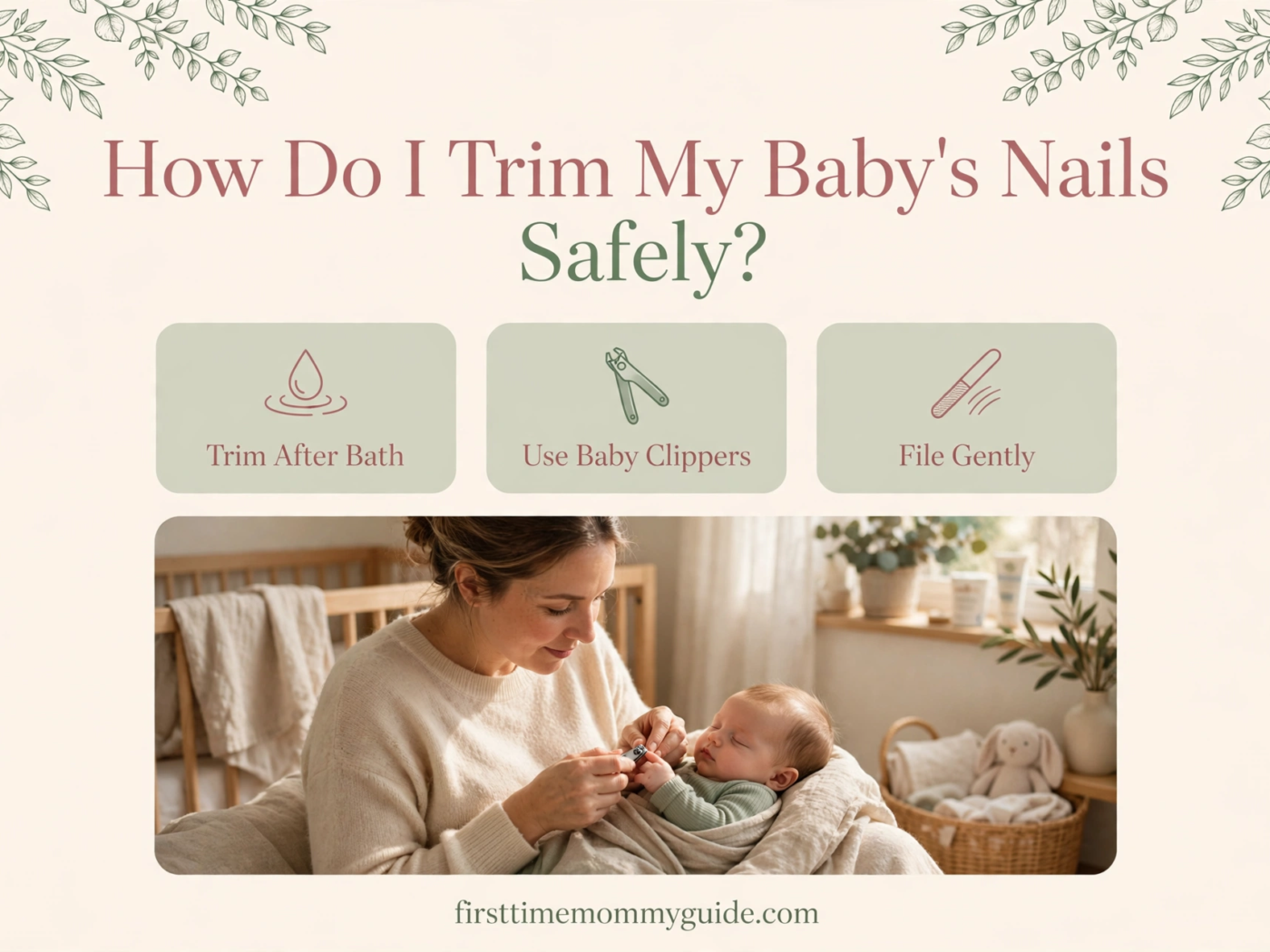
Trim your baby’s nails after a bath or feed, when they are calm or asleep. Hold their hand steady, press the fingertip pad back from the nail, and trim straight across with baby clippers or a baby nail file. File any sharp corners smooth. Trim fingernails about once a week and toenails every two to three weeks.
Never use adult clippers or scissors on a newborn. Never bite your baby’s nails — it can transfer germs and tear the nail. If you nick the skin, stay calm, press a clean cloth gently until the bleeding stops, and skip antiseptic creams unless your doctor advises them.
Why Your Baby’s Nails Need Regular Trimming
Newborn nails look harmless. They are thin, soft, and almost see-through. Yet they grow quickly, and babies have no control over their flailing arms in the first weeks of life.
A scratch from a sharp nail can break the skin on a baby’s face, neck, or chest. Most scratches heal fast, but they sting, they can bleed, and an open scratch can become infected if germs get in. Regular trimming prevents most of these scratches before they happen.
Long nails also trap dirt and milk residue underneath. Babies put their hands in their mouths constantly, so clean, short nails are part of everyday hygiene. Short nails are also easier to keep clean during bath time.
How fast do baby nails grow?
Fingernails grow faster than toenails, just as they do in adults. Most babies need their fingernails trimmed about once a week. Toenails grow more slowly and usually need attention every two to three weeks.
Growth speed varies from baby to baby. Some newborns arrive with surprisingly long nails that need a trim within days of birth. Others have nails that stay short for weeks. Check your baby’s nails every few days rather than following a rigid calendar.
Are newborn nails different from older babies’ nails?
Yes. Newborn nails are softer, thinner, and attached more closely to the fingertip skin. The nail bed is tiny, and the skin around it is delicate. That is why many parents start with a soft emery board or baby nail file instead of clippers.
By three to four months, the nails become firmer and easier to see. Clippers become the faster option. By six months, most parents have a settled routine and the job takes under two minutes.
When Should You Start Trimming Your Baby’s Nails?
You can start trimming your baby’s nails as soon as they need it, even in the first week. There is no age you must wait for. The AAP advises parents to keep their baby’s nails short and smooth from birth, using baby nail clippers or a soft file.
Some hospitals trim a newborn’s nails before discharge if they are long. If yours did not, do not worry. A gentle file is the safest first tool while you build confidence.
Signs it is time for a trim
- You can see white nail extending past the fingertip.
- Your baby has fresh scratches on their face or chest.
- The nails catch on clothing, mittens, or muslin cloths.
- The edges feel sharp when you run your finger over them.
- You can hear a faint clicking when your baby’s hand brushes a surface.
If you are unsure, run your own fingertip across your baby’s nail. If it feels sharp to you, it will feel sharp against their skin.
Should you use mittens instead of trimming?
Scratch mittens help for the first few days, especially at night. They are a short-term fix, not a replacement for trimming. Mittens reduce your baby’s ability to explore with their hands, and they need washing often because babies chew them.
Most paediatric guidance treats mittens as a stopgap. Trim the nails, and keep mittens for the occasional overnight when a trim is overdue.
The Best Tools for Trimming Baby Nails
Choosing the right tool matters more than technique at the start. Baby-specific tools are smaller, blunter, and designed for tiny fingers. Adult tools are too large and too sharp for the job.
| Tool | Best for | Pros | Cons |
|---|---|---|---|
| Baby nail clippers | Babies 3 months and older | Fast, clean cut, widely available | Needs a steady hand; risky on newborns |
| Baby nail scissors (rounded tip) | Newborns and young babies | Rounded tips reduce nick risk; good control | Slower than clippers |
| Baby emery board / nail file | Newborns, first trims | Safest option; no cutting; smooths edges | Slow; files wear out and need replacing |
| Electric baby nail trimmer | Nervous parents, squirmy babies | Very gentle; almost no nick risk; quiet models exist | Slower; needs batteries or charging; costs more |
| Baby nail file (glass or crystal) | Smoothing after clipping | Leaves a perfectly smooth edge | Not a standalone trimming tool |
Baby nail clippers: what to look for
Pick clippers made for babies, with a small cutting head and a comfortable grip. Some have a magnifying lens or a small light built in. A light helps enormously when you are trimming in a dim room while your baby sleeps.
Check the blade before each use. If it feels loose or the edges look rough, replace the clippers. A dull blade crushes the nail instead of cutting it, which can split the nail.
Baby nail scissors: what to look for
Choose scissors with short, rounded tips and small finger loops. Rounded tips mean that even if the scissors touch the skin, they are far less likely to cut it. Many parents prefer scissors for the first month because they offer more control than clippers.
Emery boards and baby nail files
A soft emery board is the gentlest way to shorten a newborn’s nails. File in one direction, from the outer edge toward the centre, using light strokes. Avoid sawing back and forth, which can fray the nail.
Disposable emery boards lose their grit quickly. Replace them often, and keep a few spares in your changing bag.
Electric baby nail trimmers: are they worth it?
Electric trimmers use a tiny rotating filing head to gently grind the nail down. They are popular with parents who feel nervous about blades. Most models come with different filing pads for different ages and stop automatically if they press too hard against skin.
They are slower than clippers, and you may need several passes on a thicker toddler nail. For a newborn, though, they are an excellent confidence builder.
Tools to avoid
- Adult nail clippers: too large, too sharp, and easy to cut too much.
- Adult nail scissors: pointed tips are dangerous near tiny fingers.
- Your teeth: biting nails tears them unevenly and transfers bacteria from your mouth to your baby’s fingers.
- Nail polish remover or chemicals: never use these on a baby.
- Metal files meant for adults: too rough for a newborn’s soft nails.
How to Trim Baby Nails Safely: Step-by-Step
The method below works for fingernails and toenails. Read it once before you start, gather your tools, and pick a calm moment. The whole job takes two to five minutes once you are practised.
Step 1: Pick the right moment
The best time is after a bath, when the nails are soft and flexible. A second good window is during or just after a feed, when your baby is drowsy and relaxed. Many parents trim nails while their baby sleeps, because a sleeping hand stays still.
Avoid trimming when your baby is hungry, overtired, or already upset. A wriggling, crying baby and a sharp tool are a bad combination. If your baby starts crying midway, stop. You can finish the other hand later.
Step 2: Set up good light and a comfortable position
Sit somewhere with bright, natural light. Hold your baby on your lap, facing away from you, with their back against your chest. This position gives you a clear view of their hands and keeps their arms within easy reach.
If another adult is nearby, ask them to hold your baby still and gently distract them with a toy, a song, or a rattle. Two pairs of hands make the job far easier, especially in the early weeks.
Step 3: Hold the finger steady
Take one finger at a time. Use your thumb and forefinger to hold the fingertip firmly but gently. Press the soft pad of the fingertip back and down, away from the nail. This small movement pulls the skin clear of the cutting edge and is the single most important safety step.
Keep your grip relaxed. Squeezing too hard makes your baby pull away, which is when accidents happen.
Step 4: Trim straight across
With baby clippers or rounded-tip scissors, cut the nail straight across. Leave a tiny sliver of white at the tip — do not cut down to the pink nail bed. Cutting too short causes pain and can lead to an ingrown nail.
Work slowly, one small snip at a time. It is better to take two small cuts than one big one. If the nail is very soft, a file may be enough on its own.
Step 5: File the edges smooth
After clipping, run a soft emery board gently across the cut edge. File in one direction to remove any sharp corners or rough spots. This step prevents the fresh edge from scratching your baby’s face.
Check the edge with your own fingertip. If it feels smooth to you, it is smooth enough for your baby.
Step 6: Repeat, then check both hands
Move to the next finger and repeat. Take a short break between hands if your baby gets restless. When you finish, inspect all ten fingernails for sharp edges and any redness around the nail folds.
Trimming toenails: what is different
Toenails are thicker, flatter, and slower growing than fingernails. Trim them straight across and never round the corners down into the skin. Rounded corners on toenails increase the risk of ingrown toenails, which are painful and can become infected.
Toenails usually need trimming only every two to three weeks. Hold the foot firmly, press the toe pad back, and use the same straight-across cut. File the edge lightly afterwards.
How to trim nails while your baby sleeps
Sleep trimming is the easiest method for many parents. Wait until your baby is in a deep sleep — usually 20 minutes after they fall asleep, when their arms are limp and their breathing is slow and regular.
Work in soft light or use clippers with a built-in light. Keep your movements slow and gentle. If your baby stirs, pause and wait for them to settle again. Stop if they wake fully; you can finish tomorrow.

Age-by-Age Nail Care Guide
Your approach should change as your baby grows. The table below summarises what works at each stage.
| Age | Nail texture | Best tool | How often | Top tip |
|---|---|---|---|---|
| 0–1 month | Very soft, thin, close to skin | Emery board or soft file | As needed | File only; skip clippers until you are confident |
| 1–3 months | Still soft, slightly firmer | Rounded-tip scissors or file | Weekly | Trim while sleeping or after a bath |
| 3–6 months | Firmer, easier to see | Baby clippers | Weekly | Let your baby hold a toy for distraction |
| 6–12 months | Much like a toddler’s nails | Baby clippers | Weekly | Trim after bath time as part of the routine |
| 12 months + | Strong, fast growing | Baby or toddler clippers | Weekly | Make it a game; let them “help” hold the file |
Newborns (0–1 month)
In the first month, filing is usually enough. Newborn nails are so soft that an emery board shortens them in a few gentle strokes. If you do use scissors, choose rounded-tip baby scissors and cut only the white tip.
Many parents feel nervous in this stage. That is normal. Practise the hand-holding technique without cutting first — hold the finger, press the pad back, and get comfortable with the grip before you bring the tool near the nail.
Babies 1–3 months
By six to eight weeks, the nails are firmer and clippers become practical. The best time is still after a bath or during a nap. Your baby’s hands are more active now, so a second adult to distract them helps a lot.
This is also the stage when scratching peaks. Your baby discovers their hands and waves them constantly. Weekly trimming keeps scratches to a minimum.
Babies 3–6 months
Nails grow faster now, and your baby may resist having their hands held. Turn trimming into a calm ritual after bath time. Sing a song, or let them grip a soft toy with the other hand while you work.
If your baby pulls away, stop and try again later. Forcing the issue teaches them that nail trimming is something to fear, and you will face resistance for months.
Babies 6–12 months
By now the routine is familiar, and many babies sit still for a short trim, especially if they are distracted by a toy or a snack. Keep sessions short and praise your baby afterwards. A calm, positive association now pays off when they are a wriggly toddler.
What to Do If You Accidentally Nick the Skin
It happens to almost every parent at least once. A nick is usually tiny, bleeds a little, and heals within a day or two. Stay calm — your baby takes their cue from you.
- Do not panic. A small nick looks worse than it is because babies bleed easily from fingertips.
- Press gently. Hold a clean, soft cloth or cotton pad against the spot with gentle pressure for a minute or two until the bleeding stops.
- Keep it clean. Rinse with clean water. Do not use antiseptic creams, alcohol, or hydrogen peroxide unless your doctor advises it.
- Skip the plaster. Small plasters are a choking hazard for babies. Leave the nick uncovered so air can reach it.
- Watch it. If the area becomes red, swollen, warm, or starts oozing after a day or two, contact your GP or paediatrician. These can be signs of infection.
When to call the doctor
Most nicks need no medical care. Call your doctor if the bleeding does not stop after ten minutes of gentle pressure, if the finger looks very swollen or infected, or if your baby develops a fever. Trust your instincts — if you are worried, call. Your GP or paediatrician would rather answer a quick question than see a small problem become a bigger one. The NHS advises parents to seek medical advice promptly for any infected-looking cut on a baby.
Common Mistakes to Avoid
Cutting the nails too short
Cutting into the pink part of the nail hurts and can cause bleeding. Always leave a thin white edge. If you are unsure how much to cut, cut less. You can always take a little more off.
Rounding the toenails
Fingernails can be gently rounded. Toenails should stay straight across. Cutting toenail corners too short invites ingrown toenails, which are painful and may need medical treatment.
Trimming when your baby is upset
A crying, thrashing baby is the most common cause of nicks. If your baby is upset, wait. There is no deadline — an extra day of long nails is safer than a rushed trim.
Using adult tools
Adult clippers and scissors are designed for adult-sized nails. They remove too much at once and their sharp points are dangerous near tiny fingers. Keep a dedicated baby nail kit and replace tools when they dull.
Biting your baby’s nails
Some parents bite their baby’s nails because it feels easier than using a tool. Do not do this. Biting tears the nail, leaves ragged edges, and transfers bacteria from your mouth. It can also introduce germs that cause infection around the nail.
Ignoring the skin around the nails
Dry skin and hangnails are common in babies. Do not pull a hangnail — it can tear the skin and bleed. Trim it carefully with rounded-tip scissors or leave it alone and apply a fragrance-free baby moisturiser. If the skin around a nail looks red or swollen, watch it closely and mention it at your next check-up. Babies with eczema are more prone to skin irritation around the nails; see our guide on baby eczema care for gentle skin-care routines.
Forgetting to clean the tools
Wipe clippers and scissors with a clean cloth after each use. Wash them with warm soapy water occasionally and dry them fully to prevent rust. Clean tools reduce the chance of introducing germs to a tiny nick.
Expert Tips for Stress-Free Nail Trims
Make it part of bath time
Pairing nail care with bath time builds a habit. After the bath, while your baby is wrapped in a warm towel and the nails are soft, do a quick check. If a trim is needed, you are already in the right setting with good light and a calm baby.
Use distraction wisely
A favourite toy, a song, or a silly face keeps your baby’s attention away from their hands. For older babies, a small snack or a teething toy to hold works well. The goal is a relaxed baby, not a restrained one.
Trim one hand at a time
You do not need to finish all ten fingers in one sitting. Trim one hand, take a break, and do the other hand at the next feed or nap. Splitting the job keeps sessions short and calm.
Keep a nail kit ready
Store your baby’s clippers, scissors, and emery boards together in a small pouch. Keep it where you do nappy changes or bath time so you never have to hunt for it. A ready kit means you can trim the moment your baby is calm instead of losing the window.
Ask for help when you need it
There is no prize for doing it alone. A partner, grandparent, or friend holding your baby while you trim is the easiest way to avoid nicks. Many health visitors are happy to demonstrate the technique at a routine check — ask at your next visit. Our newborn doctor visits checklist explains what to expect at those appointments.
Stay calm, even after a nick
Babies sense tension. If you flinch or gasp, your baby will cry harder. Take a breath, speak softly, and carry on. One small nick does not make you a bad parent — it makes you a normal one.

Baby Nail Problems: What Is Normal and What Is Not
Most nail quirks in babies are harmless and resolve on their own. Knowing what to watch for saves worry.
Peeling or flaking nails
Newborn nails often peel or flake at the tips. This is normal and usually stops within the first few weeks as the nails strengthen. File the rough edges smooth and leave the rest alone.
White spots on the nails
Small white spots are common and usually caused by minor bumps to the nail. They grow out as the nail grows. They are not a sign of a vitamin deficiency in babies, despite what old advice suggests.
Ingrown toenails
An ingrown toenail happens when the edge of the nail grows into the surrounding skin. The toe looks red, swollen, and tender. It is usually caused by cutting the nail too short or rounding the corners.
Soak the foot in warm water a few times a day and keep the nail trimmed straight across. If the toe becomes very swollen, oozes pus, or your baby develops a fever, see your doctor promptly.
Nail infection (paronychia)
Paronychia is an infection of the skin around the nail. Signs include redness, swelling, warmth, and sometimes a small pocket of pus. It can follow a nick, a hangnail, or thumb sucking.
Mild cases often improve with warm soaks and keeping the area clean. Do not squeeze the area. If the redness spreads, the swelling worsens, or your baby seems unwell, contact your doctor the same day.
Fungal nail infection
Fungal infections of baby nails are uncommon. If a nail becomes thick, discoloured, or crumbly and does not improve, mention it to your paediatrician. Treatment for babies differs from adult treatment, so do not use over-the-counter antifungal creams without advice.
When nails do not grow
Extremely slow nail growth is rarely a concern on its own. Nails grow at different rates in different babies. Mention it at a routine check if you are worried, especially alongside other concerns such as slow weight gain.
Baby Nail Care and Hygiene Routine
Nail trimming is one part of a simple hygiene routine. A few habits keep your baby’s hands clean and healthy between trims.
- Wash hands daily. Wash your baby’s hands with warm water and mild baby soap, especially before meals and after nappy changes.
- Clean under the nails. Use a soft damp cloth to wipe under the nails gently during bath time.
- Moisturise the skin. A fragrance-free baby moisturiser on the hands prevents dry skin and hangnails, especially in cold weather.
- Check nails twice a week. A quick look during a nappy change is enough to spot nails that need attention.
- Keep nails short before sleep. Short nails mean fewer face scratches overnight. If your baby scratches a lot at night, check the nails before bed.
- Trim after illness. Babies often scratch more when they are unwell or teething. Keep nails short during teething and colds.
Nail Trimming and Your Baby’s Development
Nail care connects to your baby’s development more than you might think. In the first months, babies explore the world with their hands and mouths. Short, smooth nails let them grasp toys, touch faces, and explore textures without hurting themselves.
As your baby grows, nail trimming becomes a chance to teach body awareness. Toddlers who are used to calm nail trims accept them more easily. By the time your child is two or three, they may even enjoy choosing which colour emery board to use.
If your baby sucks their thumb or fingers, keep those nails especially short and smooth. A sharp nail on a sucked finger can cut the inside of the cheek. For help with the habit itself, see our guide on how to stop baby thumb sucking.
Frequently Asked Questions
How often should I trim my baby’s nails?
Trim fingernails about once a week and toenails every two to three weeks. Check the nails every few days, because growth speed varies. Newborns sometimes need a trim within days of birth.
Can I cut my newborn’s nails?
Yes. You can trim a newborn’s nails as soon as they need it. Use a soft emery board or rounded-tip baby scissors. Press the fingertip pad back before cutting, and only trim the white tip.
Is it better to cut baby nails while they sleep?
Yes, for most parents. A sleeping baby stays still, which makes nicks far less likely. Wait until deep sleep, use good light, and stop if your baby wakes.
What is the safest tool for trimming baby nails?
For newborns, a soft emery board is safest because it cannot cut skin. For babies over three months, baby nail clippers or rounded-tip scissors are safe when used carefully. Electric trimmers are the gentlest option for nervous parents.
Can I use regular nail clippers on my baby?
No. Adult clippers are too large and too sharp for tiny fingers. They remove too much nail at once and increase the risk of cutting the skin. Always use clippers made for babies.
Should I bite my baby’s nails instead of cutting them?
No. Biting tears the nail, leaves ragged edges, and transfers bacteria from your mouth to your baby’s fingers. Use a file or baby clippers instead.
What should I do if I cut my baby’s finger while trimming nails?
Stay calm and press a clean cloth gently against the spot until the bleeding stops, usually within a couple of minutes. Rinse with clean water and leave it uncovered. Do not use a plaster, because it is a choking hazard. Watch for signs of infection over the next day or two.
How do I stop my baby’s nails from scratching their face?
Keep the nails short and filed smooth. Trim weekly, check the edges with your fingertip, and use scratch mittens at night only as a short-term fix. If scratches keep appearing, you may need to trim more often.
When should I trim my baby’s toenails?
Trim toenails every two to three weeks, or whenever the white tip extends past the toe. Always cut straight across and never round the corners, to avoid ingrown toenails.
Can I file my baby’s nails instead of cutting them?
Yes. Filing is a safe and effective method, especially for newborns. Use a soft baby emery board and file in one direction. It takes longer than clipping, but it carries almost no risk of nicks.
Why are my baby’s nails peeling?
Peeling nails are normal in newborns. The nails are thin and soft in the first weeks and often flake at the tips. File the rough edges smooth. Peeling usually stops as the nails strengthen over the first month or two.
Are white spots on baby nails a problem?
Small white spots are common and usually caused by minor bumps. They grow out as the nail grows and are not a cause for concern. Mention them at a routine check if they appear alongside other symptoms.
What is the best time of day to trim baby nails?
After a bath or during a nap are the best times. Nails are soft after bathing, and a sleeping baby stays still. Avoid trimming when your baby is hungry, tired, or upset.
Should I trim my baby’s nails before or after a bath?
After a bath is best. Warm water softens the nails, making them easier to cut and less likely to split. A quick trim while your baby is wrapped in a towel after bathing works well.
How do I trim the nails of a squirmy baby?
Wait for a calm moment, such as after a feed or during sleep. Ask another adult to hold and distract your baby. Trim one hand at a time and take breaks. If your baby will not settle, stop and try again later.
Do I need to sterilise baby nail clippers?
You do not need to sterilise them, but you should keep them clean. Wipe them with a clean cloth after each use and wash with warm soapy water occasionally. Dry them fully to prevent rust.
Can I use an electric baby nail trimmer on a newborn?
Yes. Electric trimmers are designed for newborns and are very gentle. Choose a model with a newborn filing pad, use the lowest speed, and follow the manufacturer’s instructions.
What if my baby’s nail looks infected?
Look for redness, swelling, warmth, or pus around the nail. Soak the finger in warm water and keep it clean. If the redness spreads or your baby develops a fever, contact your doctor the same day.
Should I put a plaster on a nicked baby finger?
No. Plasters are a choking hazard for babies and young children. Leave small nicks uncovered so air can reach them, and keep the area clean.
When should I worry about my baby’s nails?
See your doctor if a nail area becomes infected, if bleeding does not stop after ten minutes of pressure, if an ingrown toenail is very swollen or painful, or if a nail looks thick, discoloured, or crumbly and does not improve. Trust your instincts and call if you are worried.
Conclusion
Learning how to trim baby nails safely is a small skill with a big payoff. Short, smooth nails mean fewer scratches, cleaner hands, and a more comfortable baby. Start with a soft file, pick a calm moment after a bath or during a nap, press the fingertip pad back, and cut only the white tip straight across.
You will nick the skin one day — almost every parent does. When it happens, stay calm, press a clean cloth gently, and carry on. Your confidence grows with every trim, and within a few weeks this will be a quick, ordinary part of your routine.
If you found this guide helpful, save it for your next nail day. And for more everyday baby-care help, explore our guides on soothing a crying baby, baby massage, and baby’s first haircut.
This article is for general information only and is not a substitute for medical advice. If you are concerned about your baby’s nails, skin, or health, speak to your GP, health visitor, or paediatrician.

Dilawar Mughal
Founder and editor, First Time Mommy Guide
I research every guide against what the NHS, the AAP and the WHO publish, then write it in plain English — because most new parents are reading with one hand free, not comparing clinical guidelines. I'm not a doctor or a midwife. Every health claim on this site is sourced and linked so you can check it yourself, and anything urgent belongs with your health visitor or GP, not a blog.


