
General information, not medical advice. Every baby is different — if anything worries you, speak to your midwife, health visitor or GP rather than waiting.
The daycare start date is circled on the calendar, the bag is half-packed, and your heart is doing something complicated every time you think about it. Preparing baby for daycare is one of the most emotional transitions of early parenthood, and it is completely normal to feel guilty, excited, relieved, and terrified all in the same afternoon. Here is the reassuring truth: with a little preparation, most babies settle into daycare far faster than their parents expect, and many come to love it.
This guide covers the whole journey: how to choose a daycare you trust, how to prepare your baby (and yourself) in the weeks before day one, what to pack, how to handle goodbyes without prolonging tears, and what to do when illness, sleep disruption, or separation anxiety shows up. By the end, you will have a practical plan you can start this week.
Quick Answer: How Do You Prepare a Baby for Daycare?
- Start 3 to 4 weeks early. Visit the daycare together, meet the caregivers, and let your baby explore the room while you are still there.
- Practice short separations. Leave your baby with a trusted person for 20 to 30 minutes, then gradually extend the time.
- Build a predictable goodbye. The same short ritual every day — a hug, a phrase, a wave — helps your baby learn that goodbyes are safe and temporary.
- Keep goodbyes short. Lingering, sneaking out, or returning repeatedly makes separation harder, not easier.
- Pack smart and label everything. Spare clothes, bottles or food, diapers, a comfort item, and any medication instructions, all labelled with your baby’s name.
- Expect an adjustment period. Most babies settle within 2 to 4 weeks. Tears at drop-off in the first weeks are normal and do not mean you made the wrong choice.
When Is the Right Age to Start Daycare?
There is no single “right” age, and families start daycare for many reasons: returning to work, needing childcare support, or wanting social time for their baby. In many countries, babies start daycare anywhere from 6 weeks to 18 months, and research consistently shows that what matters most is the quality of care, not the exact starting age.
Babies under 12 months adapt through routine and attachment to a consistent caregiver. Toddlers adapt through play, language, and peer interaction. Separation anxiety peaks at a predictable time, usually between 8 and 18 months, so if your baby starts during that window, expect more protest at drop-off. That protest is a sign of healthy attachment, not a sign that daycare is harming your child. It means your baby knows who you are, loves being with you, and notices when you leave — and with a consistent routine, they learn just as reliably that you always come back.
If you have flexibility, consider a gradual start: a few short days in the first week, building to full days over two to three weeks. Many daycares offer a settling-in period for exactly this reason. Ask about it when you tour.
For related milestones, see our guide to baby separation anxiety: signs, ages and soothing strategies, which explains the developmental science behind those goodbye tears in more depth.
Choosing a Daycare You Can Trust
Preparation starts before the first day, with a setting you feel genuinely good about. A rushed choice made under pressure is much harder to fix later, so if you can, start looking at least two to three months ahead.
What to look for on a tour
- Warm, responsive caregivers. Watch how staff speak to babies: do they get down to eye level, respond to cries promptly, and narrate what they are doing? Responsive care is the single most important quality indicator.
- Low ratios and consistent staff. Ask about the caregiver-to-baby ratio and how often staff change. A familiar face every day matters enormously to a baby.
- Safety basics. Secure entry, safe sleep practices (babies on their backs, no loose bedding), clean changing areas, outlet covers, and a clear sick-child policy.
- A daily rhythm, not a rigid schedule. Babies need feeding, naps, and play at roughly predictable times, but a good daycare adapts to each baby’s cues rather than forcing a one-size timetable.
- Communication. How will you hear about your baby’s day? Daily reports, photos, or an app are all fine — what matters is that you are not left guessing.
- Outdoor time and play. Even young babies benefit from fresh air, tummy time, and sensory play. Ask what a typical day looks like.
Questions worth asking
Ask about staff qualifications and turnover, the illness exclusion policy, how they handle a crying baby who will not settle, what happens if your baby refuses a bottle, how naps are managed, and what the settling-in process looks like. Also ask what other parents wish they had known before starting. The answers will tell you as much about the culture of the place as any brochure.
Trust your gut as well as the checklist. If a daycare looks perfect on paper but feels cold when you visit, keep looking. Your baby will spend many hours there, and your peace of mind during the workday depends on genuinely trusting the people in the room.
The 4-Week Preparation Plan
Preparation works best when it is gradual. Here is a week-by-week plan you can adapt to your start date.
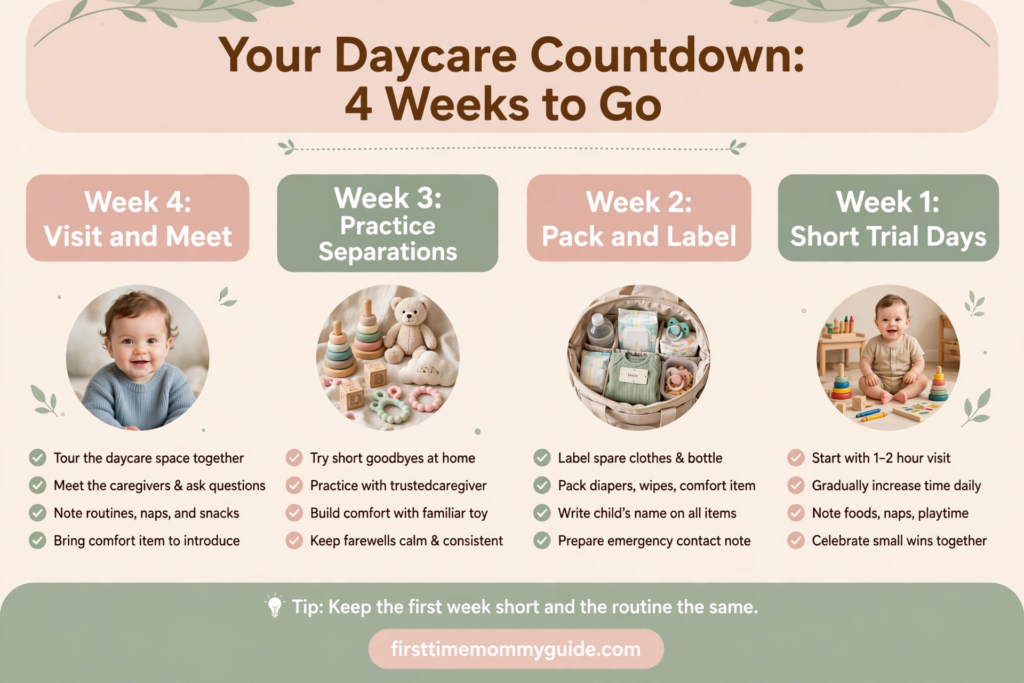
Week 4: Visit and meet
Visit the daycare with your baby at least once, ideally twice. Let your baby play in the room, meet their caregiver, and explore the toys while you stay close. Talk about daycare at home in a cheerful, matter-of-fact way: “Soon you will play at nursery with Miss Sara and the blocks.” Babies absorb your tone even before they understand the words.
This is also the week to start aligning routines. If daycare naps at a certain time, gently shift your baby’s nap toward it. If daycare serves lunch at noon, move lunch a little earlier. Small alignment now prevents a double adjustment later.
Week 3: Practice separations
Begin leaving your baby with a trusted person — a partner, grandparent, or friend — for short periods. Start with 20 to 30 minutes in a familiar place, and build toward an hour or two. Always say goodbye clearly, even for short separations, and always return when you said you would. This is how babies learn that goodbye is not disappearance.
If your baby has never been apart from you, expect protest. That is the point of practice: each successful reunion teaches your baby that separations end. Keep your own goodbye calm and brief, even when it is hard. Babies read your face, and a tearful, anxious parent signals that something is wrong.
Week 2: Pack, label, and rehearse
Pack the daycare bag together and label everything with your baby’s name: clothes, bottles, cups, bedding, and comfort items. Practice the morning routine a few times — wake, dress, breakfast, bag, out the door — so day one does not feel like a rehearsal for a play nobody has read.
Introduce any new items your baby will use at daycare, such as a new cup or a sleep sack, at home first. Familiar objects in an unfamiliar room are anchors. A comfort item, like a small blanket or a soft toy, can be especially powerful, but check the daycare’s policy on comfort items first, since some settings restrict them for safety or hygiene reasons.
Week 1: Short trial days
If your daycare offers settling-in sessions, use them. Start with an hour with you present, then an hour without you, then a half day. Keep the goodbye ritual exactly the same each time. After each session, greet your baby warmly and talk about what they did, even if they are too young to answer. Your enthusiasm teaches them that daycare is a good place.
By the end of this week, your baby should know the room, the caregiver’s face, and the goodbye routine. That familiarity is the foundation everything else rests on.
The Daycare Packing List
Packing well prevents frantic morning searches and midday calls from the daycare. Check your daycare’s list first, then add from this one.
Daily essentials:
- 3 to 4 diapers more than you think you need, plus wipes and barrier cream
- 2 to 3 complete spare outfits, including socks
- Bottles or a cup, pre-measured formula or expressed milk, clearly labelled
- Baby food, snacks, and a bib, if your daycare does not provide meals
- A comfort item, if allowed, and a pacifier with a spare
- Any medication, with written instructions and a signed consent form
- Sunscreen and a hat in warm weather; a warm layer in cold weather
Weekly or as needed:
- A sleep sack or bedding, if the daycare asks you to provide it
- Nappy bags, tissues, and a spare dummy clip
- A change of clothes for messy play, including a waterproof bib
Label everything, including shoes and bottles. Daycares care for many babies, and unlabelled items wander. A simple pack of iron-on or stick-on name labels saves daily detective work.
The Goodbye Routine: Short, Sweet, and Consistent
How you say goodbye matters more than almost anything else in the first weeks. The research and the lived experience of parents agree on the same principles.
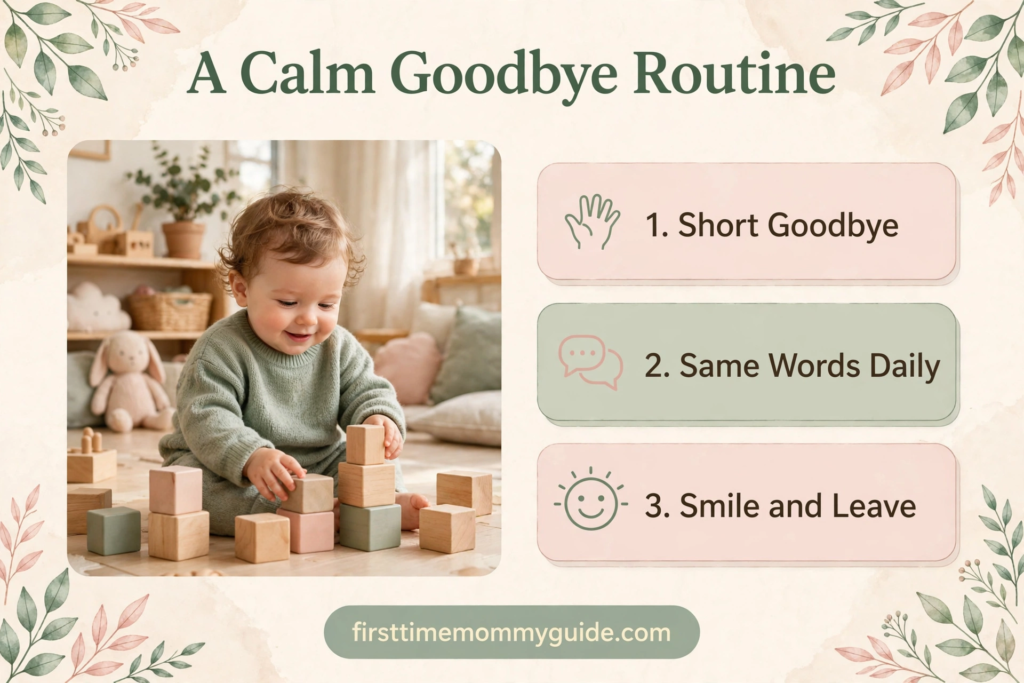
Do: Keep it short, around one to two minutes. Use the same words every day, such as “Mummy always comes back after snack time.” Give a hug, a kiss, and a wave, then leave with a smile, even if you are crying inside. Tell the caregiver any useful information, such as a poor night’s sleep, and then go.
Do not: Sneak out while your baby is distracted. It may buy you a tear-free exit today, but it teaches your baby that you can vanish without warning, which makes future separations scarier. Do not linger for 20 minutes trying to soothe tears, and do not come back three times. Each return restarts the goodbye and teaches your baby that crying longer brings you back.
Most daycare caregivers will tell you the same thing: the majority of babies calm within 5 to 15 minutes of a parent leaving. Ask your daycare to text or call you after drop-off in the first weeks. Hearing that your baby is playing happily by 9:30 makes the rest of the day far easier.
If tears persist beyond a month, or if your baby seems distressed all day rather than just at drop-off, talk to the caregivers and your pediatrician. Persistent, all-day distress deserves a closer look at the fit between your baby and the setting.
What to Expect in the First Weeks
Tears are normal
Expect tears at drop-off, and sometimes at pickup too. Pickup tears confuse many parents, but they are often a release of the day’s held-together feelings, not a sign that the day was bad. Your baby held it together all day and can finally let go with their safe person. It is actually a compliment.
Sleep may wobble
Naps at daycare are rarely as long or as settled as naps at home in the first weeks. New sounds, new light, and new people all disturb sleep. Night sleep may also become choppier for a while, and some babies wake more often or want extra feeds. This usually settles as the daycare routine becomes familiar. Keep your home bedtime routine consistent and calm, and avoid introducing a second big change, like sleep training, in the same month.
Our newborn sleep routine guide and baby sleep training methods explain how routines and sleep interact, and why patience beats pressure during transitions.
Appetite may change
Some babies eat less at daycare at first, especially if they are used to being fed by you. Others eat more, inspired by watching other children. Both are normal. Share your baby’s usual foods, textures, and feeding cues with the caregivers, and ask for a daily food report in the first weeks so you can spot patterns.
Illness will happen
This is the part nobody enjoys hearing, but it is better to expect it. Babies in daycare catch more colds and stomach bugs in the first year than babies cared for at home, because they are exposed to more germs. The upside is that their immune systems build resilience, and illness frequency usually drops after the first year. Stock up on saline spray, a thermometer, and infant pain relief approved by your pediatrician, and learn your daycare’s illness policy before you need it. Have a backup care plan for sick days, because you will need it.
Helping Yourself: The Parent Side of Daycare
Much of the advice about daycare focuses on the baby, but the parent’s adjustment matters too. Guilt is the most common feeling, and it is worth naming: feeling guilty does not mean you are doing something wrong. It means you love your baby and the change is hard.
A few things that genuinely help: plan something absorbing for the first morning, rather than sitting by the phone; ask the daycare for a mid-morning update instead of checking constantly; talk to other daycare parents, who will almost certainly share your exact feelings; and remind yourself of the benefits your baby gains — social play, language exposure, new experiences, and caregivers who enjoy them.
If returning to work is part of the picture, give yourself grace in the first month. You are learning a new routine at the same time as your baby. Prepare what you can the night before, accept that some mornings will be messy, and keep the evening reunion unhurried when you can. Ten focused minutes of play on the floor after pickup does more for connection than an hour of distracted guilt.
For your own recovery and rhythm in this season, our postpartum recovery in the first weeks guide and the baby-proofing home checklist are useful companions, especially if the daycare transition coincides with other big changes at home.
Daycare and Breastfeeding: Keeping It Going
If you are breastfeeding and starting daycare, you do not have to wean. Many mothers pump at work and send expressed milk, while breastfeeding in the morning, evening, and on weekends. Babies often adjust by “reverse cycling” — taking less milk at daycare and more at home — which is normal and not a sign that your supply is failing.
Practical tips: practice bottle feeding with a caregiver other than yourself a few weeks before daycare starts, since some babies refuse a bottle from their breastfeeding parent; label and date all milk; and store milk according to your daycare’s guidelines. If pumping at work is difficult, talk to your employer about a private space and break time, which many workplaces are required to provide.
If your baby is moving to cow’s milk or formula at the same time, our guide to introducing a sippy cup to your baby covers the timing and amounts, and the newborn feeding schedule guide explains how feeding patterns evolve over the first year.
When to Worry: Signs Worth a Conversation
Most adjustment struggles resolve within a month. Seek advice from your pediatrician or the daycare manager if your baby cries inconsolably for most of the day after several weeks, refuses all food and drink at daycare, loses weight, regresses significantly in skills they had mastered, or seems fearful of a specific caregiver. These signs do not automatically mean something is wrong, but they deserve attention and a joint conversation about what might need to change.
Also trust your instincts about the setting itself. If caregivers seem overwhelmed, turnover is constant, or your questions are dismissed, it is reasonable to look elsewhere. A good daycare welcomes questions and treats you as a partner.
Authoritative sources for this topic include the American Academy of Pediatrics’ childcare guidance via healthychildren.org, the NHS guidance on childcare options, and the World Health Organization’s early childhood development resources. These sources agree on the core message: quality of care, consistency, and a gradual start matter most.
Daycare Costs, Contracts, and Practical Admin
The emotional side of daycare gets most of the attention, but the practical side can cause just as much stress if it is left to the last minute. Sorting contracts and logistics early frees your attention for what actually matters: your baby.
Read the contract carefully before you sign. Check the notice period, the fee structure, what happens during holidays and closures, and whether you pay for sick days or planned absences. Ask whether fees rise annually and how much notice you get. Some settings charge for late pickup by the minute, so knowing the exact pickup window matters. Keep a copy of the contract, the illness policy, and the emergency contact form in one place at home.
Budget for the extras beyond the monthly fee: labelled clothing that will be lost or stained, spare comfort items, sunscreen, and the occasional backup care day. If your employer offers childcare vouchers, flexible working, or dependent-care benefits, ask about them before your start date, not after. A short conversation with HR in advance can save real money and a lot of scrambling.
Also plan the commute realistically. A daycare that looks perfect on a map can feel very different in rush-hour traffic with a tired baby in the back seat. Do a trial run of the morning route at the actual time you will travel, including parking and sign-in. The first morning is stressful enough without discovering that drop-off takes twenty minutes longer than you planned.
Building a Partnership With Your Baby’s Caregivers
The best daycare experiences happen when parents and caregivers act as a team. That partnership starts with honest, specific communication. Instead of “she had a bad night,” try “she woke at 2am and skipped her morning feed, so she may be hungry earlier today.” Specific information helps caregivers respond well, and it builds trust in both directions.
Share the small things that matter to your baby: the song that calms them, the way they like to be held for a burp, the sign they use when they are tired, the foods they love and the ones they refuse. Write it down for the first week, since a busy caregiver cannot memorise every detail from a single chat at the door.
Ask for feedback as well as giving it. A good caregiver will tell you how your baby played, what they ate, and what soothed them, and will raise concerns early rather than letting them grow. If something worries you, raise it promptly and kindly, with a specific example. “He came home with a wet shirt three days this week — could we add a spare bib to his bag?” solves a problem; a vague complaint about care quality puts people on the defensive.
Finally, thank caregivers when things go well. A short note or a word at pickup costs nothing and builds the kind of warm relationship that makes a caregiver go the extra mile for your baby on a hard day.
Frequently Asked Questions
How long does it take a baby to adjust to daycare?
Most babies settle within 2 to 4 weeks. Some take a few days, others take 6 weeks, especially if they start during peak separation anxiety between 8 and 18 months. Steady improvement matters more than speed.
Should I stay for the first day?
A gradual settling-in is ideal: stay for part of the first session, then leave for a short period, then build up. A full day with no preparation is harder for both of you. Ask your daycare what settling-in options they offer.
What if my baby cries every morning for months?
Ongoing distress deserves a conversation with caregivers and your pediatrician. It may reflect a poor fit, an unmet need, or a developmental phase, and the answer differs in each case. Do not assume it is just something to endure.
Is it okay to sneak out to avoid tears?
No. Sneaking out can increase anxiety over time, because your baby learns you might disappear without warning. A short, consistent, loving goodbye is kinder in the long run, even when it is tearful.
What should I do if my baby gets sick constantly?
Frequent mild illness in the first year of daycare is common and usually builds immunity. Keep your pediatrician informed, follow the daycare’s illness policy, and seek care promptly for high fever, dehydration, breathing difficulty, or illness that does not improve.
Can I still breastfeed if my baby goes to daycare?
Yes. Many mothers pump at work, send expressed milk, and breastfeed at home. Some babies reverse cycle and feed more at night, which is normal. Talk to your employer about pumping breaks and space.
What if my baby refuses the bottle at daycare?
Try a different bottle, cup, or feeder; have someone other than the breastfeeding parent offer it; and offer when your baby is calm rather than very hungry. Most babies accept within a week or two. If refusal persists, discuss options with your pediatrician.
Should I call to check on my baby?
Yes, especially in the first weeks. Agree a check-in time with the daycare so you are not anxiously waiting all day. A quick update that your baby settled and played is usually enough to ease the day.
How do I handle guilt about daycare?
Remember that guilt signals love, not failure. Quality daycare offers social, language, and play benefits, and a happy, supported parent is good for a baby. Talking with other daycare parents helps more than you might expect.
What if my baby naps badly at daycare?
Short, broken naps are normal at first. Share your baby’s sleep cues and routine with caregivers, keep home bedtime consistent, and give it a few weeks. If poor sleep persists and affects nights, discuss it with the daycare and your pediatrician.
Should I pack a comfort item?
If the daycare allows it, yes. A small blanket or soft toy from home can comfort a baby in a new room. Label it clearly, and consider a duplicate in case one is lost or needs washing.
What happens if my baby bites or is bitten?
Biting is common in toddlers and is usually a communication or teething behaviour, not aggression. Good daycares supervise closely, comfort the bitten child, redirect the biter, and inform both families without blame.
How do I choose between a nursery and a childminder?
Nurseries offer peer groups and structured routines; childminders offer smaller groups and a home-like setting. The best choice depends on your baby’s temperament, your schedule, and the quality of the individual caregiver. Visit both and compare how they feel.
Can I change daycare if it is not working?
Yes, and sometimes that is the right call. Give a genuine settling-in period first, talk to the manager about concerns, and if the fit is still wrong after several weeks, a change is better than months of distress.
What should drop-off look like on a bad morning?
Keep it the same. Short, warm, consistent goodbyes on bad mornings teach your baby that the routine holds even when feelings are big. Extra cuddles at pickup, not a longer goodbye, are the comfort that helps.
Your First-Day Morning Checklist
The night before, pack the bag, lay out clothes, prepare bottles or food, and charge your phone. In the morning, keep the routine calm and unhurried: breakfast together, a favourite song on the way, and the same goodbye you have practised. Bring a spare outfit in the car, a tissue for yourself, and something absorbing planned for your first hour apart. When pickup comes, greet your baby with warmth, ask the caregiver how the day went, and celebrate the milestone together — a special snack, a walk to the park, or simply extra cuddles on the sofa. You both did something brave today.
Conclusion
Preparing baby for daycare is really about preparing two people: your baby, who needs familiarity, routine, and a goodbye they can trust, and you, who need a setting you believe in and a plan for the hard mornings. Start early, visit together, practice separations, pack with care, and keep goodbyes short and sweet. Expect tears, wobbly naps, and a few colds, and know that none of them mean you chose wrong.
Within a few weeks, most families find a new rhythm: a confident drop-off, a happy reunion, and a baby who runs toward the blocks and the friends they have made. That is the part that surprises parents most — not that daycare was hard, but how quickly it became simply part of life. If this guide helped you feel steadier about the first day, save it for the week before you start, and share it with another mom counting down to her own first drop-off.

Dilawar Mughal
Founder and editor, First Time Mommy Guide
I research every guide against what the NHS, the AAP and the WHO publish, then write it in plain English — because most new parents are reading with one hand free, not comparing clinical guidelines. I'm not a doctor or a midwife. Every health claim on this site is sourced and linked so you can check it yourself, and anything urgent belongs with your health visitor or GP, not a blog.


