General information, not medical advice. Every baby is different — if anything worries you, speak to your midwife, health visitor or GP rather than waiting.
Stopped Bleeding 4 Weeks Postpartum Then Started Again? Your lochia finally tapered off around week four, and you breathed a sigh of relief. Then, out of nowhere, the bleeding came back.
This is more common than most new moms realize, and it isn’t always something to panic about. But it can also be your body’s way of flagging a problem.
Table of Contents
Stopped Bleeding 4 Weeks Postpartum Then Started Again

If bleeding stopped around 4 weeks postpartum and then returns, it’s usually light spotting from increased activity, healing tissue, or the very early return of your period.
Heavy bleeding, large clots, fever, or foul odor are signs of a possible infection or retained tissue and need same-day medical attention.
Is It Normal for Postpartum Bleeding to Stop and Restart?
Yes, mild spotting that comes back after weeks of no bleeding is common. Your uterus and the placental site are still healing internally, even after lochia appears to have ended.
A short return of light, pink or brown spotting is usually not dangerous. Heavy, bright red bleeding that soaks a pad in an hour is a different story.
Why Bleeding Can Restart After It Stopped
1. The Return of Your Period (Not Lochia)
If you’re not exclusively breastfeeding, your period can return as early as 5 to 6 weeks postpartum. Even breastfeeding moms can ovulate and get an early period.
This bleeding often feels different from lochia — it may come with cramping, be heavier for a day or two, then taper like a normal cycle.
2. Increased Physical Activity
Walking more, lifting your baby’s car seat, climbing stairs, or resuming light exercise can disturb the healing site where the placenta was attached.
This usually causes light, short-lived spotting rather than heavy bleeding, and it typically settles with rest.
3. Subinvolution of the Placental Site
Sometimes the uterus doesn’t shrink back and heal as expected at the exact spot where the placenta was attached. This is called subinvolution.
It can cause bleeding to stop and then return, sometimes weeks later, and often needs a doctor’s evaluation to confirm.
4. Retained Placental Fragments
If a small piece of placental tissue stayed in the uterus, it can cause on-and-off bleeding for weeks after delivery.
This bleeding tends to be heavier, may include clots, and often doesn’t fully resolve until the tissue is addressed medically.
5. Postpartum Infection (Endometritis)
An infection of the uterine lining can cause bleeding to restart along with fever, chills, a foul vaginal odor, and lower abdominal pain.
This needs prompt medical treatment, usually antibiotics, and should never be left untreated.
6. Secondary Postpartum Hemorrhage
Secondary postpartum hemorrhage (PPH) refers to heavy or abnormal bleeding occurring between 24 hours and 12 weeks after birth.
It’s less common than early PPH but is considered a medical concern that warrants urgent evaluation, especially with heavy flow or large clots.
7. Healing Tears or Stitches Reopening
If you had a vaginal tear, episiotomy, or C-section incision, increased movement can occasionally cause minor reopening or irritation.
This usually causes light localized bleeding rather than bleeding from inside the uterus.
Lochia vs. Returning Period vs. Secondary Hemorrhage
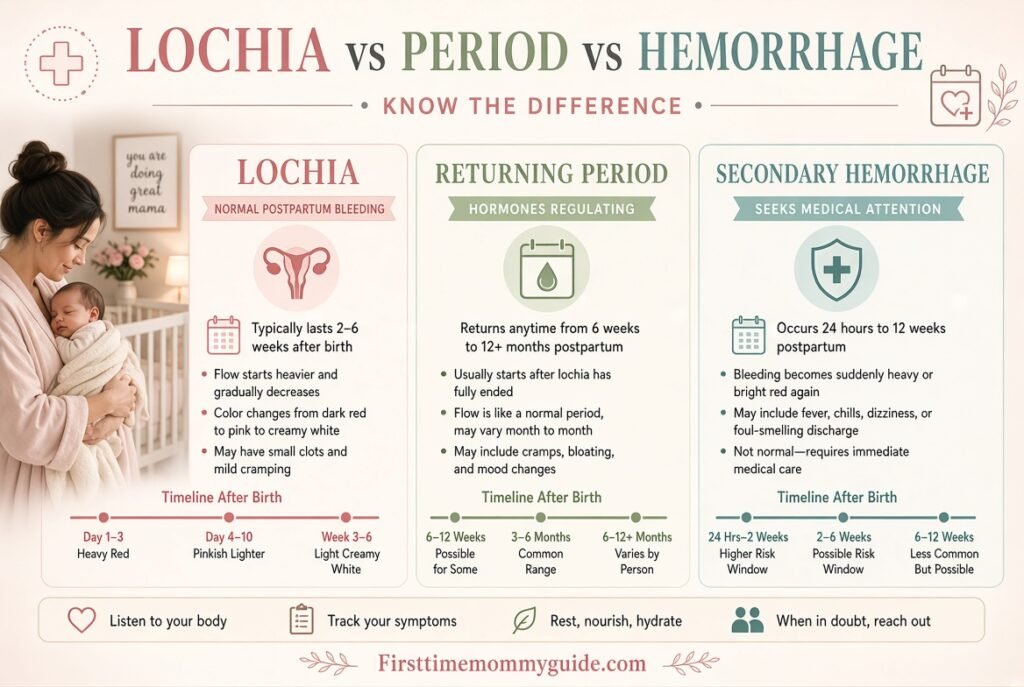
| Feature | Normal Lochia Return / Spotting | Return of Period | Secondary PPH / Infection |
|---|---|---|---|
| Color | Pink, brown, light red | Bright to dark red | Bright red, may include clots |
| Flow | Light, spotting | Light to moderate | Heavy, soaks pad in an hour |
| Duration | A few hours to 2-3 days | 3-7 days | Persistent or worsening |
| Accompanying symptoms | Usually none | Mild cramping | Fever, foul odor, pain, dizziness |
| Action needed | Monitor at home | Monitor, track cycle | Call doctor same day |
Red-Flag Symptoms: When Postpartum Bleeding Is an Emergency
- Soaking through a pad in under an hour, for more than one hour in a row
- Passing clots larger than a golf ball
- Fever above 100.4°F (38°C)
- Foul-smelling vaginal discharge
- Severe lower abdominal or pelvic pain
- Dizziness, lightheadedness, rapid heartbeat, or fainting
- Bleeding that gets heavier instead of lighter over a few hours
If you notice any of these, contact your OB-GYN or midwife the same day, or go to the emergency room if symptoms are severe.
When to Call Your Doctor
Call your provider if bleeding restarts and is heavier than a normal period, lasts longer than 7 days, includes clots, or comes with pain or fever.
It’s also worth calling just for reassurance, even with mild spotting, if you’re unsure. Postpartum bodies vary a lot, and your provider can rule out anything serious quickly.
How Long Can This Late Bleeding Last?
Light spotting related to activity or healing usually resolves within a few days on its own.
Bleeding tied to the return of your period can last 3 to 7 days, similar to a normal cycle. Bleeding from retained tissue or infection often continues or worsens until it’s medically treated.
What You Can Do at Home
- Rest more and avoid heavy lifting or strenuous exercise for a few days
- Use pads, not tampons, until a provider clears you for tampon use
- Track the color, flow, and any clots to describe accurately to your doctor
- Stay hydrated and eat iron-rich foods to support recovery
- Avoid intercourse until bleeding fully resolves and you’ve been cleared
Mistakes to Avoid
Don’t ignore bleeding that’s heavier than your original lochia — this is a common but risky assumption. Don’t assume every restart is “just your period” without checking the flow and symptoms.
Avoid resuming intense workouts too quickly, and don’t wait days to call your provider if you’re passing large clots or running a fever.
Expert Tips
Keep a simple bleeding log for a few days — note pad changes, color, and any pain. This makes it much easier for your provider to assess what’s happening on a call or visit.
If in doubt, a same-day phone call to your OB-GYN’s nurse line is almost always the right move. Postpartum bleeding questions are one of the most common calls they field.
Real-World Scenarios

A mom at 4 weeks postpartum who returns to daily walks and notices light pink spotting for a day is most likely experiencing activity-related healing, not a complication.
A mom at 5 weeks postpartum with heavy red bleeding, chills, and a foul odor is showing signs consistent with a possible infection and should be seen the same day.
Also Read:
- 2 Weeks Postpartum Bleeding Stopped and Started Again Causes 2026
Signs You Can’t Get Pregnant (When to See a Doctor) 2026 - Postpartum Bleeding Stopped Then Started Again Bright Red: Causes 2026
- How to Stop Postpartum Bleeding Faster? Safe Tips 2026
- How Long Does Bleeding Last After Birth If Breastfeeding? (2026 Guide)
- Bleeding After Birth Stopped Then Started Again: Causes and Warning Signs 2026
Frequently Asked Questions (FAQs)
Is it normal for postpartum bleeding to stop then start again at 4 weeks?
Yes, light spotting can return after lochia stops, often from activity or the early return of your period. Heavy bleeding with clots or pain is not typical and needs medical review.
How much bleeding is too much 4 weeks postpartum?
Soaking a pad within an hour, passing large clots, or bleeding that keeps increasing is too much. Contact your provider the same day if this happens.
Can exercise cause postpartum bleeding to restart?
Yes, increased activity can disturb the healing placental site and cause light spotting. It usually settles with rest within a day or two.
Could this be my period coming back already?
It’s possible, especially if you’re not exclusively breastfeeding. A returning period often comes with mild cramping and lasts 3 to 7 days.
What does postpartum bleeding with a bad smell mean?
Foul-smelling bleeding can be a sign of infection, such as endometritis. This needs same-day medical attention, often treated with antibiotics.
Is bleeding at 5 weeks postpartum normal?
Light spotting at 5 weeks can still be part of normal healing. Heavy bleeding this far out is less common and should be checked by your provider.
What is secondary postpartum hemorrhage?
It’s heavy or abnormal bleeding occurring between 24 hours and 12 weeks after delivery. It’s less common than immediate postpartum bleeding but requires prompt evaluation.
Can retained placenta cause bleeding weeks later?
Yes, small retained placental fragments can cause bleeding that comes and goes for weeks. This usually needs medical treatment to fully resolve.
Should I go to the ER for postpartum bleeding?
Go to the ER if you’re soaking a pad hourly, feel dizzy or faint, or have a rapid heartbeat along with bleeding. These can be signs of significant blood loss.
How do I know if it’s lochia or my period?
Lochia typically fades gradually from red to pink to brown to white/yellow. A returning period tends to be heavier, redder, and comes with cramping after weeks of no bleeding.
Can breastfeeding delay bleeding returning?
Breastfeeding can delay ovulation and your period, but it doesn’t guarantee it. Some breastfeeding moms still see bleeding return within a few weeks.
Why is my postpartum bleeding heavier some days than others?
Activity level, hormone shifts, and natural healing fluctuations can all cause bleeding to vary day to day. Consistent heavy bleeding, however, is not typical and should be checked.
What color is concerning for postpartum bleeding?
Bright red, heavy flow days or weeks after lochia has faded is more concerning than light pink or brown spotting. Color alone isn’t diagnostic, so flow amount and symptoms matter too.
Can stress cause postpartum bleeding to return?
Stress itself doesn’t typically cause bleeding, but poor rest and overexertion linked to stress can. Prioritizing rest may help symptoms settle.
How long does secondary postpartum hemorrhage last?
It varies depending on the cause, but it typically requires treatment to resolve fully rather than stopping on its own. See your provider promptly if you suspect this.
Is cramping normal with restarted postpartum bleeding?
Mild cramping, especially with a returning period, can be normal. Severe or worsening pain alongside bleeding is a reason to seek care.
Can I use tampons if bleeding restarts postpartum?
It’s best to use pads until your provider confirms it’s safe to use tampons, usually after your 6-week checkup. This lowers infection risk while your body is still healing.
When does postpartum bleeding usually fully stop?
Most women stop lochia bleeding within 4 to 6 weeks after delivery. Timing varies, and light spotting beyond this can still be normal in many cases.
What tests might my doctor run for restarted postpartum bleeding?
Your provider may do a physical exam, pelvic ultrasound, or blood work to check for retained tissue, infection, or anemia. This helps pinpoint the exact cause quickly.
Can a C-section delivery affect when bleeding restarts?
Yes, healing patterns can differ slightly after a C-section, though the general causes of restarted bleeding are similar. Any heavy or concerning bleeding should still be evaluated the same way.
Conclusion
Bleeding that stops around 4 weeks postpartum and then returns is usually mild and tied to activity, healing, or an early period. Heavy bleeding, clots, fever, or foul odor point toward something that needs medical attention.
When in doubt, call your OB-GYN or midwife rather than waiting it out. A quick check gives you peace of mind and catches anything serious early.

Dilawar Mughal
Founder and editor, First Time Mommy Guide
I research every guide against what the NHS, the AAP and the WHO publish, then write it in plain English — because most new parents are reading with one hand free, not comparing clinical guidelines. I'm not a doctor or a midwife. Every health claim on this site is sourced and linked so you can check it yourself, and anything urgent belongs with your health visitor or GP, not a blog.