General information, not medical advice. Every baby is different — if anything worries you, speak to your midwife, health visitor or GP rather than waiting.
How to Stop Postpartum Bleeding Faster? Postpartum bleeding, called lochia, is your body’s natural way of shedding the uterine lining after birth. There’s no medical way to “stop” it early, but you can support your body so it heals as smoothly as possible.
Everything here is general information, not medical advice. Always follow your own midwife’s, OB’s, or doctor’s specific instructions for your recovery.
Table of Contents
How to Stop Postpartum Bleeding Faster?
You can’t force lochia to stop faster, since it follows your uterus’s own healing timeline. What you can do is support that natural process with rest, gentle movement, breastfeeding, hydration, and avoiding overexertion.
- Rest as much as possible in the first 1–2 weeks
- Let your baby nurse often, since it naturally triggers uterine contractions
- Avoid heavy lifting, strenuous exercise, and long periods on your feet
- Stay hydrated and eat iron-rich foods to support recovery
- Watch for warning signs and contact your provider if bleeding suddenly gets heavier
What Is Postpartum Bleeding (Lochia)?
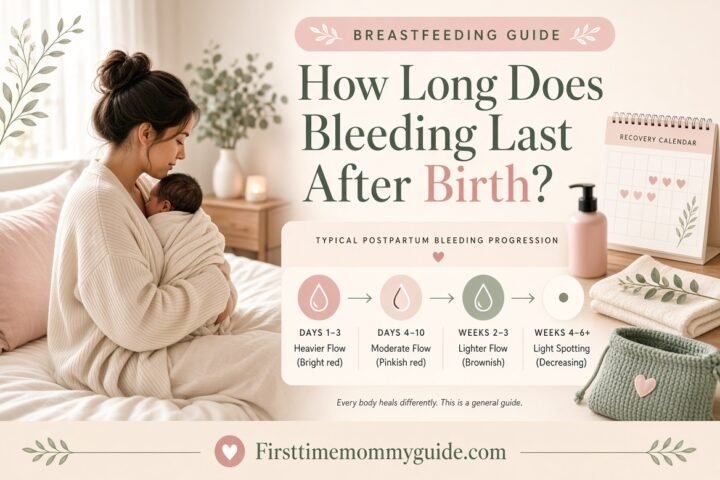
Lochia is the vaginal discharge of blood, mucus, and uterine tissue that happens after any birth, vaginal or cesarean. It typically lasts four to six weeks, gradually tapering from bright red to pink, then brown, then white or yellow.
This bleeding happens because your uterus is shrinking back down and healing the site where the placenta was attached. It’s a normal, expected part of recovery, not an injury.
The Three Stages of Lochia
Lochia moves through three recognizable color and flow stages as healing progresses.
| Stage | Timeframe | What to Expect |
|---|---|---|
| Lochia Rubra | Days 1–4 | Heavy, bright red flow, may include small clots |
| Lochia Serosa | Days 4–10 | Pinkish-brown, watery, lighter flow |
| Lochia Alba | Days 10–42 | Yellowish-white, light discharge, tapering off |
Why You Can’t “Stop” Postpartum Bleeding Early
Lochia ends when your uterus finishes healing, not on a schedule you can control. Trying to rush it with strenuous activity often backfires and makes bleeding heavier.
The goal isn’t to stop it faster artificially. The goal is to avoid slowing down your own natural healing process.
How to Support Faster, Healthier Postpartum Recovery
These are the practices most consistently recommended by maternal health sources to help your body recover well.
Step 1: Rest as Much as Possible
Your uterus needs energy to contract and heal, and overexertion diverts that energy elsewhere. Lie down when you can, and let others help with the baby and household tasks.
Step 2: Breastfeed or Pump Regularly
Nursing releases oxytocin, the hormone that helps your uterus contract and shrink back down. Many parents notice cramping during nursing sessions, which is this process at work.
Step 3: Avoid Heavy Lifting and Strenuous Exercise
Lifting anything heavier than your baby, or jumping back into intense workouts, can increase bleeding. Ease into movement gradually and check with your provider before resuming exercise.
Step 4: Use Proper Pads, Not Tampons
Choose thick maternity pads and change them often to track your flow and avoid infection. Avoid tampons, menstrual cups, and vaginal intercourse until your provider clears you, usually around six weeks.
Step 5: Stay Hydrated and Eat Iron-Rich Foods
Good hydration and iron intake support blood volume recovery after birth. Foods like leafy greens, beans, and lean meats can help replace what was lost.
Step 6: Gently Massage Your Lower Abdomen
Some providers recommend gently massaging the lower abdomen to help the uterus contract. Ask your midwife or doctor to show you the correct technique before trying it yourself.
Key Takeaways
- Lochia is normal and typically lasts four to six weeks
- Rest, breastfeeding, and hydration all support natural healing
- Overexertion is the most common reason bleeding gets heavier again
- Heavy bleeding or large clots are never something to just wait out
Postpartum Bleeding: Normal vs. Warning Signs
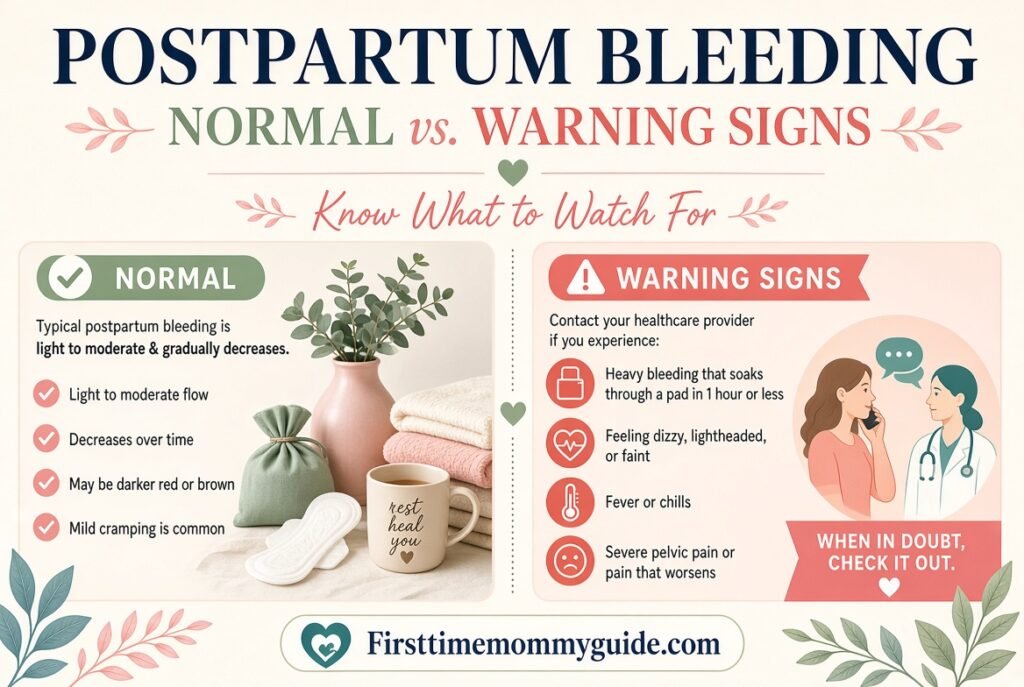
Knowing the difference between expected lochia and a possible complication is one of the most important parts of recovery.
| Normal Lochia | Warning Signs — Call Your Provider |
|---|---|
| Gradually lightens in color over weeks | Sudden return to heavy, bright red bleeding |
| Small clots smaller than a grape | Clots larger than a golf ball or egg |
| Mild cramping, especially while nursing | Severe pain not relieved by medication |
| Mild, non-offensive odor | Strong or foul-smelling discharge |
| Soaking a pad over several hours | Soaking one pad in an hour or less |
When Postpartum Bleeding Is a Medical Emergency
Postpartum hemorrhage is a serious, time-sensitive complication. Seek emergency care immediately if you experience any of the following.
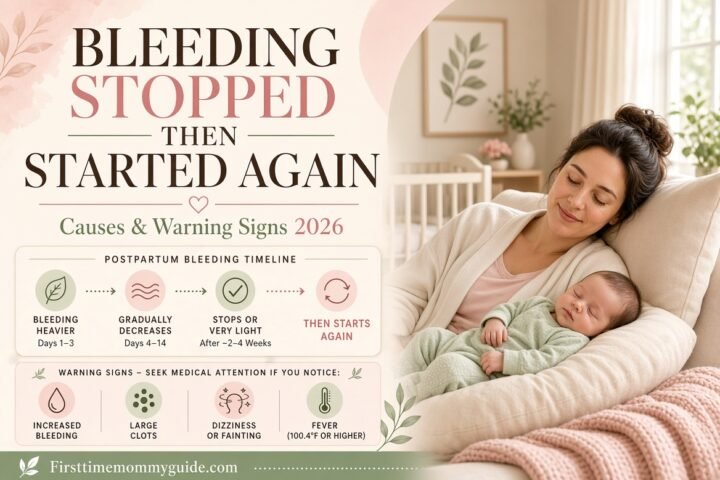
- Soaking through a maternity pad in an hour or less
- Passing clots larger than a golf ball
- Dizziness, fainting, rapid heartbeat, or blurred vision
- Bleeding that suddenly restarts heavily after slowing down
- Fever, chills, or foul-smelling discharge suggesting infection
Common Mistakes to Avoid During Postpartum Recovery
- Returning to intense exercise or heavy lifting too soon
- Using tampons or having intercourse before your provider clears you
- Ignoring a sudden increase in bleeding as “just normal”
- Skipping meals or not drinking enough water while caring for a newborn
- Assuming all clots are harmless without checking their size
Expert Tips for Postpartum Healing
- Track your pad changes for the first week so you notice any sudden changes quickly
- Keep a water bottle within reach during every nursing session
- Ask a partner or family member to handle stairs, laundry, and lifting for the first two weeks
- Bring up any bleeding concerns at your postpartum checkup, even if they’ve since resolved
Postpartum Bleeding After Vaginal Birth vs. C-Section
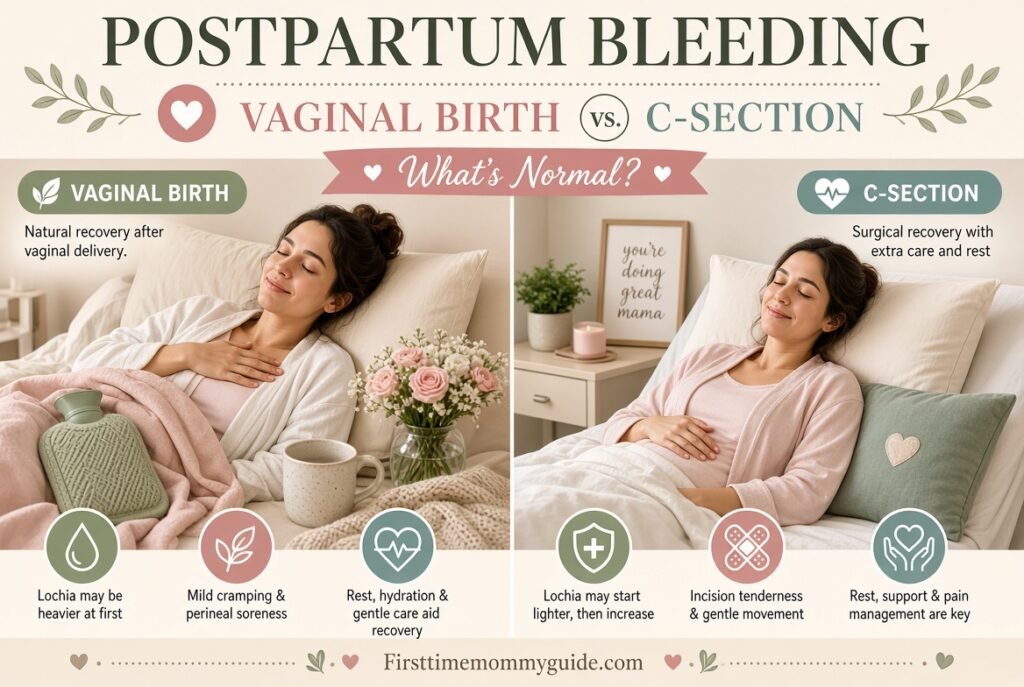
Both delivery methods involve lochia, since it comes from the uterus healing, not the delivery method itself.
| Factor | Vaginal Birth | Cesarean Birth |
|---|---|---|
| Presence of Lochia | Yes, same process | Yes, same process |
| Typical Duration | 4–6 weeks | 4–6 weeks, sometimes slightly lighter |
| Extra Considerations | Perineal healing, hemorrhoids | Incision care, more restricted movement |
Also Read:
- How Long Do You Bleed After You Give Birth? Full Timeline Guide
- How Long Does Bleeding Last After Birth If Breastfeeding?
- Bleeding After Birth Stopped Then Started Again: Causes and Warning Signs
- After Giving Birth First Period: Timeline, Symptoms & What’s Normal
- Pelvic Pain During Pregnancy: Causes, Relief & When to Worry
- SPD Pregnancy: Symptoms, Causes & Relief Tips
- Best Electrolytes for Pregnancy: Safe Picks & Expert Tips
- Baby Sleep Guide for New Moms: Safe Sleep & Schedules
- Baby Sleep Guide
- How to Become a Midwife: Complete Step-by-Step Guide
- Pregnancy Guide Month by Month: Symptoms & Baby Growth
- Baby Essentials Checklist 0–3 Months
- Baby Food Guide 6–12 Months
- 33 Weeks Pregnant: Symptoms, Baby Development & What to Expect
- 25 Weeks Pregnant: Symptoms, Baby Size & What to Expect
- 17 Weeks Pregnant: Symptoms, Baby Size & What to Expect
- Pregnancy Week By Week 7: Symptoms & Baby Size
- FBS Test for Pregnant: Normal Range, Purpose & Next Steps
- Sex Positions to Induce Labor: Safe Options
- Sunny Side Up Baby: What It Means, Why It Happens & How to Turn Baby
- Maternity Leggings: The Complete Guide for Every Trimester
- Leggings in Pregnancy: Is It Safe to Wear Them Every Trimester?
- When Do Babies Start Sitting Up? Month-by-Month Milestone Guide
- When Do Babies Start Smiling? Signs & Milestones
- When Do Infants Roll From Tummy to Back?
Frequently Asked Questions (FAQs)
How can I stop postpartum bleeding faster naturally?
You can’t force it to stop early, but resting, breastfeeding, staying hydrated, and avoiding overexertion all support your uterus’s natural healing timeline.
How long does postpartum bleeding usually last?
Lochia typically lasts four to six weeks, gradually lightening from bright red to pink, then brown, then a light yellowish-white.
Is it normal for postpartum bleeding to start and stop?
Light spotting that comes and goes, especially after activity, can be normal. A sudden return to heavy, bright red bleeding is not and should be checked by your provider.
Does breastfeeding help stop postpartum bleeding?
Yes. Nursing releases oxytocin, which helps the uterus contract and can support it shrinking back down faster.
What clot size is considered dangerous after birth?
Clots larger than a golf ball or egg are considered a warning sign and should be reported to your healthcare provider right away.
Can exercise make postpartum bleeding worse?
Yes. Strenuous activity or heavy lifting too soon after birth can increase blood flow and restart heavier bleeding.
When should I worry about postpartum bleeding?
Worry if you’re soaking a pad within an hour, passing large clots, feeling dizzy or faint, or noticing a fever or foul odor, and contact your provider immediately.
Is postpartum bleeding different after a C-section?
The lochia process itself is the same, though C-section recovery adds incision care and usually more restrictions on lifting and movement.
Can I use tampons for postpartum bleeding?
No. Most providers advise against tampons, cups, or anything inserted vaginally for about six weeks to reduce infection risk.
What foods help with postpartum blood loss recovery?
Iron-rich foods like leafy greens, beans, and lean meats, along with good hydration, support replacing blood volume after birth.
Does uterine massage help postpartum bleeding?
Gentle abdominal massage may help the uterus contract, but ask your midwife or doctor to show you the correct technique first.
What is postpartum hemorrhage?
Postpartum hemorrhage is heavy, excessive bleeding after birth that requires immediate medical treatment and is considered a medical emergency.
How much bleeding is too much after giving birth?
Soaking through one maternity pad per hour for more than one or two hours in a row is considered too much and needs medical attention.
Can stress affect postpartum bleeding?
Stress itself doesn’t directly cause heavier lochia, but overexertion from doing too much too soon commonly does.
Is cramping during postpartum bleeding normal?
Yes. Cramping, sometimes called afterpains, is normal and is caused by the uterus contracting, especially noticeable while breastfeeding.
Conclusion
Postpartum bleeding follows your uterus’s own healing schedule, and there’s no safe shortcut to end it early. What actually helps is resting, breastfeeding, staying hydrated, and easing back into activity slowly.
Pay close attention to your body during those first few weeks. Heavy soaking, large clots, or a sudden return of bright red bleeding are signals to call your provider, not signs to wait out.
With the right care and a little patience, most bleeding tapers off steadily within four to six weeks, letting you focus more energy on healing and your new baby.

Dilawar Mughal
Founder and editor, First Time Mommy Guide
I research every guide against what the NHS, the AAP and the WHO publish, then write it in plain English — because most new parents are reading with one hand free, not comparing clinical guidelines. I'm not a doctor or a midwife. Every health claim on this site is sourced and linked so you can check it yourself, and anything urgent belongs with your health visitor or GP, not a blog.