General information, not medical advice. Every baby is different — if anything worries you, speak to your midwife, health visitor or GP rather than waiting.
You are about to leave the house with your baby for the first time, and suddenly a simple trip to the grocery store feels like planning an expedition. What if she needs a diaper change in the car park? What if he gets hungry halfway through? What if she spits up all over both of you?
Every new mom has stood in front of an empty diaper bag wondering exactly what to pack in a diaper bag — and, just as importantly, what to leave behind. This guide answers that question completely. It gives you a master checklist, age-by-age quantities, packing lists for every kind of outing, and the organisation tricks that experienced moms swear by.
By the end, you will be able to pack your bag in five minutes, walk out the door with confidence, and handle whatever your baby throws at you — sometimes literally.
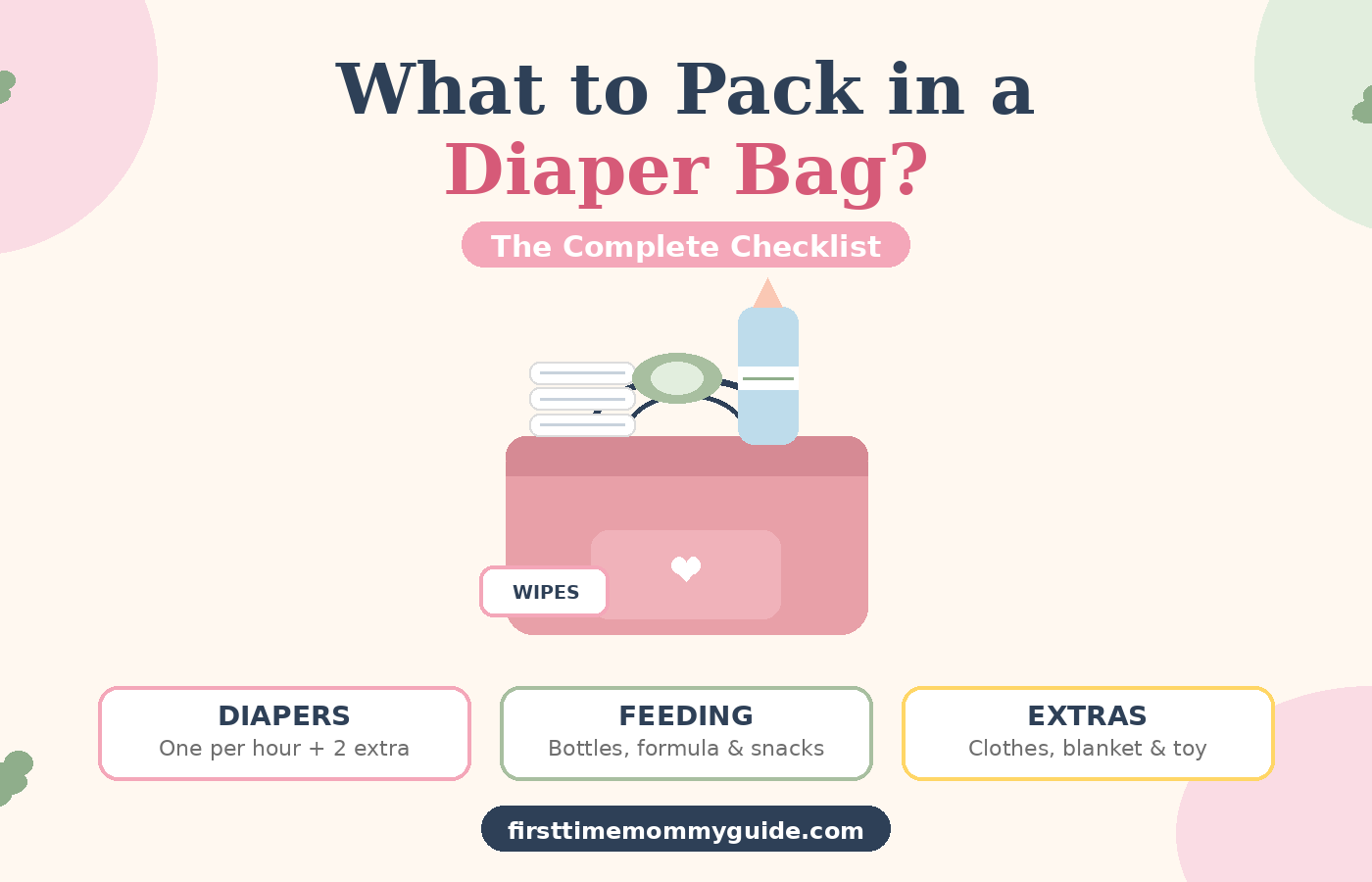
Quick answer: A well-packed diaper bag holds diapers (one per hour out, plus two extra), wipes, a portable changing pad, a change of clothes, feeding supplies (bottles, formula or nursing cover, snacks for older babies), a small first-aid kit, hand sanitiser, plastic bags for dirty items, a soft blanket, and your own essentials such as your phone, keys, wallet and water. Pack by outing type, restock the bag the moment you get home, and keep a spare set of supplies in the car.
Why Getting Your Diaper Bag Right Matters
A diaper bag is not just a bag. It is your portable nursery, your feeding station, your changing table and your emergency kit, all rolled into one. When it is packed well, outings feel easy. When it is not, a ten-minute errand can turn into a stressful scramble.
First-time moms often make one of two mistakes. Some pack far too little and end up buying emergency supplies at full price in a shop. Others pack the entire nursery, carry a bag that weighs more than the baby, and still cannot find the wipes when they need them.
The goal is the middle ground: everything you genuinely need, nothing you do not, and every item exactly where your hand expects it to be. That is what this diaper bag checklist delivers.
If you are still building your baby’s full kit, our baby essentials checklist for 0–3 months covers everything you need at home, and this article covers what travels with you.
The Master Diaper Bag Checklist
Use this table as your master reference. Tick items off before every outing, and restock from it when you get home.
| Category | Item | Quantity | Notes |
|---|---|---|---|
| Diapering | Diapers | 1 per hour out + 2 extra | Size up if between sizes |
| Diapering | Baby wipes | One full pack | Keep a travel pack in the bag |
| Diapering | Portable changing pad | 1 | Washable or disposable |
| Diapering | Diaper rash cream | 1 small tube | A sample size is enough |
| Diapering | Disposable bags | 3–4 | For dirty diapers and clothes |
| Feeding | Bottles / formula | As needed | Pre-measure formula portions |
| Feeding | Nursing cover | 1 | If you breastfeed in public |
| Feeding | Burp cloths | 2 | Also doubles as a bib |
| Feeding | Snacks / puffs | 1 small container | For babies 6 months and older |
| Feeding | Bib | 1–2 | Silicone bibs wipe clean |
| Clothing | Change of clothes | 1–2 outfits | Include socks |
| Clothing | Extra hat / sun hat | 1 | Season dependent |
| Clothing | Soft blanket | 1 | Lightweight muslin works well |
| Health | Hand sanitiser | 1 small bottle | Use before and after changes |
| Health | Thermometer | 1 | Small digital forehead type |
| Health | Nasal aspirator | 1 | Bulb syringe or manual type |
| Health | Infant pain relief | 1 | Only if your doctor has advised it |
| Health | Sunscreen | 1 | For babies over 6 months |
| Comfort | Pacifier + clip | 1–2 | Attach the clip so it stays clean |
| Comfort | Small comfort toy | 1 | A familiar soft toy or lovey |
| Comfort | Teether | 1 | For babies who are teething |
| Mom | Phone, keys, wallet | — | Keep in a zipped pocket |
| Mom | Water bottle | 1 | Staying hydrated matters |
| Mom | Lip balm, tissues | — | Small comforts count |
The Must-Have Diaper Bag Essentials
Every outing, no matter how short, needs the same core kit. These are the non-negotiables — the items that should live in your bag permanently and be restocked the moment you walk back through the door.
Diapers: How Many Do You Really Need?
The golden rule is simple: pack one diaper for every hour you expect to be out, then add two extra. A two-hour trip means four diapers. A full day out means eight to ten. Newborns go through diapers fast, so always round up rather than down.
Carry the size your baby wears now, not the size you hope she will grow into. If she is between sizes, pack the larger one — a slightly loose diaper is far better than a tight one that leaks. Keep diapers in an easy-access outer pocket so you are never digging for them with one hand while holding a wriggling baby with the other.
Wipes: Your Most Versatile Tool
Wipes do far more than clean bottoms. They wipe sticky hands, clean dropped pacifiers, mop up spit-up, and freshen changing surfaces. Pack a full travel pack, not the last few wipes from a nearly empty one.
Choose fragrance-free, sensitive-skin wipes for a newborn. If your baby has sensitive skin or you are dealing with redness, read our guide to baby diaper rash causes, treatment and prevention before you choose a brand.
A Portable Changing Pad
Public changing tables are not always clean, and sometimes there is no changing table at all. A foldable, wipe-clean changing pad turns any flat surface — a bench, a car boot, a patch of grass — into a safe changing spot.
Look for a pad that folds small, wipes clean with a single wipe, and has a small pocket for a diaper and a few wipes. Some diaper bags come with one built in, which saves space and weight.
Bags for Dirty Items
Pack three or four small disposable bags, such as nappy sacks or zip-lock bags. One holds a dirty diaper until you find a bin. Another holds a soiled outfit so it does not contaminate everything else in the bag. A third is your spare, because messes rarely arrive one at a time.
Scented bags help, but a sealed zip-lock bag works just as well and costs less. Keep them in the same pocket as the diapers so the whole changing kit is in one place.
Diaper Rash Cream
A small tube of barrier cream belongs in every diaper bag. You do not need the full-size tub — a travel tube or a sample sachet is lighter and takes up less room. Apply a thin layer at every change when your baby’s skin looks even slightly pink, because prevention is far easier than treatment.
The American Academy of Pediatrics, through HealthyChildren.org, recommends keeping the diaper area clean and dry and changing diapers frequently to prevent rash. Their diapering guidance is a reliable reference for new parents learning the basics of hygiene and skin care.
How Many Diapers Per Outing by Age
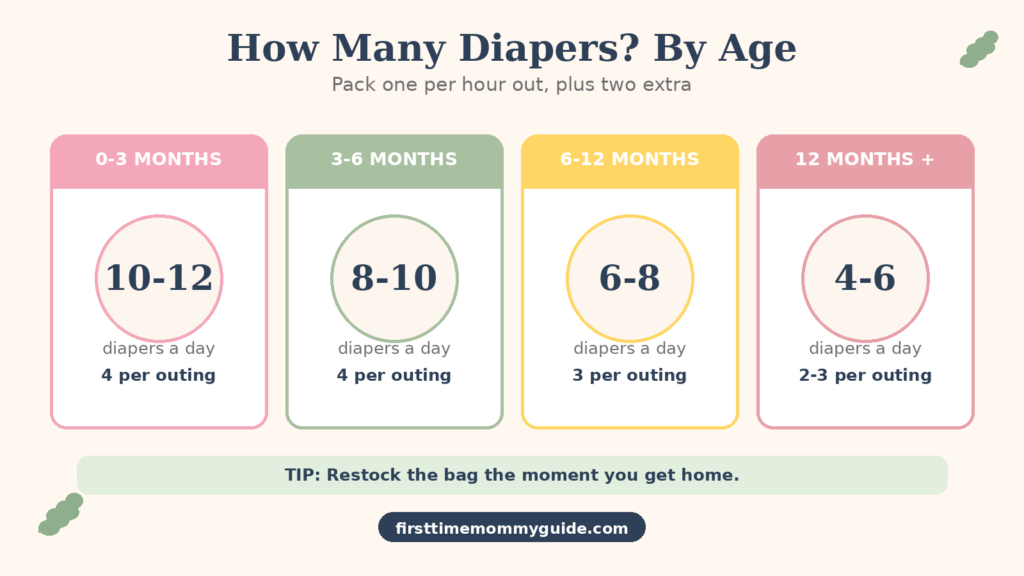
Babies use fewer diapers as they grow, but the exact number depends on your baby’s age, feeding pattern and how long you will be away. Use this age-by-age quantities table as your starting point, then adjust for your own baby.
| Age | Diapers per day | Diapers per 2-hour outing | Diapers per full day out | Wipes needed |
|---|---|---|---|---|
| 0–3 months | 10–12 | 4 | 10–12 | Full pack |
| 3–6 months | 8–10 | 4 | 8–10 | Full pack |
| 6–9 months | 7–8 | 3–4 | 7–8 | Full pack |
| 9–12 months | 6–8 | 3 | 6–8 | Full pack |
| 12–18 months | 5–7 | 3 | 5–6 | Half pack |
| 18 months + | 4–6 | 2–3 | 4–5 | Half pack |
Newborns are the hungriest for diapers. A newborn can easily use twelve diapers in a day, and a two-hour outing still deserves four. That sounds like a lot until the day you run out mid-trip — then it sounds like not nearly enough.
As your baby starts solids, around six months, diaper use drops slightly but the messes get bigger. Pack an extra outfit at this stage, because a blowout is far more likely than it was in the early weeks.
Toddlers use fewer diapers, but they also move more, eat more and make more mess. Keep three diapers for a short outing even when you think two will do, because a toddler who has just learned to walk can soak through a diaper faster than you expect.
Feeding Supplies: Bottles, Formula and Snacks
Feeding is the second-biggest job your diaper bag does. What you pack depends on how your baby eats, but the principle is the same: pack enough for the outing plus one extra feed, because babies are gloriously unpredictable about hunger.
If You Bottle-Feed
Pack one prepared bottle per feed you expect, plus one spare. For formula, pre-measure powder into a formula dispenser or small containers, and carry a separate bottle of cooled boiled water. Mix only when your baby is ready to eat — a bottle mixed hours ago is not safe to serve.
Carry bottles upright in an insulated pocket if your bag has one. A bottle warmer is rarely worth the weight for a short outing, but a small insulated sleeve keeps a prepared bottle at a reasonable temperature for an hour or two.
After the outing, wash and sterilise every bottle properly. Our guide on how to clean and sterilise baby bottles walks through the full routine step by step.
If You Breastfeed
Your feeding kit is lighter, but it is not empty. Pack a nursing cover if you prefer privacy, breast pads in case of leaks, and a burp cloth or two. If you express milk, carry it in a small insulated bag with an ice pack and use it within the safe time window your health visitor advised.
Always carry water for yourself. Breastfeeding is thirsty work, and a long outing without water leaves you tired and headachy. A bottle of water in the side pocket of your diaper bag is one of the smartest things you can pack.
Feeding Older Babies and Toddlers
Once your baby starts solids, your feeding kit grows. Pack a small container of finger food — soft fruit, puffs, rice cakes or small sandwiches — plus a sippy cup of water and a bib. A silicone bib that rolls up takes almost no space and wipes clean in seconds.
Keep snacks in a sealed container, not loose in a bag, or you will find crumbs in every pocket for weeks. And pack a spare snack, because a hungry toddler in a queue is a situation no parent wants to face unprepared.
For help planning how often your baby should eat at each age, see our newborn feeding schedule.
Clothes and Extras
One change of clothes is the minimum. Two is the comfortable choice, especially for a newborn or a baby who has just started solids. Pack a full outfit — vest, sleepsuit or top and bottoms, and socks — rolled tightly so it takes up minimal space.
Choose clothes that are easy to change quickly. Pop-fastener vests and stretchy leggings beat fiddly buttons when you are changing a baby on a park bench. Avoid white if you can, because stain removal on the go is not a hobby anyone enjoys.
A soft muslin blanket earns its place in every bag. It works as a nursing cover, a shade from the sun, a clean surface to lay your baby on, a burp cloth in an emergency, and a comfort blanket when your baby is tired. Muslin is light, breathable and folds down to almost nothing, which is why experienced moms carry two.
A spare hat matters in every season. In summer it is a sun hat with a wide brim. In winter it is a warm beanie that covers little ears. A baby loses heat quickly through the head, and a hat is the smallest, lightest insurance you can carry.
Check your baby’s size before you pack, because babies outgrow clothes fast in the first year. Our baby clothes size guide helps you match age, weight and brand sizing so the spare outfit actually fits.
First-Aid and Health Items
You do not need a full medicine cabinet, but a small health pouch saves real stress. Keep it in a clear zip-lock bag inside your diaper bag so you can find it instantly.
Pack hand sanitiser and use it before and after every nappy change, especially when there is no sink nearby. The CDC recommends hand hygiene after diapering as one of the simplest ways to prevent the spread of germs, and a small bottle of sanitiser makes that possible anywhere.
A digital thermometer is small, light and genuinely useful. If your baby feels hot while you are out, a quick reading tells you whether it is just a warm day or something that needs attention. Pack a forehead thermometer rather than an ear thermometer for a young baby, because it is faster and less fiddly.
A nasal aspirator — a bulb syringe or a manual aspirator — clears a stuffy nose in seconds. A blocked nose makes feeding miserable for a baby, so this tiny tool can turn a screaming car journey into a calm one.
Pack any medicine your doctor has already advised, such as infant paracetamol, but only in the dose your doctor or pharmacist recommended, and only if you know how to give it. Never pack a medicine you have not discussed with a healthcare professional, and always check the expiry date.
Add a few plasters for yourself, because parents get small cuts too, and a small tube of sunscreen for babies over six months old. For younger babies, shade and clothing are the safest sun protection. Our baby sunscreen guide explains when sunscreen is safe and how to apply it.
Mom’s Own Essentials
New moms pack beautifully for their baby and forget themselves entirely. Your diaper bag should carry a few things for you, because a comfortable mom is a calmer mom.
Your phone, keys and wallet go in a zipped pocket, separate from the baby items, so you are not fishing past a wet wipe packet to find your keys. A small purse or card holder is better than a full wallet — it is lighter and easier to reach.
Pack a water bottle and a small snack for yourself, especially if you are breastfeeding. A cereal bar or a small bag of nuts takes no space and keeps your energy up during a long outing. Pack lip balm and tissues, because dry lips and runny noses do not wait until you are home.
If you wear glasses, pack a lens cloth. If you take regular medication, carry that day’s dose. And pack a spare top for yourself if you have room — spit-up lands on moms as often as it lands on babies, and a clean top changes how you feel about the rest of the outing.
Packing by Outing Type
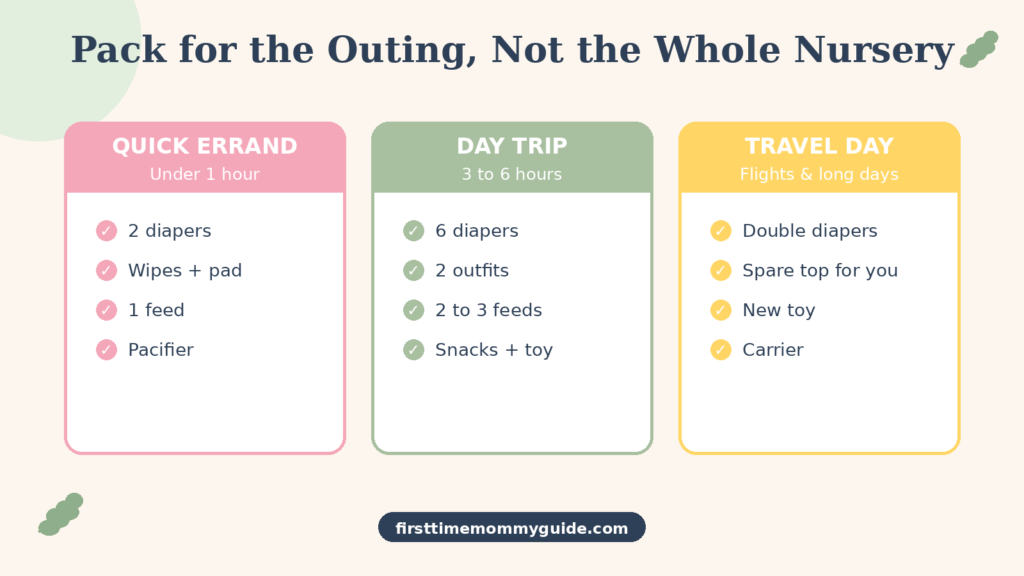
The biggest packing mistake new moms make is packing the same bag for every trip. A ten-minute dash to the pharmacy does not need the same kit as a full day at the zoo. Pack for the outing you are actually doing.
The Quick Errand (Under 1 Hour)
Keep this bag light. Two diapers, a small pack of wipes, a changing pad, a disposable bag, one bottle or nursing cover, a burp cloth, a pacifier and your phone, keys and wallet. That is all.
A smaller bag works well for quick errands. Some moms keep a second, compact diaper bag packed permanently for short trips, so they can grab it and go without repacking the big bag every time.
The Day Trip (3–6 Hours)
This is your standard full pack: four to six diapers, a full pack of wipes, a changing pad, rash cream, two changes of clothes, feeding supplies for two feeds plus one spare, snacks, a blanket, sunscreen, a first-aid pouch, a comfort toy and a teether.
Add a change of clothes for yourself if you are going somewhere messy, such as a soft-play centre or a farm. And pack a plastic bag for wet or dirty clothes, because a day trip almost always produces at least one.
Daycare Drop-Off
Daycare packing is different, because the bag stays at nursery. Pack labelled everything: diapers for the full day, wipes, cream, two changes of clothes, bottles or breast milk in labelled containers, a comfort item, and any medicine with written instructions.
Label every item with your baby’s name, including socks and bottles, because nursery staff handle dozens of identical items every day. Check with your nursery about what they provide and what you must supply — some nurseries provide wipes and cream, others do not.
Our guide to preparing baby for daycare covers the full transition, including what to pack, how to label everything, and how to settle your baby in.
Travel and Flights
Flying with a baby deserves its own packing plan. Pack the standard day-trip kit, then add extras: double the diapers you think you need, because delays happen; extra wipes; a change of clothes for you and your baby; snacks and a bottle for take-off and landing, because swallowing helps little ears adjust to pressure changes; a favourite toy and a new small toy for distraction; and a carrier or sling, because a pushchair is not always practical in an airport.
Keep the essentials in your carry-on, never in checked luggage. And pack a zip-lock bag with a full change of clothes at the very top of the bag, so you can grab it in seconds if a blowout happens at thirty thousand feet.
| Outing type | Diapers | Feeding | Clothes | Extra items |
|---|---|---|---|---|
| Quick errand (under 1 hr) | 2 | 1 feed | 1 outfit | Pacifier, wipes |
| Half day (2–3 hrs) | 4 | 1–2 feeds | 1 outfit | Blanket, toy |
| Full day trip (4–6 hrs) | 6–8 | 2–3 feeds | 2 outfits | Sunscreen, snacks, first aid |
| Daycare | Full day supply | Labelled bottles/milk | 2 outfits | Comfort item, medicine note |
| Flight / travel | Double your estimate | Feeds + snacks | 2 outfits + spare top for you | New toy, carrier, extra bags |
Seasonal Adjustments
Your diaper bag changes with the weather. A summer bag and a winter bag are not the same bag, and adjusting seasonally keeps your baby comfortable and your bag lighter.
Summer Packing
Summer means sun protection and hydration. Pack a wide-brimmed sun hat, baby-safe sunscreen for babies over six months, a light muslin blanket for shade, and extra water for older babies. Dress your baby in light, breathable cotton and pack a spare outfit in case of sweat or a nappy leak.
Never leave your diaper bag in a hot car. Formula, breast milk and medicines spoil quickly in heat, and wipes dry out. Carry the bag with you, and keep milk in an insulated pocket with an ice pack.
Winter Packing
Winter means warmth and layers. Pack a warm hat that covers the ears, mittens or fold-over cuffs, a thick blanket, and an extra layer such as a cardigan or fleece. A footmuff or a warm all-in-one suit is worth packing if you will be outside for a while.
Cold air dries skin quickly, so pack a small tube of moisturiser or barrier cream. And pack extra wipes, because cold weather makes nappy changes slower and messier, and you will want a warm, quick change.
Rainy Days
A rainy-day bag needs a waterproof cover for the pushchair or carrier, a small umbrella, and an extra plastic bag to keep the changing pad dry. Pack a spare outfit even for a short trip, because rain finds its way into everything, and a dry baby is a happy baby.
Choosing the Right Diaper Bag
The best diaper bag is the one you will actually carry. Before you buy, think about how you travel, how much you carry, and what feels comfortable on your shoulder or your pushchair.
Size Matters
A bag that is too small forces you to leave essentials behind. A bag that is too big invites overpacking and weighs a tonne by lunchtime. For most moms, a medium bag with a main compartment, two side pockets for bottles, and a zipped front pocket is the sweet spot.
If you have twins or two children in nappies, you need a larger bag with separate compartments for each child. If you mostly do short trips, a compact backpack-style bag may be all you need.
Backpack vs Tote vs Messenger
Backpack diaper bags distribute weight evenly across both shoulders, which matters when the bag is heavy. They also keep your hands free, which matters even more when you are carrying a baby. Most experienced moms end up with a backpack.
Tote bags look elegant and are easy to dip into, but they slide off your shoulder and put all the weight on one side. Messenger bags are a good middle ground, but they swing around when you bend over. Try each style with weight in it before you decide.
Features Worth Paying For
Look for insulated bottle pockets, a wipe-clean interior, a built-in changing pad, stroller straps, and a zipped pocket for your valuables. Water-resistant fabric is worth the extra cost, because spills happen daily.
Avoid bags with dozens of tiny pockets. You will forget which pocket holds what, and you will spend every outing searching. Five or six well-placed pockets beat fifteen fiddly ones every time.
Choosing a bag goes hand in hand with choosing the rest of your travel gear. Our guide on how to choose a baby stroller covers the other half of the getting-out equation, including what to look for in storage and folding.
Organisation Tips and Packing Order
A well-organised bag saves more time than a well-stocked one. You can own every essential and still have a miserable outing if you cannot find the wipes when you need them.
Pack in Zones
Divide your bag into zones and keep them consistent. Diapering supplies live together in one pocket. Feeding supplies live together in another. Clothes and blankets live in the main compartment. Your valuables live in the zipped pocket. When every item has a home, you can reach for it without looking.
Use small pouches or zip-lock bags inside the main compartment to keep zones separate. A clear pouch for first aid, a small pouch for feeding, and a wet bag for dirty clothes keep the bag tidy even after a chaotic change.
The Packing Order That Works
Pack in reverse order of use. Items you need first go on top or in the outer pockets. Items you need last go at the bottom. Diapers and wipes go in the easiest pocket, because you reach for them most often. The spare outfit goes in the main compartment, because you only need it if something goes wrong.
Restock the bag the moment you get home, not the next morning. Empty the dirty clothes, refill the diapers and wipes, replace any used bottles, and check the snack supply. A five-minute restock tonight saves a frantic repack tomorrow.
The Car Stash
Keep a backup kit in the car: a few diapers, a pack of wipes, a spare outfit, a blanket and a bottle of water. This is your insurance policy for the day you forget the bag entirely — and every mom forgets the bag at least once.
What NOT to Pack: Overpacking Mistakes
Overpacking is the most common diaper bag mistake, and it makes every outing harder. Your back aches, the bag will not close, and you still cannot find the one thing you need.
Do not pack a full-size tub of nappy cream when a travel tube will do. Do not pack three toys when one comfort toy is enough. Do not pack a full change of clothes for every hour you will be out — one spare outfit, or two for a long day, is plenty.
Do not pack items “just in case” that you have never actually used. If you have carried a bottle warmer for a month and never switched it on, take it out. If you pack four outfits and only ever use one, pack one.
Do not pack valuables you do not need. Leave the expensive jewellery at home, and carry only the cards and cash you need for that outing. A lighter bag is a happier bag, and a lighter mom is a happier mom.
Do not pack food that needs refrigeration unless you have an insulated bag and an ice pack. Warm milk is a health risk, not a convenience, and the NHS advises careful handling of expressed breast milk and formula. When in doubt, pack powdered formula and mix it fresh.
Your Printable Diaper Bag Checklist
Print this list and stick it inside your front door, or save it on your phone. Tick it off before every outing until packing becomes automatic.
Diapering: Diapers (1 per hour + 2 extra), wipes, portable changing pad, nappy cream, disposable bags.
Feeding: Bottles or nursing cover, pre-measured formula and water, breast milk in an insulated bag, burp cloths, bib, snacks for older babies.
Clothing: One to two changes of clothes, socks, hat, soft muslin blanket.
Health: Hand sanitiser, thermometer, nasal aspirator, sunscreen (6 months+), any prescribed medicine.
Comfort: Pacifier with clip, small comfort toy, teether.
Mom: Phone, keys, wallet, water bottle, snack, lip balm.
Before you leave: Check the diaper count, check the wipes, check the bottles, check the spare outfit, check your keys. Five checks, thirty seconds, no forgotten essentials.
Frequently Asked Questions
How many diapers should I pack in a diaper bag?
Pack one diaper for every hour you expect to be out, plus two extra. A two-hour outing needs four diapers, and a full day out needs eight to ten for a newborn. Always round up, because running out is far worse than carrying two extra diapers.
What is the most important thing to pack in a diaper bag?
Diapers and wipes are the most important items, followed closely by a changing pad and a bag for dirty items. Without those four things, a nappy change away from home becomes very difficult. Everything else makes the outing easier, but those four make it possible.
What should a newborn diaper bag contain?
A newborn diaper bag should contain ten to twelve diapers for a full day, a full pack of wipes, a changing pad, nappy cream, two changes of clothes, feeding supplies, burp cloths, a muslin blanket, a pacifier, hand sanitiser and a thermometer. Newborns need more diapers and more changes of clothes than older babies.
How do I pack a diaper bag for daycare?
Pack a full day’s supply of labelled diapers, wipes, cream, two labelled changes of clothes, labelled bottles or breast milk, a comfort item and any medicine with written instructions. Label everything with your baby’s name and check with the nursery about what they provide.
What should I pack in a diaper bag for a flight?
Pack double the diapers you think you need, extra wipes, a change of clothes for you and your baby, snacks and a bottle for take-off and landing, a favourite toy and a new toy for distraction, and a baby carrier. Keep everything in your carry-on, never in checked luggage.
Do I need a changing pad in my diaper bag?
Yes. A portable changing pad gives you a clean surface anywhere, and many public changing tables are not as clean as they look. Choose a foldable, wipe-clean pad that fits in your bag without taking up much space.
How often should I restock my diaper bag?
Restock the bag every time you come home. Replace used diapers and wipes, remove dirty clothes, wash used bottles, and check the snack supply. A five-minute restock after each outing means the bag is always ready to go.
What size diaper bag do I need?
A medium bag suits most moms: a main compartment, two bottle pockets and a zipped pocket for valuables. If you have twins or two children in nappies, choose a larger bag with separate compartments. If you mostly do short trips, a compact bag is enough.
Should I pack a diaper bag the night before?
Yes, packing the night before is a smart habit, especially for early appointments or daycare drop-offs. Pack everything except fresh milk or prepared bottles, which you should add in the morning. A bag packed the night before means a calm start to the day.
What should I not pack in a diaper bag?
Do not pack full-size toiletries, multiple toys, a bottle warmer you never use, or food that needs refrigeration without an ice pack. Do not pack valuables you do not need for that outing. Keep the bag light by packing only what you will genuinely use.
How many wipes should I pack?
Pack a full travel pack of wipes for any outing longer than an hour, and a small pack for a quick errand. Wipes are used for far more than nappy changes, so they run out faster than you expect. Always check the pack before you leave.
Do I need different diaper bags for summer and winter?
You do not need a different bag, but you do need different contents. In summer, add sun protection, a sun hat and extra water. In winter, add a warm hat, mittens, an extra layer and a thicker blanket. Swap the seasonal items when the weather changes.
What should I pack in a diaper bag for a first-time mom?
A first-time mom should pack the full master checklist: diapers, wipes, changing pad, cream, bags, feeding supplies, a change of clothes, a blanket, a first-aid pouch, a pacifier, a comfort toy and her own essentials. Follow this guide’s checklist until packing becomes second nature.
Can I use a regular backpack as a diaper bag?
Yes, a regular backpack works well, especially if it has several pockets and a wipe-clean lining. Add a portable changing pad, a wet bag for dirty clothes, and small pouches to organise the contents. Many moms prefer a backpack because it keeps both hands free.
How do I keep my diaper bag organised?
Pack in zones: diapering in one pocket, feeding in another, clothes in the main compartment, valuables in a zipped pocket. Use small pouches inside the bag, pack in reverse order of use, and restock the bag after every outing so it is always ready.
What do I do if I forget my diaper bag?
Stay calm. Buy the essentials at the nearest shop — a small pack of diapers, wipes and a spare outfit — and use a carrier or a blanket as a changing surface if needed. Keep a backup kit in the car so a forgotten bag is an inconvenience, not a crisis.
Should I pack snacks in a diaper bag?
Yes, once your baby is six months or older, pack a small sealed container of finger food and a sippy cup of water. Pack a spare snack for delays, and keep snacks in a sealed container so crumbs do not spread through the bag.
What is the best way to pack bottles in a diaper bag?
Carry pre-measured formula powder in a dispenser and a separate bottle of cooled boiled water, then mix when your baby is hungry. Carry expressed breast milk in an insulated bag with an ice pack. Keep bottles upright in an insulated pocket if your bag has one.
Conclusion
Packing a diaper bag well is a skill, and like every parenting skill, it gets easier with practice. The first few outings feel overwhelming. By the tenth, you will pack the bag without thinking. By the twentieth, you will wonder why it ever felt hard.
Start with the master checklist in this guide. Pack one diaper per hour plus two extra, keep your wipes full, and restock the bag the moment you get home. Adjust for the season, the outing and your baby’s age, and leave behind anything you have never actually used.
Your baby does not need a perfect bag. She needs a mom who is prepared enough to stay calm when things go sideways — and a spare outfit when they do. Pack the bag, trust the checklist, and enjoy the outing.
If you are still setting up your baby’s world, our baby essentials checklist for 0–3 months and our hospital bag checklist for baby are good next reads. And when the toys start piling up, our guide on how to clean baby toys safely will keep the playroom healthy too.
For authoritative guidance on diapering and hygiene, see the American Academy of Pediatrics at HealthyChildren.org, the CDC’s guidance on diapering and hand hygiene, and the NHS advice on caring for your baby.

Dilawar Mughal
Founder and editor, First Time Mommy Guide
I research every guide against what the NHS, the AAP and the WHO publish, then write it in plain English — because most new parents are reading with one hand free, not comparing clinical guidelines. I'm not a doctor or a midwife. Every health claim on this site is sourced and linked so you can check it yourself, and anything urgent belongs with your health visitor or GP, not a blog.