General information, not medical advice. Every baby is different — if anything worries you, speak to your midwife, health visitor or GP rather than waiting.
Few things worry a first-time parent more than opening a nappy and finding watery, explosive stool where soft yellow paste used to be. Is it the new food you tried yesterday? A stomach bug? Teething? Something serious? Baby diarrhea is one of the most common reasons parents call their paediatrician, and most of the time it is a short, manageable illness. But because babies dehydrate far faster than adults, knowing how to tell normal loose stools from true diarrhea, and knowing exactly what to do, matters enormously.
This complete guide explains what baby diarrhea actually is, what causes it at every age, how to treat it safely at home, what to feed your baby while they recover, and the warning signs that mean you should call the doctor right away. Everything here follows guidance from the American Academy of Pediatrics (AAP), the NHS, and the World Health Organization (WHO).
Key Takeaways
- True diarrhea means frequent, watery stools — not just one loose nappy. Breastfed newborns normally have soft, mustard-yellow stools several times a day, which is not diarrhea.
- Viruses, especially rotavirus and norovirus, cause most cases of baby diarrhea. Bacterial infections, food reactions, antibiotics, and new foods cause the rest.
- Dehydration is the real danger, not the diarrhea itself. Watch for fewer wet nappies, no tears, a dry mouth, and unusual sleepiness.
- Keep feeding your baby. Breast milk or formula should continue, and older babies should keep eating bland, familiar foods. Never stop fluids to "rest the gut".
- Oral rehydration solution (ORS) is the most effective home treatment for mild to moderate dehydration. Plain water alone is not enough for a baby with diarrhea.
- Never give anti-diarrhea medicine to a baby unless a doctor specifically prescribes it. These medicines are not safe for infants.
- Call the doctor urgently if your baby is under three months with diarrhea, has blood in the stool, has not urinated in eight hours, or is unusually drowsy or difficult to wake.
What Is Baby Diarrhea? How to Tell It Apart From Normal Baby Poop
The first step in dealing with baby diarrhea is knowing whether your baby actually has it. Baby stool changes constantly in the first year, and many perfectly normal stools look alarming to a new parent.
A breastfed newborn may pass soft, seedy, mustard-yellow stools after every feed — sometimes eight to ten times a day. This is normal. A formula-fed baby usually passes firmer, tan or brown stools once or twice a day. Both patterns are healthy. Neither is diarrhea.
True diarrhea in a baby means a clear change from your baby's usual pattern: stools that are much looser and more watery than normal, passed much more often than usual, and often large in volume. The stool may soak into the nappy instead of sitting on top of it. It may be explosive, leaking out of the nappy, and it may smell sharper than usual. A baby with diarrhea often has more than three watery stools in a day, though what matters most is the change from baseline, not a magic number.
Normal stool patterns by age
| Age | Typical stool pattern | What is normal |
|---|---|---|
| 0–4 weeks (breastfed) | Soft, seedy, mustard yellow | Several times a day, after most feeds |
| 0–4 weeks (formula-fed) | Firmer, tan or brown | 1–3 times a day |
| 1–6 months | Soft, yellow to brown | Varies widely; some babies poop daily, others every few days |
| 6–12 months (starting solids) | Thicker, darker, stronger smell | 1–3 times a day; colour changes with food |
| After new foods | Temporary change in colour or texture | Usually settles within a day or two |
A useful rule from paediatricians: if the stool is watery enough to soak through the nappy, happens much more often than your baby's normal pattern, and keeps happening, treat it as diarrhea. If your baby has one loose stool after trying a new food and then returns to normal, it is probably just a reaction to the food, not an illness. When in doubt, take a photo of the nappy (paediatricians genuinely find this helpful) and note how many watery stools happened in the last 24 hours.
What baby diarrhea is not
Teething does not cause diarrhea. This is one of the most persistent myths in baby care. Teething can cause drooling, chewing, irritability, and slightly looser stools from swallowed saliva, but it does not cause true watery diarrhea. If your baby has watery stools while teething, something else is going on, and you should treat it as diarrhea rather than blaming the teeth. Our guide to baby teething signs and remedies explains what teething really does and does not cause.
Similarly, a single green stool is usually not diarrhea. Green stool in a breastfed baby often means the baby is getting more foremilk than hindmilk, or has eaten green foods. Green, watery stool passed repeatedly, however, should be treated as diarrhea.
What Causes Diarrhea in Babies?
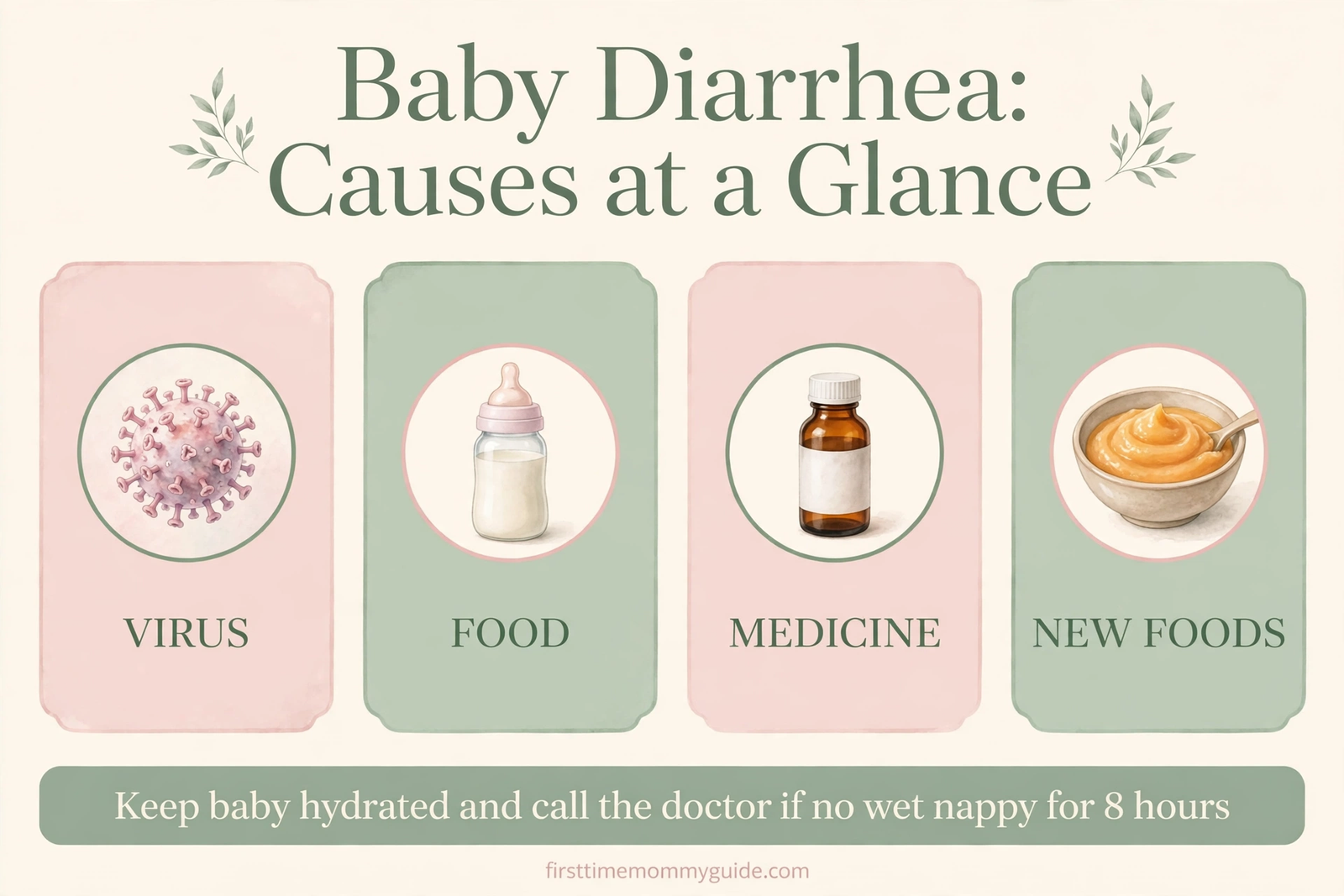
Most cases of baby diarrhea are caused by infections, but food, medicines, and feeding changes can all play a role. The cause often matters less than the treatment — keeping your baby hydrated — but knowing the likely cause helps you judge how long it will last and whether anyone else in the family is at risk.
Viral infections: the most common cause
Viruses cause the large majority of baby diarrhea cases. Rotavirus used to be the leading cause of severe diarrhea in babies worldwide, and it still matters in unvaccinated children, but routine rotavirus vaccination has reduced it dramatically in many countries. The NHS recommends the rotavirus vaccine for babies at eight and twelve weeks, and it is one of the most effective protections available. Check your baby's schedule in our guide to the baby vaccination schedule in the first year.
Norovirus is now the most common viral cause in many countries. It spreads easily through households and nurseries, causes watery diarrhea and sometimes vomiting, and usually lasts one to three days. Adenovirus and other stomach viruses cause similar, usually mild illness lasting a few days.
Viral diarrhea typically starts suddenly, may come with a low fever and vomiting, and resolves on its own within three to seven days. The stool is watery without blood. Because viruses spread so easily, everyone in the household should wash hands carefully after every nappy change.
Bacterial infections
Bacterial diarrhea is less common but can be more serious. Salmonella, Campylobacter, E. coli, and Shigella can cause diarrhea with fever, blood or mucus in the stool, and severe cramping. Babies can pick these up from contaminated food, undercooked meat or eggs, unpasteurised milk, contact with reptiles, or an infected family member. Bacterial diarrhea is more likely to need medical assessment, especially if there is blood in the stool or a high fever. Never give your baby raw or undercooked foods — our guide to baby first foods to avoid covers the foods that carry the highest infection risk.
Parasites
Parasites such as Giardia can cause diarrhea that lasts longer than a week, with greasy, foul-smelling stools and poor weight gain. This is uncommon in babies who are not in daycare or travelling, but it is worth mentioning to your doctor if diarrhea lasts more than two weeks.
Food reactions and intolerances
New foods commonly cause a day or two of looser stools. This is normal while the gut adjusts and is not true diarrhea. But a genuine food reaction can cause persistent diarrhea. Cow's milk protein allergy is the most common food allergy in babies under one, and diarrhea is one of its symptoms, along with eczema, vomiting, blood in the stool, and poor weight gain. Lactose intolerance is different: it is rare in babies, but it can develop temporarily after a stomach bug damages the gut lining, causing a week or two of loose stools after drinking milk. If you suspect a food is causing your baby's diarrhea, do not cut foods out of your baby's diet without medical advice — our guide to introducing allergens to baby explains how allergen introduction should work.
Antibiotics
Antibiotics can disturb the balance of healthy gut bacteria and cause loose stools. This usually starts a few days into the course and settles after it finishes. Never stop a prescribed antibiotic because of diarrhea without asking your doctor first. If diarrhea is severe or contains blood during antibiotic treatment, call the doctor the same day.
Other causes
Drinking too much fruit juice is a surprisingly common cause of loose stools in older babies. Juice is high in sugars that the gut cannot fully absorb, and the excess sugar draws water into the bowel. The AAP recommends no juice at all before age one. Overfeeding, a new formula, and switching formulas too quickly can also loosen stools temporarily. Rarely, persistent diarrhea points to a condition such as coeliac disease or a metabolic disorder, which is why diarrhea lasting more than two weeks always deserves a medical review.
Symptoms That Come With Baby Diarrhea
Diarrhea rarely arrives alone. The accompanying symptoms help you judge the cause and the severity, and they are exactly what your doctor will ask about.
Fever. A low fever (under 38°C / 100.4°F) is common with viral diarrhea. A high fever, especially above 39°C, or a fever in a baby under three months, needs same-day medical advice. Fever plus diarrhea also increases fluid loss, so hydration matters even more.
Vomiting. Many stomach bugs cause vomiting for the first day or two, followed by diarrhea. Vomiting makes hydration harder, because fluids come straight back up. Small, frequent sips are the answer — large amounts at once are more likely to be vomited. If your baby cannot keep any fluid down for more than eight hours, seek medical help.
Stomach pain and cramps. Babies show pain by crying, pulling their legs up, arching their back, and being difficult to settle. Colic can look similar, but colic does not cause watery stools. If your baby's crying pattern has changed suddenly and watery stools have started, think stomach bug first.
Diaper rash. Watery stool is acidic and irritates delicate skin quickly. A baby with diarrhea often develops a red, sore bottom within hours. Change nappies immediately after every stool, clean gently with water rather than wipes, pat dry, and apply a thick barrier cream. Air-drying for a few minutes at each change helps enormously. Our guide to baby diaper rash causes, treatment, and prevention covers this in detail.
Poor appetite and sleepiness. A baby with diarrhea often feeds less and sleeps more. Some reduction in appetite is expected, but a baby who refuses all feeds or is hard to wake is a red flag.
Mucus or blood in the stool. Small streaks of mucus can occur with any diarrhea. Blood, however — red streaks, or black, tarry stools — always needs same-day medical assessment.
Dehydration: The Danger to Watch For
Dehydration is the reason baby diarrhea can become serious. A baby's body is about 75 percent water, and a baby loses fluid faster relative to body size than an adult. Mild dehydration can be treated at home. Moderate or severe dehydration needs medical care, sometimes with intravenous fluids.
Signs of mild dehydration
- Fewer wet nappies than usual, but still urinating
- Slightly darker yellow urine
- A dry or sticky mouth and lips
- Fewer tears when crying
- Slightly sunken soft spot (fontanelle) on top of the head
Signs of moderate to severe dehydration — call the doctor
- No wet nappy for eight hours or more
- No tears at all when crying
- Very dry mouth and tongue
- Sunken eyes
- A deeply sunken fontanelle
- Unusual sleepiness, floppiness, or difficulty waking
- Cold hands and feet with pale or mottled skin
- Rapid breathing or a fast heartbeat
Babies under six months dehydrate fastest because they have the smallest fluid reserves. A baby under three months with diarrhea should be assessed by a doctor the same day, even if they seem well. Keep a simple log during the illness: the time of each watery stool, each wet nappy, and each feed. Doctors find this enormously helpful, and it stops you guessing about whether things are improving.
| Sign | Mild — manage at home | Moderate — call doctor today | Severe — urgent care now |
|---|---|---|---|
| Wet nappies | Slightly fewer | Much fewer, dark urine | None in 8+ hours |
| Tears | Fewer than usual | Very few | None |
| Mouth | Slightly dry | Dry and sticky | Very dry, cracked lips |
| Alertness | Normal, maybe tired | Sleepy, less playful | Hard to wake, limp |
| Fontanelle | Slightly sunken | Sunken | Deeply sunken |
| Skin | Normal | Slow to spring back when pinched | Cool, pale, mottled |
How to Treat Baby Diarrhea at Home
Most mild cases of baby diarrhea resolve in three to seven days with careful home care. The treatment has three goals: replace lost fluids, keep feeding, and protect the skin. There is no medicine that "stops" viral diarrhea, and trying to stop it can do more harm than good.
Step 1: Replace fluids with oral rehydration solution
Oral rehydration solution (ORS) — sold as Pedialyte, Dioralyte, or a pharmacy's own brand — is the single most effective treatment for baby diarrhea. It contains the right balance of water, salts, and sugar to replace what is lost in watery stools. Plain water does not replace salts, and sugary drinks such as juice or sports drinks can make diarrhea worse.
Offer ORS in small, frequent sips: a teaspoon every few minutes, or a small amount from a syringe or spoon if your baby refuses a bottle. For a breastfed baby, continue breastfeeding on demand and offer ORS between feeds. For a formula-fed baby, offer ORS in addition to normal formula feeds — do not dilute the formula or switch to water alone.
How much ORS? A rough guide is about 50–100 ml after each loose stool for a baby under one year, but follow the packet instructions or your doctor's advice. If your baby vomits the ORS, wait 15–20 minutes and start again with even smaller sips. Cold ORS is often better tolerated than room-temperature ORS.
Step 2: Keep feeding — do not starve the gut
Old advice to stop feeding during diarrhea is wrong and harmful. A baby's gut heals faster when it keeps receiving food. Breast milk is especially valuable during diarrhea: it contains antibodies, is easy to digest, and replaces fluids at the same time. Breastfeed more often than usual if your baby will take it.
Formula-fed babies should continue their usual formula at normal strength. Do not water it down, and do not switch to a lactose-free or soy formula unless a doctor advises it. Temporary lactose intolerance after a stomach bug usually resolves on its own within a week or two.
Babies over six months who have started solids should keep eating. Small, frequent meals of familiar foods are best. Good choices include bananas, rice, plain toast, cooked carrots, potatoes, plain yoghurt, and stewed apple. Offer food in small amounts and let your baby guide how much they eat. Appetite usually returns fully within a few days of the diarrhea settling.
Step 3: Protect the bottom
Change nappies as soon as they are soiled — watery stool left against the skin causes painful rash within hours. Wash the bottom with warm water and pat dry rather than rubbing. Use a thick zinc-oxide barrier cream at every change, and give your baby some nappy-free time on a towel each day. Avoid scented wipes and soaps until the rash heals.
Step 4: Rest and comfort
A baby with diarrhea needs rest, cuddles, and a calm routine. Keep the room comfortable, dress your baby lightly if they have a fever, and offer extra feeds and comfort. Soothing a crying baby during illness is mostly about closeness, rocking, and patience — illness makes even settled babies clingy.

What to Feed a Baby With Diarrhea (and What to Avoid)
Feeding during diarrhea is about gentle, familiar foods that are easy to digest and help firm the stool. The old "BRAT diet" (bananas, rice, applesauce, toast) is a useful starting point, but it is not a complete diet — add protein and other foods as soon as your baby tolerates them.
| Food | Why it helps | How to serve |
|---|---|---|
| Bananas | Potassium, gentle fibre, firms stool | Mashed, ripe |
| Rice and rice cereal | Easy to digest, binds stool | Well cooked, plain |
| Toast and plain crackers | Bland, easy on the stomach | Small pieces, no butter at first |
| Cooked carrots | Gentle fibre, replaces nutrients | Soft, mashed or in finger strips |
| Potatoes | Potassium, easy to digest | Mashed, plain |
| Plain yoghurt | Live cultures may help gut recovery | Full-fat, no added sugar |
| Stewed apple or pear | Gentle fibre, pectin firms stool | Soft, peeled |
| Breast milk / formula | Hydration, antibodies, nutrition | Continue as normal |
Foods and drinks to avoid during diarrhea:
- Fruit juice, fizzy drinks, and sports drinks — the sugars draw more water into the bowel and worsen diarrhea
- Cow's milk as a main drink for babies under one (already not recommended at this age)
- Spicy, fatty, or fried foods
- Raw or undercooked foods
- High-fibre bran cereals and raw vegetables
- Sugary snacks and sweets
- Any brand-new food you have not tried before — this is not the week to experiment
If your baby is still breastfeeding, your own diet rarely needs to change. Continue eating normally, and keep yourself hydrated. If you are formula feeding and your baby has had a stomach bug, check your preparation routine: always use freshly boiled water cooled to the right temperature, and discard unfinished bottles rather than saving them.
Medicines: What Helps and What Is Dangerous
Oral rehydration solution: safe and recommended for babies of all ages. Keep a few sachets at home before illness strikes.
Paracetamol (acetaminophen): safe for fever or discomfort in babies over two to three months at the correct dose for their weight. Always follow the packet or your doctor's dosing advice, and never give ibuprofen to a dehydrated baby without medical advice, because it can affect the kidneys when fluid levels are low.
Probiotics: some evidence suggests specific probiotic strains can shorten viral diarrhea by about a day. They are not essential, and you should ask your doctor or pharmacist before using them in a baby under six months.
Anti-diarrhea medicines (loperamide and similar): never give these to a baby. They are not licensed for infants, they can slow the gut so much that the infection stays longer, and they can cause serious side effects. If a doctor ever prescribes one, it will be in a very specific situation — never buy one over the counter for your baby.
Antibiotics: only help if the diarrhea is bacterial, and only a doctor can decide that. Most baby diarrhea is viral, and antibiotics do nothing for viruses. Never give leftover antibiotics to your baby.
When to Call the Doctor: Red Flags You Must Not Ignore
Most baby diarrhea settles at home, but some situations always need medical advice. Call your doctor or an urgent-care line the same day if any of these apply:
- Your baby is under three months old and has diarrhea
- There is blood or black, tarry stool
- Your baby has not urinated in eight hours
- Your baby cannot keep any fluid down for more than eight hours
- Your baby is unusually sleepy, limp, or difficult to wake
- Your baby has a high fever (over 39°C / 102°F) or a fever lasting more than 24 hours
- Your baby has a swollen or tender belly, or vomits green or yellow fluid
- Diarrhea lasts more than seven days, or keeps coming back
- Your baby is losing weight or not gaining weight
- You have recently travelled abroad with your baby
- Your baby was recently exposed to someone with a confirmed bacterial infection
Call emergency services immediately if your baby is hard to wake, has a stiff neck, has a rash that does not fade when pressed, is breathing rapidly or struggling to breathe, or has a seizure. Trust your instincts: parents who feel something is seriously wrong are usually right, and doctors would always rather see a baby who turns out to be fine than miss one who is not.
Baby Diarrhea at Different Ages
Newborns (0–3 months). Diarrhea in a newborn is always taken seriously because newborns dehydrate so quickly and their immune systems are immature. Do not try to manage newborn diarrhea at home without medical advice. Call the doctor the same day, keep breastfeeding or offering formula, and watch wet nappies closely. A newborn should have at least six wet nappies a day. Fewer than that is a warning sign. Our guide to newborn sleep routines also covers the normal feeding and nappy patterns that help you spot when something has changed.
3–6 months. Babies in this age group can usually be managed at home if they are alert, feeding, and still passing urine. ORS between feeds is the main treatment. Watch for the dehydration signs above, and call the doctor if the diarrhea lasts more than three days or your baby is feeding much less than usual.
6–12 months. Older babies have more fluid reserves and can eat solid foods, which makes home management easier. Offer ORS, keep feeding solids and milk, and watch for blood in the stool or a high fever. This is also the age when food-related diarrhea becomes more common, as new foods are introduced. Our guide to signs your baby is ready for solid foods helps you time introductions safely, and the baby food chart for 6 to 12 months shows what to offer at each stage.
How Long Does Baby Diarrhea Last?
Viral diarrhea usually lasts three to seven days. The worst of it is normally in the first two or three days, then the stools gradually firm up. Bacterial diarrhea can last longer, sometimes up to two weeks, and may need antibiotics. Diarrhea caused by a new food usually settles within a day or two of stopping that food. Diarrhea after antibiotics usually settles within a few days of finishing the course.
If diarrhea lasts more than two weeks, doctors call it persistent diarrhea, and it needs investigation. Possible causes include a food allergy, lactose intolerance, a parasite, or an underlying gut condition. Keep a food and stool diary for the doctor — what your baby ate, how many watery stools, any fever, and any other symptoms. This diary often points straight to the cause.
Preventing Baby Diarrhea
You cannot prevent every stomach bug, but you can cut the risk sharply with a few habits.
Hand hygiene is the single most effective measure. Wash your hands with soap and water after every nappy change, before preparing food or bottles, and after using the toilet. Wash your baby's hands too, especially once they start crawling and touching everything. Alcohol hand gel is not a substitute for soap and water after nappy changes.
Vaccination. The rotavirus vaccine is the most powerful protection against severe diarrhea in babies. Make sure your baby is up to date with the full schedule, including the rotavirus doses at eight and twelve weeks.
Safe bottle and food preparation. Sterilise bottles and teats until your baby is at least twelve months old, use freshly boiled water for formula, and never save unfinished bottles. Wash fruit and vegetables thoroughly, cook meat and eggs fully, and never give unpasteurised milk or juice. Clean high-chair trays and feeding spoons daily.
Keep ill family members at a distance. Stomach bugs spread easily in a household. If an older sibling or adult has diarrhea, they should not prepare your baby's food, and everyone should use separate towels and wash hands even more often.
Be careful with water when travelling. In countries where tap water is not safe to drink, use bottled or boiled water for formula and for washing feeding equipment. Avoid ice cubes and raw salads in such places.
Breastfeeding protects. Breast milk contains antibodies that reduce the frequency and severity of diarrhea. The WHO recommends exclusive breastfeeding for the first six months partly for this reason.
Common Mistakes Parents Make With Baby Diarrhea
- Stopping feeds to "rest the gut." This dehydrates your baby and slows healing. Keep feeding.
- Giving plain water instead of ORS. Water alone does not replace the salts lost in diarrhea. Use ORS for fluid replacement, and breast milk or formula as well.
- Giving juice or fizzy drinks. The sugar makes diarrhea worse, not better.
- Using anti-diarrhea medicine. These are not safe for babies and can make the illness worse.
- Diluting formula. Watered-down formula gives your baby fewer calories and nutrients when they need them most.
- Waiting too long to call the doctor. If your baby is under three months, has blood in the stool, or has not urinated in eight hours, call the same day.
- Blaming teething. Teething does not cause watery diarrhea. Treat the diarrhea as an illness, not a milestone.
- Stopping breastfeeding. Breast milk is the best fluid and food for a baby with diarrhea. Feed more often, not less.
Frequently Asked Questions About Baby Diarrhea
How many watery stools mean my baby has diarrhea?
There is no single number, because normal stool frequency varies so much between babies. As a rough guide, more than three watery stools in 24 hours that are clearly looser and more frequent than your baby's normal pattern counts as diarrhea. What matters most is the change from your baby's baseline. A breastfed newborn who normally poops eight times a day and still passes soft yellow stools is fine. A formula-fed baby who normally poops once a day and suddenly passes five watery stools has diarrhea.
Is it normal for a breastfed baby to have watery poop?
Breastfed babies normally have soft, loose, seedy stools that some parents describe as watery. This is normal if it is your baby's usual pattern and your baby is feeding well, gaining weight, and passing plenty of wet nappies. It becomes diarrhea only when the stools are much more watery and frequent than usual, and especially if your baby also has a fever, vomiting, or fewer wet nappies.
How long does baby diarrhea usually last?
Viral diarrhea, the most common kind, usually lasts three to seven days. The first two or three days are the worst, and stools gradually firm up after that. If diarrhea lasts more than seven days, or more than two weeks in total, call your doctor, because persistent diarrhea needs investigation.
What should I feed my baby when they have diarrhea?
Keep breastfeeding or giving formula as normal, and offer oral rehydration solution between feeds. For babies over six months, offer small, frequent meals of familiar bland foods: bananas, rice, toast, cooked carrots, potatoes, plain yoghurt, and stewed apple. Avoid juice, fizzy drinks, spicy food, and any brand-new food. Appetite returns gradually as the illness settles.
Can teething cause diarrhea in babies?
No. Teething does not cause true watery diarrhea. Teething can cause drooling, chewing, and slightly looser stools because of swallowed saliva, but watery, frequent stools during teething have another cause, usually a virus. Do not dismiss diarrhea as teething — treat it as an illness and watch for dehydration.
When should I worry about baby diarrhea?
Worry and call the doctor the same day if your baby is under three months, has blood in the stool, has not urinated in eight hours, cannot keep fluids down, is unusually sleepy or limp, or has a high fever. Call emergency services if your baby is hard to wake, is breathing rapidly, or has a rash that does not fade when pressed.
Can I give my baby anti-diarrhea medicine?
No. Anti-diarrhea medicines such as loperamide are not safe for babies and should never be given without a doctor's specific prescription. They can slow the gut, keep the infection in the body longer, and cause serious side effects. The safe treatment is oral rehydration solution, continued feeding, and medical advice if the illness is severe.
How do I keep my baby hydrated with diarrhea?
Offer breast milk or formula as often as your baby will take it, plus oral rehydration solution in small, frequent sips between feeds — a teaspoon every few minutes, or small amounts from a syringe. If your baby vomits, wait 15–20 minutes and try again with even smaller sips. Cold ORS is often better tolerated. Count wet nappies: fewer than four in 24 hours is a warning sign.
Is baby diarrhea contagious?
Yes, when it is caused by a virus or bacteria. Stomach bugs spread through tiny amounts of stool on hands, surfaces, toys, and nappies. Wash your hands with soap and water after every nappy change, disinfect changing surfaces, and wash soiled clothes and bedding in hot water. Keep your baby away from other babies and from daycare until 48 hours after the last watery stool.
What does blood in baby diarrhea mean?
Blood in a baby's stool always needs same-day medical assessment. It can mean a bacterial infection, a food allergy such as cow's milk protein allergy, a small tear around the anus from frequent stools, or a more serious gut problem. Take a photo of the nappy, note when the blood first appeared, and call your doctor the same day. Do not wait to see if it goes away.
Should I change my baby's formula during diarrhea?
Usually no. Continue the usual formula at normal strength. Switching formulas during illness can upset the gut further. The exception is if a doctor suspects a milk allergy or temporary lactose intolerance and recommends a special formula. Never switch to a lactose-free or soy formula on your own without medical advice.
Can antibiotics cause diarrhea in babies?
Yes. Antibiotics can disturb the healthy bacteria in the gut and cause loose stools, usually starting a few days into the course. This normally settles after the course finishes. Never stop a prescribed antibiotic because of diarrhea without asking your doctor. If diarrhea during antibiotics is severe, bloody, or your baby develops a high fever, call the doctor the same day.
How can I prevent diaper rash during diarrhea?
Change nappies immediately after every stool, clean with warm water instead of wipes, pat the skin dry rather than rubbing, and apply a thick zinc-oxide barrier cream at every change. Give your baby nappy-free time on a towel for a few minutes at each change. If the rash blisters, bleeds, or does not improve in two days, ask your doctor or pharmacist for advice.
When can my baby go back to daycare after diarrhea?
Most daycares and health authorities recommend keeping a baby home until 48 hours after the last watery stool or vomiting episode. This protects other babies and gives your baby time to recover. Check your daycare's policy — some require a doctor's note after a confirmed infection. Our guide to preparing your baby for daycare covers illness policies and what to tell your provider.
Does rotavirus vaccine prevent baby diarrhea?
The rotavirus vaccine does not prevent all diarrhea, because many different viruses and bacteria cause it. But it is very effective against rotavirus, which used to be the leading cause of severe, dehydrating diarrhea in babies. Vaccinated babies who do catch rotavirus usually have a much milder illness. Make sure your baby receives both doses on schedule.
What is oral rehydration solution and where do I get it?
Oral rehydration solution (ORS) is a carefully balanced mix of water, salts, and a small amount of sugar, designed to replace exactly what diarrhea removes from the body. You can buy ready-made ORS or sachets to mix with water from any pharmacy, without a prescription. Keep a few sachets at home so you have them before illness strikes. Do not make your own ORS at home unless a doctor gives you the exact recipe — getting the salt concentration wrong is dangerous for a baby.
Can I give my baby probiotics for diarrhea?
Some probiotic strains have modest evidence for shortening viral diarrhea by about a day. They are not essential treatment, and the evidence is not strong enough for routine use. If you want to try them, ask your doctor or pharmacist for a strain and product suitable for your baby's age. Never give an adult probiotic to a baby.
My baby has diarrhea after starting a new food. Is that normal?
A day or two of looser stools after a new food is common and usually settles on its own. But if the diarrhea is watery, frequent, lasts more than two days, or comes with blood, mucus, eczema, vomiting, or poor weight gain, stop that food and call your doctor. A food allergy, especially to cow's milk protein, can present as persistent diarrhea. Keep a food diary to show the doctor.
How do I know if my baby needs hospital treatment for diarrhea?
Your baby needs urgent medical care if they have not urinated in eight hours, have no tears, have a very dry mouth, are unusually sleepy or hard to wake, have sunken eyes or a deeply sunken soft spot, have cold hands and feet with pale or mottled skin, or cannot keep any fluid down. Hospital treatment usually means intravenous fluids and monitoring until your baby is rehydrated. Most babies recover fully within a day or two of treatment.
Conclusion
Baby diarrhea is frightening the first time it happens, but most cases are short viral illnesses that resolve in a few days with the right home care. The principles are simple: replace fluids with oral rehydration solution, keep feeding your baby, protect their skin, and watch closely for dehydration. Never give anti-diarrhea medicine to a baby, and never stop feeds to rest the gut.
Know the red flags by heart: a baby under three months with diarrhea, blood in the stool, no urine for eight hours, or a baby who is unusually sleepy or hard to wake all need same-day medical advice. When in doubt, call. Doctors would far rather reassure you about a mild bug than see a baby who has become dehydrated while the family waited.
Keep a few sachets of oral rehydration solution in your medicine cupboard, keep your baby's vaccinations up to date, and wash hands after every nappy change. With those habits and the knowledge in this guide, you will handle your baby's next tummy bug calmly and safely — and your baby will be back to their usual happy self within a few days.
This article is for general information only and is not a substitute for medical advice. If you are worried about your baby, contact your paediatrician or local health service. If your baby is seriously unwell, seek emergency care immediately.

Dilawar Mughal
Founder and editor, First Time Mommy Guide
I research every guide against what the NHS, the AAP and the WHO publish, then write it in plain English — because most new parents are reading with one hand free, not comparing clinical guidelines. I'm not a doctor or a midwife. Every health claim on this site is sourced and linked so you can check it yourself, and anything urgent belongs with your health visitor or GP, not a blog.