
General information, not medical advice. Every baby is different — if anything worries you, speak to your midwife, health visitor or GP rather than waiting.
Cradle cap on a baby’s eyebrows shows up as yellow, greasy or white flaky scales that cling to the brow hairs and the skin underneath. It is a harmless form of infant seborrheic dermatitis, and it is very common in the first months of life.
Most parents want to know how to get rid of cradle cap on baby’s eyebrows without hurting that delicate face. The good news is that gentle oil, a soft wipe and mild baby shampoo are usually enough.
Table of Contents
How to Get Rid of Cradle Cap on Baby’s Eyebrows?
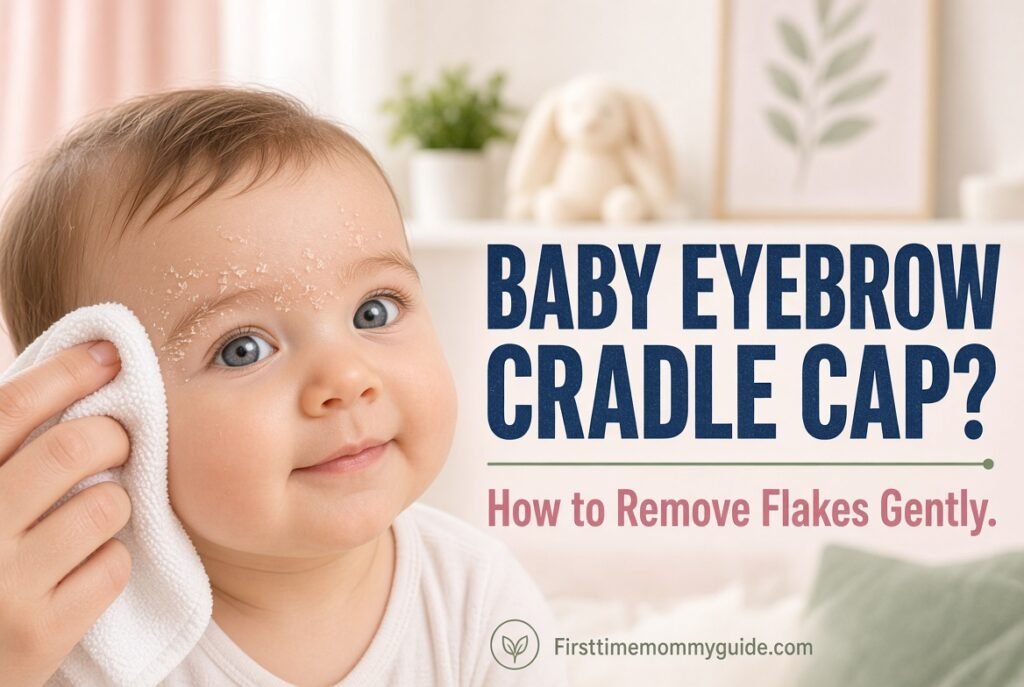
To remove cradle cap from your baby’s eyebrows, dab a small amount of a gentle oil or fragrance-free moisturizer on the flakes. Leave it for 15 to 30 minutes, then wipe softly with a warm, damp washcloth.
Wash the area with mild baby shampoo during bath time and rinse well. Pat the skin dry and repeat daily or every other day until the flakes clear.
Never pick or scrape stubborn scales. If the skin turns red, oozes, smells bad or seems to bother your baby, call your pediatrician.
Key Takeaways
- Cradle cap on baby’s eyebrows is common, harmless and not contagious.
- It is not caused by poor hygiene, allergies or anything you did wrong.
- Gentle oil, a soft washcloth and mild baby shampoo are the core home treatment.
- Keep every product away from your baby’s eyes.
- Do not pick the scales, because picking can break the skin and cause infection.
- Most cases fade within weeks to a few months, and many clear by the first birthday.
- See a doctor if you notice redness, oozing, a bad smell, spreading rash or heavy itching.
What Is Cradle Cap on a Baby’s Eyebrows?
Cradle cap is the everyday name for infantile seborrheic dermatitis. It creates oily, scaly patches that usually start on the scalp.
When the same patches appear on the brow area, parents often call it eyebrow cradle cap. It is the same condition, just in a different spot.
Medical Name and Meaning
Doctors call it seborrheic dermatitis because it appears in areas rich in oil glands. Those areas include the scalp, eyebrows, forehead, nose folds and behind the ears.
In babies, the condition is mild and temporary. It usually looks worse than it feels.
Why the Eyebrows Are a Common Spot
Eyebrows have plenty of tiny oil glands and a dense cluster of hairs. Oil and dead skin cells easily get trapped there.
The brow ridge also stays warm and a little damp from drool, spit-up and wipes. That combination helps flakes build up.
Is It the Same as Scalp Cradle Cap?
Yes, it is the same process. The scales on the eyebrows are often thinner, finer and more flaky than the thick crusts seen on the scalp.
Some babies have it only on their eyebrows. Others have it on the scalp, brows and behind the ears at the same time.
Cradle Cap on Baby’s Eyebrows Symptoms: What It Looks Like
Spotting eyebrow cradle cap early makes it much easier to treat. The signs are usually easy to recognize once you know what to look for.
Common Signs to Look For
- Yellow, white or brownish flakes stuck to the eyebrow hairs
- Greasy, waxy or crusty patches on the brow skin
- Mild pink skin under the scales
- Flakes that look like dandruff falling onto the cheeks
- Thin or sparse-looking brows when the crust is thick
Texture and Color
Early flakes often look dry and white. Over time they can turn yellow and greasy as they mix with natural skin oil.
Thick patches can look crusty and may lift away in sheets when softened with oil.
Does It Itch or Hurt?
Classic cradle cap does not bother babies. Your baby should act normally, feed well and sleep as usual.
If your little one scratches the brows, cries when touched or seems very uncomfortable, it may be eczema or another skin problem. Your pediatrician can sort this out.
Where Else Cradle Cap May Appear
Eyebrow cradle cap can show up alongside patches on other oily areas. Watch the places below:
- Scalp and soft spot
- Forehead and hairline
- Behind the ears
- Sides of the nose
- Neck folds, armpits and diaper area
Why Do Babies Get Cradle Cap on Their Eyebrows?
Experts do not know the exact cause of cradle cap. Several factors seem to work together.
Understanding them helps you stop blaming yourself and choose smarter care.
Overactive Oil Glands
Newborn skin can make a lot of sebum, the natural oil that coats skin. When too much oil builds up, dead skin cells stick together instead of falling off.
The result is the greasy, flaky layer you see on the brows.
Yeast on the Skin
Everyone has a harmless yeast called Malassezia living on their skin. In some babies, the immune system may react strongly to it.
That reaction can inflame the skin and increase flaking. It is not an infection you caught from anyone.
Hormones Passed From Mom
Some researchers think leftover hormones from pregnancy may rev up a newborn’s oil glands. This could explain why cradle cap often starts in the first weeks of life.
As those hormones fade, the oil production usually settles down.
Family History
Cradle cap can run in families. A baby may be more likely to get it if a parent had dandruff or seborrheic dermatitis.
This is a tendency, not a guarantee.
Weather and Environment
Dry, cold air and very warm, humid rooms can both make flaking more noticeable. Hats and sweaty skin folds may also trap oil.
Keeping the face clean and the room comfortable helps.
It Is Not Your Fault
Cradle cap is not caused by poor hygiene. It is also not caused by feeding choices, formula, breast milk or allergies.
You did nothing wrong, and you cannot give it to your baby by being too gentle or too thorough.
Is Cradle Cap on a Baby’s Eyebrows Contagious?
No, cradle cap is not contagious. Your baby cannot pass it to siblings, cousins or friends.
You also cannot catch it by kissing or holding your baby.
Why Parents Worry
The scales can look like a fungal or bacterial skin problem. That makes many parents worry about spreading it.
The yeast involved already lives on everyone’s skin, so there is nothing new to share.
Conditions That Are Contagious
Some rashes that look similar can spread. Impetigo, for example, is a bacterial skin infection that causes honey-colored crusts and is contagious.
If crusts look golden, wet or oozy, ask your pediatrician to take a look.
Is Cradle Cap on Eyebrows Harmful to Your Baby?
Cradle cap on eyebrows is not dangerous. It does not cause long-term skin damage or scarring.
It rarely troubles your baby and often bothers parents far more than the child.
When It Can Become a Problem
Problems can start if the scales get picked or scratched. Broken skin can let bacteria in and lead to infection.
Thick crusts can also trap moisture and make the area red and sore.
Effect on Sleep and Feeding
Eyebrow cradle cap does not normally affect sleep, feeding or mood. If your baby is fussy, itchy or off their feeds, something else may be going on.
Mention this to your pediatrician at the next visit.
How Common Is Cradle Cap on Baby’s Eyebrows and When Does It Start?
Cradle cap is one of the most common baby skin conditions. Estimates vary, but a large share of infants get it at some point in their first months.
It usually appears in the first few weeks and is most common in the first three months.
Typical Age of Onset
Most babies develop it between two weeks and three months of age. It can appear a little later in some infants.
Eyebrow flakes often show up after the scalp patches, but they may also come first.
Typical Age It Fades
Many babies outgrow cradle cap by 6 to 12 months. Some cases hang around into the second year.
A few babies develop a similar pattern again in toddlerhood or later childhood.
Cradle Cap vs Eczema on Baby’s Eyebrows: How to Tell the Difference
Eyebrow flakes can come from cradle cap or from eczema (atopic dermatitis). The two look alike at first glance, but they behave differently.
Knowing which one you are dealing with helps you pick the right care.
| Feature | Cradle Cap | Eczema |
|---|---|---|
| Typical age | First 3 months | Often after 2 to 3 months |
| Color of scales | Yellow, greasy or white | Dry, rough, red or pink |
| Itch | Usually none | Often very itchy |
| Baby’s mood | Calm and comfortable | Fussy, rubs or scratches |
| Common spots | Scalp, brows, ears, nose folds | Cheeks, elbows, knees, scalp |
| Skin feel | Oily and waxy | Dry and scaly |
| Treatment | Oil, gentle washing | Moisturizer and doctor-guided care |
Signs It Might Be Eczema
If the brows are red, rough and your baby keeps rubbing them, eczema is more likely. Flare-ups may also appear on the cheeks or body folds.
Cradle cap that continues past three months or is very itchy may actually be scalp or facial eczema, which needs different treatment.
What to Do If You Are Unsure
Take a clear photo in daylight and show your pediatrician. A doctor can usually tell the difference by looking and by asking how your baby is behaving.
Do not start steroid creams or medicated products without medical advice.
Other Skin Problems That Look Like Eyebrow Cradle Cap
Not every flaky brow is cradle cap. A few other conditions can mimic it.
Simple Dry Skin
Dry skin looks flat, dull and tight. It lacks the greasy yellow scale of cradle cap.
A mild moisturizer usually fixes it.
Impetigo
Impetigo causes honey-colored crusts and may weep fluid. It is contagious and needs medical treatment, sometimes with antibiotics.
Fungal Infection
A fungal rash tends to have a clear border and may spread outward. A doctor can confirm it with a quick exam.
Contact Dermatitis
Irritation from wipes, soaps, drool, scented lotions or a new detergent can make the brows red and flaky. Removing the trigger usually helps.
Baby Acne and Milia
Baby acne causes small red bumps, while milia are tiny white dots. Neither forms greasy scales, and both fade on their own.
What You Need Before You Start
Gather everything first so you can work calmly. A quiet, well-lit spot makes the job easier.
Supplies Checklist
- A gentle oil or fragrance-free moisturizer
- A soft, clean washcloth
- Cotton pads or soft gauze
- Mild, tear-free baby shampoo
- A soft baby brush or soft-bristled toothbrush
- A clean towel
- Warm water
Tips for Choosing Products
Pick products labeled fragrance-free, dye-free and made for babies. Fewer ingredients usually mean less risk of irritation.
Check ingredients for nut oils if nut allergies run in your family.
Patch Test First
Dab a tiny amount of any new product on your baby’s inner arm. Wait 24 hours and look for redness or bumps.
If skin reacts, do not use that product on the face.
How to Get Rid of Cradle Cap on Baby’s Eyebrows Step by Step
This simple routine works for most babies. Stay patient, because the flakes may take several days to loosen.
Step 1: Wash Your Hands and Settle Your Baby
Clean hands protect your baby’s skin. Trim your nails short so you do not scratch.
Lay your baby on a soft surface with the head supported. Feeding time or a calm moment after a nap works well.
Step 2: Apply a Small Amount of Oil
Put a few drops of oil on your fingertip or a cotton pad. Dab it gently onto the flaky patches along the brow.
Use only enough to coat the scales. More oil does not work faster.
Step 3: Let It Soak for 15 to 30 Minutes
The oil softens the scales and helps them loosen. Keep your baby supervised and the oil away from the eyes.
Some doctors suggest leaving oil on for a longer time on the scalp, but the eyebrow area is delicate, so shorter is safer.
Step 4: Wipe Softly With a Warm Washcloth
Dampen a clean washcloth with warm water and wring it out. Wipe along the direction the hairs grow, using very light strokes.
Loose flakes should slide away. If they stay put, stop and try again tomorrow.
Step 5: Use a Soft Brush on Loosened Scales
A soft baby brush or clean soft toothbrush can lift flakes that have already come loose. Use gentle, short strokes.
Stop at once if the skin looks red or your baby fusses.
Step 6: Wash With Mild Baby Shampoo
Oil left on the skin can make cradle cap worse, so washing it out matters. Lather a small amount of tear-free baby shampoo on the scalp and brow area.
Keep suds away from the eyes and rinse thoroughly with a cup or damp cloth.
Step 7: Rinse and Pat Dry
Rinse until no soap or oil remains. Pat the face dry with a soft towel rather than rubbing.
Dry brow skin folds well, because trapped moisture can irritate.
Step 8: Repeat Until Clear
Repeat the routine daily or every other day. Most parents see improvement within a week or two.
If nothing changes after about two weeks, check in with your pediatrician.
How Often Should You Treat Cradle Cap on Baby’s Eyebrows?
Treatment frequency depends on how thick the flakes are. Start slow and watch how your baby’s skin reacts.
| Severity | Suggested Routine |
|---|---|
| Mild flaking | Oil and wipe once a day or every other day |
| Moderate crusting | Oil, wipe and wash daily for up to two weeks |
| Stubborn or thick | Keep gentle routine and call your pediatrician |
| Clear skin | Wash with mild shampoo two to three times a week |
Do Not Overdo It
Washing and scrubbing too often can dry and irritate the skin. Gentle and steady beats strong and fast.
Keep Going Briefly After It Clears
Once flakes are gone, continue gentle washing for a few more days. This helps keep oil from building up again.
Best Oil for Cradle Cap on Baby’s Eyebrows
Oil is the heart of most home treatments. It softens crusts so they lift off without force.
Not every oil suits every baby, so choose carefully.
| Option | Why Parents Use It | Things to Know |
|---|---|---|
| Coconut oil | Soft, light and widely used | Use refined or virgin, fragrance-free, patch test first |
| Mineral oil or baby oil | Gentle and stable, rarely irritates | Choose fragrance-free versions |
| Petroleum jelly | Softens thick crusts | Wash out well, since it can feel heavy |
| Jojoba oil | Closely resembles skin oil | Patch test first |
| Plain moisturizer | Simple and mild | Pick fragrance-free baby formula |
| Olive oil | Common household option | Some experts caution it may irritate skin barrier |
| Almond oil | Light and soothing for many | Avoid if nut allergy runs in family |
| Essential oils | Often marketed as natural | Not recommended for babies |
What Experts Generally Suggest
Health sources such as Plunket and other pediatric guides suggest massaging a simple oil or moisturizer into the scales before washing. Mild baby shampoo then removes the oil and loosened skin.
Mayo Clinic notes that leaving oil on the skin may make cradle cap worse, so always wash it out.
How Much Oil to Use
A pea-sized drop is plenty for both brows. Too much oil can clog pores and make the skin greasy again.
Coconut Oil for Cradle Cap on Baby’s Eyebrows

Coconut oil is among the most popular home options. Many parents like its mild scent and smooth feel.
It is not a medical treatment, but it can soften scales effectively.
How to Use It
Warm a tiny amount between your fingers until it melts. Dab it along the brow and avoid the eyelid.
Wait 15 to 30 minutes, wipe gently and wash with baby shampoo.
Possible Downsides
Coconut oil can feel heavy and may irritate a few babies. Stop if you see redness, bumps or increased flaking.
Choose a clean, unscented product and store it in a cool place.
Petroleum Jelly and Mineral Oil for Eyebrow Cradle Cap
Petroleum jelly and mineral oil are old favorites for softening crusts. Some baby-care guides recommend massaging petroleum jelly into the scales before bathing.
They lock in moisture and loosen flakes effectively.
When They Work Best
These work well for thick, stuck-on scales. A thin layer is enough.
Wash them off thoroughly afterward so they do not trap sweat or oil against the skin.
Cautions
Some sources suggest avoiding heavy petroleum-based products if they seem to worsen flaking in your baby. Every baby reacts differently.
If skin looks worse after use, switch products and talk with your pediatrician.
Olive Oil, Almond Oil and Jojoba Oil: What to Know
Many parents reach for pantry oils first. A few can work, but each has a catch.
Olive Oil
Olive oil is easy to find, but some skin experts caution it may weaken the baby’s skin barrier. If you use it, keep the amount small and wash it off well.
Almond Oil
Sweet almond oil is gentle, but it comes from a nut. Skip it if your family has a nut allergy or your pediatrician advises caution.
Jojoba Oil
Jojoba oil is actually a liquid plant wax that resembles human skin oil. Many parents find it light and non-greasy.
Patch test first, as with any new product.
Oils to Avoid
Skip tea tree, lavender, peppermint and other essential oils. They can irritate delicate baby skin and should not go near the eyes.
Baby Shampoo and Cradle Cap Shampoo for Eyebrows
Washing is the second half of the process. Shampoo removes extra oil and carries loosened flakes away.
Mayo Clinic suggests that shampooing your baby’s hair every few days can help prevent cradle cap, using a baby shampoo unless your doctor recommends something stronger.
Choosing a Mild Baby Shampoo
Pick a tear-free, fragrance-free formula. Avoid harsh cleansers, strong scents and anything marketed for adults.
How to Use Shampoo Near the Eyebrows
Use a small dab on your fingertips. Work it softly over the brow skin and rinse with a damp washcloth rather than pouring water over the face.
Tilt your baby’s head slightly back so suds run away from the eyes.
What About Cradle Cap Shampoos?
Over-the-counter cradle cap shampoos exist, but many are made for the scalp. Check the label and ask your pediatrician before using one near the eyes.
Anything that gets into the eyes should be rinsed out right away with clean water.
Medicated Treatments for Cradle Cap on Baby’s Eyebrows
Most babies never need medicated products. Mild cases clear with oil and gentle washing.
When cradle cap is stubborn, inflamed or spreading, a doctor may step in with something stronger.
Medicated Shampoo
Mayo Clinic says that if cradle cap does not stop or seems serious, your baby’s doctor may suggest a medicated shampoo, lotion or other treatment. Some contain ingredients such as zinc pyrithione or ketoconazole.
Never use these near the eyes without your pediatrician’s direct advice.
Anti-Yeast Cream
Because yeast plays a role, doctors sometimes prescribe an anti-yeast cream for the brows. It targets the yeast that may trigger inflammation.
Apply exactly as directed and no more.
Mild Corticosteroid Cream
If the crusts are red and inflamed, a doctor might prescribe a mild steroid cream, sometimes combined with an anti-yeast ingredient. Skin around the eyes is thin, so strength and timing matter.
Do not use adult hydrocortisone on your baby’s face unless a doctor tells you to.
Why Not Self-Prescribe?
Medical News Today notes that creams carry risks that may outweigh benefits for a benign condition. A baby’s skin absorbs products more easily than adult skin.
A short call to your pediatrician is safer than guessing.
Soft Brush, Washcloth and Fingertips: Gentle Removal Tools
The tool matters as much as the product. Harsh tools can scratch or irritate brow skin.
Warm Washcloth
A soft washcloth is the safest tool for the brows. Healthline suggests using a gentle washcloth to massage the skin under and around the eyebrows while cleaning your baby’s face.
Use circular, light movements and never scrub.
Soft Baby Brush
A soft baby brush can lift loosened flakes. Use it on the scalp and only very lightly on the brow area.
Soft Toothbrush
A clean, extra-soft infant toothbrush gives you precision on small patches. Keep strokes light and stop if skin reddens.
Fingertips
Your clean fingertips are often the best tool. Gently rub in small circles and feel for how stuck the scales are.
If they resist, stop and try again after the next oil soak.
Tools to Avoid
- Combs with sharp teeth
- Tweezers or scissors
- Fingernails
- Metal or plastic scrapers
- Rough cloths or scrubbing pads
Can You Use Breast Milk for Cradle Cap on Baby’s Eyebrows?
Many parents try breast milk because it is free and gentle. It is a common question in parenting groups.
There is no strong evidence that breast milk cures cradle cap.
What We Know
Breast milk is safe for your baby, but it can leave a sticky film on skin. Milk residue may also feed yeast or bacteria if left on warm skin folds.
Better Choices
Gentle oil, washing and patience have more support from pediatric guidance. If you still want to try it, wipe it off and rinse well afterward.
Natural Home Remedies for Cradle Cap on Baby’s Eyebrows
Natural does not always mean safe for babies. Some remedies help, while others cause trouble.
Use this list as a guide and check with your pediatrician if unsure.
| Remedy | Verdict |
|---|---|
| Gentle oil soak | Generally safe and helpful |
| Warm damp washcloth | Safe and helpful |
| Soft brushing | Safe when light |
| Fragrance-free moisturizer | Safe and helpful |
| Regular baby shampoo | Safe and helpful |
| Breast milk | Unproven |
| Apple cider vinegar | Not recommended, can burn skin |
| Lemon juice | Not recommended, can irritate |
| Baking soda paste | Not recommended, can dry skin |
| Essential oils | Not recommended |
| Honey on the skin | Not recommended near the face |
Why Acidic and Strong Remedies Are Risky
Vinegar, lemon juice and baking soda are strong for newborn skin. They can sting, redden or burn.
Skip internet hacks that sound harsh, even if they claim to be natural.
Stick With What Is Simple
A gentle routine done consistently beats any exotic remedy. Simple care is also easier to keep up on busy days.
Mistakes to Avoid When Treating Cradle Cap on Baby’s Eyebrows
Small mistakes can make flaky brows worse. Most of them come from being too eager.
Picking or Scratching Scales
Picking can tear healthy skin and invite infection. It can also pull out brow hairs.
Let oil do the loosening instead.
Leaving Oil on Overnight
Mayo Clinic warns that leaving oil on may make cradle cap worse. It can trap dead skin and feed yeast.
Wash it off after the soak.
Using Adult Dandruff Shampoo
Adult products are stronger and can sting or burn near the eyes. Use only what your pediatrician approves.
Scrubbing Too Hard
Hard scrubbing irritates sensitive skin. Reddened brows then look worse and may become sore.
Washing Too Often With Harsh Soap
Over-washing can dry out the skin. Stick with mild baby shampoo and lukewarm water.
Using Too Many Products at Once
Layering oils, creams and shampoos makes it hard to know what is working. Change one thing at a time.
Ignoring Signs of Infection
Redness, pus, fluid, swelling or a bad smell are not normal. Call your pediatrician promptly if you see them.
Daily Care Routine for Eyebrow Cradle Cap
A steady routine keeps flakes under control. Here is a simple plan you can follow.
| Time | What to Do |
|---|---|
| Before bath | Dab a small amount of oil on brow flakes |
| During bath | Wash scalp and brows with mild baby shampoo |
| After bath | Pat dry and wipe loosened flakes with soft cloth |
| Once dry | Apply thin layer of fragrance-free moisturizer if skin feels dry |
| Daily | Check brows for redness, oozing or spreading |
| Weekly | Review progress with a quick photo |
Make It a Calm Moment
Talk or sing softly while you work. A relaxed baby makes the process faster and gentler.
Keep a Simple Log
Jot down what you used and how the skin looked. This helps if you need to show your pediatrician.
How Long Does Cradle Cap on Baby’s Eyebrows Last?
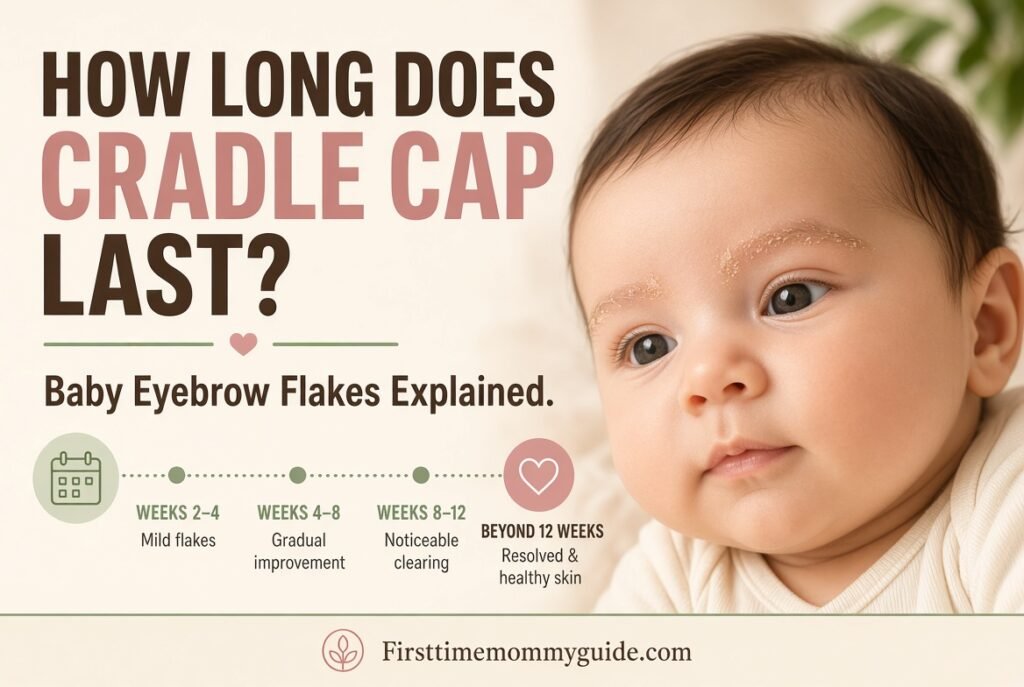
Most cases of cradle cap clear on their own within weeks to a few months. Mayo Clinic notes it usually clears up in weeks or a few months.
Some babies keep flakes longer, especially if they have a family history of dandruff or eczema.
Typical Timeline
| Stage | What You May See |
|---|---|
| Week 1 to 2 | Flakes loosen with gentle routine |
| Week 2 to 4 | Brows look clearer, small patches remain |
| Month 2 to 3 | Most mild cases fade |
| 6 to 12 months | Many stubborn cases disappear |
When It Lasts Longer
If flakes persist despite two weeks of consistent care, see your pediatrician. A doctor can rule out eczema or other issues and suggest next steps.
Why Does Cradle Cap Keep Coming Back?
Cradle cap can return after treatment. That does not mean you did something wrong.
Some babies simply have oil glands that stay active for months.
Possible Reasons
- Oil glands still producing extra sebum
- Skin yeast reacting again
- Washing less often than needed
- Heavy products left on the skin
- Cold, dry weather
- Hats or bedding that trap sweat
How to Keep It Away
Continue mild washing a few times each week. Rinse well and keep brow skin dry.
Brushing hair gently with a soft brush can also help prevent buildup on the scalp.
Do Not Panic
A returning patch is usually mild. Repeat the gentle routine and call your doctor if it worsens.
Does Cradle Cap Cause Eyebrow Hair Loss?
Cradle cap does not cause permanent hair loss. Thick crusts can make hairs fall out with the scales, but they grow back.
Think of it as a temporary change that settles once the skin calms down.
Why Hairs Seem to Disappear
Crusts can glue hairs together and lift them out when removed. Picking makes this worse.
Gentle oil softening reduces breakage.
Will Brows Grow Back?
Yes, brows and scalp hair return once the skin heals. Wonderbaby and other parenting sources agree it is not permanent.
If patches stay bald for months or look scarred, ask your pediatrician.
Cradle Cap on Baby’s Face: Eyebrows, Eyelids, Nose and Ears
Cradle cap does not always stop at the brows. It can spread to other oily areas of the face.
Eyelids
Flakes along the lash line are delicate territory. Do not apply oil or shampoo close to the eyes.
Ask your pediatrician for advice if the eyelids are red, crusty or swollen.
Sides of the Nose
Greasy flakes often collect in the creases near the nose. Wipe with a warm damp cloth and a tiny dab of moisturizer.
Behind the Ears
This is another favorite spot. Clean it gently during bath time and dry the fold well.
Forehead and Hairline
Patches along the hairline often join with eyebrow flakes. Treat them together with the same gentle routine.
Neck Folds and Diaper Area
Cradle cap can also appear in skin folds and the diaper area. If it covers large areas of the body, talk with your pediatrician.
Cradle Cap on Eyebrows in Newborns, Older Babies and Toddlers
Age changes how cradle cap looks and how you should respond. Here is a quick comparison.
| Age | What to Expect | Care Tips |
|---|---|---|
| Newborn to 3 months | Most common time for onset | Gentle oil, washing, call doctor early if widespread |
| 3 to 6 months | Often fading, may linger | Keep routine, watch for eczema |
| 6 to 12 months | Usually clearing | Continue mild washing |
| 1 year and older | Less typical | Ask your pediatrician for evaluation |
Newborns Under 3 Months
Newborn skin is thin and absorbs products quickly. Use the smallest amount of the mildest product.
If cradle cap covers large areas of the body, or your baby is not feeding or gaining weight well, see a doctor.
Older Babies
Older babies may scratch more because their hands are more coordinated. Keep nails short and consider soft mittens if scratching bothers the skin.
Toddlers and Young Children
Flaky brows in toddlers are more likely to be dandruff-type seborrheic dermatitis or eczema. Your pediatrician can guide proper treatment.
How to Prevent Cradle Cap on Baby’s Eyebrows
You cannot always prevent cradle cap. Still, simple habits lower the chance of heavy buildup.
Wash Regularly With Mild Shampoo
Mayo Clinic suggests shampooing your baby’s hair every few days. This removes extra oil before it hardens into scales.
Rinse Well
Soap residue can irritate skin. Rinse the scalp and brows thoroughly after each wash.
Brush Gently
A soft baby brush helps lift loose skin cells. Use it after bath when hair is damp.
Keep the Face Clean and Dry
Wipe away drool, milk and spit-up around the brows. Dry skin folds so moisture does not linger.
Dress Baby Comfortably
Avoid hats or bedding that cause heavy sweating. Breathable cotton is a good choice.
Skip Preventive Oil
Applying oil every day to healthy skin will not prevent cradle cap. It can leave residue that traps flakes.
Use oil only when you are actively softening scales, then wash it out.
Signs of Infection in Eyebrow Cradle Cap
Cradle cap is not usually infected. Still, broken skin can pick up bacteria.
Watch for these changes and act quickly.
Warning Signs
- Oozing or weeping fluid
- Yellow or green pus
- Bad smell from the patch
- Spreading redness or swelling
- Warm skin around the area
- Fever or poor feeding
Why It Matters
The Royal Children’s Hospital in Melbourne notes that if cradle cap starts to ooze or smell, the area may be infected and your baby should be assessed. Infections may need antibiotics.
Do not wait if your baby looks unwell.
Impetigo Warning
Impetigo can start on the face and form golden crusts. Unlike cradle cap, it is contagious, so keep towels separate and call your pediatrician.
When to See a Doctor for Cradle Cap on Baby’s Eyebrows
Most cases need no medical care. Still, certain signs mean it is time for a professional opinion.
Call Your Pediatrician If
- The flakes do not improve after about two weeks of gentle care
- The skin is red, swollen or very itchy
- The patch oozes fluid or smells
- Cradle cap spreads to the face, body or diaper area
- Your baby seems uncomfortable or sleeps poorly
- Cradle cap persists past 12 months
- Your baby is very young and the rash is widespread
- You are unsure whether it is cradle cap
Seek Urgent Care If
- Your baby has a fever with the rash
- Your baby is lethargic, refusing feeds or breathing with difficulty
- The skin looks blistered, severely swollen or spreading fast
Trust your instincts. A quick check is always better than worrying at home.
Severe Widespread Rash
Medical News Today notes that babies with cradle cap across the body who are not gaining weight or have diarrhea should see a doctor. This pattern can point to another condition.
What to Expect at the Pediatrician Visit
A doctor can usually diagnose cradle cap just by looking. No special tests are normally needed.
Questions the Doctor May Ask
- How long has the cradle cap been there?
- How often do you shampoo your baby’s hair?
- What products have you tried?
- Does your baby scratch or seem bothered?
- Is there a family history of eczema, dandruff or allergies?
Possible Treatments
- Reassurance and continued gentle care
- A medicated shampoo or lotion
- A mild steroid or anti-yeast cream for a short time
- Antibiotics if infection is present
How to Prepare
Bring a list of products you have used. Photos of the brows over time can help the doctor see progress.
Safety Tips: Protecting Your Baby’s Eyes and Skin
The eyebrow area sits right next to the eyes. A little extra care goes a long way.
Keep Products Away From the Eyes
Apply oil only to the brow bone and keep it off the lids. Use cotton pads rather than pouring or spraying.
If Product Gets in the Eye
Rinse the eye with clean lukewarm water. Call your pediatrician if redness or discomfort continues.
Watch for Allergic Reactions
Redness, hives, swelling or fussiness after using a product are warning signs. Stop at once and call a doctor if symptoms are strong.
Supervise Oil Soaks
Never leave your baby alone while oil is on the skin. Oil can slip toward the eyes or onto clothing and surfaces.
Check Product Safety
Choose products designed for babies. Avoid those with fragrance, alcohol, dyes or essential oils.
Keep Nails Short
Short nails protect your baby from scratching and protect you from accidentally scraping skin.
Myths About Cradle Cap on Baby’s Eyebrows
A lot of advice online is outdated or wrong. Clearing up the myths helps you avoid unnecessary worry.
Myth: It Means Your Baby Is Dirty
Cradle cap has nothing to do with cleanliness. Even the most careful parents see it.
Myth: It Is an Allergy
Medical News Today states that allergies do not cause cradle cap. It is a skin condition tied to oil and yeast.
Myth: You Should Never Wash the Baby’s Head
You can and should wash the scalp and brows gently. Washing helps remove excess oil and flakes.
Myth: It Spreads to Others
Cradle cap is not contagious. It cannot be passed on to siblings or friends.
Myth: Strong Treatments Work Faster
Harsh products often irritate skin and make flakes worse. Gentle care works best.
Myth: It Always Needs Treatment
Many cases clear without any treatment. Treatment is mainly for comfort and appearance.
Is Cradle Cap Dandruff?
Cradle cap and dandruff are close relatives. Both are forms of seborrheic dermatitis, which involves oil, yeast and skin flaking.
The difference is mostly age. Cradle cap is the name used in babies, while dandruff appears later in life.
Why Adult Dandruff Products Are Not for Babies
Adult dandruff shampoos contain stronger active ingredients. These can irritate a baby’s skin and eyes.
Always ask your pediatrician before using any medicated shampoo.
Does Cradle Cap on Eyebrows Hurt a Baby’s Vision or Eyes?
Eyebrow cradle cap does not harm vision. The flakes sit on the skin above the eye and do not enter the eye normally.
Occasionally, flakes may fall into the eye and cause mild watering. Rinse with clean water if this happens.
Eyelid Redness
If the eyelids look red, crusty or swollen, see your pediatrician. This may be a different issue, such as blepharitis or an eye infection.
Cradle Cap on Eyebrows and Baby’s Soft Spot Care
Many parents fear touching the soft spot, or fontanelle. This fear can lead to under-washing the scalp, which lets oil build up.
Is It Safe to Wash the Soft Spot?
Yes, it is safe to wash and gently brush the scalp, including the soft spot. The membrane is tougher than it looks.
Use light pressure and avoid pressing hard.
Photographing and Tracking Progress
Tracking helps you know whether your routine is working. It also gives your doctor useful information.
How to Take Useful Photos
- Use soft natural daylight
- Take the photo before treatment
- Include a close-up and a wider view
- Repeat weekly from the same angle
What to Note
Write down the products used, how often you used them and any change in redness or flaking. A short note on your phone is enough.
Tips From Real-World Parent Experience
Parents who have handled eyebrow cradle cap often share the same lessons. These tips may help you feel more confident.
Patience Pays Off
Flakes may look worse for a day or two as they loosen. That is normal as long as the skin is not red or sore.
Work in Short Sessions
Do a little at a time rather than trying to remove everything at once. Short sessions are easier on both of you.
Choose the Right Moment
Pick a time when your baby is calm and fed. Avoid treating a hungry or overtired baby.
Do Not Compare Babies
Every baby clears at a different pace. A friend’s baby may finish in weeks while yours takes months, and both are normal.
Be Kind to Yourself
Cradle cap is not a reflection of your parenting. Experts agree it is very common, and nothing you did caused it.
Handling Thick, Stubborn Crusts on the Eyebrows
Some babies develop thick crusts that refuse to budge. Force never helps here.
A slower approach protects the skin and brow hairs.
Use Repeated Short Soaks
Apply oil in the morning and again before bath. Wipe softly after each soak.
Layers of crust usually lift a little at a time.
Soften With a Warm Compress
After oiling, hold a warm, damp washcloth against the brow for a minute. The warmth helps loosen scales gently.
Make sure the cloth is warm, not hot, and keep it clear of the eyes.
Know When to Stop
If scales do not lift easily, leave them. Try again later or ask your pediatrician for advice.
Leaving a few flakes is far better than irritating the skin.
Ingredients to Look For and Avoid in Baby Products
Reading labels takes only a minute and prevents many skin reactions. Simple formulas are usually best.
| Look For | Avoid |
|---|---|
| Fragrance-free | Added perfume or fragrance |
| Dye-free | Artificial colors |
| Tear-free baby cleansers | Strong adult shampoos |
| Short ingredient lists | Essential oils |
| Hypoallergenic claims from trusted brands | Alcohol-heavy formulas |
| Pediatrician-approved products | Menthol or camphor |
Why Fragrance Matters
Perfume is one of the most common causes of skin irritation in babies. Choosing unscented products removes a big risk.
Ask Before You Switch
If your baby has eczema-prone skin, ask your pediatrician which cleansers and moisturizers suit best.
Laundry, Bedding and Clothing Tips for Flaky Brows
Fabric and detergent touch your baby’s face all day. Small changes can calm irritated skin.
Wash Baby Items Gently
Use a mild, fragrance-free detergent for bedding, hats and swaddles. Rinse well so no residue stays on the fabric.
Change Sleep Surfaces Often
Flakes and oil can transfer to sheets and swaddles. Wash fitted sheets and cloths frequently.
Choose Soft Hats
If your baby wears a hat, pick soft, breathable cotton. Avoid tight bands across the brow that trap heat.
Cradle Cap on Baby’s Eyebrows in Winter and Summer
Season can change how flaky brows look. Weather affects both oil and moisture in the skin.
Cold, Dry Months
Dry indoor air can make flakes look worse. A cool-mist humidifier and a fragrance-free moisturizer may help.
Hot, Humid Months
Sweat can trap oil on the skin. Keep the face clean and dry, and avoid heavy layers.
Understanding Why Gentle Care Works
Cradle cap management follows one simple idea. Soften the scales, remove them softly, then wash away extra oil.
Softening
Oil and warm water loosen the glue-like mix of oil and dead cells. This lets flakes slide off.
Removing
Soft wiping or light brushing lifts loosened flakes. Forceful scraping is unnecessary.
Washing
Mild baby shampoo removes leftover oil and helps stop new buildup. Rinsing is the final step that keeps skin clear.
Can Cradle Cap on Baby’s Eyebrows Be Cured?
Cradle cap does not have a one-time cure. It is a temporary condition that fades as your baby’s skin matures.
Treatment manages the flakes and keeps your baby comfortable while the skin settles.
What Treatment Can Do
Gentle care removes existing scales and reduces buildup. It can also lower the chance of a quick return.
It cannot switch off the oil glands that caused the flakes in the first place.
Why Time Is Part of the Answer
As your baby grows, oil production and the skin’s reaction to yeast usually calm down. That is why most babies outgrow it.
Patience, plus steady care, is the real long-term plan.
Bath Time Routine for Babies With Eyebrow Cradle Cap
Bath time is the easiest moment to work on flaky brows. Warm water already softens the scales.
Before the Bath
Dab a small amount of oil on the brow flakes and wait. Gather the washcloth, shampoo and towel within reach.
During the Bath
Wet the head with a cup of lukewarm water. Lather a tiny amount of baby shampoo on the scalp and brow area, then rinse by wiping with a damp cloth.
After the Bath
Pat the face dry, especially the brow and nose folds. Apply a thin layer of fragrance-free moisturizer only if the skin looks dry.
How Often to Bathe
Newborns do not need a full bath every day. A few baths a week plus gentle face wipes is often enough, and your pediatrician can advise on what suits your baby.
Can Feeding Choices Cause Cradle Cap on Eyebrows?
Parents often wonder whether breast milk, formula or a new food caused the flakes. There is no proof that feeding choices cause cradle cap.
Mayo Clinic states that the cause of cradle cap is not known.
Breastfeeding Moms
You do not need to change your diet because of cradle cap. Cutting foods without medical advice can leave you short of nutrients.
Formula-Fed Babies
Formula does not cause cradle cap either. Keep feeding as planned and talk to your pediatrician if you suspect a food reaction.
When Food Might Matter
If your baby has itchy, red, spreading skin, vomiting or diarrhea, ask your doctor about eczema or a food allergy. Those need medical guidance rather than guesswork.
Sharing the Routine With Partners, Grandparents and Caregivers
Many people help care for a baby. Everyone should follow the same gentle method.
Agree on the Basics
- Use only the approved oil and shampoo
- Keep products away from the eyes
- Never pick the flakes
- Wash the oil out after the soak
- Call the pediatrician if the skin looks red or oozes
Write It Down
A short note on the fridge keeps instructions clear. It also prevents well-meaning caregivers from trying strong home remedies.
What to Do If Eyebrow Cradle Cap Returns After It Cleared
A comeback is common and usually mild. It does not mean the earlier treatment failed.
Restart the Gentle Routine
Repeat the oil, wipe and wash steps for a few days. Most flare-ups clear faster the second time because the habit is already set.
Review Your Products
Check whether you changed soap, detergent, wipes or lotion. A new product can trigger flaking.
Ask for Help If It Keeps Returning
Repeated flare-ups are worth mentioning to your pediatrician. A doctor can check for eczema and suggest a longer-term plan.
Eyebrow Cradle Cap Action Plan: A Simple Checklist
Use this short plan when you want everything in one place.
- Wash your hands and trim your nails.
- Patch test any new product on the inner arm.
- Dab a small amount of gentle oil on the brow flakes.
- Wait 15 to 30 minutes while supervising your baby.
- Wipe softly with a warm, damp washcloth.
- Wash with mild, tear-free baby shampoo.
- Rinse well and pat dry.
- Repeat daily or every other day for up to two weeks.
- Check daily for redness, oozing, smell or spreading.
- Call your pediatrician if there is no improvement or if any warning sign appears.
Keep the Goal Realistic
The goal is calm, comfortable skin, not perfectly flake-free brows overnight. Small, steady progress is the sign that the plan is working.
Cradle Cap on Baby’s Eyebrows: Quick Reference Table
Use this summary when you need a fast reminder.
| Question | Short Answer |
|---|---|
| Is it harmful? | No, it is usually harmless |
| Is it contagious? | No |
| Best home steps? | Gentle oil, soft wipe, mild shampoo, rinse |
| How long does it last? | Weeks to months, often gone by age 1 |
| Should you pick it? | No |
| Can you leave oil overnight? | No, wash it out |
| Do you need medicine? | Only if stubborn, inflamed or infected |
| When to call a doctor? | Redness, oozing, smell, itching or no improvement after two weeks |
Trusted Sources for Cradle Cap Information
Reliable medical sources can help you double-check advice. Look for guidance from pediatric and hospital organizations.
Where to Read More
- Mayo Clinic health library on cradle cap
- Royal Children’s Hospital Melbourne kids health information
- Plunket (New Zealand) cradle cap and hair guidance
- Healthline’s guide to cradle cap on eyebrows
- Medical News Today cradle cap overview
- Your own pediatrician, who knows your baby best
This article is general information and not a substitute for medical advice. Always speak with your baby’s doctor about any concerns.
Also Read
- Can Teething Cause a Low Grade Fever in Babies? Temperature Range, Symptoms and Remedies 2026
- Newborn Grunting in Sleep Normal or Should I Call the Doctor? A Complete Parent Guide 2026
- Breastfed Baby Hasn’t Pooped in 5 Days but Passing Gas: Is It Normal? Causes and Safe Relief 2026
- Is It Normal for Umbilical Cord Stump to Bleed After Falling Off? What Parents Should Know 2026
- Baby Won’t Eat? Common Reasons, Fixes & When to Worry 2026
- Baby Sleep Guide for New Moms: Safe Sleep & Schedules (2026)
- Baby Sleep, Honestly: The Complete Baby Sleep Guide
- Baby Essentials Checklist: 0 to 3 Months
- Newborn Coming Home Outfit: What to Pick, What to Skip, and How to Keep Baby Safe
- Hospital Bag Checklist for Baby: The Complete Packing List 2026
- How Long Does Newborn Cluster Feeding Last Each Night? A Complete Guide for New Parents 2026
- Signs of Cluster Feeding: Complete Guide for New Parents 2026
- Bottle Feeding Schedule Newborn: Complete Age-by-Age Guide 2026
- Low Milk Supply Signs and Fixes: What Every Breastfeeding Mom Should Know 2026
- When Can My Baby Start Eating Real Food? Age, Signs & First Foods 2026
- Baby Food Guide: Starting Solids 6 to 12 Months
- Baby Food Chart 6 to 12 Months: Free Month-by-Month Feeding 2026
- Fruit Purees for 6 Month Old Babies: Safe Recipes & Guide (2026)
- Best Vegetable Purees for Baby: A Complete Age-by-Age Guide 2026
- Best Baby Food Combinations: A Complete Age-by-Age Guide for Parents 2026
- Baby Food Combo Purees: The Complete Age-by-Age Guide 2026
- Pregnancy Guide: Month by Month
Frequently Asked Questions (FAQs)
How do you get rid of cradle cap on baby’s eyebrows fast?
There is no instant fix, but a daily routine works quickly for many babies. Dab a little gentle oil on the flakes, wait 15 to 30 minutes, wipe softly and wash with mild baby shampoo.
Most parents see improvement within one to two weeks. Never pick the scales to speed things up.
What is the safest way to remove cradle cap from baby’s eyebrows?
The safest method is the softest. Use a small amount of oil or fragrance-free moisturizer, a warm damp washcloth and mild baby shampoo.
Keep every product away from the eyes and avoid scrubbing or scraping.
Can I use coconut oil on my baby’s eyebrows for cradle cap?
Yes, many parents use a tiny amount of coconut oil to soften scales. Patch test it first and keep it off the eyelids.
Wash it out after the soak, because leftover oil can make cradle cap worse.
Should I leave oil on my baby’s eyebrows overnight?
No. Mayo Clinic says leaving oil on can make cradle cap worse. Oil can trap dead skin and feed yeast.
Apply it, let it soak for a short time, then wash it off with baby shampoo.
Is cradle cap on eyebrows normal?
Yes, it is normal and very common. Cradle cap often spreads from the scalp to the eyebrows, ears and forehead.
It is harmless and usually fades on its own.
Is cradle cap on baby’s eyebrows contagious?
No. Your baby cannot pass it to siblings, and you cannot catch it from your baby.
Wash your hands as usual, but there is no need to isolate your child.
What causes cradle cap on baby’s eyebrows?
Experts do not know the exact cause. Overactive oil glands, a reaction to normal skin yeast and leftover pregnancy hormones may all play a part.
It is not caused by poor hygiene or allergies.
How long does cradle cap on baby’s eyebrows last?
Most cases clear within weeks to a few months. Many babies are free of it by their first birthday.
Some linger longer, especially if eczema or dandruff runs in the family.
Does cradle cap cause eyebrow hair loss?
It can make hairs fall out with the scales, but the loss is temporary. Brows grow back once the skin heals.
Gentle oil softening and avoiding picking reduce hair loss.
Can I pick off cradle cap from my baby’s eyebrows?
Please don’t. Picking can break the skin, cause infection and pull out brow hairs.
Soften the scales with oil and let them slide off during gentle wiping instead.
What is the best shampoo for cradle cap on eyebrows?
A mild, tear-free, fragrance-free baby shampoo is the best starting point. Use only a small amount on the brow area and rinse well.
Ask your pediatrician before using any medicated shampoo near the eyes.
Can I use anti-dandruff shampoo on my baby’s eyebrows?
Not without medical advice. Adult dandruff shampoos are strong and can irritate your baby’s skin and eyes.
Your pediatrician can recommend a safe product and show you how to use it.
Is it cradle cap or eczema on my baby’s eyebrows?
Cradle cap is usually greasy, yellow and not itchy. Eczema is more often dry, red and itchy, and it can make your baby fussy.
If you are unsure, show your pediatrician a clear photo.
Can breast milk cure cradle cap on eyebrows?
There is no strong evidence that breast milk cures cradle cap. It is safe but can leave a sticky film on the skin.
Gentle oil, washing and patience are better supported.
Does cradle cap on eyebrows itch or hurt?
Typically no. Cradle cap does not bother most babies.
If your baby scratches or seems uncomfortable, ask your doctor to check for eczema or another condition.
Why does cradle cap keep coming back on my baby’s eyebrows?
Oil glands may stay active for months, so flakes can return. Yeast on the skin can also trigger a new flare-up.
Regular gentle washing and thorough rinsing help keep it away.
Can cradle cap spread from the scalp to the eyebrows?
Yes. Cradle cap can appear on the scalp, forehead, eyebrows, ears, nose folds and skin creases.
It is the same condition in different oily areas, not an infection spreading from place to place.
Do I need to see a doctor for cradle cap on my baby’s eyebrows?
Most cases do not need a doctor. Call your pediatrician if the skin is red, oozing, smelly or very itchy.
Also call if the flakes do not improve after about two weeks of gentle care.
What are signs that cradle cap on eyebrows is infected?
Signs include oozing fluid, pus, a bad smell, spreading redness, swelling and warmth. Fever or poor feeding can also appear.
See a doctor promptly, since infections may need treatment.
Can I use hydrocortisone cream on my baby’s eyebrows?
Only if your doctor says so. The skin around the eyes is thin and sensitive.
A doctor may prescribe a mild steroid cream for a short time if the area is inflamed.
Can I use baby oil for cradle cap on eyebrows?
Fragrance-free baby oil or mineral oil can soften scales. Use a tiny amount and wash it out afterward.
Avoid scented oils, which can irritate your baby’s skin.
How often should I wash my baby’s eyebrows if they have cradle cap?
Daily or every other day is fine while treating active flakes. Once the skin clears, washing a few times a week with mild shampoo helps keep it away.
Over-washing can dry the skin.
Should I use a brush on my baby’s eyebrows?
A soft baby brush or extra-soft toothbrush can lift loosened flakes. Use very light strokes and stop if the skin reddens.
A damp washcloth is often gentler for the brow area.
Is it safe to wash my baby’s soft spot with cradle cap?
Yes. It is safe to wash and gently brush the scalp, including the soft spot.
Use light pressure and avoid pressing down hard.
Can cradle cap on eyebrows affect my baby’s eyes?
It does not harm vision. Flakes may occasionally fall into the eye and cause watering.
If the eyelids look red, crusty or swollen, ask your pediatrician to check.
Can I prevent cradle cap on my baby’s eyebrows?
You cannot always prevent it. Regular mild shampooing, thorough rinsing and gentle brushing lower the chance of buildup.
Do not apply oil daily to healthy skin, since it can trap flakes.
Will cradle cap on baby’s eyebrows go away on its own?
Yes, in most cases. Cradle cap usually clears without treatment, often within weeks to months.
Gentle care simply speeds up the process and improves appearance.
Is cradle cap on baby’s eyebrows a sign of allergy?
No. Medical News Today states that allergies do not cause cradle cap.
If your baby also has itching, hives or other symptoms, talk to your doctor about possible allergies or eczema.
Can I use olive oil on my baby’s eyebrows for cradle cap?
Some parents do, but some skin experts caution that olive oil may irritate the skin barrier. If you try it, use a tiny amount and wash it off well.
Safer options include fragrance-free mineral oil or a gentle moisturizer.
What should I never put on my baby’s cradle cap?
Avoid essential oils, vinegar, lemon juice, baking soda and adult dandruff products. Skip anything scented or harsh.
These can sting, burn or cause a rash on delicate baby skin.
Conclusion
Learning how to get rid of cradle cap on baby’s eyebrows comes down to patience and gentleness. Soften the flakes with a little oil, wipe them away with a warm damp cloth and wash with mild baby shampoo.
Avoid picking, strong products and anything that could reach your baby’s eyes. Most cases fade within weeks or months, and the brows grow back normally.
Call your pediatrician if you see redness, oozing, a bad smell, heavy itching or no improvement after about two weeks. With steady care and a little time, your baby’s eyebrows will look clear and healthy again.

Dilawar Mughal
Founder and editor, First Time Mommy Guide
I research every guide against what the NHS, the AAP and the WHO publish, then write it in plain English — because most new parents are reading with one hand free, not comparing clinical guidelines. I'm not a doctor or a midwife. Every health claim on this site is sourced and linked so you can check it yourself, and anything urgent belongs with your health visitor or GP, not a blog.