General information, not medical advice. Every baby is different — if anything worries you, speak to your midwife, health visitor or GP rather than waiting.
Sleep, or the lack of it, is often the hardest part of the newborn stage.
This baby sleep guide for new moms covers what’s actually normal, how sleep changes month by month, and the safe sleep rules pediatricians want every parent to know.
Table of Contents
How Much Sleep Do Babies Really Need?
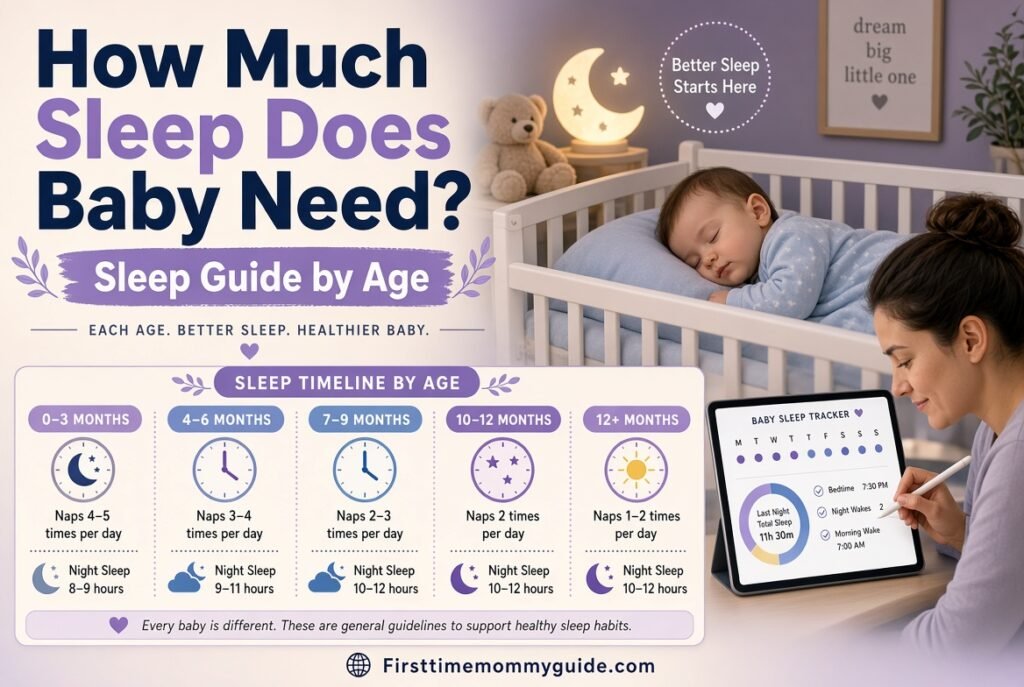
Newborns sleep 14 to 17 hours a day, but almost never in one long stretch.
By 4 months, many babies can manage longer nighttime stretches, though frequent waking is still completely normal.
By 6 to 12 months, most babies need around 12 to 15 hours of sleep across nighttime and naps combined.
Baby Sleep by Age: Quick Reference Table
| Age | Total Sleep | Typical Naps | Longest Night Stretch |
|---|---|---|---|
| 0–2 months | 14–17 hours | 4–6 short naps | 2–4 hours |
| 3–4 months | 12–16 hours | 3–4 naps | 4–6 hours |
| 5–6 months | 12–15 hours | 2–3 naps | 5–8 hours |
| 7–9 months | 12–14 hours | 2 naps | 6–10 hours |
| 10–12 months | 11–14 hours | 1–2 naps | 8–11 hours |
Safe Sleep Guidelines Every New Mom Should Know
The American Academy of Pediatrics recommends these core safe sleep practices to reduce SIDS risk.
- Always place your baby on their back to sleep, for every sleep, every time.
- Use a firm, flat sleep surface, like a crib or bassinet with a fitted sheet.
- Keep the sleep space bare, with no pillows, blankets, bumpers, or soft toys.
- Room-share, don’t bed-share, keeping baby’s sleep space in your room for at least the first 6 months.
- Avoid overheating, dressing baby in light layers appropriate for the room temperature.
What Is a Wake Window, and Why It Matters
A wake window is the amount of time a baby can comfortably stay awake between sleeps.
Newborns typically manage 45 to 60 minutes awake, while a 12-month-old may comfortably stay awake for 3 to 4 hours.
Watching for tired cues, like eye-rubbing or fussiness, alongside wake windows helps you catch the right moment to start winding down.
Building a Simple Bedtime Routine

- Start winding down 20 to 30 minutes before bedtime, dimming lights and lowering noise.
- Follow the same steps each night, like a bath, a feed, and a short book.
- Keep the room cool and dark, ideally between 68°F and 72°F.
- Put baby down drowsy but awake when possible, to build independent settling skills.
- Stay consistent, since predictability is what actually teaches sleep, not any single trick.
Common Sleep Challenges in the First Year
| Challenge | What’s Happening | What Helps |
|---|---|---|
| Frequent night waking | Normal feeding needs, especially under 6 months | Feed on demand, don’t rush to “fix” it too early |
| The 4-month sleep regression | A real shift in sleep cycles, not a phase to fight | Stick to routine, expect some disruption |
| Short naps | Common under 6 months as sleep cycles mature | Consistent nap timing helps more than it feels like it will |
| Bedtime resistance | Overtiredness or an inconsistent routine | Move bedtime slightly earlier, tighten the routine |
Gentle Ways to Encourage Better Sleep
- Use white noise to mask household sounds and signal sleep time.
- Offer a dream feed around 10 to 11 PM for some babies, to help extend the first stretch.
- Keep daytime and nighttime feeds clearly different, calm and quiet at night.
- Watch for overtiredness, which often makes falling asleep harder, not easier.
Sleep Training: Is It Right for Your Family?
Sleep training is optional, not required, and every family should choose what feels right for them.
Some parents use gradual methods, gently increasing the time before comforting a fussing baby.
Others prefer a no-tears approach, offering comfort without picking the baby up each time, or simply follow their baby’s cues without formal training at all.
Pros and Cons of Common Sleep Approaches
| Approach | Pros | Cons |
|---|---|---|
| Gradual check-ins | Structured, often works within days | Involves some crying, which some parents find hard |
| No-tears method | Gentle, minimal crying | Can take longer to show results |
| Follow baby’s cues | No formal method needed | Less predictable, may take longer to settle into a rhythm |
When to Talk to Your Pediatrician About Sleep
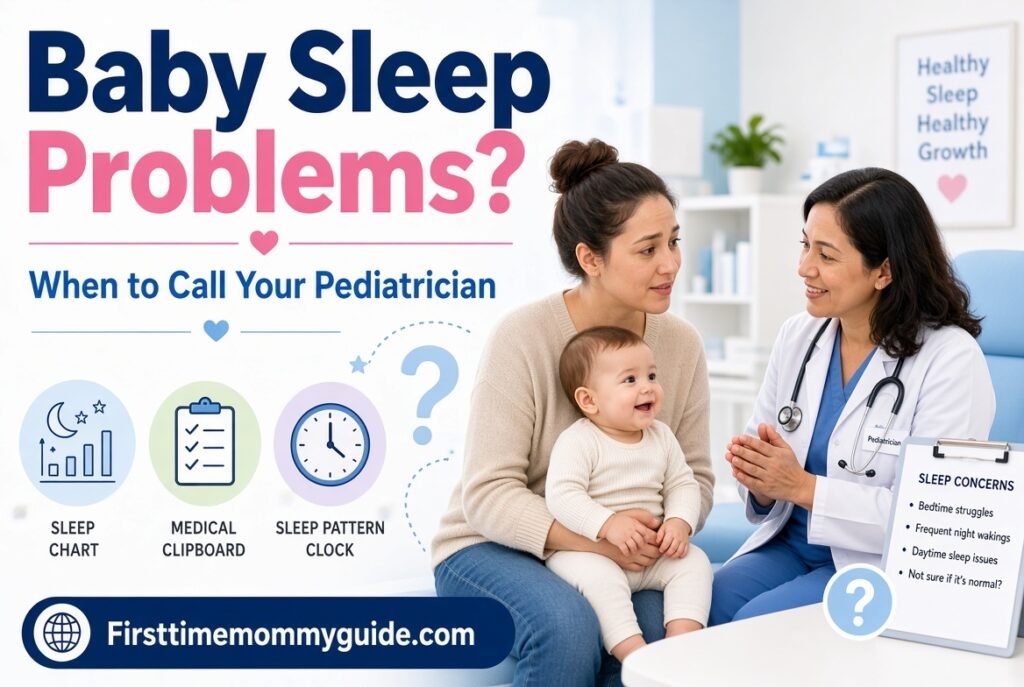
- Your baby snores loudly or seems to gasp during sleep.
- Sleep problems come with poor weight gain or feeding difficulties.
- You suspect reflux, allergies, or another medical issue affecting sleep.
- You’re feeling overwhelmed and need extra support, which is always worth raising too.
Also Read:
- Baby Sleep Guide: What’s Normal at Each Age
- Baby Won’t Eat? Common Reasons, Fixes & When to Worry
- When Can My Baby Start Eating Real Food? Age, Signs & First Foods
- First Foods for Baby at 6 Months: A Complete Guide to Starting Solids
- First Food for Baby 6 Months: Best Options, Safety Tips & Feeding Guide
- Baby Food Chart 6 to 12 Months: Free Month-by-Month Feeding
- Baby Food Guide, 6–12 Months (Full Guide)
- Best Vegetable Purees for Baby: A Complete Age-by-Age Guide
- Baby Food Combo Purees: The Complete Age-by-Age Guide
- Best Baby Food Combinations: A Complete Age-by-Age Guide
- Sweet Potato Puree for Baby: Easy Recipe, Age Guide & Storage Tips
- Apple Puree for Baby: Easy Recipe & Safety Guide
- Blueberry Puree for Baby: Easy Recipe & Choking Safety Guide
- Baby Essentials Checklist: What New Parents Actually Need
- Baby Essentials Checklist 0–3 Months (Complete Guide)
- Baby Essentials, 0–3 Months (Full Guide)
- Baby Shopping List for First-Time Moms: The Complete 2026 Checklist
- Hospital Bag Checklist for Baby: The Complete Packing List
- How Many Newborn Outfits Do You Need? A Complete Size-by-Size Guide
- Newborn Coming Home Outfit: What to Pick, What to Skip, and How to Keep Baby Safe
- Pregnancy Guide Month by Month: Symptoms & Baby Growth
Frequently Asked Questions (FAQs)
How much sleep does a newborn need?
Newborns typically need 14 to 17 hours of sleep a day, spread across many short stretches rather than one long period.
When do babies start sleeping through the night?
Many babies can manage a 6 to 8 hour stretch by 4 to 6 months, though this varies widely between babies.
Is it safe to co-sleep with my baby?
Room-sharing without bed-sharing is what the AAP recommends for at least the first 6 months to lower SIDS risk.
What is the 4-month sleep regression?
It’s a real, temporary shift in sleep cycles around 4 months that often causes more frequent night waking.
Should I wake my baby for feeds during the night?
For most healthy, growing babies, this isn’t necessary past the newborn stage, but always follow your pediatrician’s specific guidance.
What temperature should a baby’s room be for sleep?
Around 68°F to 72°F is generally considered a safe, comfortable range for a baby’s sleep environment.
Is sleep training necessary?
No, sleep training is a personal choice, and many babies settle into good sleep patterns without any formal method.
Can white noise help my baby sleep better?
Yes, many parents find white noise helps mask household sounds and signals that it’s time to sleep.
What are wake windows and why do they matter?
Wake windows are the comfortable stretch of time a baby can stay awake between sleeps, and using them helps prevent overtiredness.
Is it normal for my baby to take short naps?
Yes, short naps are common under 6 months as a baby’s sleep cycles are still maturing.
What should not be in my baby’s crib?
Pillows, loose blankets, bumpers, and soft toys should all be kept out of the sleep space for safety.
How do I know if my baby’s sleep problem needs a doctor?
Loud snoring, gasping, poor weight gain, or feeding trouble alongside sleep issues are worth raising with your pediatrician.
Does a bedtime routine really make a difference?
Yes, a consistent, predictable routine is one of the most effective tools for helping babies learn to settle.
Can teething affect baby sleep?
Yes, teething discomfort can temporarily disrupt sleep, and it usually settles once the tooth comes through.
What is a dream feed and does my baby need one?
A dream feed is a feed given while baby is still mostly asleep, often used to try extending the first night stretch, though not every baby needs one.
Conclusion
Every baby’s sleep looks a little different, and most of what feels alarming at 2 AM is actually completely normal.
Focus on safe sleep basics, a consistent routine, and age-appropriate expectations, and the rest tends to fall into place with time.
For a deeper month-by-month breakdown, explore the full Baby Sleep Guide next.

Dilawar Mughal
Founder and editor, First Time Mommy Guide
I research every guide against what the NHS, the AAP and the WHO publish, then write it in plain English — because most new parents are reading with one hand free, not comparing clinical guidelines. I'm not a doctor or a midwife. Every health claim on this site is sourced and linked so you can check it yourself, and anything urgent belongs with your health visitor or GP, not a blog.