General information, not medical advice. Every baby is different — if anything worries you, speak to your midwife, health visitor or GP rather than waiting.
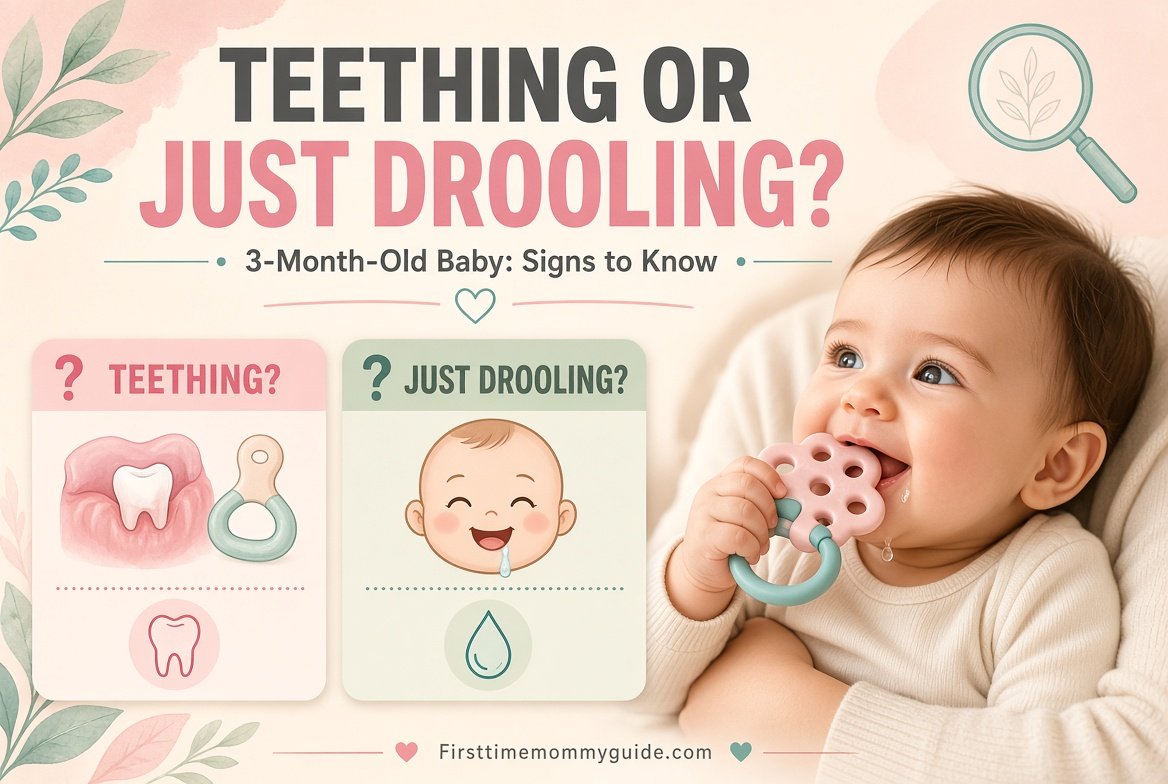
If you are asking, “is my 3 month old teething or just drooling,” the most likely answer is drooling. Most babies get their first tooth around 6 months, and a bib-soaking stream of saliva at 3 months is usually a normal developmental phase.
That said, a small number of babies do start teething early. The tricky part is that drooling, chewing on fists, fussiness and swollen-looking gums can look the same in both cases.
Table of Contents
Is a 3 Month Old Teething or Just Drooling?
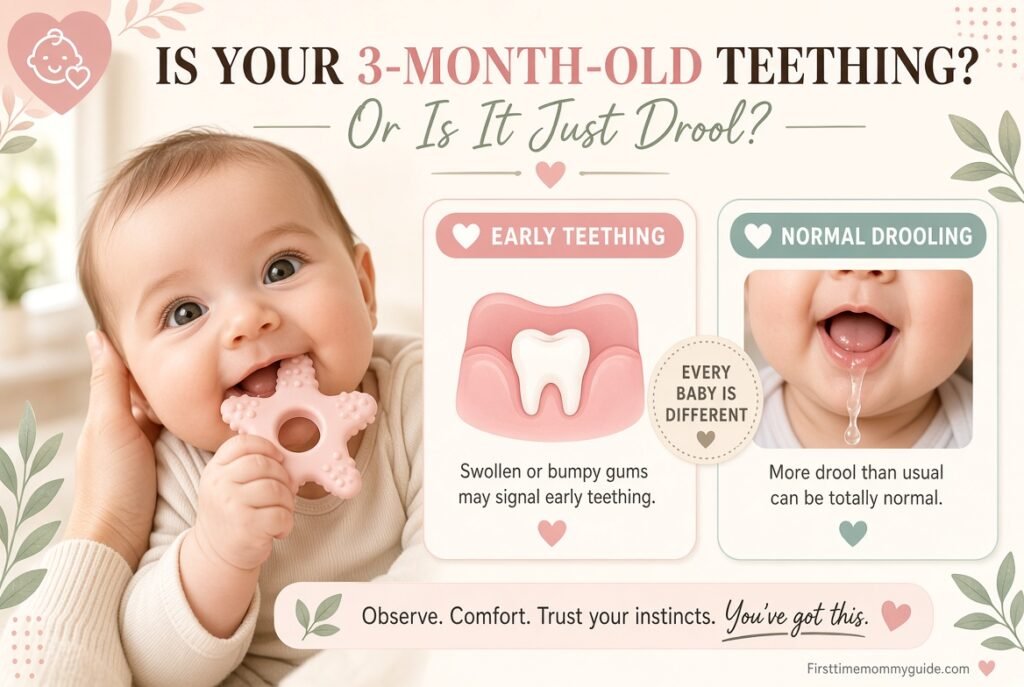
A 3 month old who is drooling a lot is most likely going through normal development, not teething. Saliva production increases in the first few months, and babies this age cannot yet swallow it efficiently.
Teething at 3 months is possible but uncommon. The first tooth usually appears around 6 months, although the range is wide.
If you see a tooth, a firm white edge under the gum or a clearly swollen ridge, early teething is more likely. A fever, vomiting, diarrhea or a cough is not caused by teething and needs a medical check.
Key Takeaways
- Drooling usually begins around 2 to 4 months, long before most first teeth.
- Most babies get their first tooth around 6 months, with a normal range of about 3 to 14 months.
- Hand chewing and fussiness at 3 months are often signs of normal mouth exploration.
- Teething does not cause a true fever, diarrhea or a runny nose.
- A fever of 100.4°F (38°C) or higher in a young baby needs prompt medical advice.
- Safe soothing options include a clean finger gum massage and a chilled, not frozen, teether.
- Skip teething gels with benzocaine, teething necklaces and homeopathic tablets.
Why Is My 3 Month Old Drooling So Much?
Heavy drooling often starts between 2 and 4 months. It can feel sudden, because the front of your baby’s clothes may be soaked within an hour.
The cause is simple and mostly mechanical.
Saliva Glands Are Waking Up
Your baby’s salivary glands become more active in the first months of life. Saliva helps with digestion and protects the mouth.
At first, only small amounts are made. By 3 months, the supply has often increased noticeably.
Swallowing Skills Are Still Immature
Adults swallow saliva automatically without thinking. Babies this age are still learning the muscle control needed to do it smoothly.
Extra saliva simply escapes over the lower lip. That is why drool often looks constant.
Hands and Mouth Are Becoming a Team
Around 3 months, many babies discover their hands. They bring fists and fingers to the mouth, which stimulates saliva and spreads drool.
This is a healthy sign that your baby is exploring and coordinating.
The Mouth Is the Main Learning Tool
Babies learn about the world by mouthing things. Mouthing builds oral motor skills used later for feeding, babbling and speech.
More mouth activity means more saliva on show.
Can a 3 Month Old Really Be Teething?
Yes, it is possible, but it is not the usual story. Some babies do begin teething as early as 3 months.
Experts say the normal range for the first tooth is wide. It runs from roughly 3 months to 14 months of age.
What Is Typical?
Mayo Clinic says babies often begin teething by about age 6 months. The two bottom front teeth usually come first, followed by the two top front teeth.
Healthline notes that most babies get their first tooth between 4 and 7 months.
What Early Teething Means
Early teething does not signal a problem. Teething age often runs in families, so ask relatives when their babies got their first teeth.
If a parent teethed early, your baby may too.
Symptoms Can Start Before the Tooth
Teething symptoms can begin days or even weeks before a tooth breaks through the gum. That means a baby may seem to be teething without any visible tooth.
This is one reason parents feel unsure at 3 months.
When Do Babies Usually Start Teething? A Typical Timeline
Knowing the usual order helps you judge whether your baby is on track. Timing varies, and a few months either way is still normal.
| Tooth | Typical Age It Appears |
|---|---|
| Lower central incisors | About 6 to 10 months |
| Upper central incisors | About 8 to 12 months |
| Upper lateral incisors | About 9 to 13 months |
| Lower lateral incisors | About 10 to 16 months |
| First molars | About 13 to 19 months |
| Canines | About 16 to 23 months |
| Second molars | About 23 to 33 months |
Why Ranges Look Different Between Sources
Different charts use slightly different averages. All of them agree that timing varies from child to child.
Girls may get teeth slightly earlier than boys, but the difference is small.
What Is Not a Concern
A baby with no tooth at 7 or 9 months is usually fine. If there is still no tooth by around the first birthday, mention it to your pediatrician or dentist.
Signs of Teething at 3 Months: What Is Real
Teething has a few reliable signs. Most are mild, and they often come and go.
Common Teething Signs
- Increased drooling
- Swollen, tender or slightly red gums
- Chewing or gnawing on fists, toys or fabric
- Mild fussiness or irritability
- Rubbing the face or cheeks
- Slightly disturbed sleep
- A mild drool rash around the mouth or chin
How Mayo Clinic Describes It
Mayo Clinic lists excessive drooling and crankiness as classic signs. It also notes a slight rise in temperature but no true fever.
Why One Sign Is Not Enough
Drooling alone does not prove teething. If you see two or more signs together, plus changes in the gums, teething becomes more likely.
Signs It Is Probably Just Drooling
Plain developmental drooling has its own pattern. It tends to look happy and steady rather than uncomfortable.
Typical Signs of Normal Drooling
- Constant wet chin and damp clothing
- A cheerful, curious mood
- Hands going to the mouth often
- Normal feeding and sleeping
- Gums that look normal and pink
- No swelling or redness along the gum line
The Mood Test
Teething babies often seem cranky, especially in the evening. A baby who drools heavily but stays calm and content is probably just developing.
The Gum Test
Healthy gums look smooth and even. If your baby’s gums look the same on both sides and nothing feels hard under the surface, teething is less likely.
Teething vs Drooling at 3 Months: Side-by-Side Comparison
Use this table to compare what you are seeing. No single row decides the answer, but the overall pattern helps.
| What You Notice | More Likely Just Drooling | More Likely Teething |
|---|---|---|
| Mood | Happy, curious | Cranky, clingy, especially at night |
| Gums | Normal, pink, smooth | Swollen, tender, red or bulging |
| Chewing | Fist sucking and hand exploration | Intense gnawing on anything firm |
| Sleep | Normal for age | More waking than usual |
| Feeding | Normal | May pull away or fuss at the breast or bottle |
| Drool rash | Sometimes | Often, from constant wetness |
| Duration | Weeks to months, comes in waves | Symptoms may come and go for days |
| Visible tooth | None | White edge may appear later |
| Fever or illness | None | Not caused by teething, so look for another cause |
How to Read the Table
If most of your answers fall in the left column, plain developmental drooling is the best explanation. If most fall in the right column, early teething may be starting.
When the picture is mixed, wait a week or two and watch for changes.
Other Reasons a 3 Month Old Drools More
Drooling has more than one cause. Teething gets the blame, but several everyday things can play a part.
Normal Mouth Exploration
Mouthing hands and toys is the most common reason. It stimulates saliva and spreads it across the chin.
Hunger Cues
Some babies drool, smack their lips and suck on fists when hungry. Check the clock and offer a feed if it is close to feeding time.
Looking at Food
Babies who watch others eat may drool in anticipation. This is more common closer to the age of starting solids.
Nasal Congestion
A stuffy nose can make babies breathe through the mouth. Mouth breathing lets saliva pool and spill out.
A Cold
Colds can increase mucus and saliva. If your baby also has a cough, fever or trouble feeding, call your pediatrician.
Reflux and Spit-Up
Spit-up can look like drool and mix with it. Frequent spitting, arching or crying during feeds should be discussed with your doctor.
Tongue-Tie or Oral Differences
Rarely, a tight tongue or lip attachment can affect swallowing and increase drooling. Feeding trouble, clicking sounds or poor weight gain are the clues to mention to your doctor.
Is Drooling at 3 Months a Developmental Milestone?
Yes. Increased drooling is often part of normal growth. It goes hand in hand with other skills that appear around the same time.
What Else Happens Around 3 Months
- Smiling and cooing in response to you
- Better head control
- Hands opening and reaching toward the mouth
- Longer periods of alertness
- Following objects with the eyes
- Early attempts to grab or swipe at toys
Why Drool Fits the Picture
As babies gain control of their hands and mouth, they practice more. The extra saliva is a side effect of that practice.
How Long Does It Last?
Drooling often continues for months. It usually lessens as swallowing control improves, although it may rise again during teething.
How to Check Your Baby’s Gums at Home
A quick, gentle look can tell you a lot. Do it when your baby is calm and the room is well lit.
Step 1: Wash Your Hands
Clean hands protect your baby’s mouth. Short nails also help prevent scratches.
Step 2: Choose a Calm Moment
Pick a moment after a feed or nap. A hungry or overtired baby will not cooperate.
Step 3: Look First
Gently lift the lip and look at the gum line. Compare the left and right sides, and note any color change or swelling.
Step 4: Feel With a Clean Finger
Rub the gum gently with a clean fingertip. A hard ridge, a bump or a rough edge under the surface can suggest a tooth is moving closer.
Step 5: Note What You Find
Write down what you see and the date. Photos help if you need to show your pediatrician.
What Do Teething Gums Look Like?
Teething gums change as a tooth moves upward. The appearance depends on how close the tooth is.
Early Stage
The gum may look slightly puffy or red. It can feel warm or tender, and your baby may flinch when you touch it.
Closer to Eruption
You may see a white or pale ridge beneath the surface. The gum can look stretched or shiny.
Bluish or Bruised Bump
Occasionally a soft, bluish or purple bump appears over a tooth. It is a fluid-filled swelling that often settles on its own.
Ask your pediatrician or dentist if it looks large or your baby seems in pain.
When the Tooth Breaks Through
A small white edge appears. Lower front teeth usually come first.
What Is Not Teething
Pus, a bad smell, spreading redness or white patches that do not wipe off are not typical. Call your doctor if you see them.
Teething Myths: What Teething Does Not Cause
Many parents blame teething for every symptom at this age. Medical sources say that is not accurate.
Fever
Mayo Clinic says researchers do not link teething to a fever. A slight rise in temperature may occur, but a true fever points to another cause.
Diarrhea
Diarrhea is not a teething symptom. Babies may swallow more saliva, but that does not explain watery stools.
Runny Nose and Cough
Healthline notes that a runny nose, productive cough, vomiting and high fever are not associated with teething. These signs suggest a cold or another illness.
Severe Crying
A baby who cries inconsolably for hours is not simply teething. Look for other causes and call your doctor.
Ear Pulling
Babies pull on ears to explore or soothe themselves. Ear pulling with fever or fussiness may mean an ear infection, so ask your doctor.
Can Teething Cause a Low Grade Fever in a 3 Month Old?
A tiny bump in body temperature may happen, but a true fever does not come from teething. Doctors usually define a fever as a temperature of 100.4°F (38°C) or higher.
For a deeper explanation, read our guide on can teething cause a low grade fever in babies.
Why 3 Months Is Different
Young babies have immature immune systems. A fever at this age can signal an infection that needs prompt attention.
What to Do
Take your baby’s temperature the way your pediatrician recommends. Call your doctor right away if it is 100.4°F or higher, and do not assume teething is the reason.
Never Guess at Medicine
Ask your doctor before giving any fever or pain medicine. Dosing depends on your baby’s weight and age, and mistakes can be dangerous.
Drool Rash and Teething Rash: How to Care for Your Baby’s Skin
Constant wetness can irritate your baby’s chin, cheeks and neck. The skin may look red, rough or bumpy.
Medicinenet describes a mild rash around the mouth caused by excessive drooling. It is common and manageable.
How to Treat Drool Rash
- Wipe drool gently with a soft, clean cloth
- Pat the skin dry instead of rubbing
- Apply a thin layer of fragrance-free barrier ointment
- Change wet shirts and bibs often
- Keep skin folds dry
What to Avoid
Skip scented wipes, perfumed lotions and rough cloths. They can worsen redness.
When a Rash Needs Attention
Call your pediatrician if the rash spreads, blisters, oozes or comes with a fever. These are not typical for a drool rash.
How to Soothe a 3 Month Old Who May Be Teething
If your baby seems sore, gentle comfort is enough in most cases. Mayo Clinic says teething can usually be handled at home.
Try one method at a time so you can see what helps.
Gum Massage With a Clean Finger
Wash your hands, then gently rub your baby’s gums with a fingertip. The light pressure can ease tenderness.
Keep it short and stop if your baby pulls away.
A Cold, Damp Washcloth
Dampen a clean washcloth, chill it in the fridge and let your baby mouth the corner. Stay close and watch the whole time.
Do not freeze it, because frozen items can be too hard.
A Chilled Teething Ring
Mayo Clinic suggests a cold spoon or a chilled, not frozen, teething ring. Cold soothes sore gums without being too hard.
Check the age label, and choose a one-piece solid teether made for young babies.
Extra Cuddles and Distraction
Comfort goes a long way. Hold your baby, sing, walk around or change the scenery.
Many teething fusses ease with attention and a calm voice.
Keep Feeds Comfortable
If your baby fusses at the breast or bottle, try shorter, calmer feeds. Offer a gum rub before feeding.
Call your doctor if your baby refuses feeds or has fewer wet diapers.
Pain Relief Medicine
Ask your pediatrician before giving any pain reliever to a 3 month old. A doctor can advise whether it is needed and give the right amount for your baby’s weight.
Teething Products to Avoid at 3 Months
Some popular teething products are risky. Others are simply unproven.
| Product | Why to Skip It |
|---|---|
| Gels with benzocaine or lidocaine | Mayo Clinic advises against them, and benzocaine carries safety warnings for young children |
| Teething necklaces, bracelets or anklets | Choking and strangulation risk |
| Homeopathic teething tablets | Benefits not proven, and safety concerns have been raised |
| Frozen teethers or frozen washcloths | Too hard and can bruise gums |
| Alcohol on the gums | Not safe for babies |
| Hard biscuits or foods | Choking risk, and not suitable at this age |
| Liquid-filled teethers | Can leak or burst |
| Amber necklaces | Same choking and strangulation hazard |
What Mayo Clinic Says
Mayo Clinic notes that the benefits of topical gels and teething tablets have not been demonstrated. It also says to avoid teething medications containing benzocaine or lidocaine, and teething necklaces, bracelets or anklets.
A Simple Rule
If a product claims to numb a baby’s mouth or hangs around a baby’s neck, leave it on the shelf.
How to Choose a Safe Teether for a Young Baby
Not every teether suits a baby this young. Safety comes first.
What to Look For
- Made from solid, one-piece silicone or firm rubber
- Free from BPA and phthalates
- Easy for small hands to grip
- Big enough that it cannot reach the back of the throat
- Free from small parts that can come loose
What to Avoid
Skip teethers with liquid inside, detachable pieces or long cords. Never tie anything around your baby’s neck or hand.
Cleaning and Care
Wash teethers with warm soapy water after use. Check often for cracks or tears and replace them if damaged.
Supervise Every Use
At 3 months, your baby should always be watched while mouthing a teether. Remove it when your baby falls asleep.
How to Manage Drool Day to Day
Even if it is just drooling, you will want a plan. A few small habits keep your baby comfortable and dry.
Use Soft Bibs
Choose absorbent cotton bibs. Change them as soon as they are soaked, since wet fabric can irritate the neck.
Keep Burp Cloths Handy
Keep a clean cloth in every room. Dab drool away before it runs onto the neck and chest.
Change Wet Clothing
Wet collars can rub the skin and cause redness. Keep spare onesies nearby.
Protect the Skin
A thin layer of fragrance-free ointment on the chin and cheeks can act as a barrier. Reapply after wiping.
Wash Laundry Gently
Use a mild, fragrance-free detergent for bibs and clothes. Rinse well so no residue is left on fabric that touches the face.
Teething, Drooling and Safe Sleep
Drool does not change safe sleep rules. Follow them even when your baby is fussy.
Keep the Crib Bare
Place your baby on the back on a firm, flat sleep surface. Keep soft items, pillows and loose bedding out of the crib.
Do Not Leave Teethers in the Crib
A teether can become a hazard once your baby is asleep. Take it out before bed.
Handle Wet Sheets
Drool can soak the sheet near your baby’s face. Use a fitted sheet and change it when damp.
Never add extra pillows or rolled towels to soak up drool.
Night Waking
If your baby wakes more at night, try a gum rub and quiet cuddles. Keep the room dim and calm.
For more help, see our baby sleep guide for new moms.
Does Teething Affect Feeding at 3 Months?
Some babies feed differently when their gums are sore. At this age, most feeding changes are due to other reasons.
Breastfed Babies
Teething babies may fuss at the breast or pull away. Nipple biting is unusual at 3 months because babies do not have teeth.
Cluster feeding and growth spurts are more common explanations for changes in feeding. See our guide on signs of cluster feeding.
Bottle-Fed Babies
Bottle-fed babies may also fuss with the nipple. Try a slower flow and a calm feeding spot.
Our bottle feeding schedule newborn guide explains typical patterns by age.
When Feeding Trouble Is a Warning
Mayo Clinic says to contact the doctor if teething seems to interfere with eating or drinking. Fewer wet diapers, refusing feeds or signs of dehydration need prompt advice.
Is It Teething or Something Else? Look-Alike Phases at 3 to 4 Months
Many things happen between 3 and 4 months. Several can mimic teething.
Growth Spurts
A growth spurt can bring extra hunger and fussiness. It often lasts a few days.
Cluster Feeding
Babies may nurse often during certain hours, usually in the evening. Our guide on how long newborn cluster feeding lasts each night can help.
Sleep Changes
Around 3 to 4 months, sleep patterns begin to mature. Babies can wake more often even without any pain.
Developmental Leaps
Babies take in more of their surroundings. New awareness can bring clinginess and fussiness.
Overtiredness
A baby who stays up too long may cry and rub the face. Check awake windows before blaming teething.
Hand Chewing and Fist Sucking: Teething or Normal Exploration?
Seeing your baby gnaw on fists is a classic worry. In most cases, it is normal.
Why Babies Chew Their Hands
Hands are always available, and sucking is soothing. Mouthing also helps babies learn how their own body works.
How to Tell the Difference
A calm baby sucking happily on fingers is exploring. A baby gnawing hard, crying and refusing to be put down may be uncomfortable.
Keep Hands Clean
Wash your baby’s hands gently with a damp cloth. Keep nails short to avoid scratches.
Natal and Neonatal Teeth: When a Baby Is Born With a Tooth
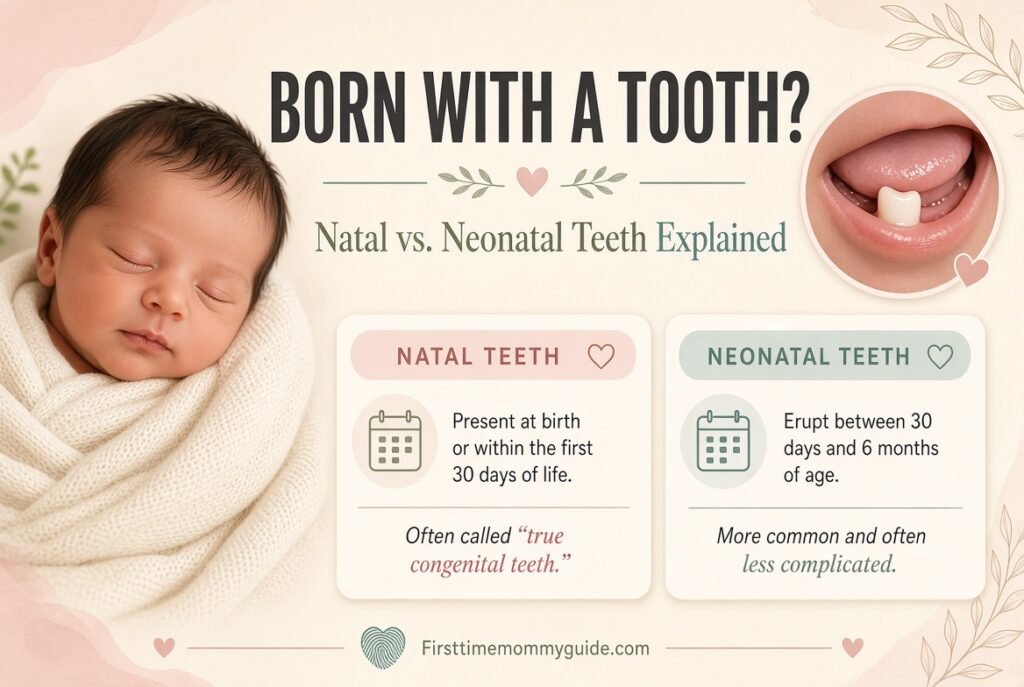
Rarely, babies are born with a tooth or one appears in the first month. These are called natal or neonatal teeth.
They are not the same as early teething at 3 months, but they are worth knowing about.
What They Are
A natal tooth is present at birth. A neonatal tooth erupts in the first month of life.
What to Do
Show the tooth to your pediatrician or a pediatric dentist. Some teeth are loose and may need to be monitored or removed for safety.
Caring for Your Baby’s Mouth Before the First Tooth
You can start oral care before any tooth appears. It builds a good habit and keeps the mouth clean.
Wipe the Gums
After feeds, wipe the gums gently with a clean, damp washcloth or gauze. This removes milk residue.
Brush When the First Tooth Arrives
Mayo Clinic suggests brushing with a small, soft-bristled toothbrush twice a day once teeth appear.
First Dental Visit
Mayo Clinic notes that the American Dental Association and American Academy of Pediatric Dentistry recommend a first dental visit at or near the first birthday. Other pediatric guidance suggests a visit within 6 months after the first tooth appears.
Avoid Bottles in Bed
Do not put your baby to bed with a bottle of milk or juice. Constant contact with sugars can harm teeth later.
Does Heavy Drooling Mean a Tooth Is Coming Soon?
Not necessarily. Drooling often starts months before a first tooth appears.
One review of the topic suggests that drooling can come weeks or even months ahead of teething, so it is not a reliable countdown.
Why Parents Link Them
Both happen around the same time in the first year. Both also involve the mouth, so they get lumped together.
A Better Clue
Look at the gums, not just the drool. Swelling, firmness and a ridge under the surface say more than wetness alone.
What to Expect From 3 to 6 Months: A Simple Roadmap
Here is how the mouth usually develops over the next few months. Your baby may be a little ahead or behind.
| Age | What You May See |
|---|---|
| 3 months | Increased drooling, hands to mouth, early mouthing |
| 4 months | More mouthing and chewing, possible fussiness |
| 5 months | Gum swelling may appear, heavier drool |
| 6 months | First tooth may appear, often a lower front tooth |
| 7 to 9 months | More teeth may follow |
How to Use the Roadmap
Treat it as a guide, not a deadline. A baby who is early or late is rarely a cause for concern.
Keep Watching the Gums
A gentle gum check every few days helps you notice changes. You will quickly learn what normal looks like for your baby.
Excessive Drooling: When It Might Be Something Else
Most drooling is harmless. Occasionally, too much drooling or drooling with other signs points to something that needs attention.
Signs That Deserve a Closer Look
- Coughing, gagging or choking during feeds
- Noisy or labored breathing
- Poor weight gain
- Difficulty latching or sucking
- Very floppy muscle tone
- Drooling that suddenly gets much worse
- Constant open mouth with no response to touch
Possible Causes a Doctor May Check
Doctors may look at oral structure, swallowing, nasal blockage or muscle tone. In rare cases, drooling can relate to neurological or oral motor conditions.
Do Not Panic
Most babies who drool a lot are healthy. A quick check gives you peace of mind and catches uncommon problems early.
When to Call the Pediatrician
You do not need to wait for a scheduled visit if something feels wrong. Trust your instincts.
Call Your Doctor If
- Your baby has a temperature of 100.4°F (38°C) or higher
- Your baby is feeding poorly or refusing feeds
- There are fewer wet diapers than usual
- Your baby has diarrhea, vomiting or a cough
- The gums look infected, with pus or a bad smell
- The drool rash spreads, blisters or oozes
- Your baby seems very uncomfortable for days
- You are unsure whether it is teething or illness
Why a Young Baby Needs Extra Care
Babies under 3 months have a higher risk from infections. Even at 3 months, a fever or looking unwell should be checked quickly.
When to Seek Urgent Care
Some signs need immediate help. Do not wait or try home remedies.
Go to Emergency Care or Call Emergency Services If
- Your baby is having trouble breathing
- Your baby is hard to wake or very limp
- Lips or face look blue or gray
- Your baby has a seizure
- A fever comes with lethargy, a stiff neck or a spreading rash
- Your baby cannot stop choking
Trust Your Gut
If your baby looks unwell in a way that worries you, get help. It is always better to be checked.
What to Expect at the Pediatrician Visit
A doctor can usually tell what is happening with a quick exam. Tests are rarely needed.
Questions the Doctor May Ask
- When did the drooling start?
- Is your baby feeding well?
- Are there signs of fever, cough or diarrhea?
- How is your baby sleeping?
- Has anyone in the family had early teeth?
What the Doctor Will Check
The doctor may look at the gums, throat, ears and skin. They may also check weight, muscle tone and feeding.
How to Prepare
Bring notes on symptoms, feeding and sleep. A photo of the gums or rash can help.
Common Mistakes Parents Make When Trying to Soothe Teething
Everyone wants a quick fix for a fussy baby. A few common mistakes can cause harm.
Using Numbing Gels
Numbing gels wash away quickly and can be risky for young children. Mayo Clinic advises against products with benzocaine or lidocaine.
Giving Frozen Items
Rock-hard teethers can bruise the gums. Chilled is better than frozen.
Using Jewelry
Necklaces and bracelets pose a choking and strangulation risk. Skip them entirely.
Blaming Every Symptom on Teething
Assuming fever or diarrhea is teething can delay care. Look for another cause first.
Giving Medicine Without Advice
Dosing depends on age and weight, so ask your pediatrician first.
Forgetting to Supervise
Never leave a baby alone with a teether, even for a moment.
Tracking Symptoms: A Simple Parent Log
A short log can bring clarity quickly. It also helps your doctor.
| What to Note | Example |
|---|---|
| Date and time | Tuesday evening |
| Drooling level | Heavy, wet bib twice |
| Gums | Slightly puffy on the bottom |
| Mood | Fussy after feeds |
| Sleep | Woke twice |
| Feeding | Normal |
| Temperature | Normal |
| What helped | Cold washcloth, cuddles |
How Long to Track
Track for a week or two. Patterns often become obvious.
Share the Log
Show it at your next appointment. It saves time and helps your doctor see the full picture.
Daily Comfort Routine for a Droolly Baby
A predictable routine keeps your baby comfortable. It also keeps you organized.
Morning
Wipe the face with a soft damp cloth. Apply barrier ointment if skin looks pink.
Midday
Change bibs and shirts as needed. Offer a clean teether or a chilled washcloth if your baby seems sore.
Evening
Do a gentle gum rub before bedtime. Keep the evening calm to ease fussiness.
Before Sleep
Remove teethers and bibs, then lay your baby on a safe sleep surface.
Pacifiers and Drooling: Do They Help?
Pacifiers can soothe, but they do not stop drooling. They may even move saliva around.
Clean Often
Wash pacifiers regularly and replace them if they crack. Never tie one around your baby’s neck.
Do Not Use It as a Teething Fix
A pacifier gives sucking comfort. Teething babies often want pressure, not suction.
Caring for Yourself While Your Baby Is Fussy
A fussy phase can wear you down. Looking after yourself helps you care for your baby.
Share the Load
Pass your baby to a partner or helper when you need a break. A few quiet minutes can reset your patience.
Keep Expectations Realistic
Not every cry has a cause you can fix. Comfort and presence are often enough.
Ask for Help
If you feel overwhelmed, talk to your pediatrician, a friend or a health professional. You do not have to manage alone.
Why Drooling Comes and Goes in Waves
Many parents notice heavy drooling for a few days, then a quieter stretch. This is normal.
Baby development moves in bursts rather than in a straight line.
Skill Spurts
When your baby learns something new with the hands or mouth, drool often increases for a while. It settles as the skill becomes easier.
Mood and Tiredness
Tired or overstimulated babies may seem to drool more. Their mouths are often busier when they are trying to self-soothe.
Time of Day
Drool may rise in the late afternoon and evening. Fussiness often peaks then too, which can look like teething.
Drool Color, Bubbles and Smell: What Is Normal?
Normal saliva is clear, thin and nearly odorless. Small bubbles around the lips are common.
Clear Drool
Clear drool is what you should expect. It may look frothy when your baby blows bubbles.
Milky Drool
Milk-colored drool often means a little spit-up has mixed in. It is common after feeds.
Yellow or Green Drool
Colored or thick drool with a cough, fever or congestion may signal a cold or infection. Call your doctor if your baby seems unwell.
Bad Smell
A foul smell from the mouth is not typical. Ask your doctor to check for infection or another cause.
Drooling During Sleep
Some babies drool more when asleep. Their mouths often open slightly and saliva pools near the cheek.
Is It Safe?
A damp cheek is not a safety concern on its own. Follow safe sleep rules and keep the sleep space clear.
Reduce Skin Irritation
Change the fitted sheet when it gets wet. Wipe the cheek gently and apply a thin barrier layer if the skin looks pink.
Signs to Watch
Noisy breathing, long pauses in breathing or gasping during sleep need a medical check. Call your doctor if you notice them.
Tummy Time, Play and Drooling
Tummy time often leads to drool puddles. Your baby’s mouth hangs lower and saliva runs out easily.
Why It Happens
Gravity pulls saliva forward. Babies also push up and mouth the mat.
Keep the Mat Clean
Wipe the play mat after each session. Use a muslin cloth to dab drool away during play.
Make It Comfortable
Place a clean cloth under your baby’s chin. Change it as soon as it becomes damp.
How to Choose Bibs for a Drooling Baby
The right bib protects clothing and skin. Look for soft, absorbent and breathable fabric.
| Bib Feature | Why It Matters |
|---|---|
| Soft cotton or bamboo fabric | Gentle on the skin |
| Adjustable snaps | Easy to fit and remove |
| Absorbent layers | Keeps shirts dry |
| No long ties | Avoids neck hazards |
| Machine washable | Saves time |
| Fragrance-free materials | Less irritation |
Check the Fit
A bib should sit snugly but never tightly. You should be able to slip a finger under the edge.
Do Not Wear Bibs to Sleep
Remove bibs before naps and bedtime. A loose bib can cover your baby’s face.
Does Early Teething Affect a Baby’s Health or Development?
Early teething is usually just a variation in timing. It does not tell you your baby will have better or worse teeth.
Family Patterns
Teething timing often runs in families. Ask grandparents or siblings about their own experiences.
Premature Babies
Babies born early often reach milestones according to their adjusted age. Ask your pediatrician how to read your baby’s teething timeline.
Late Teething Is Also Normal
Some healthy babies get their first tooth after their first birthday. A dentist can check for any underlying issues if there is concern.
What If My Baby Does Not Drool at All?
Some babies drool very little. That can be perfectly normal.
Natural Variation
Babies differ in saliva amount and in how well they manage it. A baby who rarely drools is not behind.
What Matters More
Look at feeding, growth, alertness and responsiveness. If those are good, a lack of drool is not a concern.
Daycare, Grandparents and Caregivers: Sharing the Plan
Anyone who looks after your baby should know the basics. Clear instructions prevent mix-ups.
Key Points to Share
- Use only approved teethers
- No necklaces, gels or home remedies
- Change wet clothing and bibs
- Wipe drool with a soft cloth
- Call you if there is a fever, vomiting or poor feeding
Write It Down
A short note on the diaper bag works well. It helps everyone stay consistent.
Real-Life Examples: How Parents Sort Out Teething From Drooling
Real situations make the signs easier to understand. These examples show how it can play out.
Example 1: A Happy, Soggy Baby
A 3 month old drools through three bibs a day but eats and sleeps normally. Gums look normal and she is cheerful. This is most likely developmental drooling.
Example 2: A Cranky, Chewing Baby
A baby at 3.5 months is gnawing on everything and waking at night. His lower gum looks puffy and tender. Early teething is possible, and a chilled teether and cuddles help.
Example 3: Drool Plus Fever
A baby drools heavily and has a temperature of 100.6°F. The parents assume teething. A fever needs a call to the pediatrician, because teething does not cause it.
What These Examples Show
Look at the whole picture. Mood, gums and other symptoms matter more than drool alone.
Questions to Ask Yourself Before Blaming Teething
A short checklist helps you stay calm and think clearly.
- Is my baby happy between fussy spells?
- Do the gums look swollen or feel firm?
- Is there any fever, vomiting, diarrhea or cough?
- Is my baby feeding and wetting diapers normally?
- Has anything changed in routine, products or environment?
- Is the fussiness lasting longer than a few days?
- Do I feel worried about my baby’s health?
How to Use the Checklist
If you answer yes to question 3, 4 or 7, call your pediatrician. If your answers point to normal behavior, keep watching and use comfort measures.
How Saliva Helps Your Baby: Why Drool Is Not All Bad
Saliva does real work in your baby’s mouth. Understanding its role can make the mess easier to accept.
Protects the Mouth
Saliva keeps the mouth moist and washes away milk residue. It also helps protect the gums and delicate tissues.
Prepares for Solid Foods
Over time, saliva helps break down food and makes swallowing easier. That becomes important when your baby starts solids around 6 months.
When the time comes, our guide on when can my baby start eating real food explains the readiness signs.
Supports Early Digestion
Enzymes in saliva begin the first steps of digestion. This is a quiet benefit behind the wet bibs.
The Link Between Mouthing, Hunger Cues and Drool
Mouth activity at 3 months can mean several things. Reading the cues helps you respond calmly.
Early Hunger Cues
Lip smacking, rooting and sucking on fists often signal hunger. Drool may increase as your baby gets ready to feed.
Comfort Sucking
Some babies suck their fingers simply to calm down. In that case, there is no hunger or pain.
Teething Discomfort
Teething babies may gnaw harder and for longer. They often seem to want pressure on the gums.
Why It Helps to Feed First
Offer a feed if your baby’s last feed was more than a couple of hours ago. If fussing stops after eating, hunger was the cause.
Bath Time, Face Washing and Caring for a Drool-Prone Face
Daily face care keeps skin healthy when saliva is everywhere. Gentle habits make the biggest difference.
Wash Gently
Use lukewarm water and a soft cloth. Clean the chin, neck folds and behind the ears.
Dry the Skin Folds
Moisture trapped in neck folds can cause redness. Pat them dry with a soft towel.
Pick Mild Products
Choose fragrance-free baby cleansers and moisturizers. Avoid anything with strong scents or dyes.
How Often to Bathe
A full bath every day is usually unnecessary for young babies. A few baths a week plus daily wipes of the face and neck folds is often enough.
Clothing Choices for a Droolly Baby
What your baby wears affects comfort and skin. A few smart choices can reduce irritation.
Soft, Breathable Fabrics
Cotton is gentle and absorbs moisture well. Avoid rough seams near the neck.
Easy Layers
Wear simple layers you can change quickly. Wet collars should come off as soon as possible.
Keep Spares Close
Pack extra onesies and bibs in the diaper bag. Drool often soaks through during outings.
Our baby essentials checklist for 0 to 3 months can help you stock the basics.
Common Questions Parents Ask About the 3 Month Stage
This stage brings plenty of new questions. Here are the ones that come up again and again.
Is My Baby Behind If There Are No Signs of Teething?
No. Most babies do not show real teething signs until closer to 4 to 7 months.
Is My Baby Ahead If There Are?
Not necessarily. Early drooling and chewing are common developmental signs, not a measure of progress.
Do I Need to Change Anything in My Routine?
Usually not. A few extra bibs, a teether and gentle gum care are enough.
Should I Call the Doctor Just in Case?
If you are unsure, a short call is fine. Doctors expect questions at this stage and would rather hear from you than have you worry.
How to Stay Calm When You Are Not Sure What Is Happening
New parents often feel pressure to figure out every cry. Uncertainty is normal, and you are not doing anything wrong.
Focus on the Basics
Check hunger, diaper, sleep, temperature and comfort. Most fussy moments settle after one of these.
Watch Patterns, Not Single Moments
One bad evening tells you little. A few days of the same pattern tell you much more.
Use Trusted Sources
Stick to guidance from pediatricians and respected medical organizations. Parenting forums can be helpful for support, but they are not a substitute for medical advice.
Remember That Phases Pass
Drooling, chewing and fussing all change quickly. Your baby will soon move on to the next stage.
Preparing for the First Tooth
If the first tooth is still months away, you have plenty of time to prepare. A few simple steps will make the transition easier.
Stock Safe Teethers
Buy one or two safe, solid teethers and keep them clean. Store them in the fridge, not the freezer.
Get a Soft Infant Toothbrush
Choose a small, soft-bristled brush designed for babies. You will need it once the first tooth appears.
Plan the Dental Visit
Ask your pediatrician when to schedule the first dental visit. Most guidance points to the first birthday, or within about 6 months of the first tooth.
Keep Notes
Record the date of the first tooth. It becomes a nice keepsake, and your dentist may ask for it.
Teething Order: What Is Happening Under the Gums
Teeth begin forming long before they show. Knowing the basic process makes the symptoms less mysterious.
Teeth Are Already There
Your baby’s baby teeth are formed in the jaw before birth. Teething is the slow movement of those teeth up through the gum.
Why Gums Feel Sore
As a tooth pushes upward, it presses on the gum tissue. That pressure can cause tenderness, swelling and the urge to chew.
Why Symptoms Come and Go
Tooth movement is not steady. Discomfort may rise for a few days, ease off and return later.
Why Lower Front Teeth Often Lead
The two bottom front teeth usually appear first, according to Mayo Clinic. They are followed by the two top front teeth.
Drooling, Teething and Allergies: Is There a Link?
Parents sometimes wonder if drooling or fussiness could be an allergy. At 3 months, this is not common.
What Allergy Signs Look Like
Hives, swelling of the lips or face, repeated vomiting or wheezing are not teething signs. They need medical advice.
When Skin Looks Irritated
A drool rash can look like eczema. If the rash spreads beyond the mouth area or itches, ask your pediatrician to check.
Keeping Notes for the Next Checkup
Well-baby visits are a good time to raise questions. Write them down so you do not forget.
Questions Worth Asking
- Is my baby’s drooling normal for age?
- Do the gums look like early teething?
- Which teethers do you recommend?
- Is the drool rash something to worry about?
- When should we schedule the first dental visit?
Share Photos and Notes
Bring your symptom log and photos. Doctors can use them to spot patterns quickly.
Safe Habits Around the House While Your Baby Mouths Everything

Mouthing grows quickly in the coming months. A few safety habits protect your baby from the start.
Keep Small Objects Away
Anything small enough to fit in a baby’s mouth is a choking risk. Check play areas and floors regularly.
Wash Toys Often
Clean toys that your baby chews with warm soapy water. Rinse well and air dry.
Check Toy Labels
Choose toys made for your baby’s age. Avoid items with loose parts, button batteries or sharp edges.
Keep Cords and Strings Out of Reach
Long cords, ribbons and strings are strangulation risks. Never attach a teether or pacifier to your baby’s clothing with long ties.
A Gentle Reminder: Every Baby Is Different
Charts and timelines help, but your baby is an individual. Some drool early and heavily, and others hardly at all.
Some babies breeze through teething. Others have a harder time.
Trust What You Observe
You know your baby best. If something feels off, speak up and get advice.
Celebrate the Small Wins
Your baby is learning to use hands and mouth together. The soggy bibs are a sign that development is on its way.
Teething and Drooling: Quick Reference Table
Use this summary when you need a fast reminder.
| Question | Short Answer |
|---|---|
| Is drooling at 3 months normal? | Yes, very common |
| Is teething at 3 months possible? | Yes, but uncommon |
| When do most babies get their first tooth? | Around 6 months |
| Does teething cause fever? | No, a true fever points to another cause |
| Safest soothing method? | Clean finger gum rub or chilled teether |
| What should you avoid? | Benzocaine gels, necklaces, frozen items, homeopathic tablets |
| Does drool rash matter? | It is common, and barrier ointment helps |
| When to call a doctor? | Fever, feeding trouble, diarrhea, cough, rash that spreads or worry |
Trusted Sources for Teething and Drooling Information
Reliable medical sources help you double-check advice. Look to pediatric and health organizations.
Where to Read More
- Mayo Clinic first-aid guide on teething and sore gums
- Healthline guide on when babies start teething
- MedicineNet tooth eruption chart
- American Academy of Pediatrics HealthyChildren.org
- American Dental Association and American Academy of Pediatric Dentistry guidance on infant oral health
- Your own pediatrician, who knows your baby best
Also Read
- Can Teething Cause a Low Grade Fever in Babies? Temperature Range, Symptoms and Remedies 2026
- Baby Sleep Guide for New Moms: Safe Sleep & Schedules (2026)
- Baby Sleep, Honestly: The Complete Baby Sleep Guide
- Newborn Grunting in Sleep Normal or Should I Call the Doctor? A Complete Parent Guide 2026
- How Long Does Newborn Cluster Feeding Last Each Night? A Complete Guide for New Parents 2026
- Signs of Cluster Feeding: Complete Guide for New Parents 2026
- Bottle Feeding Schedule Newborn: Complete Age-by-Age Guide 2026
- Low Milk Supply Signs and Fixes: What Every Breastfeeding Mom Should Know 2026
- Breastfed Baby Hasn’t Pooped in 5 Days but Passing Gas: Is It Normal? Causes and Safe Relief 2026
- Baby Won’t Eat? Common Reasons, Fixes & When to Worry 2026
- Baby Essentials Checklist: 0 to 3 Months
- Newborn Coming Home Outfit: What to Pick, What to Skip, and How to Keep Baby Safe
- Is It Normal for Umbilical Cord Stump to Bleed After Falling Off? What Parents Should Know 2026
- Hospital Bag Checklist for Baby: The Complete Packing List 2026
- When Can My Baby Start Eating Real Food? Age, Signs & First Foods 2026
- Baby Food Guide: Starting Solids 6 to 12 Months
- Baby Food Chart 6 to 12 Months: Free Month-by-Month Feeding 2026
- Fruit Purees for 6 Month Old Babies: Safe Recipes & Guide (2026)
- Best Vegetable Purees for Baby: A Complete Age-by-Age Guide 2026
- Best Baby Food Combinations: A Complete Age-by-Age Guide for Parents 2026
- Baby Food Combo Purees: The Complete Age-by-Age Guide 2026
- Pregnancy Guide: Month by Month
Frequently Asked Questions (FAQs)
Is my 3 month old teething or just drooling?
Most likely just drooling. Saliva production rises in the first months, and babies cannot swallow it well yet.
Teething at 3 months is possible but uncommon. Swollen gums, a firm ridge under the gum or a visible tooth edge point toward teething.
Can a 3 month old start teething?
Yes, a few babies do. The normal range for a first tooth is wide, from about 3 months to 14 months.
Most babies get their first tooth around 6 months.
Is drooling at 3 months normal?
Yes, it is very normal. Drooling often starts between 2 and 4 months.
It reflects maturing salivary glands, developing swallowing skills and more mouth exploration.
Why is my 3 month old drooling so much all of a sudden?
Increased saliva and new hand-to-mouth skills usually explain it. Many babies drool more when they discover their fists.
If your baby also has a fever, cough or feeding trouble, call your pediatrician.
What are the first signs of teething in a baby?
Common first signs include more drooling, tender or swollen gums, chewing on objects and mild fussiness. Sleep may also be a bit unsettled.
These signs can start days or weeks before a tooth appears.
How can I tell if my baby’s gums are teething?
Look for swelling, redness or a firm ridge under the gum. Feel gently with a clean fingertip.
A white edge or a small bluish bump may appear as a tooth gets closer.
Does drooling mean a baby is teething?
Not by itself. Drooling often begins months before the first tooth.
Look at the gums, mood and sleep for more clues.
Can teething cause a fever in a 3 month old?
No. Mayo Clinic says researchers do not link teething to a fever. A slight rise in temperature may occur, but a true fever means another cause.
Call your pediatrician if your baby has a temperature of 100.4°F (38°C) or higher.
Does teething cause diarrhea or a runny nose?
No. Medical sources say diarrhea, a runny nose, vomiting and a productive cough are not teething symptoms.
These signs suggest a cold or another illness and deserve a medical check.
Why is my 3 month old chewing on their hands?
Hand chewing is normal exploration at this age. Babies discover their hands and find sucking soothing.
It does not always mean teething.
Should I give my 3 month old a teething ring?
You can offer a one-piece, solid teether made for young babies. Chilled, not frozen, is best.
Check the age label and supervise every use.
What is the safest way to soothe a teething 3 month old?
Gently rub the gums with a clean finger or offer a chilled teether or cool, damp washcloth. Add extra cuddles and a calm routine.
Ask your pediatrician before giving any medicine.
Are teething gels safe for a 3 month old?
Mayo Clinic advises against teething medications with benzocaine or lidocaine. The benefits of gels and tablets have not been demonstrated.
Skip them and use safer comfort methods.
Are teething necklaces safe?
No. Teething necklaces, bracelets and anklets pose choking and strangulation risks.
Mayo Clinic advises against them.
Can I give my 3 month old a pain reliever for teething?
Only after you speak with your pediatrician. Doses depend on weight and age, and a young baby’s discomfort may have another cause.
Never guess the amount.
Why does my baby drool more at night?
Babies often sleep with their mouths slightly open, and saliva can pool on the cheek. Lying down changes how drool collects.
Change wet sheets and follow safe sleep rules.
Can drooling cause a rash?
Yes. Constant wetness can irritate the chin, cheeks and neck.
Wipe gently, pat dry and apply a thin layer of fragrance-free barrier ointment.
How do I treat drool rash on my baby’s chin?
Keep the area clean and dry. Wipe drool with a soft cloth and change wet bibs and clothes often.
Call your doctor if the rash spreads, blisters or oozes.
Is it normal for a 3 month old to be fussy while drooling?
Mild fussiness can be normal. Growth spurts, tiredness and sleep changes at this age also cause fussiness.
Persistent crying, feeding refusal or fever should be checked by a doctor.
Does teething affect sleep at 3 months?
It can, if the gums are sore. Many sleep changes at this age are due to normal sleep development instead.
Offer comfort and keep routines steady.
What age do most babies get their first tooth?
Most babies get their first tooth around 6 months. Lower front teeth usually come first.
A healthy baby may not get a tooth until after 12 months.
What does early teething look like?
Early teething looks like puffy gums, extra drool and more chewing. A white edge may show through later.
Symptoms may start before any tooth is visible.
Is it normal for a 3 month old to have teeth?
A tooth at 3 months is rare but possible. A tooth present at birth or in the first month is called a natal or neonatal tooth.
Show it to your pediatrician or a pediatric dentist.
What if my baby is drooling a lot and not feeding well?
Poor feeding with heavy drooling should be checked. It may point to illness, reflux, congestion or an oral issue.
Call your pediatrician the same day.
Can a stuffy nose cause drooling?
Yes. A blocked nose makes babies breathe through the mouth, so saliva spills out.
Ask your doctor about safe ways to ease congestion.
Do I need to brush a 3 month old’s gums?
You do not need to brush yet. Wipe the gums gently with a clean, damp cloth after feeds.
Start brushing with a soft toothbrush when the first tooth appears.
When should my baby first see a dentist?
Mayo Clinic notes that the American Dental Association and American Academy of Pediatric Dentistry recommend a first visit at or near the first birthday. Other pediatric guidance says within 6 months after the first tooth.
Ask your pediatrician if you have questions.
Is excessive drooling ever a sign of a problem?
Sometimes. Drooling with choking, breathing trouble, poor weight gain or very low muscle tone needs prompt medical attention.
Most drooling, however, is harmless.
Should I worry if my 3 month old does not drool?
No. Some babies drool very little.
Feeding, growth and alertness tell you more about your baby’s health.
How long does teething last?
Symptoms for each tooth often last a few days. The whole process of getting all baby teeth continues until about age 3.
Mild symptoms come and go over many months.
Should I call the doctor about teething at 3 months?
Call if your baby has a fever, feeding trouble, diarrhea, cough or spreading rash. Call too if you are unsure what is going on.
A quick check can give you peace of mind.
Conclusion
So, is your 3 month old teething or just drooling? In most cases, it is drooling. Saliva glands are waking up, swallowing skills are still developing and your baby is busy exploring with hands and mouth.
Early teething is possible, but look for swollen gums, a firm ridge or a visible tooth edge. Soothe your baby with a clean finger gum rub or a chilled teether, and skip gels, necklaces and homeopathic tablets.
Remember that teething does not cause a true fever, diarrhea or a runny nose. Call your pediatrician for a temperature of 100.4°F or higher, feeding trouble or any sign that worries you. With patience, soft bibs and plenty of cuddles, you will get through this messy, wonderful stage.

Dilawar Mughal
Founder and editor, First Time Mommy Guide
I research every guide against what the NHS, the AAP and the WHO publish, then write it in plain English — because most new parents are reading with one hand free, not comparing clinical guidelines. I'm not a doctor or a midwife. Every health claim on this site is sourced and linked so you can check it yourself, and anything urgent belongs with your health visitor or GP, not a blog.