General information, not medical advice. Every baby is different — if anything worries you, speak to your midwife, health visitor or GP rather than waiting.
If you love the idea of guiding families through pregnancy and birth, you’ve probably searched how to become a midwife more than once. The path is clearer than it looks once you break it into stages.
Table of Contents
How to Become a Midwife
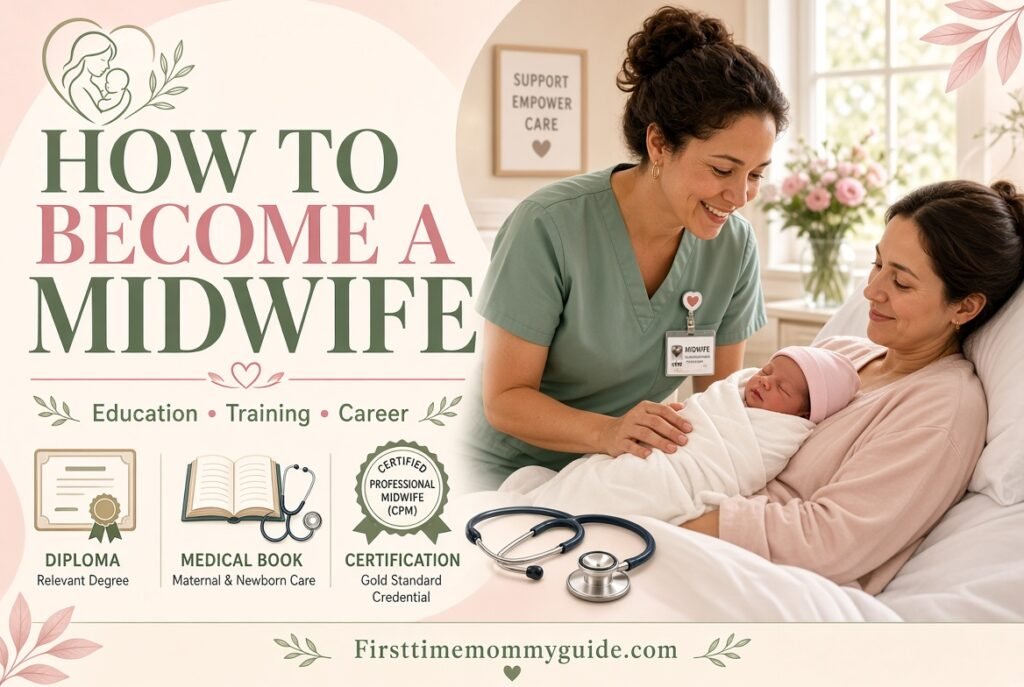
In short, most people become a midwife by earning a nursing or health-related degree, completing an accredited midwifery program, and passing a national certification exam before applying for state licensure.
The exact steps depend on which type of midwife you want to become. There are three main routes, and each one leads to a different credential.
What Does a Midwife Actually Do?
A midwife provides care during pregnancy, labor, birth, and the postpartum period. This includes prenatal checkups, labor support, delivery, and newborn care in the first weeks of life.
Many midwives also handle wellness visits, family planning, and reproductive health care outside of pregnancy. They work in hospitals, birth centers, private practices, and sometimes in a client’s home.
The Three Types of Midwives in the US
Not every midwife follows the same path. Understanding the differences up front will save you time and help you choose the right one.
Certified Nurse-Midwife (CNM)
A CNM is a registered nurse with advanced graduate training in midwifery. This is the most common and most widely recognized credential across all 50 states.
CNMs can prescribe medication in every state and typically work in hospitals alongside OB-GYNs. This path takes the longest but offers the most flexibility and the highest average pay.
Certified Midwife (CM)
A CM has a health-related bachelor’s degree and a master’s degree in midwifery, but no nursing background. This credential mirrors the CNM education without the nursing detour.
CM licensure is currently recognized in only a handful of states, so check local rules before choosing this route. It’s a strong option if you already have a science degree outside of nursing.
Certified Professional Midwife (CPM)
A CPM focuses on out-of-hospital births, typically in homes or freestanding birth centers. This path doesn’t require a nursing degree and can start with a high school diploma.
CPMs are certified through the North American Registry of Midwives (NARM) rather than the American Midwifery Certification Board. State recognition varies widely, so this route needs the most research before you commit.
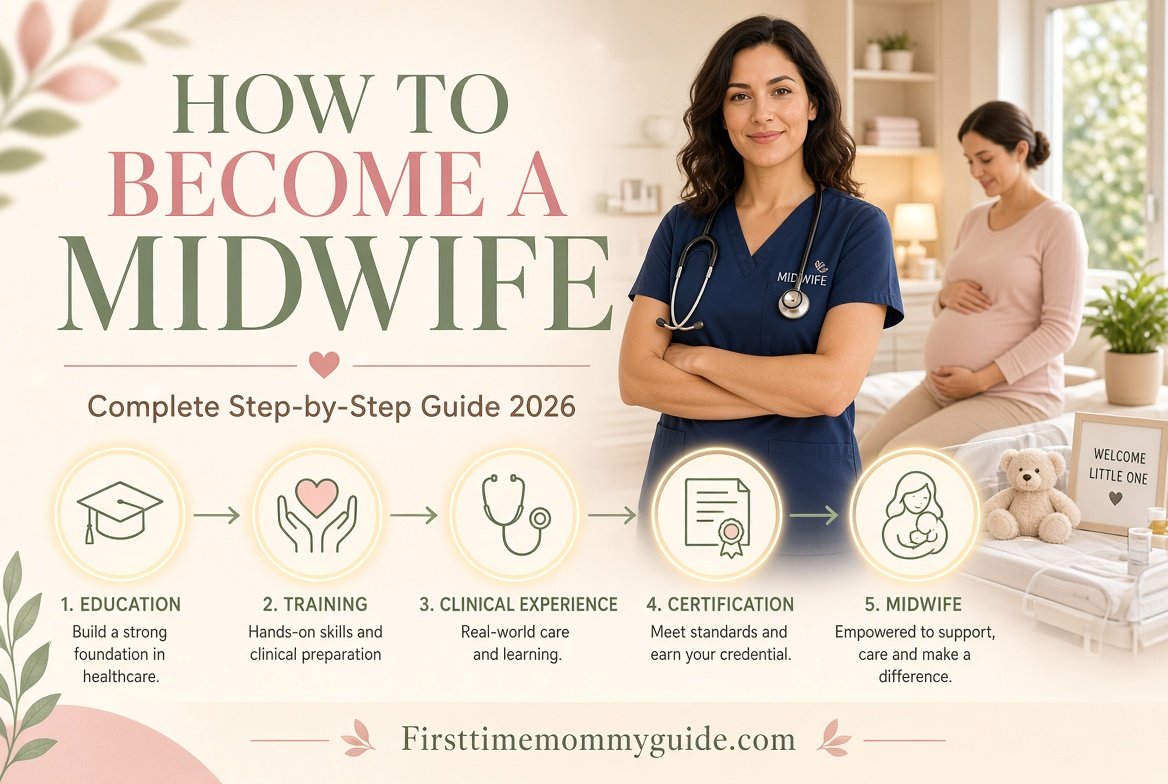
Step-by-Step: How to Become a Midwife
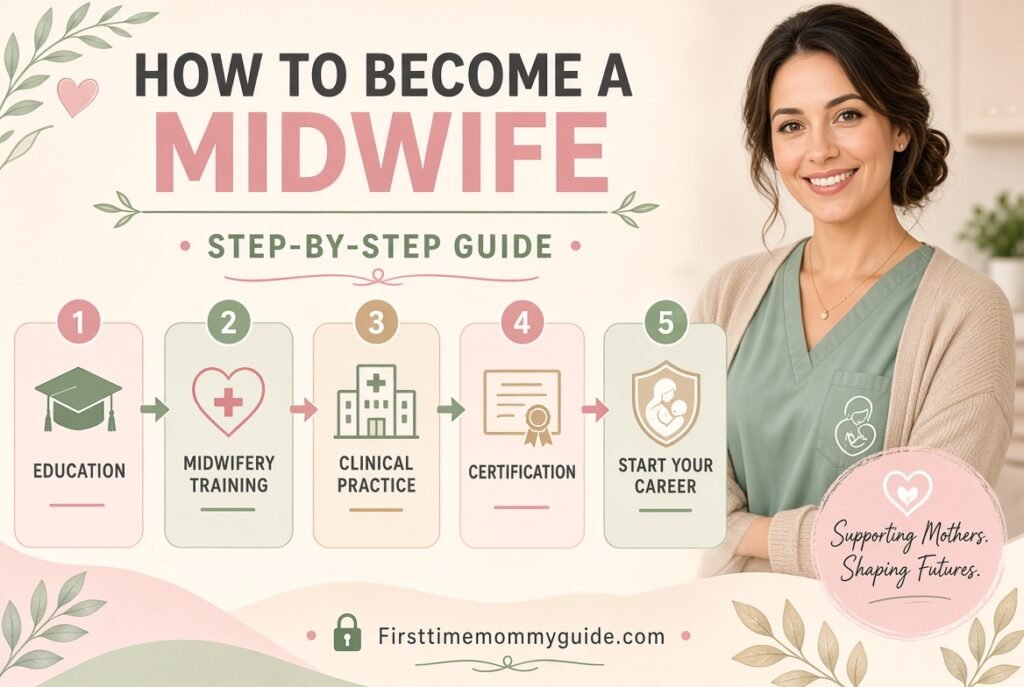
Step 1: Choose Your Midwifery Path
Decide between the CNM, CM, or CPM route before enrolling in anything. Your choice affects your degree requirements, timeline, and where you can legally practice.
If you want hospital-based work and full prescriptive authority nationwide, CNM is the safest bet. If you’re drawn to home births and community-based care, CPM may fit better.
Step 2: Complete Your Undergraduate Degree
For CNM, earn a Bachelor of Science in Nursing (BSN) and become a licensed Registered Nurse (RN). For CM, a bachelor’s degree in any health-related field works.
CPM candidates can skip a four-year degree and move into direct-entry midwifery education instead. This is one of the biggest time-savers in the entire process.
Step 3: Gain Clinical Experience
Most graduate midwifery programs prefer applicants with at least one to two years of nursing or clinical experience. Labor and delivery, NICU, or women’s health units are especially valuable.
This hands-on time also helps you confirm midwifery is the right career before committing to graduate school.
Step 4: Enroll in an Accredited Midwifery Program
Apply to a program accredited by the Accreditation Commission for Midwifery Education (ACME). This accreditation is required for CNM and CM certification eligibility.
Programs award a Master of Science in Nursing (MSN) or Doctor of Nursing Practice (DNP) with a midwifery specialization. CPM candidates instead complete NARM-approved education or an apprenticeship pathway.
Step 5: Pass Your Certification Exam
CNMs and CMs sit the American Midwifery Certification Board (AMCB) exam after graduation. CPMs complete the NARM exam, which tests both knowledge and hands-on clinical skills.
Passing this exam is what officially earns you your professional credential.
Step 6: Apply for State Licensure
Certification alone doesn’t let you practice. You still need a state license, and requirements differ by state.
Some states also require a separate application for prescriptive authority, especially for CNMs. Always check your specific state board before starting clinical work.
Step 7: Start Practicing and Keep Learning
Once licensed, you can apply for midwifery positions in hospitals, birth centers, or private practice. Continuing education is required to keep your certification active.
Many midwives also join professional organizations like the American College of Nurse-Midwives (ACNM) for mentorship, job boards, and ongoing training.
How Long Does It Take to Become a Midwife?
Timelines vary a lot depending on your starting point and chosen credential. Here’s a realistic breakdown for each path.
| Credential | Typical Education | Total Time |
|---|---|---|
| Certified Nurse-Midwife (CNM) | BSN + RN experience + MSN/DNP | 6–8 years |
| Certified Midwife (CM) | Bachelor’s degree + Master’s in midwifery | 4–6 years |
| Certified Professional Midwife (CPM) | Direct-entry program or apprenticeship | 3–5 years |
If you’re already a working RN, some accelerated MSN-midwifery tracks can shorten the CNM timeline by a year or more.
Education Pathways Compared
Choosing a pathway is easier once you see the requirements side by side.
| Factor | CNM | CM | CPM |
|---|---|---|---|
| Nursing background required | Yes | No | No |
| Governing exam | AMCB | AMCB | NARM |
| Typical birth setting | Hospital | Hospital, birth center | Home, birth center |
| Prescriptive authority | All 50 states | Limited states | Rare |
| State recognition | Universal | Partial | Varies widely |
Skills and Qualities You’ll Need
Strong clinical knowledge matters, but midwifery also demands specific personal qualities. Programs and employers look for these consistently.
- Calm decision-making under pressure
- Active listening and genuine empathy
- Physical stamina for long labors and shifts
- Comfort with irregular hours, including nights
- Clear communication with patients and medical teams
- Attention to detail during clinical assessments
Midwife Salary and Job Outlook in the US
Pay varies by credential, setting, and state, but the outlook for nurse-midwives is strong. According to O*NET and Bureau of Labor Statistics 2024 wage data, nurse midwives earn a national median of roughly $128,790 per year.
The lowest 10% of earners make around $74,670, while the top 10% earn $177,040 or more annually. California, Massachusetts, and Oregon consistently rank among the highest-paying states.
Job growth in this field is projected well above average, driven by demand for personalized, low-intervention maternity care. CPMs typically earn less than CNMs, since much of their work is self-employed or contract-based.
Pros and Cons of Becoming a Midwife
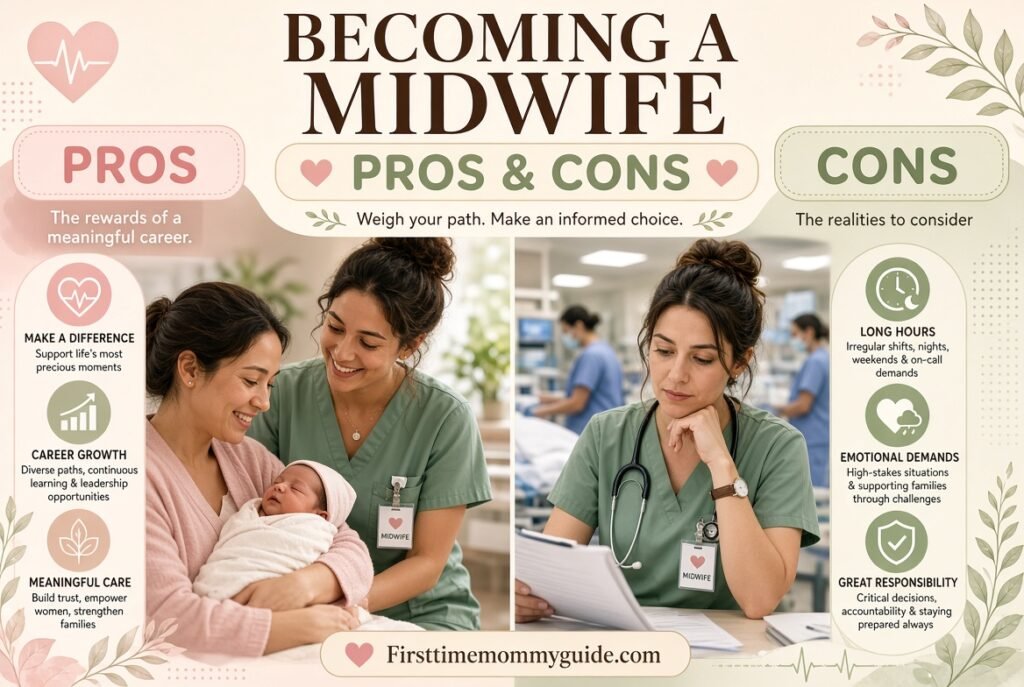
Weighing both sides helps set realistic expectations before you commit years of study.
Pros
- Deeply meaningful, hands-on work
- Strong job security and growing demand
- Flexible practice settings, from hospitals to home births
- Above-average pay for CNMs
Cons
- Long, demanding education for the CNM and CM paths
- Irregular hours, including nights and weekends
- Emotionally intense situations during complications
- Licensing rules vary significantly by state
Mistakes to Avoid When Pursuing Midwifery
A few missteps come up again and again among aspiring midwives. Avoiding them early saves time and money.
- Choosing a program that isn’t ACME-accredited
- Ignoring your target state’s licensure rules before enrolling
- Underestimating the clinical hours required
- Skipping mentorship or shadowing opportunities
- Assuming all midwife credentials are treated equally by employers
Expert Tips for Aspiring Midwives
Shadow a working midwife before you apply to any program. A single clinic day tells you more than any brochure about whether this career fits you.
Talk to your state’s nursing or midwifery board directly, not just the school’s admissions office. Rules change, and admissions staff don’t always have the latest licensure details.
Join a professional group like ACNM early. Student memberships are usually discounted and give you access to job boards and mentors before you even graduate.
Also Read:
- Pregnancy Guide, Month by Month
- Baby Essentials Checklist, 0–3 Months
- Baby Food Guide, 6–12 Months
- Baby Sleep Guide
- Sex Positions to Induce Labor: Safe Options
- Pelvic Pain During Pregnancy: Causes, Relief & When to Worry
- How Long Do You Bleed After You Give Birth?
- SPD Pregnancy: Symptoms, Causes & Relief Tips
- When Do Babies Start Sitting Up?
- When Do Babies Start Rolling Over?
- Maternity Leggings: The Complete Guide
- Leggings in Pregnancy: Is It Safe?
- When Do Babies Start Smiling?
- 33 Weeks Pregnant: Symptoms & Baby Development
- Baby Sleep Guide for New Moms
- Fruit Purees for 6 Month Old Babies
- Best Vegetable Purees for Baby
- Newborn Coming Home Outfit Guide
- Baby Food Combo Purees Guide
- Best Baby Food Combinations
- Baby Won’t Eat? Common Reasons & Fixes
- When Can My Baby Start Eating Real Food?
- Hospital Bag Checklist for Baby
- Baby Food Chart, 6 to 12 Months
Frequently Asked Questions (FAQs)
What is the fastest way to become a midwife?
The Certified Professional Midwife (CPM) path is generally fastest, since it doesn’t require a four-year nursing degree first. It can take as little as three to five years depending on the program.
Do you need to be a nurse to become a midwife?
No. Only the CNM path requires an RN license first. CM and CPM routes don’t require a nursing background.
How much does it cost to become a midwife?
Costs vary widely, but graduate midwifery programs typically range from $30,000 to over $100,000 total. Direct-entry CPM programs are often less expensive than nursing-based routes.
Can midwives deliver babies at home?
Yes, particularly CPMs, who are trained specifically for out-of-hospital births. CNMs can also attend home births in some states, though most work in hospital settings.
What’s the difference between a midwife and an OB-GYN?
A midwife focuses on low-risk, natural pregnancy and birth care, while an OB-GYN is a physician trained in surgery and high-risk obstetrics. Midwives often collaborate with OB-GYNs when complications arise.
Is midwifery a good career in the US?
Yes, demand is strong and projected to keep growing well above the national average. CNMs in particular report high job satisfaction and competitive pay.
What degree do you need to become a midwife?
CNMs need a BSN plus a graduate degree in midwifery. CMs need any bachelor’s degree plus a midwifery master’s. CPMs may not need a bachelor’s degree at all.
Where do midwives work?
Midwives work in hospitals, freestanding birth centers, private practices, and sometimes clients’ homes. The setting often depends on which credential they hold.
How many states recognize Certified Midwives (CM)?
Recognition is limited and changes over time, so check your specific state’s licensing board for the current list before enrolling in a CM program.
Do midwives need malpractice insurance?
Yes, most practicing midwives carry malpractice insurance, whether they’re employed or self-employed. Requirements often depend on the practice setting and state.
What is the AMCB exam?
The American Midwifery Certification Board exam is the national certification test for CNMs and CMs. Passing it is required before you can apply for state licensure.
What is NARM certification?
NARM stands for the North American Registry of Midwives, which certifies Certified Professional Midwives. It tests both clinical knowledge and hands-on skills.
Can I become a midwife without a college degree?
Yes, through certain direct-entry CPM pathways that combine apprenticeship with structured coursework. Requirements vary by program and state.
How competitive is admission to midwifery programs?
Competitive, especially for well-regarded CNM programs at accredited universities. Prior clinical experience and strong academic records improve your chances.
Do midwives prescribe medication?
CNMs have prescriptive authority in all 50 states. CM and CPM prescriptive rights are more limited and vary by state law.
Conclusion
Learning how to become a midwife really comes down to picking the right credential for your goals, then following the accredited education and licensing steps in order. Whether you choose the CNM, CM, or CPM route, the process rewards patience, hands-on experience, and genuine care for the families you’ll serve.
Start by talking to a working midwife and checking your state’s specific licensing requirements. From there, the path forward becomes a lot more concrete.

Dilawar Mughal
Founder and editor, First Time Mommy Guide
I research every guide against what the NHS, the AAP and the WHO publish, then write it in plain English — because most new parents are reading with one hand free, not comparing clinical guidelines. I'm not a doctor or a midwife. Every health claim on this site is sourced and linked so you can check it yourself, and anything urgent belongs with your health visitor or GP, not a blog.