General information, not medical advice. Every baby is different — if anything worries you, speak to your midwife, health visitor or GP rather than waiting.
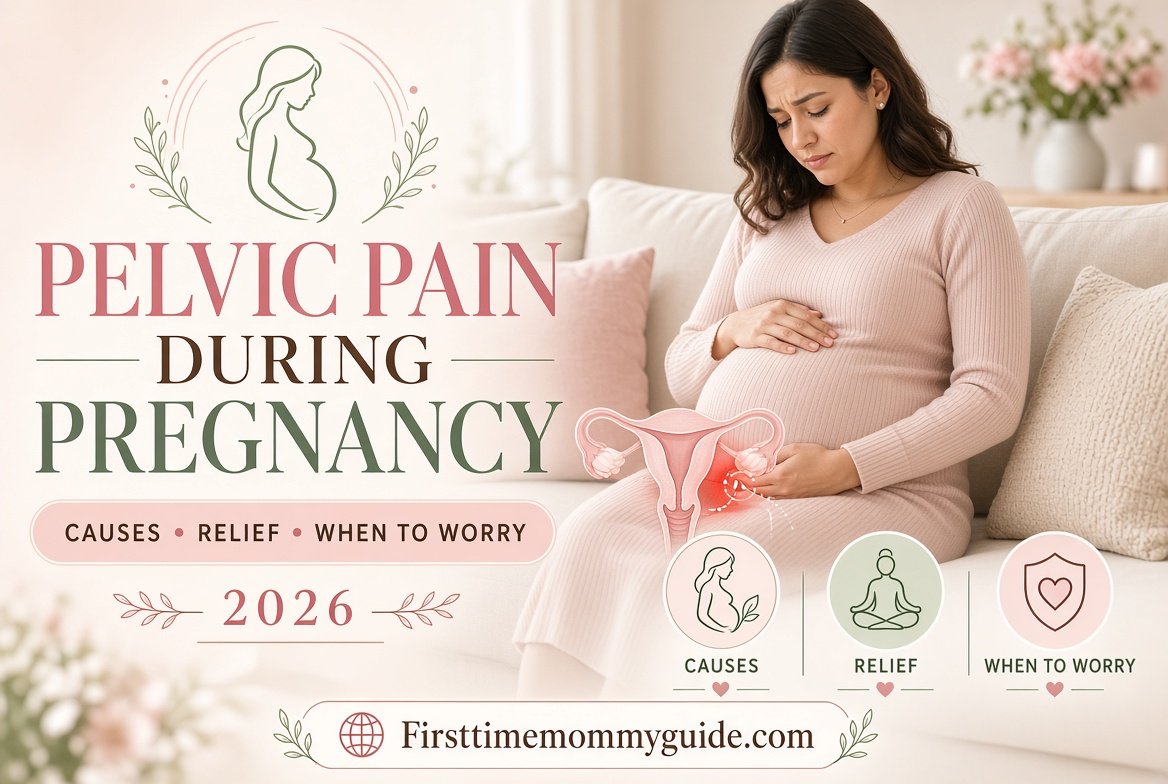
That deep ache or sudden stab low in your belly can be alarming the first time it hits. Pelvic pain during pregnancy is common, and most of the time it is your body adapting, not a sign that something is wrong.
Table of Contents
Is Pelvic Pain During Pregnancy Normal?

Pelvic pain during pregnancy is usually normal. It is most often caused by loosening ligaments, a shifting center of gravity, and pressure from your growing uterus.
Sudden, severe, or one-sided pain, especially with bleeding, fever, or contractions, is not typical and needs prompt medical attention.
Why Pelvic Pain Happens in Pregnancy
Your body releases a hormone called relaxin during pregnancy. Relaxin loosens the ligaments around your pelvis so your joints can shift to make room for delivery.
That extra flexibility is helpful for labor, but it also makes the pelvic joints less stable in the meantime. This instability is a major reason pelvic pain shows up long before your due date.
Added weight from the growing uterus, changes in posture, and a shifting center of gravity all add extra strain on top of that hormonal change.
Common Types of Pregnancy Pelvic Pain
Not all pelvic pain feels the same, and the type of pain often points to the cause. Here is a quick breakdown of the most common categories.
| Type | Where It’s Felt | What Triggers It |
|---|---|---|
| Round ligament pain | Lower belly or groin, one or both sides | Sudden movement, standing up, coughing |
| Pelvic girdle pain (PGP) | Front and/or back of the pelvis | Walking, climbing stairs, turning in bed |
| Symphysis pubis dysfunction (SPD) | Front pubic bone | Standing on one leg, walking, opening legs |
| Braxton Hicks or general pressure | Lower abdomen, feels like tightening | Later in pregnancy, dehydration, activity |
Round ligament pain and PGP are the two types you will hear about most often, so it helps to understand each one in more detail.
Round Ligament Pain Explained Simply
The round ligaments support your uterus and stretch as it grows. Quick movements, like standing up fast or laughing hard, can trigger a sharp, jabbing pain in your lower belly or groin.
This pain typically lasts a few seconds to a couple of minutes and then eases on its own. It is most common in the second trimester, when the uterus grows quickly.
Moving slowly and supporting your belly with your hand before you shift positions can reduce how often it happens.
Pelvic Girdle Pain (PGP) Explained Simply
Pelvic girdle pain affects the joints that connect your pelvis, including the sacroiliac joints in the back and the pubic joint in the front. It can radiate into your hips, thighs, or lower back.
PGP tends to worsen with walking, climbing stairs, standing on one leg, or turning over in bed. It is not dangerous, but it can significantly affect daily comfort.
A pelvic support belt, physical therapy, and modified movement patterns are the most effective ways to manage it.
Symphysis Pubis Dysfunction (SPD)
SPD is a more specific form of pelvic girdle pain centered on the pubic joint at the front. The joint becomes too mobile, causing a grinding or sharp pain right above the genitals.
Walking, getting out of a car, or separating your legs can all trigger SPD pain. Some people describe it as feeling like their pelvis might give way.
Physical therapy focused on pelvic stability is usually the most effective long-term treatment for SPD.
How Pelvic Pain Changes by Trimester
Pelvic pain does not feel the same throughout pregnancy. Each trimester tends to bring a different pattern of discomfort.
- First trimester: mild cramping as the uterus begins to stretch, often linked to hormonal shifts.
- Second trimester: round ligament pain becomes more common as the uterus grows quickly.
- Third trimester: PGP, SPD, and general pelvic pressure increase as the baby drops lower.
Knowing what is typical for your stage can help you decide whether a new symptom is worth a call to your provider.
Safe Relief Strategies for Pelvic Pain
Most pregnancy pelvic pain responds well to simple, low-risk changes at home. Try a few of these strategies to see what helps most.
- Wear a maternity or pelvic support belt during long periods of standing or walking.
- Sleep on your side with a pillow between your knees to keep your pelvis aligned.
- Move slowly when standing up, rolling over, or getting out of a chair.
- Apply a warm compress to sore areas for short periods.
- Try low-impact activity such as swimming or a short walk, avoiding breaststroke kicks.
- Keep your knees together when getting in and out of a car.
Consistency matters more than intensity here. Small daily adjustments usually help more than occasional intense stretching sessions.
Exercises That May Help
Gentle, targeted movement can ease pelvic girdle pain and SPD for many pregnant people. A prenatal physical therapist can tailor these to your specific pain pattern.
- Pelvic tilts: gently rock your pelvis forward and back while standing or on hands and knees.
- Cat-cow stretch: move slowly between arching and rounding your back on hands and knees.
- Glute bridges: lie on your back with knees bent and lift your hips slightly, if comfortable.
- Prenatal yoga: many classes include poses specifically designed for pelvic and hip mobility.
Stop any exercise that increases your pain, and check with your provider before starting a new routine.
When Pelvic Pain Is a Warning Sign
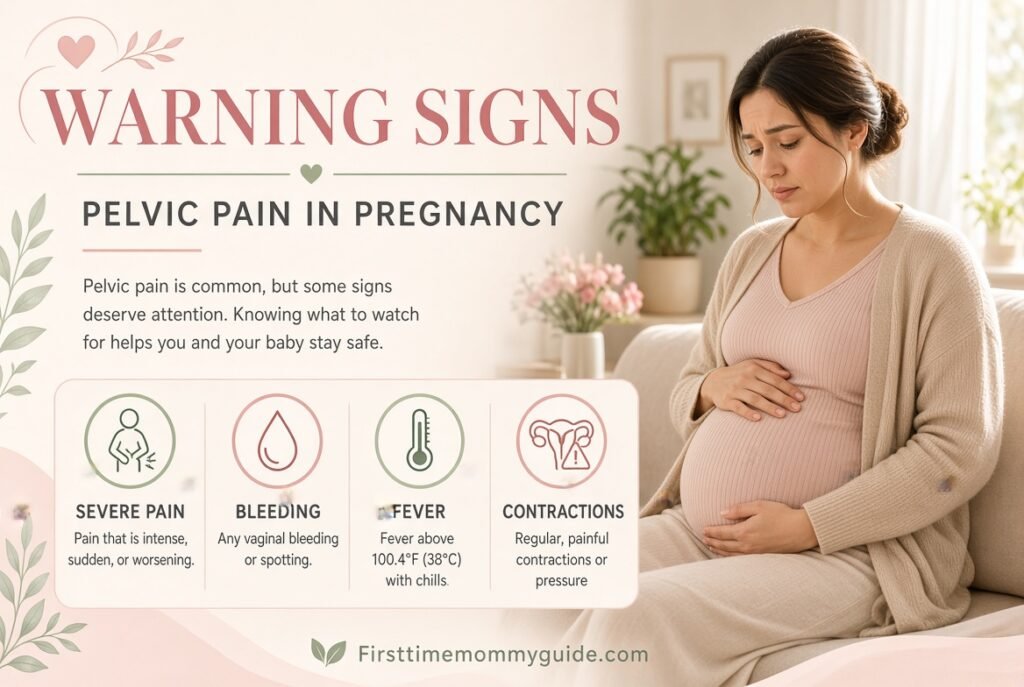
Most pelvic pain in pregnancy is uncomfortable but not dangerous. Certain symptoms, though, need immediate medical attention rather than home treatment.
- Severe, sudden, or one-sided pelvic pain that does not ease with rest.
- Pelvic pain paired with vaginal bleeding or unusual discharge.
- Regular contractions before 37 weeks.
- Pain combined with fever, chills, or feeling generally unwell.
- Pain with dizziness, fainting, or shoulder tip pain in early pregnancy.
Call your midwife, OB, or labor and delivery unit right away if you notice any of these. It is always better to check than to wait it out.
Pelvic Pain vs Other Pregnancy Discomforts
It can be hard to tell pelvic pain apart from other common pregnancy symptoms. This table breaks down the key differences.
| Symptom | Typical Feeling | Usually Needs Medical Review? |
|---|---|---|
| Round ligament pain | Sharp, brief, one side | No, unless severe or constant |
| PGP or SPD | Aching, worse with movement | Usually no, but PT is helpful |
| Braxton Hicks | Tightening, comes and goes | No, unless frequent before 37 weeks |
| Preterm labor signs | Regular cramping, pelvic pressure | Yes, immediately |
If you are ever unsure which category your pain falls into, it is always reasonable to call your provider and describe what you are feeling.
Mistakes to Avoid With Pregnancy Pelvic Pain
- Pushing through pain during exercise instead of stopping and resting.
- Ignoring pain that is getting worse week over week instead of mentioning it at appointments.
- Sleeping flat on your back for long periods in later pregnancy.
- Assuming all pelvic pain is normal without ever asking a provider to confirm.
- Skipping a support belt or pillow because the pain feels “manageable” for now.
Small proactive steps early on tend to prevent pelvic pain from becoming severe later in pregnancy.
Expert Tips for Daily Comfort

- Change positions often instead of standing or sitting in one spot for too long.
- Avoid activities that require standing on one leg, like putting on pants standing up.
- Keep a small pillow in the car and at your desk for extra pelvic support.
- Ask your provider for a referral to a pelvic floor physical therapist early rather than waiting.
These habits are simple, but they add up over the course of a pregnancy.
Also Read:
- SPD Pregnancy: Symptoms, Causes & Relief Tips (2026 Guide)
- Pregnancy Guide Month by Month: Symptoms & Baby Growth
- How Long Do You Bleed After You Give Birth? Full Timeline Guide 2026
- 33 Weeks Pregnant: Symptoms, Baby Development & What to Expect 2026
- 25 Weeks Pregnant: Symptoms, Baby Size & What to Expect 2026
- 17 Weeks Pregnant: Symptoms, Baby Size & What to Expect 2026
- Pregnancy Week By Week 7: Symptoms & Baby Size 2026
- FBS Test for Pregnant: Normal Range, Purpose & Next Steps 2026
- Maternity Leggings: The Complete Guide for Every Trimester 2026
- Leggings in Pregnancy: Is It Safe to Wear Them Every Trimester? 2026
- Baby Sleep Guide
- Hospital Bag Checklist for Baby: The Complete Packing List 2026
- Baby Essentials Checklist 0–3 Months (Complete Guide)
- Baby Essentials Checklist: What New Parents Actually Need
- Newborn Coming Home Outfit: What to Pick, What to Skip, and How to Keep Baby Safe
- How Many Newborn Outfits Do You Need? A Complete Size-by-Size Guide
- Baby Shopping List for First-Time Moms: The Complete 2026 Checklist
- When Do Babies Start Sitting Up? Month-by-Month Milestone Guide 2026
- When Do Babies Start Smiling? Signs & Milestones 2026
- When Do Babies Start Rolling Over? (2026 Guide)
- Baby Won’t Eat? Common Reasons, Fixes & When to Worry 2026
- First Foods for Baby at 6 Months: A Complete Guide to Starting Solids 2026
- First Food for Baby 6 Months: Best Options, Safety Tips & Feeding Guide
- Sweet Potato Puree for Baby: Easy Recipe, Age Guide & Storage Tips
Frequently Asked Questions (FAQs)
Is pelvic pain during pregnancy normal?
Yes, mild to moderate pelvic pain is common and usually caused by loosening ligaments and pressure from the growing uterus, not a sign of a problem.
When does pelvic pain usually start in pregnancy?
Pelvic pain can start as early as the first trimester, but it becomes more noticeable in the second and third trimesters as the uterus grows.
What does round ligament pain feel like?
Round ligament pain feels like a sharp, brief jab in the lower belly or groin, often triggered by sudden movement, and it usually fades within minutes.
What is pelvic girdle pain (PGP)?
PGP is discomfort in the joints connecting the pelvis, often felt in the front, back, or both, and it worsens with walking or climbing stairs.
What is symphysis pubis dysfunction (SPD)?
SPD is a specific type of pelvic girdle pain centered on the front pubic joint, causing sharp or grinding pain with walking or leg movement.
Can pelvic pain mean labor is starting?
Regular, rhythmic pelvic pressure or cramping before 37 weeks can signal preterm labor and should be evaluated by a provider right away.
How can I relieve pelvic pain at home?
A support belt, side sleeping with a pillow between the knees, slow movements, and warm compresses are common at-home relief strategies.
Is it safe to exercise with pelvic pain?
Gentle, low-impact movement like walking, swimming, or prenatal yoga is usually safe, but any exercise that increases pain should be stopped.
Does pelvic pain mean something is wrong with the baby?
Typical pregnancy pelvic pain does not usually affect the baby, but sudden severe pain or bleeding should always be checked promptly.
Can a pelvic support belt actually help?
Yes, many pregnant people find that a pelvic support belt reduces pain by stabilizing the pelvis during walking and standing.
Should I see a physical therapist for pelvic pain?
A prenatal physical therapist can be very helpful, especially for PGP or SPD, by teaching targeted stretches and movement modifications.
What sleeping position helps with pelvic pain?
Sleeping on your side with a pillow between your knees is generally the most comfortable and supportive position for pelvic pain.
Can round ligament pain happen on both sides?
Yes, round ligament pain can occur on one side or both, depending on which ligament is being stretched at the time.
Is pelvic pain worse with a second pregnancy?
Some people experience pelvic pain earlier or more intensely in later pregnancies, since ligaments may already have less initial tension.
What foods or habits make pelvic pain worse?
There is no specific food link, but prolonged standing, high-impact activity, and poor posture tend to worsen pelvic pain symptoms.
How long does pregnancy pelvic pain last?
Pelvic pain often continues until delivery and may take several weeks postpartum to fully resolve as hormone levels return to normal.
Can pelvic pain be prevented?
It cannot always be prevented, but supportive belts, good posture, and early physical therapy can reduce how severe it becomes.
What is the difference between pelvic pain and back pain in pregnancy?
Pelvic pain is centered around the pelvic joints and groin, while back pain is felt higher, along the spine, though the two often overlap.
Does pelvic pain affect walking ability?
In more severe cases of PGP or SPD, pelvic pain can make walking, climbing stairs, or standing on one leg noticeably harder.
When should I go to the hospital for pelvic pain?
Go immediately if pelvic pain is severe, sudden, one-sided, or paired with bleeding, fever, dizziness, or regular contractions before 37 weeks.
Can stress make pelvic pain feel worse?
Stress can increase muscle tension throughout the body, which may make existing pelvic discomfort feel more intense.
Is heat or ice better for pelvic pain?
Warm compresses are generally preferred for pelvic pain, since heat helps relax tight muscles around the joints.
Does pelvic pain mean I’m having a boy or girl?
No, pelvic pain is caused by physical and hormonal changes and has no connection to the sex of the baby.
Can I still travel with pelvic pain?
Short trips are usually fine with breaks to move and stretch, but check with your provider before longer travel, especially later in pregnancy.
Will pelvic pain go away after birth?
For most people, pelvic pain improves within a few weeks after birth as hormone levels drop and ligaments regain tension, though some benefit from continued physical therapy.
Conclusion
Pelvic pain during pregnancy is uncomfortable, but in most cases it reflects normal changes as your body prepares for birth. Round ligament pain, PGP, and SPD each have distinct patterns, and each responds well to targeted, low-risk relief strategies.
Pay attention to sudden, severe, or one-sided pain, especially alongside bleeding, fever, or contractions, since those symptoms deserve prompt medical review.
With the right support, movement adjustments, and guidance from your provider, most pelvic pain can be managed comfortably through the rest of your pregnancy.
This article is general information, not medical advice, and does not replace guidance from your midwife, OB, or healthcare provider.

Dilawar Mughal
Founder and editor, First Time Mommy Guide
I research every guide against what the NHS, the AAP and the WHO publish, then write it in plain English — because most new parents are reading with one hand free, not comparing clinical guidelines. I'm not a doctor or a midwife. Every health claim on this site is sourced and linked so you can check it yourself, and anything urgent belongs with your health visitor or GP, not a blog.