General information, not medical advice. Every baby is different — if anything worries you, speak to your midwife, health visitor or GP rather than waiting.
At 33 weeks pregnant, you’re deep into the third trimester and your body is running out of room fast. Your baby is packing on weight, your bump feels heavier, and everyday tasks may take a little more effort.
This week brings a fresh set of symptoms, from shortness of breath to swollen feet, alongside major developmental milestones for your baby. Knowing what’s typical helps you separate normal discomfort from something worth a call to your provider.
Table of Contents
33 Weeks Pregnant
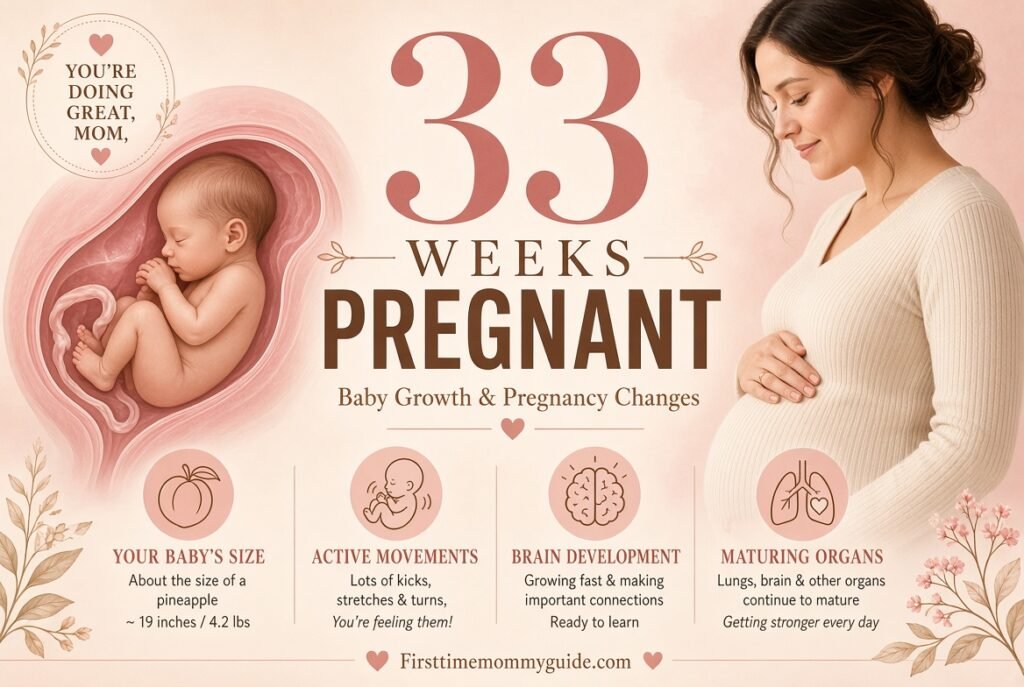
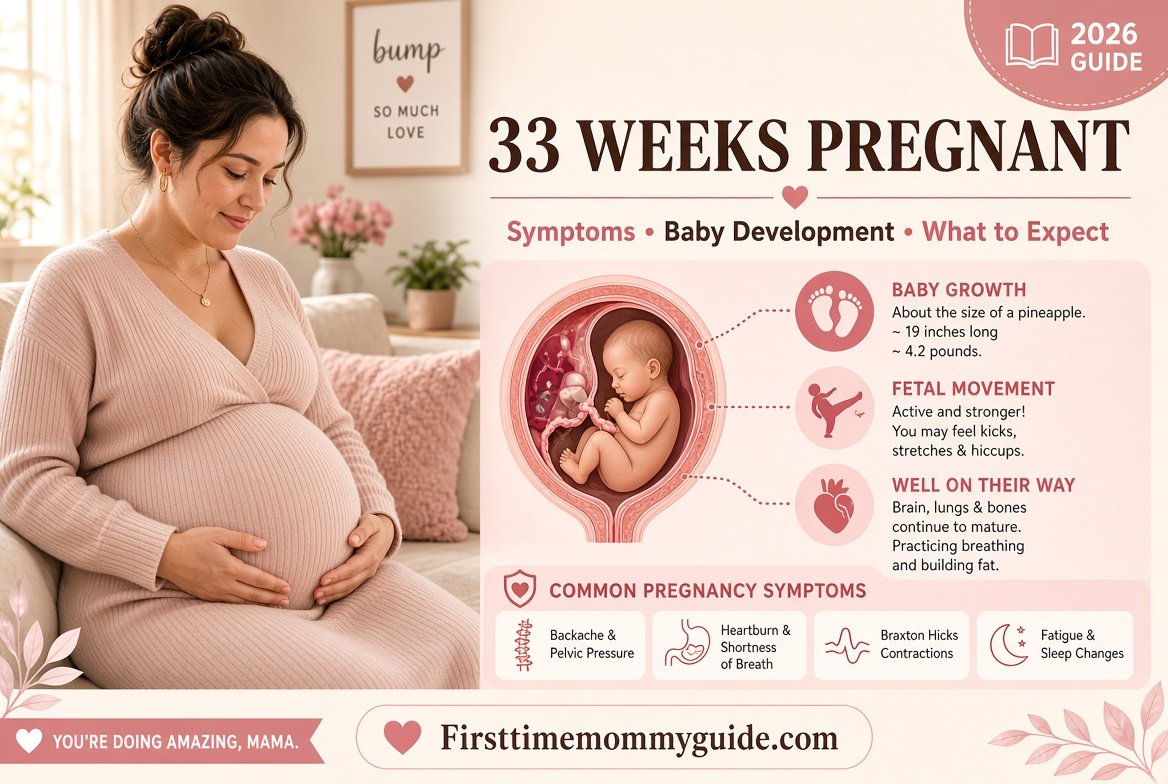
At 33 weeks pregnant, your baby weighs about 4 to 4.5 pounds (1.8–2 kg) and measures around 17 to 19 inches, roughly the size of a pineapple. You’re about seven weeks from your due date, deep in the third trimester.
How Many Months Is 33 Weeks Pregnant?
Thirty-three weeks pregnant falls in month eight of pregnancy. You’re firmly in the third trimester, with roughly seven to eight weeks left until your due date.
Doctors track pregnancy in weeks rather than months since 40 weeks doesn’t divide evenly. Week 33 is often described as being about 7.5 to 8 months along.
Baby’s Size and Growth at 33 Weeks
Your baby is gaining weight quickly this week, adding roughly half a pound every seven days. Here’s what’s typical at this stage.
- Weighs approximately 4 to 4.5 pounds (1.8 to 2 kg).
- Measures around 17 to 19 inches from head to heel.
- About the size of a pineapple or a head of celery.
- Skin is smoother and less wrinkled as fat builds underneath.
- Won’t grow much longer before birth but will keep gaining weight steadily.
Baby’s Brain, Bones, and Senses at 33 Weeks
Your baby’s brain and nervous system are largely developed by this stage. Neurons are rapidly forming connections that support sight, sound, smell, taste, and touch.
Bones are hardening throughout the body, with one key exception. The skull bones stay soft and separate, allowing slight overlapping during birth to ease the trip through the birth canal.
Your baby’s eyes can now detect light and the pupils adjust in response to it. Antibodies are also crossing the placenta from you to your baby, giving early immune protection.
Lung Development at 33 Weeks
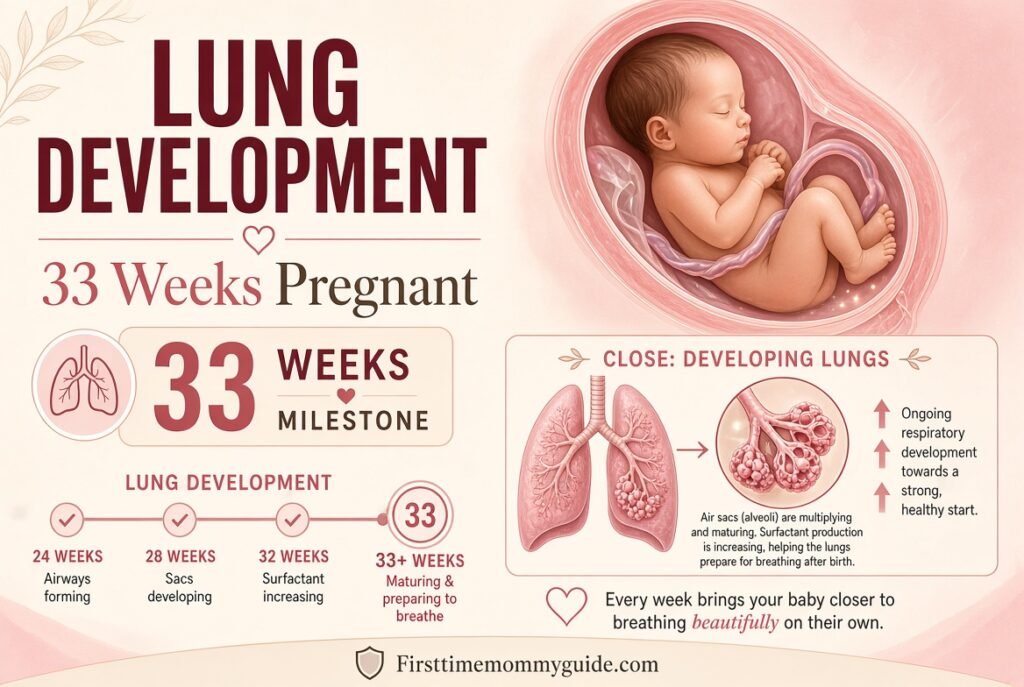
Surfactant production continues to increase this week, helping the lungs’ air sacs expand properly. This is a critical step toward independent breathing after birth.
Babies born at 33 weeks generally have strong survival odds, though every extra week in the womb still benefits lung maturity. Full lung readiness typically isn’t reached until closer to term.
Common Symptoms at 33 Weeks Pregnant
Many symptoms intensify around week 33 as your baby grows and space becomes tighter.
| Symptom | Why It Happens |
|---|---|
| Shortness of breath | Uterus pushes up against the diaphragm |
| Frequent urination | Baby’s position adds pressure on the bladder |
| Back and pelvic pain | Extra weight and shifting posture strain the lower back |
| Swelling in feet and ankles | Increased fluid retention and pressure on veins |
| Braxton Hicks contractions | Uterus practicing ahead of labor |
| Itchy skin | Stretching skin across belly and breasts |
| Trouble sleeping | Bump size and frequent bathroom trips disrupt rest |
| Heartburn | Growing uterus presses on the stomach |
Your Belly and Body Changes at 33 Weeks
Your bump feels noticeably heavier now, and your baby’s head may already be positioned downward. Many women also notice a dark vertical line, called the linea nigra, running down the belly.
Skin across your abdomen and breasts may feel tight, dry, or itchy from ongoing stretching. A gentle, fragrance-free moisturizer or a cornstarch bath can help ease persistent itchiness.
Some women also notice mild heart palpitations at this stage, caused by the extra blood volume and pressure on the diaphragm.
Tips for Feeling Better at 33 Weeks
- Sleep on your side with a pregnancy pillow to ease back pressure and improve circulation.
- Practice gentle backbends or stretches to relieve lower back and pelvic discomfort.
- Elevate your feet when sitting to reduce ankle and foot swelling.
- Eat smaller, more frequent meals to manage heartburn and shortness of breath.
- Keep track of Braxton Hicks contractions so you notice if they become regular or painful.
Common Mistakes to Avoid This Week
- Ignoring regular, painful contractions instead of timing them and calling your provider.
- Assuming all swelling is normal without checking for sudden, severe swelling paired with a headache.
- Skipping your prenatal appointments, even if you feel physically fine.
- Pushing through severe back pain instead of asking your provider about safe stretches or physical therapy.
- Waiting too long to pack a hospital bag or finalize your birth plan.
Expert Tip
Keep a simple daily note of your baby’s movement patterns starting this week. A sudden, noticeable drop in normal activity is worth calling your provider about right away, even if nothing else feels wrong.
When to Call Your Doctor
Most symptoms at 33 weeks are uncomfortable but expected. Some signs, however, need same-day medical attention.
- Regular, painful contractions occurring every 10 minutes or closer.
- Vaginal bleeding, spotting, or a sudden gush of fluid.
- Abdominal cramping, especially paired with diarrhea.
- Sudden or severe swelling in the face or hands with a headache or vision changes.
- A noticeable, sustained drop in your baby’s movement.
Real-World Preparation for Week 33

- Hospital bag prep: many providers recommend having your bag ready by this point, since labor can start early.
- Birth plan review: week 33 is a good time to finalize preferences with your provider.
- Car seat installation: getting it installed and inspected now avoids a last-minute scramble.
- Prenatal appointments: visits often become more frequent from this stage onward.
- Rest planning: with insomnia common at this stage, building in daytime rest can help offset poor nighttime sleep.
Also Read:
- Pregnancy Guide Month by Month
- 17 Weeks Pregnant: Symptoms, Baby Size & What to Expect
- Pregnancy Week by Week 7: Symptoms & Baby Size
- FBS Test for Pregnant: Normal Range, Purpose & Next Steps
- Baby Sleep Guide, Honestly
- Baby Sleep Guide for New Moms: Safe Sleep & Schedules
- Baby Essentials Checklist 0–3 Months
- Baby Essentials Checklist: What New Parents Actually Need
- Baby Essentials Checklist 0–3 Months (Complete Guide)
- How Many Newborn Outfits Do You Need?
- Baby Shopping List for First-Time Moms
- Newborn Coming Home Outfit: What to Pick, What to Skip
- Baby Food Guide, 6–12 Months
- Baby Food Chart 6 to 12 Months
- First Foods for Baby at 6 Months
- First Food for Baby 6 Months: Best Options & Safety Tips
- Fruit Purees for 6 Month Old Babies
- Best Vegetable Purees for Baby
- Sweet Potato Puree for Baby
- Apple Puree for Baby: Easy Recipe & Safety Guide
- Blueberry Puree for Baby: Recipe & Choking Safety Guide
- Spinach Puree for Baby: Recipe, Nitrate Facts & Age Guide
- Homemade Pumpkin Puree for Baby
- Zucchini Puree for Baby: Easy Recipe & Age Guide
- Baby Won’t Eat? Common Reasons, Fixes & When to Worry
Frequently Asked Questions (FAQs)
How big is a baby at 33 weeks pregnant?
Your baby typically weighs about 4 to 4.5 pounds and measures around 17 to 19 inches long. This is roughly the size of a pineapple.
How many months pregnant is 33 weeks?
Thirty-three weeks pregnant is generally counted as month eight of pregnancy. You’re in the third trimester, about seven to eight weeks from your due date.
Is 33 weeks considered full term?
No. Full term is generally 39 to 40 weeks, so a baby born at 33 weeks is considered moderately preterm.
What symptoms are normal at 33 weeks pregnant?
Common symptoms include shortness of breath, frequent urination, swelling, back pain, and Braxton Hicks contractions. Most of these are uncomfortable but expected in the third trimester.
Why am I so short of breath at 33 weeks pregnant?
Your growing uterus is pushing up against your diaphragm, reducing the space your lungs have to expand. This typically eases once your baby drops lower closer to delivery.
Is swelling normal at 33 weeks pregnant?
Mild swelling in the feet and ankles is common due to fluid retention and pressure on leg veins. Sudden, severe swelling paired with a headache needs prompt medical attention.
What does the baby look like at 33 weeks?
Your baby looks fuller and smoother, with less wrinkled skin as fat builds up underneath. The face and limbs are becoming rounder as birth approaches.
Is it normal to feel Braxton Hicks contractions at 33 weeks?
Yes. These practice contractions, often called false labor, are common in the third trimester and usually last 15 seconds to two minutes.
How can I tell Braxton Hicks from real labor?
Real labor contractions are typically strong, regular, arrive every 10 minutes or closer, and intensify over time. Braxton Hicks are usually irregular and don’t follow that pattern.
Why do I have back pain at 33 weeks pregnant?
Extra weight and a shifting center of gravity put pressure on your lower back and sciatic nerve. Warm baths, heating pads, and switching sleep positions can help relieve it.
Is it normal to have heart palpitations at 33 weeks pregnant?
Mild palpitations can occur due to increased blood volume and pressure from the growing uterus. Frequent or severe episodes should be reported to your provider.
How much weight should the baby gain each week at 33 weeks?
Babies typically gain about half a pound per week around this stage. This steady weight gain continues until close to delivery.
Why is my skin so itchy at 33 weeks pregnant?
Ongoing skin stretching across the belly and breasts commonly causes dryness and itching. A fragrance-free moisturizer or cornstarch bath can help ease discomfort.
What is the linea nigra at 33 weeks pregnant?
The linea nigra is a dark vertical line that can appear down the middle of the belly due to increased pigmentation. It typically fades gradually after birth.
Is frequent urination normal at 33 weeks pregnant?
Yes. As your baby moves lower, added pressure on the bladder often increases how often you need to urinate. This may include leaking when you laugh, cough, or sneeze.
What should I be doing to prepare at 33 weeks pregnant?
This is a good time to pack your hospital bag, finalize your birth plan, and install your car seat. Prenatal appointments often become more frequent from this stage onward.
Are your baby’s lungs fully developed at 33 weeks?
Not fully, but surfactant production is increasing and the lungs are maturing quickly. Babies born now generally have strong survival rates, though extra weeks still help lung readiness.
Can my baby see at 33 weeks pregnant?
Yes. Your baby’s eyes can detect light, and the pupils constrict and dilate in response to it. Full visual development continues after birth.
Is abdominal cramping normal at 33 weeks pregnant?
Occasional mild cramping can be normal, but cramping paired with diarrhea may signal preterm labor. Contact your provider if you notice either symptom.
How many weeks until my due date at 33 weeks pregnant?
You typically have about seven weeks left until your due date at 33 weeks, based on a standard 40-week pregnancy. Your exact timeline may vary based on your due date calculation.
Why can’t I sleep well at 33 weeks pregnant?
A large bump, frequent bathroom trips, and shortness of breath all make comfortable sleep harder at this stage. Side-sleeping with a pregnancy pillow often helps.
Is carpal tunnel syndrome common at 33 weeks pregnant?
Yes, tingling or numbness in the hands can develop due to fluid retention and swelling. This usually improves after delivery once fluid levels return to normal.
What trimester am I in at 33 weeks pregnant?
You’re in the third trimester at 33 weeks, which runs from around week 28 to birth. This puts you roughly two-thirds through the third trimester.
Conclusion
At 33 weeks pregnant, your baby is gaining weight rapidly, fine-tuning senses, and preparing key systems like the lungs for life outside the womb. Your body is working hard too, with symptoms like shortness of breath, swelling, and back pain becoming more noticeable.
Staying on top of prenatal visits, tracking your baby’s movement, and preparing practical items like your hospital bag can make this final stretch smoother. If anything feels seriously off, don’t hesitate to contact your midwife or doctor rather than waiting it out.

Dilawar Mughal
Founder and editor, First Time Mommy Guide
I research every guide against what the NHS, the AAP and the WHO publish, then write it in plain English — because most new parents are reading with one hand free, not comparing clinical guidelines. I'm not a doctor or a midwife. Every health claim on this site is sourced and linked so you can check it yourself, and anything urgent belongs with your health visitor or GP, not a blog.