General information, not medical advice. Every baby is different — if anything worries you, speak to your midwife, health visitor or GP rather than waiting.
Learning how to poop after C section without pain is one of the most practical things you can do for your recovery. Your abdomen has just been through major surgery, your gut is sluggish, and every muscle you would normally use to bear down feels tender.
The good news is that a calm, well-planned approach makes that first bowel movement far easier than most moms expect. Soft stool, the right position, a supported incision, steady movement, and the right timing take most of the fear out of it.
Table of Contents
How to Poop After C Section Without Pain
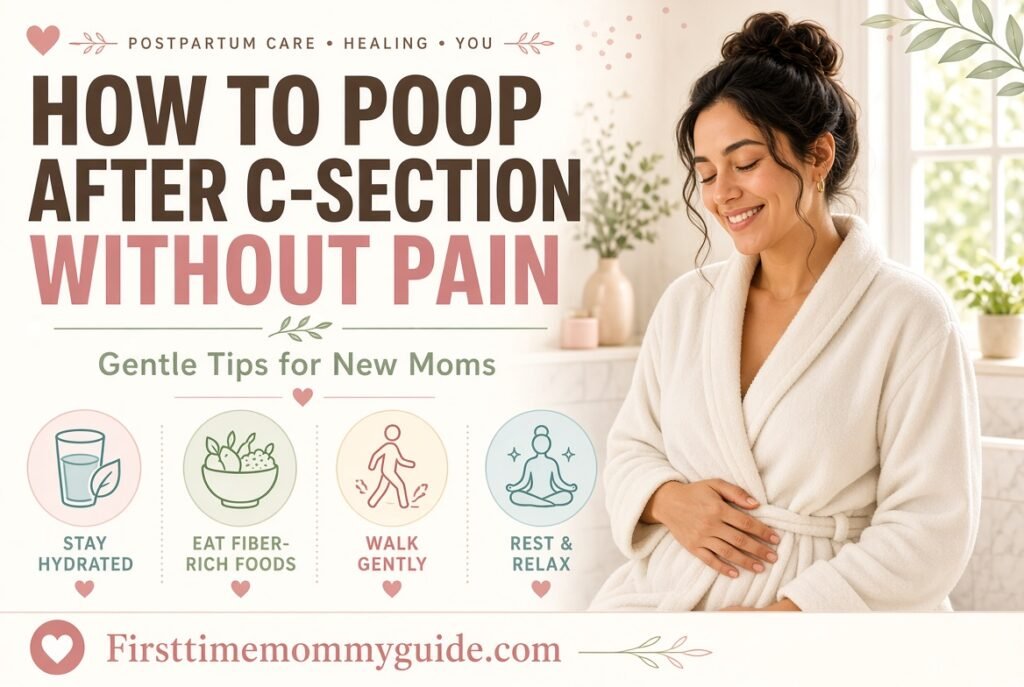
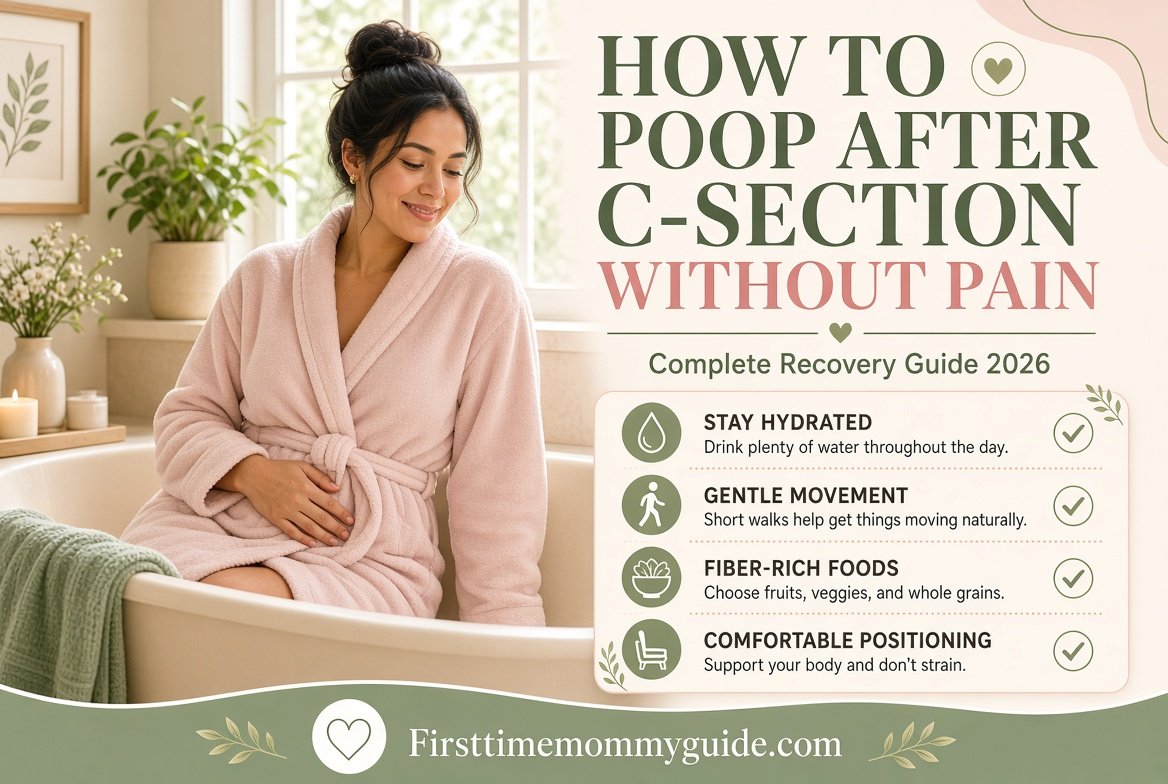
To poop after C section without pain, keep your stool soft, support your incision, and never strain. Drink fluids, eat fiber gradually, walk as soon as your care team allows, and take a stool softener if your doctor has recommended one.
Sit with your knees higher than your hips, press a firm pillow against your lower belly, and breathe out slowly as you go.
- Soften the stool with water, fiber, and a doctor-approved stool softener or laxative.
- Walk a little every hour or two while you are awake.
- Hold a pillow or folded towel firmly over your incision.
- Raise your feet on a small stool and lean slightly forward.
- Exhale gently instead of holding your breath.
- Do not ignore the urge, and never force a bowel movement.
Why Pooping After a C Section Feels So Scary
Most moms feel nervous about their first poop after a C section, and that fear is completely normal. Your incision is sore, your belly muscles feel weak, and the idea of pushing seems risky.
Understanding what is actually happening inside your body makes the fear smaller. Once you know why your bowels slow down, every tip in this guide makes more sense.
Your Belly Muscles Are Healing From Surgery
A cesarean cuts through skin, fat, and the tissue layer covering your abdominal muscles. Your core is tender and weaker than usual for weeks.
When you normally poop, your abdominal muscles help create pressure. After surgery, that pressure feels painful, so you tend to tense up, which makes everything harder.
Anesthesia and Surgery Slow Your Gut
Surgery, anesthesia, and handling of the abdomen can temporarily slow the natural wave-like movements of your intestines. Doctors call this a slowed or sluggish bowel, and a more serious version is called ileus.
For most women, the bowel wakes up within a few days. Passing gas is the first sign that it is working again.
Pain Medicines Cause Constipation
Opioid pain medicines are a major reason for constipation after a C section. They slow the gut and make stool dry and hard.
If you are taking a prescription opioid, ask your care team whether a stool softener or laxative should be taken at the same time. Planning ahead is much easier than treating constipation after it starts.
Fasting, Blood Loss, and Dehydration Add Up
Before a planned C section, you fast for hours. During surgery you lose some blood and fluid, and in the first day you may eat very little.
Less food and less fluid mean smaller, drier stool. That is why the first bowel movement can feel firmer than you expect.
Pregnancy Hormones and Iron Supplements Still Linger
Progesterone stays high during pregnancy and relaxes the muscles of your digestive tract. It takes time to settle after birth.
If you are also taking iron for anemia, constipation can get worse. Iron is helpful for recovery, but it often makes stool harder.
Fear Makes Your Pelvic Floor Tighten
When you worry about pain, you clench. Tight pelvic floor muscles make it harder for stool to pass.
Relaxing your jaw, shoulders, and pelvic floor is a real technique, and it works. You will find it later in this guide.
How Long After a C Section Do You Poop?
Most women have their first bowel movement within a few days to about a week after a C section. Many hospitals look for passing gas first, then a bowel movement before or soon after discharge.
Every body is different. Your timeline depends on your anesthesia, pain medicine, food intake, and how soon you start moving.
Typical First Poop Timeline After a Cesarean
| Time After Surgery | What Is Usually Happening |
|---|---|
| First 24 hours | Gut is sleepy, you may only have small sips or light food, gas is not yet moving |
| Day 2 | Gas begins to pass, belly sounds return, appetite improves |
| Days 3 to 4 | Many moms feel the urge to poop for the first time |
| Days 5 to 7 | Some moms still have not gone, especially while taking strong pain medicine |
| After 7 days | Talk to your doctor if you have not passed stool, especially with pain or bloating |
Passing Gas Comes First
Gas is a good sign. It tells you your intestines are working again.
Do not hold gas in because you are afraid of the pain. Letting it out relieves pressure and makes the next step easier.
You Do Not Need to Poop Right Away
Many new moms feel pressure to go on day one. That pressure is unnecessary.
There is often little in your system after fasting, and your gut needs time to restart. Be patient, but stay prepared.
Why Your First Poop May Be Delayed After an Emergency Cesarean
If you labored for many hours before an emergency C section, you may have eaten little and felt very stressed. Your bowels can be slower to restart.
General anesthesia can also slow the gut more than a spinal or epidural. Your team will watch your recovery closely.
When Is No Bowel Movement After a C Section a Problem?
A few days without pooping is common. A week without pooping, or any delay with strong symptoms, deserves a phone call to your doctor.
The goal is not to panic early. The goal is to spot the difference between ordinary constipation and something that needs medical care.
Signs You Should Call Your Doctor
- No bowel movement and no gas for several days
- Severe belly swelling or a very hard, tight abdomen
- Vomiting or being unable to keep fluids down
- Fever, chills, or redness spreading around your incision
- Sharp pain that is getting worse instead of better
- Bleeding from the rectum that is heavy or continues
Signs That Need Emergency Care
Go to the emergency room or call emergency services if you have severe belly pain with repeated vomiting, a swollen belly with no gas or stool, trouble breathing, chest pain, or heavy bleeding. These can point to a bowel blockage or another serious complication.
Do not wait at home and hope it passes.
Can Pooping Break Your C Section Stitches?
This is the question behind most of the fear. The honest answer is that it is very unlikely for ordinary pooping to open a properly healing C section incision.
Your incision is closed in layers, and your care team designed it to handle everyday movement. That said, straining hard is still painful and not helpful.
Why Straining Is Still Not a Good Idea
Hard straining raises pressure inside your belly. It can pull on the incision, increase pain, and worsen hemorrhoids.
It can also strain a healing pelvic floor. Softening the stool is the safest way to avoid all of this.
What Pooping Can Feel Like Even When Nothing Is Wrong
You may feel pulling, pressure, or a deep ache near the scar. That sensation is common and does not mean your stitches have opened.
Warning signs are different. They include a gap in the wound, new drainage, bright bleeding from the incision, or a sudden bulge.
Do Staples or Skin Glue Make It Worse?
Skin closures like staples, sutures, or glue sit on the surface. The deeper layers hold the real structure of the repair.
Pressing a pillow gently over the area is safe and helps you feel stable. Ask your provider if you are unsure about your specific closure.
Step by Step: How to Poop After C Section Without Pain
The best approach combines several small habits. None of them is complicated, but together they make a big difference.
Start these steps in the hospital if you can, and continue them at home.
Step 1: Start Preventing Constipation Before You Feel Constipated
The easiest bowel movement is the one you plan for. Ask your nurse or doctor about a stool softener on day one rather than waiting for trouble.
Prevention is much gentler than treatment. It also saves you from the worst-case first poop.
Step 2: Drink Fluids Throughout the Day
Water, broth, diluted juice, and herbal tea all count. Sip steadily rather than gulping a large amount at once.
If you are breastfeeding, you need even more fluid. Keep a large bottle next to your bed and your nursing chair.
Step 3: Eat Fiber Gradually
Fiber adds bulk and softness to stool. Too much too fast, especially without water, can cause bloating and gas.
Add fruit, oats, cooked vegetables, beans, and whole grains slowly. Pair every fiber boost with fluids.
Step 4: Walk Early and Often
Gentle movement helps wake up the bowel. Walk short distances around your room or home several times a day, with help at first.
You do not need long walks. Five minutes at a time counts.
Step 5: Take Stool Softeners as Directed
Many doctors send moms home with a stool softener or gentle laxative. Take it as directed, particularly while you are using prescription pain medicine.
If you were not given one, ask your provider before buying anything on your own.
Step 6: Respond to the Urge Right Away
When your body says it is time, go. Holding it in makes stool drier and harder.
Keep your bathroom setup ready so you are never rushed or caught off guard.
Step 7: Use a Footstool
Raising your feet puts your body in a more natural pooping position. It relaxes the muscle around your rectum and lets stool pass with less effort.
A small step stool or a stack of sturdy books works in a pinch.
Step 8: Brace Your Incision With a Pillow
Hold a firm pillow or rolled towel gently against your lower belly. This gives your incision counter-pressure so it feels supported.
Many moms say this one tip changed their entire experience.
Step 9: Breathe Out as You Go
Never hold your breath and push. Instead, take a slow breath in and exhale softly, as if blowing out a candle.
Let your belly relax rather than tightening it.
Step 10: Give Yourself Time and Privacy
Rushing creates tension. Sit calmly for several minutes, and leave your phone out of the bathroom if it keeps you sitting too long.
If nothing happens after about five minutes, get up and try again later.
Step 11: Try After a Meal
Eating triggers a natural reflex that moves stool along the colon. Many people find that the best time to go is soon after breakfast or another meal.
Use that natural timing to your advantage.
Step 12: Clean Gently and Dry Well
Use a peri bottle with warm water or unscented wipes, then pat dry. Avoid wiping hard, especially if you have hemorrhoids.
Gentle cleaning protects delicate skin and helps you feel comfortable after you finish.
Best Position to Poop After a C Section
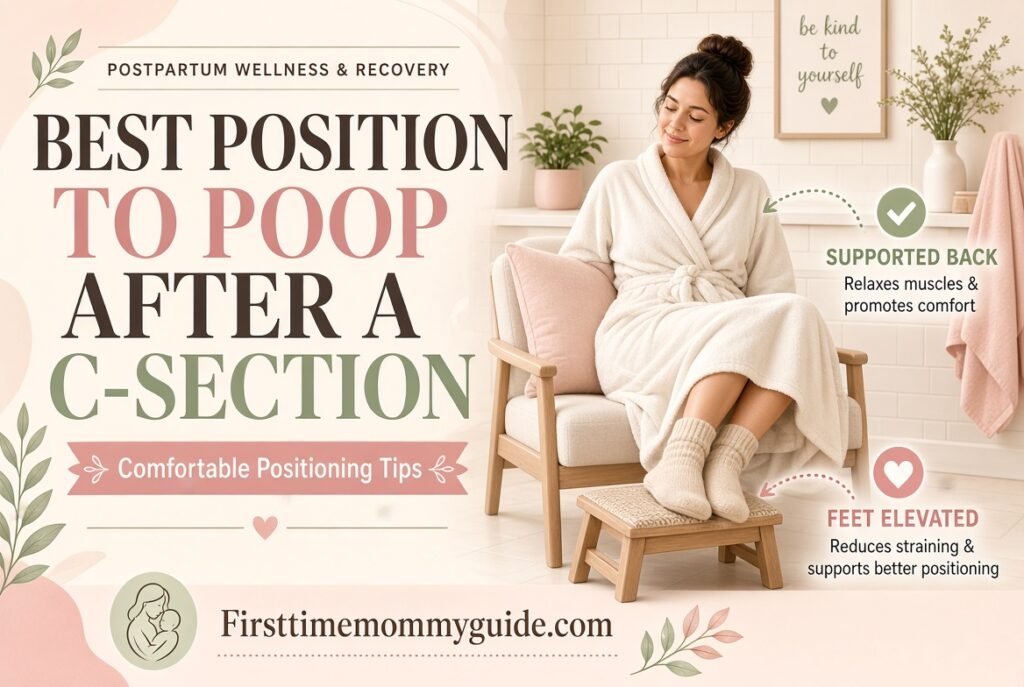
Position matters more than most people realize. The right posture lets stool pass with less pushing, which is exactly what your incision needs.
Aim for a relaxed, slightly forward-leaning posture with your knees above your hips.
The Squat-Style Position on the Toilet
Place a small stool under your feet so your knees rise higher than your hips. Lean forward gently and rest your forearms on your thighs.
This opens the angle at your rectum and reduces the need to strain.
Why Leaning Forward Helps
Leaning forward with a straight back relaxes the muscle that normally holds stool in. It also keeps your belly from being squeezed.
Keep your spine long rather than rounded, which can compress the incision area.
Positions to Avoid
- Sitting upright with feet dangling
- Bearing down while holding your breath
- Twisting or bending sharply at the waist
- Perching on the toilet seat edge without support
Raised Toilet Seat or Grab Bar for Easier Sitting
Lowering yourself onto a low toilet can pull painfully on your incision. A raised seat or a sturdy grab bar can make sitting down and standing up much easier.
Ask your partner or helper to stand nearby for the first few trips.
How to Support Your C Section Incision While Pooping
Splinting means pressing something soft and firm against your incision during movement. It is the same trick used when coughing, sneezing, or laughing after surgery.
It reduces pulling and helps you trust your body again.
What You Need
A firm small pillow, a folded bath towel, or a rolled blanket works well. Some hospitals give new moms a special pillow for this purpose.
Choose something that is soft enough to be comfortable but firm enough to resist pressure.
How to Splint Correctly
Place the pillow flat across your lower belly, just above your incision. Hold it with both hands and press in gently.
Keep the pressure steady as you exhale and let your pelvic floor relax.
Splinting for Other Movements
Use the same technique when you cough, sneeze, laugh, stand up, or get out of bed. Roll to your side first, then push up with your arms rather than sitting straight up.
Those habits protect your core every day, not only in the bathroom.
Breathing and Relaxation for Pain-Free Bowel Movements
Your breathing controls how tense your abdomen and pelvic floor become. Slow breathing sends a calming message to your whole body.
This is a free tool you can start using today.
Diaphragmatic Breathing in Three Steps
- Sit on the toilet with your feet supported and your back long.
- Breathe in through your nose and let your lower ribs and belly expand gently.
- Breathe out slowly through softly pursed lips while letting your pelvic floor drop.
Repeat for several rounds before you try to go.
The Candle Breath
As you feel the urge to pass stool, exhale slowly as if blowing out a candle. This keeps you from holding your breath and bearing down.
It also helps your core stay relaxed instead of bracing against the incision.
Relax Your Jaw and Shoulders
Your jaw and your pelvic floor are connected in how they tense. Unclench your teeth and drop your shoulders.
It sounds simple, yet many moms notice an immediate difference.
Stool Softeners After C Section: What They Are and How They Help
A stool softener or gentle laxative is one of the most helpful tools after a cesarean. Used early, it keeps stool soft so you can pass it without pushing.
Always check with your doctor, midwife, or pharmacist first, especially if you are breastfeeding or taking other medicines.
Types of Bowel Medicines Moms Commonly Hear About
| Type | How It Works | Things to Know |
|---|---|---|
| Docusate (stool softener) | Helps water mix into stool to soften it | Often given in the hospital, gentle, may work best as prevention |
| Polyethylene glycol (osmotic laxative) | Pulls water into the bowel to soften stool | Commonly used for postpartum constipation, drink plenty of fluid |
| Senna (stimulant laxative) | Stimulates the bowel to move | Can cause cramping, so ask your doctor about timing |
| Psyllium or fiber supplement (bulk-forming) | Adds bulk and holds water in stool | Needs lots of water, may cause gas at first |
| Magnesium-based products | Draws water into the bowel | Dosage matters, check with your provider |
| Glycerin suppository | Lubricates and softens stool near the rectum | Useful when stool is low and hard |
Stool Softener vs Laxative
A stool softener makes stool easier to pass. A laxative actively encourages your bowel to move.
Many care teams use both in a plan: a softener to prevent hard stool, and a laxative if things stay stuck.
When to Start Taking Them
The best time is early, often on day one or two, especially if you are using opioid pain medicine. Starting before constipation develops is far easier than reversing it.
Follow the schedule your care team gives you, and stop if you develop loose stool.
Are They Safe While Breastfeeding?
Many common stool softeners and osmotic laxatives are considered compatible with breastfeeding because very little enters breast milk. Your doctor or pharmacist can confirm the best option for you.
Avoid starting new herbal laxatives or strong products without advice.
Do Not Use Enemas or Suppositories Without Advice
Rectal products are sometimes helpful, but they should be used with your provider’s guidance after surgery. Using them incorrectly can cause irritation, especially with hemorrhoids.
If you feel stuck, call your care team before reaching for one.
Natural Remedies for Constipation After C Section
Food and lifestyle changes work best together with medicine, not instead of it when you are already struggling. They are gentle, safe for most new moms, and easy to start.
Think of them as the daily foundation of good bowel health.
Prunes and Prune Juice
Prunes contain fiber and a natural sugar called sorbitol that draws water into the bowel. Many moms find a small serving each morning helps.
Start with a small amount, since too much can cause cramping or loose stool.
Kiwi
Kiwi fruit is a gentle, mild option that many people enjoy. Eating a couple a day can support softer stool.
It is also easy to prepare and eat when you are tired.
Warm Liquids in the Morning
Warm water, herbal tea, or broth first thing in the morning can stimulate your gut. Warmth helps your digestive tract relax and wake up.
Pair it with a light breakfast to take advantage of your natural reflex.
Coffee
For some women, a cup of coffee stimulates a bowel movement. If you are breastfeeding, keep caffeine moderate and watch how your baby responds.
Coffee does not replace water, so keep drinking fluids as well.
Ground Flaxseed and Chia Seeds
Both seeds are rich in fiber and soak up water to form a soft gel. Stir a spoonful into oatmeal, yogurt, or a smoothie.
Drink extra water whenever you add them.
Magnesium-Rich Foods
Foods like almonds, spinach, pumpkin seeds, and bananas that are ripe can support regular digestion. They are a pleasant way to add minerals back in.
Use food first, then ask your doctor about supplements.
Best Foods to Eat After a C Section to Poop Easily
A gentle, fiber-rich, high-fluid diet keeps stool soft. You do not need a perfect plan, only steady, simple choices.
Introduce foods gradually, since your gut is still waking up.
Fiber-Rich Foods That Help
- Oatmeal and whole grain cereal
- Cooked vegetables such as carrots, zucchini, and sweet potatoes
- Pears, apples with the skin, berries, and prunes
- Beans, lentils, and chickpeas
- Whole grain bread and brown rice
- Chia seeds and ground flaxseed
Foods With High Water Content
Soups, broths, cucumbers, oranges, melon, and yogurt all add fluid while providing nutrients. They are easy to eat when your appetite is low.
Water-rich foods are especially helpful when you do not feel like drinking much.
Probiotic Foods
Yogurt with live cultures, kefir, and other fermented foods can support gut health. They may be especially helpful if you took antibiotics around delivery.
Choose plain versions with less added sugar.
Healthy Fats
A little olive oil, avocado, or nut butter can lubricate digestion. They also keep you full and give you steady energy.
Add them in moderate amounts.
Foods to Limit While You Are Constipated
- Large amounts of cheese and other heavy dairy
- Highly processed foods and white bread
- Fried or greasy foods
- Excess red meat
- Sugary snacks that replace real meals
- Carbonated drinks if they make gas worse
How Much Water Should You Drink After a C Section?
Hydration is the simplest way to soften stool. Fluid is also needed to heal and, if you are nursing, to make milk.
There is no magic number that fits everyone. A practical goal is to sip steadily so your urine stays pale yellow.
Easy Ways to Drink More
- Keep a large water bottle with a straw at every spot you sit
- Drink a glass of water each time you nurse or pump
- Add fruit slices or a splash of juice for flavor
- Drink warm herbal tea in the evening
- Use a cup with a lid so you can sip lying down
Signs You Need More Fluid
Dark urine, a dry mouth, headaches, dizziness, and hard dry stool all point to dehydration. Increase your fluids gradually and talk to your provider if you feel unwell.
Do not push huge amounts of water suddenly, since small steady sips work better.
Electrolytes and Hydration
If you feel wiped out even when you drink water, you may be missing minerals. Broth, coconut water, and electrolyte drinks that are safe for postpartum use can help.
Check labels for added sugar, and ask your provider if you are unsure.
Trapped Gas After C Section: Why It Hurts and How to Relieve It
Gas pain can feel worse than the incision itself. Trapped gas often shows up on days two to four, just before bowel function returns.
It may cause sharp pain in your belly, bloating, or even pain in your shoulder.
Why Shoulder Pain Can Happen
During surgery, a small amount of air can enter your abdomen and irritate nerves connected to your shoulder. That is why some women feel a strange ache near the shoulder blade.
It usually fades as your body absorbs the air and your gut starts moving.
How to Ease Gas Pain
- Walk slowly around the room as often as you are able
- Lie on your left side and gently pull your knees up
- Sip warm water or peppermint or ginger tea
- Ask your provider about simethicone for gas relief
- Avoid drinking through a straw or gulping air
- Skip fizzy drinks and gas-producing foods for a few days
Gentle Rocking and Pelvic Tilts
Lie on your back with your knees bent and gently tilt your pelvis. This small movement can help move gas along without stressing the incision.
Stop if anything pulls sharply or hurts.
Do Not Hold Gas In
Letting gas pass relieves pressure and signals that your bowel is recovering. Pass it privately, and do not feel embarrassed.
Every nurse on the postpartum unit has heard it all before.
Walking After a C Section Helps Bowel Movements
Early movement is one of the most reliable ways to wake the gut. Many hospitals encourage a short walk within the first day, as soon as it is safe.
Movement also lowers your risk of blood clots and helps your overall recovery.
How to Start Safely
Ask your nurse for help standing the first time. Roll to your side, push up with your arms, and let your legs swing off the bed.
Stand for a moment before taking a step to prevent dizziness.
How Much Is Enough
Start with a few steps to the bathroom and a short loop around your room. Build up to short walks several times a day as you feel stronger.
Avoid overdoing it, since fatigue and pain can set you back.
Walking at Home
Walk indoors at first, perhaps down the hallway or around your living room. Take short, gentle walks after meals to encourage digestion.
Listen to your body and rest when you need to.
Does Chewing Gum Help Bowels Start After a Cesarean?
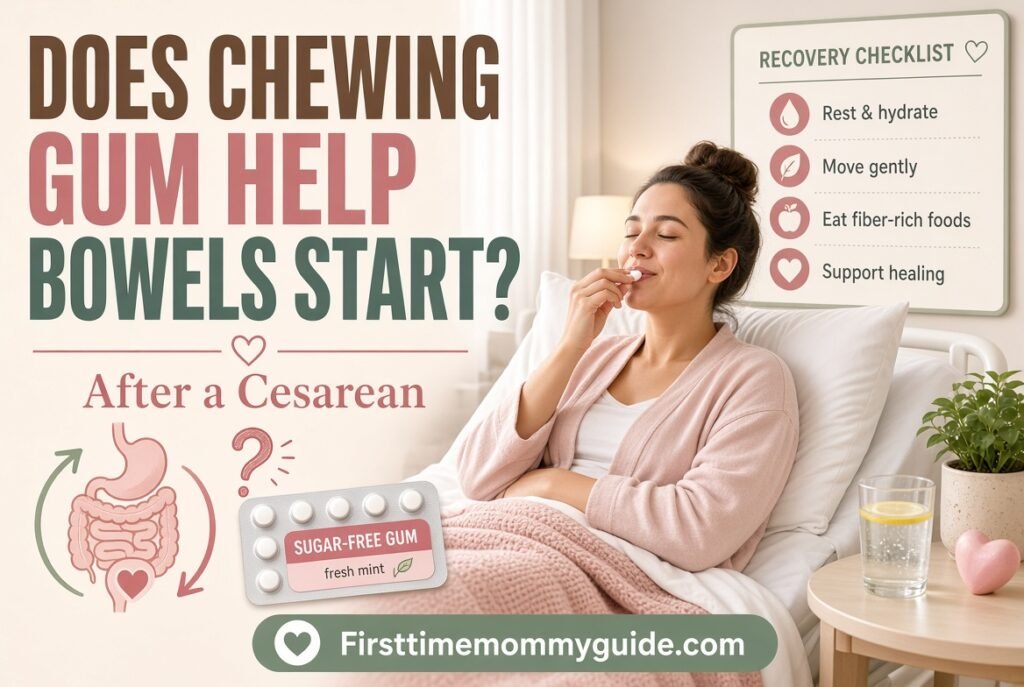
Studies of women after cesarean births suggest that chewing gum can help the bowel start working sooner. The idea is that chewing tricks the gut into thinking food is coming, which stimulates movement.
Many hospitals now include gum as part of their recovery plans.
How to Use Gum
Chew sugar-free gum for about 15 to 30 minutes a few times a day if your care team agrees. Choose a flavor you enjoy, such as mint.
Stop if it gives you stomach upset or jaw pain.
Why Sugar-Free Matters
Some sugar-free gums use sweeteners that can cause gas or loose stool in large amounts. Use moderation, especially while your belly is already bloated.
Check the label if you are sensitive.
Gentle Abdominal Massage to Help Stool Move
Light massage can encourage the bowel to move. It is not a replacement for medical care, and it should always be gentle.
Ask your provider before starting, since it may not be suitable right after surgery.
Basic Technique
Use a very light touch around your belly, moving in a clockwise direction. Stay well away from the incision itself.
Follow the path of the colon: up the right side, across, then down the left side.
When to Avoid It
- If your incision is open, draining, or red
- If you have severe belly pain
- If you have a fever
- If you have vomiting or a hard swollen belly
- If your provider has told you to avoid it
Pain Medicine and Constipation After a C Section
Controlling pain is essential for healing, and it also helps you poop. When pain is under control, you walk more, relax more, and strain less.
The trick is choosing a plan that treats pain without stopping your bowels.
How Opioids Slow Your Bowels
Opioid medicines bind to receptors in the gut and slow its movement. They also pull extra water out of stool, leaving it hard and dry.
The longer you take them, the more likely constipation becomes.
Non-Opioid Options Your Doctor May Suggest
Many care teams use a mix of acetaminophen and anti-inflammatory medicine such as ibuprofen as the foundation of pain relief. Stronger medicine is added only when needed.
Ask your provider which combination suits you, especially if you are breastfeeding.
Take Pain Medicine on a Schedule
Pain that gets ahead of you makes every movement feel worse. Taking medicine on the schedule your doctor gave you, rather than waiting until the pain is severe, often leads to better comfort overall.
Good comfort makes that first bowel movement far less frightening.
Taper Off When You Can
As your pain eases, ask your doctor about reducing opioid doses sooner rather than later. Many moms notice their bowels improve a few days after they stop.
Never stop or change a prescription without guidance.
Iron Supplements and Constipation After Birth
Iron helps rebuild blood after delivery, but it is a common cause of hard stool. If your doctor recommended iron, you do not need to stop it.
You can manage the side effects with smart habits.
Ways to Make Iron Easier on Your Gut
- Take iron with food if your doctor says it is okay
- Ask whether a different form or every-other-day schedule is an option
- Increase water and fiber
- Add a stool softener while taking iron
- Pair iron with a source of vitamin C, such as orange slices, to help absorption
Do Not Skip Iron Without Advice
Low iron can leave you exhausted and slow down healing. Talk with your provider before changing anything.
They can adjust your plan so you get the benefits with fewer side effects.
Hemorrhoids After a C Section
Many people assume hemorrhoids only happen after vaginal birth, but they can appear after a cesarean too. Pregnancy puts pressure on the veins in your pelvis, and constipation makes them worse.
They can cause pain, itching, and bleeding when you poop.
Symptoms to Watch For
- Swollen, tender lumps near the anus
- Itching or burning
- Bright red blood on toilet paper
- Pain while sitting or pooping
Gentle Relief Options
Warm sitz baths, cold packs wrapped in cloth, and witch hazel pads can ease discomfort. Soft stool is the best long-term treatment.
Ask your provider about creams or suppositories that are safe for you.
How to Reduce Straining
Keep stool soft, use your footstool, and avoid sitting on the toilet for long periods. Sit only as long as you need to.
If a hemorrhoid becomes extremely painful or does not shrink, see your doctor.
Anal Fissures: Small Tears That Hurt When You Poop
A fissure is a tiny tear in the lining of the anus. It often happens when you pass a large, hard stool.
The pain can be sharp, and you may see a streak of bright red blood on the paper.
What Helps
Soft stool, warm baths, and extra fluids give a fissure time to heal. Your provider may also suggest a soothing ointment.
Avoid long periods of sitting on the toilet, since that adds pressure to the area.
When to Get Checked
If pain lasts more than a couple of weeks or bleeding continues, ask your doctor to take a look. Early treatment prevents small tears from becoming chronic problems.
Never ignore rectal bleeding that is heavy or comes with dizziness.
Overcoming the Fear of the First Poop After a C Section
Fear is a real physical factor. When you expect pain, you tense, and tension makes pooping harder.
Treat your fear as part of the problem to solve.
Remind Yourself of What Is Safe
Your incision is built to heal, and gentle bowel movements will not undo it. Repeating that truth calmly can lower your stress.
You are protecting yourself with every tip in this guide.
Create a Calm Bathroom Routine
Dim the lights, warm the room, play quiet music, and have everything ready before you sit down. A relaxed environment sends a message of safety to your body.
Ask your partner to keep the baby occupied so you are not rushed.
Talk to Your Nurse or Doctor
You are not the first person to be scared, and you will not be the last. Ask what to expect, and ask for help early.
Honest conversations make the experience far less isolating.
Build a Daily Bowel Routine After Your Cesarean
Your bowels love predictability. A gentle routine trains your body to go at a consistent time.
It also lowers the chance of rushing or ignoring your body’s signals.
Choose a Consistent Time
After breakfast is often the best time because of the natural reflex that follows eating. Sit for a few minutes even if you do not feel a strong urge.
Do not strain if nothing comes.
Never Ignore the Urge
When stool sits in the colon, it loses water and hardens. Newborn care can distract you, so set reminders if you need to.
Go as soon as you feel the signal, even in the middle of the night.
Keep Meals Regular
Small, regular meals work better than skipping meals and then eating a large one. Regular eating keeps your gut moving at a steady pace.
Snack on fruit, yogurt, or oatmeal between feedings.
Hospital Tips for a Smoother First Poop After a C Section
The hospital is the best place to start. You have nurses, medicines, and experts nearby.
Take advantage of all three.
Questions to Ask Your Care Team
- Can I start a stool softener now?
- When should I try walking for the first time?
- Is chewing gum okay for me?
- Which pain medicine is least likely to constipate me?
- Which symptoms should I report before leaving?
Ask for Help Standing and Walking
Getting up the first few times can be shaky. Ask the nurse to assist you, and take your time.
Moving early helps both your bowel and your circulation.
Eat Slowly as You Are Cleared
When you are allowed to eat, start with easy foods and increase gradually. Chew well and sip fluids between bites.
Let your gut adjust rather than rushing back to a full meal.
Track Your Gas and Bowel Movements
Make a mental note, or a note on your phone, of when you pass gas and when you poop. This helps your care team know how your recovery is going.
Share the details at your follow-up visit.
What to Prepare at Home for Pooping After a C Section
A little preparation before the baby arrives makes the first week much easier. You can build your bathroom kit while you are still pregnant.
Having everything in one place means less stress when you are sore and tired.
Home Recovery Setup Checklist
| Item | Why It Helps |
|---|---|
| Small footstool | Raises your knees for a better pooping position |
| Firm pillow or rolled towel | Supports your incision while you go |
| Peri bottle | Gentle, hygienic cleaning without hard wiping |
| Doctor-approved stool softener | Keeps stool soft and easier to pass |
| Prunes or prune juice | A gentle natural option |
| Water bottle with a straw | Makes steady sipping easy |
| High-waisted soft underwear | Avoids pressure on the incision |
| Witch hazel pads | Soothes sore hemorrhoids |
| Night light | Lets you go safely and calmly at night |
Place Supplies Where You Need Them
Keep a water bottle and snacks next to every spot where you nurse or rest. Store pillows and wipes in the bathroom so you do not have to search.
Convenience helps you stick with your plan.
Arrange Help Ahead of Time
Ask your partner, a family member, or a friend to cover baby care for short periods. Even ten uninterrupted minutes can make a big difference.
Asking for help is part of recovery, not a sign of weakness.
Pelvic Floor and Core Recovery After a C Section
Many moms think a cesarean protects the pelvic floor completely. In reality, pregnancy itself places weight on those muscles, and your core was also affected by surgery.
Gentle recovery work supports easier bowel movements over time.
Start With Breathing
Diaphragmatic breathing is the safest exercise to begin with. It reconnects your deep core and relaxes your pelvic floor.
Practice a few slow breaths several times a day.
Gentle Pelvic Floor Awareness
Learning to both tighten and fully relax your pelvic floor matters. Relaxation is especially important for pooping without strain.
A pelvic floor physical therapist can teach you exactly how.
Wait for Clearance Before Exercising
Avoid sit-ups, heavy lifting, and strenuous workouts until your provider says it is safe. Rushing back can strain the incision and slow healing.
Walking and gentle stretching are usually the first steps.
Breastfeeding and Bowel Health After a C Section
Breastfeeding takes a lot of fluid, and many moms feel thirsty and hungry all the time. That extra need can make constipation worse if you do not keep up.
Fortunately, most of the habits that help you poop are also good for milk supply.
Eat Enough and Drink Enough
Nourishing food and steady fluids support both recovery and milk production. Do not restrict calories while you heal.
Think of every meal as fuel for your body and your baby.
Check Medicines With Your Provider
Most commonly used postpartum bowel medicines are considered acceptable during breastfeeding, but always confirm. Your pharmacist can check each product for you.
Share a full list of everything you take.
Notice Changes in Your Baby
If you introduce new foods or supplements, watch your baby for fussiness or changes in stool. Most babies tolerate changes well.
Call your pediatrician if something seems off.
A Simple 3-Day Plan to Poop After a C Section Without Pain
A plan removes guesswork when your brain is foggy from sleep loss. Use this as a general template, then adjust it with your doctor’s advice.
Stay flexible and listen to your body.
Day 1
- Rest, sip fluids, and eat light foods when cleared
- Walk to the bathroom with help
- Ask about a stool softener and gum
- Practice slow breathing in bed
Day 2
- Walk short distances several times
- Add oatmeal, fruit, and warm drinks
- Take stool softeners as directed
- Lie on your left side and relax if you have gas
Day 3
- Keep walking and keep drinking fluids
- Try the bathroom after breakfast with your footstool and pillow
- Add prunes or kiwi to your meals
- Call your care team if you have not passed gas or feel very bloated
Spinal, Epidural, and General Anesthesia: Does It Change Your First Poop?
Most cesareans use a spinal or epidural, which numbs the lower body while you stay awake. Some emergencies require general anesthesia.
The type you had can influence how quickly your gut wakes up.
Spinal or Epidural
With regional anesthesia, most moms start moving and eating sooner. The bowel often recovers quickly in this setting.
You can usually begin the early steps in this guide within the first day.
General Anesthesia
General anesthesia may slow digestion a little more. You may also feel groggy and nauseated at first.
Be patient and follow your team’s guidance on drinking and eating.
Repeat C Sections and Emergency C Sections
Some moms find that repeat cesareans bring more scar tissue and slower recovery. Others recover faster the second time because they know what to expect.
Either way, the same steps apply.
Common Mistakes to Avoid When Pooping After a C Section
Small mistakes can add up to a lot of pain. Knowing what to avoid saves you trouble.
Here are the ones moms run into most.
Holding Your Breath and Pushing
This increases pressure on your incision and your pelvic floor. Exhale instead.
Waiting Until You Are Desperate
Start preventive care early. Waiting until you are severely constipated makes everything harder.
Skipping Water While Adding Fiber
Fiber without enough fluid can make stool harder and cause bloating. Always add water with it.
Ignoring the Urge to Go
Putting it off lets stool dry out. Respond to your body as soon as you can.
Sitting on the Toilet Too Long
Long sitting adds pressure to your veins and hemorrhoids. Limit your time to a few minutes.
Starting New Medicines Without Advice
Not every laxative is right for every new mom. Check with your provider first.
Diarrhea or Loose Stool After a C Section
Sometimes the opposite problem shows up. Antibiotics, stool softeners, or a new food can cause loose stool.
It is usually mild, but it deserves attention.
Possible Causes
- Too much laxative or magnesium
- Antibiotics used around surgery
- Food changes or sugar alcohols in gum
- Infection
What to Do
Drink plenty of fluids and pause the laxative if your doctor says it is okay. Call your doctor if you have severe diarrhea, fever, or signs of dehydration.
Watching a pattern of loose stool after constipation can also signal that stool is stuck. Mention this to your care team.
Blood in Your Stool After a C Section
A little bright red blood on tissue usually comes from a hemorrhoid or small fissure. It can be alarming, but it is often minor.
Dark, black, or tar-like stool is different and should be checked promptly.
When to Call Your Doctor
- Blood that drips into the toilet or does not stop
- Black or very dark stool
- Dizziness, fast heartbeat, or weakness
- Severe belly pain along with bleeding
How Partners and Family Can Help
Recovery is easier with support. Your partner can be your biggest asset during those first weeks.
Share this section with them.
Practical Ways to Help
- Bring water and snacks to you
- Handle the baby so you can have bathroom time
- Help you stand and walk
- Remind you to take medicine on time
- Keep the bathroom stocked with supplies
Emotional Support
Be patient, listen, and never rush. Encouraging words go a long way when you feel vulnerable.
A calm helper makes a calm recovery.
How Long Does C Section Constipation Last?
For most women, constipation gets better within a week or two as pain medicine stops and activity increases. Your bowel pattern gradually returns to normal over the following weeks.
Some moms notice sluggishness for longer, especially if they continue iron or have a low-fiber diet.
Keep the Habits Going
Even after you feel better, keep drinking fluids, eating fiber, and staying active. These habits protect you against hard stool and hemorrhoids later.
They are good for your long-term digestion, too.
When to Seek Help for Long-Lasting Constipation
If constipation lasts for weeks, or comes with ongoing pain, bloating, or bleeding, talk to your provider. A pelvic floor therapist or specialist can find the cause and offer solutions.
You deserve comfort, not just endurance.
Quick Checklist: Poop After C Section Without Pain
- Ask about a stool softener early
- Sip fluids all day
- Add fiber slowly
- Walk often
- Chew sugar-free gum if approved
- Use a footstool
- Splint your incision with a pillow
- Exhale slowly while you go
- Go when you feel the urge
- Call your doctor if warning signs appear
Myths About Pooping After a C Section
Fear grows in the gaps between facts. A few common myths make the first bowel movement seem far scarier than it needs to be.
Clearing them up helps you feel calmer and more confident.
Myth: Your Stitches Will Pop Open
Everyday bowel movements do not open a properly healing incision. Pain and pulling are normal, but true wound separation is rare and comes with obvious signs like a gap or drainage.
Supporting your belly and keeping stool soft keeps you comfortable and protected.
Myth: You Must Poop Before You Leave the Hospital
Many hospitals look for gas and a bowel movement, but timelines vary. Your team decides based on your overall recovery, including pain, eating, and walking.
Ask them what they expect in your case.
Myth: Pushing Harder Gets It Out Faster
Pushing against hard stool only increases pain and pressure. Softer stool, a better position, and relaxation work far better than force.
Patience is the real shortcut.
Myth: Laxatives Are Never Safe After Birth
Many gentle bowel medicines are routinely used after a cesarean. The key is choosing the right type with your provider, rather than avoiding them out of worry.
Untreated constipation causes far more trouble than a well-chosen softener.
Myth: Eating Fiber Alone Is Enough
Fiber helps only when paired with enough fluid and movement. Without them, extra fiber can leave you bloated and gassy.
Think of fiber, water, and walking as a team.
Easy Meal Ideas for Soft Stool After a C Section
Planning meals ahead removes stress when you are exhausted. These simple ideas combine fiber, fluid, and gentle nutrition.
Prepare a few in advance or ask a friend to bring them.
Breakfast Ideas
- Oatmeal topped with chopped prunes, berries, and ground flaxseed
- Plain yogurt with kiwi and a spoonful of chia seeds
- Whole grain toast with mashed avocado and a soft egg
- A smoothie with banana, spinach, and a little nut butter
Lunch Ideas
- Lentil soup with a slice of whole grain bread
- Brown rice bowl with cooked carrots, beans, and olive oil
- Vegetable broth with soft noodles and shredded chicken
- Sweet potato with black beans and a side of cooked greens
Dinner Ideas
- Baked salmon with steamed broccoli and quinoa
- Slow-cooked chicken stew with root vegetables
- Pasta with a vegetable sauce and a side salad if tolerated
- Chickpea and spinach curry over brown rice
Snack Ideas
- A pear or an apple with the skin
- A handful of almonds and dried apricots
- Hummus with soft vegetable sticks
- Warm herbal tea with a small piece of fruit
Constipation, Ileus, and Bowel Obstruction: Knowing the Difference
Most post-cesarean constipation is a normal, temporary slowdown. Occasionally, the slowdown goes further, and your care team needs to step in.
Understanding the terms helps you describe symptoms clearly.
Ordinary Constipation
You have hard or infrequent stool, mild bloating, and some discomfort. You can still pass gas, eat, and drink.
It usually improves with fluids, movement, and medicine.
Postoperative Ileus
Ileus means the intestines have stopped moving properly for a while. It can bring nausea, vomiting, a swollen belly, and no gas or stool.
It needs medical attention, and care is usually provided in the hospital.
Bowel Obstruction
An obstruction means something is physically blocking the intestine. It causes severe cramping pain, repeated vomiting, and a very swollen belly.
This is an emergency, and you should seek care immediately.
| Condition | Typical Signs | What to Do |
|---|---|---|
| Ordinary constipation | Hard stool, mild discomfort, still passing gas | Fluids, fiber, walking, doctor-approved softener |
| Postoperative ileus | Nausea, vomiting, swollen belly, no gas or stool | Call your doctor or go to the hospital |
| Bowel obstruction | Severe cramping, repeated vomiting, rigid belly | Emergency care right away |
Getting Out of Bed and Sitting Down Without Pain
Your trips to the bathroom begin with getting out of bed. How you move affects how your incision feels when you reach the toilet.
Good technique protects your core every time.
The Log Roll Method
Bend your knees and roll onto your side as one unit. Use your arms to push yourself upright while your legs swing off the bed.
Avoid sitting straight up with your abdominal muscles.
Lowering Onto the Toilet
Hold the pillow against your belly, keep your back long, and lower yourself slowly using a grab bar or sturdy counter. Exhale as you sit.
Reverse the steps when you stand up, using your legs to do the work.
When to See a Pelvic Floor Specialist
If bowel movements stay painful or difficult beyond the early recovery period, a pelvic floor physical therapist can help. They assess how your muscles coordinate and teach you specific techniques.
Many women are surprised by how much it helps, even after a cesarean.
Signs It Is Time for a Referral
- Pain with pooping that continues after the first few weeks
- Feeling like you cannot fully empty your bowel
- Straining that does not improve with softer stool
- Leaking stool or urine
- A feeling of heaviness or pressure in the pelvis
What a Therapist Can Teach
They can guide you in proper breathing, relaxing your pelvic floor, safe core activation, and scar care. These skills make bowel movements smoother for the long run.
Ask your doctor for a referral, since a specialist can often start working with you after your postpartum check.
Caring for Your Scar and Body While You Recover
Poop trouble is rarely only about the bowel. How you care for your incision, sleep, and mood also shapes how comfortable you feel.
Look after the whole picture.
Keep Your Incision Clean and Dry
Follow your discharge instructions for washing and drying the area. Pat gently, and wear loose, soft clothing.
Report redness, swelling, drainage, or a fever to your provider.
Rest When the Baby Rests
Fatigue amplifies pain and makes every task harder. Sleep as much as you can, and accept help with chores.
Your body heals during rest.
Be Kind to Yourself
Recovery from major surgery while caring for a newborn is demanding. Celebrate small wins, including the first successful poop.
You are doing an enormous job.
Talk About It
Share your worries with your doctor, midwife, friends, or other moms. Honest conversation takes away the shame and the fear.
Your questions are always welcome.
Also Read:
- After Giving Birth First Period: Timeline, Symptoms & What’s Normal 2026
- How Long Do You Bleed After You Give Birth? Full Timeline Guide 2026
- Pelvic Pain During Pregnancy: Causes, Relief & When to Worry 2026
- SPD Pregnancy: Symptoms, Causes & Relief Tips (2026 Guide)
- Sunny Side Up Baby: What It Means, Why It Happens & How to Turn Baby (2026 Guide)
- Best Electrolytes for Pregnancy: Safe Picks & Expert Tips (2026)
- Hospital Bag Checklist for Baby: The Complete Packing List 2026
- Baby Shopping List for First-Time Moms: The Complete 2026 Checklist
- Baby Essentials Checklist 0 to 3 Months
- Pregnancy Guide Month by Month
- Newborn Coming Home Outfit: What to Pick, What to Skip, and How to Keep Baby Safe
- How Many Newborn Outfits Do You Need? A Complete Size-by-Size Guide
- Baby Sleep Guide for New Moms: Safe Sleep & Schedules (2026)
- Baby Sleep Guide
- Newborn Grunting in Sleep Normal or Should I Call the Doctor? A Complete Parent Guide 2026
- How Long Does Newborn Cluster Feeding Last Each Night? A Complete Guide for New Parents 2026
- How Much Breast Milk to Put in Each Storage Bag (Complete Guide) 2026
- How to Do the Pitcher Method for Breast Milk Step by Step: A Safe, Simple Guide for Pumping Moms 2026
- How to Scald Breast Milk for High Lipase Before Freezing: Step-by-Step Guide for Pumping Moms
- Thawed Breast Milk Smells Like Soap Is It Still Good? Causes, Safety, and Fixes 2026
- When Do Infants Roll From Tummy to Back? (2026 Guide)
- When Do Babies Start Sitting Up? Month-by-Month Milestone Guide 2026
- Baby Won’t Eat? Common Reasons, Fixes & When to Worry 2026
Frequently Asked Questions (FAQs)
How do you poop after a C section without pain?
Keep stool soft with fluids, fiber, and a doctor-approved stool softener. Sit with your feet raised, hold a pillow against your incision, and breathe out slowly instead of straining.
How long after a C section do you poop?
Most women have a first bowel movement within a few days to a week. Passing gas usually comes first, and your timeline depends on anesthesia, pain medicine, and activity.
Is it normal not to poop for 5 days after a C section?
It can be normal, especially with pain medicine and a slow appetite. Call your doctor if you also have severe pain, vomiting, a swollen belly, or no gas.
Can pooping rip your C section stitches?
It is very unlikely. Your incision is closed in layers designed for normal movement, but straining still hurts, so keep stool soft and avoid forcing it.
Is it okay to push when pooping after a C section?
Gentle effort is fine, but hard pushing is not a good idea. Use a footstool, support your belly, and exhale gently while you let your body do the work.
What is the best position to poop after a C section?
Sit with your knees higher than your hips and lean slightly forward. A small footstool under your feet creates this position easily.
Should I take a stool softener after a C section?
Many doctors recommend one, especially if you take opioid pain medicine. Ask your provider which type is best for you, particularly if you are breastfeeding.
What helps you poop fast after a C section?
Walking, warm drinks, prunes, fluids, and a doctor-approved laxative can help. Avoid forcing it, and be patient while your bowel wakes up.
Do stool softeners affect breast milk?
Many common ones are considered compatible with breastfeeding because little passes into milk. Confirm with your doctor or pharmacist before starting any product.
How do I support my incision when I poop?
Press a firm pillow or folded towel against your lower belly. Hold it gently but steadily while you breathe out and relax.
Why does gas hurt so much after a C section?
Surgery slows your gut, so gas builds up and presses on a tender abdomen. Walking, lying on your left side, and sipping warm tea can help.
Can I drink coffee to help me poop after a C section?
Coffee helps some people go. Keep it moderate if you are breastfeeding, and keep drinking water as well.
Does chewing gum help after a C section?
Research suggests it may help the bowel start working sooner after a cesarean. Choose sugar-free gum and chew for short periods if your care team agrees.
What foods help you poop after a C section?
Oatmeal, prunes, kiwi, pears, beans, vegetables, yogurt, and whole grains are good choices. Add fiber gradually and pair it with plenty of fluid.
How much water should I drink after a C section?
Drink steadily through the day until your urine is pale yellow. You need more if you are breastfeeding.
Can opioid pain medicine cause constipation after a C section?
Yes, opioids slow the gut and dry out stool. Ask your doctor about a softener and non-opioid pain options.
Can iron pills make constipation worse after birth?
Yes, iron commonly makes stool harder. Do not stop it without advice, but ask about timing, form, and a stool softener.
Are hemorrhoids common after a C section?
They can happen, because pregnancy and constipation increase pressure on rectal veins. Soft stool, sitz baths, and your provider’s advice usually help.
Is a little blood in my stool normal after a C section?
A small streak of bright red blood on the tissue often comes from a hemorrhoid or fissure. Call your doctor if bleeding is heavy or black stool appears.
When should I call the doctor about constipation after a C section?
Call if you have no gas or stool for several days, a swollen belly, vomiting, fever, or severe or worsening pain. Seek emergency care for severe pain with repeated vomiting.
What are the signs of a bowel blockage after a C section?
Severe cramping, repeated vomiting, a swollen rigid belly, and no gas or stool are warning signs. Get emergency care right away.
Can I use an enema or suppository after a C section?
Only with your provider’s guidance. Rectal products can irritate sore tissue if used incorrectly.
When will my bowels return to normal after a C section?
Most moms notice improvement within one to two weeks. Keep up fluids, fiber, and movement to stay regular.
Does a spinal or epidural change when I will poop?
Regional anesthesia usually lets you move and eat sooner, so your bowel often restarts quickly. General anesthesia may slow things a little more.
Is it safe to massage my belly to help me poop?
Gentle, light massage away from the incision can help, but ask your provider first. Avoid it if you have fever, severe pain, or wound problems.
Can fear of pooping make constipation worse?
Yes, worry makes your pelvic floor tighten and can lead you to avoid going. Relaxation, breathing, and a calm routine can help.
Should I see a pelvic floor therapist after a C section?
It helps if pooping stays painful, you cannot fully empty, or you feel pelvic pressure. Your doctor can refer you.
Conclusion
Learning how to poop after C section without pain comes down to preparation, patience, and gentle habits. Soft stool, steady fluids, early walking, a supported incision, and a relaxed position turn a scary moment into a manageable one.
Start early, ask your care team for a stool softener plan, and respond to your body’s signals. If warning signs like severe pain, vomiting, a swollen belly, fever, or heavy bleeding appear, call your doctor right away.
Your body is healing from major surgery while caring for a new baby. Be patient with yourself, lean on your support team, and trust that your first postpartum poop will be far easier than your fears suggest.

Dilawar Mughal
Founder and editor, First Time Mommy Guide
I research every guide against what the NHS, the AAP and the WHO publish, then write it in plain English — because most new parents are reading with one hand free, not comparing clinical guidelines. I'm not a doctor or a midwife. Every health claim on this site is sourced and linked so you can check it yourself, and anything urgent belongs with your health visitor or GP, not a blog.