General information, not medical advice. Every baby is different — if anything worries you, speak to your midwife, health visitor or GP rather than waiting.
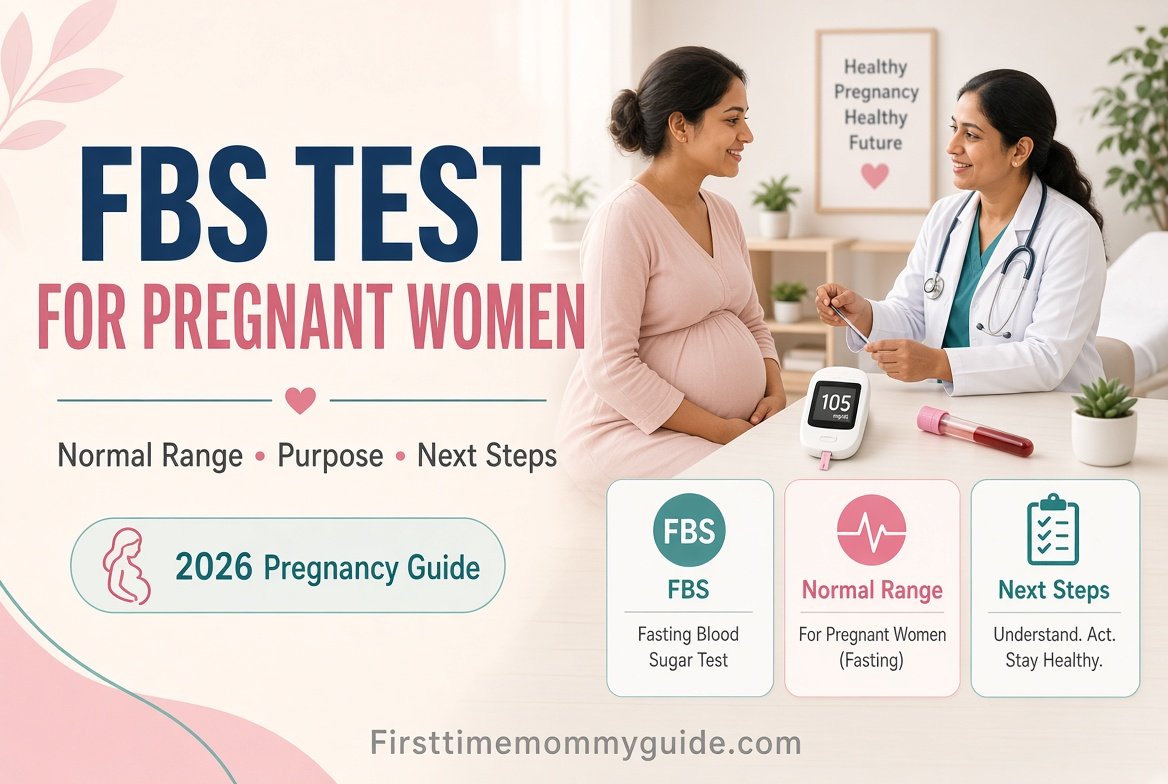
The FBS test for pregnant women is a simple blood draw that checks how your body is handling sugar after a period of fasting. Doctors use it to screen for gestational diabetes and other glucose problems that can develop during pregnancy.
If your provider just ordered this test, or you got a result back and aren’t sure what it means, this guide walks through the normal range, how to prepare, and what happens next.
You’ll also find a clear comparison between the FBS test and the other glucose tests used in pregnancy, plus practical tips for the fasting window itself.
Table of Contents
What Is an FBS Test for Pregnant Women?
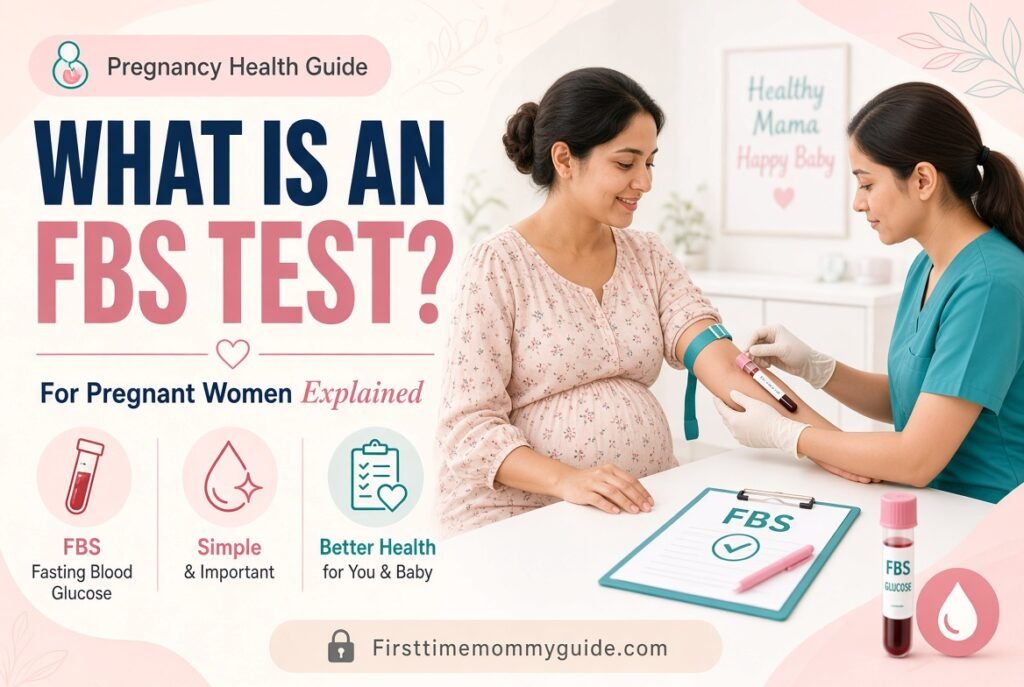
FBS stands for fasting blood sugar, also called fasting blood glucose or FPG. It measures the glucose in your blood after you haven’t eaten for several hours.
During pregnancy, hormones made by the placenta can make it harder for your body to use insulin properly. An FBS test helps your provider catch early signs of this before it becomes a bigger problem.
The test itself is quick. A small blood sample is drawn from a vein in your arm, or sometimes from a finger prick, and sent for lab analysis.
Why Doctors Order an FBS Test During Pregnancy
Screening for Gestational Diabetes
Gestational diabetes mellitus, or GDM, develops only during pregnancy and usually resolves after delivery. It happens when your body can’t produce enough insulin to keep up with pregnancy hormones.
An FBS reading that’s higher than expected is one of the first signs your provider looks for when screening for GDM.
Checking for Pre-Existing or High Risk Diabetes
Some women enter pregnancy with undiagnosed prediabetes or type 2 diabetes. A first-trimester FBS test can flag this early, which matters because uncontrolled blood sugar in early pregnancy carries different risks than gestational diabetes found later.
Women with obesity, a family history of diabetes, or a previous pregnancy with GDM are often tested earlier and more closely.
How the FBS Test Works
Fasting Requirements
Most labs ask you to avoid food and drink, except water, for 8 to 12 hours before the test. This is usually done first thing in the morning after an overnight fast.
Your provider may also ask about any medications you take, since some can affect glucose readings.
What Happens During the Test
A phlebotomist draws blood from a vein in your arm using a small needle. The sample goes to a lab, and you can eat normally right afterward.
Some clinics use a fingerstick and a glucose meter for a faster in-office reading, though a vein draw sent to a lab is considered more accurate.
How Long Results Take
Lab-based fasting glucose results are usually available within a few hours to a couple of days, depending on your clinic. A fingerstick meter reading is available within seconds.
Who Is at Higher Risk for Abnormal FBS Results
Certain factors raise the chance of an elevated fasting glucose during pregnancy. Knowing whether these apply to you can help you understand why your provider ordered the test when they did.
- Being overweight or obese before pregnancy
- A parent or sibling with type 2 diabetes
- A previous pregnancy with gestational diabetes
- Polycystic ovary syndrome (PCOS)
- Having a baby who weighed over 9 pounds in a past pregnancy
- Being over age 35 at conception
- Certain ethnic backgrounds with higher documented GDM rates
None of these factors guarantee a problem. They simply help your provider decide how early and how often to screen you.
How FBS Fits Into Your Overall Prenatal Bloodwork
The FBS test is usually one of several blood tests done during pregnancy, alongside checks for anemia, blood type, and infections. It’s rarely ordered completely on its own.
Your provider may repeat fasting glucose checks at different points if you’re managing gestational diabetes, so it becomes a recurring part of your prenatal visits rather than a one-time test.
FBS Test for Pregnant Normal Range
Reference ranges vary slightly by lab and by the guideline your provider follows. The table below summarizes commonly cited fasting ranges during pregnancy.
| Source or Guideline | Normal Fasting Range | Notes |
|---|---|---|
| American Diabetes Association | 60 to 95 mg/dL | Above 95 mg/dL is generally flagged for follow-up |
| World Health Organization | 70 to 100 mg/dL | Used in several international screening protocols |
| IADPSG diagnostic criteria | Below 92 mg/dL | 92 mg/dL or higher on a fasting OGTT sample meets one GDM criterion |
| General pregnancy target (non-diabetic) | 70 to 95 mg/dL | Commonly cited target range across clinics |
A single number outside these ranges doesn’t automatically mean a diagnosis. Your provider will usually look at the full picture, including symptoms, risk factors, and sometimes repeat testing.
What a High FBS Result During Pregnancy Means
Possible Gestational Diabetes
A fasting glucose at or above 92 mg/dL on a diagnostic oral glucose tolerance test is one of the recognized cutoffs for gestational diabetes under IADPSG criteria.
A single high FBS outside that specific test context often leads to a follow-up test rather than an immediate diagnosis.
Risks to Mother and Baby
Unmanaged high blood sugar in pregnancy has been linked to a larger than average baby, a harder delivery, and a higher chance of needing a C-section.
It can also raise the risk of low blood sugar in the newborn shortly after birth, along with other complications your care team will monitor for.
What a Low FBS Result Means
Blood sugar naturally runs lower during pregnancy than outside of it, so a slightly low fasting number isn’t always concerning on its own.
If your reading is very low, or you’re having symptoms like shakiness, dizziness, or sweating, tell your provider so they can look into the cause.
FBS Test vs Glucose Challenge Test vs OGTT
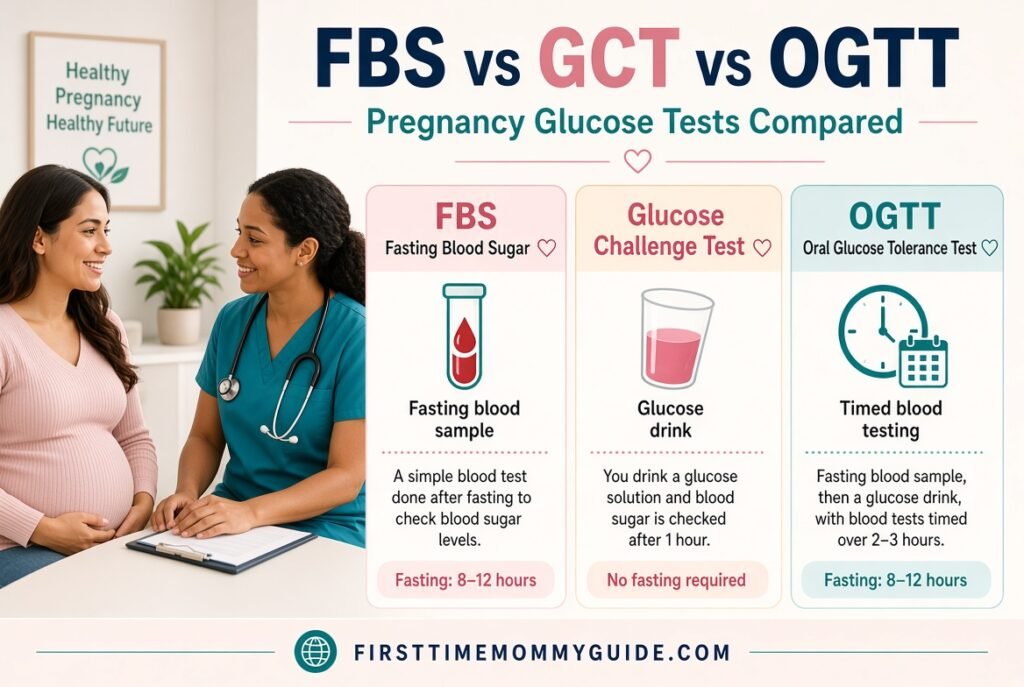
These three tests are often confused with each other. Here’s how they differ.
| Test | Fasting Required | What It Measures | When It’s Used |
|---|---|---|---|
| FBS (Fasting Blood Sugar) | Yes, 8 to 12 hours | Single glucose reading after fasting | Early screening, routine bloodwork |
| Glucose Challenge Test (GCT) | No | Blood sugar 1 hour after a glucose drink | Standard 24 to 28 week screening |
| Oral Glucose Tolerance Test (OGTT) | Yes | Fasting plus 1, 2, or 3 hour readings after a glucose drink | Follow-up after an abnormal GCT, or first-line for high-risk women |
An FBS test can stand alone, or it can be the first data point collected at the start of a full OGTT.
When Is the FBS Test Done During Pregnancy
First Trimester Screening for High-Risk Women
If you have risk factors like obesity, PCOS, or a family history of diabetes, your provider may order an FBS test at your very first prenatal visit.
Catching high blood sugar early allows more time to manage it before it affects your pregnancy.
Routine Screening at 24 to 28 Weeks
Most pregnant women without risk factors are screened between 24 and 28 weeks using a glucose challenge test, with an FBS test used as part of the follow-up OGTT if needed.
This window is chosen because insulin resistance from pregnancy hormones typically peaks during this period.
How to Prepare for an FBS Test
- Fast for 8 to 12 hours before your appointment, drinking only water.
- Schedule the test for early morning so the fasting window overlaps with sleep.
- Take your usual medications only if your provider tells you to.
- Avoid intense exercise the morning of the test, since it can shift glucose levels.
- Bring a snack for right after the blood draw so you can eat promptly.
Tips to Help Keep Blood Sugar in a Healthy Range
- Space meals evenly through the day instead of going long stretches without eating.
- Pair carbohydrates with protein or fiber to slow sugar absorption.
- Stay active with pregnancy-safe movement like walking, as approved by your provider.
- Limit sugary drinks and refined carbohydrates where possible.
- Keep prenatal appointments so any changes in your levels are caught early.
Understanding Your Lab Report
Lab reports usually list your result next to a reference range, along with a flag like “H” for high or “L” for low if you fall outside it. This flag is a starting point for a conversation with your provider, not a diagnosis on its own.
Some labs report in mg/dL, while others use mmol/L. If you’re comparing numbers from different sources, make sure you’re looking at the same unit before drawing conclusions.
It’s also worth asking your provider which specific guideline your clinic uses, since the exact cutoff for “normal” can shift slightly depending on the reference chosen.
Does Insurance Cover the FBS Test During Pregnancy
In the United States, routine prenatal glucose screening, including the FBS test, is typically covered as part of standard prenatal care under most insurance plans. Coverage details still vary, so it’s worth confirming with your insurer.
If you’re uninsured or your plan has a high deductible, ask your clinic about the cash price in advance, since lab costs can differ significantly between locations.
Emotional Wellbeing While Waiting for Results
Waiting on glucose test results can bring up anxiety, especially if you’ve had a difficult pregnancy before or have a family history of diabetes. That reaction is completely normal.
Talking with your provider about what different results would actually mean for your specific situation can make the waiting period feel less uncertain.
Remember that an abnormal FBS result is a starting point for management, not a sign that something has gone wrong with your pregnancy.
FBS Results at a Glance
Here’s a simplified snapshot of how fasting glucose numbers are generally categorized during pregnancy, based on commonly used clinical cutoffs.
| Category | Fasting Glucose (mg/dL) | Typical Next Step |
|---|---|---|
| Normal | Below 92 | Continue routine prenatal care |
| Borderline / Needs Follow-Up | 92 to 125 | Repeat test or full OGTT |
| Consistent with Diabetes in Pregnancy | 126 or higher | Prompt evaluation and management plan |
This table is a general reference, not a diagnostic tool. Only your provider, using your full test results and history, can confirm what your numbers mean.
What Happens After an Abnormal FBS Result
Repeat Testing
A single abnormal number is often repeated before any diagnosis is made, since factors like stress, illness, or an incomplete fast can skew results.
Your provider will let you know if a repeat test is needed and when.
Oral Glucose Tolerance Test
If your FBS or glucose challenge result is elevated, the next step is usually a full OGTT, which checks your glucose at fasting and again at set intervals after a glucose drink.
This test gives a more complete picture of how your body processes sugar over time.
Lifestyle Changes and Monitoring
For many women with mildly elevated glucose, adjusting meals, staying active, and checking blood sugar at home are enough to keep levels in range.
If lifestyle changes aren’t enough, your provider may add medication or insulin, both of which are considered safe and effective options during pregnancy.
Living With Gestational Diabetes Day to Day
A gestational diabetes diagnosis can feel overwhelming at first, but most women manage it successfully with support from their care team. Daily life usually involves checking blood sugar at set times and adjusting meals around the results.
Many providers connect patients with a dietitian who specializes in pregnancy nutrition, which takes the guesswork out of meal planning.
Home glucose monitors let you track fasting and after-meal readings between appointments. Your provider will show you the target ranges to aim for and when to call if a reading is out of range.
Postpartum Follow-Up After Gestational Diabetes
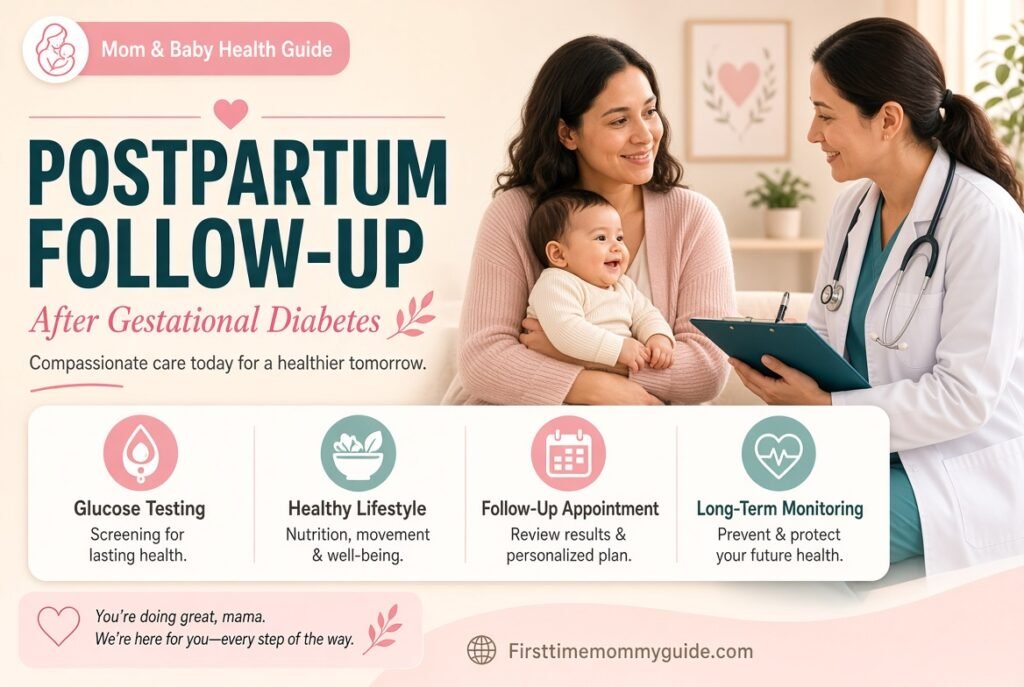
Gestational diabetes usually goes away after delivery, but it does raise your future risk of developing type 2 diabetes. Most providers recommend a follow-up glucose test around 6 to 12 weeks postpartum.
Continuing healthy eating and activity habits after birth can lower that long-term risk, and regular checkups going forward help catch any changes early.
Common Mistakes to Avoid Before an FBS Test
- Eating or drinking anything besides water during the fasting window.
- Forgetting to mention medications or supplements to your provider.
- Scheduling the test after a poor night’s sleep or unusually stressful day.
- Skipping the test because you feel fine, since gestational diabetes often has no symptoms.
- Assuming one high number means a diagnosis without waiting for follow-up guidance.
Expert Tips for a Smoother Testing Experience
Ask your clinic exactly how many hours of fasting they require, since it can vary slightly between labs.
Book an early morning slot whenever possible, so you can eat again soon after the draw.
If needles make you anxious, tell the phlebotomist beforehand. Many clinics can adjust their approach to make the draw easier for you.
Also Read:
- Pregnancy Week By Week 7: Symptoms & Baby Size 2026
- Pregnancy, Month by Month Guide
- Hospital Bag Checklist for Baby: The Complete Packing List 2026
- Baby Essentials Checklist 0–3 Months (Complete Guide)
- Baby Essentials Checklist: What New Parents Actually Need
- Baby Shopping List for First-Time Moms: The Complete 2026 Checklist
- How Many Newborn Outfits Do You Need? A Complete Size-by-Size Guide
- Newborn Coming Home Outfit: What to Pick, What to Skip, and How to Keep Baby Safe
- Baby Sleep Guide for New Moms: Safe Sleep & Schedules (2026)
- Baby Sleep Guide, Honestly
- Baby Food Guide, 6 to 12 Months
- Baby Food Chart 6 to 12 Months: Free Month-by-Month Feeding 2026
- When Can My Baby Start Eating Real Food? Age, Signs & First Foods 2026
- First Foods for Baby at 6 Months: A Complete Guide to Starting Solids 2026
- First Food for Baby 6 Months: Best Options, Safety Tips & Feeding Guide
- Baby Won’t Eat? Common Reasons, Fixes & When to Worry 2026
- Best Baby Food Combinations: A Complete Age-by-Age Guide for Parents 2026
- Baby Food Combo Purees: The Complete Age-by-Age Guide 2026
- Fruit Purees for 6 Month Old Babies: Safe Recipes & Guide (2026)
- Best Vegetable Purees for Baby: A Complete Age-by-Age Guide 2026
- Sweet Potato Puree for Baby: Easy Recipe, Age Guide & Storage Tips
- Apple Puree for Baby: Easy Recipe & Safety Guide (2026)
- Blueberry Puree for Baby: Easy Recipe & Choking Safety Guide
- Spinach Puree for Baby: Safe Recipe, Nitrate Facts & Age Guide
- Zucchini Puree for Baby: Easy Recipe & Age Guide
Frequently Asked Questions (FAQs)
What does FBS stand for in a pregnancy blood test?
FBS stands for fasting blood sugar, sometimes called fasting blood glucose or FPG. It measures glucose in your blood after several hours without food.
What is a normal FBS level for a pregnant woman?
Most guidelines put normal fasting glucose in pregnancy between roughly 60 and 95 mg/dL. Your lab’s exact reference range may vary slightly.
How many hours should I fast before an FBS test?
Most clinics ask for 8 to 12 hours of fasting, with water allowed. Confirm the exact window with your own provider.
Can I drink water before a fasting blood sugar test?
Yes, plain water is allowed and encouraged during the fasting window. Avoid anything with calories, sugar, or caffeine.
Is the FBS test the same as the glucose challenge test?
No. The FBS test requires fasting and gives one reading, while the glucose challenge test is done without fasting and measures glucose an hour after a sugary drink.
What happens if my FBS result is high during pregnancy?
Your provider will likely repeat the test or order a full oral glucose tolerance test. A single high reading isn’t automatically a diagnosis.
Does a high FBS always mean gestational diabetes?
Not always. Stress, illness, or an incomplete fast can raise a single reading, which is why follow-up testing is standard before diagnosis.
When during pregnancy is the FBS test usually done?
High-risk women may be tested at their first prenatal visit. Routine screening for others typically happens between 24 and 28 weeks.
Can I eat right after the FBS blood draw?
Yes, you can eat normally as soon as the blood sample is taken. Many people bring a snack to eat right away.
What should I do if my FBS levels stay high?
Follow your provider’s plan, which may include diet changes, activity, home glucose monitoring, or medication if needed. Regular prenatal visits help track progress.
Conclusion
The FBS test for pregnant women is a routine, low-risk way to check how your body is managing blood sugar during pregnancy. A fasting glucose in the normal range is reassuring, while an elevated result usually leads to a repeat test or a full oral glucose tolerance test rather than an instant diagnosis.
Preparing well, fasting as instructed, and asking your provider questions about your specific numbers will help you get the most accurate picture. Gestational diabetes is manageable with the right monitoring and support, and catching it early is one of the best things you can do for both you and your baby.
If your result comes back outside the normal range, talk to your provider about next steps rather than searching for answers alone.

Dilawar Mughal
Founder and editor, First Time Mommy Guide
I research every guide against what the NHS, the AAP and the WHO publish, then write it in plain English — because most new parents are reading with one hand free, not comparing clinical guidelines. I'm not a doctor or a midwife. Every health claim on this site is sourced and linked so you can check it yourself, and anything urgent belongs with your health visitor or GP, not a blog.